



Did you know that eucalyptus trees grow fast and have a unique smell and bark? They come from Australia and are loved by people who work in gardens and landscaping. Have you thought about the many types of eucalyptus trees and how they grow?
This article will show you more about eucalyptus trees. You will learn about the different kinds and how each one grows. For instance, the Blue Gum has pretty blue-green leaves. The Cider Gum is smaller and has silver-blue leaves.
Are you excited to learn about eucalyptus trees’ great diversity for gardens and outdoors? Then, stay with us. We’ll explore the amazing world of eucalyptus tree varieties and how they grow.
Key Takeaways:
- Eucalyptus trees are renowned for their aromatic foliage, peeling bark, and rapid growth rate.
- There are numerous varieties of eucalyptus trees, each with its own unique growth habits.
- From the Blue Gum to the Cider Gum, eucalyptus trees offer a diverse range of foliage colors, bark textures, and growth forms.
- Understanding the characteristics and growth habits of different eucalyptus varieties is essential for successful cultivation and landscape design.
- By embracing the beauty of eucalyptus trees, you can create stunning and vibrant outdoor spaces.
Table of Contents
About Eucalyptus Trees
Eucalyptus trees are amazing in gardens and landscapes. They offer many benefits, making them key. Their tall stature, unique leaves, and interesting bark charm all who see them.
The Importance of Eucalyptus in Gardens and Landscapes
In gardens and landscapes, eucalyptus trees are very important. They make shaded areas that are cool and pleasant in summer. Their thick leaves also block strong winds, protecting flowers and creating a calm space.
Eucalyptus trees have a unique ability to add visual interest to any garden or landscape with their beautiful foliage and striking bark.
These trees also look great. Their green leaves, which can be tinted different shades, and bark that peels, offer an eye-catching sight all year. Planted alone or with others, eucalyptus trees bring beauty, texture, and charm to places.
But there’s more than looks. Eucalyptus trees help the environment greatly. They give homes and food to wildlife like birds. Plus, they naturally keep bugs away with their scent, making the outdoors better for all creatures.
In the air, eucalyptus trees do a lot too. They take in carbon dioxide, helping cut down on harmful gases. Also, they put out oxygen, improving the air we breathe.
So, eucalyptus trees are special for many reasons. They offer shade, block winds, look beautiful, help wildlife, smell nice, and improve the air. With all these strengths, they are perfect for any landscape, from personal gardens to big public areas.
Popular Varieties of Eucalyptus Trees
Eucalyptus trees have many types. They range from fast-growing to small and compact. This makes it easy to find the perfect tree for any garden. Here, we’ll learn about some well-loved kinds:
Eucalyptus Globulus (Blue Gum)
The Blue Gum, or Eucalyptus Globulus, is loved for its quick growth. It shines with striking blue-green leaves. Planted everywhere, it brings life to any scenery.
Eucalyptus Cinerea (Argyle Apple)
The Argyle Apple, or Eucalyptus Cinerea, stands out with its silver-blue, round leaves. It’s a unique and beautiful tree for home gardens. With its special features, it captures everyone’s eye.
Eucalyptus Gunnii (Cider Gum)
The Cider Gum, or Eucalyptus Gunnii, is perfect for small spaces. It’s known for its compact shape. Its silver-blue leaves add a classy touch to the landscape.
Eucalyptus Radiata (Narrow-Leaved Peppermint)
For elegance, the Narrow-Leaved Peppermint is a great choice. It has slender, graceful leaves. This makes it a top pick for gardens and other green spaces.
These eucalyptus varieties are just a glimpse of what’s out there. You can choose from many options, each with unique traits. This helps you find the best tree for your garden or yard.
Unique Characteristics of Eucalyptus Varieties
Eucalyptus trees stand out because of their different traits. Each type has its own leaf shapes, colors, and bark patterns. They make any garden look interesting with their visuals.
Leaf Shapes and Colors
Eucalyptus trees have a wide variety of leaf shapes and colors. You might see trees with long, slim leaves or others with round, silver-blue ones. This mix creates a beautiful look.
Bark Textures and Patterns
The bark of eucalyptus trees isn’t just for protection. It’s also pretty to look at. The bark can be smooth, stringy, or rough. No two trees look exactly the same.
Flowering Habits and Fragrance
Some eucalyptus trees have showy flowers. These flowers come in many colors and shapes. They draw in bees and butterflies. Plus, they smell really nice.
Eucalyptus trees are special because of their leaves, bark, and flowers. They bring beauty and interest wherever they’re planted. Adding them can make your garden look and smell great.
Growth Habits of Eucalyptus Trees
Eucalyptus trees have unique ways of growing. This makes them versatile and able to adapt well. Knowing how they grow is key to caring for them in gardens or landscapes.
Size and Height Potential
There is a wide variety in the size and height of eucalyptus trees. The small mallee eucalyptus stays small, perfect for tight spaces. Large ones can grow over 100 feet high, dominating the landscape.
Growth Rate and Lifespan
Eucalyptus trees grow fast, adding lots of new height each year. This makes them great for quick shade or privacy. They also live a long time, some for many decades.
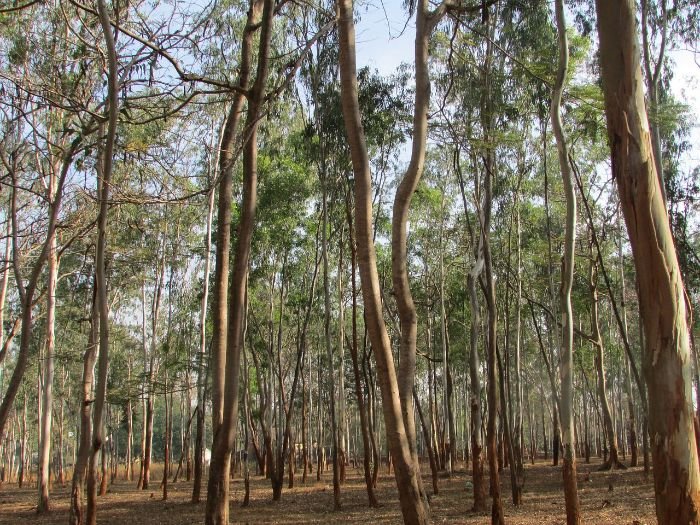
Root System and Soil Preferences
Eucalyptus trees have wide and deep roots. These act as anchors and find water and nutrients deep down. They like well-draining soil, and can live in sand, loam, or clay.
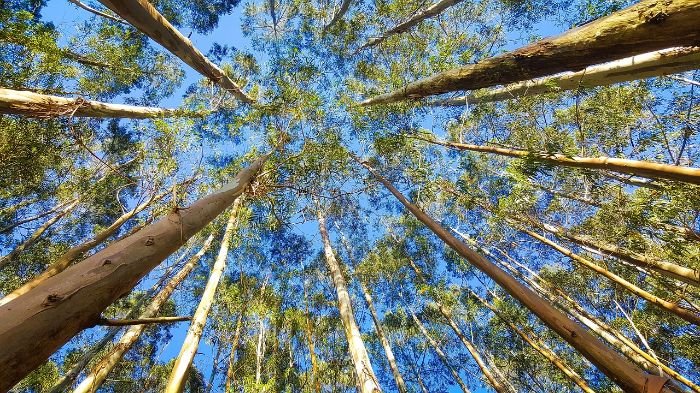
The picture above shows how eucalyptus trees grow and do well in many places.
Planting and Care Tips
Planting and caring for eucalyptus trees right is key. Follow these tips for beautiful outdoor eucalyptus trees.
Choosing the Right Eucalyptus for Your Garden
Think about the climate, space, and growth needs when choosing a type. Some eucalyptus like warm weather, others do well in the cold. Make sure the tree won’t squeeze out other plants as it grows.
Soil Preparation and Planting Techniques
Good soil prep is critical for planting eucalyptus trees. First, loosen the soil and get rid of any weeds. Add compost or manure to make the soil better for the tree. This helps the roots take hold.
When planting, make a hole a bit bigger than the tree’s roots and carefully put the tree in. Make sure it’s at the right depth. Fill with soil and press down gently to avoid air pockets.
Watering and Fertilizing Needs
Eucalyptus trees like regular but not too much water. Deep water the tree when it’s new and during long dry times. Too much water can harm the roots. After they are set up, they can handle a bit of dryness but like deep watering now and then.
For feeding, a little balanced fertilizer in spring is enough. Follow the directions on the package. Don’t fertilize close to winter. Too much growth late might not get strong in time for winter.
Pruning and Maintenance
Pruning keeps eucalyptus trees healthy and in shape. It involves cutting specific parts. This helps the tree grow well and stay the right size and shape.
Pruning Techniques for Healthy Growth
For eucalyptus trees, you must prune in specific ways. Crown thinning is one such method. It means taking out some branches to help air flow and lower the tree’s thickness. This stops diseases and lets new, healthy branches grow.
You should also cut off dead or broken branches to keep the tree safe and looking good. Pruning branches that hang low will make space and avoid touching buildings or paths nearby.
Managing Size and Shape
Eucalyptus trees grow fast and need regular pruning to stay in shape. It’s important to know how your eucalyptus tree naturally grows. This way, you can trim it to fit your area and keep it looking nice.
Expert tip: Be careful not to cut too much. This could make the tree look bad and even harm its health.
Dealing with Common Pests and Diseases
Eucalyptus trees usually fight off bugs and sickness. But sometimes, they need our help. Some common troubles are gall wasps that make lumps on branches, and powdery mildew that harms leaves. Wet soil can lead to root rot, too.
Do a check often for any problems. If you find them, act fast. This might mean cutting off sick branches, using natural treatments, or getting advice from a tree expert if things get serious.
Using the right pruning methods and care against pests and disease keeps eucalyptus trees beautiful and healthy for a long time.
Benefits of Growing Eucalyptus Trees
Eucalyptus trees are excellent for anyone who loves the environment or gardening. They offer many benefits. These include helping the environment, adding beauty to any space, and providing a fresh smell. They’re also used for their healing properties.
Environmental and Ecological Benefits
Eucalyptus trees are great for the earth. They absorb a lot of carbon dioxide. This helps fight climate change. Also, they grow quickly, which means they take in a lot of carbon. This is good for the air we breathe. Eucalyptus trees welcome many different animals. They help make our world more diverse.
Uses in Landscaping and Garden Design
Eucalyptus trees are perfect for making your garden look good. They have pretty leaves in many colors. These trees grow fast, offering shade and privacy soon after planting. They work well in different weather, fitting many garden types. You can use them to enhance any garden scene.
Aromatic and Medicinal Uses
Eucalyptus leaves have oils with health benefits. These are often used in medicine and products. The scent alone can help clear the airways. Eucalyptus oil is good in diffusers or rubbed on the chest when you’re sick. Its leaves can also be used in teas for healing. So, it’s not just pretty, it’s helpful for keeping us healthy.
Creative Uses of Eucalyptus in the Garden
Eucalyptus trees don’t just look good in gardens. They have many creative uses too. They can make your garden look better and work better, too. Let’s see how we can use eucalyptus trees creatively in gardens.
Eucalyptus as a Focal Point or Specimen Tree
Eucalyptus trees can be the stars of your garden. Their look and growth make them stand out. Placing a big eucalyptus tree in a garden bed or by itself can draw people in. It will make your garden more beautiful.
Companion Planting with Eucalyptus
Eucalyptus trees are good friends to other plants. They can help keep pests away and bring in helpful bugs. Their shade is great for plants that don’t like the sun too much. And they protect other plants from strong winds. Grow eucalyptus with other plants for a garden that works together.
Incorporating Eucalyptus into Garden Themes
Eucalyptus fits well in many garden styles. For a Mediterranean garden, choose eucalyptus with silver-blue leaves. For a tropical look, pick ones with colorful leaves. Choosing the right eucalyptus can make your garden’s theme come alive.
Looking at all the ways you can use eucalyptus, it’s clear they’re great for gardens. They can be the centerpieces, protect other plants, or fit into garden themes. Eucalyptus trees bring something special to gardens.
Conclusion – Embracing the Beauty of Eucalyptus
Eucalyptus trees bring beauty to gardens and landscapes. They come in many shapes, sizes, and types. This makes them perfect for any outdoor area. By learning how to care for them, you can make your space look amazing.
These trees can live in various climates and soils. So, they fit everywhere, from big landscapes to small gardens. You can choose from types like the Blue Gum, known for its blue-green leaves, to the Narrow-Leaved Peppermint, which is light and airy.
Having eucalyptus in your garden has many pluses. They give shade and protect from the wind. They also help wildlife and clean the air. Plus, the leaves smell nice and can be medicinal.
In short, adding eucalyptus to your garden makes it a great place. They not only look good but also help nature. So, welcome these trees and see your garden bloom.
FAQ
What are the different varieties of eucalyptus trees?
Some popular varieties include Eucalyptus Globulus (Blue Gum) and Eucalyptus Cinerea (Argyle Apple). There’s also Eucalyptus Gunnii (Cider Gum) and Eucalyptus Radiata (Narrow-Leaved Peppermint).
How tall can eucalyptus trees grow?
Eucalyptus trees vary in size. Some are small, while others tower over 100 feet tall.
How fast do eucalyptus trees grow?
Eucalyptus trees grow quickly. Some can grow several feet each year.
What kind of soil do eucalyptus trees prefer?
They like well-draining soil. It’s good to add organic matter to the soil before planting.
How do I care for eucalyptus trees?
Water them well at first. Then, water deeply when it’s dry. Also, know the right way to prune them and how to protect from pests.
What are the benefits of growing eucalyptus trees?
Growing eucalyptus helps with climate change. They clean the air, provide homes for animals, and have many uses.


