


Last Updated June 07, 2026
A mindfulness garden fails when it looks peaceful from the window and feels unusable once someone steps outside. An exposed chair, a damp dead-end path, a loud fountain, and a short-lived burst of scented flowers can turn the space into another maintenance job waiting beside the house.
A calmer garden starts with behavior before decoration. It gives the body somewhere to arrive, slow down, sit, walk, notice, breathe, and leave without feeling pulled into unfinished work. The design should lower friction: a clear route, a comfortable seat, shade at the hour you actually use it, plants close enough to notice, and enough privacy to stay for a few minutes.
Mindfulness garden design turns a backyard, balcony, patio, or side-yard layout into a place for present-moment attention through sensory cues, safe movement, and low-pressure routines. Reflection becomes easier when the garden is ready before the day becomes crowded.
Key Takeaways
- Comfort, shade, privacy, safe footing, and a reachable seat matter more than decorative objects.
- Sensory design should be balanced so scent, sound, texture, light, and movement calm the space without crowding it.
- Low-maintenance planting protects the garden from becoming another stressful task list.
- Small gardens, balconies, and patios can work when the arrival point, seat, plants, and daily cue are close together.
- Repeat use becomes easier when the garden includes one simple routine cue.
Table of Contents
Choose The Right Mindfulness Garden Layout
The right design depends on the space you can use repeatedly. A large backyard corner can hold a path loop, layered planting, and a sheltered bench. A balcony may need only one chair, three containers, a textured floor mat, and a wind chime that is quiet enough for neighbors. The layout should fit the body first.
If the space already feels busy, a mindfulness garden can be a smaller zone inside the larger yard. A quiet corner, a side-yard path, or a container group near the back door often works better than a full redesign. Therapeutic garden design moves into more formal care settings, accessibility needs, and health-supportive outdoor environments. A home mindfulness garden can stay focused on repeat use, comfort, and daily reflection.
| Space Type | Best Mindful Use | Core Design Move | Avoid |
|---|---|---|---|
| Balcony or apartment patio | Morning breathing, tea, journaling, plant observation | One comfortable chair, containers at hand height, filtered light, one tactile surface | Too many pots that need daily rescue watering |
| Small backyard corner | Quiet sitting and five-minute resets | Privacy screen, bench, layered plants, simple focal point | Placing the seat where windows, bins, or traffic dominate the view |
| Side yard | Slow walking and sensory transition | Curved path, soft planting, wall climbers, gravel or stepping stones | Narrow planting that catches ankles or blocks access |
| Front garden | Pause before entering the house | Short seat or perch, evergreen structure, low fragrance near the path | Overexposure to passersby if privacy is the main need |
| Shared family garden | Short reflection without separating from household life | Defined nook beside the active lawn or vegetable area | Putting the calm seat in the main play or work route |
| Mobility-sensitive garden | Rest, sensory contact, reachable plant care | Firm path, frequent seating, raised containers, shade, clear turning space | Loose stones, steep slopes, or low plants that require bending |
Build The Garden Around Arrival, Shelter, And A Seat
The first few steps decide whether the garden feels usable. A mindful space needs a small threshold: a gate, a change in paving, an arbor, a bend in the path, a pair of pots, or a shift from open lawn to enclosed planting. This arrival cue tells the body that the space has a different pace.
The seat should feel protected without feeling hidden in a forgotten corner. Place it with a solid backdrop, such as a hedge, fence, wall, shrub mass, trellis, or small tree canopy. Let the view land on something settled: layered foliage, a water bowl, a stone, a bird bath, a small tree, or seasonal flowers. If the seat faces clutter, utilities, or a work zone, the mind usually follows that visual noise.
Comfort is a design feature. Choose a seat with a back if the garden is meant for reflection. Add arm support if standing up takes effort. Use a side surface for a mug, notebook, or pruning snips. Place the seat where morning or evening light matches the real routine, not where the garden looks prettiest at noon.
| Design Element | Mindfulness Function | Practical Detail |
|---|---|---|
| Threshold | Marks the shift from task mode to pause mode | Use a path bend, two pots, a gate, or a change in material |
| Sheltered seat | Reduces exposure and supports longer pauses | Back the seat with planting, fence, wall, or trellis |
| Focal point | Gives the eye a quiet place to rest | Choose one object, plant, water feature, or framed view |
| Side surface | Supports tea, writing, tools, or phone-free time | Use a small table, flat-topped stool, wall cap, or broad stone |
| Shade control | Keeps the space usable during the chosen hour | Use tree canopy, umbrella, pergola, shade sail, or tall planting |
Design A Calm Sensory Budget
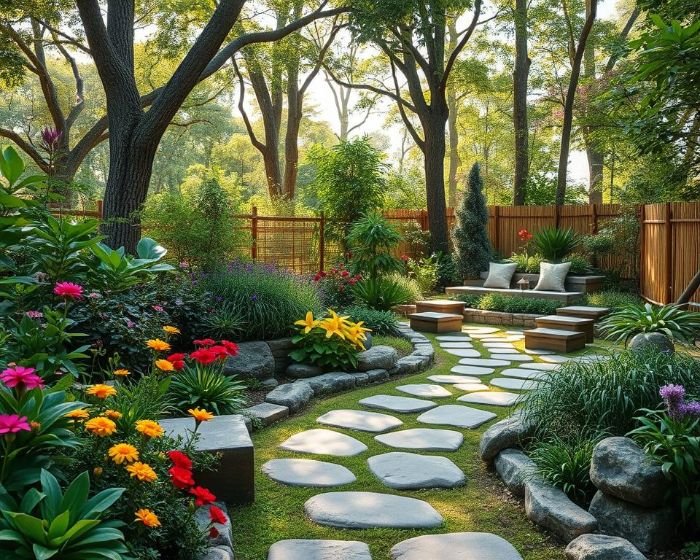
Sensory design is the heart of a mindfulness garden, and it needs restraint. Too much scent, color, sound, motion, and texture can feel busy. A calm garden usually uses a few repeated cues: rustling foliage, one soft fragrance, filtered shade, a simple water sound, and plants close enough to touch.
Sensory and meditation gardens are commonly designed around touch, sight, scent, sound, safe movement, and calm engagement; plants, seating, accessibility, and user needs shape how therapeutic garden spaces function. In a home mindfulness garden, that means every sensory choice should earn its place through daily use.
| Sense Or Cue | Use It For | Good Garden Choices | Common Overload |
|---|---|---|---|
| Sight | Soft focus and visual rest | Greens, silver foliage, grasses, mossy textures, one focal plant | Too many bright colors fighting for attention |
| Sound | Masking traffic and slowing attention | Low water trickle, bamboo leaves, grasses, birds, quiet chimes | Metal chimes or fountains that dominate the whole yard |
| Scent | Grounding through close contact | Lavender, thyme, rosemary, mint in pots, scented geranium, rose | Heavy fragrance near a seat used by people with scent sensitivity |
| Touch | Present-moment attention | Lamb’s ear, thyme, sage, smooth stone, bark, water-safe surfaces | Spiky or sticky plants along narrow paths |
| Movement | Gentle change without clutter | Ornamental grasses, loose perennials, small tree leaves, climbing vines | Plants that whip into paths or shed constantly onto seating |
| Temperature | Body comfort and seasonal use | Dappled shade, warm paving in cool months, breeze channel, evening shelter | Full sun seating that becomes unusable in summer |
Choose Plants For Calm, Care Level, And Seasonal Continuity
Plants in a mindfulness garden should do more than look soothing. They should keep the space usable through the season, invite gentle attention, and stay within the maintenance capacity of the person using the garden. A plant that needs constant staking, spraying, deadheading, or winter rescue can turn reflection into obligation.
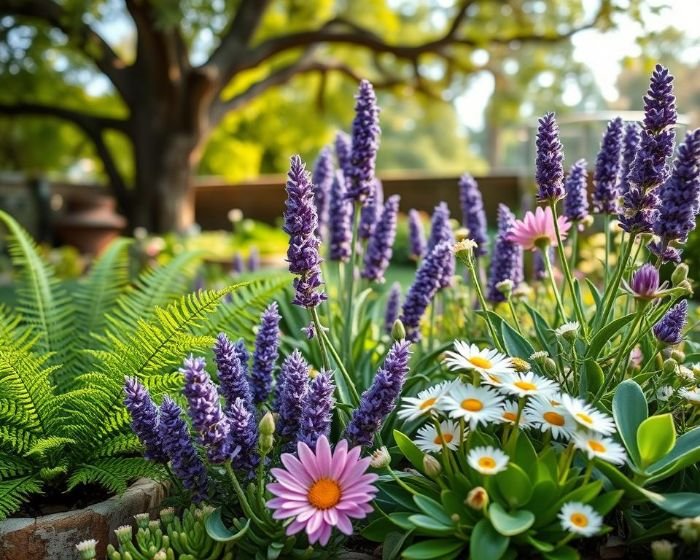
Use a few plant roles in place of a long plant list. Evergreen structure keeps the space legible in winter. Soft grasses add movement. Herbs bring scent and touch. Seasonal flowers mark time. Shade foliage gives quiet texture. Edible herbs give a small harvest cue without turning the garden into a production bed.
Herbal gardens for mindfulness can carry scent, touch, harvest, and small routine practices when herbs sit close to the seat, path, or entry point.
| Plant Role | Good Choices | Mindful Use | Maintenance Note |
|---|---|---|---|
| Evergreen anchor | Boxwood, dwarf conifers, rosemary in mild climates, holly, evergreen ferns | Gives winter form and a stable view | Choose mature size carefully to avoid constant clipping |
| Soft movement | Switchgrass, fountain grass where noninvasive, carex, feather reed grass | Tracks wind and gives the eye a gentle motion cue | Cut back once a year and leave space for arching growth |
| Scent near the path | Lavender, thyme, rosemary, mint in pots, lemon balm in containers, scented geranium | Creates a close sensory cue for breathing or pause rituals | Keep spreading herbs contained |
| Quiet flowers | Hellebore, salvia, nepeta, anemone, calendula, simple roses, native perennials | Marks seasonal change without constant spectacle | Choose repeat bloomers or long-interest foliage where time is limited |
| Shade texture | Hosta, fern, heuchera, Solomon’s seal, moss where climate allows | Supports calm in lower-light nooks | Check slug pressure and water needs before planting heavily |
| Wildlife cue | Serviceberry, coneflower, yarrow, dill flowers, native grasses, bird bath planting | Invites observation of birds, pollinators, seedheads, and seasonal change | Keep wildlife planting away from narrow walking surfaces |
Shape Paths, Water, And Light For Slower Attention
A short mindfulness garden path can still be intentional. A compact loop, a few stepping stones, or a curved line from door to seat can slow the pace by changing foot rhythm. Good path materials feel stable and readable: compacted gravel, flat stepping stones, pavers, boardwalk, or firm mulch in low-traffic zones.
Water can help when it is quiet, clean, and easy to maintain. A small recirculating bowl, wall fountain, rain chain, or bird bath can soften a hard corner and add a focus point. Water becomes distracting when it splashes, needs constant topping up, grows algae quickly, or creates a mosquito risk. If the water feature becomes a chore, use stone, planting, or a still focal object. Water features in healing gardens deserve careful sizing because sound, distance, safety, and maintenance decide whether water calms the space.
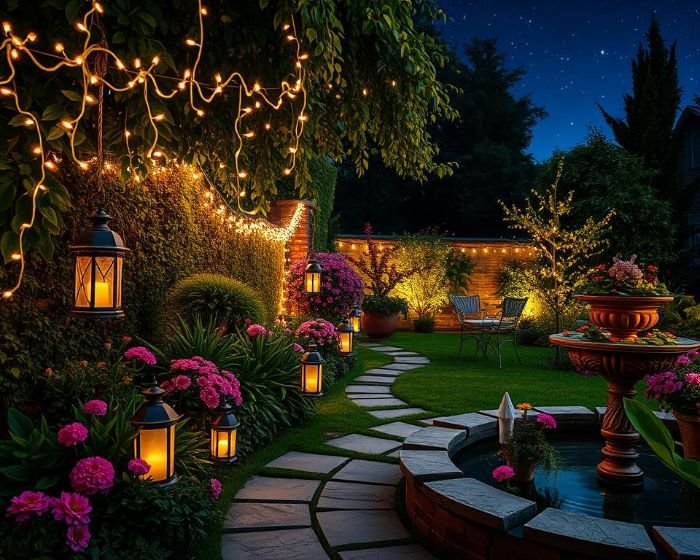
Lighting should support arrival and exit. Use low, warm, shielded light on the route and seat. Avoid glare near the eyes, bright color-changing fixtures, and uplighting that makes the garden feel staged. In a reflection garden, evening light should help the body find the path and settle for a few minutes, then fade into the background.
| Feature | Calming Version | Risky Version | Design Check |
|---|---|---|---|
| Path | Stable, slightly curved, wide enough for relaxed movement | Loose, uneven, slippery, or crowded by plants | Walk it slowly with a cup in one hand |
| Water | Low trickle, easy cleaning, no standing mosquito habitat | Loud splash, hard-to-clean basin, unsafe edge | Listen from the seat before final placement |
| Light | Warm, low, shielded, path-focused | Glare, harsh color, bright uplighting near the face | Sit in the space after dark and check eye comfort |
| Focal object | Stone, bowl, small tree, sculpture, bird bath, framed view | Too many objects competing for attention | Keep one main view from the seat |
Keep The Garden Easy To Maintain
A mindfulness garden should lower the mental load of the yard. The maintenance plan starts before planting. Choose plants that match sun, soil, water, wind, and container size. Leave access behind shrubs. Keep the hose or watering can close. Place compostable trimmings where cleanup is easy.
Maintenance can become part of mindful use when tasks are small and bounded. Deadhead one pot. Sweep one path. Refill one bird bath. Check one herb. A garden that requires a full weekend rescue every month is fighting its own purpose. For people who use gardening itself as the practice, daily gardening routines for mindful relaxation can turn care into a repeatable loop.
| Maintenance Problem | Design Prevention | Mindful Routine |
|---|---|---|
| Containers drying too fast | Use larger pots, mulch, saucers where suitable, and drought-tolerant plants | Check soil with one finger before watering |
| Path covered by leaves or petals | Plant away from narrow walking lines and choose stable surfaces | Sweep one short path section before sitting |
| Overgrown privacy planting | Choose mature size before planting and leave pruning access | Trim one reachable branch group at a time |
| Water feature algae or mosquitoes | Use moving water, easy-clean basins, shade, and regular refresh points | Rinse or refill on a fixed weekly day |
| Too much seasonal replanting | Use perennials, evergreens, bulbs, and a few annual containers | Replace one seasonal pot and leave the broader space intact |
Add Daily Reflection Cues That Keep The Garden Usable
A mindfulness garden works through repeat contact. The cue can be tiny: sit for three breaths before checking messages, touch thyme on the way inside, watch one pollinator, write one line, or walk the path once after watering. The routine should be easy enough to repeat on an ordinary day.
Objects can help when they have a job. A flat stone holds a notebook; a small bowl collects fallen petals; a bell marks the end of a practice; a weatherproof box keeps a pencil dry. Personal touches become clutter when every object asks for attention at the same time.
Mindful observation in gardening fits naturally into a design built around close details. New buds, dry soil, seedheads, leaf scent, bird movement, and the sound of rain can become cues for attention. Even an unfinished garden can support that kind of noticing.
| Practice Cue | Garden Feature That Supports It | Time Needed |
|---|---|---|
| Three slow breaths | Seat with a stable view and one scent cue nearby | One minute |
| Slow path loop | Short stable path with texture underfoot | Two to five minutes |
| One-line reflection | Dry side table, notebook box, or sheltered writing spot | Three minutes |
| Touch and scent check | Herbs or textured plants near the entry route | Thirty seconds |
| Quiet plant care | One container, one bed edge, or one water bowl | Five to ten minutes |
Common Mindfulness Garden Design Mistakes
The most common mistake is designing from a mood board before testing body comfort. A gravel circle, sculpture, and lavender border may look meditative, then fail because the chair is uncomfortable, the scent is too strong, or the path is hard to walk after rain.
Another mistake is using too many symbols. Statues, signs, mirrors, candles, bells, lanterns, and quotes can make a garden feel busy. A reflection garden usually feels stronger when one object carries meaning and the rest of the space supports plants, light, sound, and comfort.
Maintenance mismatch creates the quietest failure. High-water containers, fussy plants, loud fountains, thorny shrubs, and messy trees can all belong in the right garden. In a mindfulness garden, each one needs a reason and a care plan. A calmer space should feel ready when the person arrives.
| Mistake | Why It Breaks The Space | Better Decision |
|---|---|---|
| Choosing decor before seating | The garden looks intentional and feels awkward to use | Place the seat, shade, view, and path first |
| Adding every calming feature | Scent, sound, color, and objects compete for attention | Use a sensory budget with two or three dominant cues |
| Ignoring privacy | The user feels watched or exposed | Add partial screening behind or beside the seat |
| Using difficult plants | Care demands interrupt the relaxation purpose | Choose durable plants matched to the site |
| Making the space too precious | The garden becomes something to protect, so ordinary use feels risky | Design for touching, sitting, clipping, weather, and ordinary days |
Conclusion
A mindfulness garden grows from a simple act of attention with less friction around it. A clear route leads to a sheltered seat. Plants invite touch, scent, sound, and seasonal noticing. Maintenance fits real life, and the daily cue stays small enough to repeat.
Start with the use that matters most: sitting, walking, breathing, journaling, stretching, or quiet observation. Then shape the garden around that behavior with shade, privacy, sensory restraint, stable footing, and durable plants. When the design is working, the space supports ordinary use without ceremony or extra preparation. It gives the body somewhere to arrive, notice one thing, and leave a little more settled than before.
FAQ
What is a mindfulness garden?
A mindfulness garden is an outdoor space arranged to support present-moment attention, relaxation, and reflection. It usually includes a comfortable pause point, sensory plants, safe movement, a calm view, and a small routine cue such as breathing, observing, journaling, or slow walking.
How big does a mindfulness garden need to be?
It can be as small as a balcony chair with containers or as large as a backyard path loop. Size matters less than repeat use. A small space with shade, privacy, stable footing, and plants within reach often works better than a large garden that feels unfinished or hard to maintain.
Which plants are best for a mindfulness garden?
Useful plants include herbs for scent, grasses for movement, evergreens for structure, shade foliage for texture, and seasonal flowers for gentle change. Good choices depend on local climate, sun, water, soil, and the amount of care the gardener can sustain.
Should a mindfulness garden include water?
Water can help when the sound is quiet, the feature is easy to clean, and mosquitoes are prevented. A small recirculating bowl, rain chain, bird bath, or wall fountain can work. If water adds stress, use stone, planting, or a simple focal object.
Can a mindfulness garden work in a rental or apartment?
Yes. Use movable containers, a folding chair, a textured mat, a small side table, herbs, foliage plants, and soft lighting. A renter-friendly mindfulness garden should be portable, low-water, and easy to reset at the end of a lease.
Can gardening help with stress?
Gardening and horticultural activities can support relaxation through movement, sensory contact, nature exposure, and focused attention. Professional medical or mental health care remains appropriate when symptoms need trained support.