
Last Updated April 29, 2026
Eucalyptus tree varieties differ by much more than silver leaves and fragrance; their mature size, growth habit, cold tolerance, roots, and pruning response decide whether they suit a home garden. The plant tag might show a neat blue-green spray, and the young tree in the pot might smell clean when you rub a leaf between two fingers. That small plant may be a container foliage crop for one season, a coppiced shrub for cut stems, or a tall tree that outgrows a small yard.
Eucalyptus selection should start with growth form, mature size, climate fit, and pruning response. A single-trunk gum, a multi-stemmed mallee, a dense marlock, and a silver dollar plant cut back each year do not behave the same way. Pick the habit first, then the species.
Eucalyptus tree varieties include blue gum, silver dollar eucalyptus, cider gum, snow gum, lemon-scented gum, rainbow eucalyptus, and red flowering gum. Most need full sun, sharp drainage, and room for fast top growth. Many garden choices fall between container annuals under three feet and landscape trees over forty feet.
Gardeners often use “eucalyptus” loosely for eucalypts, a wider group that includes Eucalyptus, Corymbia, Angophora, and related Australian genera. Common garden language often says eucalyptus, while botanical names in the tables show the accepted genus when a plant belongs in Corymbia.
Key Takeaways:
- Choose growth habit before leaf color or fragrance
- Measure mature width before planting near structures
- Use containers when cold winters or small spaces decide
- Avoid blue gum where local invasive or fire rules apply
- Probe drainage before trusting drought-tolerant labels
Table of Contents
Eucalyptus Trees – Why One Name Covers Very Different Plants
The eucalyptus name covers very different garden plants. It includes evergreen woody plants in the myrtle family, ranging from container-grown foliage plants to towering gums. The Eucalyptus genus is native from the Philippines through Australia, and eucalypt species number more than eight hundred fifty, with almost all native to Australia.
That range explains why general eucalyptus advice breaks down quickly. One species grows as a tall, open tree with peeling bark. Another stays lower and multi-stemmed after fire or pruning. A third is sold for round juvenile leaves, even though the same plant would produce longer adult leaves if allowed to mature.
Run your thumb across a young silver dollar leaf and it feels waxy, almost powdered, with a cool blue-gray cast. Crush it and the scent opens fast because oil glands in the leaf release volatile compounds, including eucalyptol. The aroma often drives the purchase. Roots, canopy size, and winter tolerance decide garden fit.
Eucalyptus usually grows as upright, open, evergreen trees or shrubs that need full sun and well-draining soil, with drought tolerance after establishment. Garden fit depends on the form the species will take after three, five, or ten growing seasons in your climate.
Eucalyptus Growth Habits – The Form Matters Before The Species
Growth habit is the first filter because it predicts maintenance, scale, and recovery after pruning. A tree form builds a single trunk or a dominant trunk system. A mallee grows from several stems at or near ground level. A marlock is a dense, single-stemmed small tree or shrub-like form with foliage carried low.
In the EUCLID key, mallee describes eucalyptus growth that is multi-stemmed from ground level and seldom taller than ten meters. The mechanism sits below the soil line: a woody lignotuber stores buds and carbohydrates, allowing the plant to resprout after fire, cutting, or other damage. Gardeners use the same biology when they coppice selected eucalyptus for fresh juvenile foliage.
Tree Form
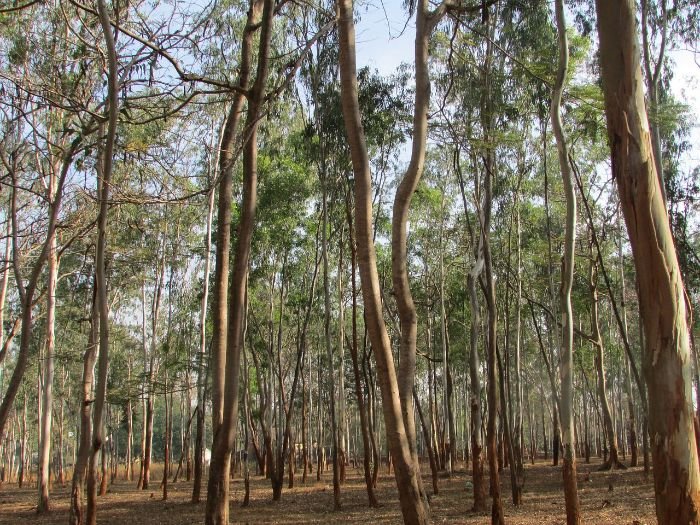
Tree-form eucalyptus needs space from the start. Blue gum, Sydney blue gum, lemon-scented gum, and rainbow eucalyptus belong in large landscapes or mild-climate sites with room above and below ground. Their canopy gives shade and movement, and the bark can peel in cream, tan, gray, green, or cinnamon sheets. Stand under a mature tree on a dry day and the shed bark has a papery snap underfoot, mixed with the sharp smell of leaf litter.
That beauty carries a space cost. A tree-form eucalyptus that wants to become fifty feet tall should not be treated like a shrub because the root system, trunk taper, and wind load all develop around height. Repeated hard size control can create weak regrowth and awkward structure.
Mallee And Shrub Forms
Mallee types suit gardeners who want eucalyptus character without a giant canopy. They branch low, resprout from stored buds, and read more like big shrubs than shade trees. In dry gardens, that low structure can feel natural with grasses, rosemary, agave, rock garden plants, or other drought-adapted companions.
Gardeners disappointed with eucalyptus often choose the leaf color they want, then ask a tall species to behave like a mallee. The label photo looked right. The architecture did not.
Coppiced Foliage Plants
Coppicing keeps selected eucalyptus in juvenile growth. Cutting stems back near the base in late winter or early spring stimulates latent buds, which push soft, round, highly colored leaves. Florists love that stage. Home gardeners use it for silver stems, wreaths, and patio containers.
Not every eucalyptus responds equally, and hard cutting is only sensible on species known to regrow from low buds. The plant also needs active roots, warm weather ahead, and drainage that keeps the crown from rotting after the cut.
Eucalyptus Tree Varieties – Best Choices By Garden Role
Eucalyptus choice should start with the garden role: shade tree, container foliage, cut stems, bark specimen, or collector plant. Each role asks for a different mature size, pruning response, and climate fit.
| Variety Or Type | Typical Mature Size | Climate Fit | Garden Role | Growth Habit | Watch Before Planting |
|---|---|---|---|---|---|
| Blue gum, Eucalyptus globulus | 70-150+ ft in mild landscapes | Mild coastal or Mediterranean; avoid flagged regions | Large mild-climate landscape, not small yards | Fast tree form | Size, fire risk, invasive concern in parts of California |
| Silver dollar eucalyptus, Eucalyptus cinerea | 15-50 ft in ground; 2-8 ft when managed | Warm zones 8-11; container or annual in cold zones | Cut foliage, containers, warm-zone accent | Small tree or shrub when managed | Cold damage, fast seasonal growth, toxic oil |
| Cider gum, Eucalyptus gunnii | 30-70 ft uncut; 3-10 ft when coppiced | Cool mild sites; cold-tested selections only | Foliage plant, coppiced shrub, mild garden tree | Tree if uncut, shrub if coppiced | Outgrows indoor spaces and small pots |
| Snow gum, Eucalyptus pauciflora forms | 20-50 ft depending on form | Cool mild gardens with sharp drainage | Cooler mild climates, ornamental bark | Small to medium tree | Needs drainage plus young-plant protection |
| Lemon-scented gum, Corymbia citriodora | 60-100+ ft in warm climates | Frost-free warm zones | Large aromatic specimen in warm regions | Tall tree form | Large size and frost sensitivity |
| Rainbow eucalyptus, Eucalyptus deglupta | 100-200 ft in tropical conditions | Tropical or subtropical, frost-free | Tropical collector tree | Very tall tree form | Warm-zone only; not a practical houseplant |
| Red flowering gum, Corymbia ficifolia | 20-40 ft in suitable gardens | Frost-free or very mild coastal sites | Flowering accent in frost-free gardens | Small to medium tree | Cold limits and grafted plant quality |
Silver dollar eucalyptus deserves special attention because the common name gets used loosely. In nurseries, it commonly points to Eucalyptus cinerea, grown for round juvenile leaves that look like stacked coins along the stem. Eucalyptus cinerea is a fast-growing small evergreen tree or shrub native to Australia, with fragrant silver foliage and full sun needs.
Blue gum is the opposite kind of choice. It is impressive, fast, and aromatic, and Eucalyptus globulus is invasive along parts of the California coast, with effects on fire danger, native plants, and wildlife. In a region with those warnings, skip it. A tree should fit the site without creating work for the next owner.
For a small garden, treat “dwarf eucalyptus” claims carefully. Some plants are naturally smaller. Others look small only because they are being sold young or because they are grown as annual foliage crops. A three-foot ‘Silver Drop’ plant in a pot is not proof that the species stays three feet in the ground.
Eucalyptus Leaves And Bark – The Clues That Keep Labels Honest
Leaves tell you whether the plant is juvenile, adult, or regrowing after pruning. Many eucalyptus species show heteroblasty, meaning juvenile and adult leaves differ in shape, arrangement, color, and stalk attachment. The round silver leaves used in bouquets are often juvenile leaves. Adult leaves on the same plant may become longer, narrower, and more pendulous.
That shift matters when buying for appearance. If you want round silver foliage, choose a plant sold for coppicing or container foliage, then maintain it that way. If you let it grow into a tree, the plant may move into adult leaf form. The waxy glaucous coating that gives many young leaves their blue-gray color also reduces water loss by changing the surface boundary layer where transpiration occurs.
Bark gives another clue. Some species shed in ribbons, plates, curls, or patches. Freshly exposed bark can feel cool and smooth under the palm, then dry to cream, gray, tan, orange, or green. Bark exfoliation lets the trunk expand and shed old outer tissue; it is not automatically a disease symptom.
Flowers appear less predictably in cold or heavily pruned plants. Eucalyptus flowers are built around showy stamens, not petals, and the woody capsules that follow are the “gum nuts” used in floral work. Bees visit many flowering eucalypts. Home gardeners in cold zones may never see bloom if the plant is cut back yearly or killed to the crown by winter.
Pro Tip: When buying eucalyptus for foliage, inspect the newest growth near the shoot tips and the older stems near the base. If the upper leaves are round and silver and the lower stems already show narrow adult leaves, plan on coppicing or replacing the plant after the display phase.
Buy for the mature form, because juvenile foliage can change once the plant grows out of its cut-stem stage.
Eucalyptus Tree Size – The Space And Root Problem To Solve Early
Eucalyptus size is the detail that ruins more plantings than care mistakes. A young tree in a five-gallon pot looks polite. Two growing seasons later, the stem may be thick, the top may be racing, and the root ball may have moved from exploratory roots to a water-demanding woody framework.
Fast growth comes from a large transpiration engine. Leaves pull water upward through xylem under tension, and warm wind raises that pull sharply. Once the canopy gets big, the root zone must keep pace. A site with compacted fill, a narrow planting strip, or a dry wall edge turns that growth habit into stress.
Before buying, map the real clearance. A forty-foot evergreen needs a place to drop bark, cast shade, pull water, and move in wind without crowding a roof, fence, sidewalk, septic field, or neighbor’s yard.
Root behavior varies by species and soil. The practical rule stays firm: do not plant tall eucalyptus close to structures, drains, pavement, or small patios. It is also poor manners near vegetable beds where shade, dry soil, and leaf litter will change the growing conditions. For urban yards, smaller trees from a local shortlist often fit better than a eucalyptus forced into a tight footprint; selecting trees for urban gardens should account for mature height, width, shade, roots, and nearby structures.
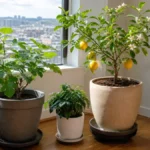
Containers solve some size issues and create new ones. A potted eucalyptus heats, dries, and exhausts root space faster than an in-ground plant. Lift the pot after watering; the weight should feel heavy and settled, not light with water sliding around the edges. If water runs down the side of a tight root ball and exits cleanly in seconds, the mix is no longer wetting the center.
Use a container eucalyptus as a managed plant, not a forever tree in miniature. For long-term pot culture, root pruning, crown reduction, and fresh mix become part of the calendar. Root-volume limits also shape many best plants for container gardening.
Growing Eucalyptus In U.S. Gardens – Climate, Soil, Water, And Risk
Climate decides whether eucalyptus becomes a tree, a dieback shrub, a container plant, or a one-season foliage crop. Most common landscape species prefer mild winters. In colder zones, stems can freeze back even when roots survive, and some plants never reach their adult form.
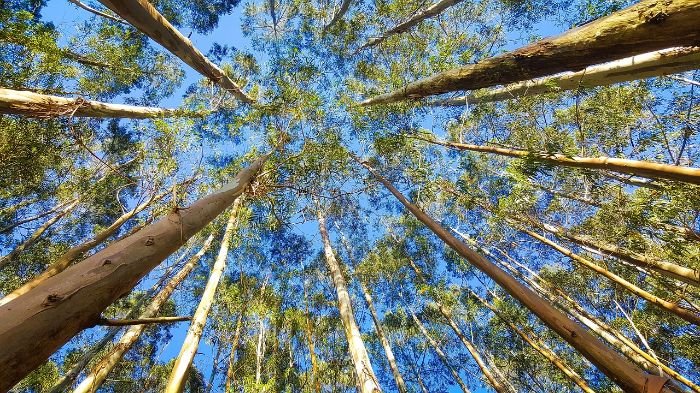
Cold injury begins at the cell level. Ice crystals outside cells draw water out of tissue, membranes lose integrity, and young shoots blacken from the tips inward. A plant that survives by resprouting from the base may still lose the trunk form you wanted. That is why cold-hardy lists need local proof, not just a zone number.
Eucalyptus cinerea grows best in sun on a dry site or with fast drainage. Fast drainage should decide whether the site is suitable. Drought tolerance after establishment does not mean tolerance of wet, airless soil. In clay, dig a test hole, fill it with water, and watch how long it takes to drain. Soil that stays slick and sour-smelling the next morning is warning you before the plant does.
Water young eucalyptus deeply during establishment, then widen intervals as roots extend. Shallow daily watering keeps roots near the surface and makes the tree less resilient when heat arrives. If you are still learning how water moves through your beds, the difference between sand, loam, and clay in types of soil in gardening matters more than the word “drought-tolerant” on a tag.
Fire risk deserves plain language. Eucalyptus leaves contain volatile oils, and many species shed bark, leaves, and twigs that add dry fuel under the canopy. In fire-prone regions, follow local firewise planting guidance and avoid species flagged by regional invasive or fuel-risk lists. Eucalyptus longhorned borers also attack stressed trees, especially where drought, injury, or poor site conditions weaken the plant.
Pets and children add another constraint. Eucalyptus oil is toxic if swallowed, and foliage can irritate skin in sensitive people. Keep fresh cut stems and fallen leaves out of reach of animals that chew plants.
Eucalyptus Choice Matrix – Pick By Constraint, Not By Photo
Eucalyptus choice should start with the limiting factor. If the limiting factor is cold, choose a hardy type or grow in a container. If it is space, choose a coppiced foliage plant or skip eucalyptus as a permanent tree. If it is fire risk, local rules outrank plant desire.
| Your Constraint | Better Direction | Planting Decision |
|---|---|---|
| Small patio or balcony | Silver dollar eucalyptus in a container | Grow for foliage, prune yearly, refresh potting mix |
| Mild coastal garden with room | Small to medium ornamental eucalyptus | Check local invasive lists before buying |
| Cold winter climate | Seasonal container or cold-tested species | Expect dieback or overwinter under protection |
| Large rural site | Tree-form species matched to soil and wind | Plant away from structures, drains, and overhead lines |
| Cut foliage goal | Coppiced E. cinerea or E. gunnii type | Cut low only after roots establish strongly |
| Fire-prone region | Lower-fuel alternatives or locally approved species | Follow defensible-space rules before aesthetics |
For containers, the potting mix has to drain and rewet well. Fine peat-heavy mixes can collapse around eucalyptus roots after repeated drying. A coarser mix with mineral aeration keeps oxygen in the root zone, which matters because root respiration stops when pore spaces stay water-filled. A good soil mix for container gardening should keep air and water moving through the root zone.
For in-ground planting, choose smaller specimens when possible. Young eucalyptus roots establish with less circling and transplant shock. A large root-bound specimen can look impressive on delivery; white roots wrapped tightly around the pot wall tell you it has already started growing in circles. Slice or tease only what the species and root ball condition allow, then water to settle soil around the root zone without burying the crown.
Gardeners who want the eucalyptus look without eucalyptus problems should match the substitute plant to the real site need. Need silver foliage? Artemisia, olive, lavender, or germander may fit. Need a small tree? Consider regionally adapted choices with cleaner root and fire behavior. Need scent? Rosemary or bay laurel gives aromatic leaves with easier size control in many warm gardens.
A different silver-leaved shrub, aromatic plant, or small tree may fit the site better.
Conclusion
Give eucalyptus one honest site audit before buying: full sun, fast drainage, mature height, mature width, cold exposure, fire context, and distance from structures. If one of those conditions fails, choose a container-grown foliage plant, a coppiced shrub approach, or a different tree. The smaller decision now prevents the bigger pruning problem later.
A well-chosen eucalyptus looks settled, never forced. New shoots carry clean color, the bark sheds without panic, water sinks through the root zone without sour smell, and the plant has enough room to move in wind without making the garden feel crowded.
FAQ
What are the main types of eucalyptus trees?
The main garden types are tree-form eucalyptus, mallee eucalyptus, marlock-type plants, and coppiced foliage plants. Tree forms build height and canopy. Mallees grow from multiple low stems and stay more shrub-like. Coppiced plants are cut back to keep juvenile leaves for silver foliage and cut stems.
Which eucalyptus tree is best for a small garden?
For a small garden, silver dollar eucalyptus grown in a large container is usually safer than planting a tree-form species in the ground. Choose Eucalyptus cinerea or a similar foliage type and manage it by pruning. If the plant must stay under six to eight feet, treat it as a managed shrub or seasonal container plant, not as a permanent shade tree.
How fast do eucalyptus trees grow?
Fast species can add several feet of growth in a warm growing season, especially with sun, drainage, and water during establishment. Eucalyptus cinerea can add six to eight feet in one season under strong conditions. Growth slows when roots hit compacted soil, cold damage removes stems, or pruning keeps the plant in juvenile foliage.
Can eucalyptus trees survive cold winters?
Some eucalyptus survive light to moderate freezes. Survival does not always mean the trunk remains intact. In colder gardens, stems may die back and regrow from lower buds or the crown. Snow gum and some cider gum selections are sold for colder sites, and local performance matters more than a broad zone label. Protect young plants from wind and wet winter soil.
Are eucalyptus trees safe to plant near a house?
Large eucalyptus trees should be planted well away from houses, drains, pavement, and overhead lines. Their size, water demand, bark drop, wind movement, and fire behavior make close planting risky. A container-grown foliage eucalyptus on a patio is a different situation, as long as pets and children cannot chew leaves or stems.
What is the difference between eucalyptus and silver dollar eucalyptus?
Eucalyptus is the genus name for hundreds of species. Silver dollar eucalyptus is a common nursery name, most often used for Eucalyptus cinerea, grown for round, blue-gray juvenile leaves. The name describes the foliage stage and ornamental use more than a whole category of small trees. If you want the coin-shaped leaves, plan to prune for juvenile growth.
What happens if eucalyptus is planted in wet soil?
Wet soil limits oxygen around the roots. Root respiration slows, fine roots die back, and the plant becomes more vulnerable to crown rot or stress pests. The first aboveground signal is often dull foliage, weak new growth, or dieback after a wet spell. Move container plants into a faster-draining mix and avoid planting in low spots that stay slick after rain.
Can you grow eucalyptus indoors?
Yes, for a limited period, especially with very bright light and a cool, airy room. Most eucalyptus plants outgrow indoor conditions because they need stronger sun, deeper root space, and better airflow than a room provides. Grow one indoors as a temporary foliage plant, then prune, move outside for the warm season, or replace it when stems stretch and leaves thin.