
Last Updated June 06, 2026
A shaded garden bed usually fails quietly. The first hosta leaf looks good in spring, then slugs chew holes through it. The begonia blooms for a few weeks, then drops flowers when the soil stays wet. A patch under the maple looks empty by August because tree roots took the water before the new perennials could reach it.
Gardening in shade works when the site is treated as its own microclimate. Light level, moisture, tree roots, roof overhangs, buildings, wind, soil drainage, and reflected light all change the plant list. A plant labeled for shade may grow well in cool, moist, dappled light and fail under a dry evergreen canopy.
Each low-light area needs a plant role and a care pattern. Some shaded spots can hold flowers. Others suit foliage, ferns, groundcovers, containers, or a narrow edible edge. Deep shade may need mulch, paths, seating, or leaf litter more than another round of struggling plants.
Key Takeaways:
- Shade gardening starts with light mapping: full shade, partial shade, dappled shade, open shade, and dry shade behave differently.
- Moisture and root competition decide more shade plant failures than low light alone.
- Foliage texture, leaf color, plant height, and repetition carry a shade garden longer than short bloom windows.
- Dry shade under trees or eaves needs smaller plants, careful planting holes, mulch, and occasional deep watering.
- Leafy vegetables and herbs may crop in bright partial shade, and fruiting crops need more direct sun.
Table of Contents
Map The Shade Before Choosing Plants
Walk the garden at breakfast, midday, late afternoon, and early evening. Mark where direct sun touches the soil, where light filters through leaves, and where the ground stays dark all day. Repeat the check after deciduous trees leaf out, because a spring bulb bed can receive bright April sun and dense June shade in the same spot.
Plant labels help only after the actual site is understood. Morning sun is cooler and more useful for many shade plants. Late afternoon sun can scorch thin leaves, dry containers fast, and turn a “part shade” site into a stress point during July heat.
| Shade Type | What It Looks Like | Direct Sun Pattern | Best Plant Expectation |
|---|---|---|---|
| Open shade | Bright area with no direct sun, often beside a north wall or under high branches | Little direct sun, strong ambient light | Good foliage color, some flowers, strong container options |
| Dappled shade | Moving patches of light under deciduous trees | Filtered light through the canopy | Best all-around shade condition for perennials, bulbs, ferns, and shrubs |
| Partial shade | Morning sun with afternoon protection, or a few hours of soft direct light | About 2 to 5 hours, usually cooler if early | Flowering perennials, hydrangeas, leafy vegetables, herbs, annuals, and mixed borders |
| Full shade | Little direct sun, often beside buildings, fences, or dense shrubs | Less than 2 hours | Ferns, hostas, hellebores, epimedium, wild ginger, groundcovers, and foliage-led planting |
| Deep shade | Dark ground under evergreens, narrow side yards, or dense structures | Almost none | Very limited plant growth; mulch, paths, containers, and selective planting work better |
| Dry shade | Shade plus tree roots, eaves, building foundations, or blocked rainfall | Any shade level paired with dry soil | Tough groundcovers, small transplants, mulch, and planned watering |
Shade plants need to be matched to the degree of shade and available light, because open shade, dappled shade, partial shade, full shade, and dense shade create different growing limits.
Use your hand as a final check. Soil in cool shade may look damp on top and feel dry two inches down. Under walls or maples, the surface can mislead you.
Match Shade Plants To Moisture And Root Pressure
The strongest shade plant list separates light from soil moisture. A moist woodland edge can support astilbe, ferns, foamflower, ligularia, and many spring bulbs. A dry strip under a mature tree asks for epimedium, bigroot geranium, Christmas fern, hellebore, wild ginger, or mulch with only small planting pockets.
Exact shade conditions should decide the plant list. Low-light outdoor plants can handle reduced sun. The “shade-loving” label says little about dry roots, compacted soil, or a roof overhang. Look at the soil before looking at flower color.
Dry shade is difficult because shade tolerance and drought tolerance do not always come from the same plant traits. Many sun-drought plants want more light than a tree canopy gives. Many classic shade plants have broad leaves that lose water quickly when roots cannot keep up.
| Site Condition | Plants To Consider | Plant Role | Care Limit |
|---|---|---|---|
| Moist dappled shade | Astilbe, Japanese painted fern, hosta, brunnera, foamflower, Solomon’s seal | Layered foliage, spring flowers, summer texture | Keep crowns above soggy soil and thin crowded plants for airflow |
| Dry shade under trees | Epimedium, hellebore, Christmas fern, bigroot geranium, wild ginger | Low-care cover and durable foliage | Plant small and water through establishment |
| Open shade near a wall | Heuchera, begonia, coleus, fuchsia, impatiens, container hydrangea | Color near patios, entries, and side yards | Check pots often because walls and paving change heat and moisture |
| Cool full shade | Ferns, hosta, hellebore, pulmonaria, sweet woodruff, sedge | Foliage, groundcover, early flowers | Expect fewer blooms and slower spread |
| Wet shade or slow-draining shade | Carefully chosen ferns, astilbe, sedge, ligularia, cardinal flower in suitable regions | Moisture-tolerant planting | Fix standing water before adding crowns that rot |
| Bright partial shade | Hydrangea, azalea, coral bells, bleeding heart, parsley, chives, lettuce, kale | Flowers, foliage, shrubs, and limited edibles | Protect from hot afternoon sun in warm climates |
Choose Shade Plants By Garden Role
| Garden Role | Best Plant Direction | Examples | Main Caution |
|---|---|---|---|
| Groundcover under trees | Low plants that tolerate root competition after establishment | Epimedium, wild ginger, sweet woodruff, sedges, Christmas fern | Check regional spread and invasive status before planting near woods |
| Bold foliage mass | Large or repeated leaves that hold the bed after bloom | Hosta, ligularia, rodgersia in moist shade, hellebore, heuchera | Match moisture first because bold leaves often suffer in dry shade |
| Fine texture and movement | Ferns, sedges, and airy woodland plants | Japanese painted fern, lady fern, carex, foamflower, Solomon’s seal | Use repeated clumps so the bed does not look scattered |
| Spring flowers | Plants that use light before tree canopy closes | Hellebore, bleeding heart, brunnera, pulmonaria, woodland phlox, spring bulbs | Expect some plants to go quiet or dormant after spring |
| Container color | Annuals and foliage plants with controlled soil and drainage | Begonia, coleus, fuchsia, impatiens, torenia, caladium in warm climates | Watch roof shade, wall heat, and pot drainage |
| Winter structure | Evergreen foliage, shrubs, stems, or hardscape | Hellebore, Christmas fern, boxwood where suitable, mahonia where appropriate, pale stone, containers | Deep shade limits density, so combine plants with paths or mulch |
Check invasive status before planting aggressive groundcovers near woods, streams, or natural areas. Periwinkle, English ivy, goutweed, and some spreading groundcovers can move beyond a garden bed. Native sedges, foamflower, wild ginger, woodland phlox, ferns, and regional shrubs often make a better long-term choice.

Choose The Right Low-Light Garden Setup
A shaded garden can be a border, a woodland edge, a container group, a narrow side-yard path, an edible strip, or a mulched root zone. The setup should follow the site constraint. Dense roots call for small plugs and mulch. A dark patio may need containers. A bright east-facing strip may support leafy crops and herbs.
| Low-Light Area | Best Setup | Plants Or Materials | Avoid This Mistake |
|---|---|---|---|
| North side of a house | Open-shade border with repeated foliage | Hosta, heuchera, ferns, hellebore, mulch, pale stepping stones | Filling the whole strip with high-bloom plants that need morning sun |
| Under mature deciduous trees | Woodland edge with small plants and leaf-mold mulch | Epimedium, wild ginger, foamflower, spring bulbs, Christmas fern | Adding deep soil over roots or tilling the whole area |
| Shaded patio or balcony | Container shade garden | Begonia, coleus, fuchsia, heuchera, fern, impatiens, compact hydrangea | Using pots without drainage or leaving saucers full of water |
| Bright partial shade near vegetables | Leafy edible edge | Lettuce, spinach, chard, kale, parsley, cilantro, chives, mint in a pot | Planting tomatoes, peppers, squash, or melons where they receive only low light |
| Deep narrow side yard | Path, mulch, containers, and a few tough plants | Gravel, stepping stones, ferns in pots, wall-mounted planters | Expecting a dense flower border with almost no sky exposure |
| Wet shaded corner | Drainage check plus moisture-tolerant planting | Sedges, suitable ferns, astilbe, moisture-tolerant regional natives | Adding compost to a waterlogged pocket and planting rot-prone crowns |
Container gardening for balconies and patios suits low-light spaces where the ground is root-filled, paved, compacted, or too wet. Pots let you move a plant six feet toward morning light, refresh tired soil, and group plants by moisture needs.
| Shade Container Role | Plant Direction | Examples | Care Limit |
|---|---|---|---|
| Main foliage plant | One strong leaf shape or color | Hosta, heuchera, brunnera, fern, caladium in warm climates | Protect thin leaves from hot afternoon glare |
| Flower color | Annuals that bloom in low light | Begonia, impatiens, fuchsia, torenia | Keep soil moist without leaving roots waterlogged |
| Trailing edge | Soft spillover for pot rims | Creeping Jenny where appropriate, lamium where non-invasive, trailing begonia, small ferns | Check spread risk before planting near natural areas |
| Structure | Compact shrubs or evergreen foliage | Boxwood where suitable, compact hydrangea in bright shade, evergreen fern | Use a large pot and protect roots in cold climates |
Use Foliage, Texture, And Light-Colored Details For Color
Flowers are shorter-lived in shade because flower production usually needs more light than leaf growth. A strong shade garden relies on leaf size, leaf shape, surface shine, variegation, height, and repetition. Large hosta leaves beside fine fern fronds give the eye enough contrast even when bloom color is low.
Shade garden perennials work best when foliage carries the bed after bloom season. Hellebores may start the year. Brunnera and pulmonaria can brighten spring. Hostas, ferns, heuchera, sedges, and epimedium hold the summer structure. Shrubs or evergreen ferns keep the bed from looking empty in winter.
Pale leaves show up in dim light. Lime-green hostas, silver brunnera, variegated sedges, white-edged heuchera, and glossy evergreen leaves reflect more available light than flat dark green foliage. Cream flowers, pale pink flowers, white blooms, and light stone paths also show better than deep red or purple flowers tucked into dense shade.
Plan Shade Garden Interest Across The Year
| Season | Main Shade Garden Asset | Plant Direction | Design Caution |
|---|---|---|---|
| Early spring | Flowers before tree canopy closes | Hellebore, pulmonaria, brunnera, bleeding heart, woodland phlox, spring bulbs | Mark dormant plants so they are not disturbed later |
| Late spring to summer | Foliage mass, texture, and pale leaves | Hosta, fern, heuchera, sedge, Solomon’s seal, epimedium | Do not depend only on bloom color after canopy shade deepens |
| Late summer to fall | Leaf contrast, seedheads, and late flowers where light allows | Japanese anemone, hardy begonia in suitable climates, sedges, ferns, hydrangea in bright shade | Dry shade may need water before fall plants recover |
| Winter | Evergreen foliage, stems, mulch, paths, and containers | Hellebore, Christmas fern, evergreen sedges, regional shrubs, pale stone, containers | Deep shade may need hardscape and mulch more than more plants |
Buy fewer kinds and repeat them. Three clumps of the same fern along a path look intentional. Five heucheras beside a pale wall read as color. A mixed row of unrelated shade plants often looks busy in spring and patchy by midsummer.
Prepare Shade Garden Soil Without Hurting Tree Roots

Many shade gardens sit under trees, and tree roots occupy the same topsoil that new plants need. Digging deeply, tilling, or adding a thick layer of soil over roots can damage the tree and create a raised grade against the trunk. Planting pockets are safer than rebuilding the whole bed under an established tree.
Start with small plants in root-filled shade. A plug, quart pot, or small division needs a smaller hole and adapts faster to the existing soil. Slide the trowel between roots, loosen only the planting pocket, set the crown at the same depth it grew in the pot, and water slowly so the root ball and surrounding soil settle together.
Soil health improvement in shade should focus on thin layers of compost, leaf mold, mulch, and reduced compaction. Shaded soil does not need heavy feeding every time a plant looks slow. Low light naturally slows growth, and too much nitrogen can make soft leaves that attract slugs and disease.
| Soil Situation | What To Do | What To Avoid |
|---|---|---|
| Dry root-filled tree shade | Plant small, mulch lightly, water deeply during establishment | Tilling, cutting major roots, or burying the trunk flare |
| Compacted side-yard soil | Use stepping stones, compost topdressing, and tough groundcovers | Walking through planting beds after rain |
| Wet shade with standing water | Check drainage, redirect runoff, choose moisture-tolerant plants | Planting crowns deeper to “anchor” them in wet soil |
| Container shade garden | Use fresh potting mix, drainage holes, and raised pot feet if needed | Using garden soil in pots or letting pots sit in water |
Leaf mold is especially useful in shade because it mimics woodland litter. A thin annual topdressing feeds soil life, protects the surface, and breaks down without smothering shallow roots. Keep mulch a few inches away from woody stems, shrub crowns, and tree trunks.
Water And Mulch Shaded Beds By Soil Feel
Shade reduces evaporation, so the surface may stay cool after rain. Root competition and overhangs can still leave the actual root zone dry. Push a finger or narrow trowel two to four inches into the soil. Cool and lightly damp soil can wait. Warm, dusty, or crumbly soil needs a slow soak.
Dry shade under eaves, tree canopies, and building edges often still needs supplemental water, especially when the top few inches of soil dry out. Watering deeply and less often is better than sprinkling the surface every evening.
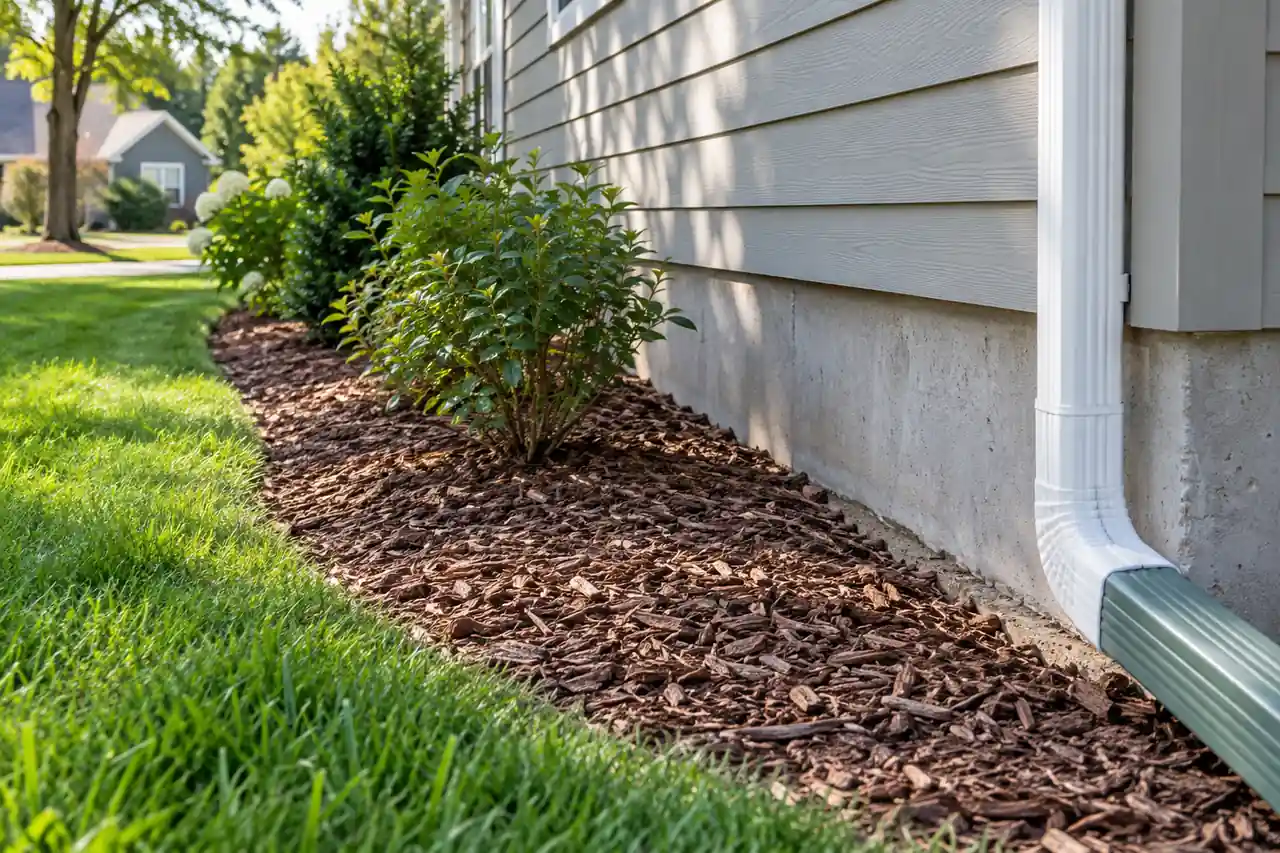
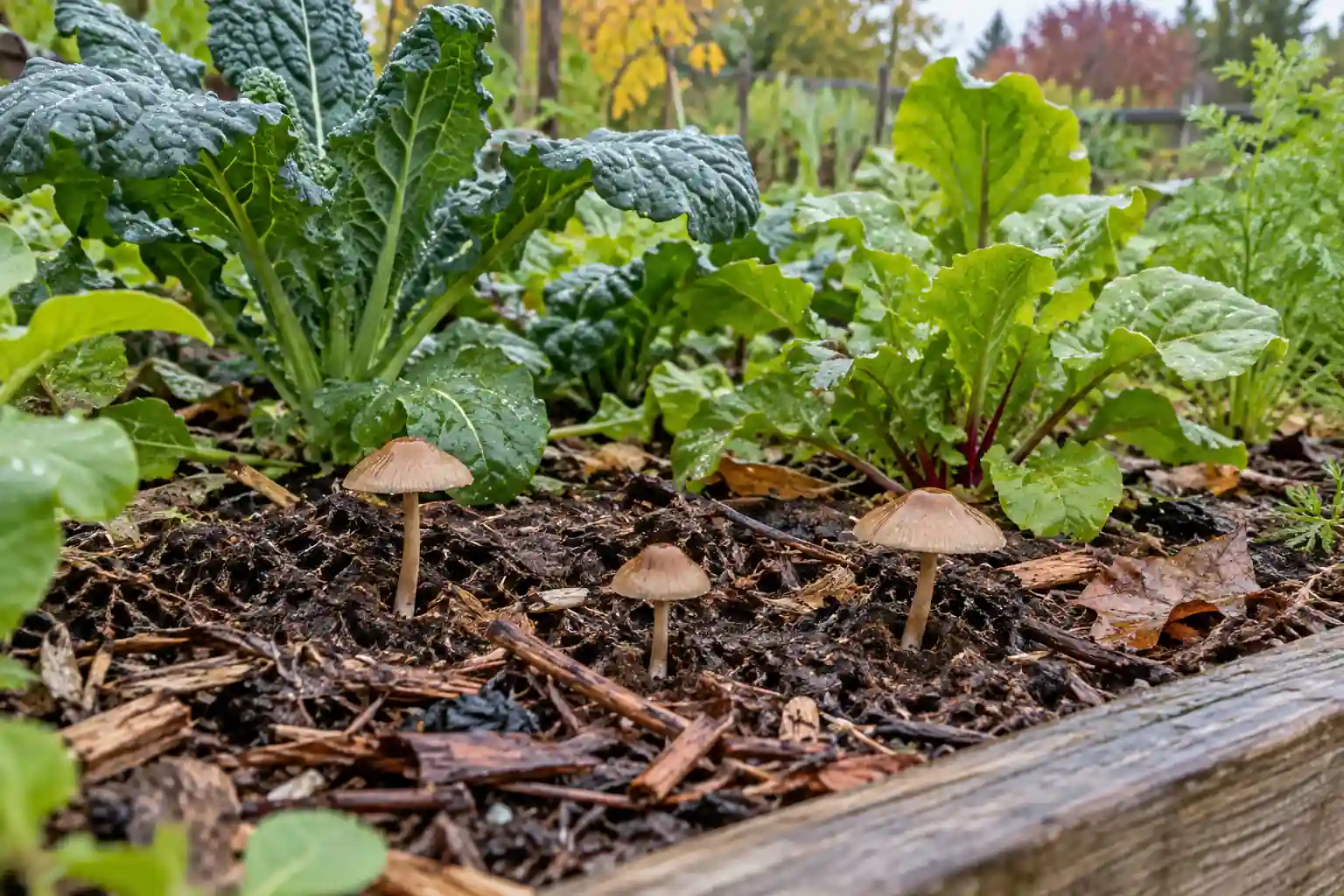
Mulching for soil health helps shaded beds keep a more even moisture pattern. Use shredded leaves, leaf mold, fine bark, pine needles where suitable, or composted wood chips. Keep the layer thin around small perennials, because buried crowns rot quickly in cool, damp shade.

Container shade gardens need a different rhythm. A pot under a roof may receive no rain. Stone paving can dry a pot from heat stored below. Glazed containers may stay wet for days after watering. Lift a small pot to feel its weight, or push a bamboo skewer several inches into the mix. Damp mix clings to the skewer. Dry mix falls away.
Pot drainage matters even in shade because cool, wet roots run out of air. Every container needs drainage holes, a mix that holds moisture without turning dense, and a place for excess water to leave the pot.
Grow Vegetables And Herbs Only In Brighter Shade
Food crops have a stricter light budget than most ornamental foliage plants. Leaves and stems can grow with less sun than fruit, roots, bulbs, or seed-heavy crops. A low-light vegetable bed should be judged by realistic harvests, not by whether the plant survives.
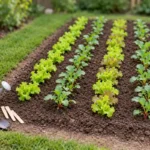
Shade-tolerant vegetables belong in bright partial shade, open shade, or morning sun. Lettuce, spinach, arugula, chard, kale, parsley, cilantro, chives, and sorrel can be useful in cooler low-light beds. Tomatoes, peppers, eggplant, corn, squash, cucumbers, melons, and most fruiting crops need longer direct sun for reliable yields.
| Edible Crop Group | Best Shade Situation | Realistic Harvest | Warning Sign |
|---|---|---|---|
| Leafy greens | Morning sun or bright open shade | Slower, tender leaves with less bolting in heat | Long pale stems and thin leaves |
| Cool-season herbs | Bright partial shade | Useful leaf harvests from parsley, cilantro, chives, mint in a pot, and sorrel | Weak scent, stretched stems, or wet crowns |
| Root crops | Morning sun with loose soil | Small roots and edible tops | Large tops with tiny roots |
| Fruiting vegetables | Only the brightest partial shade in hot climates | Reduced yield at best | Flowers drop, fruit stays small, or plants lean toward light |
| Perennial edibles | Dappled edge with enough moisture | Regional options such as ramps, ostrich fern fiddleheads, or shade-tolerant berries where appropriate | Foraging-style crops planted without proper identification or local guidance |
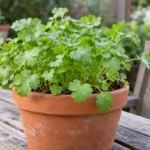
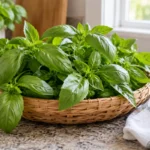
Use containers for herbs in shade if tree roots or compacted soil limit growth. A container of parsley near the kitchen door may outproduce a parsley plant tucked into a dry bed under shrubs. Mint should stay in a pot because its roots spread fast in moist shade.
Fix Common Shade Garden Problems
Shade problems often look like plant weakness, and the real cause sits in the light, soil, moisture, or airflow pattern. Diagnose the pattern before adding fertilizer. A plant stretching toward one side needs more light. A crown that turns soft needs less moisture around the base. Leaves with holes in cool damp shade may point to slugs, not nutrient deficiency.
| Problem | Likely Cause | Field Check | Better Fix |
|---|---|---|---|
| Pale, stretched stems | Too little usable light | Track direct sun and bright sky exposure for one day | Move the plant toward morning light or replace it with a deeper-shade plant |
| Leaves wilt by afternoon under trees | Dry shade and root competition | Check soil two to four inches deep near the root ball | Water slowly, mulch lightly, and plant smaller divisions next time |
| Slug holes in hostas or tender annuals | Cool damp hiding spots | Look at leaf undersides and mulch edges at dusk | Thin crowded foliage, reduce wet debris, and protect vulnerable plants early |
| Fungal spots on leaves | Poor airflow, wet leaves, crowded planting | Check whether leaves stay wet into midday | Water soil, remove infected leaves, widen spacing, and prune nearby growth carefully |
| Plants disappear after one season | Wrong plant for dry shade, winter wet, or deep shade | Review soil moisture in summer and winter | Switch to tougher groundcovers, ferns, or containers |
| Shade bed looks flat | Too many similar leaf shapes and dark colors | Squint at the bed from the main viewing point | Add broad leaves, fine ferns, pale foliage, glossy leaves, and repeated clumps |
Give new shade plantings one full growing season before judging their final size. Many perennials build roots first, especially in low light. Keep the bed weeded, watered during dry spells, and mulched lightly. If a plant shrinks each year, move it before the crown becomes too weak to recover.
Conclusion
Shade gardening works when the gardener stops treating low light as the only problem. A shaded bed has a light pattern, a moisture pattern, a root pattern, and a design role. Once those are clear, the plant list becomes narrower and more reliable.
Reserve the brightest shade for flowers, containers, and leafy edibles. Dry tree shade suits tough perennials, groundcovers, mulch, and careful planting pockets. Deep shade works best with paths, seating, containers, or a few plants that match the limits. A low-light garden can feel calm, full, and intentional when each plant is chosen for the shade that is actually there.
FAQ
What is the best way to garden in shade?
The best way to garden in shade is to match plants to the exact light and moisture pattern. Map direct sun, check soil two to four inches deep, note tree roots or roof overhangs, then choose plants for that condition. Foliage plants, ferns, groundcovers, containers, and light-colored paths often perform better than high-bloom plants in deep shade.
What should I do with a spot where almost nothing grows?
A deep shade area with dry soil, dense roots, or blocked rainfall may work better as mulch, a path, seating, containers, or a few tough plants than as a full planted border. Improve the surface, reduce foot traffic, and plant only small pockets where roots and water allow growth.
Can vegetables grow in shade?
Some vegetables grow in bright partial shade, especially leafy greens and herbs. Lettuce, spinach, arugula, chard, kale, parsley, cilantro, chives, and sorrel can produce useful harvests with morning sun or bright open shade. Tomatoes, peppers, squash, cucumbers, melons, and corn need more direct sun for reliable fruit.
How do I make a shade garden look brighter?
Use pale foliage, glossy leaves, fine and broad textures, cream or white flowers, light stone, and repeated plant groups. Lime-green hostas, silver brunnera, variegated sedges, pale heuchera, and ferns can brighten a dark bed. A light-colored wall, path, container, or bench also reflects available light.
Why do plants fail under trees?
Plants fail under trees because the shade is paired with root competition, dry soil, compacted ground, and intercepted rainfall. Large tree roots take water and nutrients from the same topsoil where new plants start. Small transplants, shallow planting pockets, leaf-mold mulch, and slow watering give new plants a better chance.
Do shade gardens need less water?
Some shade gardens need less water because cooler soil loses moisture slowly. Dry shade under trees, eaves, and building edges may need more attention because rain does not reach the root zone or roots remove it fast. Check soil below the surface before watering.