
Last Updated August 10, 2026
How to grow kiwifruit starts with choosing a vine that matches your winters and planning its permanent support before planting. Fuzzy kiwifruit needs a long, warm season. Hardy kiwi and kiwiberries tolerate colder winters; tender spring growth remains vulnerable to late frost. Most cultivars also need compatible male and female vines that bloom together. Give the roots moist, well-drained soil, then train one trunk to a sturdy T-bar, arbor, or pergola.
Annual winter pruning renews fruiting canes; summer pruning keeps the canopy open and reachable. Expect years, not months, before a dependable crop. A vine that makes lush growth without flowers often needs more maturity, better light, or less nitrogen. Flowers without fruit point first to pollination, frost damage, or mismatched bloom timing. Solving those decisions early prevents the most expensive kiwi failures.
Key Takeaways
- Match kiwi species to winter lows before buying vines.
- Install permanent support before roots limit construction access.
- Pair compatible male and female plants for dependable pollination.
- Renew fruiting canes yearly; remove tangled older growth.
- Investigate frost or pollination when flowers produce no fruit.
Table of Contents
How to Grow Kiwifruit: Start With the Right Type
Kiwi planting begins with species, not fertilizer. Fuzzy kiwifruit, hardy kiwi, and arctic kiwi are all Actinidia vines. Each group has different winter tolerance, fruit size, sunlight response, and harvest behavior. The nursery tag should state the species, cultivar, sex, pollination partner, hardiness range, and expected mature spread. If those facts are missing, the plant is a gamble.
| Decision | What to confirm | Failure signal |
|---|---|---|
| Winter fit | Species and cultivar tolerate local minimum temperatures | Repeated trunk dieback or dead fruiting wood |
| Season length | Fruit can mature before damaging autumn frost | Full-size fruit remains hard and immature |
| Pollination | Male and female cultivars flower at the same time | Healthy flowers drop without fruit set |
| Structure | Posts, wires, and access fit a long-lived vine | Sagging support or unreachable tangled canes |
| Patience | The household accepts a multi-year wait for fruit | A young vine is overfed to force early cropping |
Named nursery vines are the dependable route to fruit. How to grow kiwi from seed is a different project: seedlings vary, their sex is unknown until flowering, and the fruit may not resemble the parent. Seed propagation is useful for breeding or rootstocks. A gardener who wants a predictable home crop should buy labeled plants or rooted cuttings.
Choose Fuzzy Kiwi or Kiwiberries
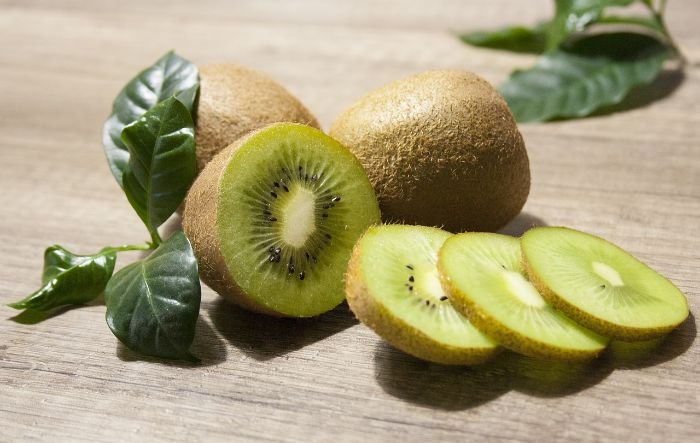
Types of kiwi fruit differ most clearly in cold tolerance and fruit size. Fuzzy kiwifruit produces the familiar large, hairy fruit and needs a relatively mild site with a long season. Hardy kiwi, often sold as a kiwiberry plant or kiwi berry plant, produces grape-sized fruit with smooth edible skin. Arctic kiwi is smaller and more cold tolerant; some cultivars prefer protection from strong afternoon sun.
| Kiwi group | Best garden fit | Main management issue |
|---|---|---|
| Fuzzy kiwifruit | Long, mild growing seasons with a sheltered sunny site | Cold injury and enough time to mature fruit |
| Hardy kiwi | Cold-winter gardens with room for a vigorous vine | Late spring frost and heavy annual growth |
| Arctic kiwi | Very cold climates and sites with some heat protection | Early shoot growth and sun or frost injury |
| Self-fruitful cultivar | Small yards with room for one vine | Confirm the label and expect better crops with pollen nearby |
Kiwi growing zones on a sales label are a starting point, not a complete site test. Dormant wood may survive winter; early shoots or flowers can still be damaged by a late freeze. Check the usual last spring frost, first autumn frost, cold-air drainage, wind exposure, and summer heat before selecting kiwi varieties.
Plan Pollination Before You Buy Vines
The kiwi plant male and female distinction controls fruit set. Most kiwifruit vines are dioecious, so male and female flowers grow on separate plants. A female vine can look vigorous and flower heavily without producing fruit when compatible pollen is absent. Buy the pollinizer at the same time as the fruiting vine and confirm that both are the same species with overlapping bloom periods.
One male can supply pollen for several female vines in a larger planting. One male and one female is simpler in a home garden because the distance is short and the labels stay clear. Self-fruitful cultivars can set fruit alone. Another compatible vine may improve berry size or yield. Do not assume that any male kiwi can pollinate any female kiwi.
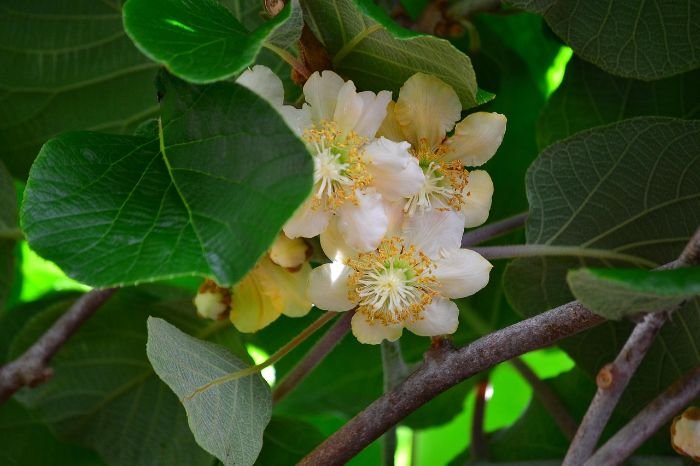
Tag each trunk with the cultivar and sex once the first flowers open. Male flowers have numerous pollen-bearing anthers. Female flowers have a prominent central structure that develops into fruit. If both sexes flower together and fruit still fails, investigate frost during bloom, poor bee activity, drought stress, or pesticide exposure before adding fertilizer.
Build a Kiwi Trellis Before Planting
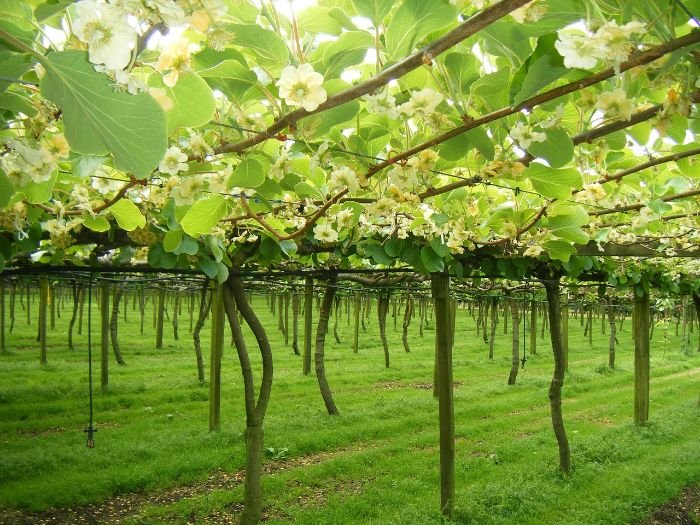
A kiwi trellis is permanent infrastructure. Mature vines carry dense wood, foliage, and fruit, and light decorative panels can twist or collapse under the load. A T-bar system with anchored end posts and several horizontal wires gives the clearest training pattern. A heavy pergola or arbor can also work when the posts, beams, fasteners, and picking access are designed for mature weight.
Place the trunk below the center of its allotted wire run. Train one straight trunk to the support, then form two permanent horizontal cordons in opposite directions. Fruiting canes arise from those cordons and are renewed through pruning. This framework resembles the logic used when training grape vines on support systems; kiwi produces heavier, faster growth.
| Trellis part | Purpose | What to avoid |
|---|---|---|
| End posts | Anchor the tensioned wire and mature crop load | Shallow posts or unbraced corners |
| Cross arms | Spread cordons and fruiting canes into reachable rows | Narrow arms that force a dense canopy |
| Wire | Carry trained wood across the full structure | Thin loose wire that sags under wet foliage |
| Access lane | Allow pruning, tying, inspection, and harvest | A canopy directly above fragile furniture or fencing |
Install the structure before planting so digging, post driving, and wire tensioning cannot damage established roots. Allow the spacing stated for the cultivar, often about 10 to 15 feet between vigorous plants. A kiwi vine trellis that seems oversized during year one usually looks appropriately scaled once the cordons and replacement canes mature.
Plant Kiwi Vines in the Right Site
Choose moist, fertile soil that drains after heavy rain. Kiwi roots are shallow and sensitive to both drought and saturation. Avoid low pockets where cold air settles, exposed corners that dry shoots, and ground where water stands around the crown. Correct compaction and drainage before the permanent vine goes in. Broad soil health improvement is easier before posts and roots occupy the site.
- Set the completed trellis and mark each trunk position.
- Soak dry container roots before removing the nursery pot.
- Dig a hole wider than the root ball, not deeper.
- Plant at the nursery depth without burying the crown.
- Backfill with native soil and water the full root zone.
- Tie one selected shoot loosely to a training stake.
- Mulch broadly and keep the trunk base uncovered.
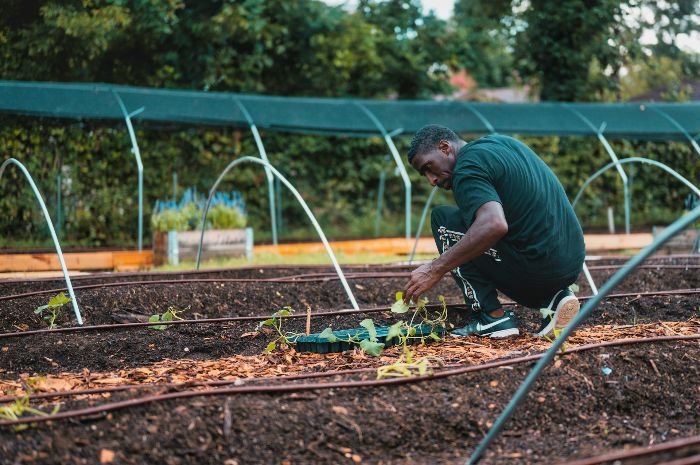
Full sun supports flowering and fruit quality in many climates. Shelter from harsh wind and frost pockets still matters. Arctic kiwi and some kiwiberries may perform better with protection from intense afternoon heat. Read the cultivar guidance and assess the site through the entire growing season, not only on planting day.
Water, Feed, and Protect Kiwi Roots
Kiwi roots need consistent moisture during establishment, shoot growth, flowering, and fruit sizing. Water deeply across the root zone, then check below the mulch before repeating. Frequent surface sprinkles encourage shallow rooting. Saturated soil excludes air and can damage the crown. A carefully planned drip irrigation system keeps the wetting pattern repeatable without soaking the canopy.
Apply a two to four inch organic mulch layer over the active root area after the soil warms. Leave several inches clear around the trunk. Proper mulching for moisture conservation reduces grass competition and buffers dry periods. Grass growing against a young vine can take more water and nutrients than its small root system can replace.
Base fertilizer on a soil test and annual growth. Kiwi vines can make excessive leafy growth when nitrogen is pushed. That growth tangles the canopy, delays hardening, and does not correct missing pollen. Young hardy kiwi roots can also be damaged by heavy fertilizer. Apply measured amounts over the root zone and keep concentrated products away from the trunk.
Train and Prune Kiwi Vines
Training creates permanent structure; pruning renews productive wood. During establishment, select one strong shoot as the trunk and remove competing basal shoots. When the trunk reaches the wire, head it and train two shoots in opposite directions as cordons. Tie growth loosely with soft material and inspect ties before they constrict thickening stems.
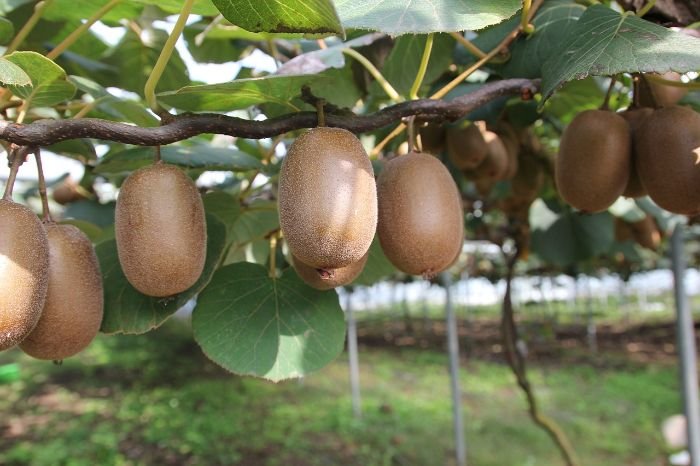
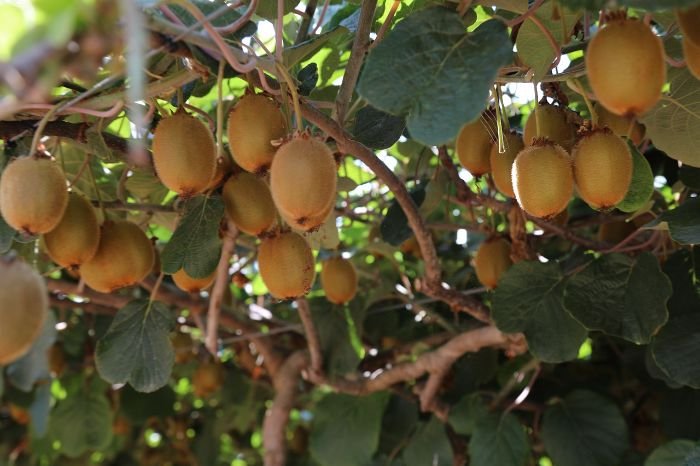
Kiwifruit bears on current shoots growing from one-year-old canes. Dormant pruning should retain well-positioned replacement canes and remove old, crowded, weak, or poorly placed growth. The goal is a repeating sequence of permanent cordons, temporary fruiting canes, and new replacements. The renewal principle is similar to pruning trained grape vines; kiwi requires its own spacing and timing.
| Pruning job | Timing | Purpose |
|---|---|---|
| Remove suckers | Through the growing season | Keep energy in the trained trunk and canopy |
| Shorten excess shoots | Summer as needed | Improve light, airflow, and access without stripping the vine |
| Renew female canes | Dormant season before sap flow | Replace old fruiting wood with strong one-year canes |
| Prune male vines | After flowering | Preserve the pollen supply, then control size |
Avoid major pruning once sap begins flowing strongly because cuts may bleed heavily. Summer pruning is selective, not a second dormant cut. Keep enough leaf area to feed fruit and replacement wood, and prevent long shoots from wrapping around wires, gutters, trees, or neighboring vines.
Grow Kiwiberries in Colder Gardens
Hardy kiwi growing follows the same structural rules as fuzzy kiwi and changes the climate calculation. Kiwiberries are usually Actinidia arguta or Actinidia kolomikta. They produce small, smooth-skinned fruit that can be eaten whole. Their dormant vines tolerate much colder winters than fuzzy kiwi; early spring shoots and flowers remain vulnerable to frost.
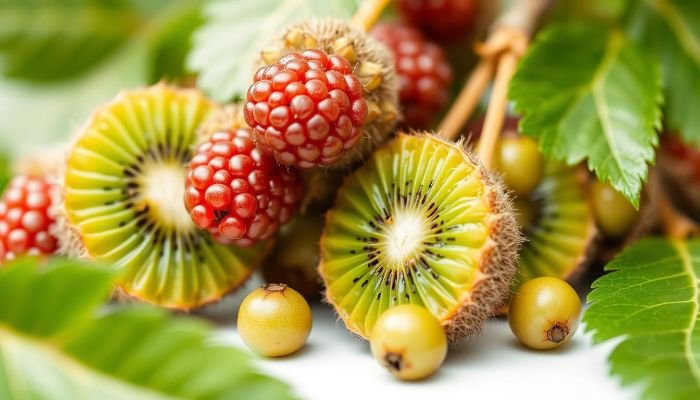
To grow kiwi berries successfully, keep the trunk away from low frost pockets and locations warmed too early by reflected winter sun. Sudden warming followed by freezing can split bark and injure cambium. Snow, rabbit, and deer pressure also matter because the trunks remain accessible for years. Use guards that do not trap moisture against the bark.
| Kiwiberry decision | Practical choice | Risk to prevent |
|---|---|---|
| Species | Select a named hardy cultivar tested near your climate | Buying by the words hardy kiwi alone |
| Pollinizer | Match male and female species with overlapping bloom | Two healthy vines that cannot pollinate each other |
| Site | Avoid frost pockets and exposed thaw-freeze locations | Live wood with frozen flowers and no crop |
| Canopy | Provide a heavy trellis and annual renewal pruning | A dense vine that shades and hides the berries |
| Harvest | Pick in shallow containers and cool firm fruit promptly | Soft berries crushed beneath the day’s harvest |
Most kiwiberry cultivars still need male and female plants. Some are marketed as self-fruitful. Labels can be inconsistent, and cross-pollination may improve performance. A mature female vine can produce a substantial crop, so one compatible pair is enough for many households. The University of Minnesota provides a detailed home-garden kiwiberry guide covering species, siting, wildlife, and harvest differences.
Harvest and Ripen Kiwifruit
Fuzzy kiwifruit is normally harvested mature and firm, then softened indoors. Fruit that feels soft on the vine may already have lost storage quality. Maturity is difficult to judge by appearance alone, so use the expected harvest window, seed color, soluble-solids guidance where available, and a test batch. Pick before a damaging hard freeze.
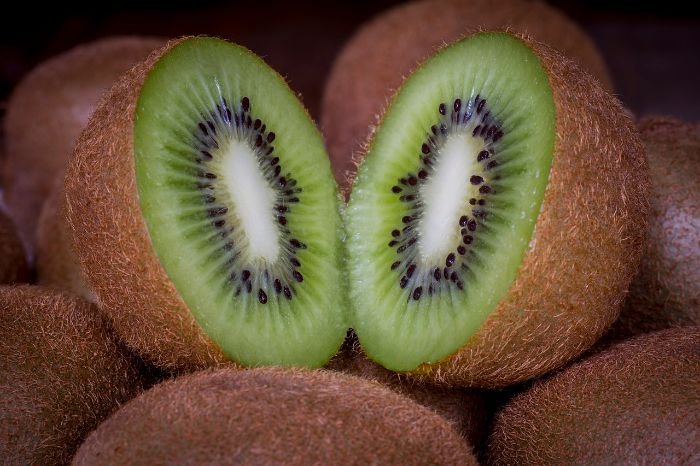
Cut or snap fruit carefully without tearing the supporting cane. Cool the harvest promptly. Bring a few fuzzy kiwis to room temperature at a time and let them soften until the flesh yields gently. Keep the remaining firm fruit cool and away from damaged specimens. Fuzzy kiwi maturity standards vary by cultivar and climate, with further species, training, pruning, and maturity guidance available from Oregon State University.
Kiwiberries are smaller and more fragile. Harvest may require several passes because berries do not always soften together. Pick into shallow containers, separate damaged fruit, refrigerate firm berries, and soften small batches for eating. Smooth edible skin and tiny seeds make the ripe fruit easy to eat whole. A deep bucket crushes the harvest and removes that convenience.
How long does a kiwi plant take to produce fruit? Named vines commonly need about three to seven years; some hardy types may take longer. Plant age, propagation method, winter injury, light, training, pollination, and pruning all change the date. A young vine without flowers is not automatically failing. A mature flowering pair without fruit needs diagnosis.
Diagnose Common Kiwi Problems
Start with the pattern and timing. A vine that never established may have root damage, poor drainage, drought, or a buried crown. A vine that grows vigorously without flowering may be young, shaded, overfed, or pruned incorrectly. Flowers followed by no fruit point toward pollination or frost. Small fruit often reflects crop load, moisture stress, canopy shade, or weak pollination.
| Symptom | Likely causes | First check |
|---|---|---|
| No flowers | Young vine, shade, excess nitrogen, or wrong pruning | Plant age, sun hours, growth rate, and retained canes |
| Flowers, no fruit | Missing pollen, mismatched bloom, frost, or few pollinators | Vine sex and flower condition during bloom |
| Weak pale growth | Root stress, drought, saturation, or nutrient imbalance | Soil moisture and roots before applying fertilizer |
| Dead shoot tips | Late frost, wind injury, or winter damage | Live tissue below the injury and local weather timing |
| Dense fruitless canopy | Old tangled wood, excess nitrogen, or poor light | Fruiting-cane renewal and interior shade |
| Soft berries collapsing | Late picking, deep containers, heat, or delayed cooling | Harvest stage and handling temperature |
Inspect the crown, trunk, and trellis before treating foliage. Bark damage from string trimmers, rabbits, sunscald, or wire ties can interrupt water movement and imitate a root problem. Remove fallen or overripe fruit, keep weeds away from the crown, and preserve airflow through selective pruning. Confirm a disease or pest before using a control product.
Conclusion
Productive kiwi vines begin with the correct species, compatible pollination, and a permanent support system. Match fuzzy kiwifruit or kiwiberries to the climate, prepare moist well-drained soil, and install the trellis before planting. Train one trunk and two cordons, then renew fruiting canes and remove the wall of old wood.
Keep roots evenly moist without saturating them, protect spring growth from frost where practical, and expect several years before full cropping. At harvest, handle fuzzy fruit and kiwiberries differently: pick fuzzy kiwi mature and firm for indoor softening; kiwiberries need shallow containers and careful batch picking. If a mature vine flowers without fruit, investigate pollen and frost before fertilizer.
FAQ
How long does a kiwi plant take to produce fruit?
Named nursery vines often need three to seven years; some hardy kiwi can take longer. Plant age, winter damage, sunlight, training, pruning, and pollination all affect the first dependable harvest.
Do you need two kiwi plants to get fruit?
Most cultivars need a compatible male and female vine that flower together. One male can pollinate several females. A self-fruitful cultivar can crop alone. Compatible pollen may still improve performance.
Can kiwifruit grow in cold climates?
Hardy kiwi and kiwiberries tolerate colder winters than fuzzy kiwifruit. Their early shoots and flowers are still vulnerable to late frost, so species choice and site placement both matter.
Can you grow kiwi from seed?
Yes. Seedlings vary, their sex remains unknown until flowering, and fruit quality may not match the parent. Buy named vines or rooted cuttings when predictable fruit is the goal.
How strong should a kiwi trellis be?
Build it as permanent fruit-vine infrastructure with anchored posts, bracing, strong cross arms, and tensioned wire. Light decorative lattice rarely supports a mature wet canopy and fruit load safely.
When should kiwi vines be pruned?
Prune female vines during dormancy before strong sap flow, then shorten excess shoots selectively in summer. Prune male vines after flowering so their pollen-producing blooms are not removed beforehand.