



Last Updated May 10, 2026
Biochar works in garden soil when it solves a real leak in the root zone. One bed dries hot and pale two days after watering. Another loses fertility after every hard rain. A third grows acceptably for a month after feeding, then fades because nutrients and moisture never stay where roots need them.
Biochar should be treated as a long-lived retention amendment, separate from compost and fertilizer. It is a carbon-rich material with a huge internal pore network, and those pores can change how water, air, nutrients, and microbes move through the soil.
Biochar pays off most when it is matched to the right soil problem and charged before use. Done well, it can help a light leaky bed hold more, give tired soil more internal pore space, and keep nutrients in the root zone longer. Broader soil health improvement should still include testing, organic matter balance, and long-term soil care because biochar only works well when the whole root zone is managed correctly.
Key Takeaways
- Match biochar to leaky, tired, or low-organic soil
- Charge biochar with compost before adding it
- Use biochar to hold more, not to feed directly
- Blend it into the root zone, not loose surface dust
- Skip it as a fix for drainage or hardpan
Table of Contents
Start With The Soil Biochar Actually Helps
Biochar gets overused when gardeners buy it before naming the problem. The soil problem should be clear before purchase: water, nutrients, or root-zone stability must be leaving the bed too fast.
| If the soil acts like this | Biochar fit | Use it with | Do not expect it to fix |
|---|---|---|---|
| Sandy or light soil dries fast and needs frequent feeding | Strong fit | Finished compost and mulch | A complete fertility program by itself |
| Low-organic bed loses water and nutrients after rain | Strong fit | Compost, residues, and lasting root cover | Instant dark rich soil in one season |
| Acidic soil with low biological activity | Possible fit | Soil test, compost, and moderate rates | Replacing lime decisions without testing |
| Heavy clay stays wet and sour after rain | Weak fit alone | Drainage correction and one-time structure reset | Perched water or a sealed hard layer |
| Bed already has dark crumbly soil and regular compost inputs | Low-priority fit | Testing and restraint | Big visible gains from another amendment |
Think about the bed that disappoints you most. Is it losing water too fast, losing nutrients too fast, or staying too wet for roots to breathe? Biochar only deserves space in the plan if one of those losses matches what its pore structure can change.
That filter matters because biochar underperforms when the real problem is perched water, compaction, poor drainage, or a bed that already retains moisture and nutrients well.
Biochar Improves Garden Soil By Holding More, Longer
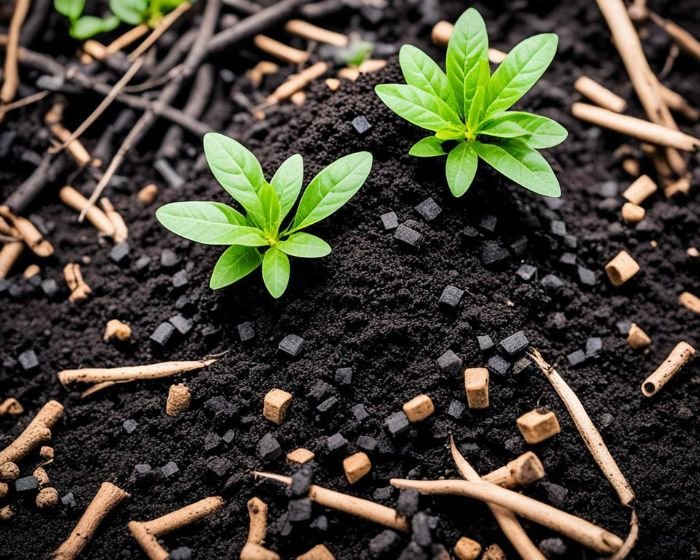
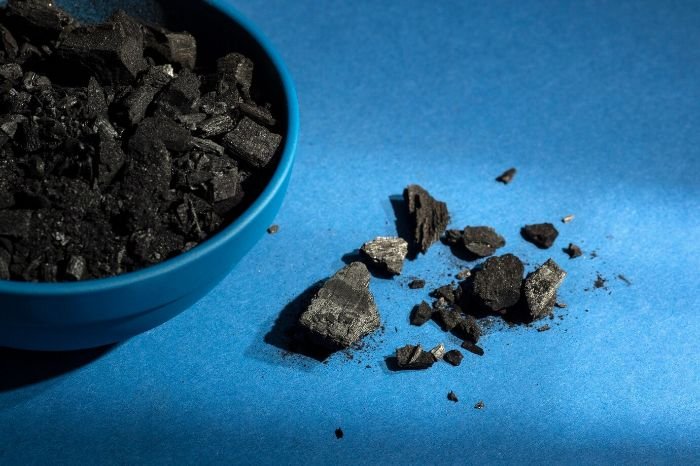
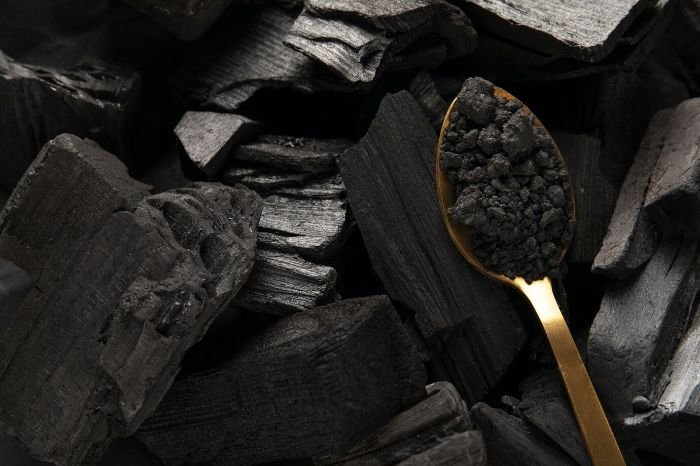
Biochar is made by heating biomass in low oxygen until much of the volatile material burns off and a stable carbon framework remains. The useful part is not the black color. It is the internal surface area, the tiny pores, and the charged surfaces that can hold water films and nutrient ions close to roots.
It Changes Retention More Than Feeding
In temperate garden soils, the most reliable benefit is not a dramatic fertilizer effect. The most useful soil effects include increased water holding while maintaining drainage, reduced nutrient loss through leaching, and better nutrient availability near active roots.
That mechanism matters because roots do not live in averages. They live in the top few inches where a dry spell, heavy rain, or fertilizer flush can quickly change the chemistry around them. A more porous, more retentive root zone gives them a slower, less erratic environment.
It Is Not A Fertilizer
Biochar should not be treated as fertilizer because its main value is retention, pore habitat, and nutrient holding rather than direct nutrient supply. If nitrogen, phosphorus, or potassium are genuinely low, the bed still needs organic matter, residues, compost, or another nutrient source.
Biochar supports structure when the goal is better crumbs, more pore continuity, and slower loss from the root zone. Improving soil structure still depends on aggregation, pore space, and root channels, while soil microbes in healthy soil help occupy and use the pore habitat that charged biochar can provide.
Charge Biochar Before It Goes Into A Garden Bed
Raw biochar disappoints when it goes into soil empty. Its surface has room to hold nutrients and moisture, which is the long-term advantage, though that same capacity can make a fresh application feel flat if it enters the bed with nothing loaded into those pores.
The practical fix is charging. Mix the biochar with finished compost, aged manure, worm castings, or another biologically active organic amendment and keep that mix moist before it goes into the bed. Combining organic matter with biochar can reduce nutrient leaching more effectively than organic matter alone, which is why charging biochar with compost fits garden use better than adding it raw.
That is why biochar belongs in a compost-rich system, not in isolation. A bucket of charged biochar should smell earthy and damp, not ashy and dusty. When you rub it between your fingers, it should leave a fine black stain with some grit, not a dry puff that drifts in the wind.
Pro Tip: If you are using bagged biochar for the first time, mix a modest amount into finished compost and let the pile sit moist before spreading it. The easiest visual cue is that the black particles stop looking dry and separate and start reading as part of the compost mass.
A home system gets more efficient when garden waste moves through composting at home and becomes a charging partner, especially in beds that keep exporting residue every season. Organic matter supports aggregation, moisture, and nutrient cycling, while charged biochar helps retain more of that activity in the root zone.
How To Use Biochar In Garden Soil
| Garden situation | Best biochar method | Mix with | Avoid |
|---|---|---|---|
| Sandy or leaky vegetable bed | Charge first, then blend into the main root zone | Finished compost and mulch | Loose dry surface dust |
| Low-organic raised bed | Add modest charged amounts across the active growing layer | Compost, residues, and cover crops | Deep black layer under the bed |
| Acidic low-activity soil | Use moderate charged biochar after a soil test | Compost and a pH-aware fertility plan | Replacing lime decisions without testing |
| Heavy wet clay | Correct drainage and compaction first | Biochar only after air pathways improve | Treating biochar as a drainage fix |
| Already rich composted bed | Hold off unless testing shows a retention gap | Cover crops or mulch may matter more | Adding biochar by habit |
That application logic matters more than a one-size-fits-all rate. In most gardens, placement and pairing decide whether biochar improves the root zone or just becomes black dust in the wrong layer.
Biochar Works Best In Leaky, Tired, Or Acid-Prone Soils
Biochar shows its clearest value in soils that lose too much, too quickly. Light soils with low organic matter leak water and soluble nutrients through the root zone fast. Old raised beds that have been cropped hard and fed in bursts can behave the same way, even if they no longer look obviously sandy.
There is a second pattern too. Some low-pH soils may see liming effects from certain biochars, especially where biology and nutrient holding are both weak.
That does not mean every acidic bed needs biochar first. A soil test still decides whether lime, compost, or a nutrient correction deserves priority. Biochar is best used as a long tool for retention and habitat, not as a shortcut around diagnosis.
Because some biochars are alkaline, high-pH soils need extra caution. A soil test should come before biochar use where pH is already high, because the wrong product can push nutrient availability in the wrong direction.
Rich beds can see smaller gains. If a vegetable bed is already dark, cool below the surface, easy to dig, and regularly topdressed with compost, another bag of biochar may produce less visible improvement than a cover crop, a mulch reset, or cleaner watering. That tradeoff matters because biochar should move down the priority list when compost, cover crops, mulch, or watering corrections solve the limiting problem first.
Biochar Will Not Repair Every Soil Failure
Biochar gets blamed or praised for problems it was never designed to solve. A waterlogged bed with a perched layer still needs drainage correction. A compacted bed that stops a spade at four inches still needs a structural reset before pore space can matter. A nutrient-starved bed still needs actual nutrients in addition to a material that holds them.
Biochar also does not stop surface losses by itself. Bare soil can still crust over, heat up, and shed water before any of the pore-level benefits below the surface come into play. Mulching to conserve soil moisture and off-season rooting from cover crops for soil health help protect the surface while charged biochar works in the root zone.
I often notice that the gardener disappointed by biochar has a bigger physical problem hiding underneath it – runoff from one hard edge, a smeared wet layer, or a bed that never stays covered long enough for any amendment to compound.
The fix in those cases is to identify the dominant failure first. Water that stands overnight needs soil drainage solutions before biochar. Soil that keeps sealing after rain needs surface cover and better structure. An amendment only earns credit after the water and air pathways are functional enough to let it work.
Source Clean Biochar And Use It Like A Long-Term Amendment
Garden biochar has to be clean enough to trust. Briquettes for grilling, ash from painted or treated lumber, and random char swept from a fire pit do not belong in a food bed. Not all biochars are beneficial to soil because feedstock, burn conditions, pH, ash content, particle size, and contamination risk can change the final amendment.
Look for a product made from clean, untreated biomass and sold for soil use. Finer particles distribute more evenly in the root zone, though they are dustier to handle. Coarser pieces last, though they can feel uneven in small seed rows. Crushing oversized chunks before charging makes the finished mix easier to spread and easier for roots to encounter consistently. Moisten fine biochar before mixing and avoid spreading it in wind, because dry dust is difficult to control and should not be inhaled.
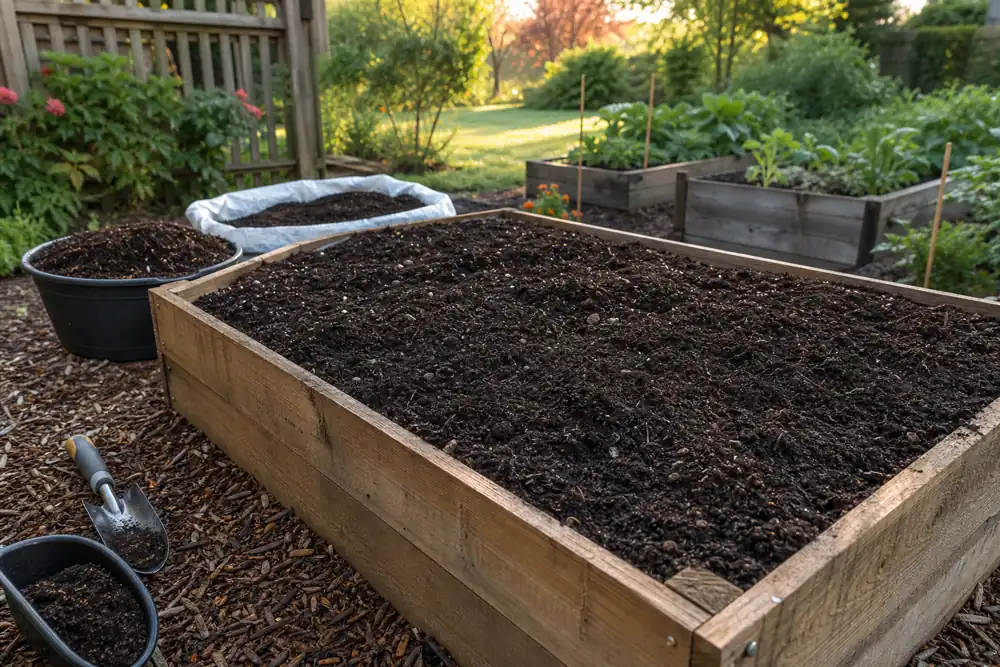
Application style matters too. A thin sprinkle across the surface does very little. A deep raw layer can dry out, blow away, or create an odd black band in the bed. Mix a moderate amount into the active root zone, keep the surface mulched, and let roots and watering cycles integrate the rest over time.
Biochar is slow by design. That is part of the value. You are adding a stable carbon structure that can keep doing retention work long after fresher organic amendments have decomposed.
Conclusion
Biochar works best as a retention tool, not as a promise. Match it to the bed that leaks water or nutrients, charge it before use, and give it a living system of compost, cover, roots, and mulch to work inside. If the soil is already functioning well, it moves down the priority list fast.
The payoff is subtle at first and obvious later. Water stays in the bed longer. Feedings stop fading so fast. Under the surface you find darker crumbs, cooler root-zone moisture, and black particles tucked into a soil profile that feels less empty and less quick to give everything away.
FAQ
What does biochar actually do in garden soil?
Biochar mainly changes retention. Its pore network helps soil hold water and nutrient ions longer, gives microbes more microsites, and can improve structure in lighter or more depleted beds. It does far more as a long-lived conditioner than as a direct nutrient source.
Can you add raw biochar straight to a garden bed?
Yes, though that is rarely the best use. Fresh biochar works better after it has been mixed with compost or another nutrient-bearing organic material and allowed to get fully moist. That simple charging step makes the early performance more consistent.
Is biochar better than compost?
No, because the two materials do different jobs. Compost feeds the system with nutrients and active organic matter. Biochar extends the system by holding more of that water and fertility in place. In most home gardens, compost comes first and biochar becomes the helper.
Which soils benefit most from biochar?
Light soils, low-organic soils, and beds that lose water or nutrients quickly are the clearest candidates. Some acidic soils also respond well. Rich dark beds with good structure can see smaller gains, especially if the real problem is not retention in the first place.
What happens if you add too much biochar?
Too much can push the amendment ahead of the biology that is supposed to occupy it. The bed can turn too loose, too dry on the surface, or simply show no benefit worth the cost. Moderate incorporation into the root zone works better than a dramatic black layer.
Can you use fireplace charcoal or grill briquettes as biochar?
Usually no. Briquettes contain additives, and random fireplace char can come from unsuitable feedstocks or incomplete burns. Garden soil needs clean biochar from untreated biomass made for soil use, not leftover fuel waste.
How long does biochar stay active in soil?
Its structure lasts a long time because the carbon is very stable. That does not mean every visible effect stays constant year after year, though it does mean one well-used application can keep influencing retention and habitat far longer than fresh compost alone.
Does biochar replace fertilizer in a hungry bed?
No. A hungry bed still needs nutrients from compost, residues, manure, or another appropriate source. Biochar helps keep more of those nutrients from washing out of the root zone once they are there.