

Last Updated June 07, 2026
A grapevine can look tough and still fail from the wrong watering rhythm. A new vine with a small root system can stall after one hot week. An established vine can grow a wall of leaves and weak fruit after too much water. A vine planted in slow-draining soil can yellow, droop, and lose root oxygen even when the surface looks normal.
Good grapevine watering is about depth, timing, and vine age. Young vines need help during root spread. Mature vines need water only when rainfall, soil depth, canopy size, and heat demand it. The goal is a root zone that is moist at useful depth, never soggy around the crown, and dry enough at the surface to keep roots searching downward.
Watering also changes with the season. Early growth, flowering, fruit set, berry sizing, veraison, harvest, and fall hardening all ask for different restraint. The right schedule keeps roots active, supports fruit, avoids wet foliage, and prevents the shallow watering habit that makes vines less resilient each summer.
Key Takeaways
- Young grape vines usually need regular water for the first two growing seasons because their roots are still limited.
- Mature grape vines need irrigation mainly during drought, hot windy periods, sandy soil conditions, or heavy fruit demand.
- Deep, slower watering builds better roots than frequent surface sprinkling.
- Water the soil at the root zone and keep grape leaves dry to reduce disease pressure.
- The most useful check is soil moisture below the surface, beyond the look of the top inch.
Table of Contents
Choose The Right Watering Rhythm For Your Grape Vine
Grape watering starts with vine age. A first-year bare-root vine has a small root system, a thin shoot, and little access to deeper moisture. A mature vine trained on a trellis may have roots reaching far beyond the trunk, a large canopy, and a crop that changes water demand through the season.
The site matters just as much. Sandy soil loses water quickly. Clay soil can hold water long enough to suffocate roots. A sloped site drains faster than a flat low spot. A weed-filled row steals moisture before the vine can use it. The same schedule can under-water one vine and overwater another.
| Vine Situation | Watering Priority | Typical Rhythm | Main Risk |
|---|---|---|---|
| New bare-root vine | Settle soil and keep young roots active | Water at planting, then keep the root zone evenly moist through the first season | Letting the small root system dry during establishment |
| First two growing seasons | Build a deep root system and trunk | About 0.5 to 1 inch of water per week from rain and irrigation combined, often roughly 5 to 10 gallons per vine | Short daily watering that keeps roots shallow |
| Established vine in loam | Replace water only during dry periods | Deep irrigation during drought or sustained heat | Watering by habit after the vine can access stored moisture |
| Established vine in sandy soil | Prevent rapid drying below the root zone | Smaller deep irrigations more often than clay or loam sites | Drying between irrigations before roots can recover |
| Established vine in clay or low ground | Preserve oxygen around roots | Longer intervals with soil checks before adding water | Saturated soil and root decline |
| Container grapevine | Prevent rapid pot drying and heat stress | Check daily in hot weather, then water thoroughly when the mix begins to dry | Small pots swinging from drought to saturation |
Water Young Grapevines For Root Depth
The first two seasons decide how much help a grapevine will need later. Watering should reach the developing root zone, then pause long enough for air to return to the soil. That rhythm encourages roots to explore outward and downward. A little water on the surface each day trains roots toward the top layer, where heat and drought arrive first.
Young grape vines commonly need about 0.5 to 1 inch of water per week, and deep moisture readings around 18 to 24 inches help guide mature-vine irrigation. In a backyard, that means the exact number matters less than the wetting depth and the next soil check. A new vine in a hot sandy site may need water more often than a vine in cool loam after rain.
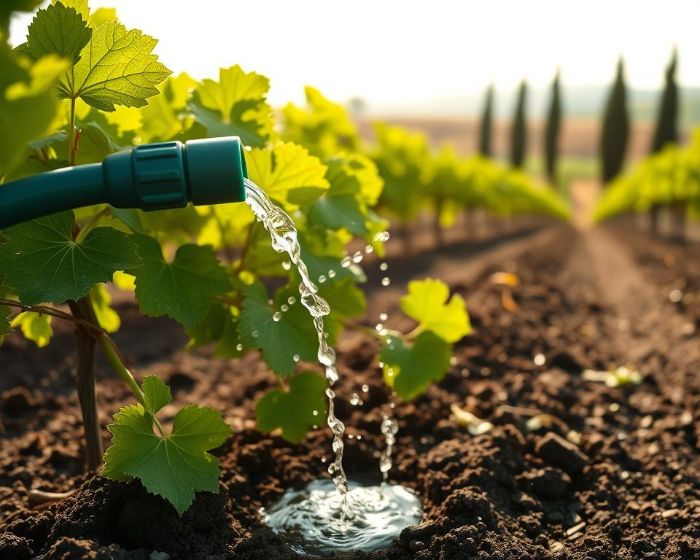
After planting, water slowly over the full root area and avoid soaking the trunk alone. A 3 x 3 foot zone around a new vine is a practical target in the first year. As the vine grows, widen the wetting area so roots spread beyond one emitter or one hose spot.
| Young Vine Stage | What To Water | Depth Goal | Adjustment Signal |
|---|---|---|---|
| Planting day | Whole planting hole and surrounding backfill | Full root depth with settled soil | Air pockets remain if water disappears into gaps around roots |
| First month | Root ball and nearby native soil | About 6 to 10 inches for small bare-root starts | New shoot tips stop extending during mild weather |
| First summer | Wider root zone beyond the trunk | About 10 to 12 inches, deeper as roots spread | Midday wilt that remains into evening means the vine is behind |
| Second season | Expanding root area under the trellis | 12 inches or more in workable soil | Frequent surface moisture with weak trunk growth points to shallow watering |
| Late summer and fall | Only enough to prevent severe drought stress | Moisture at depth with less soft late growth | Excess late water can keep canes too lush before winter |
Water Mature Grapevines By Soil Depth, Weather, And Growth Stage
Mature grapevines are more drought-tolerant than many young fruit plants because they can explore a larger soil volume. That tolerance still has limits because severe drought can damage fruit set, berry size, nutrient uptake, canopy function, and next year’s fruiting wood.
A reliable mature-vine schedule begins with a soil check, then adjusts for canopy size and weather. A vine with a large leaf canopy uses more water than a small vine. Hot, dry, windy days pull water through leaves faster. Grass or weeds under the trellis compete with the vine. Dry weather after fruit set can shrink berries; excess water late in ripening can dilute flavor and push unwanted leaf growth.
| Growth Stage | Watering Goal | Stress To Avoid | How To Adjust |
|---|---|---|---|
| Budbreak to early shoot growth | Support shoot extension and root activity | Cold wet soil, weak roots, delayed growth | Water only if the root zone is dry after a low-rain period |
| Flowering and fruit set | Keep the vine from entering severe drought stress | Poor set, small clusters, weak berry development | Check soil depth during dry spells before symptoms appear |
| Berry sizing | Maintain enough water for leaf function and fruit expansion | Small berries, hot leaves, leaf curling, tendril drying | Use deep irrigation when the root zone dries below the active depth |
| Veraison to ripening | Protect canopy without pushing watery growth | Berry shrivel from drought or diluted fruit from excess water | Use moderate irrigation only when soil and vine signs call for it |
| After harvest | Help leaves feed wood and roots before dormancy | Early leaf drop or soft late growth | Water during dry fall weather, then reduce as canes harden |
Check Soil Moisture Before Adding Water
The surface of a grape row can mislead watering decisions. It can look dusty a few hours after irrigation, or stay damp after a shallow sprinkle that never reached roots. Digging, probing, or using a soil moisture sensor gives a better decision.

For young vines, check the upper 6 to 12 inches. For established vines, check deeper, especially near drip emitters or the outer edge of the wetting pattern. A long screwdriver, soil probe, trowel, auger, or moisture sensor can show whether the irrigation reached the target depth.
Soil for grape vines changes the reading. Soil preparation for grape vines should create drainage and root access before irrigation becomes a weekly decision. If the site puddles after rain, watering fixes will stay limited until drainage and soil structure improve.
| Soil Check Result | What It Means | Next Watering Move |
|---|---|---|
| Dry at 2 inches, moist at 10 inches | Surface has dried, root zone may still be fine | Wait and check again before irrigating |
| Dry through 8 to 12 inches on a young vine | Establishment roots are running short | Water slowly over the root area |
| Wet at 2 inches and wet at 12 inches | Soil still holds water | Pause irrigation and watch for oxygen-stress symptoms |
| Wet at emitter, dry between emitters | Wetting pattern may be too narrow | Add emitter coverage or lengthen runtime carefully |
| Water runs off before soaking in | Soil surface may be crusted, compacted, or too steep | Use slower flow, basins, or shorter cycles with soak time between |
Spot Overwatering Before Roots Lose Oxygen
Overwatering grape vines usually comes from repeated saturation after the soil should have begun drying. Roots need oxygen. When soil stays waterlogged, the vine cannot use water well even though water is everywhere. That is why an overwatered vine can droop in wet soil and look strangely similar to a thirsty vine from a distance.
Diagnosis should include the soil. Yellow leaves alone can come from nutrient problems, disease, herbicide injury, drought, or natural aging. Persistent yellowing with wet soil, soft growth, sour-smelling soil, algae on the surface, and weak new shoots points more strongly toward overwatering or drainage trouble. General overwatering signs in plants are useful, then grape-specific context decides the fix.
| Symptom | More Likely Overwatering | More Likely Drought Stress | Confirmation Check |
|---|---|---|---|
| Leaves droop | Droop continues with wet soil and soft shoots | Droop appears in heat and improves overnight after deep moisture | Check soil at 6 to 12 inches before watering |
| Lower leaves yellow | Yellowing pairs with wet soil and slow new growth | Leaves may scorch, curl, or dry at edges | Inspect drainage and recent irrigation volume |
| Shoot tips stop growing | Tips stay pale, soft, or weak in damp soil | Tips turn dull gray-green and tendrils dry | Compare soil moisture with weather and canopy size |
| Berries crack or flavor weakens | Water swings after dry periods or excess late irrigation | Berries may stay small or shrivel under severe drought | Review irrigation around fruit set and ripening |
| Root zone smells sour | Low oxygen and possible root decline | Rare in dry soil | Stop watering and correct drainage before feeding |
Use Drip Irrigation To Keep The Canopy Dry
Drip irrigation fits grape vines because it puts water near the root zone and keeps foliage dry. Drip systems reduce disease problems associated with wet foliage, especially in humid regions where black rot, downy mildew, and powdery mildew are already part of the season. Sprinklers can also waste water between rows and encourage weeds under the trellis.
A drip setup still needs checking. Emitters clog, lines shift, roots grow beyond the wetting pattern, and timers keep running after rain. Run the system long enough to learn how deep the water moves in your soil. Then adjust runtime, emitter number, or emitter placement as the vine grows.
Training also changes irrigation access. A vine tied to a clean trunk and trellis is easier to water, weed, and inspect than a vine sprawling on the ground. Training grape vines creates the structure that keeps the fruiting zone dry and the root zone reachable.
| Irrigation Method | Best Use | Problem To Watch | Practical Fix |
|---|---|---|---|
| Drip emitters | Young and mature vines in rows or trellises | Too narrow a wetting zone as roots expand | Add emitters or widen placement as the vine matures |
| Dripline or soaker hose | Backyard rows and fence-trained vines | Uneven flow along long runs | Test several points after each season starts |
| Slow hose trickle | Single vines and occasional drought watering | Water pooling at the trunk | Move the hose around the root area in stages |
| Basin watering | New vines in dry climates or sloped sites | Basin staying soggy after irrigation | Break the basin open when soil drains slowly |
| Overhead sprinkler | Emergency watering only where disease risk is low | Wet leaves, wasted water, weed growth | Water early and switch to root-zone irrigation when possible |
Adjust For Soil, Containers, Mulch, And Heat
Watering advice fails when it ignores the growing medium. Sandy soil may need smaller irrigations more often. Clay may need slow application and longer pauses. Loam gives a wider margin. Containers dry faster than in-ground vines because the root volume is smaller and the pot heats on every side.

Mulch around grapes needs local judgment. Organic mulch can conserve water and suppress weeds. Deep mulch against grape trunks may keep soil cooler in cool regions and can shelter rodents in winter. Keep any mulch pulled back from the trunk and use it only where it solves a real water or weed problem.
Weeds and turf change the watering equation. A young grapevine competing with grass under the trellis may look thirsty even after irrigation. Remove competition in a clean strip, then water the vine root zone. When a row is crowded with weeds, extra irrigation often feeds the weeds first.
| Condition | What Changes | Watering Adjustment |
|---|---|---|
| Sandy soil | Water drains downward quickly | Use more frequent checks and avoid long dry gaps |
| Clay soil | Water moves slowly and can stay saturated | Water more slowly and wait longer between irrigations |
| Shallow soil | Root storage is limited | Monitor more often during heat and drought |
| Container vine | Roots heat and dry faster | Use a large pot, strong drainage, and daily summer checks |
| Mulched row | Evaporation drops and soil stays cooler | Pull mulch back from trunks and check depth before irrigating |
| Hot windy weather | Canopy water loss increases | Check deeper soil and add water before severe wilt develops |
Connect Watering To Pruning, Fertilizer, And Fruit Quality
Watering cannot be separated from the rest of grape care. Light pruning can leave a large canopy that uses more water and shades fruit. Excess nitrogen pushes soft growth that demands more water and stays more disease-prone. Heavy crop load can make a vine struggle under heat even when soil moisture looks acceptable.
Pruning grape vines keeps canopy size, fruit load, and water demand in balance. Fertilizing grape vines should also stay measured because excess nitrogen can make the watering problem look like drought when the real issue is oversized leaf growth.
Fruit quality responds to water timing. Severe drought near flowering and fruit set can reduce crop potential. Excess irrigation during ripening can encourage vegetative growth and weaker flavor. Home growers can skip commercial deficit-irrigation calculations and use a basic rule: protect the vine from damaging stress and avoid pushing water into already wet soil.
New rows work better when watering is part of the row design. Starting a vineyard for wine or table grapes is easier when irrigation access, trellis layout, weed control, and soil drainage are decided before the vines are permanent.
| Related Practice | How It Changes Water Demand | Watering Response |
|---|---|---|
| Heavy canopy | More leaves lose more water | Prune and train before increasing irrigation repeatedly |
| Weak young trunk | Small root system has limited reach | Keep moisture consistent without saturating the crown |
| Too much nitrogen | Soft shoots use water and shade fruit | Review fertilizer before blaming irrigation alone |
| Heavy crop load | Fruit and canopy compete for water and carbohydrates | Thin crop on young or weak vines and avoid severe drought stress |
| Wet foliage | Disease pressure rises in humid regions | Water at the root zone and improve airflow |
Conclusion
Watering grape vines well means matching water to the root zone, vine age, soil, weather, and fruit stage. Young vines need help during root spread. Mature vines need deeper checks and less automatic watering. Drip lines, slow hose watering, and soil probes all work when the target is useful moisture below the surface.
The vine and soil must point to the same watering decision. Drooping leaves with dry soil call for water. Drooping leaves with wet soil call for air, drainage, and restraint. A grapevine with balanced water grows roots downward, keeps foliage drier, carries fruit more evenly, and enters winter with better wood than a vine pushed by shallow watering or repeated saturation.
FAQ
How often should I water grape vines?
Young grape vines usually need regular water through the first two growing seasons, often about 0.5 to 1 inch per week from rain and irrigation combined. Mature vines need water mainly during drought, hot windy periods, sandy soil conditions, or fruit demand. Check soil depth before following a fixed calendar.
How much water does a young grape vine need?
A young vine often needs about 5 to 10 gallons per week during dry growing-season weather, applied slowly over the root area. Smaller vines in cool weather may need less. Hot sandy sites may need more frequent checks. The goal is moist soil through the young root zone with air returning between waterings.
What are the signs of overwatering grape vines?
Common signs include yellow lower leaves, persistent drooping in wet soil, soft weak growth, sour-smelling soil, algae or constant surface dampness, and poor root vigor. Fruit may crack or taste diluted when dry-wet swings or excess late irrigation disrupt ripening.
How deep should water reach for grape vines?
New vines need moisture through the young root zone, often the upper 6 to 12 inches during establishment. Established vines benefit from deeper checks, commonly around 12 to 24 inches depending on soil depth, emitter placement, and root development. A probe or small soil hole gives a better answer than the surface.
Is drip irrigation good for grape vines?
Yes. Drip irrigation delivers water near the root zone, reduces runoff, and keeps leaves dry. It works best when emitters are checked for clogging and moved or expanded as the vine grows. A timer helps only when rainfall and soil moisture are still monitored.
Should grape vines be watered during ripening?
Water only when the root zone and vine symptoms show real need. Severe drought can damage leaves and berries; excess irrigation during ripening can push soft growth and weaken fruit flavor. Mature vines usually need moderate, targeted watering guided by depth checks, not routine soaking at every dry surface sign.