



Last Updated June 05, 2026
A greenhouse can look calm from the doorway as the crop is already under pressure. Tomato leaves may feel cool and slightly limp under a wet canopy. Condensation can bead on the glazing before sunrise. A fan may hum in the aisle as stale, humid air still sits around the lower leaves. The numbers on one wall sensor can look fine and the plants can tell a different story.
IoT greenhouse climate control works when sensors, controllers, and actuators manage the air around the crop zone. Temperature, humidity, CO2, light, airflow, and root-zone moisture move together. Open a vent to drop heat and CO2 leaves with the air. Add fog for cooling and relative humidity climbs. Run heat at dawn and VPD changes before the leaves are ready to transpire.
The useful system is a control loop: measure the right variables, compare them with crop-stage setpoints, trigger the right device, verify the result, and send an alert when the greenhouse does something unsafe. A sensor alone is a thermometer with Wi-Fi. Climate control begins when the reading changes a fan, vent, heater, shade screen, fogger, valve, or CO2 solenoid at the right time.
Key Takeaways
- IoT greenhouse climate control should manage temperature, humidity, VPD, CO2, light, airflow, and substrate moisture as connected variables.
- VPD is usually more useful than relative humidity alone because it links temperature, leaf water loss, and disease risk.
- CO2 enrichment only pays off when light, temperature, ventilation timing, and crop demand are managed together.
- Sensor placement at canopy height matters more than buying extra devices for the wrong location.
- Automation needs guardrails so heating, cooling, venting, fogging, and CO2 dosing do not fight each other.
- Alerts, calibration, fallback settings, and logs keep the system useful after the first week of excitement fades.
Table of Contents
IoT Greenhouse Climate Control – The Loop Behind The Dashboard
An IoT climate-control dashboard only shows the visible layer. The real system is a chain of decisions. A sensor reads the greenhouse. A controller checks that reading against the crop target. An actuator changes the environment. Another reading confirms whether the change worked. If the number keeps drifting, the system either escalates, sends an alert, or falls back to a safer mode.
That loop matters because greenhouse climate changes fast. Sun on clear plastic can lift air temperature within minutes. A cloudy front can drop leaf temperature before the air sensor catches up. Wet benches and dense foliage can raise humidity near the crop even when the aisle feels comfortable. Plants respond through stomata, transpiration, photosynthesis, and root uptake, not through the neat categories shown in an app.
Good IoT control keeps those plant responses connected. High humidity near the leaf slows transpiration and can leave water on tissue long enough for Botrytis and other fungal problems. Dry air pushes transpiration hard, and leaves close stomata to conserve water. When stomata close, CO2 uptake falls even if a CO2 sensor says the greenhouse air is enriched.
IoT in gardening ranges from simple irrigation timers to weather stations. In a greenhouse, each connected device should make the crop environment more stable before it earns space in the control system.
| IoT Layer | Greenhouse Role | Failure To Avoid |
|---|---|---|
| Sensor layer | Reads temperature, RH, VPD, CO2, light, leaf temperature, and root-zone moisture | Trusting a clean graph from the wrong location |
| Gateway or edge controller | Receives readings, stores rules, and applies crop-stage setpoints | Letting separate apps make conflicting decisions |
| Actuator layer | Runs vents, fans, heaters, shade, fogging, irrigation, and CO2 dosing | Changing climate without confirming equipment status |
| Alert layer | Sends warnings for heat, cold, humidity duration, CO2, sensor failure, and power loss | Finding the failure after crop damage appears |
| Log layer | Shows patterns across nights, sunny days, irrigation cycles, and ventilation events | Reacting to one reading and missing the recurring pattern |
Greenhouse Climate Targets – Read Temperature, Humidity, VPD, CO2, And Light Together
Temperature and relative humidity alone can mislead a grower. A greenhouse at 75 F and 80 percent RH does not pull water from leaves the same way as a greenhouse at 62 F and 80 percent RH. Vapor pressure deficit, or VPD, links temperature and moisture into the drying force around the leaf. Many greenhouse measurement guidelines treat VPD as a better moisture-control value than RH alone because it tracks the gradient that drives transpiration.
The usual working range for many crops sits near 0.8 to 1.2 kPa VPD, with seedlings and propagation often needing the gentler end and fruiting crops tolerating a stronger pull once roots and irrigation can keep up. That range is a starting point, not a command. Crop species, leaf temperature, light intensity, root health, and air movement all change the target.
| Climate Variable | Useful Sensor Or Reading | Control Devices | Watch For |
|---|---|---|---|
| Air temperature | Canopy-height temperature sensor, ideally shielded from direct sun | Heater, vents, exhaust fans, shade screen, evaporative cooling | Fast sun spikes, cold intake air, hot roof layer above the crop |
| Humidity and VPD | RH plus temperature, VPD calculated from the same zone | Ventilation, heat-purge cycle, HAF fans, fogging, dehumidifier | Condensation, Botrytis risk, wilting, poor pollen release |
| CO2 | NDIR CO2 sensor near crop height, away from direct gas release | CO2 solenoid, burner, ventilation lockout window, circulation fans | Enrichment wasted through open vents, worker safety, low light response |
| Light | PAR sensor or DLI estimate from a quantum sensor | Shade cloth, shade screen, supplemental lights | CO2 dosing under weak light, leaf scorch near glazing, short winter days |
| Leaf temperature | Infrared leaf sensor or handheld spot checks | Airflow, shade, irrigation timing, fogging | Leaf temperature drifting away from air temperature |
| Substrate moisture | Soil moisture or media moisture sensor near the active root zone | Drip irrigation, fertigation valve, pump relay | Wet roots under high humidity, dry media under high VPD |
The strongest target is usually a range, not a single number. A controller that keeps RH at exactly 70 percent can make poor decisions if temperature shifts. A controller that watches VPD, dew point risk, airflow, and crop stage has a better chance of keeping leaves dry and stomata working.
Match Climate Targets To Crop Stage
| Crop Stage | Main Climate Priority | IoT Readings To Watch | First Control Move | Main Risk |
|---|---|---|---|---|
| Seedlings | Avoid cold stress and harsh drying | Canopy temperature, RH, low VPD, substrate moisture | Use gentle heat, airflow, and careful irrigation timing | Wet media with weak transpiration |
| Propagation and cuttings | Keep leaves hydrated without long wet periods | RH, leaf wetness, bench temperature, VPD | Use mist or fog with airflow and duration limits | Disease pressure under stagnant humidity |
| Leafy greens | Prevent heat spikes and uneven water stress | Air temperature, VPD, root-zone moisture, light | Use shade, airflow, and irrigation before midday stress | Tipburn, wilting, or weak growth under poor airflow |
| Tomatoes, cucumbers, peppers | Balance transpiration, pollen release, CO2 use, and root uptake | VPD, CO2, PAR, leaf temperature, substrate moisture | Coordinate venting, HAF fans, irrigation, and CO2 lockouts | Condensation, poor pollen release, uneven calcium movement |
| Night period | Prevent condensation and cold wet canopy conditions | Dew point risk, RH duration, canopy temperature, fan status | Use HAF fans and short heat-purge cycles | Botrytis and leaf wetness persisting until morning |
Sensor Placement – Make The Readings Match The Crop
A greenhouse sensor should read the crop zone. A device mounted near the door, roof peak, heater outlet, wet wall, or direct sun patch can produce clean graphs and poor decisions. The best climate reading usually comes from canopy height, shaded from direct radiation, with enough airflow across the sensor to keep it from sitting in a stale pocket.
Walk the greenhouse before installing sensors. The warmest place may be the upper south corner. The wettest place may be the back bench with dense foliage and weak fan movement. A CO2 sensor placed close to the injection line will show a spike that leaves never receive. A humidity sensor hanging above wet floor algae can overstate crop humidity and trigger unnecessary venting.

Use at least one crop-zone sensor for a small greenhouse. In longer houses, add a second reading near the far end, especially if fans, vents, or shade create uneven zones. Commercial systems often average several sensors or use zones; home systems can still benefit from a simple comparison. If the north bench reads 7 F cooler and 12 RH points wetter than the center aisle, the controller needs to know that.
Calibration belongs on the maintenance calendar. Humidity sensors drift. CO2 sensors can read high or low after years in damp air. Soil moisture sensors respond differently in peat, coir, bark, mineral soil, and salt-heavy fertigation. Test a new sensor against a known reference before letting it control expensive equipment.
Greenhouse Sensor Selection Checklist
| Sensor Type | Better Specification | Why It Matters | Weak Choice To Avoid |
|---|---|---|---|
| Temperature and RH | Shielded or aspirated crop-zone sensor | Reduces false readings from sun, stale air, and hot surfaces | Wall-mounted indoor sensor near the door |
| CO2 | NDIR sensor with calibration support and a safe range for enrichment | Keeps dosing decisions stable away from injection points | Cheap sensor placed beside the gas release line |
| Light | PAR or DLI-capable sensor for crop light decisions | Connects CO2 and shade rules to usable plant light | Lux-only reading used for photosynthesis decisions |
| Leaf temperature | Infrared reading checked against crop conditions | Shows when leaves drift away from air temperature during stress | Air temperature used as proof that leaves are safe |
| Substrate moisture | Probe matched to peat, coir, soil, or fertigated media | Prevents media type from distorting irrigation decisions | Generic soil probe trusted without calibration |

Choose The Right IoT Climate Control Setup For Your Greenhouse
The right setup depends on what the greenhouse must protect. Seed-starting houses need freeze alerts, ventilation, and basic humidity management. Tomato or cucumber houses need VPD, airflow, irrigation timing, and CO2 decisions tied to light. Propagation benches need gentler humidity control than fruiting crops with dense leaves.
| Greenhouse Use | Minimum Useful IoT Layer | Next Upgrade | Avoid Spending First On |
|---|---|---|---|
| Seed starting and season extension | Temperature sensor, freeze alert, heater relay, vent opener status | RH sensor and fan control for condensation | CO2 enrichment before light and heat are stable |
| Mixed home vegetable greenhouse | Temperature, RH, VPD, exhaust fan, HAF fan, irrigation timer integration | Light sensor and crop-stage schedules | Too many single-purpose apps that do not talk to each other |
| Tomatoes, cucumbers, peppers, or high-value crops | Multiple climate sensors, VPD control, vent/fan/heater coordination, alert logs | CO2 sensor and enrichment tied to light and vent status | CO2 dosing in a leaky house with open vents |
| Propagation or cuttings | Bench-level temperature, RH, mist/fog control, leaf-wetness checks | Bottom heat and shade automation | Dry-air VPD targets meant for mature crops |
| Remote or weekend-managed greenhouse | Cellular or reliable Wi-Fi gateway, power-loss alert, high-low temperature alerts | Camera, battery backup, actuator status feedback | Automation with no manual override or fail-safe vent position |
Device selection should follow the control job. Smart garden devices earn their place when they survive humidity, report reliably, and connect to the equipment that actually changes the greenhouse climate.
Control Logic – Stop Heating, Cooling, Venting, And CO2 From Fighting
Cheap automation usually fails at the rule level. One controller turns on the heater because the air is cool. Another opens the vent because humidity is high. A third releases CO2 because the ppm reading is low. The greenhouse spends money pushing heat, water vapor, and CO2 outside.
Setpoint order prevents that waste. Winter humidity control may need a brief heat-and-vent cycle: warm the air so it can hold more moisture, vent a small amount of humid air, then close before crop temperature drops too far. Sunny CO2 enrichment may pause dosing once vents open past a set position. Summer cooling may use shade before fogging if humidity is already high.
| Problem Reading | Better First Response | Automation Guardrail |
|---|---|---|
| High temperature with low humidity | Vent or shade first, then fog only if VPD remains too high | Stop fogging before condensation forms at sunset |
| High humidity at night | HAF fans plus heat-purge ventilation | Do not chill the canopy below dew point |
| Low CO2 during bright, sealed conditions | Dose CO2 only during closed-vent periods with strong light | Lock out dosing when exhaust fans run |
| Low substrate moisture under high VPD | Irrigate earlier and verify root-zone response | Do not mist leaves as a substitute for root-zone water |
| Cold intake air during venting | Mix with circulation fans before air reaches crop height | Delay vent opening if crop-zone temperature drops too fast |
Control rules should be visible in plain language. If the greenhouse owner cannot explain what happens when RH rises, CO2 falls, and vents are open, the system is too opaque. Good automation reduces daily checking; it should not hide the cause of a bad morning.
CO2 Control – Enrich Only When Light, Vents, And Crop Demand Agree
CO2 supports photosynthesis when leaves have light, water, and open stomata. Enrichment makes little sense in a shaded greenhouse, a vented house, or a stressed crop with closed stomata. The sensor reading has to be tied to light level, vent position, crop stage, and worker safety.
Ambient outdoor CO2 sits roughly near 420 ppm. Many controlled systems enrich above ambient during bright periods, and the crop has to use that carbon. A tomato canopy under strong light can draw CO2 down quickly when vents stay closed. The same greenhouse on a cloudy winter morning may not justify dosing because light limits photosynthesis first.
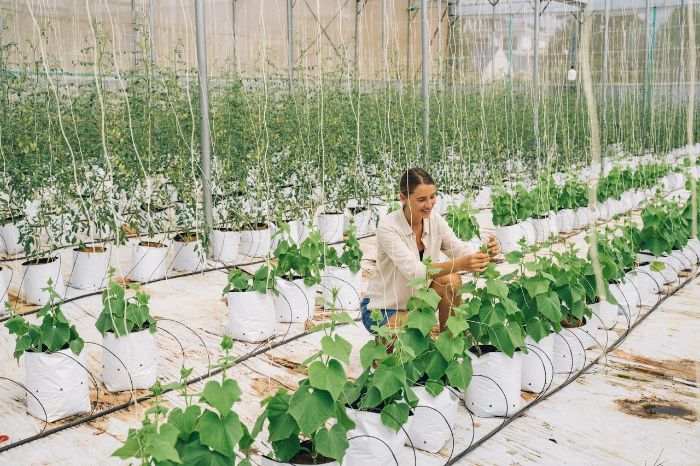
Place CO2 sensors where mixed air reaches the crop, not beside a burner or injection tube. The reading should rise smoothly after dosing and decline as the crop uses CO2 or as vents open. A jagged line with sudden spikes often points to poor sensor placement, weak circulation, or gas released too close to the probe.
Ventilation is the hard tradeoff. Opening vents removes heat and humidity, and it also dumps enriched CO2. A good IoT rule treats CO2 dosing as conditional: strong light, vents mostly closed, circulation on, crop-zone temperature safe, and no people working in a poorly ventilated enclosed space.
CO2 Safety Rules For Automated Greenhouse Dosing
CO2 enrichment needs worker-safety limits as well as crop targets. carbon dioxide has occupational exposure limits and an IDLH value at high concentrations, so automated dosing should never depend only on a crop-growth setpoint.
| Safety Control | Why It Matters | Automation Rule |
|---|---|---|
| Independent CO2 alarm | CO2 is colorless and odorless, so unsafe buildup may not be obvious | Alarm separately from the crop-control dashboard |
| Ventilation lockout | Dosing during exhaust operation wastes gas and hides ventilation faults | Stop CO2 dosing when exhaust fans or roof vents are open |
| Occupancy rule | Crop dosing and worker exposure are different safety problems | Pause enrichment during work periods in enclosed houses unless the safety system is designed for occupancy |
| Burner caution | Combustion systems can add heat, moisture, and combustion risk | Use only properly installed and monitored equipment |
| Sensor failure response | A failed CO2 sensor can cause unnecessary dosing or missed buildup | Stop dosing when readings are missing, implausible, or uncalibrated |
Humidity And VPD – Manage The Microclimate Around Leaves
Greenhouse humidity problems often begin at leaf level. Dense tomato foliage can hold a damp pocket around the lower canopy even when the center aisle reads acceptable. Run your fingers over a lower leaf early in the morning. A cool, slick surface and the faint smell of wet plastic tell you condensation stayed too long.
IoT control helps by watching the pattern before disease appears. Night humidity rising after irrigation, temperature falling toward dew point, and fans shutting off together create a risk window. A controller can keep HAF fans moving, delay irrigation, run a short heat-purge cycle, or alert the grower before the canopy stays wet for hours.
VPD gives that decision more shape than RH alone. Low VPD means the air is too moist or too cool to pull water from the leaf; transpiration slows and disease risk climbs. High VPD means the air is too dry or too warm; plants lose water fast, stomata close, and calcium movement through fruit can become uneven. The best correction depends on which side of the range is causing trouble.
VPD is a better moisture-control value than RH alone because it is less tied to air temperature and more directly connected to transpiration. Advanced greenhouse dashboards calculate VPD from temperature and humidity so RH does not sit alone as the main moisture number.
| Microclimate Pattern | Likely Crop Risk | IoT Signal | First Correction |
|---|---|---|---|
| High RH for several night hours | Condensation and Botrytis pressure | RH duration, dew point proximity, fan status | Run HAF fans and a short heat-purge cycle |
| High VPD during bright midday | Fast water loss and stomatal closure | VPD spike, leaf temperature rise, dry substrate | Irrigate earlier, shade, or add evaporative cooling with limits |
| Wet roots under low VPD | Weak uptake and root stress | High substrate moisture plus low transpiration demand | Delay irrigation and improve airflow |
| CO2 drop during closed bright periods | Limited photosynthesis if enrichment is planned | CO2 falling as PAR is strong and vents are closed | Dose CO2 only if safety and ventilation rules allow |
Alerts, Logs, And Maintenance – Keep The System Trustworthy
A greenhouse controller earns trust when it catches bad conditions before plants show damage. The first alerts should be simple: high temperature, low temperature, high humidity duration, low VPD, high VPD, CO2 outside range, sensor offline, actuator failed, water tank low, and power loss. A quiet dashboard with no alerts during a heat spike is worse than no dashboard at all.
Logs turn those alerts into better growing decisions. A graph showing RH climbing every night after 8 p.m. points to irrigation timing, ventilation, or plant density. A CO2 graph that drops whenever the exhaust fan starts shows wasted enrichment. A temperature graph with repeated midday spikes points to shade timing, fan capacity, or vent area.
Maintenance should be boring and scheduled. Wipe dust from radiation shields. Check sensor batteries before the coldest month. Compare humidity readings with a second meter twice a season. Confirm that a relay actually starts the fan; the app status alone is not proof. Open vents by hand after a software update. Listen for a fan bearing that has shifted from a smooth hum to a rough buzz.
Fallback settings matter in every greenhouse. Vents should fail toward a safe position when heat rises. Heaters should have a separate safety thermostat. CO2 dosing should stop when ventilation runs or when the controller loses reliable readings. Remote control is useful only when local safety still works during a network outage.
Greenhouse structure still sets the limits. Choosing the right greenhouse affects vent area, heat retention, glazing, wind exposure, and whether automation can hold stable conditions without running equipment all day.
IoT Climate Control And Garden Conditions Outside The Greenhouse
An IoT greenhouse should read outside conditions too. Outdoor temperature, wind, rain, solar radiation, and local frost risk change the safest control move. A vent that works on a mild spring day can chill seedlings during a windy cold front. A fogging cycle that cools well in dry air can make condensation worse during humid weather.
Local climate also shapes the control strategy. Coastal greenhouses may fight humidity more than heat. Desert greenhouses may need shade, evaporative cooling, and irrigation timing more than dehumidification. Cold-climate greenhouses may spend most of their automation value on freeze protection, heat retention, and condensation control.
Local climate zone changes greenhouse automation because regional weather decides which control risks repeat most often. Automation can respond faster and more consistently than a person walking out with a notebook twice a day. Coastal humidity, desert dryness, cold fronts, and wind exposure still set the boundary conditions.
Water control has to follow the same climate data. High VPD increases plant water demand. Low VPD can leave roots wet as leaves barely transpire. An irrigation timer that ignores climate can overwater on cloudy humid days and underwater during clear windy heat. Automatic garden watering systems work better when climate data changes run times and the daily schedule can adjust.
Conclusion
IoT climate control helps a greenhouse when it turns plant risk into visible, timed decisions. A useful system reads the crop zone, connects temperature with humidity through VPD, treats CO2 as a conditional tool, and coordinates fans, vents, heat, shade, fogging, irrigation, and alerts.
Greenhouse automation works best when each control action has limits. It knows when to hold CO2, skip fogging, keep air moving at night, and tell the grower something has failed. Build the system around the crop’s microclimate, verify the readings by touch and observation, and the dashboard becomes a growing tool with a clear job.
FAQ
What is IoT greenhouse climate control?
IoT greenhouse climate control uses connected sensors, controllers, and actuators to monitor and adjust temperature, humidity, VPD, CO2, light, airflow, and irrigation. The system becomes useful when readings trigger vents, fans, heaters, foggers, shade, valves, alerts, or CO2 dosing.
Should a small greenhouse automate VPD or only monitor it?
A small greenhouse can start by monitoring VPD before full automation. Alerts for low VPD, high VPD, and long humid periods often give enough value before the system controls fogging, venting, heat, or irrigation automatically.
What should stop automated CO2 dosing?
Automated CO2 dosing should stop when vents or exhaust fans run, sensor readings are missing or implausible, light is weak, workers are inside an enclosed house without proper safety monitoring, or the crop is under heat or water stress.
What happens if greenhouse sensors lose connection?
The controller should move to a safe fallback mode when sensor data is missing or implausible. Fans, vents, heaters, irrigation valves, and CO2 dosing need default rules that protect the crop and stop unsafe dosing until reliable readings return.
Is IoT climate control worth it for a small home greenhouse?
IoT control is worth it when the greenhouse is unattended during heat, cold, or humid nights. A small setup can start with temperature alerts, a fan or heater relay, and humidity monitoring before adding CO2, VPD automation, or irrigation integration.
What is the most common IoT greenhouse mistake?
The most common mistake is letting separate devices fight each other. A heater, vent fan, humidifier, and CO2 controller need shared rules so the greenhouse does not heat, vent, humidify, and dump CO2 at the same time.