


Last Updated June 07, 2026
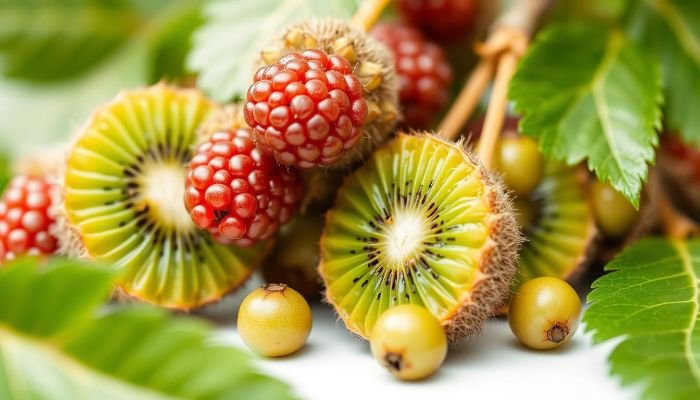
Kiwiberries sound almost too useful: smooth-skinned mini kiwis, edible seeds, cold-hardy vines, and a nutrition story that often gets summarized as omega-3 fruit. The useful distinction starts with the seeds and the whole fruit. Kiwiberries can carry plant-based omega-3 in their tiny seeds, and the whole fruit is still a low-fat berry-sized snack.
That distinction matters before planting a vine. A gardener who expects a major omega-3 food may be disappointed. A gardener who wants a productive fruiting vine with edible skin, vitamin C, fiber, tart-sweet flavor, and seed-based nutrition has a better reason to grow kiwiberries at home.
The home-growing side also needs respect. Kiwiberries grow as vigorous Actinidia vines that need climate fit, pollination planning, a strong support, regular pruning, even moisture, and harvest timing. Nutrition value reaches the kitchen only when the vine actually carries ripe fruit.
Key Takeaways:
- Kiwiberries have an omega-3 angle because the edible seeds contain plant-based ALA, and the whole fruit has very little fat.
- The main nutrition case is the whole fruit: edible skin, seeds, vitamin C, fiber, pigments, acidity, and repeat home harvests.
- Most kiwiberry plantings need a female vine plus a compatible male vine for reliable fruit set.
- A weak trellis creates long-term risk because mature vines become heavy and long-lived.
- Even moisture, mulch, frost-aware siting, and annual pruning decide whether the crop reaches usable quality.
- Harvest timing, refrigeration, and careful handling keep soft fruit from turning into a short-lived glut.
Table of Contents
Understand The Omega-3 Claim Before You Grow Kiwiberries
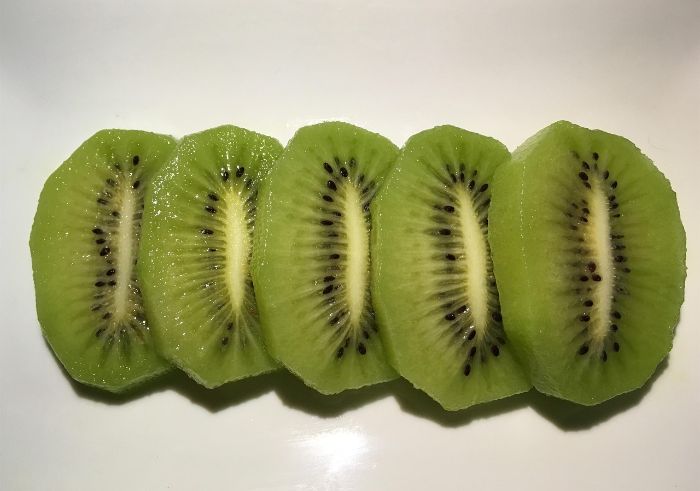
The omega-3 story in kiwiberries begins with the seeds. Kiwiberries are eaten whole, so those seeds are part of the serving. In kiwiberry, lipid content is located almost entirely in the seeds, with a smaller amount in the flesh. That makes the seed fraction interesting.
It also keeps the claim modest. Kiwiberries are still fruit, and fruit is mostly water and carbohydrate. The seed oil may be rich in unsaturated fatty acids, including plant omega-3 forms, and a handful of whole berries contains only a tiny amount of seed oil. Think of the omega-3 angle as a seed-based bonus inside a nutrient-dense fruit.
| Omega-3 Question | Realistic Answer | Kitchen Meaning |
|---|---|---|
| What kind of omega-3 is involved? | Plant-based ALA from the seed fraction; kiwi seed oil shows alpha-linolenic acid in its fatty-acid profile | Useful as part of plant-forward eating, separate from EPA and DHA foods |
| Where is it found? | Mainly in the tiny edible seeds | Eat the fruit whole, skin and seeds included |
| Is the whole fruit a high-fat food? | No. Kiwiberries remain low-fat fruit | Serving size matters more than seed-oil percentages |
| What is the better nutrition claim? | Whole-fruit density, edible skin, vitamin C, fiber, pigments, and seeds | Use them as repeat fruit servings, separate from oil substitutes |
| How does home growing help? | A productive vine can provide many small servings across harvest season | Nutrition becomes easier when the fruit is already in the kitchen |
That framing keeps the omega-3 claim below supplement-level or disease-prevention language. Kiwiberries can support a varied diet, and the omega-3 detail gives the seeds a reason to stay in the conversation. They work as whole fruit, separate from concentrated supplements.
What Kiwiberries Add To A Homegrown Diet
Kiwiberries earn garden space because they combine convenience and density. Berries are small enough to eat like grapes, with smooth skin and edible seeds. A ripe berry gives acidity, sweetness, aroma, and texture in one bite. That makes repeat servings easier than fruits that need peeling, slicing, or cooking.
The nutrition value is broader than omega-3. Kiwiberries are known for vitamin C, phenolic compounds, pigments, minerals, acidity, soluble solids, and fiber. Exact values vary by cultivar, maturity, climate, and storage. The practical point is simpler: the whole fruit brings more than flesh alone because the skin and seeds stay in the serving.
| Nutrition Feature | Where It Shows Up | Why Gardeners Should Care |
|---|---|---|
| Edible seeds | Tiny black seeds in every berry | Carry the seed-based omega-3 angle and add texture |
| Smooth edible skin | Whole fruit serving | Less prep, more complete use of the fruit, easier snacking |
| Vitamin C | Fresh ripe berries | Helps make the fruit valuable beyond novelty |
| Fiber and pectin | Skin, flesh, and seeds together | Supports the whole-fruit value of eating berries intact |
| Acidity and aroma | Ripe fruit and cultivar flavor | Decides whether the crop gets eaten fresh or left unused |
| Repeat harvests | Mature female vine with good pruning and pollination | Turns a nutrition fact into a food habit |
Gardeners can change the outcome because fruit quality depends on light, water, pruning, pollination, and harvest handling. A vine grown with good care has a better chance of delivering fruit that people actually eat. A neglected vine may create shade and leaves with very little usable crop.
Vitamin K in kiwifruit follows the same garden logic: the nutrient matters most when the vine is productive enough to keep fruit in regular rotation.
Choose The Right Kiwiberry Setup For Your Garden
Kiwiberry success starts with space and structure. The vine can look delicate in a nursery pot and then grow like a permanent fruiting climber. Choose the site, support, and pollination plan before buying plants.
| Garden Situation | Good Kiwiberry Setup | Nutrition Payoff | Main Risk |
|---|---|---|---|
| Cold-winter backyard | Hardy kiwiberry species matched to the local zone | Better chance of repeat fruit after winter | Spring frost can injure young shoots |
| Sunny fence line | Heavy trellis or T-bar set away from cramped access | Enough canopy for a serious crop | Fence panels may fail under mature weight |
| Small yard with pergola | One female vine plus a male vine nearby | Fruit plus shade from one structure | Pruning access can become awkward overhead |
| Existing arbor | Use only if posts, anchoring, and cross members are strong | Fruit can hang where picking is easy | Old decorative arbors may lean or split |
| Patio container trial | Temporary young-vine trial in a large pot | Learning plant habit before permanent planting | Long-term cropping is limited by root volume and support |
| Wildlife-pressure garden | Trunk guards, fruit cleanup, netting as needed | More of the crop reaches the kitchen | Rabbits, deer, birds, and fruit flies can take value fast |
Most home gardeners need fewer vines than expected. A single productive female can become a large crop when matched with a male pollinizer, and the trellis must carry that future weight. The same permanent-structure thinking used for vertical gardening with woody fruiting vines applies here.
Plant Kiwiberries Like Long-Term Fruiting Vines
Kiwiberries prefer a site that holds moisture and drains well. Roots struggle in waterlogged soil, and young plants can suffer when dry spells arrive before the root system has filled the area. A mulch ring helps moderate moisture and reduces grass competition around the trunk.
Light is more nuanced than many fruit guides make it sound. Kiwiberries need enough sun for growth and fruit quality, and trunks can benefit from protection against harsh wind, winter sun, and frost pockets. In hot or exposed gardens, morning sun with protection from the roughest afternoon stress can be easier to manage than a baked wall.
Set the permanent support before planting. Kiwifruit vines need that structure because mature growth, annual pruning, and crop load put real weight on posts, wires, and cross members. A T-bar, pergola, or heavy arbor works only when posts are anchored and wires or cross members can handle mature growth.
| Planting Factor | Target | What Goes Wrong |
|---|---|---|
| Soil | Moist, well-drained, organic-matter-rich soil | Root stress, poor establishment, or root rot |
| Mulch | Wood chips or leaf mulch around the root zone | Grass competition and dry surface roots |
| Water | Even moisture through establishment and fruit sizing | Small fruit, berry drop, weak growth, winter vulnerability |
| Support | Permanent T-bar, arbor, pergola, or heavy trellis | Broken supports and unreachable fruiting wood |
| Spacing | Room for canopy spread, pruning, picking, and air movement | A tangled vine that is hard to manage |
| Frost exposure | Avoid low frost pockets and harsh early-spring traps | Damaged young shoots and reduced fruit set |
If the soil is compacted or drains poorly, fix the root zone before planting. Soil health improvement is more useful before a permanent vine goes in than after the trunk and trellis limit access.
Train, Prune, Pollinate, And Protect The Crop
Kiwiberry vines need a managed framework. Train one main trunk up to the support, then develop permanent arms and replace fruiting wood through pruning. A dense vine can look productive and still shade its own crop.
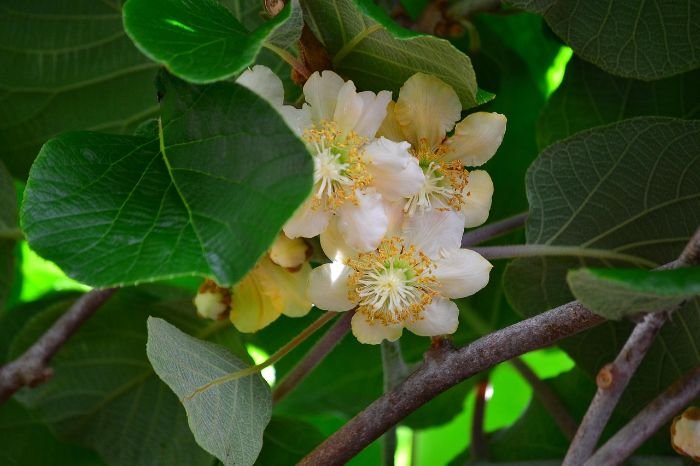
Pollination is the other early decision. Many kiwiberry cultivars are dioecious, meaning male and female flowers are on separate plants. A female vine gives fruit only when compatible pollen reaches the flowers. One male kiwiberry vine can provide enough pollen for up to six female vines, and fruit often begins 3 to 5 years after planting.
| Task | Timing | Reason |
|---|---|---|
| Set the trunk | Planting year | Creates a clean structure for future arms |
| Tie new shoots | Spring through summer | Keeps growth on the intended support |
| Remove wild explorer shoots | Early summer as needed | Prevents a shade thicket around fruiting wood |
| Prune dormant female vines | Late fall or winter in suitable conditions | Renews fruiting wood and controls canopy size |
| Prune male vines | After bloom | Preserves flowers needed for pollen |
| Clean fallen and overripe fruit | Harvest season | Reduces fruit-fly pressure and waste |
The pruning logic resembles grape care more than berry-bush care. Training grape vines on systems and structures gives a useful comparison because both crops reward strong frames, reachable canopy zones, and regular renewal pruning.
Harvest, Ripen, Store, And Use Kiwiberries
Harvest timing has a direct effect on flavor and kitchen use. Kiwiberries soften as they ripen, and color alone can mislead. Use touch, taste, cultivar notes, and seed maturity. Fruit that is too firm may taste sharp. Fruit that is very soft can be excellent eaten immediately and fragile in storage.
Pick into shallow clean containers. Keep damaged fruit separate. Refrigerate firm fruit and let small batches soften for fresh eating. Ripe berries can be frozen whole for smoothies, sauces, baking, or winter snacks. The easiest nutritional win is also the simplest use: eat the whole ripe berry, skin and seeds included.
| Use | Good Fruit Stage | Why It Works |
|---|---|---|
| Fresh snacking | Soft, aromatic, and sweet-tart | Uses skin and seeds with no prep loss |
| Yogurt or oats | Soft or just-ripe berries | Adds acidity, seeds, and texture |
| Freezing | Ripe berries with no leaks or mold | Preserves surplus for later use |
| Sauce or compote | Very soft berries | Uses fruit too fragile for storage |
| Drying | Small ripe berries | Concentrates flavor for trail mixes and baking |
| Salads | Firm-ripe berries | Holds shape and adds sharp-sweet contrast |
Water management affects this stage long before harvest week. Fruit with enough root-zone moisture can size and finish better. Watering grape vines for deeper roots is a useful comparison for gardeners managing long-lived fruiting vines through dry periods.
Common Kiwiberry Mistakes That Reduce Fruit And Nutrition Value
Kiwiberries usually fail through ordinary planning problems more than exotic pests. The gardener plants one unverified vine, puts it on a light arbor, skips pruning for two seasons, forgets winter trunk protection, or waits for fruit color to do all the ripeness work. Each mistake reduces the chance that the nutrition story reaches the plate.
| Mistake | Result | Better Move |
|---|---|---|
| Buying one female vine with no pollinizer | Flowers may appear with little or no fruit | Confirm cultivar sex and plant a compatible male nearby |
| Trusting a decorative trellis | Mature vines overwhelm the support | Build the support for long-term fruiting weight |
| Letting the vine grow as a thicket | Shaded canopy, poor access, and lower fruit quality | Train one trunk and renew fruiting wood each year |
| Planting in a wet corner | Root stress and weak establishment | Use well-drained soil with mulch and even moisture |
| Waiting for perfect color | Missed harvest window or overripe fruit | Use touch, taste, cultivar timing, and seed maturity |
| Overstating the omega-3 claim | Nutrition expectations become unrealistic | Present kiwiberries as whole fruit with seed-based ALA |
The simplest decision rule is to grow kiwiberries for fruit quality first. If the berries are ripe, clean, easy to pick, and good to eat, the seed-based omega-3 angle comes along with the whole fruit. If the vine never crops well, the nutrition claim stays theoretical.
Conclusion
Kiwiberries connect omega-3 to the garden through tiny edible seeds. Their ALA story is real, and the whole fruit remains the main value: smooth skin, seeds, vitamin C, fiber, acidity, flavor, and repeat harvest potential.
For gardeners, the nutrition claim depends on horticulture. Choose a climate-suited vine, plan male and female pollination, build a serious support, mulch and water the root zone, prune every year, and harvest at the right stage. When those pieces work together, kiwiberries become a useful homegrown fruit with a seed-based nutrition detail worth keeping.
FAQ
Do kiwiberries really contain omega-3?
Yes, through the tiny edible seeds. The relevant form is plant-based ALA, and the amount in a whole-fruit serving is modest because the fruit contains very little total fat.
Are kiwiberries a good omega-3 source?
They are better described as a whole fruit with a seed-based omega-3 bonus. Use flax, chia, walnuts, canola oil, soy foods, fish, or algae-based products for more focused omega-3 intake.
Do I need male and female kiwiberry plants?
Usually yes. Many kiwiberry cultivars need a female vine for fruit and a compatible male vine for pollen. Self-fruitful selections exist, though a male pollinizer can still improve set in some plantings.
How long do kiwiberries take to fruit?
Many home plantings need 3 to 5 years before fruiting becomes meaningful. Site quality, plant age, pruning, pollination, winter damage, and spring frost can change that timeline.
Can kiwiberries grow in containers?
A young vine can be tested in a large container. Long-term cropping is hard in a pot because kiwiberries are vigorous woody vines, so permanent in-ground planting with a strong support is usually the better plan.
When are kiwiberries ripe?
Ripe berries soften, become more aromatic, and taste sweet-tart. Color alone is a weak guide. Pick carefully, refrigerate firm fruit, and use very soft fruit quickly.