
Last Updated April 29, 2026
How to choose a garden hose: match diameter, length, material, fittings, and hose type to the watering job you repeat most often. A hose that fills a stock tank quickly can feel clumsy beside patio herbs, and a feather-light coil hose that makes containers easy can starve a far sprinkler of flow.
The wrong hose announces itself fast. It kinks behind the same planter, leaks at the spigot no matter how hard you twist, or leaves the spray wand coughing at the far end of the yard. Most of those problems start before the first watering, when length, material, diameter, storage, and water-contact safety get treated as separate features, not one working system.
Quick answer
- Choose a 5/8-inch hose for most home gardens
- Buy only enough length to reach regular watering points
- Pick rubber, hybrid polymer, or polyurethane for daily use
- Use soaker hose for beds, borders, and root watering
- Choose drinking-water-safe labels for pets and edible rinsing
Key Takeaways:
- Match hose size to flow demand and distance
- Measure the route before buying extra length
- Choose material by drag surface and storage
- Pair nozzles with hose flow, not habit
- Inspect washers, fittings, and kink points monthly
Table of Contents
Best Garden Hose By Yard Situation – Quick Match
The right garden hose depends on route length, flow demand, drag surface, storage space, and water-contact safety. Start with the job, then choose the hose. That order beats comparing labels in an aisle where every package promises flexibility, durability, and kink resistance.
| Your yard situation | Best hose setup | Why it works |
|---|---|---|
| Small patio or balcony | 25-foot 1/2-inch or light 5/8-inch hose, coil hose, or short drinking-water-safe hose | Low weight and compact storage matter more than high flow |
| Average beds and lawn | 50- to 75-foot 5/8-inch hybrid or rubber hose | Enough flow for nozzles and sprinklers without excess drag |
| Vegetable beds and borders | Main 5/8-inch hose plus soaker hose or drip line | Hand watering stays flexible and beds get slow root-zone water |
| Large yard with long runs | Two connected 5/8-inch hoses or one 3/4-inch supply hose | Reach improves without forcing one heavy hose into every task |
| Rough gravel, pets, or sharp edging | Rubber, heavy hybrid, or stainless-shell hose | Outer wall resists abrasion and puncture better |
| Kids, pets, herbs, or harvest rinsing | Drinking-water-safe hose, ideally polyurethane or clearly labeled lead-free | Cleaner water-contact choice for mouths, bowls, and edible leaves |
Dry-climate gardens need one more filter: the hose should help slow water down, not just move it farther. In a hot, windy yard, a soaker hose under mulch or a hose feeding drip line makes more sense than standing with a jet spray over bare soil. Water conservation in arid and drought-prone gardens starts by reducing loss before adding minutes.
Garden Hose Size – Length, Diameter, And Flow
Length is the first place gardeners overbuy. A 100-foot hose looks safer on the shelf because it promises reach, then it becomes a wet, heavy loop that steals flow and catches on every chair leg, raised bed corner, and wheelbarrow tire. Water loses energy as it rubs against the inside wall of the hose. The longer the run, the more friction loss you get before water reaches the nozzle.
Pressure diminishes as hose length increases, so the hose should reach the work area and no farther. Measure the real route from spigot to plant, around corners, beds, steps, and fences. Add 5 to 10 feet for comfortable movement. If the route is 58 feet, a 75-foot hose fits better than a 100-foot coil.
| Hose size | Best fit | Tradeoff | Skip it when |
|---|---|---|---|
| 1/2-inch | Patios, balconies, short container runs | Easy to handle, lower volume | You run sprinklers or long routes |
| 5/8-inch | Most home lawns, beds, borders, and hand watering | Good balance of flow and weight | You need high volume past 75 feet |
| 3/4-inch | Large yards, split lines, long runs, high-flow sprinklers | More volume, more wet weight | You mainly water pots by hand |
Pressure and flow are not the same thing
A narrow hose can feel sharp at the nozzle because the stream exits through a smaller path and still delivers less water volume. A wider hose supports sprinklers, long runs, splitters, and faster filling because it reduces friction loss. Low house pressure cannot be fully fixed by buying a larger hose; a clogged spigot screen, partly closed valve, narrow quick-connect, or long tangled run can still limit usable flow.
Soil changes the buying choice too. Sandy beds need quicker repeated moisture checks. Clay beds need slower application so water does not run sideways over the surface. If your soil type changes across the yard, a hose that feeds a wand, soaker, or timer cleanly matters more than raw length. Types of soil in gardening affect whether the same hose setting soaks one bed and puddles another.
Garden Hose Material – Match Weight To Drag Surface

Material decides how the hose behaves after heat, sun, dragging, and storage have had their say. The label talks about durability. Your hands notice weight, stiffness, smell, and how the hose remembers a bad coil. Pick up a cheap vinyl hose on a hot afternoon and it feels warm, slick, and slightly plastic-smelling. Pick up a good rubber or hybrid hose and the wall gives resistance without folding flat under your thumb.
| Material | What it does well | What to watch | Best use |
|---|---|---|---|
| Vinyl or PVC | Low price, light weight | Kinks, cracking, chemical concerns in some hoses | Occasional light watering |
| Rubber | Abrasion resistance, heat tolerance, long service | Heavy when full of water | Daily yard work and rough surfaces |
| Hybrid polymer | Flexible handling with moderate weight | Quality varies by brand and wall design | General home gardens |
| Polyurethane | Light handling, cleaner water-safe options | Higher price | Edible gardens, patios, frequent hand watering |
| Stainless steel outer shell | Puncture resistance, no classic hose kinks | Lower flexibility around tight corners | Rocky paths, pets, rough storage areas |
| Expandable fabric hose | Compact storage, low dry weight | Shorter life, hard to repair, needs pressure to extend | Small patios and light-duty convenience |
Do not trust “no-kink” claims as if the phrase changes physics. Any hose folds when it is twisted tightly enough, especially near a fitting or around a sharp corner. Wall thickness, reinforcement, and resilience decide whether the hose pops back round or stays pinched in a flat crease.
I often notice that the hose people hate most is not the heaviest one. It is the one that holds a tight corkscrew memory from storage, then drags every loop across seedlings and edging. Weight matters. Coil memory ruins more watering sessions.
Storage and reel fit
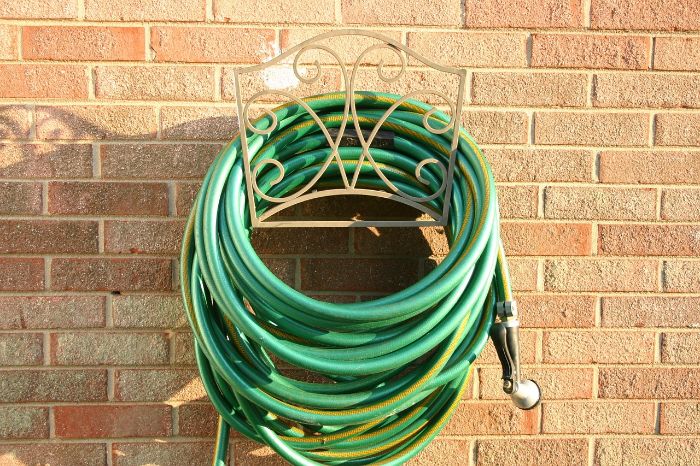
Hose storage should match the hose body. Heavy rubber needs a sturdy reel or broad wall hanger. Expandable hoses do poorly on ordinary reels because they shrink and swell with pressure. Flat hoses need full unrolling before water moves well. Hose pots suit patios; a narrow pot can trap tight bends that become permanent kink points. A wide-radius hanger is boring, cheap, and usually kinder to the hose.
Garden Hose Buying Test – Five Checks At The Shelf
The shelf test catches problems the package tries to hide. You do not need lab gear. You need both hands, a few seconds, and the willingness to bend the hose before you buy it.
Pro Tip: Bend the hose into a loop about the size of a dinner plate, then loosen your grip. A good daily-use hose rounds back out without a flat crease. If the wall folds sharply or stays pinched, that kink will appear beside the same garden corner all season.
- Bend the hose into a wide loop and watch for flattening
- Grip the coupling and tug lightly on the hose wall
- Look for a rubber washer seated inside the female end
- Read the label for material, safety, and burst rating
- Lift the full coil and picture it wet, not dry
The coupling test is the most revealing. A solid fitting feels like it belongs to the hose, not like a cap crimped onto a tube. The washer should sit flat, slightly springy, and replaceable. If the fitting already wobbles on the shelf, water pressure and summer dragging will not improve it.
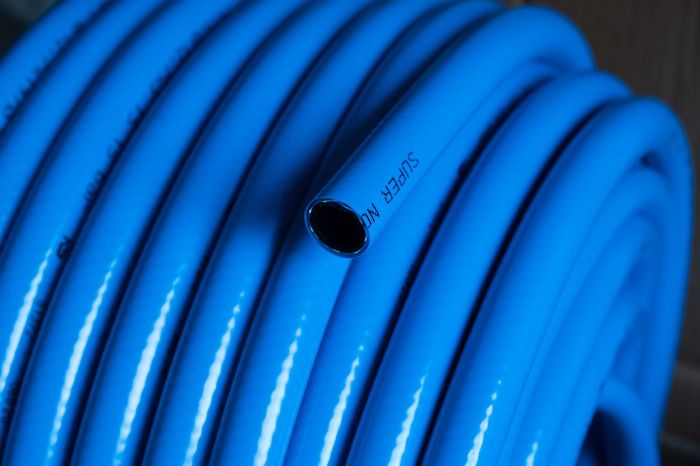
Weight needs honest math. A hose gets heavier when water fills the line, and a long hose becomes heavier still when the far end is trapped behind a bed or around a corner. If you hesitate when lifting the dry coil, buy shorter or lighter. A hose you can move easily gets used correctly. A hose you dread moving leads to shallow spot watering and skipped beds.
One final check: smell the inside of the coil if the packaging lets you. A sharp plastic odor does not prove danger. It tells you the hose is fresh, soft plastic and likely to hold that scent when water sits in the sun. For edible harvest rinsing, patios, or children, choose the cleaner labeled hose.
Garden Hose Types – Match The Tool To The Watering Pattern
Standard, soaker, and drip-fed hose setups
Different watering patterns need different hose types. Hand-watering pots, soaking vegetable rows, feeding a sprinkler, and cleaning mud from tools ask for different flow patterns. Soaker hoses are porous lines that let water seep slowly along their length and reduce evaporation.
Use a standard hose when you need range and flexibility. It pairs with nozzles, wands, sprinklers, hose-end timers, and quick shutoff valves. For most gardeners, this is the main hose, especially at 5/8-inch diameter and 50 to 75 feet long.
Use a soaker hose in beds where roots need slow water, not a moving spray. A soaker line under mulch works especially well in vegetables, mixed borders, and shrub rows. It also fits gardens where soil moisture and plant health matter more than the speed of getting leaves wet. Add a simple timer only after you know how long the line takes to wet the root zone.
A hose timer feeding drip or soaker lines turns the hose into part of automatic garden watering systems. Keep the setup simple: one planting type per line, a filter before drip parts, and a pressure regulator if the system calls for one.
Residential outdoor water use in the United States reaches nearly 8 billion gallons per day, mainly for landscape irrigation. Hose choice will not solve that waste alone. It does decide whether water lands slowly at roots or sprays across paths, fences, and leaves.
Vegetable beds often need watering when soil is dry 2 inches below the surface, and sandy soil needs more frequent watering than clay or loam. The nozzle and hose get water to the bed; the soil test tells you whether it reached the root zone..
Coil, flat, expandable, and stainless-shell hoses
Coil hoses fit patios, greenhouses, and container corners where the hose never travels far from the spigot. Flat hoses suit temporary straight runs, but they need full unrolling before water moves well. Expandable hoses save storage space and depend on pressure to reach full length; once damaged, they are harder to repair than rubber or hybrid hoses. Stainless-shell hoses handle rough paths and pets well, then feel less graceful around tight corners and closely planted beds.
Nozzle and accessory pairing
Pair the hose to the attachment at the end. A gentle watering wand suits seedlings, containers, and hanging baskets. A multi-pattern nozzle fits mixed gardens where one minute you rinse tools and the next you water basil. A fireman-style nozzle needs stronger flow and makes more sense with a short 5/8-inch hose or a 3/4-inch supply line. A shutoff valve near the nozzle saves repeated walks to the spigot. A sprinkler needs more usable flow than a hand wand, so long 1/2-inch hoses are the first option to cross off.
Match the hose to the repeated job: filling, rinsing, soaking, or hand-watering. A watering schedule for mixed plantings should be built around plant demand, soil, and root depth, not whatever hose happened to be on sale. Creating a watering schedule for various plant types keeps the hose from becoming the whole plan.
Garden Hose Mistakes That Lead To Leaks, Kinks, And Poor Flow
The first leak rarely appears in the middle of a hose. It starts at the coupling, the washer, the crimped collar, or the tight bend right after the spigot. That area bends every time the hose is pulled sideways. If the hose has no strain relief sleeve or a flimsy collar, the wall begins to crease where water pressure is highest and movement is most repeated.
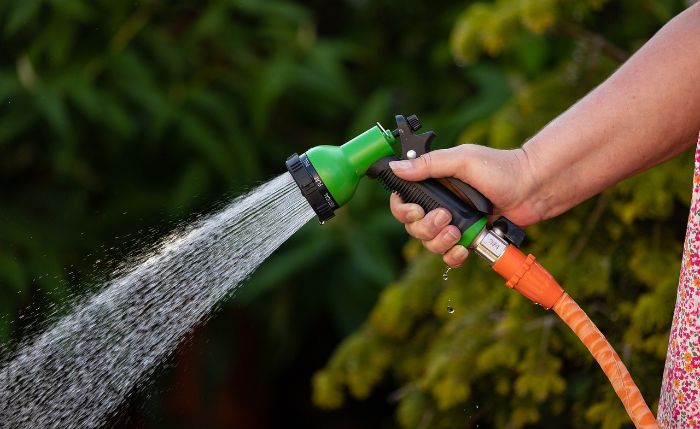
The common buying mistakes are predictable: buying 100 feet when 50 or 75 reaches the regular beds, choosing thin vinyl for daily dragging, ignoring coupling quality, trusting “kink-free” claims, leaving the hose pressurized in full sun, and using a standard hose for pets, kids, or edible rinsing. Each mistake feels small at checkout. Each one gets larger once the hose is wet, hot, and twisted around a corner.
For fittings, the practical tradeoff is real. Brass couplings last well and tolerate repeated threading. Plastic fittings are easier for sore hands. Thin plastic threads strip fast. The right coupling is the one you can tighten gently, seal cleanly with a washer, and remove before winter without pliers.
Garden hose threads seal with a rubber washer, not thread tape. If a connection drips, remove the hose and inspect the female coupling. A flattened washer feels hard and shiny, no longer rubbery, and it lets water bead around the threads even when the coupling is tight. Replace the washer before you blame the hose.
Repairability belongs in the buying decision. Rubber and many hybrid hoses can be cut and repaired with replacement couplings. Washers are cheap and should be replaceable. Expandable hoses and some stainless-shell hoses resist certain damage, then become awkward or impractical to repair once the inner tube fails. A hose with common repair parts is less exciting in the aisle and much more useful three summers later.
Burst rating matters most when the hose will sit under pressure behind a shutoff nozzle or timer. A higher rating gives more safety margin. It does not fix heat, kinks, or leaving the hose pressurized in full sun all afternoon. Water trapped in a dark hose on pavement heats quickly; the wall softens, pressure rises, and the weakest fitting takes the abuse.
Drinking Water Safe Garden Hose – When The Label Matters
Not every hose should deliver water that touches mouths, pets, or fresh harvests. Ordinary garden hoses are built for outdoor watering, not drinking water contact. That difference matters when children play in the spray, dogs drink from the end, or you rinse lettuce and strawberries near the bed.
A 2016 garden hose study tested 32 hoses and found that PVC hoses were more likely to contain lead, bromine, antimony, and phthalates than non-PVC hoses. Hoses labeled drinking-water-safe had fewer chemicals of concern, though some still contained phthalates. That is not a reason to panic over watering shrubs. It is a reason to read the label when water will contact people, pets, or edible harvests.
Products intended for drinking water contact should be certified to NSF/ANSI 61, and lead-content claims are tied to NSF/ANSI 372. For hose shopping, the practical labels to look for are “drinking water safe,” “lead free,” and ideally a recognized certification mark. “Lead-free couplings” is weaker than a whole-hose safety claim because the flexible hose wall matters too.
Heat changes the risk. Water sitting inside a hose for hours picks up more from the material than fresh water moving through it. Before watering edible leaves, herbs, or anything children might taste from the spray, flush the hose until the water runs cool. That first warm slug of water carries the plastic smell, the sun heat, and whatever sat in the hose since yesterday.
Conclusion
Buy the hose for the route you walk, not the yard you imagine from the shelf.
If you are stuck between two choices, choose the shorter hose unless reach is a weekly need, the 5/8-inch diameter unless flow is the problem, and the better coupling unless the hose will be used only a few times a year. Replace washers before replacing hoses, flush hot standing water before it touches food or pets, and store the coil in broad loops out of direct sun. A good hose does not call attention to itself. It reaches the bed, waters the root zone, and coils back with a clean rubber bend instead of a hard white crease.
FAQ
What size garden hose is best for most homes?
A 5/8-inch hose is the best fit for most homes because it balances flow, weight, and compatibility with common nozzles and sprinklers. Choose 50 feet if the spigot sits near the main garden area and 75 feet if beds wrap around corners or paths. Move to 3/4-inch only when you have long runs, high-flow sprinklers, or split lines. For patios and balconies, 1/2-inch is easier to manage.
Is rubber better than vinyl for a garden hose?
Rubber beats vinyl for daily use on rough surfaces, hot pavement, and frequent dragging. It resists abrasion better and handles temperature swings with less cracking. Vinyl costs less and weighs less, which fits occasional light watering. The weak point is long-term behavior: cheap vinyl kinks more easily, stiffens with age, and develops cracks faster when stored in sun.
Are expandable garden hoses worth buying?
Small patios are where expandable hoses make the most sense. They store in little space, weigh almost nothing when dry, and work well for a few pots near the spigot. Larger yards expose their drawbacks: they contract as pressure drops, pull at the nozzle, and are harder to repair after damage. Use one for convenience, not as the main hose for a full garden.
Is a 100-foot garden hose a bad idea?
One hundred feet is useful when you truly need that reach every week. It is a bad everyday choice when 50 or 75 feet would reach the regular work area. Longer hoses reduce flow through friction, weigh more when full, and take more effort to coil. Two shorter hoses joined only when needed give more flexibility in many yards.
Can you drink from a garden hose?
Do not drink from a standard garden hose unless the label says it is drinking-water safe. Many outdoor hoses are not made for potable water contact, and water sitting in a sun-heated hose tastes and smells like the material it touched. For kids, pets, patio herbs, or rinsing edible harvests, choose a drinking-water-safe hose and flush it until the water runs cool before use.
What does kink resistant mean on a hose?
Kink resistant means the hose is built to resist flattening when bent, not that it cannot kink. Reinforcement, wall thickness, and material resilience all matter. A hose kink starts when the round water channel collapses into a crease. Store the hose without twists, avoid sharp corner pulls, and use a reel or hanger wide enough to keep broad loops.
What garden hose is best for vegetable beds?
Use a regular 5/8-inch hose for filling cans, rinsing tools, and flexible hand watering, then add a soaker hose or drip line for beds that need slow root-zone moisture. Keep edible leaves as dry as practical, especially in dense plantings. If the hose water will touch harvestable leaves, herbs, or kids’ hands, choose a drinking-water-safe hose and flush warm standing water first.
What is the best way to store a garden hose?
Release pressure first, then coil the hose in broad loops on a wide wall hanger, sturdy reel, or roomy hose pot. Keep it shaded when possible, because sun heat hardens the wall and shortens washer life. Do not force a heavy hose into a tight pot or narrow hook; tight bends become kink memory. Before winter, disconnect the hose, drain it fully, and store it where freezing water cannot split the wall or fittings.