Updated April 20, 2026
Choosing vegetables by season works when it’s built around two numbers – your last spring frost date and your first fall frost date – not around a calendar month. The month of May looks the same on paper in Georgia and Minnesota, but a Georgia gardener safely transplants tomatoes three weeks before a Minnesota gardener can. Most planting guides skip this layer and publish national lists that don’t apply cleanly to any one yard.
Soil temperature is what actually separates what grows from what stalls. Spinach germinates in 35°F soil – the kind that’s still cold and dark and clumps between your fingers in early March. Tomatoes won’t germinate below 60°F. That 25-degree gap explains why spring planting happens in two distinct waves, and why planting both at the same time produces one thriving row and one that sits unchanged for weeks. This guide builds the full framework from that starting point.
Key Takeaways:
- Plant cool-season crops 4-6 weeks before your last spring frost date
- Check soil temperature before transplanting tomatoes – wait for a consistent 60°F minimum
- A light frost sweetens carrots and parsnips, so leave them in the ground longer in fall
- Count back 8-10 weeks from your first fall frost to time fall sowing correctly
- Succession-sow fast crops like lettuce every 2-3 weeks to avoid a single harvest glut
Table of Contents
Cool Season vs. Warm Season – The Classification That Drives Every Decision
Every vegetable belongs to one of two temperature groups. Cool-season crops – lettuce, spinach, kale, peas, carrots, beets, broccoli, cabbage, radishes – germinate and grow best when soil is between 40°F and 65°F, and they tolerate frost to varying degrees. Established kale survives temperatures down to 20°F once it has hardened off, which surprises most gardeners who treat “frost tolerant” as meaning “handles a light dip to 30°F.” Warm-season crops – tomatoes, peppers, cucumbers, squash, beans, eggplant, corn, melons – need soil consistently above 60°F to germinate and above 50°F at night to avoid chilling injury that stalls root function even without visible damage.
Penn State Extension describes the cool-season threshold as any crop that matures best when average temperatures stay below 70°F. Above that ceiling, cool-season crops either bolt (lettuce, spinach) or produce hollow, pungent roots (radishes). This upper limit is just as important as their frost tolerance. A late-spring heat wave can wipe out a spring lettuce bed as effectively as a hard freeze – and it does so more slowly, which means gardeners often don’t trace the failure back to heat.
| Category | Soil Temp to Germinate | Frost Tolerance | Common Crops |
|---|---|---|---|
| Cool-season | 35-65°F | Light to heavy frost, crop-dependent | Lettuce, spinach, peas, kale, broccoli, carrots, radishes, beets |
| Warm-season | 60-95°F | None – frost kills at any growth stage | Tomatoes, peppers, cucumbers, squash, beans, corn, eggplant, melons |
Understanding this classification makes every seasonal decision faster. If a crop bolts in heat, it’s cool-season and goes in early or late. If it stalls when nights drop below 50°F, it’s warm-season and waits for settled warmth. The seasonal planting advice that follows in this guide is really just an application of this two-category system to different points in the year. For decisions that extend beyond vegetables – integrating herbs, flowers, and ornamentals alongside edibles – the same logic scaled up is covered in the plant selection guide.
Spring Planting – Working Both Sides of Your Last Frost Date
The last frost date divides spring into two distinct planting windows. Most gardeners know the second window – after frost risk passes, tomatoes and peppers go in. The first window is where many gardens leave weeks of production on the table.
Before the last frost: cold-tolerant crops
Four to six weeks before the last frost date, cool-season crops can go directly into the garden if the soil is workable. In zone 6, that typically means late March or early April. In zone 4, late April. Peas germinate at soil temperatures as low as 40°F. Spinach and lettuce seeds germinate reliably at 45°F. Broccoli and cabbage transplants tolerate frost after they’re in the ground, provided they were hardened off first. The University of Minnesota Extension notes that hardened transplants of these crops survive temperatures as low as 28°F without lasting damage.
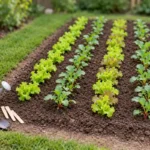
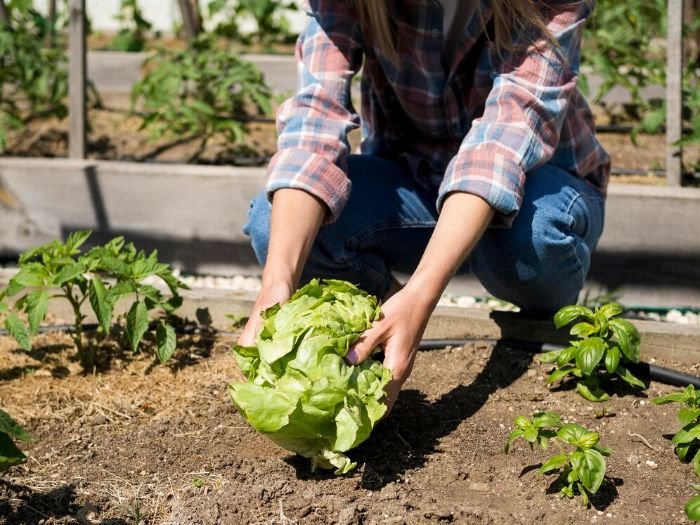
Succession sowing matters most in this window. Lettuce planted in a single batch in early April gives a two-week harvest window, then bolts or fades. Lettuce sown every two to three weeks through mid-spring provides continuous harvest from late April into June. Most gardeners skip succession sowing because it requires planning in February, when the garden still feels theoretical. That gap in planning produces a familiar outcome: three weeks of more lettuce than a household can use, followed by nothing.
After the last frost: warm-season transplants
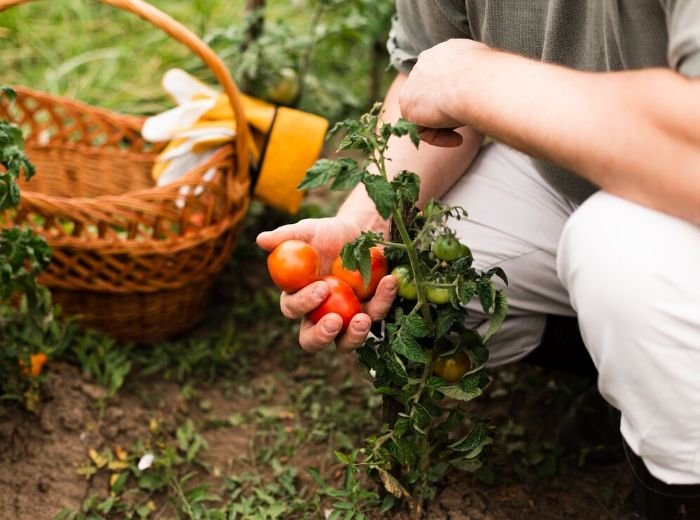
The calendar date matters less here than the soil does. A warm week in late April can push the apparent frost-free window earlier, but if the soil hasn’t warmed, warm-season transplants sit in cold ground and develop chilling injury. They look alive but roots aren’t functioning. The reliable threshold for tomatoes is consistent soil temperature at 60°F measured at a 2-inch depth in the morning, before sun warms the surface. For peppers, 65°F is more dependable. Each of these crops moves through predictable vegetable growth stages – understanding what those stages look like helps identify when cold-soil stalling is actually happening, rather than assuming normal early sluggishness.
| Crop | Start indoors (before last frost) | Transplant outdoors | Direct sow outdoors |
|---|---|---|---|
| Peas | Not recommended | N/A | 6-8 weeks before last frost |
| Lettuce / spinach | 4-6 weeks prior | 4-6 weeks before last frost | 4-6 weeks before last frost |
| Broccoli / cabbage | 6-8 weeks prior | 3-4 weeks before last frost | N/A – too slow for most zones |
| Tomatoes | 6-8 weeks prior | After last frost, soil 60°F+ | N/A |
| Peppers | 8-10 weeks prior | After last frost, soil 65°F+ | N/A |
| Cucumbers / squash | 2-3 weeks prior (optional) | After last frost | At or just after last frost |
| Beans | Not recommended | N/A | After last frost, soil 60°F+ |
Summer – When Cool-Season Crops Quit and Heat-Lovers Hit Their Stride
Once daytime temperatures consistently reach the upper 70s, cool-season crops begin their exit. Lettuce that was producing well in May bolts by late June. The plant shifts energy from leaf growth to flowering when temperatures exceed 75°F for several consecutive days – it’s a hormonal response, not a sign that something went wrong. Fighting it with shade cloth delays the process by a week or two at best.
Summer is when heat-loving crops take over. Tomatoes, peppers, eggplant, cucumbers, squash, and beans need consistent warmth not just to survive but to set fruit reliably. The University of California Cooperative Extension found that blossom drop in tomatoes increased sharply when nighttime temperatures stayed above 75°F for extended periods – plants look healthy and flower freely, but fruit doesn’t set. This explains why a very hot early summer can look disappointing in a tomato bed despite apparently healthy growth.
The mid-summer gap most gardens miss
Between when spring greens fade and when warm-season crops produce at scale, there is often a two-to-three week harvest gap in late May and early June. Gardeners who plan for this sow a second succession of fast-maturing cool-season crops in mid-spring: radishes (25-30 days to harvest), baby spinach, and arugula. Radishes are the practical choice here – they mature in under a month and handle the warming soil better than full-size greens. They bridge the gap without requiring separate bed space if sown between slower-maturing transplants.
Pro Tip: Interplant basil directly between tomato rows once the soil has warmed. Basil thrives in the same heat window as tomatoes, fills the ground-level space that tomato plants can’t use in early summer, and produces harvestable leaves through July. By the time the tomato canopy shades it out in August, you’ve already harvested the best of both crops from the same square footage.
Fall Planting – The Season Most Gardens Waste
Fall gardening is underused in most home gardens, and the reason is a planning problem rather than a growing problem. Cool-season crops often perform better in fall than in spring because temperatures decline gradually and predictably instead of spiking erratically as they do in late spring. The window for successful fall planting is genuinely wide. The challenge is that fall crops must be started in mid-summer, when most gardeners are focused entirely on the current harvest.
The count-back method
Find your average first fall frost date, then count backwards. Add the crop’s days to maturity to the number of days remaining before that date. Broccoli takes 70 days from transplant. If your first fall frost is October 15, count back 70 days – transplants need to be in the ground by July 6 at the latest. Penn State Extension recommends adding 14 days as a buffer because shorter fall daylight hours slow growth by 10 to 20 percent, and seed packets don’t account for this.
Crops that perform particularly well in fall: kale, broccoli, Brussels sprouts, cauliflower, spinach, arugula, lettuce, and root crops including carrots, beets, and turnips. Brussels sprouts need early planning – they’re a 90-to-110-day crop from transplant and need to go in by late June in zone 6.
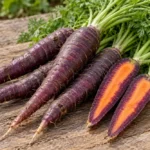
One of fall’s genuinely unexpected advantages: a light frost improves the flavor of several crops. When soil temperatures drop, carrots and parsnips convert stored starches to sugars as a kind of frost protection. The roots taste noticeably different after the first hard frost than they did in September. Kale leaves thicken and sweeten after repeated frosts in a way that summer kale doesn’t match. Leaving carrots in the ground past the first frost – something that feels counterintuitive the first time you try it – typically produces the best-flavored roots of the year.
Observation: I often notice that gardeners who start fall plantings even one week late end up harvesting broccoli heads that never fully size up before hard frost arrives. The heads are technically edible but small and loose. That one week in mid-July, when it’s hot and the summer garden is demanding attention, is where fall success or failure is decided.
Adjusting by Climate Zone – When the Standard Calendar Stops Fitting
Most US gardening advice is written for zones 5 through 7, covering a large part of the Midwest and Mid-Atlantic with a frost-free window from roughly May through September. If your zone differs significantly, the general seasonal framework applies but the timing and crop selection shift.
Zones 3 and 4 have frost-free windows of roughly 90 to 120 days. That makes long-season crops – melons, large-fruited tomatoes, long-season peppers – genuinely risky without row covers and season extension. Variety selection becomes critical rather than optional. University of Minnesota Extension research shows that choosing short-season tomato varieties under 70 days to maturity versus standard varieties at 80 to 85 days is often the difference between a reliable harvest and a gamble in zone 4. In these zones, the spring cool-season window is short and warms quickly, which means succession planting of greens requires more discipline to actually pull off.
Zones 8 through 10 flip the seasonal pattern entirely. Summer becomes the difficult growing season for most vegetables – sustained 100°F heat stops tomato fruit set, lettuce bolts within days of germination, and many crops that thrive in a zone 6 summer simply pause. The productive windows are fall through spring. Gardeners in these zones often have two distinct cool-season periods with a summer gap between them, which is the inverse of what most US gardening advice assumes. The USDA Plant Hardiness Zone Map reflects cold hardiness, not summer heat stress. For vegetable selection in hot climates, the American Horticultural Society’s Heat Zone Map is a more useful reference.
This raises a question worth sitting with: why does most US vegetable planting advice center on a summer-dominant growing season, when gardeners in zones 9 through 11 consistently produce more vegetables in December than in August?
Your Two Frost Dates – A Simple Planning Framework
Every seasonal decision in this guide traces back to the same two numbers: your average last spring frost date and your average first fall frost date. Together they define your frost-free growing window and set the boundaries for cool-season planting on both ends of the year.
The Old Farmer’s Almanac publishes a free planting calendar at almanac.com that generates crop-specific sowing dates from any US zip code – the fastest way to find your local numbers without digging through county extension records. Once you have those dates, the seasonal framework collapses into a repeating pattern: cool-season crops before and after the warm window, warm-season crops within it.
A few adjustments apply regardless of zone. Raised beds warm up three to four weeks faster than in-ground beds in spring because they lose heat from all sides less efficiently and their elevated soil mass absorbs more direct sun. This expands the effective warm-season window without changing your frost dates. South-facing beds and beds against masonry walls absorb more radiant heat and extend the season further. These microclimate effects aren’t captured in any lookup tool – they’re something you learn by noticing which corner of the garden greens up first each spring.
One last point about frost date averages: an “average last frost of April 15” means a 50 percent chance of frost after that date, not zero. Most experienced gardeners keep row covers or frost cloth available through the end of May regardless of the calendar. The frost date tells you when to begin, not when to stop paying attention.
Conclusion
Seasonal vegetable selection is a simpler system than most guides make it appear. The cool-season and warm-season classification covers nearly every crop, the frost date framework sets the timing, and the count-back method handles fall. Zone adjustments and succession planting refine the framework rather than replace it.
What tends to separate productive gardens from disappointing ones is consistent timing applied over several seasons, adjusting week by week based on what the garden shows. A gardener who plants peas in late March, succession-sows lettuce three times through spring, transitions to warm-season crops after last frost, and counts back from the first fall frost to start broccoli transplants in July is rarely surprised by the calendar. The seasonal care habits that support that pattern are worth building once – then repeating with small refinements each year until the timing feels obvious.
FAQ
What is the difference between cool-season and warm-season vegetables?
Cool-season vegetables germinate and grow best when soil temperatures are between 35°F and 65°F, and most tolerate frost to varying degrees. Warm-season vegetables require soil consistently above 60°F to germinate and are killed by frost at any growth stage. The distinction determines when each crop can go into the ground: cool-season crops plant weeks before the last frost date, warm-season crops plant after it once soil has genuinely warmed.
When is the best time to start a vegetable garden for the first time?
Spring is the most forgiving entry point because both crop categories are available within a few weeks of each other. The common mistake for first-time gardeners is waiting until after the last frost to plant anything, which skips the entire cool-season window. Start with radishes – they germinate in 5 to 7 days and mature in 25 to 30 days – to get a harvest quickly while you’re still learning. Lettuce and peas follow the same early-spring window and are equally low-risk for a first season.
Can you plant vegetables in the fall?
Yes, and fall often outperforms spring for cool-season crops because temperatures decline gradually rather than spiking unpredictably. Broccoli, kale, spinach, arugula, lettuce, and root crops all perform well in fall conditions. The timing requires planning in mid-summer: count back from your first fall frost date by the crop’s days to maturity, then add 14 days as a buffer for slower fall growth due to shorter daylight hours. Gardeners who miss that mid-July window typically find their fall crops don’t fully develop before hard frost arrives.
What happens if you plant tomatoes before the last frost?
A single frost after transplanting kills tomato plants outright – they have no frost tolerance at any stage. Even without a killing frost, soil temperatures below 55°F cause chilling injury: roots stop functioning, the plant develops a purplish tint from phosphorus starvation, and visible growth stalls for one to two weeks. A tomato planted in warm 65°F soil two weeks after the last frost almost always overtakes one planted in cold 50°F soil at last frost, even though it started later. The delay is not lost time; it’s the difference between a plant that hit the ground running and one that spent its first weeks in recovery.
What vegetables grow through winter?
In zones 8 and warmer, the full range of cool-season crops grows through winter without protection: kale, collards, spinach, chard, broccoli, cabbage, carrots, and most lettuces. In zones 6 and 7, cold-hardy varieties of kale, spinach, and mache survive moderate winters under row cover or in cold frames. Zones 5 and colder can overwinter garlic and spinach under deep mulch, though most crops require protection below zone 6. Kale is the most reliably winter-hardy leafy green across a wide zone range – Siberian kale varieties survive repeated frosts well below 20°F and are worth growing in any climate that gets cold winters.
Why does my lettuce turn bitter and bolt in summer?
Lettuce bolts – sends up a flowering stalk and turns bitter – when temperatures consistently exceed 75°F. It’s a hormonal response triggered by heat and long days, signaling the plant to switch from leaf production to seed production. Once bolting begins, the bitterness is irreversible and removing the stalk doesn’t restore leaf quality. The fix is timing rather than variety selection: plant lettuce in early spring and again in late summer or early fall, avoiding the hottest six to eight weeks of the year entirely. Heat-tolerant varieties like Jericho and Nevada extend the lettuce season by a week or two but eliminate nothing.
How do I find my exact last frost date?
Your local Cooperative Extension office publishes frost dates by county, typically more precise than zip code tools because they draw on decades of local weather station data. The Old Farmer’s Almanac planting calendar at almanac.com accepts zip codes and generates crop-specific sowing dates calculated from those averages. Both are estimates – actual dates vary by two to four weeks depending on the year, your elevation, and local microclimate. For a new garden, one full season of observation shows which parts of the garden frost first and last, which is more useful for planning than any published average.
What is succession planting and when should I use it?
Succession planting means sowing the same crop in multiple small batches spaced two to three weeks apart rather than all at once. It prevents the situation where an entire bed of lettuce matures simultaneously and produces more than a household can use in 10 days. Fast-maturing crops benefit most: lettuce at 45 to 60 days, radishes at 25 to 30 days, spinach at 40 to 50 days, and beans at 50 to 60 days. The tradeoff is that it requires planning before the season starts. Most gardeners who try it once and skip it in following years cite the same reason: they forgot to pre-plan the follow-up sowings while the first batch was still in the ground.