


Last Updated May 04, 2026
Rock garden plants succeed when the roots fit the pocket, the drainage, and the heat pattern around the stone. A south-facing stone that throws back heat at 4 p.m. needs a different plant than a cool crevice that stays damp below the surface in July. Put the wrong plant in the wrong crack and the failure usually arrives as crown rot in winter or a browned-out mat by midsummer.
Alpine plants, drought plants, wall plants, and shade fillers need different root climates, even when they all look suitable for stone. Strong rock-garden planting starts with compact, adaptable plants before moving into climate-sensitive alpine species.
Plant selection logic used for site, size, and maintenance matters more in rock gardens because shallow pockets forgive less. Read reflected heat, winter drainage, root depth, and the room a plant will need by year three. Rock garden planning starts with slope, drainage, and root-zone depth.
Each rock garden plant should match the exact pocket available.
Key Takeaways:
- Match plants to root climate before you chase bloom color
- Raise crowns slightly in lean gravel where winter moisture lingers
- Reserve alpine-style picks for cool crevices and cooler summer exposures
- Divide or shear mats before woody centers and bare gaps spread
- Avoid rich compost pockets that stay wet through the cold season
Rock garden plant selection works better when alpine plants, dry-sun mats, wall-edge spillers, and gravel-garden drought plants are treated as separate groups. They may share small scale and rocky soil. Their root temperature, moisture tolerance, and summer heat limits differ.
Table of Contents
Best Rock Garden Plants At A Glance
Start with the toughest pocket in the bed, then choose the plant that already wants that exact set of conditions.
| Plant | Best use | Typical zones | What it handles well | Main caution |
|---|---|---|---|---|
| Sempervivum tectorum | Hottest seams, troughs, wall tops | 3-8 | Shallow rocky soil, drought, winter texture | Rot in winter-wet pockets |
| Sedum and stonecrop cultivars | Dry sunny seams, wall tops, gravel pockets | Varies by species and cultivar | Shallow soil, drought, succulent texture, late-season color | Some spread fast or rot in winter-wet soil |
| Creeping thyme | Edges, between stones, low fragrant mats | 4-8 | Sun, lean soil, dry spells, foot-adjacent planting | Struggles in heavy wet clay |
| Phlox subulata | Spring color on slopes and walls | 3-9 | Sunny banks, rocky soil, cascading bloom | Needs drainage and periodic shearing |
| Aubrieta cultivars | Cool wall fronts and spring spill | 4-8 | Lean soil, spring cascade, cool-root wall edges | Humid heat and wet crowns shorten performance |
| Dianthus gratianopolitanus | Fragrant low mound for full sun | 4-8 | Gritty soil, reflected heat, compact habit | Winter wet shortens its life fast |
| Armeria maritima | Tight tuft for windy dry beds | 4-8 | Shallow soil, wind, salt, lean fertility | Center rot in rich wet ground |
| Iberis sempervirens | Evergreen spill over stone edges | 3-8 | Sun, wall shoulders, spring bloom | Crown rot in soggy soil |
| Festuca glauca | Blue year-round texture | 4-8 | Dry pockets, sharp drainage, front-edge structure | Declines in hot humid summers |
| Hardy ice plant cultivars | Color in the driest hottest spots | 5-9 depending on cultivar | Blazing sun, gravel mulch, quick drainage | Cold wet winters ruin crowns |
| Campanula carpatica | Cool-summer alpine look | 3-8 | Cool roots, crevice planting, long bloom | Hot nights and baked stone stress it |
| Saxifraga x arendsii | Cool crevices and bright shade | 5-7 | Gritty moisture, spring bloom, alpine texture | Heat and stagnant moisture cause quick decline |
Sharp Drainage Decides Which Rock Garden Plants Last
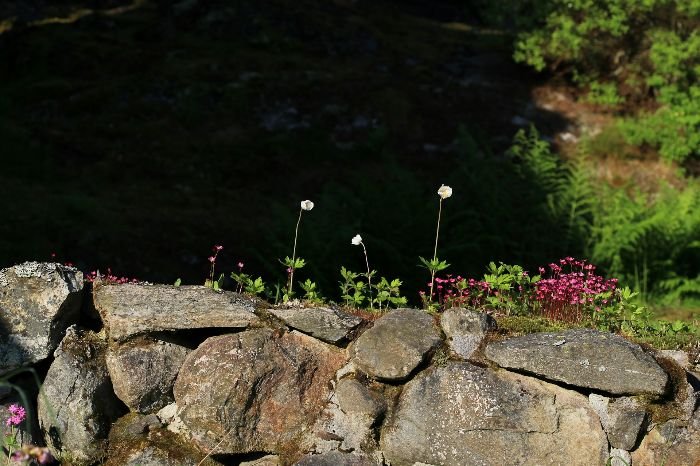
Lean soil helps. Crown airflow and fast drainage decide which plants last. A gravelly pocket with depth below it will beat a rich compost bowl that stays cold and wet through January, because most rock-garden losses begin where foliage, crown, and trapped moisture meet.
That is why soil texture matters before the plant list does. If the native ground smears into ribbons when wet, or puddles for a day after rain, fix the drainage profile first. Garden drainage solutions should raise the planting pocket, reduce fine organic matter at the crown, and let water move away.
Pro Tip: In heavy ground, set the crown slightly proud of the surrounding grade and top-dress with gravel. Bark keeps more moisture against the crown, and lifting the plant even an inch changes how long cold moisture sits there.
Use the USDA Plant Hardiness Zone Map as a cold filter first. Zone tells you winter minimums. It does not tell you whether a rock pocket stays wet, whether summer nights cool down, or whether dark stone turns one side of the bed into a heat sink.
Small plants should fit the site, the stone scale, and the available root run.
Check the hottest rock in the bed late on a summer day. If the stone still radiates heat, place that pocket with dry-sun plants and gravel-garden types.
Full-Sun Rock Garden Plants For The Hottest, Driest Pockets
Stone multiplies heat. Afternoon sun bounces off it, shallow soil dries first at the surface, and roots live in a tighter column than they would in a border. Plants that thrive there either store water, run a very low mat close to the stone, or keep their crowns compact and exposed to air.
Rosettes And Succulent Mats
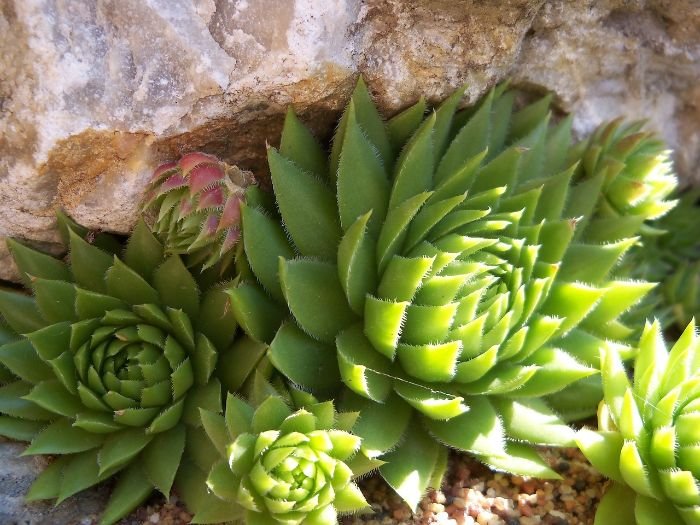
Sempervivum and hardy ice plant cultivars belong in the spots that make softer perennials flinch. Houseleeks hold water in tight leaves and root into narrow seams where deeper-rooted plants never settle well. One useful detail catches many gardeners off guard: a sempervivum rosette dies after flowering. The offsets around it keep the colony going.
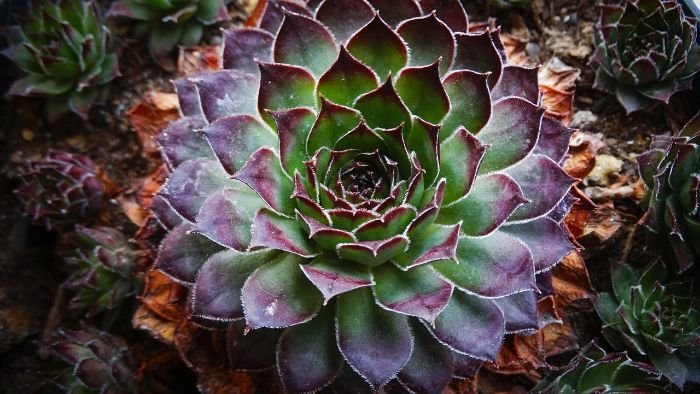
Hardy ice plants push harder on bloom color, especially where the bed stays sharply drained all winter. They look unbeatable in dry gravel and reflected heat. Cold wet clay knocks them out quickly. That tradeoff is real.
Sedum and stonecrop cultivars cover the same sun-baked terrain with more variation in leaf shape, height, and late-season bloom. Creeping sedums fit seams and wall tops. Taller stonecrops add upright texture at the back of a small rock bed. The caution is growth speed and winter wet: some run farther than expected, and some sulk if the crown stays cold and damp.
Low Mats With Fragrance Or Spring Bloom
Creeping thyme, cheddar pink, sea thrift, and phlox subulata all work when the goal is a tight low edge with fragrance or spring color. Creeping thyme earns its place where stone paths need softening without turning into a thirsty planting strip. Rub the foliage lightly on a warm day and the smell tells you why it still outranks many showier mats.
Dianthus gratianopolitanus and Armeria maritima both stay neater in lean soil than they do in fertile garden loam. Feed them hard and they loosen. Keep them sharp, open, and a little hungry, and they stay close to the rock. Water-wise rock beds share many requirements with drought-tolerant plants, though rock gardens ask for extra attention to crown exposure and winter drainage.
Phlox subulata bridges both worlds. It gives the spring show people want, then settles into a mat that still reads clean once bloom has passed. Shear it lightly after flowering and the mound stays denser for the rest of the season.
Alpine Rock Garden Plants Need Cool Roots And Sharp Drainage
Many gardeners use “alpine” to mean small and charming. True alpine behavior is narrower than that. These plants are adapted to sharp drainage, bright light, and cold winters. Many also expect cool nights, snow cover, or roots tucked into stone where the crown stays dry and the lower root run stays cooler than the surface.
Campanula carpatica is a good example. It gives the bellflower look people want in an alpine-style bed. It performs best in cooler summer conditions, especially where nights do not stay hot. In a cool-summer climate, full sun is fine. In a hot inland or humid southern garden, an east-facing crevice or bright afternoon shade reads the site better.
Saxifraga x arendsii is even stricter. It loves gritty moisture, cool summers, and bright exposure without the furnace effect of dark stone all day. Put it into a north-facing seam, a trough, or the cooler shoulder of the bed and it looks deliberate. Put it into a sun-baked retaining wall and it usually fades from the center outward.
If you want the alpine look more than strict alpine botany, start with campanula, sea thrift, compact dianthus, moss phlox, and aubrieta before you chase touchier saxifrages. Start with plants that forgive your climate before adding species that demand cool summers and perfect drainage.
Freeze-thaw adds another layer. Shallow-rooted perennials lift when winter keeps thawing and refreezing, so colder rock gardens need the same crown and drainage care as cold-hardy plants. Good drainage matters. So does keeping the crown from heaving above the gravel line.
Trailing And Structural Rock Garden Plants Keep Stone Visible Year-Round
The best wall-edge plants drape, knit, and bloom without burying the rockwork that makes the bed readable. A rock garden needs voids as much as it needs flowers. Once every crack fills with fast green growth, the planting starts to look like a normal border that happened to inherit some stone.
Wall-Edge Mats And Low Cascades
Phlox subulata, candytuft, creeping thyme, and snow-in-summer all handle this job differently. Phlox spills with spring color. Candytuft gives a broader evergreen shoulder and looks strong when it leans over a ledge and keeps clear shape. Creeping thyme stays lower and more transparent. Snow-in-summer shines in cool drier climates, then turns ragged in heat and humidity much faster than its silver foliage photo suggests.
A rock garden uses a narrower palette than a general ground cover planting. Many excellent spreaders cover bare ground fast. Rock gardens need scale, gaps, and line to stay readable.
Wet soil around the crown is a common failure point for candytuft, thyme, and other mat-forming rock-garden plants. The usual mistake is easy to picture: the mat looks dry on top. The crown sits in a fine organic pocket below, especially after bark mulch or repeated compost top-dressing changed the surface texture. Keep gravel at the crown, not wood fiber.
Tufts And Small Anchors After Bloom
Most rock gardens look their best in the two weeks people photograph them and their weakest in the months that follow. Structure fixes that. A few tufted, blue, needled, or evergreen plants keep the bed from reading as a flat quilt of spent mats.
Blue fescue is the classic small-structure move. It gives a narrow blue blade that breaks up broad-leaved mats and keeps the eye moving after spring bloom ends. The caution matters just as much as the color. Blue fescue is short-lived in some climates, especially where heat and humidity stay high, so treat it as a plant that may need division, refreshing, or replacement.
Observation: Blue fescue gets blamed for “mystery decline” when it is really reading the climate honestly. Browning at the center in a humid summer means the pocket stays warmer and wetter than its foliage suggests.
Pineleaf penstemon gives another kind of structure: fine evergreen-to-semi-evergreen texture, bright tubular flowers, and a look that belongs naturally among stone. In western and interior gardens, small penstemons and other rocky natives also fit naturally into native plant gardening where the goal is a planting that still reads local.
Dwarf conifers and creeping junipers also have a place, though restraint matters. One or two structural evergreens keep the bed grounded. Five of them turn a rock garden into a miniature shrub border.
Rock Garden Planting Matrix – Choose The Right Pocket
Map the bed by heat, drainage, and root depth before you buy. The harshest pocket decides whether the shortlist should lean succulent, alpine-style, mat-forming, or simply forgiving.
| Rock-garden pocket | Best plant direction | Strong examples | Why it works | Main caution |
|---|---|---|---|---|
| Baked sunny slope | Succulents, tight mats, lean-soil tufts | Sempervivum, creeping thyme, sea thrift, hardy ice plant, sedum | Handles reflected heat and fast drainage | Winter wet ruins crowns |
| Cool alpine crevice | Compact alpine-style perennials | Campanula, saxifraga, dianthus, moss phlox | Keeps roots cooler below the stone surface | Hot nights and dark stone stress plants |
| Wall edge or step shoulder | Cascading mats and evergreen spillers | Phlox subulata, candytuft, creeping thyme, aubrieta where suitable | Softens stone without hiding structure | Aggressive spread can bury the rockwork |
| Humid raised gravel pocket | Forgiving dry-soil plants with crown airflow | Phlox, thyme, candytuft, blue fescue, sedum | Works better than touchy alpine plants in humid climates | Thin gravel over clay still traps winter moisture |
| Bright partial-shade crevice | Cool-root plants and smaller mats | Saxifraga, campanula, some dianthus, small ferns where suitable | Avoids baked stone while keeping drainage | Deep dry shade needs a different palette |
Treat zone ranges as starting filters, not guarantees. Drainage, winter wet, reflected heat, humidity, and cultivar choice can change how reliably a rock garden plant performs in the same zone.
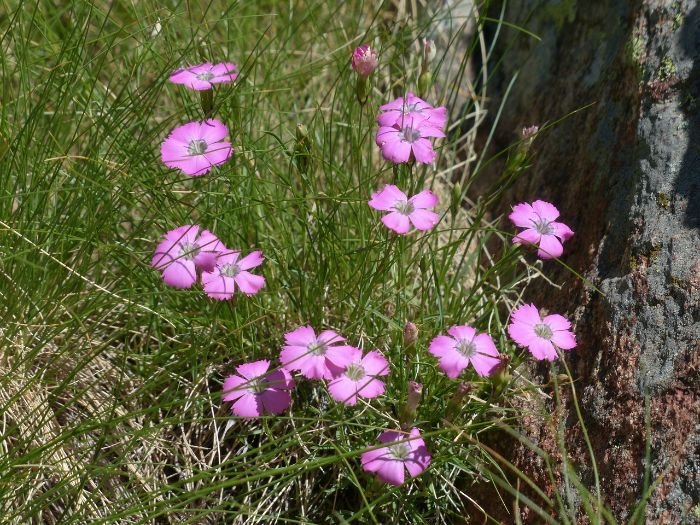
The hottest pockets still need full-sun plant selection based on reflected heat, afternoon exposure, and stone temperature before planting. A rock garden magnifies sun mistakes faster than an open border does.
Common Rock Garden Plant Mistakes
Most failures come from reading the stone and surface correctly, then misreading what happens two inches below it.
- Treating every rock garden as alpine when the site is really hot and droughty.
- Planting into rich compost pockets that hold cold moisture against the crown.
- Burying crowns under mulch or gravel until air stops moving around the base.
- Choosing mats for flower color alone and ignoring how wide they get by year three.
- Treating blue fescue as a permanent anchor in hot humid climates instead of a plant that may need division, refreshing, or replacement.
- Using ice plant without checking humidity, winter wet, and zone fit.
- Watering little and often in year one, which keeps roots shallow near the hottest layer.
- Letting one aggressive spreader stitch every open space until the stone disappears.
- Assuming a plant listed for full sun wants reflected heat all day long.
A good rock garden keeps a tighter outline with age. When plants start lifting, smothering the stone, or browning from the center, the site match was off long before the bloom count dropped.
Conclusion
Build the list from the harshest pocket outward. Once the hottest seam, the coolest crevice, and the wettest winter shoulder each have the right plant, the rest of the bed becomes editing rather than rescue work.
The match looks obvious when it is right: mats stay tight, gravel dries on top, the root run stays cooler below, and even in January the crowns sit clean against the stone.
FAQ
What plants grow best in a rock garden?
Sempervivum, sedum, creeping thyme, moss phlox, candytuft, sea thrift, cheddar pink, blue fescue, aubrieta, and carefully chosen campanulas are strong starting points. The best choice depends on whether the pocket is hot and dry, cool and creviced, wall-facing, or damp below the surface in winter.
Are sedums good rock garden plants?
Yes, sedums and stonecrop cultivars are strong rock garden plants for sunny, gritty, sharply drained pockets. Creeping types fit seams, wall tops, and gravel edges, and taller forms add late-season structure. The main cautions are fast spread in small pockets and crown rot where winter soil stays wet.
Can you grow rock garden plants in clay soil?
Yes, if you change the planting geometry first. Clay below a raised gritty pocket works much better than a flat clay bed with gravel sprinkled on top. Lift the crown, sharpen the surface texture, and keep fine compost away from the base.
What happens if rock garden soil stays wet in winter?
Winter losses often come from trapped moisture around crowns and roots. Crowns stay slick, roots lose air, and mats rot from the center or detach from the soil. Sempervivum, candytuft, dianthus, and many alpine-style plants fail this way long before actual cold becomes the limiting factor.
Are rock garden plants always alpine plants?
No. Many rock garden plants are drought-tolerant mats, wall-edge spillers, small structural grasses, or rocky-soil natives. True alpine plants need cooler roots, sharp drainage, and often cooler summer nights, and dry-sun rock garden plants tolerate more reflected heat.
Do rock garden plants need fertilizer?
Usually very little. Too much fertility pushes soft growth, opens tight mounds, and can shorten the life of plants that perform best in lean gravel. A light spring top-dress kept away from the crown is enough for many beds, and some dry pockets need no feeding at all.
How often should newly planted rock garden plants be watered?
For the first six to eight weeks, water deeply enough to pull roots downward, then let the surface dry before the next soak. Shallow frequent watering trains roots into the hottest layer. After establishment, timing depends on the plant group and the speed of drainage.
Can rock garden plants grow in partial shade?
If the shade is bright and the root run stays drained, yes. Saxifraga, campanula in hot climates, some dianthus, and several smaller mats handle morning sun with afternoon protection better than a stone pocket that bakes all day. Deep dry shade is a different problem and wants a different palette.