



Last Updated June 03, 2026
Therapeutic garden design works when the space lowers friction before it adds beauty. Paths reach seats without tight turns. Rosemary or lavender sits close enough to touch without stepping into a bed. Water stays close enough to hear without becoming another thing to endure.
A garden can look peaceful in a photo and still fail the person who needs it. Gravel can catch a walker. A bench can face the afternoon glare. Scented plants can sit three feet behind a border where no one can reach them. A therapeutic garden has to be designed from real use outward: walking, sitting, touching, noticing, tending, and leaving without fatigue.
Healing outdoor spaces work best when five principles support each other: access, comfort, sensory engagement, choice, and maintenance. They feel calm because the layout, plants, paths, shade, sound, and upkeep all remove small points of stress.
Key Takeaways:
- Match design choices to the people using the garden
- Place paths and seating before choosing plant colors
- Place sensory planting within reach beside paths and seats
- Avoid loud water, narrow paths, and slippery materials
- Recheck access, shade, and maintenance every season
Table of Contents
Therapeutic Garden Design – Start With The User Before The Mood
Start with the person before the planting plan. Who needs to use this space, and what makes outdoor time easier for them? A garden for quiet stress recovery needs a different layout from a rehabilitation garden, a dementia garden, a children’s sensory space, or a community healing courtyard.
A therapeutic garden is a plant-dominated outdoor environment designed for interaction with nature. The interaction can be passive, like sitting with shade and a view, or active, like pruning herbs, watering raised beds, walking a loop path, or joining a guided horticultural therapy session. AHTA’s description of therapeutic garden features includes accessible entrances and paths, raised beds, containers, and sensory planting built around color, texture, and fragrance.
That definition matters because it separates a therapeutic garden from a decorative garden with a bench added at the end. Decoration asks whether the space photographs well. Therapeutic design asks whether a tired person, an older adult, a wheelchair user, a child with sensory sensitivity, or a gardener recovering from injury can use the space without being asked to fight it.
Walk through the proposed garden slowly. Notice where a person hesitates: a step down, a hot paved strip, a dark corner, a narrow gate, a hose crossing the route, a seat with no back support. Those details decide whether the garden becomes part of daily life or stays as a view from the window.
Healing Garden Principles – Safety, Choice, Nature, And Comfort
Healing garden principles work best when they stay practical. A person should be able to enter, understand the route, choose a seat, reach plants, avoid glare, hear something gentle, and leave without confusion. Calm is partly emotional and partly physical.
Safety comes first because the nervous system reads risk before it reads beauty. Loose gravel under a cane, algae on a shaded paver, uneven flagstone, thorny plants beside a narrow path, and a bench that tips backward all pull attention away from restoration. A person keeps scanning for trouble.
Choice matters next. One seat in full view of the whole yard gives no control. Two or three seating options change the experience: one in shade, one with morning sun, one slightly tucked away, one close enough for conversation. The choice to withdraw or join other people is part of the design.
| Principle | What It Does | Design Detail That Carries It | Common Failure |
|---|---|---|---|
| Access | Lets people move without strain | Smooth paths, gentle slopes, reachable beds | Narrow routes that work only for able walkers |
| Comfort | Extends time in the garden | Shade, armrests, back support, wind protection | A pretty seat in glare or exposed wind |
| Sensory engagement | Pulls attention into the present moment | Scent, texture, sound, color, edible plants | Plants placed too far away to touch or smell |
| Legibility | Reduces confusion and hesitation | Clear loops, visible exits, repeated edges | Dead-end paths with no obvious return |
| Maintenance | Keeps the space safe and inviting | Durable surfaces, simple planting, pump access | High-care features that decline quickly |
Nature does the work only when the person can stay with it. Leaves moving in light wind, water slipping over stone, bees moving through catmint, and the dry resin scent of rosemary under a thumb all give the brain something concrete to track. Attention shifts from internal strain to an outside pattern that changes slowly enough to follow.
Therapeutic Garden Layout – Paths, Loops, Seating, And Boundaries
A therapeutic garden layout should be readable within the first few steps. The entrance should show where the route goes, where a person can pause, and how to return. Confusing routes create low-level stress even when the planting is beautiful.
Loop paths beat dead ends in most healing spaces. A loop lets someone keep moving without deciding when to turn around, and it helps caregivers, children, and older adults maintain orientation. In dementia-friendly gardens, a visible loop with a clear return point reduces the chance of a person stopping at a closed gate or feeling trapped at a path end.
For home gardens, treat 36 inches as a tight planning minimum for one clear accessible route and 48 inches as more comfortable for a walker, cane, or side-by-side support. A 60-inch turning space near a seat, gate, or raised bed gives a wheelchair or mobility aid room to reverse direction without scraping planting edges. Local accessibility requirements can be stricter in public, commercial, or care settings. Those extra inches feel invisible on a drawing and obvious in use.
Surface texture needs the same honesty. Pea gravel has a pleasant crunch under shoes; small wheels sink and narrow cane tips catch. Smooth concrete can work well until shade and irrigation leave a slick film. Decomposed granite, compacted stone dust, broom-finished concrete, resin-bound gravel, or firmly set pavers can carry movement better when installed with drainage and stable edges.
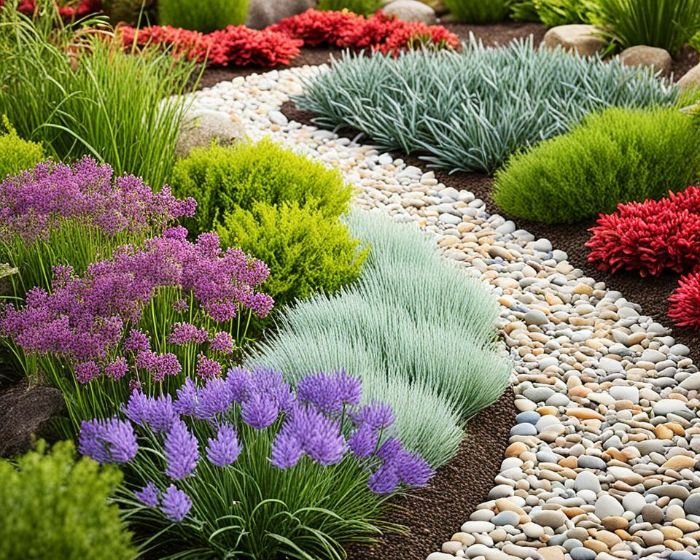
Seating belongs where a tired visitor wants to stop. A bench at the end of a path needs shade at the hour it will be used, a view with some depth, and enough space beside it for a wheelchair, walker, stroller, or garden cart. Armrests help standing. Back support extends the visit. A seat without those details becomes sculpture.
The larger path logic overlaps with good garden pathway design. Therapeutic spaces add another layer: the path is circulation, regulated pace, safe boundary, and sometimes the treatment activity itself.
Pro Tip: Before installing a path, roll a loaded wheelbarrow, stroller, or borrowed wheelchair over the proposed route if you can. The hands notice slope, drag, and tight turns faster than the eye does on a plan.
Sensory Garden Planting – Put Scent, Texture, Sound, And Color Within Reach
Sensory planting fails when the best plants sit behind a border like museum pieces. A therapeutic garden should invite close contact. Leaves, stems, flowers, bark, fruit, seedheads, and herbs need to land at hand height, beside paths, near seats, and along slow corners where people naturally pause.
Scent works through volatile oils released by flowers, foliage, and crushed leaves. Lavender, rosemary, thyme, mint, lemon balm, bee balm, sweet alyssum, and scented geranium all behave differently in heat. Rosemary gives a resinous scent when a leaf is pinched. Mint smells bright and green after a stem bruises. Lavender can become too strong in a hot enclosed courtyard, especially for people who are sensitive to fragrance.
Texture gives the hand something to read. Lamb’s ear feels soft and dry, almost like flannel. Blue fescue gives fine, wiry resistance. Oakleaf hydrangea has broad leaves with deep veins. Switchgrass seedheads brush lightly against the fingertips in late summer. Put those textures where they can be reached without bending into wet mulch.
Color should guide as well as please. Pale flowers can glow near evening seating. Deep green shrubs calm a busy view. Bright red, orange, and yellow can energize a social or children’s area. High-intensity color across the whole garden can feel restless. For low vision, contrast between path edge, planting, furniture, and steps matters more than a fashionable palette.
Sound planting is quieter than water and easier to maintain in many gardens. Ornamental grasses, bamboo kept in containers, seedheads, dry leaves, and pollinator planting add movement and small sound shifts. A garden designed around plants for sensory gardens can carry sight, smell, touch, taste, and sound without turning the space into a crowded plant collection.
Plant safety needs a firm edit. Avoid thorny roses on narrow paths, toxic plants within reach of young children, aggressive mint in open soil, and allergen-heavy plants near seats used daily. A separate bed of fragrant plants works better when the strongest scents sit downwind or in containers that can be moved.
Water, Shade, And Microclimate – Calm Depends On Conditions
A healing garden can become uncomfortable in ten minutes when the microclimate is wrong. Hot paving throws heat upward. A west-facing wall turns a bench into a glare trap. A fountain that sounded gentle in the showroom can slap against stone so loudly that conversation stops.
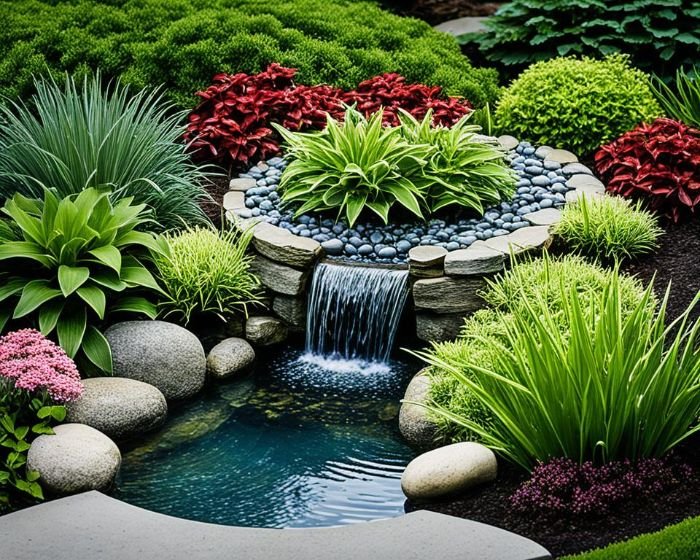
Water works best when the sound has a low, even rhythm. A small bubbler, basin, rill, or wall fountain near seating can mask traffic and give attention a soft anchor. Splashing water with a hard echo feels busy. Still water needs mosquito management. Any pump needs reachable access, because a clogged intake turns a calming feature into a maintenance irritation.
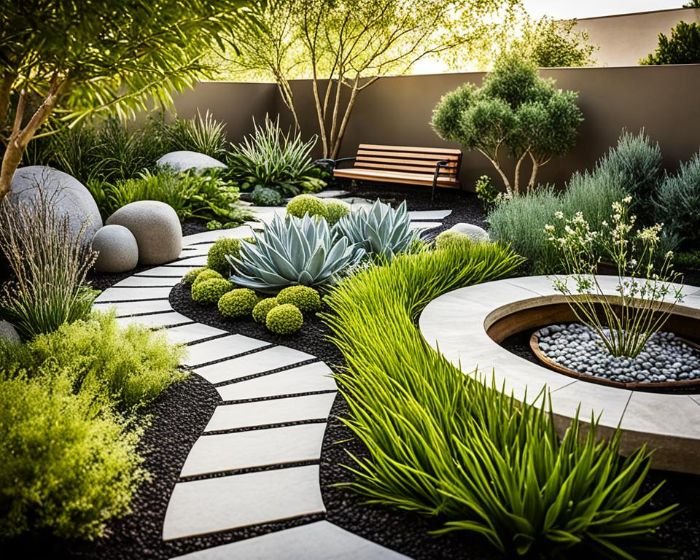
Water features in healing gardens need sound testing from the seat, not from the feature. Sit down, close your eyes for thirty seconds, and listen for the loudest thing in the space before choosing a bubbler, rill, basin, or fountain.
Shade changes the length of a visit. Morning sun can feel restorative in spring, while the same seat becomes punishing by July. Deciduous trees, vine-covered pergolas, umbrellas, shade sails, and tall shrubs all shift surface temperature and glare. Transpiration from leaves also cools nearby air as water moves from roots to leaf surfaces and exits through stomata.
Wind deserves attention in exposed yards and rooftops. A loose screen of shrubs, grasses, or slatted fencing slows wind without making the garden feel boxed in. In cold climates, a south-facing seat protected from winter wind may be the most used healing space on the property. In hot climates, afternoon shade and airflow matter more than enclosure.
Choose Features By Therapeutic Need
A single therapeutic garden does not serve every need equally. Design becomes stronger when the main therapeutic purpose is named early. Stress recovery, physical rehabilitation, dementia support, grief, social connection, and children’s sensory learning all ask for different first moves.
| User Need | Design Priority | Best Features | Feature To Limit |
|---|---|---|---|
| Stress recovery | Reduce noise, glare, and decision fatigue | Quiet seat, shade, layered green planting, low water sound | Busy color, many ornaments, loud fountains |
| Mindfulness practice | Create slow attention | Simple path, tactile herbs, one focal point, seasonal change | Too many competing focal points |
| Physical rehabilitation | Make movement safe and measurable | Loop path, handrails where needed, firm surface, rest points | Loose gravel, deep steps, unstable edging |
| Dementia support | Protect orientation and reduce exit stress | Visible loop, clear landmarks, enclosed boundary, familiar plants | Dead ends, hidden exits, confusing path branches |
| Social healing | Make gathering easy without forcing it | Movable chairs, shared table, broad paths, open planting | One fixed bench facing away from people |
| Children’s sensory learning | Invite touch and safe exploration | Durable plants, edible herbs, textures, water play with supervision | Toxic plants, thorns, fragile displays |
For a mindfulness garden, the design should slow the pace without making the space feel staged. One clear seat, a touchable herb edge, a quiet path, and a view that changes through the season do more than a crowded collection of symbolic objects. The same restraint carries into mindful garden design, where daily use matters more than decorative calm.
Community healing gardens need another kind of choice. People need places to work together and places to step aside. Raised beds, tool storage, shared shade, water access, and clear boundaries prevent the social space from becoming chaotic. A good inclusive community garden treats access, language, tool height, seating, and shared rules as design materials.
Think about the person who will arrive on a hard day. Do they need a task, a view, a loop, a conversation, a private seat, or a plant they can touch without asking for help?
Maintenance And Safety – The Hidden Design Principle
A therapeutic garden loses trust when maintenance becomes visible in the wrong way. Slimy paving, dead plants, broken edging, dry containers, clogged water, loose handrails, and overgrown paths make the space feel neglected. The body reads neglect as risk.
Maintenance should shape the design before installation. Choose surfaces that drain. Place pumps where a person can clean them without kneeling in mud. Keep thorny, brittle, or messy plants away from tight routes. Use mulch that stays put. Select shrubs that fit their mature size in place of constant hard pruning.
Plant health affects the emotional tone of the garden. A rosemary hedge that smells clean and resinous after rain feels different from a container of wilted mint with sour wet soil. A bench under a tree can be lovely until bird droppings, fruit fall, or sticky honeydew make it unusable for half the season.
Weekly maintenance should be simple enough to repeat: sweep the route, test seating, check water sound and pump flow, remove slick growth, prune plants off paths, refill containers, and look for trip edges. Seasonal checks should include shade at the main sitting hour, winter visibility, irrigation reach, and whether plants have grown into access space.
The most common design mistake is choosing high-care features to create low-stress space. A tiny pond that needs constant algae control, a gravel path that needs weekly raking, or a fragrant border that collapses in midsummer turns healing into chores. Good therapeutic design leaves enough energy for the person using it.
Choose The Right First Design Move For Your Space
On a small patio, reach comes before complexity. Place one comfortable chair in the best shade, then add two containers at hand height: one scented herb and one soft or textured plant. A tabletop water bowl or birdbath can add sound and movement if it stays easy to clean.
In a suburban backyard, make the path decision first. Mark a loop with hose or marking paint, place a seat where shade and view meet, then decide which plants should be touched along the route. The broader garden layout design should serve this movement pattern in place of forcing the therapeutic space into a leftover corner.
For a noisy yard, test sound before plant shopping. Sit where the bench might go and identify the loudest source: road, neighbor equipment, HVAC, barking, or wind through fencing. Add planting, fencing, or water only after the problem sound is named.
A care setting or shared garden needs user input before the plan gets polished. Staff, caregivers, residents, volunteers, and maintenance crews will notice different failure points. A garden that works for all of them usually begins with access, shade, water, storage, and clear routes before a dramatic centerpiece.
Conclusion – A Therapeutic Garden Works When It Gets Used
The most useful therapeutic garden is often simple. A safe path, a usable seat, reachable plants, measured shade, gentle sound, and maintenance that holds up under real weather usually matter more than a complicated design full of good intentions.
Build the garden around the moment of use. Someone steps outside tired, sore, distracted, lonely, overstimulated, or restless. The garden should give that person one simple next action: walk the loop, sit in shade, brush a scented leaf, listen to water, water a raised bed, or watch bees moving through flowers. Repeated use turns therapeutic design into a working outdoor space.
FAQs
What Are The Core Principles Of Therapeutic Garden Design?
The core principles are access, safety, comfort, sensory engagement, choice, legibility, and maintenance. A therapeutic garden should be easy to enter, easy to understand, comfortable to stay in, and rich enough in natural detail to hold attention without overwhelming the user.
What Is The Difference Between A Healing Garden And A Therapeutic Garden?
A healing garden is usually designed to reduce stress and support restoration through nature, views, seating, shade, and calm sensory cues. A therapeutic garden is more purpose-built for interaction and may support horticultural therapy, rehabilitation, accessible gardening, or programmed activities.
How Wide Should Paths Be In A Therapeutic Garden?
Use 36 inches as a tight minimum for one accessible route in a home garden, and choose 48 inches when walkers, wheelchairs, side-by-side support, or garden carts will use the space. Add a 60-inch turning area near seats, gates, raised beds, or route endings.
What Plants Work Best In A Therapeutic Garden?
Choose plants that are safe, durable, reachable, and tied to the senses. Good choices often include lavender, rosemary, thyme, lamb’s ear, ornamental grasses, coneflower, blueberries, strawberries, mint in containers, and native shrubs that attract birds or pollinators. Avoid thorns, toxic plants near children, and overpowering fragrance near main seats.
Does A Therapeutic Garden Need A Water Feature?
A water feature is helpful only when it improves the experience. Gentle water sound can mask traffic and support calm attention. Loud splash, mosquito problems, algae, leaks, or hard-to-reach pumps create stress. In some gardens, grasses, birds, leaves, and shade provide enough sensory movement without water.
Can A Small Yard Or Patio Become A Therapeutic Garden?
Yes. A small therapeutic garden needs a comfortable seat, shade or glare control, one or two reachable sensory plants, stable footing, and one calming focal point. A container of rosemary beside a chair can be more useful than a large bed placed where no one can touch or smell it.