




Last Updated May 23, 2026
AI for soil health becomes useful when crop rotation planning moves from a calendar habit to a field-by-field risk map. The best rotation for one bed or field depends on what grew there before, how much residue stayed, which pests built up, when the soil stayed wet, and where yields fell short. A model can sort those patterns faster than a notebook. The decision still has to match real soil, equipment, seed windows, and market pressure.
Good AI crop rotation planning begins with evidence: soil tests, crop families, yield maps, disease notes, cover crop windows, irrigation limits, compaction zones, and weather records. The output should be a ranked rotation plan that shows why a sequence protects soil structure, nutrient cycling, pest breaks, and harvest reliability.
Key Takeaways
- Feed AI field history before asking for crop sequences.
- Use rotation plans to manage nutrients, pests, and residue.
- Keep human review on markets, equipment, and local disease pressure.
- Track soil tests and yield response after each season.
- Avoid treating AI output as an agronomy shortcut.
Table of Contents
AI Crop Rotation Planning Starts With Field Memory
A rotation problem usually hides in the past. A tomato bed that carried nightshades for three seasons, a corn field that lost residue cover after silage harvest, or a low corner that stayed too wet for beans will all look different to a planner that can read history. AI earns its place when it connects those old decisions to the next crop choice.
Traditional crop rotation notes often live in separate places: a seed order, a spreadsheet, a yield monitor, a soil test PDF, a weather app, and the grower’s memory. Machine learning systems can bring those records into one pattern. They can flag repeated crop families, short pest breaks, declining organic matter, wet harvest risk, or fields where yield drag appears after the same preceding crop.
The soil-health reason is practical. Rotations help manage crusting, clods, water stress, erosion, compaction, low yield, nutrient recycling, and pest pressure. Crop rotation planning should identify erosion, nutrient, and soil-health concerns before crop choices are locked in. AI makes that list easier to update every season.
In a home garden, the same idea can be smaller. A spreadsheet with bed number, crop family, compost additions, disease notes, and harvest result gives an AI tool enough structure to catch repeat patterns. The value is the memory, not the novelty.
Smart Crop Rotation Uses Soil Data, Pest History, And Weather Risk
AI recommendations become shallow when the model sees crop names alone. Soil health depends on texture, drainage, organic matter, residue, nutrient levels, root depth, and the living window between harvest and planting. A crop sequence that looks balanced on paper can still expose soil to erosion or leave a field bare during the months when rainfall hits hardest.
Strong rotation models look at both slow signals and fast signals. Slow signals include organic matter trend, pH, phosphorus, potassium, compaction, and past crop family. Fast signals include this season’s rainfall, disease pressure, market timing, planting delays, and cover crop establishment windows.
| Data Layer | What AI Can Detect | Rotation Decision It Changes | Soil Or Yield Reason |
|---|---|---|---|
| Crop history | Repeated families or short pest breaks | Move to a different crop family | Reduces disease, insects, and nematode pressure |
| Soil tests | Low organic matter, pH drift, nutrient gaps | Add legumes, cover crops, or fertility correction | Improves nutrient cycling and crop response |
| Yield maps | Zones with repeated weak performance | Change crop choice or add soil-building years | Separates rotation problems from whole-field averages |
| Weather records | Wet harvest risk or short planting windows | Select crops that fit the local season | Protects soil from compaction and bare periods |
| Pest scouting | Field-specific pressure building over time | Lengthen the break before a host crop returns | Reduces rescue sprays and crop stress |
| Cover crop windows | Open weeks for live roots after harvest | Insert cover, relay, or winter annual options | Keeps roots feeding soil biology longer |
Small gardens can use fewer data layers. Bed history, crop family, compost timing, disease notes, and a yearly soil test already separate useful planning from random rotation. Soil health improvement still decides whether structure, moisture, organic matter, and biology are strong enough for the next crop to use the rotation advantage.
AI Helps Match Crop Families To Soil Health Goals
A strong rotation changes root shape, residue quality, nutrient demand, planting date, harvest timing, and pest habitat. AI can compare those traits across several years and show which sequence gives the soil the longest useful break.
Legumes can support nitrogen planning. Deep-rooted crops can open channels in compacted zones. High-residue grains can shield soil after harvest. Brassicas can fit some pest and cover-crop strategies, depending on the system. The planner becomes stronger when each crop is tagged by family, root habit, residue level, nutrient demand, disease hosts, and market use.
That is where AI can help without pretending the farm is a lab. It can rank several legal and practical sequences, then show tradeoffs: the best soil-building option may miss a market window; the strongest pest break may require equipment the grower does not have; the most profitable crop may leave too little time for cover.
For gardeners and small farms, crop family logic still matters. Crop rotation principles set the base rules; AI adds memory, scoring, and scenario comparison on top of those rules.
Pro Tip: Tag every crop by family before using an AI planner. Tomatoes, peppers, potatoes, and eggplants may look like different garden choices; the rotation break stays weak when the bed keeps returning to nightshades.
Soil Health Improves When Rotation Models Keep Living Roots In The Plan
Soil loses momentum when it sits bare between cash crops. Rain hits the surface, aggregates break, weeds take the opening, and biology has fewer living roots to feed on. AI can make that gap visible because it can compare harvest date, frost date, cover crop establishment, and next planting window at the same time.
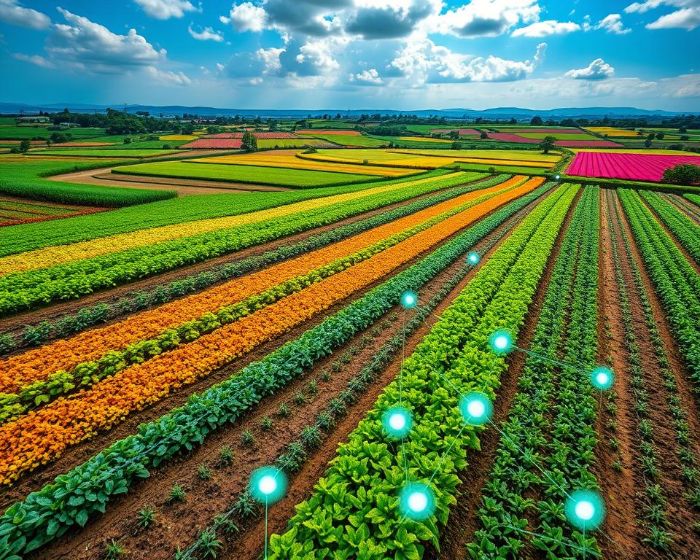
That matters for soil health because rotation models also solve a time-cover problem. A sequence with corn, soybeans, and a small grain may create a window for rye, clover, radish, oats, or a mixed cover. A model can test which window is realistic for the field, then score whether the cover improves erosion control, nutrient capture, weed pressure, or soil structure.
Diverse rotations, cover crops, and longer live plant cover can reduce pest pressure, add nitrogen through legumes, reduce erosion, and build soil physical properties. AI helps by finding the narrow windows where those practices can fit without breaking the cash-crop plan.
In a backyard garden, the same principle might mean oats after summer squash, crimson clover after tomatoes, or a winter mulch where cover crops will miss the season. The decision should come from the bed’s next crop, disease history, and planting date, not from a generic cover-crop list.
Cover crops for soil improvement become more useful when the open window is short and the bed still needs living roots before winter.
Yield Gains Come From Better Precrop Decisions, Not AI Hype
AI can overpromise when every recommendation becomes a yield claim. Rotation benefits vary by crop, climate, soil, rainfall, and the crop that came before. A legume preceding corn may help in one field and disappoint in another if heat, late planting, or poor stand establishment becomes the limiting factor.
Recent causal machine learning evidence on crop rotation shows why field context matters, though early preprint findings should not be treated as a fixed rule for every farm. Precrop effects on yield can vary by crop sequence and weather conditions, with benefits changing under warmer or rainier conditions. That is the real promise of AI crop rotation planning: measuring local response from the field’s own climate and history.
A useful model should show confidence levels, missing data, and the reason behind a recommendation. If the system recommends wheat after soybeans, the grower should see whether that recommendation came from disease break, planting window, residue need, nitrogen timing, market price, or historical yield response. Black-box advice is hard to trust when one wrong sequence affects several seasons.

Yield planning also belongs beside crop monitoring. A rotation may look strong in winter planning and still need adjustment after disease pressure, drought, or late planting changes the season. The same feedback loop appears in predictive analytics for crop health, where scouting and weather data update risk before
Start With A Rotation Risk Map
A rotation risk map is a simple first version of AI crop rotation planning. List each bed or field, then score the risks that matter most: repeated crop family, low residue, compaction, nutrient gap, erosion, disease history, water stress, and weak cover-crop window. The map tells the AI what to protect before it suggests what to plant.
For a small garden, a one-page table is enough. For a farm, the same logic can scale through GIS maps, yield data, soil tests, sensor readings, and satellite layers. The tool should still answer a grounded question: which sequence gives this soil a better chance next season?
| Risk Signal | What To Enter | AI Should Suggest | Human Check |
|---|---|---|---|
| Repeated crop family | Last 3 to 5 years of crops | Longer family break | Local disease pressure |
| Low residue | Harvest type and residue left | High-residue crop or cover crop | Planting equipment fit |
| Compaction | Wet harvest zones, traffic lanes, poor infiltration | Deep-rooted crop, reduced traffic, cover option | Soil moisture before field work |
| Nutrient gap | Soil test and past yield removal | Legume, fertility correction, or lower-demand crop | Budget and amendment availability |
| Short open window | Harvest date, frost date, next planting date | Fast cover crop or winter annual | Seed supply and weather forecast |
Sensor data can sharpen the map, especially for soil moisture, temperature, and irrigation timing. Smart garden and farm sensors improve the input layer. The rotation decision still has to come back to crop sequence and soil response.
AI Rotation Plans Need Human Agronomy Checks
A model can sort data. It cannot walk the field after a wet harvest unless someone records the damage. It cannot smell anaerobic soil, see a thin stand from poor seed contact, or know that a grower has no market for the crop it ranks highest. Human review keeps the plan usable.
The main checks are practical. Confirm equipment, labor, irrigation, seed availability, insurance rules, and harvest timing. Match the pest break to the local disease cycle. On sloping ground, leave enough residue to protect the surface. For cover crops, use a window that the grower can actually plant.
AI is strongest as a second set of eyes over messy records. It can catch patterns that are easy to miss, such as one field losing yield after wet falls, one crop family returning too soon, or one cover crop failing after a late harvest. The grower still decides which risk matters most this year.
Useful AI in agriculture connects data to field checks so decisions stay grounded in real soil.
Conclusion
AI crop rotation planning works best when it treats soil health as a set of field signals: residue, roots, pests, nutrients, water movement, compaction, and yield response. The output should be a rotation plan with reasons, risk scores, and follow-up measurements.
Start with three years of crop history, one current soil test, and one honest map of weak spots. If the next plan gives the soil more cover, longer pest breaks, better nutrient timing, and fewer bare weeks, the technology has done something useful. The field should show it in cleaner emergence, more even growth, and soil that holds together when you lift it in your hand.
FAQ
How Does AI Improve Crop Rotation Planning?
AI improves crop rotation planning by comparing field history, crop family, soil tests, weather risk, pest notes, and yield response at the same time. That helps identify sequences that protect soil structure, nutrient cycling, and harvest reliability.
Can AI Choose The Best Crop Rotation By Itself?
No. AI can rank possible crop sequences. A grower still has to check equipment, seed supply, local disease pressure, market access, insurance rules, and soil conditions before using the plan.
What Data Does AI Need For Soil Health Planning?
The most useful inputs are crop history, soil organic matter, pH, nutrients, yield records, compaction notes, pest scouting, rainfall, irrigation limits, and cover crop windows. Better records usually produce better rotation suggestions.
Is AI Crop Rotation Useful For Home Gardens?
Yes, if the garden has repeat beds and several crop families. A simple record of bed number, crop family, disease notes, compost use, and harvest result can help an AI tool suggest cleaner rotations for the next season.