
Last Updated April 30, 2026
To choose herbs for a garden, start with use, then match each plant to light, water, root behavior, and harvest style. A basil plant clipped every few days behaves nothing like rosemary in a clay pot or mint running through open soil. A strong herb garden uses fewer plants with clearer harvest roles, and each plant has a place that fits its growth.
Rub a rosemary leaf between your fingers and the resin lingers as a sharp pine scent. Crush mint and the stem feels square, cool, and slightly juicy. Those physical clues matter because herbs earn their value through oils, tender leaves, flowers, seeds, or roots. Choose by the plant part you will actually use, and the planting plan gets much cleaner.
Good culinary and medicinal herb gardens include basil, parsley, cilantro, thyme, rosemary, oregano, sage, chives, mint, chamomile, calendula, lavender, lemon balm, and echinacea. Keep dry Mediterranean herbs separate from moisture-loving leafy herbs, plant aggressive spreaders in containers, and use medicinal herbs with clear safety limits.
Key Takeaways:
- Choose kitchen herbs by the foods you cook weekly, not by nursery display labels
- Keep mint, lemon balm, oregano, and other spreading herbs contained unless you want them to roam
- Plant rosemary, thyme, oregano, sage, and lavender in sharper drainage than basil, parsley, cilantro, and chives
- Use medicinal herbs for careful home routines, not as substitutes for medical care or medication advice
- Match containers to herbs with shallow, compact roots and in-ground beds to herbs that need space or seasonal volume
Table of Contents
Herb Garden Selection – Match Use Before You Choose Varieties
Herb garden selection gets easier when the first question is practical: What will you cut, dry, brew, cook, or smell? A cook who makes tomato sauce every week needs basil, oregano, thyme, parsley, and perhaps rosemary. A tea-focused gardener reaches for mint, lemon balm, chamomile, and maybe lavender. A pollinator-minded gardener lets chives, dill, fennel, thyme, basil, and calendula flower at the right edge of the bed.
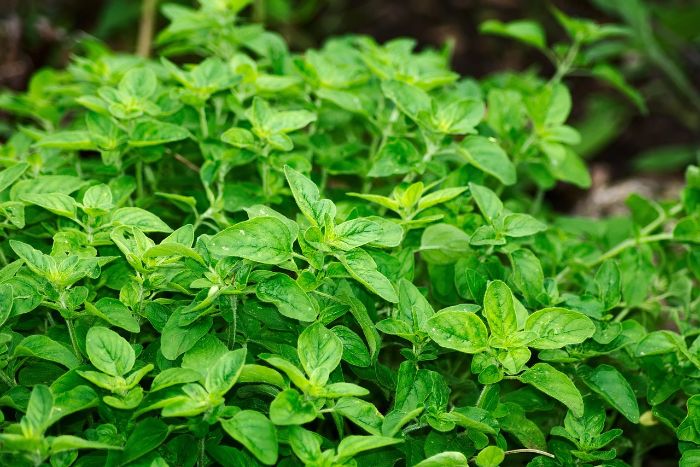
Many culinary herbs fall into two useful plant families. Mint-family herbs, including basil, oregano, rosemary, thyme, lavender, sage, and mints, carry aromatic leaves and some tolerance for heat and drier soil. Carrot-family herbs, including dill, parsley, cilantro, fennel, and lovage, have a more upright habit, deeper roots, and a stronger need for looser, somewhat moister soil. That family split explains many container failures.
The flavor mechanism sits in plant chemistry. Many familiar herbs store volatile oils in leaf glands or flower tissues. Light, drainage, pruning, and fertility change how concentrated those oils become. Stronger light also increases oil development in foliage and stems, which is why a sun-grown thyme sprig smells sharper than a weak windowsill plant with thin growth.
Best Herb Varieties For Culinary, Medicinal, And Container Gardens
Variety choice matters after the plant’s job is clear. Genovese basil and Thai basil are both basil, yet they belong in different meals. German chamomile and Roman chamomile both produce daisy-like flowers, yet one behaves like a self-sowing annual and the other creeps lower. The label under the common name decides flavor, size, winter behavior, and container fit.
| Herb group | Best variety or type | Best use | Container or ground |
|---|---|---|---|
| Basil | Genovese, Thai basil, bush basil | Pesto, tomato dishes, Southeast Asian cooking, small patio pots | Warm beds or individual pots |
| Parsley | Flat-leaf, curly | Cooking, garnish, fresh cutting bunches | Deep pots or moist beds |
| Mint | Spearmint, peppermint, apple mint | Tea, drinks, sauces, fresh scent | Separate pot |
| Thyme | Common thyme, lemon thyme, creeping thyme | Roasting, drying, edges, low aromatic groundcover | Dry pot or well-drained bed |
| Rosemary | Upright, trailing, cold-hardy forms | Cooking, structure, winter containers, dry borders | Deep pot or dry bed |
| Lavender | English lavender, lavandin, French or Spanish types | Scent, buds, pollinators, dry ornamental planting | Dry pot or dry ground |
| Chamomile | German chamomile, Roman chamomile | Tea flowers, low edging, pollinator bloom | Bed edge or wide pot |
| Oregano | Greek, common, golden | Cooking, drying, dry herb edge | Dry bed or pot |
| Sage | Common, purple, tricolor | Cooking, winter foliage, ornamental contrast | Dry pot or bed |
| Cilantro and dill | Slow-bolt cilantro, leaf dill, Fernleaf dill | Fresh leaves, seed heads, pickles, succession sowing | Direct-sown beds or deep pots |
The old gardening rule still has teeth: right plant, right place. Broader plant selection follows the same site-first logic, and herbs make placement errors visible fast because their flavor, roots, and harvest response shift within weeks.
Culinary Herbs – Match Flavor Families To Your Cooking
Culinary herbs should earn a place in the garden by appearing in real meals. Basil earns space if tomatoes, pesto, Thai basil dishes, salads, or summer pasta happen in your kitchen. Cilantro earns space if salsa, tacos, chutneys, curries, and fresh garnishes show up weekly. Rosemary earns space if roasted potatoes, chicken, beans, flatbreads, and grilled vegetables are regular food.
Leafy annual herbs
Basil, cilantro, dill, and chervil move fast. They germinate, leaf out, react to heat, flower, and decline in a single growing season. Basil leaves feel soft and slightly padded when the plant is young; once stems harden and flower buds form, the leaves get smaller and the flavor turns harsher. That shift comes from the plant moving resources toward flowers and seed production, away from tender leaf growth.
Plant these herbs in repeat rounds. Basil does well from transplants after frost. Cilantro and dill resent root disturbance because of their deeper taproot habit, so direct sowing gives cleaner results. A new pinch of cilantro seed every 2 to 3 weeks gives a better harvest than one spring row that bolts when heat arrives.
Woody Mediterranean herbs
Rosemary, thyme, oregano, sage, marjoram, and lavender prefer a leaner, drier rhythm. Their stems stiffen with age, their leaves hold more concentrated oils, and their roots dislike wet soil. A healthy thyme plant in gritty soil gives firm resistance when tugged gently. A thyme plant in wet potting mix loosens at the crown and smells sour near the base.
These herbs suit roasts, beans, breads, stews, vegetables, and sauces that cook longer. Rosemary varieties differ in growth habit and cold response, so a gardener choosing between upright, trailing, cold-hardy, or container forms should treat rosemary variety selection as a separate decision, not a random label choice. Thyme, oregano, and sage also dry better than basil because their foliage begins with less water and more stable oils.

Soft perennial and biennial kitchen herbs
Parsley, chives, tarragon, sorrel, and mint fill the space between annual speed and woody permanence. Parsley gives lush cut stems in richer soil. Chives return early, flower prettily, and tolerate division. Mint tastes clean in drinks and sauces, and open soil turns that useful plant into a maintenance problem. Mint varieties and growth habits differ in flavor, vigor, runner spread, and maintenance demand, so containment belongs in the variety decision as much as taste.
Medicinal Herbs – Grow Useful Plants With A Safety Boundary
Medicinal herbs need a firmer boundary than culinary herbs. Growing chamomile for tea, calendula for dried petals, lavender for scent, lemon balm for fresh leaves, or echinacea for a pollinator-rich perennial patch is reasonable garden work. Using garden herbs as treatment advice is a different subject. The plant in the bed is not a diagnosis, a dosage, or a substitute for a clinician.
Herbal medicines and botanicals sold as supplements can raise concerns around drug interactions and product contamination. That caution belongs in the garden too. A plant that is safe as a garnish or scent source is not automatically safe as a concentrated extract, daily tea, tincture, capsule, or pregnancy-safe product.
The mechanism behind medicinal reputation comes from secondary metabolites – compounds plants produce for defense, scent, pollinator attraction, or stress response. Volatile oils, bitter compounds, flavonoids, mucilage, and resins are real plant chemistry. Garden use should stay honest: grow accurately identified plants, harvest clean material, label dried herbs clearly, and avoid strong internal use when medication, pregnancy, breastfeeding, surgery, chronic illness, or children are involved.
| Herb | Harvest part and home-garden role | Planting note | Safety boundary |
|---|---|---|---|
| Chamomile | Flowers for tea, apple-like scent, pollinator bloom | German chamomile behaves as an annual; Roman chamomile spreads lower | Avoid casual use with medication concerns or allergy risk |
| Calendula | Petals for edible color, drying, and garden craft | Easy annual that flowers longer with regular picking | Use clean petals and accurate identification |
| Lavender | Flower buds and stems for sachets, scent bundles, occasional culinary use from edible types | Needs full sun and sharp drainage | Do not treat fragrance as medical proof |
| Lemon balm | Leaves for tea, citrus scent, pollinator flowers | Plant in a pot or deadhead before seed drop | Keep dosage claims off the garden plan |
| Peppermint and spearmint | Leaves for tea, drinks, sauces, and fresh scent | Container planting prevents bed takeover | Strong preparations deserve extra caution |
| Echinacea | Flowers and seed heads for pollinators, perennial color, herbal tradition | Needs room for a clump and winter crown drainage | Do not present it as cold or flu treatment |
Home herb growing works best plant by plant because “medicinal herb” is not one growing category. Chamomile, echinacea, lavender, and mint do not share the same roots, harvest part, or climate tolerance.

For a mixed culinary and medicinal garden, choose the gentle overlap plants first: mint in a pot, chamomile where flowers are easy to pick, calendula along an edge, lavender in the driest sunniest place, and lemon balm only where self-sowing will not become a chore.
Containers Vs In-Ground Beds – Root Behavior Decides The Home
Containers are not a beginner compromise. For many herbs, a pot is the better home. A container limits aggressive roots, improves drainage control, moves tender plants under cover, and keeps small harvest plants near the kitchen. In-ground beds suit bigger perennial clumps, pollinator edges, and herbs grown for bulk drying.
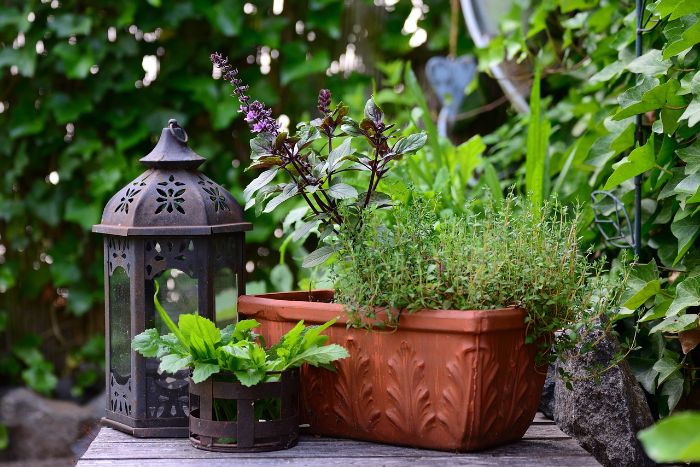
Container-grown herbs fit plants that need well-drained soil, small slow-growing herbs, and tender herbs brought indoors for winter. Containers need drainage holes, loose potting mix, and careful watering until water drips from the bottom. Those requirements look basic until a rosemary dies in a sealed decorative pot.
Tender, hardy, and overwintering herbs
Climate decides whether an herb belongs in the ground or in a movable pot. Basil acts as a warm-season annual. Cilantro and dill prefer cooler sowing windows and bolt in heat. In cold-winter gardens, rosemary and bay are safer in containers. Lavender needs dry winter drainage more than heavy feeding. Chives, thyme, oregano, and sage make more reliable perennial anchors in many gardens, while mint and lemon balm return aggressively where winter does not weaken their crowns.
Root volume changes water physics. In open ground, water moves through a deeper soil profile. In a pot, the bottom stays wetter, the side walls heat quickly, and the whole root system dries or saturates faster. Lift a watered 12-inch clay pot, then lift it two days later in hot wind; the weight difference tells you more than the surface color.
| Planting method | Best herb fit | Why it works | Watch point |
|---|---|---|---|
| Individual pot | Mint, lemon balm, rosemary, bay, lavender, bush basil | Controls roots, moisture, and winter movement | Dries faster and needs consistent checking |
| Mixed container | Chives with parsley, thyme with oregano, basil with cilantro for short season use | Gives compact harvest near the kitchen | Only combine herbs with similar water needs |
| Raised bed | Basil, parsley, dill, cilantro, calendula, chamomile, chives | Warms early and improves drainage over heavy soil | Annual herbs need succession sowing or replacement |
| Open ground | Echinacea, sage, oregano, thyme, fennel, large dill patches | Gives perennial roots and flowering plants more room | Spreading herbs need barriers or regular cutting |
Pro Tip: Use separate pots for mint, lemon balm, rosemary, and basil the first season. Those four teach the main herb lessons fast: spreading roots, self-sowing, wet-root dislike, and fast annual harvest demand.
Small-space gardeners should think in modules. A dry Mediterranean pot with thyme, oregano, and sage makes sense. A moist leafy pot with parsley, chives, and basil makes sense for a short summer run. A mint pot belongs alone. The same root-room and watering logic applies to vegetables, herbs, and flowers in pots, where root room and watering rhythm decide the planting more than the label “container friendly.”
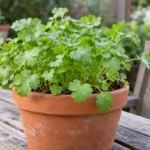
Container choice still matters. Deep pots suit parsley, rosemary, sage, and bay better than shallow bowls. Wide low pots suit thyme and oregano. Porous clay dries faster and helps herbs that hate wet roots; plastic holds moisture longer and fits thirsty leafy herbs. Choosing the right garden planters shapes root volume, drying speed, and winter protection, so the pot choice belongs inside the herb selection decision.
Soil, Sun, And Water – Group Herbs By Living Conditions
Most herb failures start with mixed living conditions. The gardener plants rosemary, basil, mint, parsley, thyme, and lavender in the same handsome trough. One watering rhythm cannot satisfy all six. Rosemary and lavender sulk in wet mix. Basil flags when the trough dries. Mint fills every open pocket. The planting looks charming for three weeks, then turns into a negotiation the gardener loses.
Most herbs need well-drained sites, at least six hours of sun, and soil near pH 6.5 to 7.0 for many culinary species. Container herbs usually need more moisture than garden-grown herbs, while excess fertilizer can push lush green growth with weaker flavor. Flavor concentration is not the same thing as leaf size.
For pH, a practical herb range is about 6.0 to 7.5, with heavy clay, wet areas, and overly rich soil causing more trouble than mild fertility gaps. Rich soil drives rapid cell expansion and watery growth. In aromatic herbs, that growth dilutes the oils that give the plant its character. A sage leaf from lean sunny soil feels firmer and smells sharper than one from a lush, shaded, overfed plant.

Dry-sun group
Rosemary, thyme, oregano, sage, lavender, marjoram, and winter savory belong in full sun with open air and quick drainage. Their roots need oxygen around the fine root hairs. When soil stays wet, oxygen diffusion slows, root cells lose function, and rot organisms gain the upper hand. The first clue is not always wilt. It is a duller leaf color, weak new growth, and a crown that feels loose when touched.
Moist-leaf group
Basil, parsley, cilantro, chives, dill, chervil, and mint need more even moisture during active growth. They still need drainage, just not drought treatment. Push a finger into the mix at one inch. Dry, warm, and dusty means basil and parsley need water. Cool and faintly damp means wait. For larger beds, a planned watering schedule for different plant types prevents watering by habit and brings the decision back to root-zone need.
Observation: I often see herb gardens fail after a generous fertilizing, not after neglect. The plants look greener for a moment, then basil gets soft and aphid-prone, and thyme and oregano lose the tight scent that made them worth growing.
Mulch deserves the same split. Straw or leaf mulch helps parsley, chives, calendula, and basil through hot spells. Gravel or a thin mineral mulch suits lavender, thyme, and rosemary better because it keeps the crown drier. Soil work also belongs before planting, not after the herb is limping. In worn beds, soil health improvement helps separate structure problems from simple fertilizer problems.
A Practical Herb Matrix – Build A Balanced First Planting
A balanced first herb garden should cover daily cooking, dry-storage herbs, one contained tea herb, one pollinator flower, and one aromatic perennial. Choose herbs that remain useful through August, not herbs that only fill the planting space in May.
| Role | Herbs | Best placement | Harvest rule |
|---|---|---|---|
| Fresh summer flavor | Basil, cilantro, dill | Raised bed or individual pots | Cut young; resow for repeat harvest |
| Year-round cooking backbone | Thyme, oregano, rosemary, sage | Dry bed or separate clay pots | Clip lightly before bloom |
| Soft garnish | Parsley, chives | Moist bed, window box, or patio pot | Cut outer stems so the crown keeps producing |
| Tea and scent | Mint, lemon balm, chamomile | Contained pots and easy-pick bed edges | Pick clean leaves or flowers in dry weather |
| Pollinator and color | Calendula, chives, dill, fennel, echinacea | Bed edge or open ground | Let selected flowers open |
Some combinations deserve a hard no:
- Do not plant mint with thyme, rosemary, lavender, or oregano in one open bed
- Do not mix rosemary and basil in one small pot unless the planting is temporary
- Do not put fennel in the center of a compact herb bed because it grows tall and self-sows
- Do not plant medicinal herbs where pesticide drift, pet traffic, or unknown soil contamination affects harvest safety
Harvest timing finishes the selection decision. Clip culinary herbs through the season as needed, and pick herbs for drying when flavor is high, after morning dew has dried. Remove about one-third of the foliage at a time so the plant keeps enough leaf area to recover. Those limits prevent the common beginner mistake of stripping a young herb down to stems.
Conclusion
Choosing herbs for a culinary and medicinal garden is a fit problem before it is a shopping problem. Kitchen staples need repeated harvest. Tea and scent herbs need clean handling and honest safety limits. Mediterranean herbs need sun, air, lean soil, and drainage. Leafy annual herbs need richer moisture and replacement through the season.
Pick fewer herbs and place them better. Keep aggressive plants contained. Separate dry-root herbs from leafy moisture lovers. Let a few plants flower for pollinators, and keep the main culinary plants clipped before flavor drops. The garden becomes easier to tend because every herb has a reason to be there.
FAQ
What herbs should I choose first for a culinary garden?
Choose the herbs that match your weekly cooking. For many home kitchens, that means basil, parsley, chives, thyme, oregano, rosemary, and mint in its own container. Add cilantro or dill if you cook with fresh salsas, pickles, curries, fish, or herb-heavy salads. A small set harvested well beats a crowded collection clipped only once.
Can culinary herbs also be medicinal herbs?
Many culinary herbs have herbal traditions; culinary use and medicinal use are not the same thing. Mint, sage, rosemary, thyme, chamomile, lavender, and lemon balm all cross categories in some way. The safe garden approach is to grow them for food, tea, scent, and craft use, then avoid treatment claims, concentrated preparations, and medication advice.
Which herbs should not be planted together?
Mint should not share open ground with slower herbs because its runners spread aggressively. Rosemary, thyme, oregano, sage, and lavender should not share a small pot with thirsty basil, parsley, cilantro, or mint. Fennel also deserves space away from compact herb groups because it grows tall, casts shade, and self-sows if seed heads mature.
Are herbs better in pots or in the ground?
Pots are better for mint, lemon balm, rosemary in cold climates, bay, tender lavender, and small patio gardens. In-ground beds are better for larger patches of basil, parsley, dill, calendula, chamomile, chives, sage, and echinacea when the soil drains well. The deciding factor is root behavior, not garden skill. Containers give control; ground gives space.
How much sun do herbs need?
Six hours of direct sun is the practical target for most herbs. Rosemary, thyme, oregano, sage, lavender, basil, dill, and chives perform best in bright conditions. Parsley, cilantro, mint, and chervil tolerate less intense light, especially in hot climates. Weak light produces thin stems, paler leaves, and weaker scent because the plant builds fewer aromatic oils.
What is the best soil for a mixed herb garden?
Most herbs need drainage before richness. Aim for loose soil that does not stay soggy after irrigation. Mediterranean herbs prefer leaner, faster-draining soil. Parsley, basil, cilantro, chives, calendula, and mint accept more organic matter and even moisture. In containers, use potting mix, not garden soil, because garden soil compacts and limits root oxygen.
How many herbs should a beginner plant?
Seven to ten herbs is plenty for a first mixed garden. Choose one or two fresh leafy herbs, two or three woody cooking herbs, one contained tea herb, one garnish herb, and one flowered herb such as calendula or chamomile. Expand after you see which plants you harvest every week and which ones merely take up space.