
Last Updated June 08, 2026
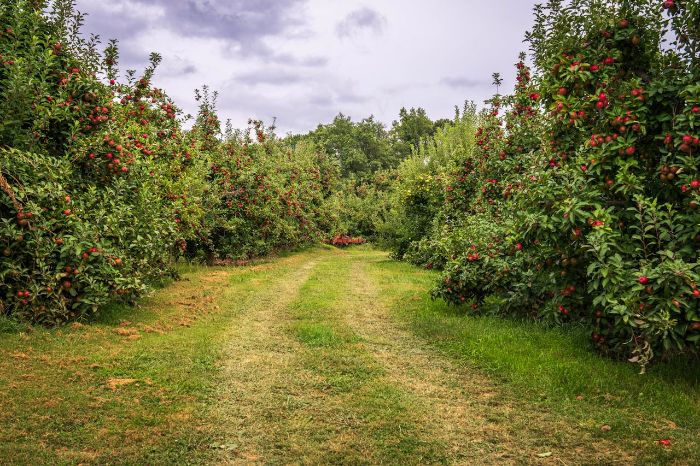
Companion planting with fruit trees works when the plants under and around the tree protect the trunk, feed insects, cover soil, and leave enough room for pruning, thinning, picking, and cleanup. A young apple or peach tree with bare mulch underneath looks unfinished, so it is tempting to fill the circle fast. By the third season, that same circle can become a damp tangle of strawberry runners, tall herbs, hidden irrigation emitters, and grass creeping back against the bark.
Fruit trees are long-lived woody crops, so their companions need stricter rules than annual vegetable partners. The tree needs a clear trunk flare, oxygen in the topsoil, full sun through the canopy, dry bark, and access from every side. Underplanting should improve the orchard floor without becoming the crop that gets managed first.
A fruit tree guild turns that idea into an orchard pattern: one central tree with plants arranged by zone and job. Effective guilds stay modest near the trunk and more diverse near the drip line.
Fruit tree companion plants can include alliums, shallow flowers, clover, thyme, yarrow, calendula, dill, comfrey, strawberries, and native perennials. Keep the first 12 to 24 inches around young trunks open, place larger mulch plants near the drip line, and use flowers across spring, summer, and fall so pollinators and beneficial insects keep visiting the orchard.
Key Takeaways
- Protect the trunk zone before adding any guild plant.
- Choose companions by orchard job, tree age, and access.
- Use compatible fruit varieties for pollination before relying on flowers.
- Keep vigorous plants near the drip line, away from bark.
- Plant bloom windows before, during, and after fruit-tree bloom.
- Avoid grass, invasive herbs, wet crowns, and hidden pests.
Table of Contents
Build Fruit Tree Guilds Around Safe Root Zones
A fruit tree guild starts with restraint. The most valuable space under a young tree is the part that looks empty: the ring where the trunk flare stays visible, the bark dries after rain, and irrigation can be checked without parting stems. Dense planting in that ring invites rodent damage, crown disease, and mower scars.
Mulch protects the soil, and mulch against bark creates trouble. Fruit and nut trees need a weed-free base because grass and weeds compete for soil moisture and nutrients. Mulch should stay at least 6 to 12 inches away from tree bases, with open air around the bark. In a home orchard, that rule should control the layout before groundcovers, flowers, or mulch plants are added.
Work outward from the trunk. The inner ring can hold low bulbs or small alliums after planting, if the soil is still loose and the tree is young. The middle and outer rings can carry flowering herbs, clover patches, comfrey, yarrow, calendula, and stepping stones. Mature trees need lighter touch because large roots sit closer to the surface than most gardeners expect.
Healthy tree mulch feels springy under your fingers and smells like damp leaves, not sour compost. Bark at the base should feel dry, with no wet stems leaning into it. If the trunk disappears under leaves, the guild is already too dense.
| Guild Zone | Distance Cue | Useful Companions | Management Rule |
|---|---|---|---|
| Trunk safety ring | First 12 to 24 inches around young trees | Open mulch, visible root flare, irrigation access | Keep grass, groundcovers, mulch piles, and dense flowers out |
| Inner working ring | Beyond the trunk ring, still easy to reach | Daffodils, chives, garlic chives, low thyme, small spring bulbs | Plant early, then avoid digging after roots expand |
| Drip-line ring | Near the outer canopy edge | Yarrow, comfrey, calendula, clover patches, borage, bee balm | Cut and manage vigorous plants before they shade the tree base |
| Service edge | Path side, stepping-stone line, or outer bed edge | Alyssum, calendula, native asters, herbs in pots, low pollinator strip | Keep a clean route for pruning, thinning, picking, and fallen-fruit cleanup |
Long-term companion planting in perennial food gardens depends on mature size and access; fruit tree guilds add safe bark and root visibility before groundcover density.
Choose The Right Fruit Tree Companions By Tree Age
Tree age changes the companion layer. During the first year, the tree needs water, mulch, trunk protection, and root establishment more than a full guild. Once bearing begins, flowers, soil cover, pest scouting, and harvest access become the main companion jobs. Under mature canopies, low-disturbance plants that tolerate partial shade are safer than new digging.
Rootstock size also changes the plan. Dwarf trees concentrate roots in a smaller area and often need staking, clean access, and careful moisture. Standard trees cast wider shade and create dry root competition under the canopy. Dwarf fruit trees for small gardens make guild planting easier to reach, yet they leave less margin for aggressive groundcovers.
Young trees show stress fast when companions take too much water. New shoot growth stays short, leaf edges turn dull, and the trunk area dries before the outer bed. If a tree has been planted for less than two years, keep permanent companions sparse and use annual flowers at the outer edge for color and insect traffic.
Bearing trees can handle more layers once their root system is established. Use companions for three jobs first: bloom support, soil cover, and access marking. Add nitrogen fixers or chop-and-drop plants only where there is room to cut, mow, or divide them. Any companion placed beyond easy cutting or division will eventually block pruning, irrigation checks, or harvest cleanup.
Pro Tip: In the first two seasons, plant no companion larger than your handspan inside the inner working ring. Use composted mulch, a visible irrigation line, and one low flower pocket at the edge. Build the guild after the tree shows normal shoot growth.
Match Underplanting To Apple, Pear, Stone Fruit, Citrus, And Fig Trees
Fruit tree companions should match the tree’s disease pressure, canopy density, water preference, and harvest style. Apple and pear trees benefit from pollinator flowers and low alliums. Peaches, plums, cherries, and apricots need clean airflow because fungal diseases rise when canopies and ground layers stay humid. Citrus needs bright, warm, lightly managed understory space. Figs prefer warm soil, wide roots, and simple groundcover that does not hide suckers.
Companion plants never fix a wrong site. A peach in a damp, shaded corner will not become healthy because lavender grows nearby. A citrus tree in alkaline or poorly drained soil needs soil correction before underplanting. Citrus soil conditions still decide more than companion flowers when leaves yellow or roots sit wet.
| Fruit Tree Type | Useful Companion Roles | Suitable Choices | Spacing Warning |
|---|---|---|---|
| Apple and pear | Pollinator support, allium scent, spring bloom, soil cover | Chives, garlic chives, daffodils, yarrow, calendula, clover near outer ring | Keep flowers low enough for pruning, thinning, and fallen-fruit removal |
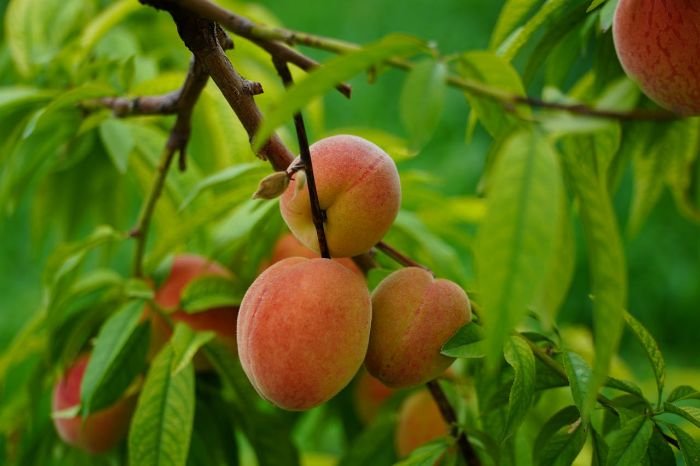
| Peach, nectarine, apricot | Dry-edge herbs, open airflow, insectary flowers | Thyme, oregano, yarrow, calendula, alyssum, lavender where soil drains well | Avoid dense wet groundcovers under disease-prone canopies |
| Plum and cherry | Early bloom support, low herbs, edge flowers, clean harvest lanes | Chives, daffodils, violets, low thyme, borage at the outer edge | Keep suckers, fallen fruit, and trunk shoots visible |
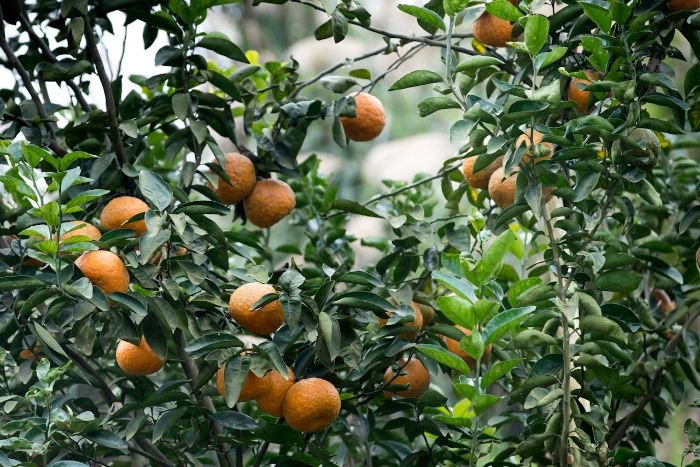
| Citrus | Warm-edge flowers, pest-scouting access, shallow soil cover | Sweet alyssum, calendula, thyme, oregano, rosemary nearby, clover outside the basin | Leave irrigation basin and graft area open |
| Fig | Heat-tolerant groundcover, path edging, pollinator flowers nearby | Thyme, oregano, strawberries at outer edge, calendula, yarrow, low clover | Keep suckers and low branches easy to inspect |
Companion planting for pest control depends on a companion changing pest movement or supporting natural enemies. Herbs and flowers are useful; they do not replace sanitation, pruning, netting, bagging, or pest-specific timing.
Use Flowers And Herbs For Pollination And Pest Pressure
Flowers under fruit trees help most when they feed insects across the gaps around fruit-tree bloom. Apples and pears bloom in a short spring window. Citrus can bloom in waves in warm climates. Figs do not use the same flower-visitation pattern as apples. A flower strip should feed bees, hoverflies, lacewings, and parasitoid wasps before and after the tree itself is blooming.
Pollinator flowers do not replace a compatible fruit variety. Apples need pollen from a different apple variety to grow fruit, and a pollen source should be within about 100 feet of the apple tree in the home landscape. Flowers help move insects through the orchard; they cannot supply apple pollen by themselves.
Small flowers matter because many beneficial insects have tiny mouthparts. Small flowers such as sweet alyssum, dill, fennel, garlic chives, coriander, and Queen Anne’s lace feed beneficial insects with nectar and pollen. Let a few herbs bloom near the orchard edge instead of cutting every stem for the kitchen.
Use bloom timing as the layout tool. Early flowers such as chives, daffodils, violets, and native spring ephemerals wake up insect traffic. Midsummer flowers such as yarrow, calendula, bee balm, borage, alyssum, dill, and cilantro support predator movement during aphid and caterpillar season. Fall asters and goldenrod keep insects present after fruit harvest and before cleanup.
Pollinator-friendly plants should sit where insects cross the tree canopy, not where tall stems block ladders or harvest baskets. Place pollinator companions at the drip line, path edge, or a nearby pollinator strip where stems do not block ladders or baskets.
Use Groundcovers, Mulch Plants, And Nitrogen Fixers Carefully
Groundcovers around fruit trees solve one problem and create another if they are chosen casually. Bare soil crusts, loses moisture, and grows weeds. Dense living cover can steal water from young trees, hide vole tunnels, and keep the trunk damp. The difference is placement.
Use wood chips or leaf mold as the base layer around young trees. Add living covers after the tree has settled and irrigation is predictable. Clover, violets, creeping thyme, strawberries, and low oregano work in different conditions. Clover likes sun and regular mowing. Thyme wants drainage and heat. Strawberries need runner control. Violets suit lighter shade under older trees.
Legumes support nitrogen cycling through root nodules. Clover, vetch, lupine, and other legumes fix nitrogen through Rhizobium bacteria in root nodules. That nitrogen becomes more useful to the orchard as roots, leaves, and clippings break down over future seasons.
Chop-and-drop plants also need discipline. Comfrey, sorrel, yarrow, and lemon balm can produce cut biomass for mulch, and mineral return depends on soil supply, cutting schedule, plant tissue, and decomposition. Treat them as mulch producers first. A comfrey crown near a young trunk is too much plant in the wrong place.
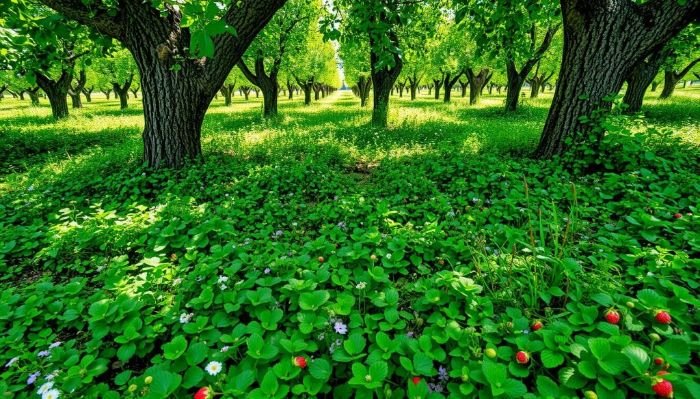
Soil health improvement under fruit trees comes from repeated small inputs: decomposing leaves, mulch, root turnover, fungal threads, and fewer deep disturbances. Pull back the mulch after rain. The top inch should smell earthy and feel crumbly, with no sour slick layer against bark.
Observation: Orchard groundcovers usually fail at the edges first. The path side dries and thins, and the shaded trunk side stays damp. That pattern tells you whether to add mulch, cut runners, or move the living cover outward.
Avoid Fruit Tree Companion Planting Mistakes
Most fruit tree companion planting failures come from crowding the wrong zone. The companion looks harmless in spring and becomes a hidden maintenance problem by summer. Leaves cover the root flare. Grass grows through clover. Mint escapes a pot. Strawberries hide fallen fruit. Comfrey blocks the place where pruning needs to happen.
Remove grass before adding companion layers. Young fruit trees grow poorly when lawn roots occupy the same surface soil and take moisture before the tree can use it. A mulched circle with a clean edge is more valuable than a crowded guild installed before the tree is established.
A second mistake is treating flowers as a complete pest-control plan. Codling moth, peach leaf curl, scale, aphids, citrus leafminer, and brown rot each need their own scouting and timing. Flowers support useful insects and make scouting easier. Heavy pest pressure still needs pest-specific timing and sanitation.
| Visible Problem | Likely Mistake | Why It Hurts The Tree | Correction |
|---|---|---|---|
| Trunk base stays wet or hidden | Groundcover or mulch pressed into bark | Rodents, fungal growth, and crown stress increase | Open the trunk ring and pull mulch back from bark |
| Young tree growth stays short | Companions compete during establishment | Surface roots lose water and nitrogen to faster plants | Remove dense covers and restore a mulched root zone |
| Canopy stays damp after rain | Tall herbs or flowers reduce airflow | Fungal disease pressure rises on leaves and fruit | Move taller companions to the outer ring or path edge |
| Fallen fruit disappears under leaves | Groundcover hides sanitation problems | Pests and disease can cycle through dropped fruit | Use stepping stones and low plants near harvest zones |
| Mint, lemon balm, or strawberries spread fast | Vigorous plants were planted with no boundary | The companion starts driving the layout and blocks tree care | Containerize aggressive herbs and cut runners monthly |
The orchard should still be easy to work after the companions fill in. Stand beside the tree and picture thinning fruit, tying a branch, checking a trap, picking dropped fruit, and placing a harvest basket. Any plant blocking those jobs needs moving before it becomes permanent.
Conclusion
Companion planting with fruit trees should make pruning, scouting, harvest, and cleanup easier across the orchard. Start with a clear trunk ring, mulch that stays away from bark, compatible fruit varieties for pollination, and a few low companions that solve visible jobs.
By the third season, a working fruit tree guild has open bark, a clean harvest path, low flowers at the edge, active insects in bloom, and soil that smells like damp leaves when the mulch is pulled back. The tree remains the center of the system.
FAQ
What is a fruit tree guild?
A fruit tree guild is a group of companion plants arranged around one fruit tree by function. The usual jobs are trunk protection, pollinator support, beneficial insect food, soil cover, mulch production, nitrogen cycling, and access marking. A useful guild protects the tree first.
Can I plant vegetables under fruit trees?
Temporary vegetables work only near the outer edge of a young tree or under a very open canopy. Avoid heavy feeders and crops that need deep digging. Leafy annuals, shallow herbs, or quick flowers are safer than squash, tomatoes, potatoes, or dense brassicas.
What should stay out of the trunk ring?
Keep grass, dense groundcovers, deep mulch, mint, strawberries, comfrey, and tall flowers out of the first 12 to 24 inches around young trunks. Bark needs air and visibility. The root flare should be easy to see after rain and after mulch settles.
Are daffodils useful under fruit trees?
Daffodils are useful ornamental spring bulbs in the inner working ring when planted early and kept away from trunk damage. They bloom before many fruit trees and add early color. Their main value is low seasonal competition, clear placement, and a dormant period during summer. Keep daffodils labeled and separate from edible alliums because bulbs and foliage are toxic if eaten.
Do companion plants improve fruit yield?
They improve the conditions that support yield: pollinator visits, insect habitat, soil cover, moisture protection, and easier scouting. Fruit set still depends on weather, compatible pollinizers, tree health, pruning, thinning, and pest control. Companion plants are one layer of orchard management.
When should I plant companions around a new fruit tree?
Plant the tree first and keep the root zone simple during establishment. Add small outer-ring flowers in the first season if water is reliable. Add permanent groundcovers, comfrey, clover, or larger herbs after the tree shows normal shoot growth and the irrigation pattern is stable.