




Last Updated May 17, 2026
Pruning grape vines controls fruit load, light in the fruiting zone, and whether next year’s wood stays useful or turns into a tangle. One winter of weak pruning can leave thin shoots, too many clusters, and a canopy so dense it disappears by midsummer.
Grapes reward hard choices, not timid cuts. Fruit comes on shoots from buds on one-year-old wood, so the job is never “trim it back a little.” Identify the right wood, match the vine to cane or spur pruning, and leave a bud load the roots can support.
Start by identifying the training wire and the one-year-old fruiting wood. Once those two pieces are right, the rest of the cut sequence becomes much easier to repeat every dormant season.
Pruning grape vines means identifying one-year-old fruiting wood, choosing cane or spur pruning to match the training system, keeping pencil-thick canes, leaving a balanced bud load, renewing wood close to the trunk, and removing most of last year’s growth during dormancy. Weak vines should carry fewer buds.
Key Takeaways
- Mature vines usually need harder dormant pruning than beginners expect
- Leave pencil-thick fruiting wood, not the fattest canes on the vine
- Prune in late winter or early spring
- Keep renewal wood close to the trunk
- Adjust bud count after each season based on cane quality and vigor
Table of Contents
Grape Vine Fruiting Wood – Cut For Next Year’s Shoots
Grape pruning becomes easier when you stop looking at clusters and start looking at wood age. The fruit you harvested last season will not fruit again. Next year’s crop comes from green shoots that push out of dormant buds on last season’s matured canes, which is why one-year-old wood matters more than older permanent structure.
A good fruiting cane looks and feels different from weak or over-vigorous wood. The bark should be brown and well matured, not green and soft. The strongest keeper canes are usually around pencil thickness because very thin wood lacks reserve strength, and oversized bull canes often carry poorer balance between vigor and fruitfulness.
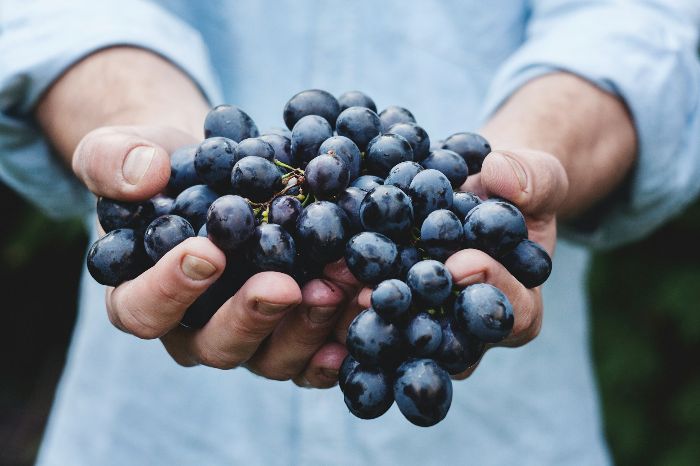
A desirable cane has moderate internodes, firm dry wood, and a pale moist center on a fresh cut, not dark lifeless tissue.
Bud fertility also shifts along the cane. In many bunch grapes, fruitfulness can be stronger away from the very basal buds, which is one reason some varieties perform better with longer retained canes. Light exposure in the previous season helps decide this. Sunlit canes mature better, build more fruitful buds, and carry stronger periderm than shaded interior wood.
Clear dormant-cane images can help when cane age and bud position still blur together in winter light. Do not prune by emotion. Prune by wood age, cane quality, and bud placement.
Start With The Training System Already On Your Wire
The first pruning decision is not which cut looks cleaner. It is which system the vine is already trained to carry. Are you holding a head-trained vine that depends on replacement canes each year, a cordon-trained vine that fruits from short spurs along permanent arms, or an arbor vine grown partly for shade? The answer changes what stays and what leaves.
If the trunk and wire layout still feel fuzzy, training grape vines starts with identifying whether the vine was built for head training, cordons, or a larger overhead frame.
| Question | Cane pruning answer | Spur pruning answer |
|---|---|---|
| Where does next year’s crop come from? | Long one-year canes tied to the wire | Short spurs kept on permanent cordons |
| Best fit | Varieties with fruitful mid-cane buds | Varieties with fruitful basal buds |
| Main renewal risk | Fruiting zone creeps outward when renewal spurs are ignored | Cordon gets crowded when old spurs stack |
| Main yield risk | Too many long canes left on the vine | Too many spur positions in one stretch |
| Best winter visual check | Strong canes plus short renewal spurs near the trunk | Evenly spaced short spurs on a clean cordon |
After the method difference is clear, match it to the structure already on the vine. A trained vine should not be forced into a pruning system that conflicts with its wire, trunk, and cordon layout.
| Vine setup | Best pruning direction | What you keep | Main risk |
|---|---|---|---|
| Head-trained bunch grape near a fruiting wire | Cane pruning | One to four fruiting canes plus renewal spurs | Arms creep too far from the trunk if renewal is ignored |
| High-cordon or VSP-style vine with permanent arms | Spur pruning | Evenly spaced short spurs along the cordons | Cordon turns into a crowded hedge if spur spacing collapses |
| Arbor or pergola grown for fruit and shade | Loose cane or spur renewal | Distributed fruiting wood and renewal points | Shade goal pushes pruning too light for good fruit quality |
| Young vine still building trunk and arms | Training cuts before crop cuts | Best trunk candidate and future framework wood | Leaving fruit too early weakens structure |
Cane pruning is often used on Concord-type and other grapes where the most reliable fruitful buds are not concentrated at the cane base. Spur pruning fits many cordon-trained grapes that fruit well from basal buds. Training system and bud fruitfulness decide the pruning method more than personal preference does.
Pergola or arbor vines are rarely pruned hard enough for the cleanest fruiting because overhead cover is part of the goal. That tradeoff is acceptable if you expect fruit quality to drop once the canopy becomes a roof.
The biggest beginner mistake is trying to spur-prune a vine that needs fruiting canes, or cane-prune a permanent cordon system as if every arm should be rebuilt each year. Start with the existing wire. Then choose the cut sequence that fits it.
Pruning Grape Vines Step By Step – The Winter Sequence
The cut order matters because a grapevine looks overwhelming until enough wood is removed to reveal the framework. Most mature home vines need about 80 to 90 percent of the previous season’s growth taken off. That sounds severe. It is normal. Young vines still building their framework and vines with winter injury need a different first pass.
- Study the trunk, cordons, or head before cutting anything.
- Remove dead, broken, diseased, and obviously misplaced wood first.
- Identify one-year-old canes with good color, thickness, and position.
- Decide whether the vine is being cane pruned or spur pruned this year.
- Set the bud load from vine vigor and cane quality.
- Cut back to fruiting canes or spurs, then remove the rest of the old wood.
- Tie retained wood securely and clean up prunings away from the vine row.
For young vines, the same sequence starts with framework selection. Choose trunk and arm structure first, then delay full crop pruning until the vine has enough permanent wood to carry fruit.
Make clean cuts just beyond the retained bud or retained spur, leaving enough stub to avoid drying back into the bud but not so much dead wood that the spur becomes a crowded peg.
The first pass should feel brutal and clarifying. Once the old tangled canes are gone, the permanent structure appears fast and the pruning decisions stop feeling abstract.
Bud load belongs in the middle of the sequence, not at the end. Too many growers keep the best-looking canes first and count buds later. That reverses the logic. The vine has a fixed reserve of stored carbohydrates and root pressure coming out of dormancy. Every retained bud becomes a draw on that reserve, which is why underpruning leads to many weak shoots, poor ripening, and a weaker harvest.
Late-winter pruning and sap bleeding from dormant cuts belong together in cold regions. Frozen canes snap badly, winter injury reads more clearly after the coldest stretch passes, and clear sap near bud swell looks dramatic without harming the vine. Green-season heading is a different act entirely and can remove leaf area the vine needs to build sugar, mature wood, and feed clusters.
Where winter injury is likely, delay final pruning until dead buds and damaged cane tips are easier to read. Cut into suspect buds and cane ends to check for green live tissue before deciding how much insurance wood to keep.
Pro Tip: Before the first real cut, grab a strip of bright survey tape and mark the two or four canes you think you will keep. That five-second pause prevents the most common beginner error: cutting away the only well-placed renewal wood, then trying to invent a framework from whatever is left.
Cane Pruning – Keep Fruiting Canes And Renewal Spurs Close
Cane pruning works when the vine fruits best on buds farther out along last season’s cane. The structure is simple after the clutter is removed: keep a limited number of strong fruiting canes for this year’s crop, then keep short renewal spurs near the trunk or head so next year’s fruiting wood stays close and does not drift outward each season.
What To Keep On A Cane-Pruned Vine
Choose fruiting canes that arose near the head or trunk, not from the far ends of old arms. That geometry matters because arm creep creates nonproductive gaps in the canopy. A useful fruiting cane is well matured, brown nearly to the tip, roughly one-quarter to one-half inch thick, and free of obvious disease or mechanical damage.
Once the fruiting cane is chosen, pick a renewal spur from a well-placed cane even closer to the trunk if possible. Cut that spur back to one or two buds. The next winter, a fresh cane from that spur becomes the new fruiting wood. That renewal cycle is the whole engine of cane pruning.
How Long To Leave The Canes
On many home-garden vines, productive fruiting canes fall in the 8 to 16 bud range, with thinner canes carrying fewer buds than stronger ones. That range works because many cane-pruned grapes carry their best fruitfulness away from the cane base. A weak vine carrying long canes will spread its reserves across too many shoots. A strong vine cut too hard will answer with excess vigor and fewer clusters than it could have handled.
After cutting to length, remove laterals and tendrils, bend the cane carefully onto the wire, and tie it before it springs back. Cold-damaged wood feels stiffer and more brittle, and the bark can flake or split when forced too fast.
Cane pruning punishes laziness more than spur pruning does. Ignore renewal spurs for a year or two and the fruiting zone marches away from the trunk. Then the vine takes two winters to fix, not one. That failure state is common in backyard vines grown on fences, where canes are left long simply because the wood looks healthy and cutting it feels wasteful.
Spur Pruning – Build A Productive Cordon With Clear Spur Spacing
Spur pruning belongs on vines with permanent cordons or arms that carry short fruiting spurs spaced along the wire. The logic is different from cane pruning. You are not replacing the whole fruiting framework each year. You are renewing short one-year-old wood along a permanent cordon and keeping the fruiting points evenly spaced.

How Spur Spacing Controls The Canopy
Each retained spur becomes a launch point for spring shoots. Crowd those spurs too tightly and the shoots stack over each other, trap humidity, and shade the fruit zone. In mature high-cordon systems, spur spacing and bud count often land around six inches between spurs, three to six buds per spur on vigorous vines, and roughly forty to sixty total buds on strong mature vines. Other training systems and cultivars use shorter spurs. The correct number follows the cultivar and the training style, not a universal rule.
Every retained bud pushes a shoot. Every shoot competes for light, water, and carbohydrate supply. Spur spacing is therefore canopy architecture, not just winter tidiness.
What A Good Spur-Pruned Cordon Looks Like
A productive cordon should read like a row of evenly placed launch points, not a broom head. The spurs sit at regular intervals. The cuts are close enough to the cordon to prevent long stubs and still preserve the last retained bud. Old dead spurs, stacked spurs, and crowded forks are removed so the cordon does not thicken into a knotted ridge that hides weak renewal wood.
I often notice that home spur-pruned vines fail gradually, not suddenly. The first warning is not low yield. It is a cordon that starts looking furry and crowded in winter because every old spur was left in place one year too long.
Spur pruning is faster once the framework is built. That speed fools people into leaving too much. When in doubt, clear space around the best-positioned spur and sacrifice the extra wood. A cordon should feel airy even in dormancy.
Bud Load And Pruning Mistakes – Where Yield Falls Apart
The crop is set long before harvest by the number of buds left in winter. Balance pruning means using last season’s cane thickness, wood maturity, and vine vigor to decide how many buds the vine should carry next. Weak canes last season mean too many buds were retained or the vine carried stress it could not support. Oversized bull canes and wild vegetative push mean the vine was cut too hard, overfed, or lost its crop to frost or disease.
How Many Buds To Leave On Grape Vines
| Vine condition | What it means | Bud-load adjustment | Pruning response |
|---|---|---|---|
| Weak vine, thin canes, late ripening | The vine carried too much crop or enough stress to weaken the wood | Leave fewer buds | Shorten canes, reduce spur count, and rebuild from stronger renewal wood |
| Balanced vine, pencil-thick canes, good ripening | The vine handled last season’s crop well | Keep a similar bud load | Repeat the spacing pattern on the best one-year wood |
| Very vigorous vine, bull canes, little fruit | The vine was cut too hard, overfed, or lost crop the previous season | Leave more buds if the wood is mature | Reduce unnecessary nitrogen and avoid another severe cut |
| Winter injury or dead buds | Viable buds are reduced and the final crop potential is uncertain | Delay the final bud count until injury is clear | Keep insurance wood first, then thin back after damage is visible |
| Crowded cordon with weak interior shoots | There are too many launch points in the same fruiting zone | Reduce spur count or bud count | Restore spacing before asking the vine to carry more crop |
Do not memorize one national bud number. Read last year’s wood and adjust retained buds so the next canopy starts balanced. That is the practical meaning of balance pruning in a backyard vine.
Common Readings From Last Season
- Thin weak canes usually point to overcropping or another stress load.
- Bull canes and excessive vegetative push usually point to too few retained buds, excess nitrogen, or crop loss.
- A fruiting zone that creeps away from the trunk points to failed renewal.
- Dense interior shade points to too many spur or cane positions in the same space.
- Winter-killed tips mean final cuts should wait until live buds and sound cane ends are easy to confirm.
Summer pruning is another place yield gets damaged. Removing a few suckers, watersprouts, or badly placed shoots early is not the same as cutting back green shoots hard in midsummer. Once the canopy is feeding clusters, those leaves are the sugar factory. Strip too much green growth and you slow ripening, weaken cane maturity, and reduce next year’s bud quality.
Misidentifying fruitful wood wrecks pruning faster than poor tool choice does. If you keep old gray wood because it looks substantial, or the thickest new canes because they look strongest, the vine answers with the wrong kind of growth. The correct keeper wood is moderate, sun-exposed, and well placed.
Many backyard grapevines underperform because too much wood is left during dormant pruning. If the vine looked full in winter, it was probably still too full.
After Pruning – Tie, Clean Up, And Read The First Spring Push
Pruning does not end at the last cut. Cane-pruned vines need fruiting wood tied securely so wind does not whip the retained canes loose before growth starts. Spur-pruned vines need the cordon cleaned of cut brush and old tendrils so the shoot zone stays visible when spring pushes begin.
When disease pressure is already visible, remove suspect prunings from the vine area instead of treating them as ordinary mulch. When cutting visibly diseased wood, clean blades before moving back into healthy growth, especially if cankers or dark tissue are present.
Early spring tells you quickly whether the winter choices fit the vine. Even budbreak, moderate shoot thickness, and a framework that is easy to read from a few feet away are good signs. Dozens of weak crowded shoots signal a bud load that was too high. A few overly vigorous shoots can signal a cut that was too hard or excess fertility.
Do not panic when cut ends bleed clear sap near bud swell. That is root pressure moving water upward, not a wound crisis. What matters more is the pattern of the first shoots: where they emerge, how evenly they space themselves, and whether the vine looks organized by May.
A vine pruned well still needs suitable soil for grape vines, measured moisture from watering grape vines, nutrient restraint when fertilizing grape vines, and site planning when starting a vineyard for wine or table grapes. Winter cuts shape the crop. The season still has to carry it.
Conclusion
Good grape pruning is wood selection first and courage second.
If the vine is trained to canes, keep strong fruiting canes and short renewal spurs close to the trunk. If the vine is trained to cordons, space productive spurs cleanly and stop the cordon from turning into a hedge. The success signal arrives in spring as evenly spaced shoots pushing from wood you can still read with one glance, then later as clusters hanging in an open fruit zone.
FAQ
When is the best time to prune grape vines?
In most cold and temperate climates, late winter to early spring is the safest window. The vine is still dormant, winter injury reads more clearly, and the wood is less brittle than it is during the coldest stretch. Pruning too early in severe cold can leave you cutting blind.
How do I know if my vine needs cane pruning or spur pruning?
If the vine fruits from buds farther out on last season’s canes, cane pruning usually fits better. If it is trained to permanent cordons and fruits well from basal buds, spur pruning is the cleaner choice. The wire layout and the variety’s fruiting habit answer this faster than habit does.
How many buds should I leave on a grape vine?
Strong mature vines can carry more buds than weak vines, and some high-cordon systems carry far more total buds than a small cane-pruned vine. The correct number depends on training system, cultivar, cane quality, and winter injury. Use last year’s cane strength as the adjustment signal instead of copying one fixed number every year.
Can I prune grape vines in summer?
Most heavy pruning belongs in dormancy. Early removal of suckers or badly placed shoots is fine in moderation. Cutting back a lot of green growth in midsummer removes leaf area the vine needs for sugar production and cane maturity.
What happens if I cut too much off?
On a mature vine with viable renewal wood, one hard dormant cut is usually easier to recover from than years of underpruning. Young vines, winter-injured vines, or vines cut below good renewal points need more caution. A severely cut vine usually answers with strong vegetative growth and a lighter crop.