


Updated April 09, 2026
Most gardening gloves end up abandoned in a shed after a season. Not because the gardener stopped caring, but because the glove stopped cooperating – too stiff for seeding, too thin for pruning, too slippery for wet mornings. The mismatch is almost always the same: chosen for how they looked on the rack rather than what the work actually demands.
Choosing correctly comes down to three variables: what the material protects against, whether the fit preserves enough hand control for fine work, and whether the design matches the specific task. A leather gauntlet is exactly right for pruning thorny shrubs. That same glove makes transplanting seedlings clumsy and slow. Getting one variable wrong means the gloves come off before the job is done, which defeats the point of wearing them.
The question is not which glove is best. It is which glove fits the work you are doing today.
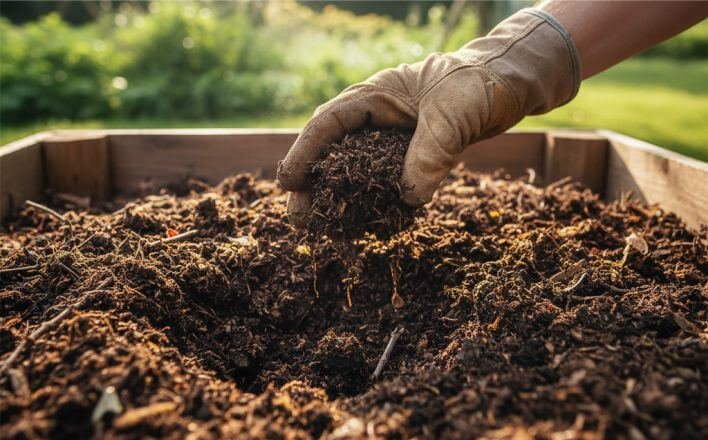
There is also a more pressing reason to wear them than most people acknowledge. Soil in any garden that has had manure applied – or that has natural wildlife activity – contains Clostridium tetani, the bacterium responsible for tetanus. The CDC recommends a booster if five or more years have passed since the last vaccine, and a thorn scratch into a wound is exactly the low-oxygen environment the bacteria thrive in. Separately, Sporothrix schenckii – a soil fungus that causes sporotrichosis, sometimes called rose gardener’s disease – enters through minor scratches and produces lesions that can take months to resolve. Ohio State Health’s guidance on open wounds in the garden specifically names soil contact as the route of exposure. A glove is not just a comfort device. For anyone working in a garden with organic amendments or rose beds, it is basic infection prevention.
Key Takeaways:
- Match glove material to the specific protection each task demands
- Measure palm circumference before buying – sizing varies widely by brand
- Avoid cotton gloves for wet soil or any task involving chemical contact
- Replace gloves when seams split or thorn resistance clearly weakens
- Keep two to three pairs for different task types rather than relying on one
Table of Contents
Gardening Glove Materials – What Each One Protects Against
Material is where most glove purchases go wrong, because buyers evaluate feel in the store rather than function in the garden. A soft cotton glove feels comfortable on the display hook. In actual garden soil – especially early spring when the ground still holds moisture – that cotton absorbs water, grip disappears, and the damp fabric becomes a direct route for soil bacteria to reach any small cut or hangnail. Cotton alone is a dry-task material, and a limited one at that.
Leather has been the standard for heavy protection since at least the nineteenth century, and for good reason. Cowhide in the 1.0 to 1.4mm thickness range resists thorn punctures and rough woody stem abrasion better than any synthetic alternative at the same price point. The trade-off is dexterity: thick leather limits finger movement enough to make small-scale planting imprecise. Goatskin leather is thinner and more supple – it handles moderate pruning and most potting tasks reasonably well, though it wears through faster on abrasive surfaces.
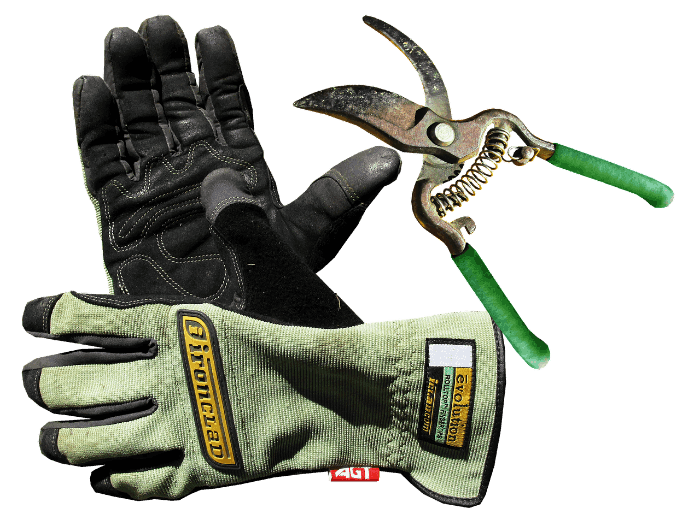
Nitrile-coated gloves – a fabric base with a rubbery coating on the palm and fingers – have become the most practical general-purpose option for most home gardeners. The coating grips wet and muddy surfaces, blocks light punctures, and stays flexible enough for weeding and planting. Penn State Extension’s guidelines on garden hand protection note that nitrile-coated fabric outperforms uncoated cotton for most everyday tasks in both grip and contamination resistance. The National Gardening Association similarly points to coated fabric as the practical default for gardeners who do not want to manage multiple specialized pairs.
Latex coatings offer comparable performance to nitrile but carry one real limitation worth knowing: according to the National Institute for Occupational Safety and Health, latex allergy affects between 4 and 8 percent of the general population and can develop after repeated exposure even in people with no previous sensitivity. Nitrile is non-allergenic and has largely replaced latex in professional horticultural settings for exactly that reason.
| Material | Best For | Thorn Resistance | Dexterity | Wet Conditions |
|---|---|---|---|---|
| Cowhide leather | Pruning, digging, tool handling | High | Low-medium | Poor – warps when wet |
| Goatskin leather | Moderate pruning, potting | Medium | Medium | Poor |
| Cotton (uncoated) | Dry light tasks only | None | High | Very poor |
| Nitrile-coated fabric | General gardening, weeding, planting | Light | High | Good |
| Rubber or PVC full dip | Water work, chemical handling | Medium | Low | Excellent |
| Synthetic (spandex/TPR) | Light tasks, breathability | None-light | Very high | Poor |
One honest trade-off worth naming: fully waterproof rubber or PVC gloves protect completely in wet conditions but are the most fatiguing material for longer sessions. Heat builds quickly inside them, and the lack of breathability softens skin that tears more easily if gloves are removed partway through a task. Reserve them for specific work – applying liquid fertilizer, washing containers, cold-weather watering – rather than treating them as a general-purpose pair.
Fit and Dexterity – Why Sizing Matters More Than Comfort
A glove half a size too large causes more fatigue than most gardeners expect. Excess material bunches at the fingertips when gripping a tool handle, reducing tactile feedback and demanding more force to hold on. Over a two-hour session that additional effort accumulates into genuine hand fatigue. Many blisters attributed to tool handles are actually caused by glove material sliding against the skin – the same problem, a different diagnosis.
Brand sizing in garden gloves is genuinely inconsistent. A medium in one manufacturer’s nitrile-coated glove can run a full size smaller than a medium in their leather gauntlet, even within the same product line. The only reliable approach is to measure before buying.
How to measure for garden gloves
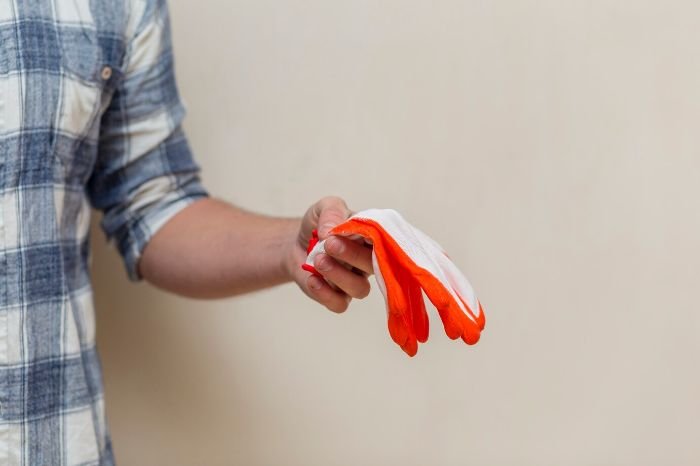
Wrap a soft tape measure around the widest part of your dominant hand, below the knuckles and excluding the thumb. That circumference in inches is your reference size. Most US manufacturers use: under 7 inches as XS, 7 to 8 as S, 8 to 9 as M, 9 to 10 as L, over 10 as XL. If your measurement falls between sizes, go up one in leather – which stiffens and slightly shrinks with use – and stay true to your measured size in fabric or coated gloves, which tend to stretch slightly over time.
Fit also determines which tasks are actually possible. Fine work – thinning seedlings, deadheading small flowers, potting on delicate root systems – requires feeling what you are touching. If the glove adds more than 2 to 3mm of padding at the fingertips, tactile feedback drops enough to make that work imprecise. For tasks that demand touch, thin nitrile-coated or spandex-blend gloves are not just a comfort preference – they are the only design that lets the work happen at the right level of control.
Pro Tip: After washing leather gloves, work a small amount of neatsfoot oil or leather conditioner into the palm and fingers while still slightly damp. This prevents the cracking and stiffening that ruins most leather gloves after their first wet season – a five-minute step that adds years to a decent pair.
Cut and proportion
Some gloves are cut short in the fingers, which suits gardeners with shorter fingers but creates pressure across the knuckles for others regardless of palm measurement. If gloves consistently feel tight across the knuckles even at your measured size, the cut is the problem rather than the size. Look for designs described as “anatomical cut” or those with pre-curved fingers – these follow the natural resting position of the hand and tend to fit a wider range of proportions without that knuckle tension.
Most unisex gardening gloves are built around men’s hand proportions – wider palms with shorter fingers relative to hand length. Women’s hands tend to have longer fingers relative to palm width, which means unisex gloves often bunch at the fingertips even when the palm fits correctly. That bunching is not a comfort issue; it is the direct cause of lost dexterity and the main reason women are frequently told that gardening gloves “just don’t work” for fine tasks. Women’s-specific sizing in garden gloves is not a marketing distinction – it is a structural necessity for anyone whose fingers are longer relative to palm circumference.
One detail that rarely appears in buying guides: check whether the gloves have internal finger seams. Cheap leather and PVC gloves frequently use hard stitched seams running down the inside of each finger joint. In the store they are invisible. After one session in the garden – particularly a wet one – those seams press directly into the flexed knuckle and produce the kind of hot spot that makes the gloves come off halfway through a task. Run a finger inside each glove before purchasing, or check the product description specifically for mention of flat or external seaming.
Matching Gloves to the Work – Protection Where You Actually Need It
The most useful way to approach glove selection is backwards from the hazard. Every garden task involves a specific risk, and the right glove addresses that risk without adding more bulk or restriction than the work requires.
| Task | Primary Hazard | Recommended Material | Key Feature |
|---|---|---|---|
| Weeding in bare soil | Soil bacteria, small cuts | Nitrile-coated fabric | Grip, breathability |
| Pruning roses and brambles | Thorns, forearm scratches | Thick leather, gauntlet cuff | Thorn resistance, forearm coverage |
| Planting and transplanting | Minor soil contact, fragile roots | Thin nitrile or spandex | Dexterity, tactile feedback |
| Digging and moving soil | Blisters, hand abrasion | Padded leather or nitrile | Palm padding, wrist support |
| Handling liquid fertilizers | Skin absorption | Rubber or nitrile, full coverage | Chemical resistance, adequate cuff |
| Wet work and cold-weather watering | Prolonged moisture, cold | Rubber or PVC dip | Waterproofing, insulation |
Pruning thorny plants deserves more attention than the table alone conveys. The hazard from roses and brambles is not just puncture – it is direction. Cornell Cooperative Extension’s guidance on safe pruning practices identifies the wrist and lower forearm as the most commonly injured area during rose maintenance, not the palm – the exact zone a standard wrist-length glove leaves unprotected. Gauntlet-style gloves, which extend 4 to 6 inches up the forearm, were designed specifically for this kind of work. When selecting bypass pruners for rose or bramble maintenance, the glove choice should be made at the same time – the two determine each other’s usefulness.
Does the task call for protection, dexterity, or both – and is a single pair supposed to provide both at once? In most cases, recognizing the primary requirement before reaching for a glove prevents the frustration of spending twenty minutes wrestling with work the gloves are actively making harder.
The one task that genuinely benefits from no gloves, or the thinnest possible option, is sowing small seeds. Seed packets, germination cells, and small seed trays all require a pinching accuracy that most garden gloves eliminate. Many experienced growers remove their gloves for sowing and put them back on for everything that follows. There is some biology behind this habit: research published in PNAS found that soil-dwelling Mycobacterium vaccae stimulates serotonin production when absorbed through skin contact – a partial explanation for why bare-hand gardening is widely reported as mood-improving. For that specific task, in clean potting mix rather than garden soil, bare hands are a legitimate choice. The caveat is any soil that has had organic amendments or manure added, or work that involves reaching into ground-level plant material. In those cases, the infection risk changes the calculation.
Cuff Length – One Decision Most Buyers Skip
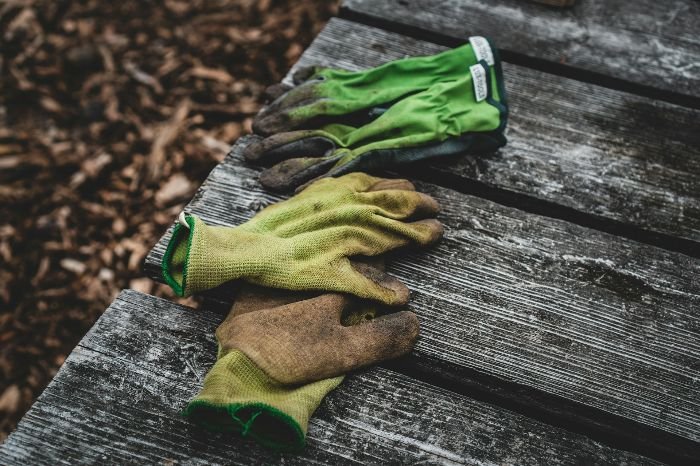
Walk through any garden center and most gloves on display end just above the wrist. That design is adequate for the majority of garden tasks. But it is not the only option, and for specific work it is the wrong one – not marginally less ideal, but genuinely ineffective at protecting the area that gets hurt most.
Three practical cuff styles cover most needs:
Standard short cuff (ends at the wrist): The default for general gardening. Suitable for weeding, planting, potting, and everyday tool use. Easiest to put on and remove, and the most breathable option during summer work.
Extended wrist cuff (2 to 3 inches above the wrist): Adds protection against soil and debris entering the glove during digging, and provides light coverage on the lower forearm for gardeners who work without long sleeves. A practical everyday upgrade from the standard short cuff without the weight or heat of a gauntlet.
Gauntlet cuff (4 to 6 inches up the forearm): Designed specifically for thorny plant work. Stiff enough to deflect cane scratches, long enough to protect the area where most thorn injuries actually occur. Heavier and warmer than standard gloves, which limits their useful range to tasks that genuinely require the coverage.
The practical question is whether the garden contains any thorny plants maintained on a regular basis – roses, blackberries, gooseberries, hawthorn hedges, barberries. If yes, gauntlet gloves are not an upgrade; they are the appropriate tool for that specific task. If the garden has none of those plants, a standard wrist cuff handles everything without the extra weight.
Observation: Gardeners who skip gauntlet gloves most often associate them with professional or commercial use rather than home maintenance. The forearm scratches they accumulate on every pruning session are not the inevitable cost of the work. They are a preventable fit problem.
Glove Lifespan – Replacement Signals That Actually Mean Something
Most care advice on gardening gloves follows the same vague standard: replace them when they are worn out. That guidance is the equivalent of changing a car tire when it goes flat. By the time a glove looks finished, its protective function was often compromised weeks earlier.
What to look for by material
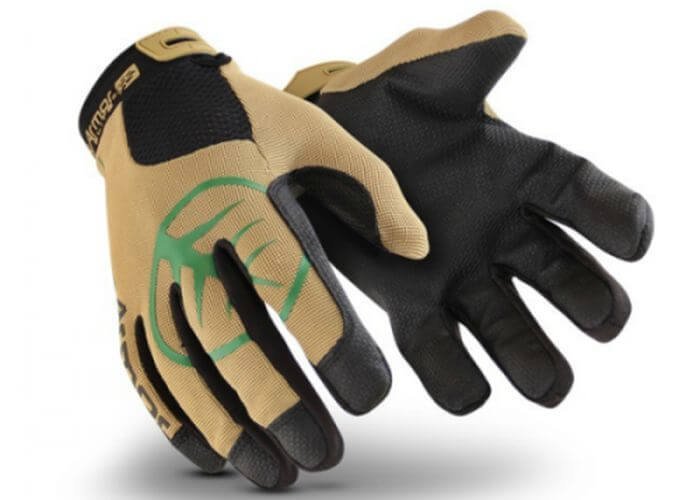
Leather gloves: replace when the palm shows visible thinning – you can feel tool pressure more acutely than you should be able to – or when seams separate at the finger joints. The stitching at the base of the index finger and thumb fails first on most designs. With consistent care – brushing off dry soil after each use, conditioning with neatsfoot oil or a leather balm twice per season – quality cowhide gloves can realistically last 3 to 4 seasons of regular work. UC Cooperative Extension’s equipment care guides for home gardeners note that the conditioning step is the single most overlooked factor in glove longevity, particularly in dry climates where leather desiccates quickly between uses.
Nitrile-coated gloves: the coating is the functional layer. Once it begins peeling or develops pinhole damage, grip drops and the puncture resistance that justified buying them is gone. The fabric backing often outlasts the coating by months, creating a false sense that the gloves are still usable. A nitrile-coated pair used frequently has a realistic working life of 1 to 2 seasons before the coating breaks down.
Cotton gloves: wear thin at the fingertips within a few months of regular use. Plan to replace uncoated cotton gloves every season – or sooner if the gardening is frequent and the tasks are anything rougher than light weeding in dry conditions.
Storage and washing
Leather gloves should never go into a washing machine. Heat and agitation destroy the tanning that gives leather its structure; they come out shrunken, stiff, and permanently misshapen. The correct approach is simpler: knock off dried soil with a brush, wipe with a damp cloth, let dry away from direct heat, and apply conditioner afterward. Stored in a dry location away from direct sunlight, a well-maintained leather pair lasts considerably longer than one stored damp in a bucket with other tools.
Nitrile and cotton gloves can be hand-washed in cool water with mild soap and air-dried. Avoid wringing, which stretches seams. Nitrile gloves stored in direct sunlight break down faster from UV exposure than from use – store them indoors between seasons.
How Many Pairs Do You Actually Need
A single pair of gardening gloves will not cover every task in a working garden. Trying to make it do so usually means compromising on protection for heavy tasks, dexterity for fine ones, or both. The practical answer for most home gardeners is two to three pairs: a thin nitrile-coated pair for everyday planting and hand weeding, a leather or reinforced fabric pair for digging and tool work, and gauntlet gloves if the garden includes any thorny plants maintained more than once per season.
The cost is smaller than it appears. Thin nitrile-coated gloves run under ten dollars for a decent pair. A quality leather pair bought once and cared for properly lasts three to four seasons. The real expense of the one-pair approach is not money – it is a garden session that ends early because the wrong glove turned manageable work into an endurance exercise.
A useful starting point: identify the two or three tasks that take up most of your garden time, name the primary hazard in each – thorn puncture, grip in wet conditions, precision touch for fine roots – and buy specifically for those. That mapping, done before purchasing, removes the reflex buy of a decorative pair that ends up living permanently at the back of the shelf.
Conclusion
The goal with garden gloves is simple enough: keep the work moving without stopping to deal with a thorn scratch, a blister, or a cut from a stem pulled through bare skin. Protection and dexterity pull against each other in almost every glove choice, and the point at which one outweighs the other depends entirely on the task. Heavy digging demands padding that blunts feedback. Transplanting demands touch that thick padding prevents. Recognizing which trade-off applies before the gloves go on is the step most buyers skip – and the reason so many pairs end up abandoned.
Measure your hands, buy for specific tasks, and plan for at least two pairs – light nitrile-coated for everyday work, leather or reinforced fabric for digging and tool handling, and gauntlet cuffs if anything thorny lives in the garden. A few well-chosen pairs, cleaned after each session and conditioned once per season, outlast three times their cost in cheap cotton gloves that lose their shape after a month of real use. A worn pair at the end of autumn, shaped to the hand and still intact at the seams, is a quiet sign of a season done properly.
FAQ
What type of gardening gloves work best for everyday use?
For most garden tasks – weeding, planting, light digging – nitrile-coated fabric gloves offer the best balance of grip, dexterity, and protection. The nitrile coating grips wet and muddy surfaces better than bare skin, resists small punctures from sticks and roots, and dries quickly between uses. A mid-weight pair in your correct measured size handles roughly 80 percent of typical home garden work without the restriction that leather creates for fine tasks.
Can you use the same gloves for pruning and planting?
You can, but the glove that works for pruning almost always works against planting. Heavy pruning gloves – especially gauntlet designs in thick leather – restrict finger movement enough to make transplanting, thinning seedlings, or handling small root systems genuinely clumsy. Dedicated pruning gloves are worth having as a separate pair if you do regular rose or bramble work. For light pruning of soft stems like herbs or flowers, the same thin nitrile glove used for planting is adequate.
What happens if leather gardening gloves get wet during use?
Wet leather gloves should be dried slowly at room temperature, away from direct heat sources. A radiator or sunny windowsill concentrates heat and causes the leather to shrink and stiffen permanently – the gloves may become unwearable. While still damp, work a small amount of conditioner into the palm to prevent cracking as they dry. Cotton gloves become temporarily ineffective when soaked, as grip disappears; let them dry fully before reusing. Nitrile-coated gloves are the least affected – they maintain grip when wet and can be rinsed clean without any damage.
How do I find the right size gardening gloves?
Measure the circumference of your dominant hand at the widest point of the palm, excluding the thumb. Most US manufacturers use that measurement in inches: under 7 is XS, 7 to 8 is S, 8 to 9 is M, 9 to 10 is L, over 10 is XL. Sizing between glove brands is inconsistent enough that measuring is more reliable than defaulting to your clothing size. If you fall between sizes, go up one for leather – which stiffens and tightens slightly with use – and stay at your measurement for fabric or coated gloves, which tend to loosen slightly.
Is it worth paying more for gardening gloves?
For leather gloves, higher price usually reflects thicker hide, reinforced palm stitching, and better construction at the thumb joint – all factors that measurably extend the working life. A quality leather pair maintained properly over 3 to 4 seasons costs less per season than a cheap pair replaced annually. For nitrile-coated gloves, the quality floor is higher and mid-price options perform nearly as well as premium ones for most home garden use. The mistake is buying cheap uncoated cotton gloves as a general solution – they offer minimal protection and wear through within a few weeks of regular use.
When should I replace my gardening gloves?
Specific signals matter more than general appearance. Leather gloves need replacing when you feel tool pressure through the palm more acutely than normal, or when seam stitching separates at the finger joints – the base of the index finger fails first on most designs. Nitrile-coated gloves should be replaced when the coating starts peeling or develops pinholes; the fabric backing outlasts the coating and creates a false sense of usability. Cotton gloves are due for replacement when the fingertip area thins noticeably, typically within a single season of frequent use.
What gardening gloves are best for people with latex sensitivity?
Nitrile is the standard alternative for anyone with latex sensitivity or confirmed latex allergy. Latex allergy can develop even after years of use with no prior reaction, making nitrile the safer default for regular garden work. Beyond allergy, gardeners with sensitive skin generally do better with fabric-backed gloves than solid rubber, since rubber traps heat that irritates skin over longer sessions. A thin spandex-blend glove with nitrile fingertips offers adequate protection while minimizing contact irritation for most skin types.