Updated April 17, 2026
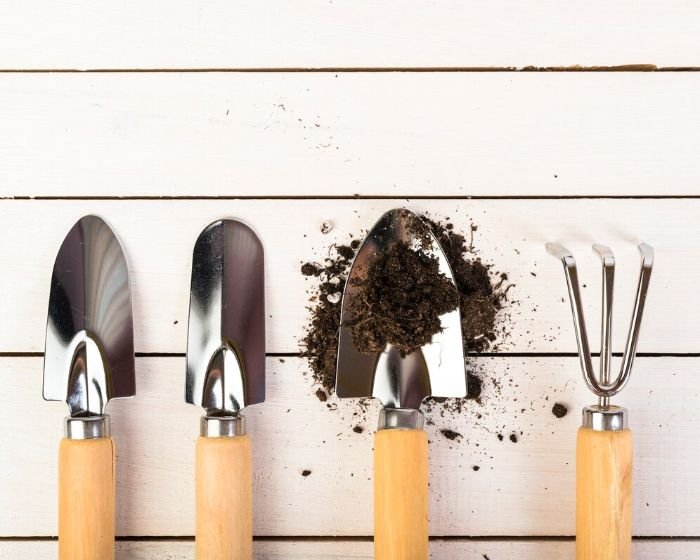
A garden trowel is the most-used hand tool in most gardens – and the most casually purchased. Pick the wrong blade profile and it fights your clay instead of cutting through it. Pick the wrong steel grade and the neck bends by the second season. Get the handle wrong and your wrist carries that mistake for the rest of the afternoon.
The smell of turned earth, the satisfying give when a sharp blade parts compacted soil cleanly – those moments depend on having the right tool. The difference between a trowel you will use for ten years and one you replace each spring comes down to four things: blade shape, steel grade, tang construction, and handle fit. None of these are complicated. Each one changes how the tool actually performs.
Key Takeaways:
- Match blade width to your primary task before considering brand or price
- Check tang construction – full-tang designs outlast socket-riveted handles by years
- Oil carbon steel blades after use in wet conditions to prevent edge rust
- Test handle grip with a gloved hand before committing to a purchase
- Avoid blades wider than 3 inches when working between established plants
Table of Contents
Blade Shape – Five Profiles and What Each One Actually Does in Soil
Most trowels look roughly the same from a distance. Up close, the differences in blade width, tip shape, and curve depth determine whether the tool does its job cleanly or creates more work than it solves.
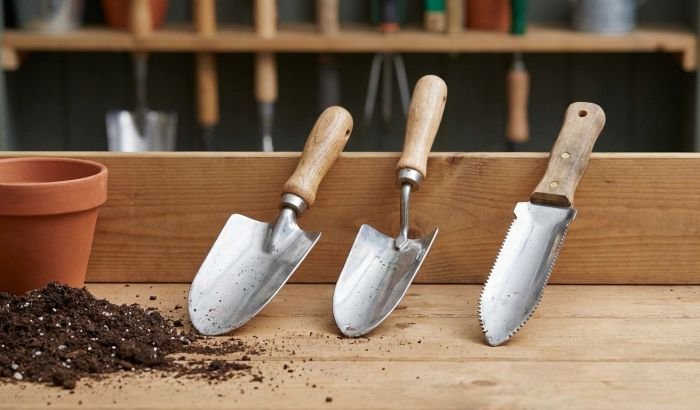
The standard garden trowel has a blade 2.5 to 3 inches wide, tapering to a pointed tip, with a curved cross-section that cups soil. It handles most tasks adequately: digging planting holes, transplanting annuals, mixing in amendments. This is the profile worth buying first if you are starting from nothing.
The transplanting trowel narrows to 1 to 1.5 inches. That width is intentional. In a bed with established perennials 8 inches apart, a standard trowel hits roots on both sides before the hole is deep enough. The narrow blade goes straight down without disturbing neighbors. Garden Gate Magazine notes this is the profile most experienced gardeners add after their first season, not before.
Specialized Profiles
The potting trowel runs wider than standard – 3 to 4 inches – with a short, shovel-like blade. It moves volume. When filling a 14-inch container with three cubic feet of potting mix, the potting trowel does it in a third of the time a standard blade would take. It is the wrong choice for in-ground beds.
The bulb trowel is narrow and long, sometimes cylindrical in cross-section, designed to go 4 to 6 inches straight down without disturbing the soil wall. Depth markers etched into the blade at 1-inch intervals are more common on bulb trowels than any other type. If you plant more than 20 bulbs at a time, this tool pays for itself in back strain saved alone.
The soil knife – sometimes called a hori-hori – occupies a different category entirely. Half blade, half knife, it has a serrated edge on one side for cutting roots and a smooth edge for slicing through soil. It does not scoop. It cuts. For weeding between pavers or dividing dense ornamental grasses, nothing else compares. For general planting, it is awkward.
| Blade Type | Width | Best For | Avoid When |
|---|---|---|---|
| Standard | 2.5-3 in | General planting, mixing amendments | Tight spacing between plants |
| Transplanting | 1-1.5 in | Seedlings, in-bed planting | Moving large volumes of soil |
| Potting | 3-4 in | Container filling, large transplants | In-ground beds with roots |
| Bulb | 1-1.5 in, deep | Bulb planting, depth-sensitive work | General digging, amendments |
| Soil Knife | 1-1.5 in | Weeding, dividing, root cutting | Scooping or moving soil |
Steel Grade and Tang Construction – Where Cheap Trowels Break First
The blade material gets most of the attention. The tang gets almost none. This is backwards.
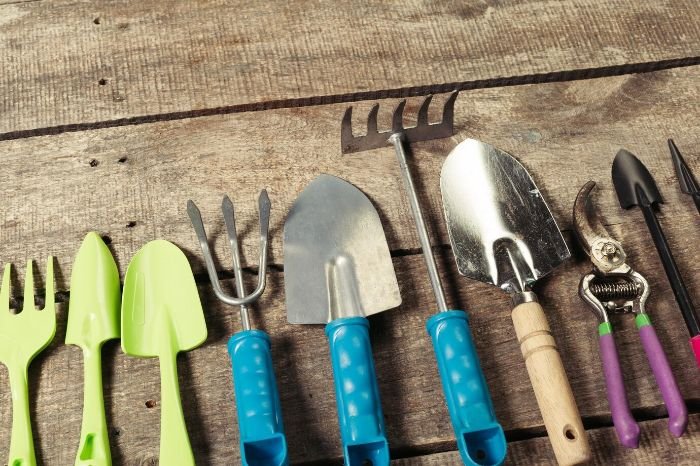
The tang is the metal extension that connects blade to handle. In a full-tang design, it runs the entire length of the handle, sandwiched between two handle slabs or molded inside a rubber grip. In a socket design, the handle end of the blade forms a collar that slides over a dowel or rod, sometimes secured with a single rivet. In a stamped-blade design, a flat metal strip is folded and crimped.
Full-tang is the correct answer for anyone working in heavy soil. The force of driving a trowel into clay concentrates at the junction between metal and handle. A socket joint with one rivet eventually loosens. Gardening Know How has documented that this failure point – the neck – is where the majority of budget trowels break, usually in the first or second season of regular use. The failure is rarely dramatic. The handle slowly rocks, then the blade tilts under pressure, and then it separates entirely when you least want it to.
Carbon Steel Versus Stainless
Carbon steel is harder and holds an edge better than stainless. It will also rust if you leave it in the soil or store it wet. Stainless steel resists corrosion, cleans easily, and costs slightly more for equivalent thickness. The tradeoff is real: stainless at the same price point as carbon steel is usually thinner, which means it flexes more under lateral pressure in dense ground.
For clay or compacted soil, carbon steel with a powder-coated or epoxy finish is the better working tool. For containers and raised beds with loose growing medium, stainless is fine and lower maintenance. Penn State Extension recommends wiping blades dry and applying a thin coat of linseed oil after use in wet conditions. Five seconds of care after each session prevents most rust issues entirely.
Pro Tip: Before buying, hold the trowel horizontally and apply firm lateral pressure where the blade meets the handle – twist as if rotating a stuck blade in clay. Any movement at that joint on a new tool is a disqualifier. That flex becomes a break under real field conditions within a season.
Handle Design – How Length and Grip Material Affect Your Wrist by Hour Three
A trowel you use for 20 minutes of casual planting rewards you very differently than one you hold for three hours of bed preparation. The handle material and length are what separate those two experiences.
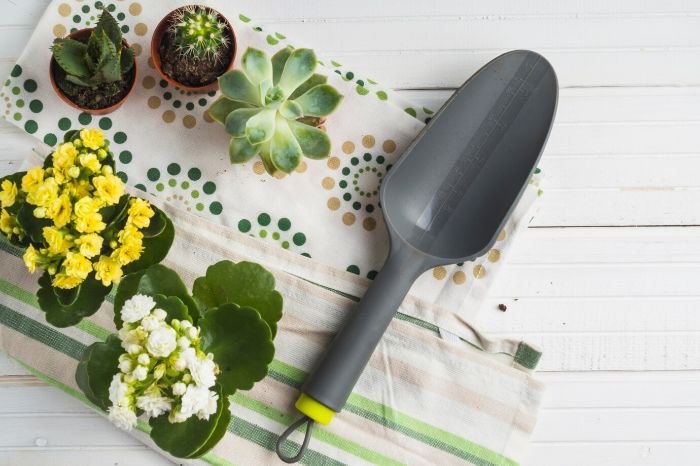
Standard trowel handles run 4 to 5 inches for close-quarter work in raised beds or containers. Longer handles in the 7 to 9 inch range add leverage for breaking into firm ground, reducing the wrist torque required to rotate a stuck blade. If you plant primarily in ground-level beds rather than raised structures, the longer handle is worth the slight bulk.
Material Comparison
Wood – usually ash or hickory – absorbs shock. When you strike a hidden root, the handle dampens the impact before it reaches your wrist. It requires periodic oiling to prevent cracking, especially in dry climates. This is the one maintenance task most gardeners skip, and the handles split for it.
Rubber-grip handles over a metal core are the most common mid-range option. They grip reliably with wet or gloved hands and require no maintenance. The limitation is longevity: rubber degrades in UV over years in a way that wood, properly cared for, does not. Pairing a good rubber-handled trowel with well-fitting garden gloves extends both the tool’s life and your comfort.
Metal-through handles – where the blade metal extends into a bare steel or aluminum grip – are sometimes marketed as “unbreakable.” That claim holds. The comfort claim does not. They feel unforgiving in cold weather and transmit every impact directly to the hand.
Weight matters throughout. The American Horticultural Society has long advocated ergonomic handle evaluation as part of tool selection, particularly for gardeners working more than an hour at a stretch. The ideal trowel for all-day use falls in the 6 to 10 ounce range. Above that, the repetitive lifting from soil surface to hand position fatigues the forearm by mid-afternoon.
Matching Trowel to Soil Type – The Selection Factor Most Sellers Skip
If the trowel you reach for most often is the wrong shape for your soil, what does that tell you about the rest of your tool decisions? Soil type changes the mechanics of every task, and most buying guides talk about blade shape without connecting it to what the blade will actually press against.
In clay-heavy soil, blade width and edge profile matter more than anywhere else. A wide blade creates more surface area in contact with dense clay, which increases the force required to drive it in. Narrow blades part clay more cleanly. A serrated edge on one side cuts through fibrous roots and compacted layers that a smooth blade skids across. This is not a subtle difference – it is the difference between a tool that works and one you stop reaching for after the third use.
I often notice that gardeners switching from a standard trowel to a narrow transplanting blade in clay soil report the biggest improvement in their planting sessions – not from the blade width alone, but because the smaller entry point disturbs less of the surrounding soil structure, which means less tamping and leveling afterward.
Sandy Soil and Raised Beds
Sandy or loamy soil is forgiving. Standard blades work fine. The soil moves easily, drains off the blade cleanly, and rarely binds. If your garden is primarily raised beds with amended growing medium, almost any trowel with a sound tang construction will serve – the focus shifts entirely to handle comfort. Understanding how soil composition changes across garden beds helps you decide whether you need one trowel or two different profiles for different zones.
Rocky soil or heavily compacted subsoil puts more stress on the blade-handle connection than any other condition. The lateral force when a blade strikes a stone and deflects sideways is where socket-riveted construction fails. Cornell Cooperative Extension notes that forcing thin-bladed trowels into gravel-bearing soil is the leading cause of trowel failure in residential gardens in the northeastern US. Carbon steel with full-tang construction is the baseline requirement here, not an upgrade.
Features Worth Paying For – Depth Markers, Serrations, and What $30 Buys
Most trowels between $10 and $15 are functional. Most will also flex at the neck, have handles that loosen over time, and lack the small details that make repeat use easier. The step up to $20 to $30 buys specific things.
Depth markers are etched or stamped lines on the blade face at 1-inch intervals, typically from 1 to 4 inches. For bulb planting – where depth directly affects bloom timing and frost survival – these eliminate the guessing. Tulips go in at 6 inches; grape hyacinth at 3 inches. Etched markers, which cut into the metal, remain readable for the life of the tool. Painted markers wear off within a season or two of use in abrasive sandy soil. Run a fingernail across the markings before buying: if you feel the groove, they are etched.
A serrated edge on one side of the blade cuts fibrous roots and dense growing medium cleanly. When dividing hostas or freeing a root-bound perennial from a container, a serrated edge reduces the force required by 40 to 60 percent compared to forcing a smooth blade through the same material. The Corona and Fiskars mid-range lines both include this feature in the $22 to $30 range.
D-Ring Handles and Other Details
Some handles end in a D-ring or closed loop rather than a flat cap. This allows you to hang the tool on a pegboard hook and gives a second grip point when extra leverage is needed. Not a reason to choose a trowel over another, but worth having when everything else is equal between two options.
| Price Range | What You Get | What You Miss |
|---|---|---|
| $8-$15 | Functional blade, basic grip, socket tang | Full-tang, ergonomic handle, depth markers |
| $18-$30 | Full-tang, cushioned grip, depth markers, often serrated edge | Premium steel, lifetime warranty |
| $35+ | Forged carbon steel, full-tang, manufacturer warranty, premium ergonomics | Rarely needed for home garden use |
Evaluating a Trowel Before You Commit – Three Checks That Reveal Construction Quality
In a store, the evaluation takes less than a minute and eliminates most bad purchases before they happen. Online, these same principles tell you what to look for in photos and product descriptions.
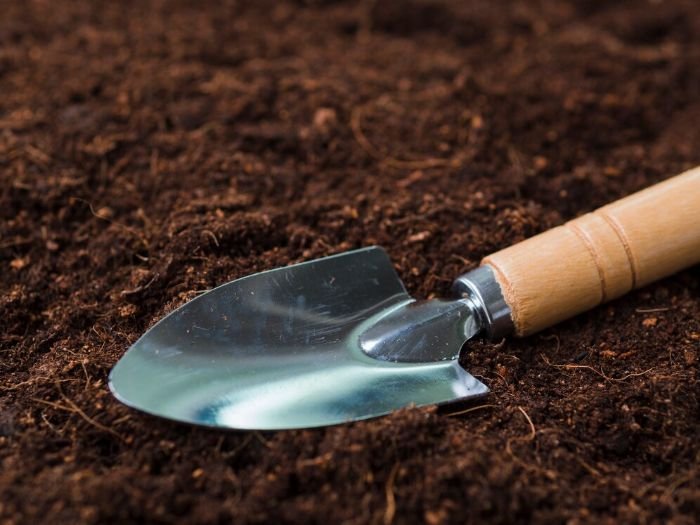
First, grip the handle and apply firm lateral pressure where blade meets handle – twist as you would to free a stuck blade in clay. New tools should have zero play at that joint. Any movement is a red flag. Second, look at the blade from the side: it should curve with a consistent arc from tip to neck. Warps or asymmetry in the curve indicate cheap stamping rather than formed steel, and they affect how cleanly the blade cups soil.
Third, check the tip. It should be sharp enough to mark a fingernail under light pressure. A blunt tip on a new trowel will not sharpen easily without a file and significant work. If you are buying online, read reviews specifically for comments on the tang or neck after six or more months of use – that joint is where quality separates from marketing.
Conclusion
For most home gardeners, one standard trowel and one narrow transplanting trowel cover 90 percent of what comes up. Add a bulb trowel if you plant more than a few dozen bulbs each fall, or a soil knife if weeding between established plants is a regular task. Beyond that, additional trowels solve problems you probably do not have.
The selection logic is simple: blade width matched to working space, full-tang construction for anything harder than loose amended soil, and a handle you can hold for an hour without fatigue. For cleaning, sharpening, and long-term care after you have chosen, a consistent routine is what determines whether a $25 trowel lasts two seasons or fifteen. A sharp, clean blade bites through each pass the way a good tool earns its keep – returning something for every hour of work put through it.
FAQ
What is the difference between a garden trowel and a transplanting trowel?
A standard garden trowel has a blade 2.5 to 3 inches wide, suited to general planting, digging, and mixing in amendments. A transplanting trowel narrows to 1 to 1.5 inches – that narrower profile lets you dig cleanly between established plants without disturbing roots on either side. If you only buy one, start with the standard. If you do a lot of in-bed planting in established borders, the transplanting trowel is the most useful second tool to add.
Can you use a garden trowel in heavy clay soil without damaging it?
Yes, with the right construction. The problem in clay is the lateral force that builds when a blade deflects off dense soil or a buried stone – that force goes straight to the tang, the connection between blade and handle. A full-tang trowel, where the metal runs the length of the handle, handles that force without damage. A socket-riveted tool under the same conditions will eventually loosen or snap at the neck. Carbon steel also outperforms stainless in clay because it is harder and less likely to flex under sustained side pressure.
What happens if you use a blade that is too wide for the planting space?
A blade that is too wide disturbs more soil than the planting requires. In a bed with perennials 6 to 8 inches apart, a 3-inch blade hits neighbor roots before the hole is deep enough. You compensate by angling the blade, which means the hole goes in at a slant rather than straight down – bad for root positioning and long-term establishment. Wide blades also require more force in any soil with resistance, which compounds over a long planting session. Matching blade width to working space is the single most practical selection decision for anyone planting in established beds.
How often should a garden trowel be cleaned and sharpened?
Cleaning after every use – removing soil and wiping the blade dry – takes thirty seconds and prevents most corrosion. Sharpening depends on material and frequency of use. A carbon steel trowel used weekly in clay soil benefits from sharpening once each season, using a mill bastard file run at the original bevel angle toward the tip. Stainless steel dulls more slowly but is also harder to bring back to a clean edge. A sharp tip cuts through soil rather than pushing it aside, which makes the most difference in compacted or clay-heavy ground.
Is a more expensive trowel always the better choice?
There is a meaningful step between the $8 to $15 range and the $20 to $30 range – and very little gain above $35 for most home gardeners. Budget trowels use stamped blades and socket construction that works adequately in loose soil but fails in anything harder. The mid-range adds full-tang construction, better steel, and ergonomic handles. Above $35, you are paying for forged steel and professional-grade warranties that home garden use rarely demands. The $20 to $30 range covers the features that matter without paying for a professional specification you will not use.
What is the best handle material for gardeners with wrist or grip problems?
Wood handles – particularly ash or hickory – absorb impact better than any other material. When you strike a root or stone, the wood compresses slightly and dampens the shock before it reaches the wrist. Rubber-grip handles over a metal core offer comfortable grip feel but do not absorb impact the same way. Metal-through handles transfer every impact directly to the hand and are a poor choice for anyone with arthritis or repetitive strain issues. Handle length matters too: a 7 to 9 inch handle adds leverage and reduces the torque needed to rotate the blade in soil, which directly reduces wrist load over a long session.
Do depth markers on trowel blades stay readable after regular use?
It depends entirely on how they are made. Etched or laser-engraved depth markers cut into the metal and remain readable for the life of the tool regardless of use in abrasive soil. Painted or ink-printed markers wear off within one to two seasons. When evaluating a trowel with depth markers in a store, run a fingernail across the lines – if you feel the groove, they are etched and will last. If the blade surface is perfectly smooth under the markings, they are printed and will not survive a full season of bulb planting.