Updated April 19, 2026
Sustainable gardening is a system that keeps a garden functioning without constant external inputs – no synthetic fertilizers to compensate for depleted soil, no heavy irrigation to make up for compacted ground, no pesticides to fight the imbalances that simplified plantings invite.
The goal is a garden that becomes more self-sufficient over time, where soil biology, rainfall, and native plant communities do the work that inputs once had to cover. That shift is measurable, replicable, and well-documented. It also takes longer than most guides admit.
Key Takeaways:
- Build soil biology first – it drives every other benefit in a sustainable garden
- Audit your water use each spring before adding new plants or expanding beds
- Native plants reduce supplemental watering by up to 70% once established
- Expect a harder first year before inputs drop and the system gains momentum
- Avoid equating organic certification with sustainability – they overlap but are not the same
Table of Contents
Sustainable Gardening – The Definition Behind the Label
The word “sustainable” has been attached to enough products and marketing copy that it risks meaning nothing. In gardening, the definition is specific enough to be useful: a sustainable garden is one that maintains or improves the ecological conditions it depends on, rather than steadily depleting them.
That distinction matters in practice. A conventional garden typically runs on inputs – fertilizer to compensate for thin soil, irrigation to offset poor water retention, pesticides to manage pest pressure that monocultures invite. Each season the garden produces, but the underlying system stays depleted or worsens. A sustainable garden runs on ecological processes – soil biology, rainfall capture, plant-insect relationships – so the need for external inputs shrinks over a 3-5 year horizon.
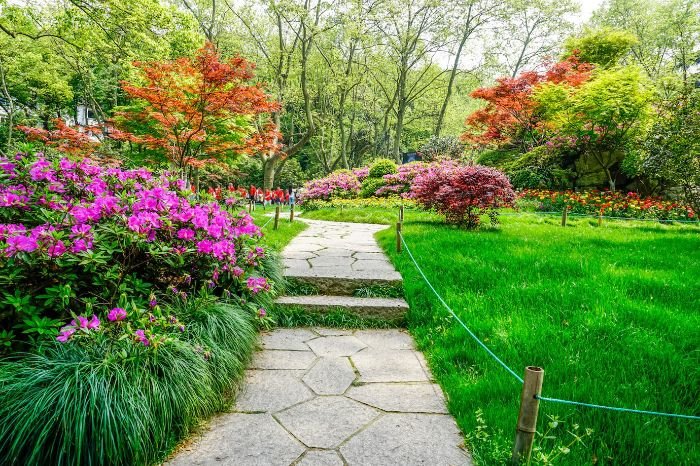
Scale changes almost nothing about this. A 300 square foot city plot and a 2-acre homestead can both operate on the same principles. What changes is the design approach: you are building a system, not just managing a planting.
One figure from EPA data puts conventional maintenance in context: American residential lawn equipment burns roughly 800 million gallons of fuel per year. That number represents what it costs, ecologically and economically, to maintain a system that cannot sustain itself. Sustainable gardening moves in the opposite direction.
Five Core Principles – How They Build on Each Other
Sustainable gardening is usually presented as a checklist of practices – composting, rainwater capture, native planting, habitat creation. The more useful frame is to see these as five interconnected principles that each make the others easier to sustain.
Soil biology over soil chemistry
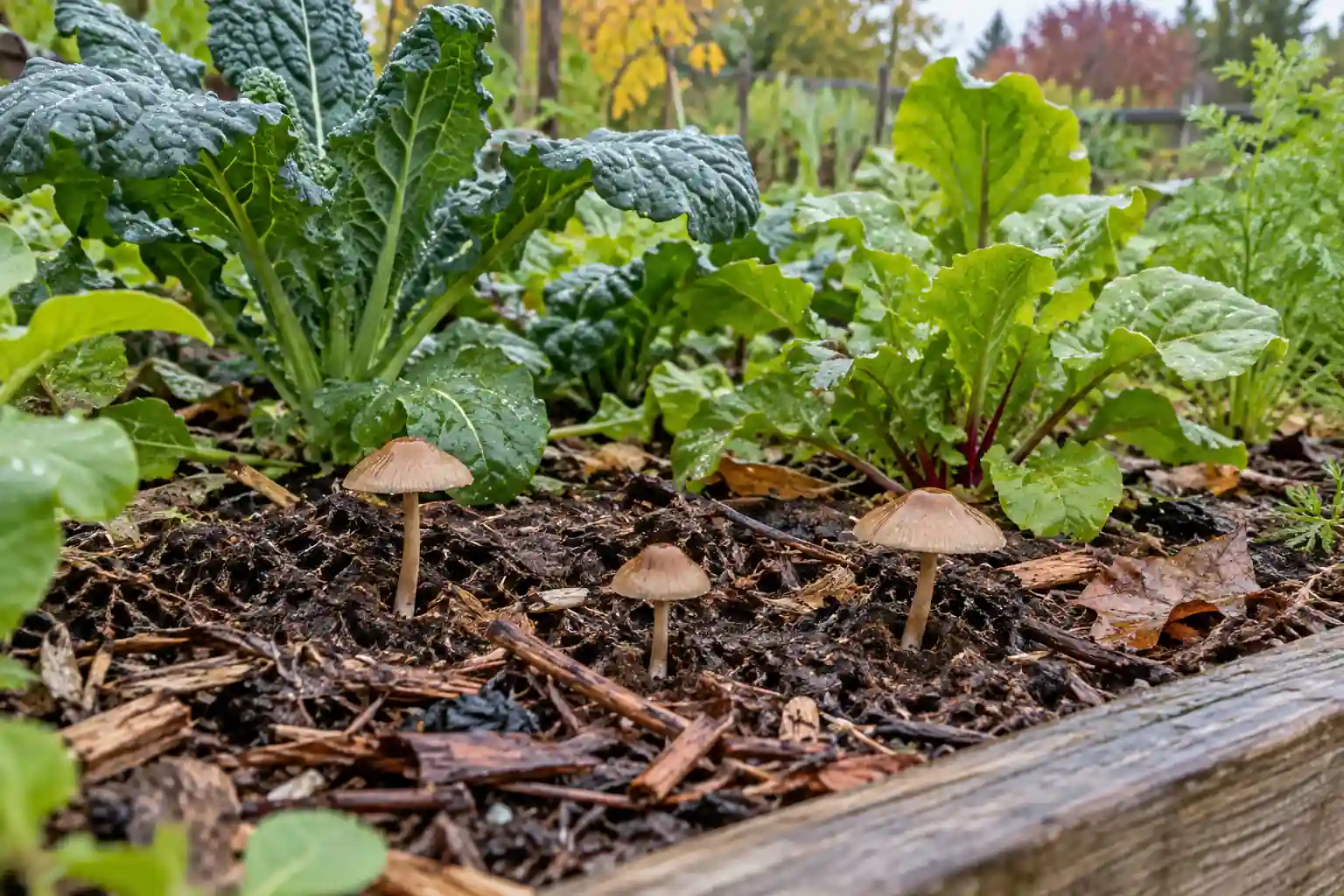
Living soil contains roughly one billion bacteria per teaspoon, according to USDA Natural Resources Conservation Service data. That community of fungi, bacteria, and invertebrates breaks down organic matter, makes nutrients plant-available, suppresses pathogens, and builds the physical structure that holds water. Synthetic fertilizers bypass this system – they feed plants directly, which works short-term, but leaves the biology unchanged or degraded. Sustainable gardening starts with investing in soil health rather than feeding plants directly.
Closed water cycles
The water a garden needs should come primarily from what falls on it and what the soil can hold, with supplemental irrigation as a backup rather than a baseline. That means building soil organic matter to increase water retention, selecting plants matched to local rainfall patterns, and designing for rainfall capture rather than runoff.
Native and locally adapted plants
Plants native to a region have co-evolved with local insects, soil fungi, and rainfall patterns over thousands of years. University of Delaware entomologist Doug Tallamy’s research has shown that native oaks support over 500 species of caterpillars, while many ornamental non-natives support fewer than five. Plant selection shapes the food web that operates in a garden. That gap between 500 caterpillar species and five is the most direct argument for choosing native plants over ornamental non-natives.
No synthetic inputs
Pesticides, synthetic herbicides, and chemical fertilizers each carry consequences beyond their immediate target: disrupted soil microbiomes, groundwater contamination, and broken pest-predator cycles that produce rebound infestations worse than the original pressure. Sustainable gardening eliminates these not as a moral position, but because healthy soil and diverse plantings typically outperform them over time, without the compounding costs.
Closed-loop waste
A garden produces significant organic material – clippings, fallen leaves, spent plants – that conventional gardeners routinely bag and remove. Returning that material to the soil completes the nutrient cycle and builds the organic matter content that drives every other principle. Composting is the mechanism that makes this work reliably – pile temperature, carbon-to-nitrogen ratios, and moisture all determine how fast organic material converts into usable soil amendments.
| Principle | What it supports | What it replaces |
|---|---|---|
| Soil biology | Nutrient cycling, plant immunity | Synthetic fertilizers |
| Closed water cycle | Drought resilience | Supplemental irrigation as baseline |
| Native planting | Pollinator habitat, reduced maintenance | Ornamental monocultures |
| No synthetic inputs | Soil microbiome, groundwater quality | Pesticides and herbicides |
| Closed-loop waste | Continuous soil building | Purchased amendments and landfill |
Environmental Benefits – What the Evidence Measures
The case for sustainable gardening is sometimes framed as an expression of values. The measured environmental outcomes are concrete enough to stand without that framing.
Soil with rising organic matter sequesters carbon. According to the University of Maryland Extension’s research on sustainable gardening and climate solutions, gardens managed without synthetic inputs and with consistent organic matter additions can shift from net carbon sources to net carbon sinks within a few growing seasons. At the scale of millions of home gardens, the cumulative effect is not trivial.
Water quality improves when runoff slows. Hard lawn surfaces and compacted soil shed rainfall quickly, carrying fertilizers and pesticides into drainage systems and waterways. Biologically active soil absorbs rainfall rather than shedding it. The difference appears in municipal stormwater monitoring data downstream from residential neighborhoods.
Biodiversity increases measurably. The RHS has conducted long-term garden wildlife monitoring and found that gardens managed with reduced intervention – less clearing of debris in autumn, less deadheading – support significantly more insect species than conventionally maintained gardens. The mechanism is direct: overwintering habitat stays intact when you leave it alone.
Here is the question worth sitting with: American home lawns and gardens collectively cover more than 40 million acres – an area comparable to the total land managed by the US National Park Service. What would it mean ecologically if half of that land shifted toward sustainable management? The calculation is speculative, but the direction is not.
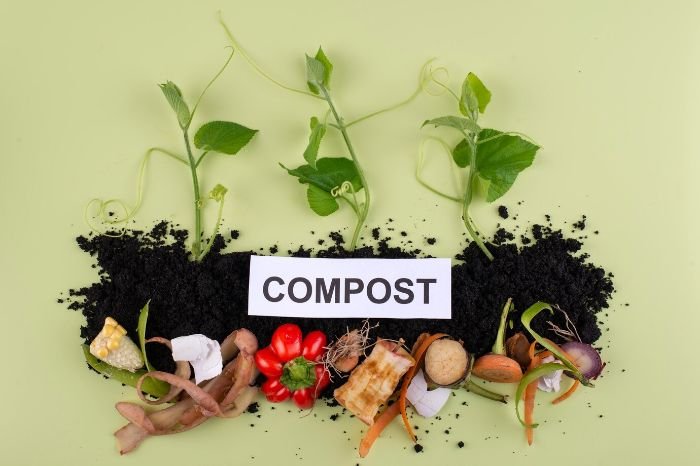
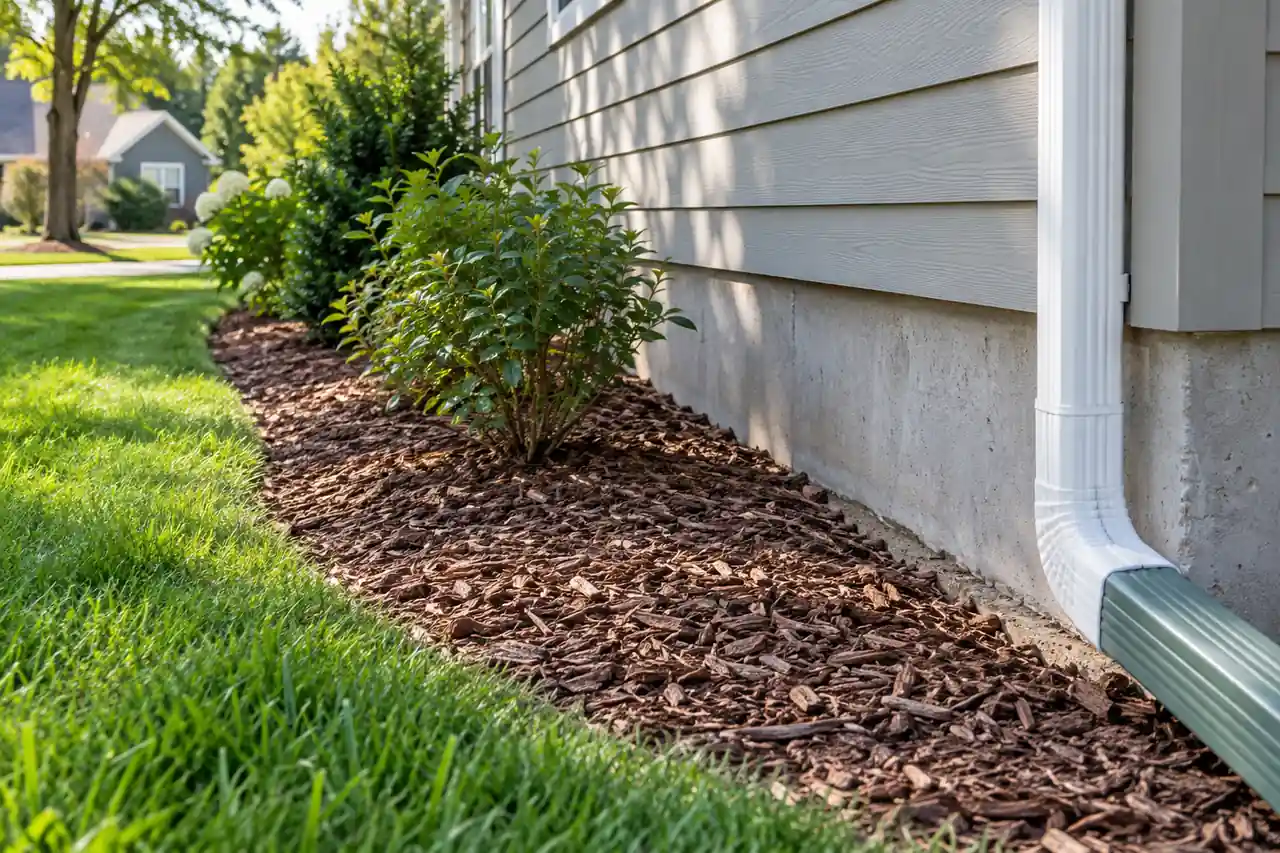
Pro Tip: The fastest way to start building soil biology is a 2-3 inch layer of wood chip mulch over bare soil. Within 12 months, soil temperature moderates, moisture retention improves, and earthworm populations increase measurably – no digging required.
Personal and Economic Benefits – The Long Game
The honest version of the economic case looks like this: sustainable gardening costs more to set up and less to maintain over time. The first season often involves soil amendment, new plant selection, and infrastructure like rain barrels or compost bins. By years two and three, water bills drop, fertilizer purchases disappear, and pest pressure that once justified pesticide spending largely manages itself.
Water savings are measurable. Native plants, once established, typically need 50-70% less supplemental watering than non-native ornamentals in the same climate. In states with tiered water pricing – now the norm across most of the Western US – that difference appears clearly on monthly bills within the first full summer.
There is a mental health dimension that research is beginning to quantify. A 2023 RHS study found that gardeners who described their approach as sustainable or wildlife-friendly reported significantly higher wellbeing scores than those who described conventional maintenance. The direction of causality is hard to isolate, but the association held consistently across income levels and garden sizes.
I often notice that gardeners who shift to sustainable practices describe a change in how they read their garden. They stop seeing weeds as failures and start seeing them as information – indicators of soil pH, compaction, and moisture. The garden becomes something to observe and work with, rather than a problem to manage.
One tradeoff worth stating honestly: the transition year is harder before it gets easier. Reducing inputs before the soil biology has recovered means plants may look stressed. That is a real cost, and it requires adjusting expectations for 12-24 months before the system gains the momentum that makes sustainable gardening genuinely lower-maintenance.
Sustainable vs. Organic Gardening – A Distinction Worth Making
Organic gardening and sustainable gardening overlap enough that the terms are routinely used as synonyms. They are not the same thing, and the difference has practical consequences for planning.
Organic gardening means avoiding synthetic pesticides and fertilizers. That is a meaningful constraint, but it says nothing about water use, plant selection, soil management strategy, or whether a garden is building or depleting the ecological system around it. A garden can be fully organic – no synthetic inputs, all approved amendments – and still rely on heavy irrigation drawing from a depleted aquifer, imported peat-based growing media from ecologically sensitive bogs, and non-native monocultures that support almost no local insect life.
Sustainable gardening asks a different question: is the garden net-positive or net-negative on soil biology, water cycles, and local biodiversity over a multi-year horizon? Organic practice can be part of that answer, but it is not sufficient on its own.
In practice, most experienced sustainable gardeners use organic methods because synthetic inputs directly undermine the soil biology they are trying to build. But the logic runs from system function to input choice, not from certification standards backward. That distinction matters when choosing between, say, an approved organic liquid fertilizer and a compost top-dress. Both are organic. One feeds plants directly and leaves the system where it was. The other feeds soil biology and compounds over time. Sustainable gardening consistently prioritizes the latter.
Understanding what each practice actually does at the systems level – rather than whether it qualifies as organic – changes how quickly a garden moves in the right direction.
Conclusion
Sustainable gardening shifts effort away from compensating for a depleted system toward building one that runs on its own biology. Soil microbes, rainfall, and native plant communities are not ideals – they are the original operating system of every garden, and they recover quickly when given the conditions to do so.
The signal that a garden is moving in the right direction is not one good season but a trend: fewer pest emergencies, less time spent watering in midsummer heat, more insects on the flowers in September. Once you can smell the difference between biologically active soil and sterile potting mix – that deep, earthy complexity that comes from fungal networks working through decomposing matter – the direction of progress becomes easy to read and hard to reverse.
FAQ
What is the simplest definition of sustainable gardening?
Sustainable gardening is managing a garden so it maintains or improves the ecological conditions it depends on – soil biology, water retention, and local biodiversity – rather than steadily depleting them. Over time, a well-managed sustainable garden needs fewer external inputs because the system supports itself through soil biology, rainfall, and plant-insect relationships rather than purchased amendments and irrigation.
Can you garden sustainably in a small backyard or container garden?
Scale has almost no bearing on sustainable gardening principles. A 200 square foot backyard responds to soil biology, native plant selection, and closed-loop composting just as effectively as a large property. Container gardens can incorporate the same principles through organic growing media, grouping plants by water requirements, and avoiding synthetic fertilizers that disrupt the microbial life even in potted soil.
What happens if you stop using fertilizer when switching to sustainable methods?
In the first 6-12 months, plants may show slower growth if the soil biology has not yet recovered enough to cycle nutrients effectively. This is a transition phase, not failure. Consistent compost application – 1 to 2 inches per season – typically restores biological activity within a year, at which point most plants perform as well or better without synthetic supplementation. Adding emergency fertilizer during this transition delays the recovery rather than accelerating it.
Is sustainable gardening more expensive than conventional gardening?
Setup costs are often higher, particularly for infrastructure like compost systems, rain barrels, and initial soil amendments. Ongoing costs drop significantly – fertilizer, pesticide, and water expenses typically fall together. University of Maryland Extension research estimates that home gardeners transitioning to sustainable practices reduce chemical input spending by 40-60% within three years. The math favors sustainability over a 3-5 year horizon in almost every climate.
What is the difference between sustainable and organic gardening?
Organic gardening is an input standard – no synthetic pesticides or fertilizers. Sustainable gardening is a systems question that asks whether the garden is improving its ecological conditions over time. A garden can meet organic certification standards while still depleting aquifer water, relying on imported peat-based compost, and growing non-native plants that support minimal local insect life. Most sustainable gardeners use organic methods, but the goal is ecosystem function, not compliance with a product classification.
How do I know if my garden is actually becoming more sustainable?
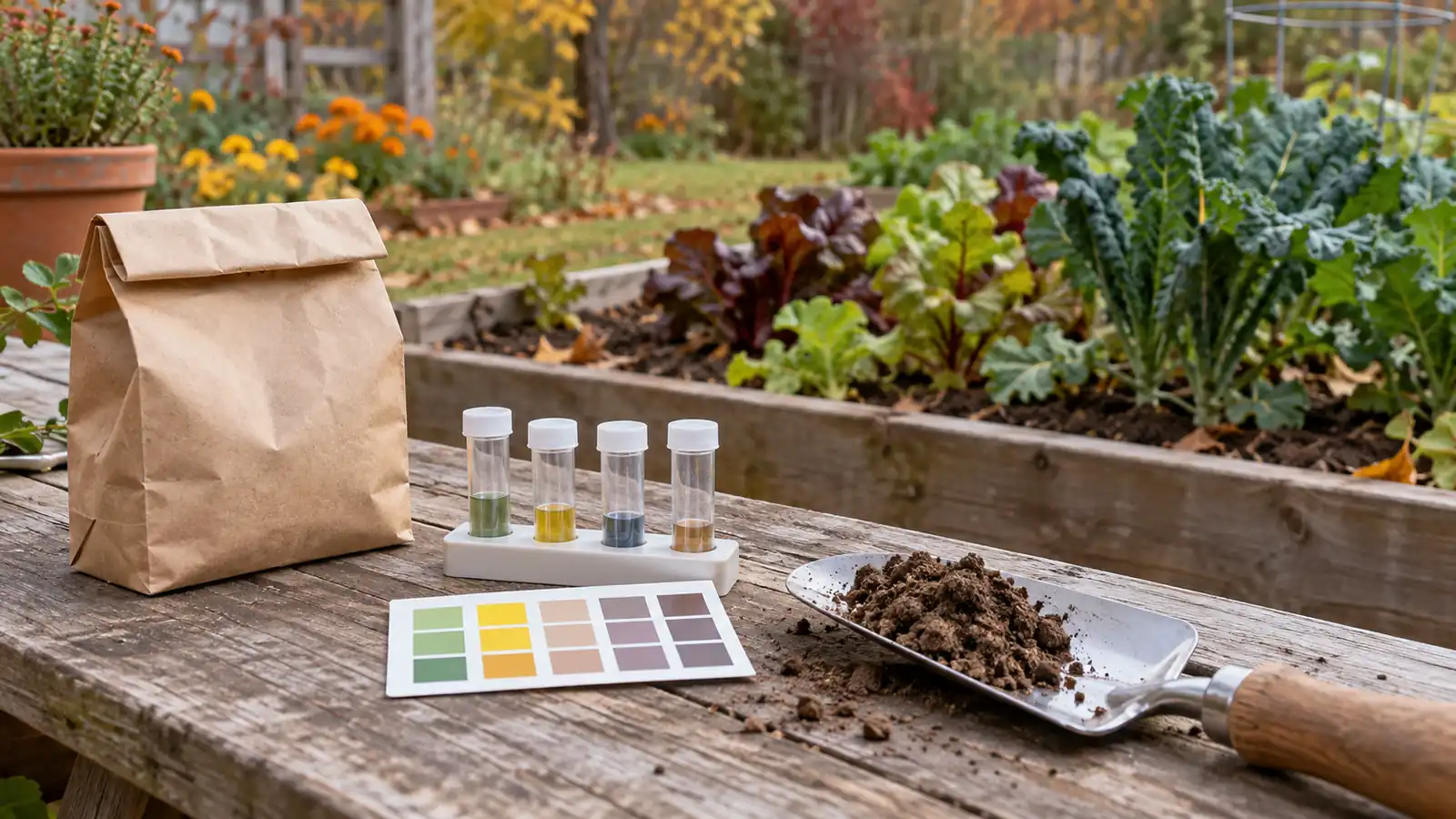
Three reliable indicators: soil that darkens and holds moisture longer than it did two years ago, a visible increase in pollinator activity during flowering periods, and a reduction in pest pressure that previously required intervention. These changes take 1-3 seasons to appear clearly depending on starting conditions. Measuring soil organic matter percentage annually – targeting above 3% for most garden soils – gives a concrete benchmark separate from visual observation.
Does sustainable gardening mean I have to give up vegetables or non-native flowers?
No. Vegetables, annual flowers, and non-native perennials are all compatible with sustainable management. The principles apply to how you manage the soil, water, and inputs around those plants, not to plant selection alone. A conventionally planted vegetable bed moves meaningfully toward sustainability through compost-based fertility, drip or soaker irrigation rather than overhead watering, and companion planting to reduce the pest pressure that monoculture rows invite.