
Last Updated May 03, 2026
The best climbing plants earn their place when the vine, the support, and the maintenance burden fit the same job. A good match can turn a bare fence, narrow trellis, shaded wall, or pergola into usable garden height without making the space feel crowded.
Choosing climbers follows the same plant selection logic used for site conditions, mature size, and maintenance level. Flower color matters. Climbing habit, mature weight, climate fit, and pruning access matter first.
Clematis wants fine mesh or slim bars. Climbing roses want tying. Climbing hydrangea wants a sound surface and patience. Grapes and kiwiberries want a frame you can still reach in midsummer. Those differences decide whether a vertical planting becomes a clean feature or a long-running repair project.
Key Takeaways:
- Match the climbing habit to the support surface
- Reserve heavy woody vines for permanent strong structures
- Use annual climbers when fast seasonal cover matters
- Check local invasive lists before planting aggressive spreaders
- Revisit ties and new shoots every week in year one
Table of Contents
Best Climbing Plants At A Glance
Filter by structure first, then confirm mature weight, pruning access, and regional risk before planting.
| Garden goal | Strong climber | Typical habit | Best support | Main caution |
|---|---|---|---|---|
| Flowering trellis | Clematis | Deciduous perennial | Wire mesh, slim lattice, obelisk | Roots dry fast near foundations |
| Pollinator gate or patio edge | Trumpet honeysuckle | Twining woody vine | Trellis, fence, arbor | Bloom is strongest in good sun |
| Warm-climate fragrance and evergreen leaf | Star jasmine | Evergreen to semi-evergreen | Trellis, pergola, pot frame | Not reliable in cold-winter gardens |
| Shaded wall cover | Climbing hydrangea | Self-clinging woody vine | Sound masonry or strong wall trellis | Slow to start and heavy when mature |
| Pergola or large arbor | American wisteria | Deciduous woody vine | Heavy arbor, pergola, stout fence | Needs regular pruning and strong framing |
| Edible privacy and summer shade | Grape | Deciduous woody vine | Pergola, trellis, training wires | Training and pruning are ongoing work |
| Edible arbor with ornamental value | Kiwiberry | Heavy twining vine | Very sturdy arbor or T-bar | Weight, pruning, and pollination planning |
| Fast annual screen | Scarlet runner bean | Seasonal twining vine | Netting, strings, panels | Frost ends the planting |
| Cool-season fragrance and cut flowers | Sweet pea | Annual tendril climber | Netting, twiggy support, wire | Fades in hot weather |
| Small pot or quick color | Black-eyed Susan vine | Tender annual climber | Tripod, obelisk, patio trellis | Needs regular water in containers |

How Climbing Plants Climb And Why Support Type Matters
Support failure usually begins when the climbing habit is matched to the wrong surface. Not every vine grips a wall, and not every trellis can carry a woody plant after a wet summer.
| Climbing habit | Best support | Load level | Strong examples | Main caution |
|---|---|---|---|---|
| Twining stems | Poles, wires, slim posts, lattice | Light to heavy | Trumpet honeysuckle, wisteria, kiwiberry | Needs something narrow enough to wrap |
| Tendrils or leaf stalks | Netting, wire mesh, narrow bars | Light to medium | Clematis, grape, sweet pea | Broad boards and thick posts are poor matches |
| Self-clinging roots or pads | Sound masonry, rough vertical surfaces | Medium to heavy | Climbing hydrangea, Virginia creeper | Can complicate removal near house surfaces |
| Scrambling canes that need tying | Trellises, fences, wires, arbors | Medium | Climbing roses | Needs tying, shaping, and regular access |
| Fast annual growth | Strings, net panels, obelisks, seasonal frames | Light | Runner beans, black-eyed Susan vine, hyacinth bean | Support can be temporary, not flimsy |
Climbing hydrangea’s aerial roots and masonry grip make it useful on sound walls and difficult to treat like a light annual vine. Trumpet honeysuckle’s twining growth on a support structure means it belongs on something it can wrap, not on a bare wall.

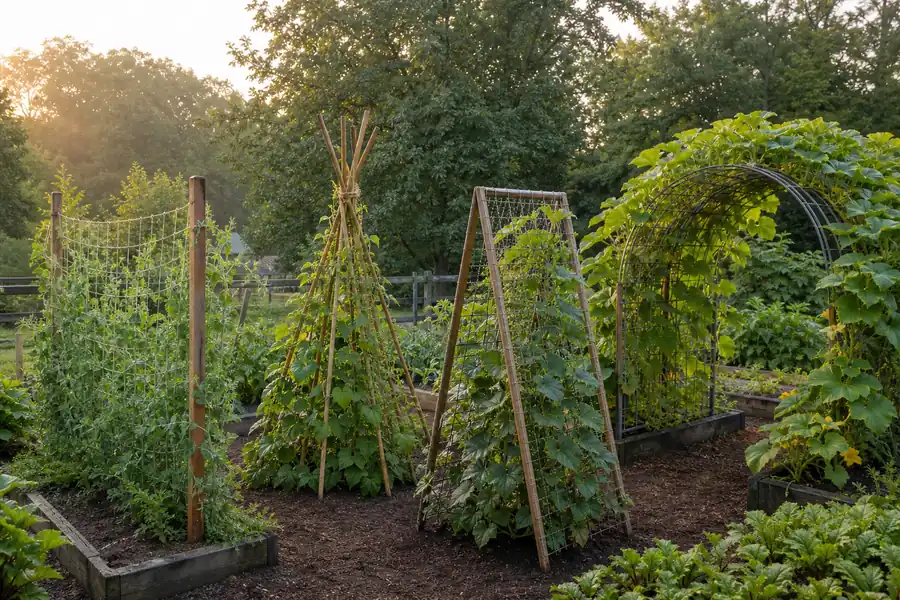
Think in load categories. Light climbers fit pots, obelisks, and removable panels. Medium climbers fit trellises, fences, and small arbors. Heavy climbers belong only on permanent structures anchored for long-term weight, leaf mass, and pruning access.
Best Climbing Plants For Trellises, Fences, Walls, Pergolas, And Containers
Most climbing-plant failures begin with the wrong structure. Pick the support first, then shorten the plant list.
Best Climbing Plants For Trellises
Trellises favor climbers that stay readable and trainable in a narrow plane. Clematis is one of the strongest choices because it delivers long bloom value without demanding a huge root footprint. Sweet peas, black-eyed Susan vine, and many climbing roses also work well when the trellis has enough tie points or mesh.
The most forgiving trellises use narrow bars, wire mesh, or taut horizontal wires. Clematis leaf stems and tendrils catch those surfaces easily. A wide decorative board trellis often looks good empty and works poorly once the plant tries to climb it.

Best Climbing Plants For Fences
Chain-link fences accept a wider range of climbers because they already act like mesh. Annual runner beans, clematis, trumpet honeysuckle, and carefully chosen climbing roses all make sense there. Wooden fences need more caution because mature vines trap weight and shade against boards, posts, and rails.
Wooden fences fitted with wires suit climbing roses and clematis better than heavy self-clingers. Solid privacy fences usually perform best with moderate climbers that can be thinned easily, not with vines that seal the whole surface shut. Airflow matters too. A dense vine and a solid fence can create a damp strip that stays slower to dry after rain.
Privacy planting on a fence works best when the plant covers enough space without trying to own the entire boundary. Trumpet honeysuckle, clematis, and seasonal beans give coverage with less long-term risk than ivy or Japanese honeysuckle.
Best Climbing Plants For Walls
Walls need a separate decision process because the plant and the house interact directly. Climbing hydrangea is a strong choice for sound masonry and cooler exposures. For house walls, a freestanding or offset trellis is usually safer than direct attachment. A separate wall trellis set a few inches off the surface preserves airflow, keeps stems off paint, and leaves inspection access around windows, gutters, and joints.
North and east walls often suit shade-loving plants, especially when the base planting needs shrubs or perennials that can share a cooler root zone. Virginia creeper can cover large wall areas fast, though its holdfasts are difficult to remove from wood or shingle walls.

Best Climbing Plants For Pergolas And Arbors
Pergolas and arbors need vines that justify the structural commitment. American wisteria, grape, kiwiberry, and mature climbing roses all belong in this group. Pergola vines need a structure built for mature weight, not only for early growth.
Trellised edible crops are a support-and-access problem, not just a plant list, and the same logic applies to larger edible vines grown over head-height structures. Grapes need training grape vine systems with planned trunks, cordons, and wire layout. Wisteria needs a strong structure and repeated pruning. Pruning access must remain possible after summer growth fills the frame.
Best Climbing Plants For Pots And Containers
Containers favor climbers with manageable root systems and lighter seasonal growth. Clematis, sweet peas, runner beans, black-eyed Susan vine, compact climbing roses, and star jasmine in mild climates all work when the pot is large enough to keep roots cool and the support is fixed to the container or anchored separately.
As a rough guide, small annual climbers can manage in a large patio pot, while clematis and compact climbing roses need a deeper container with more even moisture. Star jasmine needs a large container and winter protection outside USDA Zones 8 to 10.
Small patios, balconies, and rented spaces often benefit more from seasonal or easily reset climbers than from permanent woody vines. Vertical gardening for limited space works best with removable supports when the layout may change. In containers, dry soil, hot pot walls, and top-heavy trellises usually fail before the plant choice does.
Plant Profiles – The Best Flowering, Fragrant, Native, And Edible Climbers
Each climber should be compared by best use, support type, climate range, and caution points before it reaches the shortlist.

Clematis.
Best for: flowering trellises, obelisks, and narrow vertical accents. Support: mesh, wire, or slim bars rather than broad boards. Climate: many garden clematis are grown in USDA Zones 4 to 9, depending on cultivar. Caution: pruning-group confusion and root stress beside hot walls.
Climbing rose.
Best for: fences, arches, wires, and arbors where bloom matters as much as coverage. Support: horizontal wires or sturdy trellises with regular tying. Climate: hardiness depends heavily on cultivar. Caution: pruning and tying are easiest when the frame stays reachable from both sides.
Trumpet honeysuckle.
Best for: hummingbird-friendly color on trellises, gates, and fences. Support: a twining frame it can wrap, not a bare wall. Climate: commonly grown in USDA Zones 4 to 9. In plantings with fragrant plants for the garden, trumpet honeysuckle is valued more for pollinators and flower color than for strong perfume. Caution: bloom count drops when the site gets too dim.
Star jasmine.
Best for: evergreen screening and fragrance near patios, entries, and sheltered trellises. Support: trellises, pergolas, and large container frames. Climate: USDA Zones 8 to 10, or overwintered indoors in colder regions. Caution: it forms dense glossy cover when winter temperatures remain suitable, but cold exposure limits performance quickly.
Climbing hydrangea.
Best for: shaded or lightly shaded masonry walls with a permanent plan. Support: sound masonry or a very strong offset trellis. Climate: commonly USDA Zones 5 to 8. Caution: it is slow to establish, then heavy when mature, so the surface and long-term commitment both need to be sound.
American wisteria.
Best for: pergolas, large arbors, and other permanent frames that can carry a woody vine. Support: heavy arbor, pergola, or stout fence. Climate: commonly USDA Zones 5 to 9. American wisteria is less aggressive than Chinese wisteria. Caution: even the better-behaved option still needs weight planning, regular pruning, and room.
Crossvine.
Best for: larger supports where early-season color and hummingbird value matter. Support: fences, arbors, pillars, walls, and large trellises. Climate: commonly USDA Zones 5 to 9, with better evergreen behavior in warmer parts of that range. Caution: scale is the issue, because it can outgrow small frames.
Passionflower.
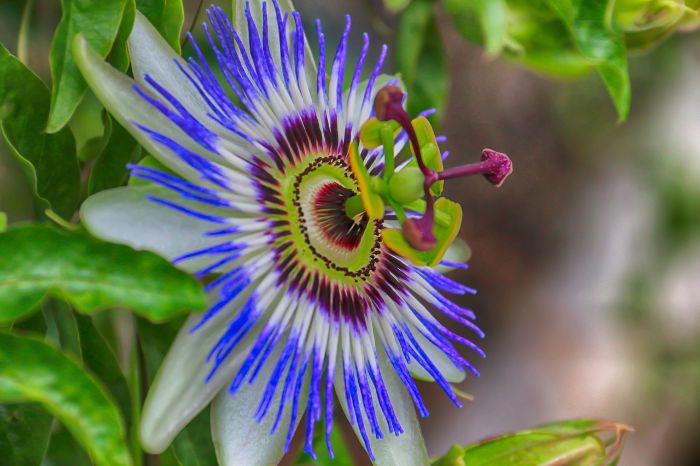
Best for: unusual flowers, butterfly support, and lively seasonal cover. Support: trellises and fences where seasonal spread fits the space. Climate: hardiness is strongly species-dependent. Caution: some passion vines travel farther than expected in warmer climates.
Grape.
Best for: edible shade, fruit, and long pergola runs. Support: pergolas, wires, and larger training systems. Climate: many home-garden grapes are chosen for USDA Zones 5 to 8, though cultivar matters. It also fits naturally into edible landscaping where utility and ornament share the same space. Caution: untrained vines become tangled fast.
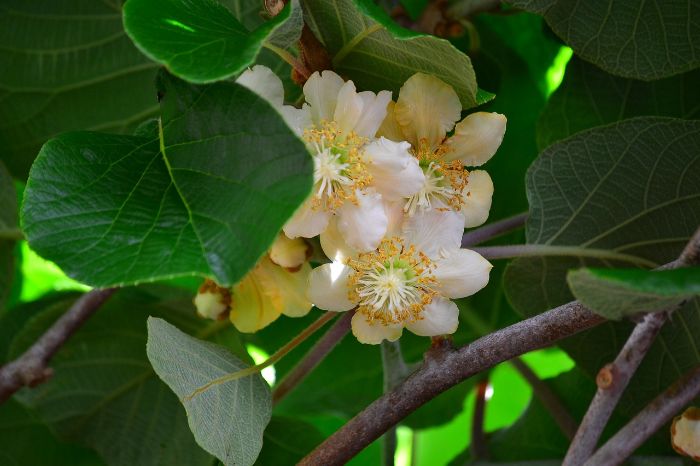
Kiwiberry.
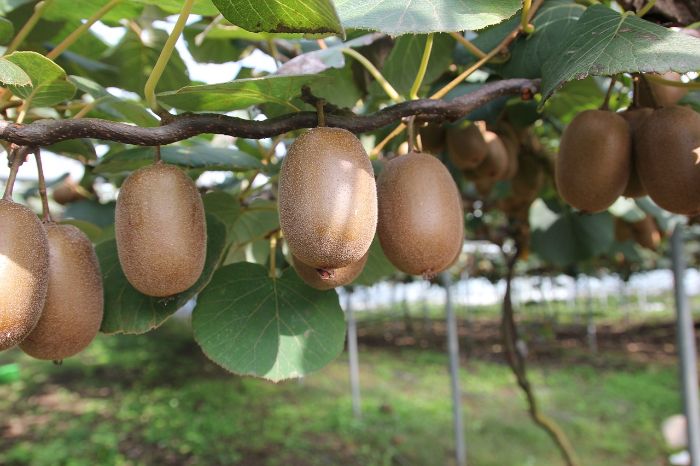
Best for: edible summer cover on a serious arbor or pergola. Support: a very sturdy arbor, pergola, or T-bar system. Climate: hardy kiwiberry types are often grown in USDA Zones 3 to 8. Caution: weight, delayed maturity, and pollination planning matter before planting.
Sweet pea.
Best for: cool-season fragrance, cut flowers, and spring trellis color. Support: pots, net panels, and twiggy supports. Climate: seasonal annual performance is best in cool spring weather. Caution: ornamental sweet peas are not edible, and hot weather shortens the display quickly.
Scarlet runner bean.
Best for: fast seasonal screening, pollinator movement, and edible pods. Support: strings, panels, arches, and seasonal fences. Climate: warm-season annual growth starts after frost danger passes. Caution: frost ends the planting, so the whole screen resets each year.
Evergreen, Deciduous, Annual, And Perennial Climbers
Evergreen And Semi-Evergreen Climbers
Year-round screening narrows the list fast. Star jasmine is a strong evergreen choice in mild climates. Crossvine and trumpet honeysuckle can keep more foliage in warmer winters, though not in every region. Ivy can stay green through winter too, though its aggressive behavior makes that benefit expensive in the long run.
Deciduous Climbers
Clematis, climbing hydrangea, grapes, kiwiberries, roses, and American wisteria all lose leaves in colder seasons. That is not a flaw. It simply means they are better for seasonal flower, fruit, shade, or wall softening than for full winter screening. The structure stays visible in winter, so the frame itself needs to look intentional.
Annual And Perennial Climbers
Annual climbers solve speed problems. Perennial climbers solve long-term structure problems. Runner beans, sweet peas, black-eyed Susan vine, and hyacinth bean give quick cover, easy removal, and a clean reset each year. Clematis, roses, grapes, honeysuckle, wisteria, and hydrangea reward patience, stronger support, and an established pruning routine.
Living walls and rooted climbers are different systems. Rooted vines growing from the ground or a container need different planning from living-wall vertical garden design, where roots live in engineered panels.
Climbing Plants To Avoid Or Check Locally Before Planting
Fast cover becomes a liability when spread rate, removal difficulty, and nearby habitat are ignored. Japanese honeysuckle can smother vegetation and climb aggressively. English ivy can be potentially invasive in Midwestern gardens. Trumpet vine suckers and self-seeds freely.
Before planting a fast climber, check:
- Your state, regional, or national invasive plant list
- County or extension notes on local spread behavior
- Whether the plant spreads by seed, suckers, or both
- Whether it clings to walls, trees, gutters, or shingles
- How difficult removal becomes after five years
- How close the planting sits to woods, roadsides, or unmanaged ground
Regional substitutes usually solve the design problem with less risk. Use trumpet honeysuckle in place of Japanese honeysuckle when fragrance and hummingbird value are the goal. Use American wisteria in place of invasive Asian wisterias when you want the wisteria look on a garden structure. Use wall trellises with clematis or climbing roses when a house wall needs softening without self-clinging growth.
Pollinator value belongs inside the same decision. Trumpet honeysuckle, crossvine, passionflower, and runner beans bring nectar and movement. A vine that feeds hummingbirds and stays in bounds is better than one that outgrows the whole planting in the process.
How To Plant, Train, Prune, And Choose The Right Climber
Most climbing plants take their permanent shape from the first season onward. Early direction matters more than rescue pruning later.
Pro Tip: Plant perennial climbers six to twelve inches away from the wall, fence, or post, then angle the first stems back to the support with soft ties. The roots sit in better soil, rain reaches them more easily, and the stems still find the frame fast.
First-Year Planting And Training
Install the support before planting. Water the root zone deeply through the first growing season. Keep mulch off the crown. Soil tight against foundations often stays drier than the visible planting area suggests, so the base of the plant deserves more attention than the growth already climbing overhead.
I often see vines called unruly when the real failure happened in the first summer. One strong shoot hardened in the wrong direction, and every later cut became an attempt to correct a frame that had already set.

Check ties and new shoots weekly during active growth. Roses need tying. Clematis often needs a gentle start so leaf stems can find the mesh. Grapes and kiwiberries need a selected leader early or the whole structure fills with stems that all look important and none are placed well.
Pruning Framework
Prune spring bloomers that flower on old wood soon after bloom. Prune many current-season bloomers in dormancy or very early spring. Renovate overgrown woody climbers in stages if the framework is still worth saving. Clematis pruning groups matter enough to read the tag before you cut. Group confusion is one of the fastest ways to lose a year’s flowers.
Seasonal garden care still affects pruning timing, though climbers add one extra rule: never ignore access. A vine that can no longer be reached has already exceeded the maintenance capacity of its support.
Start With The Structure You Have
Your support is narrow, decorative, and close to a path. Start with clematis, sweet peas, or another lighter climber that keeps the frame visible.
Your wall is shaded and the surface is sound. Start with climbing hydrangea or with a separate wall trellis carrying a moderate climber. House walls need airflow, inspection access, and more restraint than garden fences do.
Your pergola is large, permanent, and easy to reach from more than one side. Start with grape, American wisteria, kiwiberry, or a mature climbing rose with a clear pruning plan.
Your garden is rented, small, or likely to change within a few seasons. Seasonal climbers on removable supports usually make more sense than a permanent woody vine anchored deep into the layout.
Common Mistakes That Compound Fast
- Putting a heavy woody vine on a light trellis, which bends the frame and traps pruning access.
- Planting the root ball directly against a wall, which leaves the plant in a dry root zone from day one.
- Letting first-year shoots cross and harden at random, which builds a permanent tangle.
- Using one pruning calendar for every climber, which often removes flower wood or encourages the wrong growth.
- Choosing self-clinging vines near gutters, rooflines, or old paint without a maintenance plan.
Conclusion
Choose climbing plants in this order: support, climbing habit, mature weight, climate fit, invasive risk, pruning access, and only then flower color or fragrance. That sequence prevents most failures before they start.
The best climber fits the exact structure, the available maintenance, and the amount of room the garden can keep giving it year after year.
FAQ
What climbing plants grow fast?
Scarlet runner bean, black-eyed Susan vine, hyacinth bean, and sweet peas in cool weather are among the fastest annual climbers. Trumpet vine and wisteria also grow fast, though they bring a much heavier long-term maintenance load.
What climbing plants are evergreen?
Star jasmine is one of the best evergreen climbers in mild climates. Crossvine and trumpet honeysuckle can hold more leaf in warmer winters, depending on region. Ivy stays green too, though its invasive risk makes it a poor default recommendation.
What climbing plants come back every year?
Perennial climbers such as clematis, climbing roses, trumpet honeysuckle, grapes, climbing hydrangea, crossvine, and American wisteria return each year when the climate suits them. Annual climbers such as sweet peas and runner beans need replanting after frost.
Which climbing plants work in shade?
Climbing hydrangea is one of the strongest choices for light shade or a bright north or east wall. Some honeysuckles accept part shade, though bloom improves with better sun. Deep shade sharply shortens the list.
What climbing plants are best for pots?
Clematis, sweet peas, black-eyed Susan vine, scarlet runner bean, compact climbing roses, and star jasmine in sheltered warm climates all work well in containers. Use a large patio pot for lighter annuals, a deeper container for clematis and compact roses, and a large frost-protected container for star jasmine outside USDA Zones 8 to 10.
What climbing plants are safe for walls?
Wall-safe choices usually grow on a separate trellis set off the surface. For house walls, a freestanding or offset trellis is usually safer than direct attachment. Clematis, climbing roses, and many annual climbers are easier to manage that way than self-clinging vines. Climbing hydrangea can work well on sound masonry when the long-term commitment fits the site.
What is the best climbing plant for privacy or a fence?
For quick seasonal privacy, runner beans and other annual climbers are strong options. For longer structure, trumpet honeysuckle, clematis, climbing roses, and carefully placed grapes work well on suitable fences. The best privacy plant is the one the fence can actually carry.
When should climbing plants be pruned?
Pruning time depends on where the plant carries its flowers. Many spring bloomers are pruned after flowering. Many current-season bloomers are pruned in dormancy or very early spring. Clematis needs pruning by group, not by a generic calendar.