Last Updated April 25, 2026
Weed identification in the garden comes down to one decision you make before pulling anything: does this plant belong here, or not. Get it wrong in one direction and you’ve just removed a plant you spent money on. Get it wrong in the other and you’ve left something that will set 50,000 seeds before the month ends. Most gardeners build their recognition skills through seasons of trial and occasional discovery – that aggressive “weed” they’ve been pulling turned out to be edible, or that tidy seedling turned out to be bindweed with three feet of root already established underneath it.
The gap between harmful and beneficial is rarely obvious at first glance. A dandelion at the lawn edge is a nuisance; the same plant in a vegetable bed is aerating compacted subsoil eighteen inches down. A mat of chickweed looks messy but suppresses weed germination through the cool months and disappears when summer heat arrives. This guide gives you a four-step field method for identifying what you’re looking at – and a practical framework for deciding what to do next.
Key Takeaways:
- Crush a leaf and smell it before pulling – aromatic plants are rarely harmful weeds
- Check root structure before pulling – taproots and rhizomes require completely different removal approaches
- Keep chickweed, clover, and purslane unless they actively crowd planted seedlings
- Notice where seedlings cluster – random scatter across disturbed soil almost always signals the soil seed bank
- Never compost weeds with visible seedheads or underground runners still attached
Table of Contents
What Makes a Plant a Weed – The Context Problem
There is no botanical category called “weed.” The Royal Horticultural Society defines the term simply as “a plant growing where it is not wanted” – which means the same species qualifies as a weed in one bed and a valued plant twenty feet away. White clover was deliberately seeded into lawn mixes until the 1950s, when broadleaf herbicide manufacturers began promoting the idea that any non-grass growth in a lawn was a defect worth eliminating. That history, more than any ecological classification, shapes what most of us were taught to pull.
What actually defines a problem weed in practice is a combination of behaviors: prolific seed production, root systems that regenerate from small fragments, and in some species, allelopathic chemicals that suppress surrounding plant growth. Penn State Extension notes that a single dandelion plant can produce up to 15,000 seeds, and Canada thistle seeds remain viable in soil for more than 20 years. These numbers aren’t facts to memorize – they’re reasons to act before flowering, every time, with both species.
Annual vs. Perennial – Why the Difference Changes Your Approach
Annual weeds complete their lifecycle in one season. Their only real threat is reproductive – catch them before flowering and the problem ends with that plant. Crabgrass, chickweed, purslane, and lamb’s quarters are all annuals. Perennials are a fundamentally different challenge. Bindweed regenerates from root fragments as small as two inches. Japanese knotweed has rhizomes that extend fifteen feet horizontally and nine feet deep. Dock and thistle have taproots that regrow from any portion left in the ground.
This split changes your removal strategy more than knowing the name of the plant. With annuals, timing is the tool. With perennials, method and persistence matter more than speed.
How to Identify Unknown Plants in Your Garden – A Field Method
Most weed identification guides give you a list to memorize. That approach works for the ten most common species, but it leaves you guessing whenever something unfamiliar appears. A more reliable approach is to work through observable features in sequence before assuming you know what you’re looking at.
When was the last time you stopped before pulling, looked at the root system, and changed your mind about what to do next?
Step One: Grass, Broadleaf, or Sedge
This first observation eliminates half the uncertainty immediately. Grass seedlings produce a single blade emerging from a sheath, with no visible split between stem and leaf. Broadleaf seedlings produce two rounded seed leaves (cotyledons), followed by distinctly shaped true leaves that are characteristic of the species. Sedges look like grasses but have a triangular stem cross-section – run two fingers along the stem and you will feel three edges. Nutsedge, the most common garden sedge, is routinely mistaken for a grass until that test is applied.
Step Two: Leaf Architecture and Arrangement
After the initial split, look at how leaves attach to the stem. Opposite pairs at each node point to a different set of plant families than alternate arrangement, where leaves climb the stem on alternating sides. Basal rosettes – all leaves emerging from the crown at ground level with no visible stem – narrow the field further. Dandelion and broadleaf plantain both form basal rosettes, but dandelion leaves are deeply and irregularly toothed while plantain leaves are oval with parallel veins running lengthwise from base to tip. The leaf margin texture adds another layer: smooth edges, toothed edges, lobed edges, and spiny edges each reduce the candidate pool significantly.
Step Three: The Sensory Check
Crush a small piece of leaf between your fingers. Aromatic oils – anything that smells like mint, lemon, or fresh herbs – almost always signal a garden plant or beneficial volunteer, not an aggressive invasive. A sharp garlic smell is diagnostic for garlic mustard, an invasive species that suppresses native plant growth through chemical compounds; the smell is unmistakable the first time you encounter it. No smell at all usually confirms a grass or sedge. Bitter or acrid odors warrant more careful identification before assuming the plant is safe to handle without gloves.
Pro Tip: When pulling any unidentified plant, loosen the soil around it with a narrow trowel first, then grasp at the crown and apply steady upward pressure rather than a sharp yank. This keeps taproots and rhizomes intact and gives you a complete root system to examine – the single most reliable feature for finalizing an identification.
Step Four: Read the Root Before You Remove It
Gently loosen the soil around the plant before removing it. A single thick taproot – dandelion, dock, chicory – requires moist soil and a long narrow tool to remove without leaving a regenerating fragment. Fibrous roots, a dense cluster of fine threads, pull cleanly in one motion and belong to annual species. Horizontal underground stems (rhizomes) with visible nodes and pale or white coloring signal perennial spreaders; every fragment left behind becomes a new plant.
The root examination connects identification directly to removal strategy. An annual with fibrous roots can be hoed at the seedling stage. A perennial with rhizomes requires a completely different approach – and for Japanese knotweed in particular, often professional help for any established stand.
The Foes – Five Garden Weeds That Earn Immediate Removal
These five weeds share the characteristics that make delayed action costly: rapid spread, root systems that regenerate from fragments, or direct competitive harm to surrounding plants.
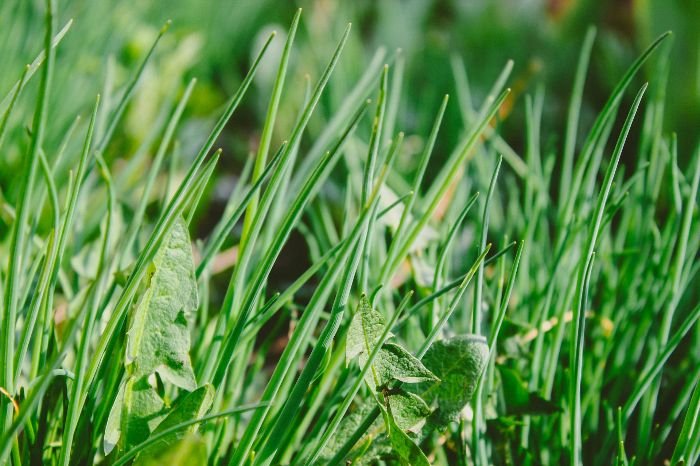
Bindweed (Convolvulus arvensis) is identified by heart-shaped leaves with a slightly pointed tip and a clockwise twining habit around any upright stem nearby. White or pale pink trumpet-shaped flowers appear from June through September. Its root system extends six feet or more in a single growing season and regenerates from two-inch fragments. Once bindweed climbs into an established shrub, mechanical removal requires damaging the host. Pull when stems are still thin and roots are shallow – early spring, before it reaches any support structure.
Canada Thistle (Cirsium arvense) is classified as a noxious weed in most US states, despite originating in Europe and Asia. Deeply lobed leaves with spiny margins and a creeping horizontal root system that spreads independently of seed production define it. A single plant can colonize several square feet through root spread alone in one season. Removing the aboveground portion every two to three weeks over a full season eventually exhausts the root reserves – this is the most reliable non-chemical approach, and it genuinely requires that full season of commitment.
Crabgrass (Digitaria spp.) is an annual that germinates when soil temperature reaches 55 to 60 degrees Fahrenheit, a timing that often coincides with forsythia bloom, according to the Old Farmer’s Almanac. Stems radiate outward from a central crown and root at nodes wherever they contact soil. Each plant can leave behind up to 150,000 seeds. The window for easy removal is the two weeks after germination, when the plant is still a pale seedling with fibrous roots and no established rooting nodes.
Japanese Knotweed (Fallopia japonica) is identified by hollow stems with raised nodes resembling bamboo jointing, shovel-shaped leaves with a flat or slightly indented base, and emergence rates of several inches per day in spring. Root systems reach fifteen feet horizontally and up to nine feet deep. Several US states list it as a regulated invasive. For established stands, cutting stems to ground level repeatedly throughout the growing season – every ten days – is the most realistic home approach, but professional removal is worth considering for anything larger than a few square feet.
Yellow Nutsedge (Cyperus esculentus) looks like a grass until you feel the stem – three distinct edges in cross-section identify it immediately. Underground tubers called nutlets survive most pulling attempts and regenerate the plant. University of Minnesota Extension notes that nutsedge thrives specifically in wet, compacted soils, making its presence a reliable signal to investigate drainage before investing further effort in removal. Improving the drainage condition matters more than any mechanical control when nutsedge has established itself.
The Friends – Five Garden “Weeds” Worth a Second Look
These plants get pulled reflexively because they were not intentionally planted. Each one earns its space under the right conditions.
Soil Workers
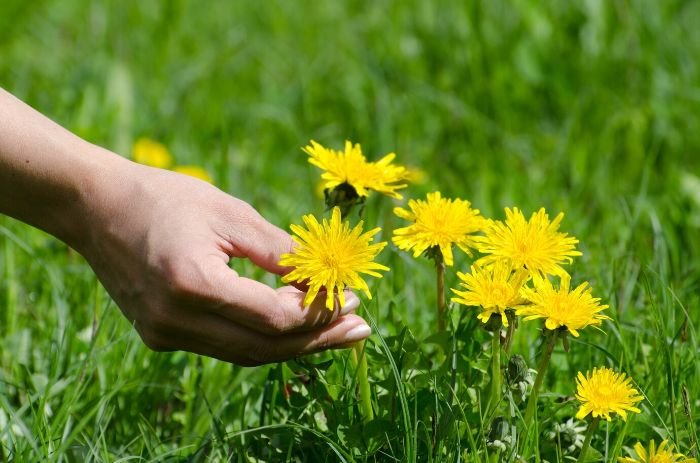
Dandelion (Taraxacum officinale) has a taproot that regularly reaches eighteen inches into compacted subsoil, drawing calcium and other minerals from depths that most cultivated plants never access. When dandelion leaves decompose in place, those minerals become available to surrounding plants. The flowers are among the first available to pollinators in spring, often weeks before anything else in the garden is open. Leave a few in vegetable beds until they flower, then cut the flower head before seeds form rather than pulling the whole plant.
Broadleaf Plantain (Plantago major) is identified by oval leaves with parallel veins running from base to tip – a reliable distinguishing feature from most look-alikes. Its taproot penetrates compacted soil layers, and its consistent appearance in new or neglected beds usually confirms a compaction problem worth addressing directly. Young leaves have a long documented history in traditional herbal applications across multiple cultures and are edible when small and tender.
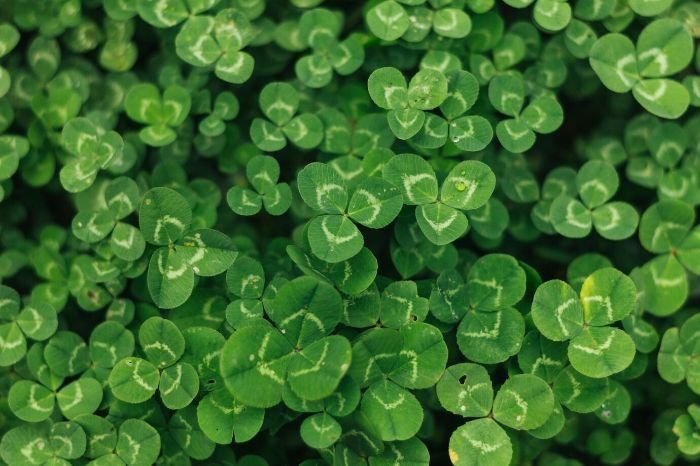
White Clover (Trifolium repens) fixes atmospheric nitrogen through a relationship with rhizobium bacteria in its root nodules. The National Gardening Association estimates clover fixes between 100 and 200 pounds of nitrogen per acre annually – the equivalent of a moderate fertilizer application at no cost. In paths and low-traffic areas it functions as a self-maintaining living mulch. Pull it from beds where it crowds seedlings; leave it where it has space to function.
Short-Season Volunteers
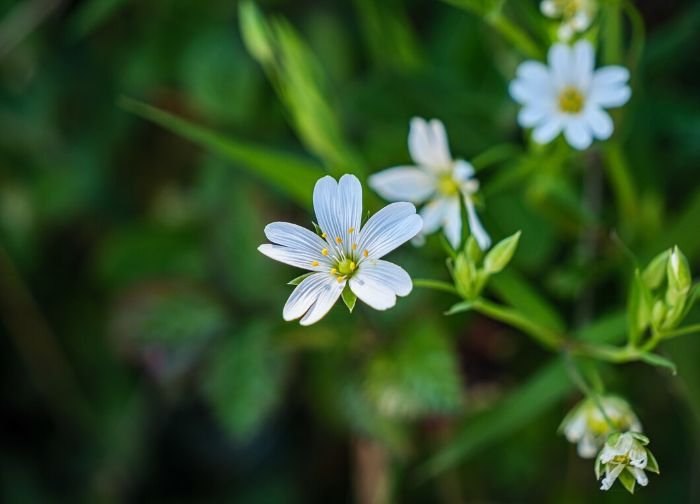
Chickweed (Stellaria media) appears in fall or early spring and dies back completely in summer heat – which is why gardeners who see it in March often don’t recognize the same plant returning the following November. The dense mat it forms suppresses other weed germination during cool months. Roots stay shallow enough to pull cleanly in seconds, and the plant goes directly into the compost bin before flowering without any composting risk. UC Cooperative Extension identifies chickweed as a reliable indicator of fertile, moist soil. Its presence in a new bed is a genuinely positive signal about what you’re working with.
I often notice that clover returns faster in areas where it was hand-pulled than in areas where it was cut at soil level. The root nodules survive cutting and the plant regrows from them, but pulling removes the nitrogen-fixing structure entirely – which explains why hand-pulling is the only approach that produces lasting results when you actually want the clover gone.
Purslane (Portulaca oleracea) is identified by thick, moisture-retaining succulent leaves and a reddish stem. One detail worth knowing before you pull it and walk away: purslane continues to survive and set seed even after being uprooted and left on dry soil. Lay it on a hard surface in full sun for a week before composting or disposing. Nutritionally, it contains more omega-3 fatty acids than most leafy greens – a finding consistent across multiple nutritional studies since the 1980s. Pull it before it flowers, use it in salads, or compost it promptly; once seeds form, a single plant contributes thousands of viable seeds to your soil for years ahead.
What Weeds Reveal About Your Soil
A weed population tells you things about your soil that a casual inspection rarely does. This is a practice that UC Cooperative Extension Master Gardeners in Napa County call indicator plant reading – specific weeds colonize specific soil conditions reliably enough to function as a preliminary diagnosis before any formal testing.
| Weeds Present | Likely Soil Condition | First Step to Take |
|---|---|---|
| Dandelion, dock, broadleaf plantain | Compacted subsoil, poor aeration | Aerate and add organic matter |
| Nutsedge, rushes, sedges | Poor drainage or waterlogging | Investigate drainage, raise bed level |
| Lamb’s quarters, chicory | Fertile, nitrogen-rich soil | No amendment likely needed |
| Nettles | High nitrogen near compost or manure | Redistribute organic matter |
| Moss or oxalis in lawn | Acidic soil (low pH) | Test pH, consider lime application |
| Bindweed, Bermuda grass | Dry, disturbed, or low-organic soil | Mulch aggressively to retain moisture |
This is not a substitute for a proper soil test – Penn State Extension offers one of the most thorough kit-based options for US gardeners. But the table above tells you where to look first and narrows the scope of what to test for. Understanding what those soil health indicators mean in practice gives you a fuller picture of what your weed population is communicating.
Deep-Rooting Weeds as Soil Service
Wild chicory, sow thistle, and dandelion have taproots that penetrate the subsoil layer – the dense, low-organic zone beneath your topsoil that most cultivated plants never reach. As these roots grow and eventually die, they leave behind channels that improve water infiltration and create pathways for shallower roots to follow. In beds compacted by foot traffic or equipment, leaving a season’s worth of deep-rooting volunteers before turning the soil does measurable work. The approach is to cut the tops before seed set and let the roots complete their work underground – not to let them establish permanently, but to use what they do naturally before they become a problem.
After Identification – Pull, Keep, or Compost
Once you know what you’re looking at, three questions determine the right action.
First: is this plant spreading into cultivated crops or crowding seedlings? Clover in a path is fine. Clover growing over lettuce seedlings is not. The decision is based on what the plant is doing, not what species it is.
Second: has it flowered or set seed? Any weed past the flowering stage is an urgent removal regardless of species. The removal techniques that work before flowering – shallow hoe passes, hand-pulling in moist soil – become insufficient once seeds are present, because the material itself becomes a future problem.
Third: can this go in the compost?
Safe to compost without concern: chickweed, lamb’s quarters, young purslane before flowering, annual grasses with no seedheads, clover. These break down cleanly and add useful organic matter.
Compost with caution: dandelion and thistle without seedheads can go in the pile, but only if the pile is actively hot. University of Minnesota Extension guidelines note that most weed seeds require sustained temperatures of 130 to 145 degrees Fahrenheit to be killed – temperatures that home piles rarely maintain through the full volume. If you’re uncertain whether your pile runs that hot, these are better left out. Understanding what conditions a home pile actually reaches is worth knowing before you assume the worst is neutralized.
Do not compost: Japanese knotweed (rhizomes survive and regenerate), nutsedge tubers, any material with visible seeds, bindweed roots. Dry these on a hard surface in full sun for a week before disposal, or bag them for municipal yard waste collection where industrial facilities reliably reach the required temperatures.
The single highest-leverage habit is a weekly walkthrough during the first eight weeks of the growing season. University of Minnesota Extension research found that eliminating weeds in this window reduces total seasonal weed pressure by more than 80% compared to mid-season intervention. After that window, the population has largely established, and you are managing rather than preventing. A mulch layer two to three inches deep applied after that first serious weeding pass makes the difference between a bed that stays manageable and one that requires constant attention. The soil and moisture benefits of mulching extend well beyond weed suppression, but suppression alone is worth the effort at this stage of the season.
Conclusion
The skill of reading a weed – identifying it by leaf margin and root structure rather than pulling anything unfamiliar – develops through repetition more than study. One season of pausing before pulling, running the four steps through in your head, and noting what you got right and wrong builds more practical knowledge than any identification guide can give you at once. Keep your phone handy to photograph anything uncertain; let a few unknowns grow their second set of true leaves before deciding.
Your beds will always have weeds. The ones that matter are perennials establishing before you notice them and annuals setting seed before you act. Catch bindweed when stems are still thin enough to pull cleanly. Pull crabgrass before the soil warms past 60 degrees in spring. Leave the chickweed mat through March. That rhythm – not zero weeds, but weeds addressed at the right moment – is what a managed garden looks like when the soil warms and the first deliberately planted seedlings push up through a clean, dark bed.
FAQ
How do I tell the difference between a weed seedling and a garden plant seedling?
Look at where the seedling appeared. Seedlings scattered randomly across a disturbed bed almost certainly emerged from the soil seed bank – weed seeds already present before you planted anything. Seedlings clustered near your planting area or emerging in recognizable rows suggest intentional growth. For any seedling you’re genuinely uncertain about, let it develop a second set of true leaves before pulling; these are always more distinctive than the initial rounded seed leaves. Growing known weed species in a small labeled pot placed next to your beds gives you a direct visual comparison template – an approach recommended by several university extension programs for exactly this reason.
Can you eat weeds from your garden?
Many common garden weeds have a longer culinary history than most vegetables in a typical grocery store. Dandelion greens were intentionally cultivated in Europe and colonial America before being reclassified as a lawn problem. Purslane appears regularly in Mediterranean, Mexican, and Middle Eastern cooking. Lamb’s quarters, which tastes similar to spinach, was widely eaten by multiple Native American communities. The practical limits are location – avoid eating weeds from beds where chemical herbicides were applied within the past three years – and certainty of identification. Never consume any plant unless you have confirmed identification from more than one reliable source.
What happens if you compost weeds with seeds still attached?
If you add a thistle with a flower that hasn’t fully opened, you’re likely fine – seeds need to complete their development to be viable. If you add anything with a fluffy seed head or dry brown seeds already formed, those will survive most home compost piles and spread when you apply the compost in spring. Home piles typically reach 80 to 100 degrees Fahrenheit in active zones; weed seeds require a sustained 130 degrees or higher to be killed, according to University of Minnesota Extension. Bag seed-bearing weeds separately and put them in municipal yard waste collection, which uses industrial composting facilities that reliably reach those temperatures across the full volume.
What is the most aggressive spreading weed in a home garden?
In seed production, common purslane generates approximately 52,000 seeds per plant, while Canada thistle produces up to 1,500 seeds that remain viable in soil for more than 20 years, according to Penn State Extension research. In terms of root spread, bindweed is in a category of its own – it regenerates from a two-inch fragment and can extend its root network faster than most hand-removal programs can keep up with. For practical purposes, the most aggressive weed in your garden is whichever perennial you leave unaddressed for a full season; by the following spring, the effort required to control it multiplies significantly.
How do I know if a weed is toxic?
Most common garden weeds are not toxic. The ones worth learning by appearance for safety are poison hemlock (hollow stems with purple mottling at the base, fern-like leaves, and a musty unpleasant smell when crushed), bittersweet nightshade (a climbing vine with clusters of berries that ripen from green through red to black simultaneously), and wild parsnip (yellow flower clusters resembling Queen Anne’s lace that cause severe chemical burns to skin exposed to sunlight after contact). These look distinct from edible weeds with practice, but early seedling stages require caution. Keep children away from any plant with berries they cannot identify by name with certainty.
Is hoeing or hand-pulling more effective for weed control?
Hoeing is faster but disturbs the top inch of soil, which contains millions of weed seeds already waiting for light to trigger germination – a process sometimes called the seedling flush. Hand-pulling in moist soil minimizes this disturbance and is more effective for long-term reduction in weed pressure. Hoeing in the morning, so severed seedlings dry out before evening dew arrives, reduces the percentage that manage to reroot. Use a hoe for large areas of annual seedlings at the cotyledon stage; hand-pull near established plants, near any perennial species where you need the full root, and whenever the goal is reducing next season’s population rather than just clearing the current one.
When is the best time of year to weed?
Early spring, before annuals have set seed and before perennials have extended their root systems for the season, is the highest-leverage window. University of Minnesota Extension research found that addressing weeds in the first six weeks of the growing season reduces total seasonal weed pressure by more than 80% compared to mid-season intervention. Fall is the second most valuable window – pulling biennials and winter annuals before they overwinter eliminates plants that would otherwise produce seed the following spring. Midseason weeding matters mainly for cutting flower heads off perennials that are too established to pull cleanly, preventing seed set without requiring full removal of the root system.
When should I consider using herbicide on garden weeds?
For most ornamental and vegetable beds, herbicide is rarely the right first choice. The situations where it crosses into genuinely practical are established Japanese knotweed stands where cutting has failed repeatedly over multiple seasons, nutsedge that has returned consistently despite thorough hand-pulling, or areas being cleared for new planting where the weed density is too high for mechanical control to be realistic. Glyphosate-based products kill most plants indiscriminately, carrying real risk of drift damage to adjacent beds. Systemic triclopyr-based herbicides act selectively on broadleaf weeds without affecting grasses, but check the label carefully for soil persistence before using anywhere near edible crops.