
Updated August 7, 2026
How to grow pear trees successfully begins with a climate-ready variety, a rootstock suited to your space, a compatible pollination partner, and a sunny site with freely drained soil. Plant the root flare at soil level, keep the graft union above the ground, water the developing root zone deeply, and train strong branch angles early. Pear tree care becomes easier when those decisions are settled before the tree arrives.
Key Takeaways
- Choose a grafted edible pear whose variety and rootstock fit your climate, soil, and mature space.
- Plan cross-pollination by bloom overlap and compatibility before buying the second tree.
- Plant with the root flare visible and keep the graft union safely above the final soil level.
- Train wide branch angles, prune moderately, and thin crowded fruit to reduce breakage and biennial bearing.
- Choose fire-blight-resistant varieties where the disease is common and learn the correct harvest method for the pear type.
Table of Contents
How to Grow Pear Trees: Quick Start
Start with a grafted nursery tree. A named pear variety is attached to a rootstock chosen for size, anchorage, soil response, and bearing behavior. Trees grown from seed are genetically variable, can become large, and may take many years to produce unpredictable fruit.
| Decision | Check before buying | Useful target | Failure to avoid |
|---|---|---|---|
| Variety | Climate, fire blight, harvest type, flavor | A locally adapted edible pear | Confusing an ornamental pear with a fruiting cultivar |
| Rootstock | Mature size, support, soil, compatibility | A tree that fits at maturity | Trusting a generic “dwarf” label |
| Pollination | Bloom group and cultivar compatibility | Two compatible varieties flowering together | Buying two identical trees |
| Site | Sun, drainage, frost pockets, mature spread | 8 hours of sun and no standing water | A shaded or waterlogged position |
| Care | Water, pruning access, thinning, disease pressure | A realistic annual routine | Treating a fruit tree as maintenance-free |
Keep the nursery label and record both the cultivar and rootstock. Those names affect pollination, final size, support, pruning, and expected time to fruit. A tag that says only “pear tree” does not provide enough information for long-term planning.
Choose Pear Tree Varieties and Rootstocks
Pear tree varieties fall broadly into European and Asian groups, with hybrids between them. European pears such as Bartlett, Bosc, Anjou, Comice, and Seckel develop a soft, melting texture after harvest. Asian pears such as Hosui, Shinseiki, and Korean Giant are generally crisp and are harvested closer to eating-ripe on the tree.
| Pear group | Fruit and harvest | Useful garden traits | Selection concern |
|---|---|---|---|
| European pears | Picked mature, then ripened indoors | Wide flavor range and familiar storage use | Fire blight susceptibility varies greatly |
| Asian pears | Picked crisp and ripe from the tree | Early bearing and crisp fruit | Heavy fruit set requires thinning |
| European-Asian hybrids | Varies by cultivar | Some combine hardiness and disease resistance | Texture and pollination cannot be assumed |
Choose through local disease pressure, winter cold, chill requirement, summer heat, bloom timing, and harvest use. Bartlett is famous. Its fire blight susceptibility can make it a demanding choice in warm, humid regions. Kieffer and several newer cultivars may offer stronger disease tolerance, with different texture and flavor.
Rootstock determines much of the mature size. Quince-based roots can produce compact European pears. They are not compatible with every cultivar and may need an interstem. Pear seedling roots create larger trees. OHxF rootstocks provide several vigor levels and useful disease traits. Ask for the exact rootstock and expected height under local conditions.
For limited space, compare the constraints described for dwarf fruit trees in small gardens. Compact size does not remove the need for pollination, sunlight, root volume, or pruning access.
Plan Pear Tree Pollination
Most pears set the most reliable crops with pollen from a different compatible pear variety blooming at the same time. Some cultivars can produce a partial crop alone. A suitable second variety can still improve reliability. Two trees of one cultivar are genetically identical and do not create cross-pollination.
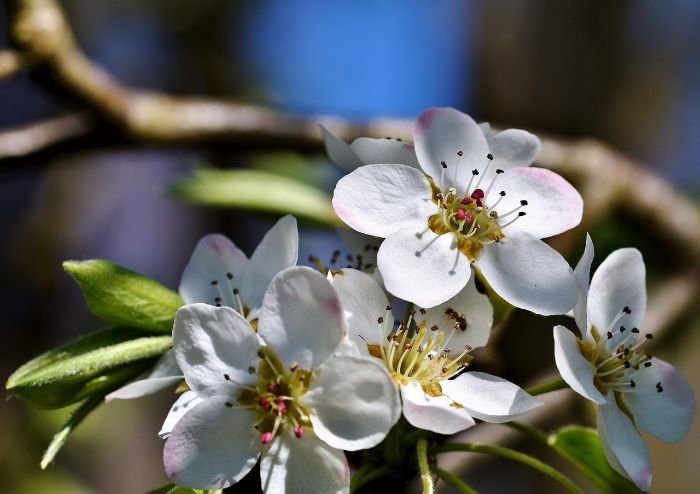
Match bloom windows, not harvest dates. A summer pear and a fall pear may overlap in bloom even though their fruit matures months apart. Use a regional compatibility chart and confirm that both varieties produce viable pollen. Certain combinations are poor partners, and some triploid cultivars cannot serve as effective pollinizers.
Pears often bloom early, when pollinator activity can be inconsistent. Avoid insecticides on open blossoms and provide food and habitat beyond the brief pear bloom. A broader planting of pollinator-friendly plants helps support insects across the season.
Choose the Best Site and Soil
Pear trees crop best in full sun. Choose a site receiving at least six hours of direct light, with eight hours preferred for strong flowering, fruit quality, and faster leaf drying. Keep the future canopy away from tall hedges, large trees, and buildings that create persistent shade.
Avoid low frost pockets because pear flowers open early. Cold air settles at the bottom of slopes and can damage blossoms even when higher parts of the garden escape. A slight slope with air drainage is often safer than a sheltered hollow.
The best soil for pear trees is deep and freely drained, with enough moisture retention to prevent severe summer stress. A practical pH is often around 6.0-7.0. Rootstock and native soil can shift the target, so test before adding lime, sulfur, phosphorus, or fertilizer.
| Site condition | What it means | Better response |
|---|---|---|
| Deep loam with reliable drainage | Good balance of air and moisture | Plant in native soil and maintain surface mulch |
| Heavy clay | Drainage and root oxygen need attention | Choose suitable rootstock, plant high, and improve broad drainage |
| Very sandy soil | Water and nutrients move quickly | Add stable organic matter broadly and plan deeper watering |
| Standing water | The root zone may be unsuitable | Correct drainage or select another location |
| Established lawn | Grass competes with young roots | Clear a broad weed-free planting circle |
Use a soil test before deciding which amendments belong in the bed. The process for testing garden soil before amending helps separate pH, fertility, texture, and drainage problems.
Do not fill one planting hole with rich compost. The tree must extend roots into surrounding native soil, and a soft amended pocket in clay can hold water. If the location remains wet after rain, diagnose it with these soil drainage solutions before planting.
How to Plant a Pear Tree
Plant bare-root pears during dormancy when soil is workable and not saturated. Late winter or early spring is practical in cold regions. Fall can suit milder areas when roots have time to establish before severe weather. Container trees offer a wider window. Avoid extreme heat and frozen or waterlogged ground.
| Step | What to do | Why it matters |
|---|---|---|
| Inspect | Find the root flare and graft union; remove damaged root ends | Final depth must be known before digging |
| Dig wide | Make room to spread roots without bending them | Roots can move outward into loosened soil |
| Set depth | Keep the root flare at grade and graft union above soil | Deep planting causes decline and can defeat size control |
| Backfill | Use excavated soil, firm gently, and water thoroughly | Air gaps close without creating a rich pocket |
| Support | Stake when the rootstock or site requires it | Dwarf roots may need permanent support |
| Mulch | Cover the root zone and keep mulch off the trunk | Moisture stays more consistent without bark decay |
Recheck the planting depth after watering because loose backfill may settle. The root flare should remain visible. Keep the graft union several inches above the final soil surface so the scion does not produce roots and bypass the rootstock.
The UC Statewide IPM guide to growing pear trees covers planting, training, irrigation, and mature-tree management. Adjust exact timing and support to the rootstock and regional climate.
Pear Tree Care Through the Year
Young pears need consistent moisture as roots expand. Check several inches below the surface and water deeply when the active root zone is drying. Frequent shallow sprinkling encourages surface roots. Saturated soil excludes oxygen, so water frequency must respond to soil, rain, heat, mulch, and tree age.
| Season | Main work | What to watch |
|---|---|---|
| Late winter | Prune structure and check stakes, ties, and guards | Excessive cutting and narrow branch angles |
| Spring | Observe bloom, pollination, moisture, and shoot health | Frost and fire blight symptoms |
| Early summer | Thin fruit, manage weeds, and water the root zone | Overloaded clusters and rapid upright shoots |
| Late summer | Support heavy limbs and judge harvest maturity | Drought, fruit drop, and wildlife |
| Fall | Harvest, remove damaged fruit, and inspect the trunk | Mummified fruit and rodent injury |
Maintain a broad grass-free circle and renew mulch without piling it against the trunk. Expand the circle as the tree grows. Turf can reduce young-tree growth by competing for water and nutrients across the same shallow soil.
Fertilize from evidence. Pears pushed with excess nitrogen produce vigorous, fire-blight-susceptible shoots and may delay fruiting. Soil results, leaf color, annual shoot growth, crop load, and regional recommendations provide better guidance than a fixed yearly dose.
Prune, Train, and Thin Pear Trees
Pear trees naturally make upright growth and narrow branch angles. Train a strong central leader and select well-spaced scaffold branches during the flexible young-wood stage. Spread suitable young branches toward wider angles before a heavy crop exposes weak attachments.
Prune free-standing pear trees mainly during dormancy. Remove dead, damaged, diseased, crossing, and competing wood. Thin crowded upright shoots and keep the upper canopy narrower so light reaches lower fruiting wood. Review these pruning basics before making structural cuts.
Thin crowded fruit after natural early drop, following local timing advice. Asian pears often set heavy clusters and benefit greatly from thinning. Leave enough space for each pear to develop, remove damaged fruit first, and protect young branches from loads they cannot support.
Thinning improves fruit size, reduces limb breakage, and can limit biennial bearing. Young trees should carry only a light crop during root and framework development.
How Long Do Pear Trees Take to Fruit?
A pear tree begins establishing roots in its first season. The first meaningful crop takes longer. Nursery age, rootstock, variety, climate, pruning, pollination, and growing conditions all affect the schedule. Early flowers are not a reason to allow a small tree to carry a full crop.
| Tree type | Typical first fruit window | Fuller production | Important condition |
|---|---|---|---|
| Dwarf pear | Often about 2-4 years | Roughly 4-6 years | Support, water, pollination, and light crop load |
| Semi-dwarf pear | Often about 3-5 years | Roughly 5-7 years | Balanced growth and structural training |
| Standard pear | Often about 4-8 years | May take 8-10 years or more | Adequate space and long-term pruning access |
| Seed-grown pear | Often 7-10 years or longer | Highly variable | Fruit quality and final size are unpredictable |
These ranges are planning estimates. A healthy young tree investing in roots and scaffold branches is progressing even without fruit. Excess fertilizer, severe pruning, shade, poor pollination, or a rootstock-variety mismatch can extend the wait.
Prevent Problems and Harvest Pears
Fire blight is the defining pear disease in many regions. Infected blossoms and shoots can darken rapidly and form a hooked “shepherd’s crook.” Start with resistant varieties, avoid excess nitrogen, maintain open structure, and confirm symptoms through a local extension before cutting or treating.
Other problems include pear psylla, codling moth, pear scab, rust, aphids, mites, and wildlife damage. Pressure varies by region. Monitor the crop at the correct season, remove damaged or mummified fruit, protect trunks from rodents and equipment, and use the least disruptive effective control after identification.
| Symptom | First checks | Practical direction |
|---|---|---|
| No flowers | Tree age, rootstock, shade, pruning, excess nitrogen | Correct growth conditions and avoid pushing shoots |
| Flowers with no pears | Frost, bloom overlap, pollinators, cultivar compatibility | Verify a compatible flowering partner |
| Blackened shoot tips | Fire blight pattern and regional alerts | Confirm diagnosis before pruning |
| Small crowded pears | Crop load, water, sunlight, leaf health | Thin earlier and stabilize moisture |
| Fruit fails to soften | Pear type, harvest maturity, chilling needs | Use the cultivar-specific ripening method |
European pears are usually picked mature and firm, then ripened indoors. Waiting for them to soften fully on the tree can leave the center overripe. Lift and twist gently; a mature pear often separates without force. Some cultivars need a period of cold storage before they ripen evenly.
Asian pears ripen on the tree and should develop their expected color, sweetness, and crisp texture before harvest. Use the variety’s normal season and taste; the European-pear method does not apply.
The University of Connecticut overview of pear varieties and home-tree care highlights the differences between European and Asian pears, pollination, pruning, and fire blight response.
Why Grow Pears at Home?
A home tree lets you choose varieties for flavor, texture, storage, cooking, disease resistance, and harvest season. Pears can be picked at the correct maturity and ripened under your control. Whole pears provide fiber along with naturally occurring nutrients and plant compounds.
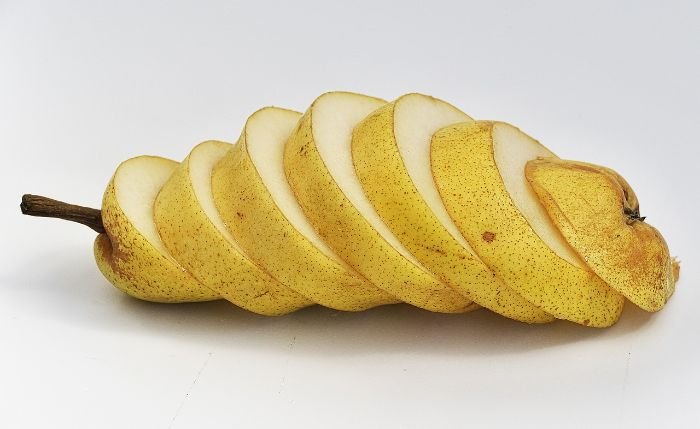
Homegrown does not automatically mean more nutritious. The practical advantages are control over variety, harvest timing, storage, and garden practices. Eat pears according to personal tolerance; rapidly increasing any fiber-rich food can cause digestive discomfort for some people.
Conclusion
Choose a pear variety and rootstock that fit the climate, disease pressure, mature space, and fruit you want. Confirm a compatible pollination partner before purchase. Then plant in full sun with the root flare visible and establish a broad grass-free root zone.
Good pear tree care is consistent and measured: water according to soil moisture, train wide branch angles, prune moderately, thin heavy clusters, monitor fire blight, and harvest according to pear type. This produces a manageable tree with a better chance of useful crops for years.
FAQ
What is the best place to plant a pear tree?
Choose a site with six to eight hours of direct sun, freely drained soil, good air movement, and enough room for the rootstock’s mature spread. Avoid shaded lawns, low frost pockets, standing water, and strong competition from established trees.
Do I need two pear trees to get fruit?
Most pear varieties produce more reliable crops with a different compatible variety flowering at the same time. Some can set a partial crop alone. Two trees of the same cultivar do not provide genetic cross-pollination, so check a regional compatibility chart.
How long does a pear tree take to bear fruit?
A grafted dwarf pear may begin in about two to four years, a semi-dwarf tree often takes three to five years, and a standard tree may need four to eight years or longer. Rootstock, variety, nursery age, climate, care, and pollination affect timing.
What soil is best for pear trees?
Pear trees grow well in deep, freely drained soil that holds useful moisture and commonly has a pH around 6.0-7.0. Test before adding lime, sulfur, or fertilizer. Standing water is a larger threat than mildly imperfect texture.
When should pear trees be pruned?
Free-standing pear trees are commonly pruned during dormancy in late winter. Remove dead, diseased, crossing, and competing wood, then thin crowded upright growth moderately. Trained forms may also need targeted summer pruning.
Can I grow a pear tree from seed?
Yes, but a seedling will not reliably reproduce the parent pear, may become a large tree, and often takes seven to ten years or longer to fruit. A grafted named variety is the practical choice for predictable fruit and mature size.