
Updated April 18, 2026
Integrated pest management is a pest control approach built around one decision: determining whether a pest population has actually crossed the point where it will cause lasting damage, rather than reacting to its presence alone. Most home gardeners have been trained to respond at first sight – one aphid on a rose, one caterpillar on a tomato, one beetle on a squash leaf – and that reflex is exactly what IPM asks you to reconsider.
The idea is not hands-off gardening or a reluctance to act. It is a sequenced system that starts with prevention, runs through biological and physical options, and reaches for chemicals only when the others have failed to hold the line. What you end up with is a garden where the soil smells right, the hoverflies arrive in summer, and pest cycles flatten out over time.
Key Takeaways:
- Monitor your garden weekly and record pest types, not just numbers
- Set a damage threshold before deciding whether a pest needs treatment
- Attract parasitoid wasps by growing dill, fennel, or yarrow nearby
- Skip purchasing ladybugs – most fly away within days due to migration instinct
- Reach for chemical controls only after biological and physical methods fail
Table of Contents
Integrated Pest Management – The System That Starts by Tolerating Pests
The discipline was formalized in the 1960s, partly in response to Rachel Carson’s 1962 book Silent Spring, which made it impossible to ignore what decades of broad-spectrum pesticide use had done to insect populations, predator chains, and soil biology. The scientific response from university extension programs was to reframe the core question: instead of “how do we eliminate this pest,” the productive question became “does this pest actually need to be eliminated right now?”
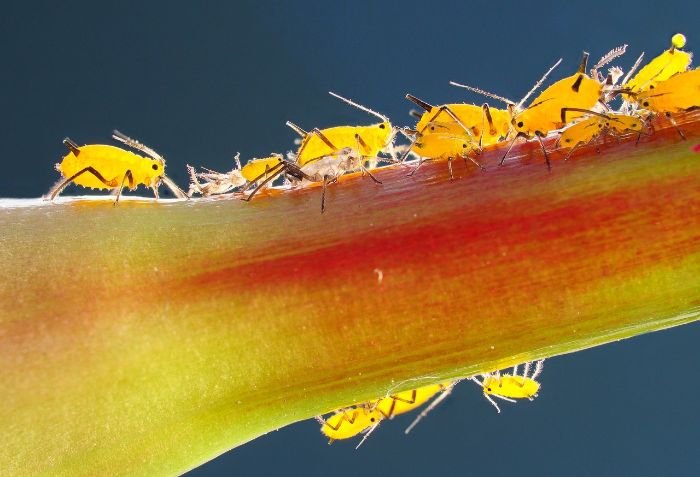
The University of California IPM Program is explicit on this point: it is not possible – or even desirable – to rid a garden of all pests. Most estimates from university entomologists place roughly 97 percent of garden insect species in the beneficial or neutral category. The aphid colony forming on your bean stems in May may already have parasitoid wasps working through it. Those small, gold-brown husks still clinging to the stem after an infestation passes are the signature of a wasp that completed its work and moved on. The caterpillar on your cabbage may be providing the food signal that keeps predatory ground beetles resident in your beds through the season.

What IPM manages is the relationship between pest populations and the threshold at which they cause damage exceeding the cost of intervention. The EPA defines it as “an effective and environmentally sensitive approach to pest management that relies on a combination of common-sense practices.” The framing undersells the discipline slightly – effective IPM requires observation skills, seasonal pattern recognition, and a tolerance for ambiguity that purely chemical approaches never demand.
One thing IPM is not: organic certification. The EPA notes there is no national IPM certification in the US marketplace. IPM programs may use synthetic pesticides when monitoring data justifies it. Organic gardening restricts pesticides to natural sources regardless of population levels. The two philosophies share considerable overlap but operate from different foundational rules.
The Four Control Layers – Why the Order You Apply Them Matters
IPM is organized as a hierarchy, not a menu. You start at the bottom – prevention and cultural practice – and escalate only when the lower tier has failed to hold. Gardeners who understand this sequence spend less money on inputs, disrupt fewer beneficial populations, and build pest resistance into their garden system rather than chasing problems every season.
Cultural Controls
These are structural changes to how and what you grow, designed to make your garden a poor environment for pest establishment before the season begins. The NC State Extension Gardener Handbook identifies plant selection, spacing, timing, and sanitation as the most consistent long-term tools. For most vegetable crops, rotation over 3 to 4 years breaks the majority of soil-borne pest and disease cycles. For tomato diseases specifically, the extension recommends extending that window to 5 to 7 years.
- Choose pest-resistant varieties where they are available for your target crop
- Space plants to maintain airflow – most foliar diseases spread faster in dense, humid canopies
- Remove crop residue at the end of the season – it overwinters larvae, eggs, and fungal spores
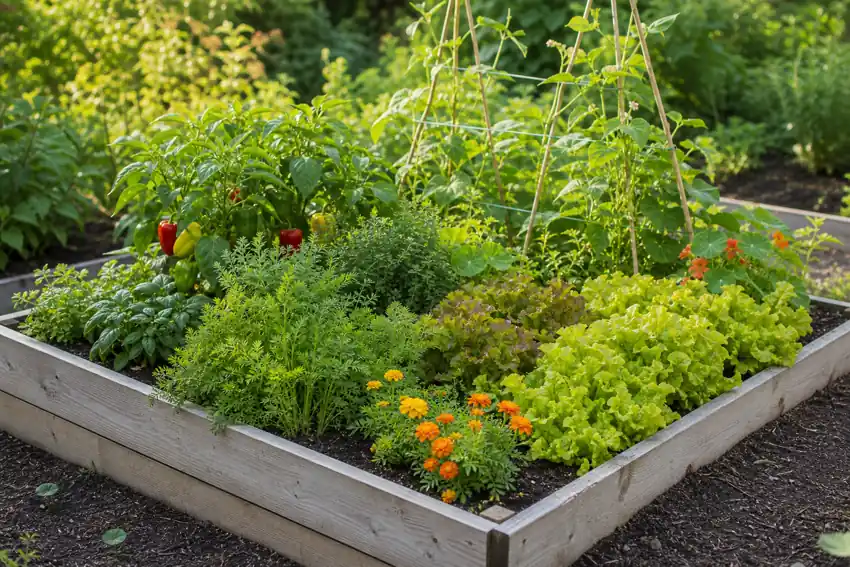
- Use trap crops to pull specific pests away from main plantings: nasturtiums for aphids, mustard for flea beetles
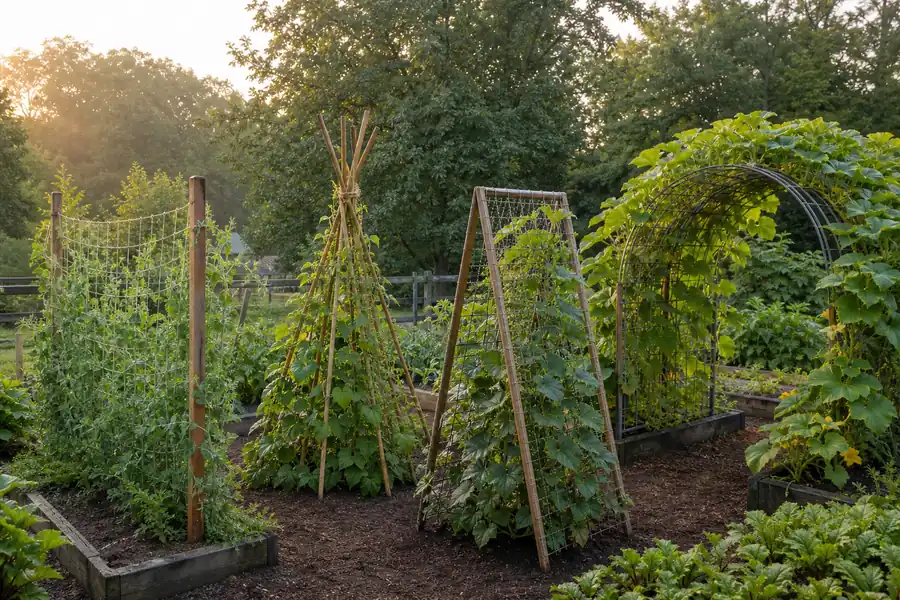
- Rotate crops and combine companion planting for pest control to reduce year-over-year pest buildup in the soil
Biological Controls
Natural predators, parasitoids, and microbial agents form the second tier. The goal is to support what already exists in your garden – and in some cases to introduce targeted organisms. Beneficial insects for biological pest control include parasitoid wasps, lacewings, ground beetles, hoverflies, and ladybird beetles. Each has specific prey ranges and habitat preferences that determine where and how to attract them.
Mechanical and Physical Controls
Hand removal, row covers, copper tape, sticky traps, and pheromone traps belong here. These are direct interventions that require labor but leave no chemical residue and do not affect beneficials. Floating row covers are one of the most underused tools in home vegetable gardens – installed at transplant time, they prevent a range of flying insects from reaching the crop before plants are established enough to tolerate feeding pressure.
Chemical Controls
Pesticides enter the system only after monitoring confirms that a pest population has exceeded its action threshold and lower-tier methods have not held the line. When chemical controls are necessary, the preference is for the most targeted product available – one affecting the specific pest without broad impact on beneficial populations. Broadcast spraying of non-specific pesticides sits outside the IPM framework. It is what the system is designed to replace.
Observation: I often notice that gardeners starting with IPM underestimate how much the cultural layer alone handles. A bed that is properly mulched, rotated, and planted with a border of aromatic herbs will carry noticeably less pest pressure by midsummer compared to a bed managed through reactive spraying. The gap shows most clearly in aphid, whitefly, and fungus gnat populations – pests that thrive on stressed plants and disturbed soil.
Action Thresholds – The Concept That Separates IPM From Panic Spraying
The action threshold is the pest population level or damage severity at which intervention becomes justified. Below it, the cost of treatment – financial, ecological, and in beneficials disrupted – outweighs the benefit. Above it, inaction allows a population to accelerate past what natural controls can correct before the season ends.
This is the concept most introductory IPM articles mention and leave abstract. Here is what it looks like with actual numbers.
| Pest / Setting | Action Threshold | Notes |
|---|---|---|
| White grubs in lawn | 10 grubs per sq ft | Healthy turf outgrows feeding below this level (NC State Extension) |
| Aphids on ornamentals | Varies by plant value and stage | Isolated colonies often self-correct via parasitoid wasps within 7-10 days |
| Caterpillars on brassicas | 1-2 per plant on young transplants | Established plants tolerate far higher feeding without yield loss |
| Flea beetles on eggplant | ~30% leaf area, seedling stage | Mature plants tolerate much higher damage; seedlings need faster response |
Your threshold is not fixed. It shifts based on plant growth stage, the plant’s value to you, and whether natural enemies are visibly working the infestation. A gardener growing prize roses for exhibition sets a lower threshold than someone growing the same plant for pollinators. That is a reasonable difference, and IPM accommodates it.
The distinction between the action threshold (act now to prevent damage) and the economic injury level (damage has already exceeded the cost of intervention) has a practical implication: IPM recommends acting before injury accumulates, not in response to it. By the time a pest population has visibly damaged the majority of a planting, the window for biological and physical controls has often closed, and chemical intervention becomes the only remaining option.
Here is the question worth sitting with before the growing season: when you see a pest in your garden, do you know whether that population has actually crossed its damage threshold – or are you responding to the discomfort of seeing it at all?
Biological Controls – What to Attract, What to Buy, and What to Skip
Attracting beneficials is more reliable than purchasing them. This is a consistent finding across university extension research and the point where many gardeners waste money on IPM.
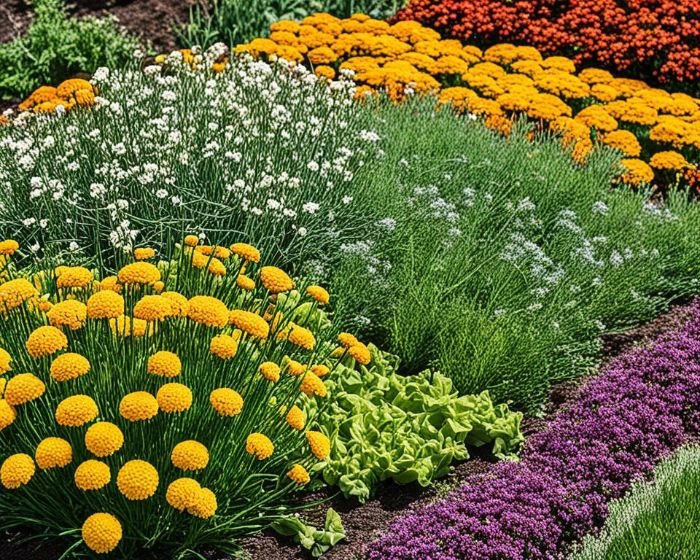
Parasitoid wasps – which kill their host insects rather than simply living on them as traditional parasites do – are among the most effective pest controllers available to home gardeners. They attack aphids, caterpillars, whiteflies, and scale insects, often working through a colony before the gardener notices anything has changed. They are attracted to small-flowered plants in the carrot family: dill, fennel, cilantro left to bolt, and yarrow. A section of flowering herbs near your vegetable beds returns more pest control value than most purchased products.
The purchased ladybug problem is well-documented. NC State Extension notes that commercially sold ladybugs are typically harvested from wild overwintering aggregations. When released, they follow their post-hibernation migration instinct – most will fly away within one to three days regardless of food availability at the release site. The few that remain rarely establish a breeding population. Creating conditions that keep wild-resident ladybugs present – mulch, some early-season aphid activity to feed on, undisturbed ground cover near beds – is more reliable than purchasing and releasing them.
For caterpillar pressure that exceeds your threshold, Bacillus thuringiensis (Bt) is the most targeted biological tool available at garden scale. It is a naturally occurring soil bacterium also used in organic pest control programs. When caterpillars ingest it, they stop feeding within two hours – the gut-paralyzing protein acts that quickly. The caterpillar may remain alive for up to 72 hours, but it causes no additional damage from the moment of ingestion. Bt has no measurable effect on beneficial insects, birds, mammals, or earthworms. For a full overview of IPM principles including where each control tier fits in the hierarchy, the EPA’s IPM principles page is the clearest public reference available.
Pro Tip: For squash vine borer or cucumber beetle pressure that arrives before your beneficials are active, mix 1 quart of kaolin clay with 2 gallons of water and 1 tablespoon of liquid soap. Apply to leaf surfaces before beetles appear – the chalky, flour-fine coating disorients crawling and landing insects without affecting beneficials or leaving residue on edible parts. Reapply every 1 to 3 weeks and after heavy rain.
IPM in Practice – The Habits That Actually Change Outcomes
IPM changes more than your spraying schedule. It changes how you observe the garden, and that shift compounds in value over multiple seasons.
The core practice is a weekly monitoring walk: same route, same time, same plant-by-plant attention. You are not looking for damage to fix. You are building a baseline. When aphids appear on your bean stems in early May, you note the count, the plant’s growth stage, and whether you can see parasitoid activity – those small, gold-brown mummified husks that signal a wasp has already been working the population. If counts double week over week with no sign of predator presence, you are approaching your threshold. If the count holds flat or drops, something is already managing it.
Keeping a simple log – pest type, plant, count, date, action taken – is the step most gardeners skip. It is also the step that makes IPM far more effective by year two. Seasonal patterns become visible: the cabbage loopers that peak in late July, the flea beetle surge that hits transplants in the first two weeks after soil warming, the scale insects that follow the dry stretch in August on ornamentals. That knowledge shortens your response time the following year and tells you exactly when to deploy preventive tools before pressure arrives.
The most difficult part of IPM is the gap between sighting a pest and acting on it. That gap is where the biology does its work. A gardener who sprays an aphid colony on sight in late April will typically face far more aphid pressure in June than the one who waited and watched. The spray eliminates the colony and, with it, the parasitoid wasps that were already moving in. A second infestation follows with no natural brake on it. The aphid population surviving a pesticide application also tends to carry a higher proportion of resistant individuals – that mechanism has driven pesticide resistance in commercial agriculture for decades, and it operates at garden scale too.
What changes with IPM is not that you do less. You do different things, at more precisely the right moments, with better information than a calendar or a first-sight reflex provides.
Conclusion
Most pest problems in home gardens are not failures of control – they are failures of timing. IPM works because it builds the information needed to act at the right moment: after a threshold is crossed, before irreversible damage accumulates, with the least disruptive tool that will hold the line. If you spray at first sight, you consistently act too early, damage the biology managing the problem, and find yourself back at the same problem three weeks later with fewer beneficials and a more resistant pest population.
Start with the monitoring walk, set your thresholds before the season begins, plant something in the carrot family to anchor your parasitoid population, and let the first few pest sightings tell you what the garden is already handling. By late summer, a garden running on IPM principles has a different quality to it – the hoverflies drifting over the dill, the ground beetle activity visible in the mulch at dusk, the tomatoes carrying small feeding marks on lower leaves while holding full fruit above. That is what a functioning pest ecosystem looks like from the outside.
FAQ
What does integrated pest management mean in simple terms?
Integrated pest management is a method for controlling garden pests that uses monitoring, damage thresholds, and a layered set of tools – cultural, biological, mechanical, and chemical – in that order of preference. The core idea is that a pest does not require a response until its population has crossed the point where it will cause more damage than the cost of treating it. Below that threshold, natural controls are often already working and intervention would interrupt them.
What are the four main principles of IPM?
The EPA organizes IPM around four tiers: set an action threshold before you act, monitor and identify the pest accurately, apply preventive cultural and biological controls first, and use chemical controls only when lower-tier methods have failed. The four principles are not independent choices – the order is the point. Reaching for pesticides before working through the first three tiers is the most common way gardeners undermine the system before it has a chance to function.
What happens if I attract beneficial insects but still get a severe infestation?
Beneficial populations take time to build, and they can be overwhelmed when a pest establishes at high density before predators are present. In practice, if an infestation exceeds your action threshold before beneficial activity is visible, move to mechanical controls first – hand removal, water sprays, row covers – and reserve chemical options for cases where mechanical intervention cannot hold the population. Bt is the most appropriate escalation for caterpillar problems because it does not affect the beneficials you are trying to build up over the season.
Can you use IPM if you have been spraying pesticides regularly for years?
Yes, but the transition takes one to two full growing seasons. Heavy pesticide use disrupts both soil biology and the resident beneficial insect population. In the first year of switching, you will likely see higher pest pressure than usual because the natural predator community has not yet recovered. Holding to your damage thresholds during that transition period – rather than reverting to a broad spray at the first problem – is what allows the system to re-establish. Most gardeners report noticeably lower pest pressure by the second season.
How is IPM different from organic gardening?
Organic gardening restricts pesticide use to naturally derived substances regardless of pest pressure levels. IPM is a decision framework, not a substance list – it allows synthetic pesticides when monitoring data justifies their use, but only after biological, cultural, and mechanical controls have been applied. A garden running on IPM principles may use a synthetic pesticide two or three times a season if thresholds require it. An organic garden cannot, even if pest pressure is extreme. Many organic gardens operate on IPM decision-making by default, but the two are not the same designation.
What is an action threshold and how do I set one for my garden?
An action threshold is the pest population level at which the cost of treatment is justified by the damage being prevented. NC State Extension uses 10 white grubs per square foot as the lawn threshold below which healthy turf will outgrow the feeding. For vegetable gardens, a practical starting point is roughly 30 percent visible leaf damage on established plants before acting, and 10 to 15 percent on seedlings or young transplants. Ornamental plants with high aesthetic value will carry lower thresholds than utility plantings. Writing yours down at the start of the season means you are deciding from information rather than from stress when a pest actually appears.
What is the biggest mistake gardeners make when starting IPM?
Spraying at first pest sighting, then calling it IPM. The defining feature of the system is the pause between observation and action – that gap is where monitoring happens, where thresholds are applied, and where beneficial insects do most of their work. Gardeners who adopt the IPM vocabulary but keep their reactive spraying habit get worse results than either full IPM or straightforward conventional control, because they eliminate the beneficials and still carry the pest cycle. The system functions only if the pause between seeing and responding is real.
Does IPM work well in small backyard vegetable gardens?
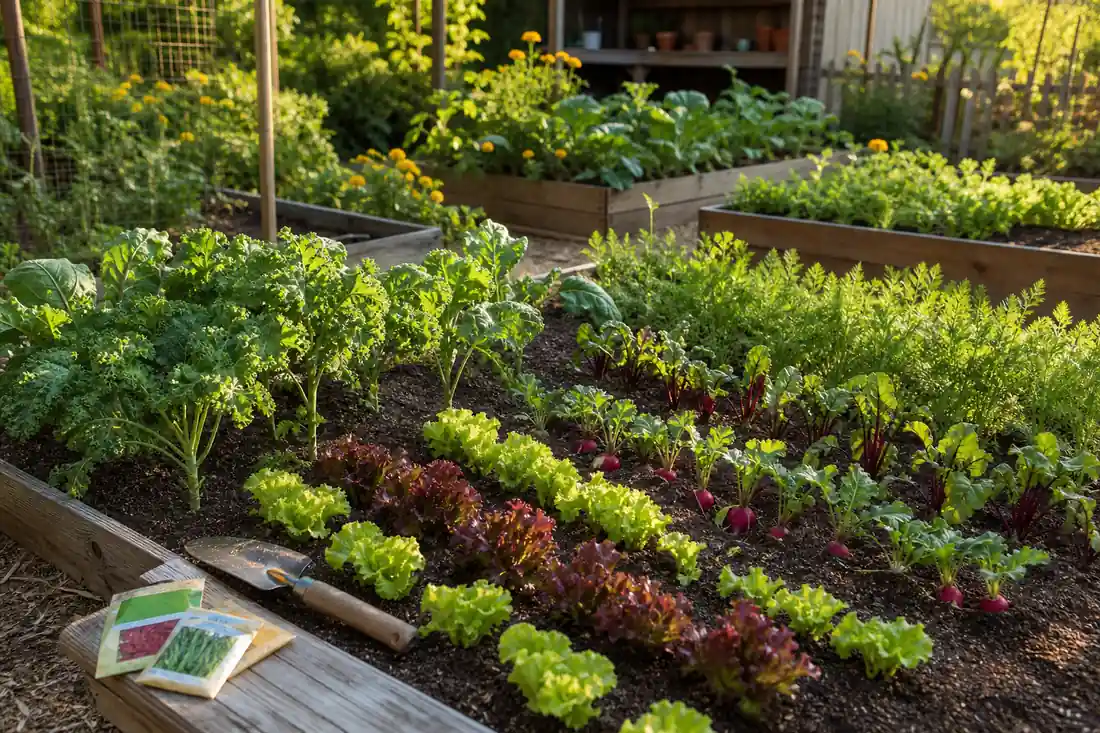
Particularly well, for two reasons. Small gardens develop beneficial insect communities faster than large ones when managed correctly, because the flowering border, the mulch layer, and the monitoring area are all within reach of each other. And small-garden losses – a row of kale with flea beetle pitting, a pepper plant with a moderate aphid colony – are rarely severe enough to cross a meaningful damage threshold, which means most pest events resolve without any intervention at all. Gardeners managing 400 to 600 square feet with mixed plantings and a few perennial herb borders tend to see the clearest IPM results within a single season.