



Updated April 15, 2026
Full sun plants succeed or fail based on a decision most gardeners make after they’ve already bought the plant: where exactly it goes, and what the soil beneath it can actually do. Six hours of direct light is the standard threshold, but a coneflower in loamy, well-drained soil and the same coneflower in compacted clay beside a reflective stone border are living in different worlds.
Lavender and zinnias both carry the full sun label at any garden center, yet one demands lean, dry conditions while the other needs consistent moisture and regular feeding. Planting them in the same bed under the same watering regime damages one of them. Matching plants by light tolerance and by what each actually requires from the soil up is the distinction that makes a full sun garden hold through September.
Key Takeaways:
- Match plants to heat intensity, not just daily light hours
- Water deeply twice weekly – daily light spraying keeps roots shallow and heat-vulnerable
- Plant lavender and rosemary in lean soil to preserve fragrance and compact form
- Avoid overwatering new transplants – root rot kills faster than summer heat does
- Layer bloom seasons so the bed stays active from late April through October
Table of Contents
What Full Sun Really Means – And Why Zone Changes The Equation
Penn State Extension defines three light categories that most plant labels follow: full sun (six or more hours of direct sunlight daily), part sun or part shade (three to six hours), and full shade (fewer than three). The six-hour threshold is where it gets nuanced. Morning sun, roughly from 6 a.m. to noon, carries less UV intensity and heat load than afternoon sun between 1 and 5 p.m. A garden bed receiving six hours of morning light along the Oregon coast and one receiving six hours of afternoon sun in Oklahoma in July are not giving their plants the same experience.
For gardeners in zones 7 through 10, the American Horticultural Society’s Plant Heat Zone Map adds a layer that the USDA hardiness map misses. Where the USDA map tells you what winter cold a plant survives, the AHS map records how many days per year temperatures exceed 86°F – the threshold above which cellular protein damage begins in most plant tissue. A coneflower that winters fine in zone 5 can struggle through August in zone 9 if planted without sufficient mulch and deep irrigation. Knowing your heat zone helps narrow which sun-loving species will genuinely perform rather than simply survive.
If a plant labeled full sun wilts by 2 p.m. every August afternoon but recovers fully by evening – is that heat stress, water stress, or a normal midday response? The answer changes what you do next, which is why watching recovery time matters as much as watching the wilt itself.
The other number worth knowing is the minimum light for full performance. Echinacea blooms at six hours but peaks at eight or more. Lavender produces its highest fragrance concentration at eight-plus hours – at six, it tends to sprawl and bloom less freely. Six hours grows most sun-loving plants. Eight hours makes them what they’re known for.
A bed in the open sun at 2 p.m. in July smells distinct from a shaded one – warmer and drier, with the sharp resin of artemisia pressing into the air and lavender adding a layer of sweetness that intensifies in afternoon heat. That is the environment these plants evolved for and what they draw from.
Full Sun Perennials That Return Stronger Each Year
Native Wildflowers That Anchor A Sunny Border
- Coneflower (Echinacea purpurea) has one behavior that surprises first-time growers: University of Maryland Extension research shows it often spends its first season establishing a deep taproot rather than pushing bloom. Many gardeners write it off after one quiet summer. The second year is when it performs, and by year three a single plant expands into a clump that blooms from June through August. Leave the seedheads standing through fall – goldfinches work them systematically through November. ‘Magnus’ is the standard selection for large, horizontally held pink-purple petals.
- Black-eyed Susan (Rudbeckia fulgida ‘Goldsturm’) blooms July through October, covering the stretch when most early perennials have finished and fall-bloomers haven’t started yet. It spreads by rhizome at a moderate pace, fills gaps in a border without requiring division for the first four or five years, and handles heat, brief drought, and clay soils better than most alternatives in this category. Native to North American prairie systems, it is one of the most field-tested sun perennials available at standard garden centers.
- Yarrow (Achillea millefolium) produces flat-topped flower clusters from June through August and is one of the most drought-tolerant perennials available. In rich, amended soil it grows aggressively and flops by midsummer. In lean, fast-draining conditions it holds its structure and spreads at a manageable pace. ‘Moonshine’ (soft yellow) and ‘Paprika’ (rust-orange fading to cream) are more restrained than the white-flowered native species.
- Catmint (Nepeta x faassenii ‘Walker’s Low’) blooms from May through July with blue-purple flowers, shrugs off deer pressure, and rebounds with a second flush if cut back by half in midsummer. Better air circulation than lavender in humid climates, which makes it a practical alternative in zones 5-7 where lavender struggles with winter wet.
Mediterranean Perennials That Need Different Soil
- Lavender (Lavandula angustifolia) has a counterintuitive relationship with soil fertility. Research on cultivated lavender in Mediterranean agricultural regions found that plants grown in lean, low-nutrient conditions produced measurably higher concentrations of linalool and linalyl acetate – the primary aromatic compounds – than those grown in enriched garden beds. More nutrients produce more foliage and dilute the oils that give lavender its character. Plant in slightly alkaline, fast-draining soil. If the bed is clay-heavy, work pea gravel into the planting hole and set the crown slightly above grade so water moves away from the base.
- Salvia nemorosa blooms from May through July with vertical purple spikes that attract hummingbirds reliably. Cut back by half immediately after the first bloom flush ends and a second flowering arrives in late summer. In zones 8-10 where afternoon temperatures routinely exceed 95°F through the summer, the selection of native and Mediterranean perennials narrows – the heat zone-specific characteristics of each species matter more in those climates than general sun tolerance alone.
Annuals For Full Sun Beds – Fast Color That Holds Through Heat
- Zinnias (Zinnia elegans) have a quality that distinguishes them from most warm-season annuals: they accelerate in heat rather than slow down. Most annuals reduce flowering at temperatures above 90°F. Zinnias, which evolved in hot, dry Mexican highland meadows, continue producing bloom through the height of summer when other annuals look spent. ‘Benary’s Giant’ produces large flowers suited to cutting; ‘Profusion’ is more compact and significantly more resistant to powdery mildew in humid climates. Direct sow after last frost date, thin to 9-12 inches for adequate air circulation between plants.
- Lantana handles heat, inconsistent watering, and poor soil with almost no visible stress. It blooms from June through frost in multicolored clusters – individual flower heads often hold three or four colors simultaneously as they age from bud to full open. Established plants are drought tolerant to a degree that makes them useful in beds where irrigation is irregular. Technically a tropical shrub in its native range, it dies back at first frost in most US zones and does not carry over.
- Marigolds (Tagetes) carry a sharp, resinous scent that deters aphids from neighboring plants – one of the more consistently observed companion planting effects in field gardens. ‘Crackerjack’ grows to 24-30 inches for the back of a border; ‘Bonanza’ stays compact at 8-10 inches for edges and containers.
- Portulaca (moss rose) thrives in sandy, hot, dry conditions where almost nothing else settles. Its one limitation worth knowing before planting: flowers close on overcast days, making it a poor choice for climates with frequent afternoon cloud cover or maritime summers.
Pro Tip: Direct sow zinnias in two batches – the first in late May, a second three weeks later. The second sowing peaks in late August as the first group starts declining, carrying the bed through September without replanting.
Shrubs And Structural Plants For Full Sun Borders
Flowering Shrubs That Cover Midsummer
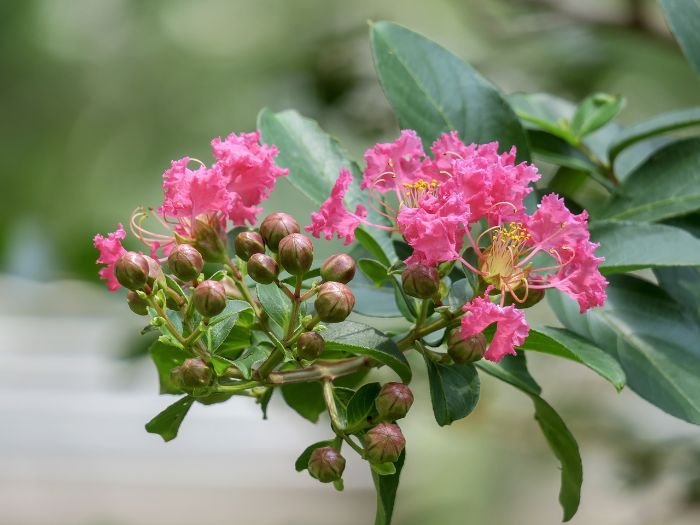
- Crepe myrtle (Lagerstroemia indica and hybrids) blooms July through September – the gap when most shrubs have already finished for the season. The National Arboretum’s named selections – ‘Natchez’ (white, 15-20 feet), ‘Dynamite’ (red, 12-15 feet), ‘Muskogee’ (lavender, 20-25 feet) – were bred specifically for mildew resistance and heat performance across zones 6-10. The most common mistake with crape myrtle is aggressive annual topping, which removes the natural branching structure that produces the heaviest bloom and generates awkward water sprouts the following season. Remove crossing branches and suckers from the base; leave the canopy alone.
- Butterfly bush (Buddleia davidii) blooms from July through first frost and attracts swallowtails, monarchs, and skipper butterflies reliably in zones 5-9. In Oregon and Washington it appears on invasive species lists because of prolific self-seeding in riparian areas – check state extension guidance before planting in the Pacific Northwest.
Grasses That Add Structure Through Winter
- Feather reed grass (Calamagrostis x acutiflora ‘Karl Foerster’) blooms in June before most ornamental grasses and holds upright, bronze-tinted seed heads through winter. It tolerates clay soils better than most grasses and grows in zones 5-9. Blue oat grass (Helictotrichon sempervirens) produces steel-blue mounding foliage at 18-24 inches, requires full sun and excellent drainage, and declines within two seasons in clay or consistently moist soil. Both add vertical structure that annuals and perennials cannot provide through the dormant months.
Vegetables And Herbs In Full Sun – Light Directly Affects What You Harvest
- Tomatoes need at minimum eight hours of direct sun for consistent fruit production. At six hours, plants develop well but fruit set drops and blossom end rot becomes more likely – a condition linked to uneven calcium uptake that worsens when photosynthesis is inconsistent day to day. Eight hours is the functional minimum; ten is more reliable in northern zones with shorter growing seasons. Peppers share the same dynamic: capsaicin concentration in chili varieties is measurably lower in fruits grown below six hours of direct sun. A jalapeño grown in a six-hour bed often tastes noticeably milder than the same variety in a fully exposed location.
- Basil grown outdoors in full sun produces higher concentrations of volatile oils than greenhouse-grown or shade-grown basil. This is why farmers market basil smells more intense than grocery store basil – the difference is light exposure and heat stress, not variety. Harvest in the morning before peak temperatures for the most concentrated flavor.
- Thyme and rosemary both require full sun and fast-draining soil without exception. In clay or consistently moist beds, both develop root rot within a season or two. They are not difficult plants in the right conditions – they simply have no tolerance for standing water at the root zone. A raised section or slightly elevated planting position addresses this in most garden situations.
I often notice that vegetable beds where tomatoes underperform aren’t as light-deprived as the gardener assumes. The plants are getting six hours of direct sun in spring, but a fence, established shrub, or house shadow has crept east over the years and cut the last two afternoon hours. That gap shows up in September when fruit doesn’t finish ripening.
Soil, Water, And Mulch – The Three Decisions That Determine Success
Drainage – The First Decision To Make
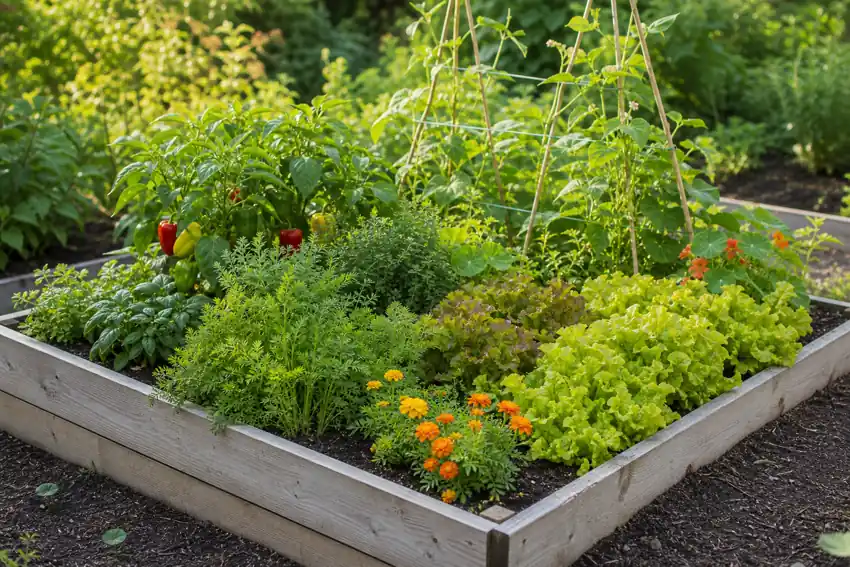
Before selecting specific plants, decide which category the bed can support. Plants that need consistent moisture – zinnias, marigolds, most vegetables, coneflower, black-eyed Susan – and plants that require excellent drainage and lean conditions – lavender, rosemary, thyme, yarrow, ornamental grasses – cannot share a flat bed on one irrigation schedule without one group suffering. A slight grade change of 3-4 inches, or a raised section for the drought-tolerant group, resolves most conflicts without rebuilding the entire bed.
Well-draining soil holds its shape when squeezed but crumbles immediately when pressed. If yours is slick and plastic-like when wet, work coarse horticultural grit or perlite into the top 10-12 inches before planting drought-tolerant species. Tracking how light and soil temperature vary across different beds through the day also identifies microclimates – spots that stay consistently cooler or drier – that change which plant group fits best.
Watering And Mulch
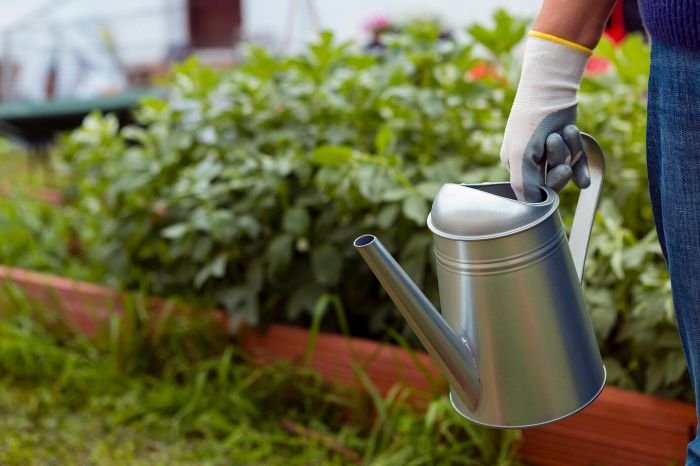
Deep watering – soaking the root zone to 3-4 inches – once or twice weekly outperforms light daily watering for all established full sun plants. Daily light watering keeps roots concentrated in the top 2 inches of soil where summer heat is most intense. Deep watering trains roots downward into cooler soil where moisture lasts longer. Watering at root level in the early morning reduces evaporation and keeps foliage dry overnight, which reduces fungal pressure across the season.
Three to four inches of organic mulch – shredded bark, wood chips, or straw – reduces surface soil temperature by 8-12°F on a peak summer day. For perennials with shallow root systems, this is the most effective heat management step available without shading the plants themselves. The relationship between mulch depth, moisture retention, and soil temperature matters particularly in beds where watering is infrequent. Exception: lavender, thyme, and rosemary do better with a thin gravel topdressing or no mulch at all – organic mulch holds moisture against these crowns and promotes rot in dry-condition species.
| Plant Group | Watering Frequency | Mulch | Notes |
|---|---|---|---|
| Native perennials (coneflower, rudbeckia, salvia) | Weekly, deep | 3″ organic | Year 1 needs more; drought tolerant from year 2 |
| Mediterranean (lavender, rosemary, thyme, yarrow) | Every 10-14 days | Gravel or none | Crown contact with organic mulch causes rot |
| Annuals (zinnias, marigolds, lantana) | 2-3x weekly | 2″ organic | Keep mulch off zinnia stems |
| Vegetables and basil | 1-2x weekly at root zone | 3-4″ organic | Consistency reduces blossom end rot in tomatoes |
| Shrubs and ornamental grasses | Monthly once established | 3″ organic | Keep mulch away from crowns and stems |
Full Sun Garden Calendar – What Blooms And When
Designing a full sun bed by bloom season – rather than by height or color alone – is what produces a planting that carries interest from May through October. The plants above represent three distinct waves: a late spring-early summer wave, a midsummer wave that covers the hottest months, and a late summer-fall wave that holds through first frost. Layering from all three categories is what prevents the bed from going dark in August.
| Plant | Bloom Season | Height | Water Need |
|---|---|---|---|
| Catmint (Walker’s Low) | May-July, rebloom Aug | 18″ | Low once established |
| Salvia nemorosa | May-July, rebloom Aug | 18-24″ | Low-moderate |
| Coneflower (Echinacea) | June-August | 24-36″ | Moderate; drought tolerant yr 2+ |
| Zinnias (annual) | June through frost | 12-36″ | Moderate-high |
| Marigolds (annual) | June through frost | 12-30″ | Moderate |
| Lantana (annual) | June through frost | 18-36″ | Low once established |
| Crape myrtle | July-September | 8-25′ | Low once established |
| Butterfly bush | July through frost | 4-8′ | Low-moderate |
| Black-eyed Susan | July-October | 18-24″ | Low-moderate |
| Feather reed grass | June (structure through winter) | 4-5′ | Low-moderate |
Conclusion
A full sun garden that holds through late September is built on three layers of decisions made before the first plant goes in: which species go into which bed based on drainage and water needs, how deeply and how often they get irrigated through summer, and whether the mulch choice matches what each plant tolerates. Get those three right and the plant selection almost takes care of itself.
The failure signal to watch for is wilt that does not recover by evening. Temporary midday wilting in intense heat, followed by full recovery before sunset, is a normal response in healthy sun plants. The signals that mean something is wrong are wilting that persists past dark, leaves yellowing between the veins rather than browning at the tips, and perennials that produce fewer flowers in year three than year two. In coneflower, that decline usually means the clump is root-bound and ready to divide – every three to four years is the standard cadence. When lavender starts sprawling and opening at the center, the soil has become too rich or the drainage too poor for it to hold form. Both are fixable once the signal is read correctly. A full sun bed in mid-August that is working smells of warm soil and dried herb stems, with zinnias still opening new flowers and black-eyed Susans catching the late afternoon light at the back of the border.
FAQ
What exactly counts as full sun for plants?
Six or more hours of direct sunlight per day is the standard threshold, as defined by Penn State Extension and most US horticultural institutions. Not all six-hour windows carry the same intensity – morning sun between 6 a.m. and noon is cooler and less UV-intense than afternoon sun between 1 and 5 p.m. For plants with strong sun preferences like lavender, coneflower, and crape myrtle, eight hours tends to produce better bloom density and more compact growth than the minimum six.
What happens if a full sun plant only gets four or five hours of light per day?
Flowering drops first. A zinnia at four hours produces fewer and smaller flowers than the same plant at eight. Vegetables respond more severely: tomatoes below six hours show reduced fruit set and increased susceptibility to blossom end rot. Lavender and rosemary go a step further – below about six hours, both tend to sprawl, lose their compact mounded form, and become more susceptible to fungal disease from reduced air circulation through the canopy.
Can you grow full sun plants in containers successfully?
Most of them work in containers, with one adjustment: pots in full sun dry out significantly faster than garden beds, sometimes within 36 hours during a heat wave in zone 7 or warmer. Terra cotta pots lose moisture faster than glazed ceramic or plastic. Lantana and portulaca handle container conditions well because their drought tolerance absorbs irregular watering. Thyme and rosemary actually benefit from containers – the fast drainage mimics their natural Mediterranean conditions better than garden beds that stay consistently moist.
What is the difference between a heat-tolerant plant and a full sun plant?
A full sun plant needs six or more hours of direct light to grow and flower well – that is a light intensity requirement. A heat-tolerant plant withstands high temperatures without cellular damage, but some heat-tolerant species actually perform better with afternoon shade. Bee balm handles heat well but blooms more freely with protection from afternoon sun in zones 7-9. The most dependable plants for hot, exposed beds qualify as both – lavender, yarrow, lantana, and crape myrtle meet both requirements. Plants that meet only one of the two categories tend to disappoint in at least one season.
Which full sun perennials perform reliably for gardeners starting a new bed?
Black-eyed Susan (Rudbeckia fulgida ‘Goldsturm’) is the most reliable starting point – it blooms July through October, spreads at a manageable pace, and tolerates a wide range of soil conditions. Coneflower (Echinacea purpurea) takes one season to establish before committing to heavy bloom, but returns reliably for eight or more years with almost no required maintenance. Catmint (‘Walker’s Low’) blooms for months, shrugs off deer pressure, and reblooms if sheared back in July. All three are available at most garden centers and transplant without difficulty in spring or early fall.
Do full sun plants need regular fertilizing?
Annuals like zinnias and marigolds respond well to a balanced fertilizer applied once a month through the growing season. Vegetables require consistent feeding throughout summer. Mediterranean perennials – lavender, thyme, rosemary, yarrow – perform better with no fertilizer or very little. Fertilizing lavender increases foliage at the direct expense of fragrance and flower density. Native perennials like coneflower and black-eyed Susan need nothing beyond what average garden soil provides once established.
What is the most common mistake in full sun gardens?
Planting drought-tolerant and moisture-loving species in the same flat bed under one irrigation schedule. Lavender sitting next to tomatoes is a combination that damages one plant or the other – the watering regime that keeps tomatoes productive causes root rot in lavender roots within a season. The fix is to group plants by water requirement rather than by height, color, or bloom time, and to use a slight grade change or raised area to separate the two groups. That single planning decision prevents more failures than any other adjustment.
How often should I water full sun plants during peak summer heat?
For most established perennials, deep watering once or twice weekly outperforms daily light watering. Frequency depends on soil type: sandy or gravelly soil dries faster and may need twice-weekly watering through August, while mulched loam can often go seven to ten days between waterings. Mediterranean plants like lavender and rosemary want to dry out fully between waterings – every ten to fourteen days is appropriate rather than weekly. Vegetables and annuals need more frequent attention: check soil moisture at 2-3 inch depth and water when dry at that level, not just when the surface looks dry.