
Last Updated May 11, 2026
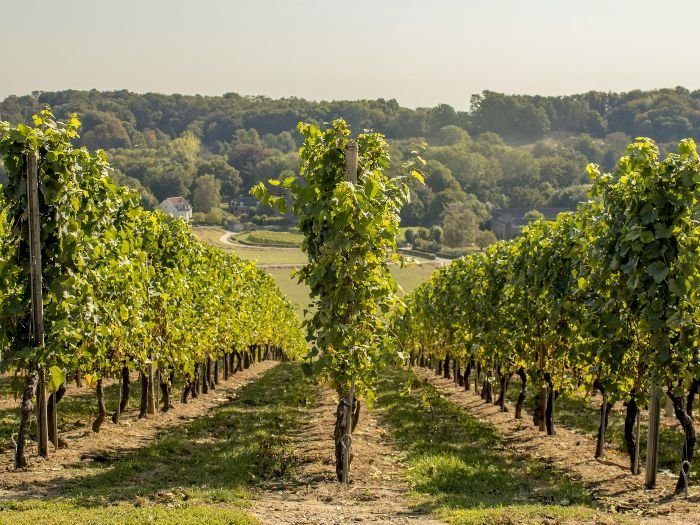
Good grape soil centers on drainage, rooting depth, pH balance, and a profile that lets roots move down into aerated ground. Grapevines handle leaner soil far better than poor drainage, shallow hardpan, or a site that stays saturated after rain.
Preparing grape soil starts with more than compost additions and pH checks. The larger pre-plant jobs are testing early, opening compacted layers, correcting drainage, avoiding excess nitrogen, and knowing when a raised row solves the root-zone problem faster than another amendment.
Row choice, cultivar fit, and trellis planning should be settled through starting a vineyard for wine or table grapes before soil work begins. Soil preparation for grapes depends on pH, drainage, organic matter, nutrient restraint, and a planting profile ready before roots enter the ground.
Key Takeaways
- Grapes need deep, well-drained soil before added fertility becomes useful
- A practical home-garden pH target is usually around 5.5 to 6.5, with testing done months before planting
- Drainage, hardpan, and root-zone depth should be corrected before fertility is pushed higher
- Moderate organic matter helps structure; excess nitrogen and overly rich soil can push weak over-vegetative growth
- Pre-plant soil correction is easier and more effective than trying to rescue a poorly prepared vine row later
Table of Contents
Good Grape Soil Is Deep, Drained, And Moderately Fertile
Grapevines can grow on a wide range of soils. The real dividing line is root movement through an aerated profile and how quickly rain leaves the planting zone. Grapes grow best in well-drained soil with a pH around 5.5 to 6.5, and grapes struggle in a poorly drained profile where roots stay wet.
| Soil situation | Why it matters to grapes | Best correction | Main mistake |
|---|---|---|---|
| Heavy soil that stays wet after rain | Roots lose oxygen and growth stays weak | Correct drainage first, then consider a raised row or bed for slight drainage issues | Adding fertilizer to a saturated root zone |
| Hardpan or plow pan below the surface | Deep rooting stops where the dense layer begins | Loosen or rip the impeding layer before planting if the site allows it | Preparing only the top few inches |
| Low pH soil | Nutrient availability shifts and vines can struggle to establish | Test early and raise pH gradually before planting | Applying lime after vines are already in the ground and expecting a quick fix |
| High pH soil | Micronutrient problems become more likely | Use soil testing to guide acidifying or nutrient-correction decisions | Ignoring pH because the soil drains well |
| Very rich or heavily manured garden soil | Excess vigor can outrun fruit balance and hardening | Use measured corrections and avoid heavy annual feeding | Treating grapevines like hungry vegetables |
| Shallow soil over dense subsoil or bedrock | Root volume is capped early | Use raised rooting volume where site conditions justify it | Planting directly into a shallow impermeable zone |
The core grape-soil distinction is functional. A vine can handle modest fertility. A persistently wet root zone, a dense layer that stops roots, or a highly fertile planting strip can keep forcing lush shoot growth after the framework should be settling.
Test pH And Nutrients Before You Move Soil
Testing first saves wasted amendment, repeated digging, and slow corrections after planting. Test the soil 6 months to a year before planting so pH and nutrient corrections have time to work. That lead time matters because lime, sulfur, and less mobile nutrients move gradually through a grape row.
A practical home-garden pH target for many bunch and table grapes is roughly 5.5 to 6.5, and some regional vineyard guidance stretches the acceptable range upward toward 7.0 when the site and cultivar allow it. Soil should be brought into a tested workable range before roots are committed to the site.
| Test result | What it usually means | Best response before planting | Avoid |
|---|---|---|---|
| pH below the target range | Some nutrients become less available and acidity may stress establishment | Apply lime according to the soil test and mix it through the correction zone ahead of planting | Throwing a small amount of lime into one planting hole |
| pH in a workable range | The main job shifts to drainage, depth, and measured fertility | Maintain pH in range and focus on site preparation | Making unnecessary pH changes anyway |
| pH above the target range | Micronutrient issues are more likely, especially iron and zinc problems | Use testing and local guidance to decide whether sulfur or targeted nutrient correction is appropriate | Blindly piling on fertilizer |
| Low phosphorus or potassium | The future root zone starts nutritionally uneven | Correct these before planting if the soil test calls for it | Waiting until roots are established deep in the row |
| High fertility or high organic matter | Vines may run too vegetative, especially with excess nitrogen | Use restraint and assume additional feeding needs proof from the test | Adding manure or high-N fertilizer by habit |
What To Correct Before Planting Grape Vines
| Soil issue | Correct before planting? | Best correction logic | Main caution |
|---|---|---|---|
| Low pH | Yes, if the soil test confirms it | Apply lime months ahead and mix it through the prepared row | Lime in one planting hole will not correct the root zone |
| High pH | Usually yes, with local guidance | Use soil testing to decide sulfur or targeted micronutrient correction | Do not acidify blindly without water and soil context |
| Low phosphorus or potassium | Yes, if the soil test confirms it | Incorporate recommended amounts before roots occupy the row | Surface correction later is slower and less even |
| High nitrogen or very rich soil | Correct through restraint | Avoid manure, high-N fertilizer, and heavy compost additions | Excess vigor can make training and fruit balance harder |
| Poor structure with good drainage | Sometimes | Add moderate finished compost across the row | Do not build a soft rich planting strip |
| Poor drainage or hardpan | Yes, before fertility correction | Fix rooting depth, oxygen movement, runoff, or raised-row need first | Fertilizer cannot compensate for a wet root zone |
The nutrient side also needs restraint. Too much fertility, especially nitrogen, can make vines excessively vegetative. That rule matters because overcorrection can create lush weak growth and displace balanced establishment.
How To Prepare Soil For Grape Vine Planting
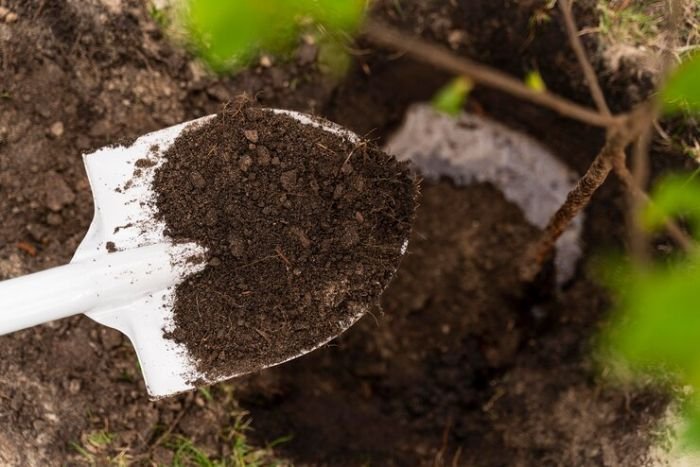
Grape soil preparation works best in sequence. The order matters because drainage, pH, and deep rooting come first. Compost and fertilizer serve as secondary adjustments built on top of that profile.
| Step | What to do | Why it matters | Main failure risk |
|---|---|---|---|
| Choose the planting strip | Use a full-sun site with good air movement and no recurring wet pockets | Soil preparation cannot rescue deep shade or a frost pocket | Treating a site problem like a soil problem |
| Test the soil early | Sample pH and nutrients months ahead of planting | Slow pH and nutrient corrections need lead time | Testing after the trellis and vines are already in place |
| Fix drainage and depth | Open hardpan, improve runoff, or raise the root zone if slight drainage issues persist | Grape roots need oxygen and downward room | Fertilizing a profile that still drowns roots |
| Control perennial weeds | Clear tough grasses and persistent weeds before planting | Young vines compete poorly during establishment | Letting a clean row become a grass strip around the trunk |
| Correct pH and slower nutrients | Apply lime, sulfur, phosphorus, or potassium only where the test justifies it | These are easier to incorporate before roots spread | Making blind amendments with no lab result |
| Add moderate organic matter if needed | Use compost or similar material to improve structure where soil is weak | Helps aggregate formation and moisture handling | Building a soft overly rich planting strip |
| Plant into corrected soil | Set vines into the prepared profile, then manage watering and nutrition lightly in year one | Roots establish into the soil you prepared as one connected profile | Creating a rich planting hole disconnected from the row |
Drainage And Rooting Depth Matter More Than Richness
For grapevines, drainage is often the real limiting factor. Wet feet slow growth, increase root stress, and make every later correction feel disappointing because the soil still lacks oxygen. Grapes need several feet of rooting zone with no impeding layer, and ripping may be required where hardpan blocks roots.
Surface-only preparation underperforms when a sealed lower profile leaves the same structural problem in place even after surface compost goes in. Where slight drainage issues persist, raised beds or raised rows can help overcome slight soil drainage problems. Severe saturation usually needs a larger correction through soil drainage solutions.
Raised rooting volume can also help where hardpan, claypan, or shallow impermeable layers limit root depth. A raised root zone is a structural tool for sites where the subsoil is the bottleneck.
Use Organic Matter For Structure And Moderate Fertility
Organic matter helps grape soil when the goal is structure, crumb stability, and better moisture handling. It causes trouble when it becomes a shortcut for fertility. Grapevines need measured fertility for establishment. In fact, too much nitrogen is one of the easiest ways to push weak overgrown vines that are harder to train and slower to balance.
A moderate incorporation of compost or other well-finished organic matter can help weak sandy or lifeless soil handle water and root activity more evenly. Amending soil with organic matter should improve structure and moisture handling without turning the grape row into a fluffy, overly dark, or heavily manured strip. Very high organic matter levels can exacerbate excess nitrogen problems in grape soils.
Manure deserves caution. Well-aged material can help some soils when used thoughtfully before planting. Fresh or heavy manure additions can overshoot nitrogen fast. Fertilizing grape vines also requires restraint because pre-plant preparation should create a stable root zone and support balanced canopy growth.
What To Put Back In The Planting Hole
The planting hole should connect the young vine to the corrected site soil and keep roots moving outward through the prepared row. Dig wide enough to spread roots comfortably. Backfill with the prepared soil from that row, adjusted as needed by the earlier pH and amendment work. Avoid creating a sharply different mix inside one hole that encourages roots to circle or stall at the edge of the correction.
If lime, phosphorus, potassium, or organic matter were needed, they should already be distributed through the prepared planting strip and not concentrated around the crown.
Concentrated fertilizer belongs nowhere near tender new roots. If soil-test recommendations call for pre-plant nutrients, the better move is to incorporate them into the broader soil-prep zone ahead of time. Watering grape vines after planting should keep the young root zone evenly moist without pushing soft excess growth. The year-one goal is root establishment into the site and controlled top growth.
Start With The Soil Limitation That Will Still Matter In Year Five
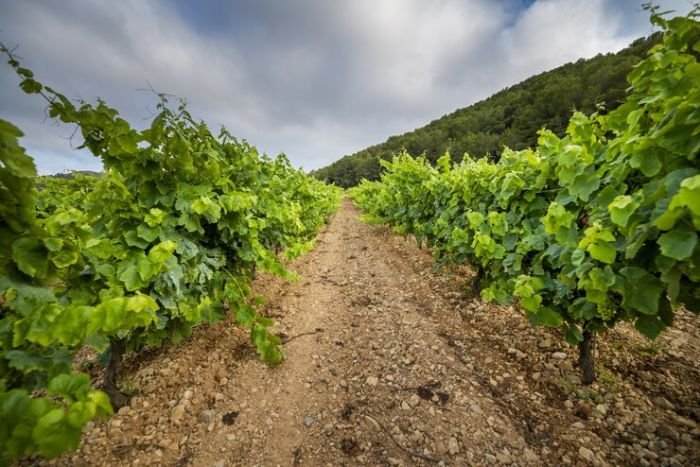
Your soil stays wet after rain and smells sour below the surface. Start with drainage and root-zone depth before thinking about fertility. A grapevine in low-oxygen soil rarely responds well to extra feeding.
Your soil test shows pH below the target range. Start with lime or the recommended correction months before planting so the row can settle into a workable range before roots arrive.
Your ground is compacted or has a shallow dense layer. Start with deep loosening or ripping where appropriate. Surface compost alone will never create a deep grape root zone.
Your soil is sandy and low in life, and it drains well. Start with moderate organic matter to improve structure and moisture handling, then manage year-one watering carefully.
Your site is already rich and dark from years of garden feeding. Start with restraint. Grapevines gain little from another heavy nitrogen push just because the soil looks productive.
Conclusion
The best soil for grapevines drains, breathes, roots deeply, and sits in a tested pH range before the vine goes in. Measured nutrient correction matters. Drainage, hardpan, and rooting depth carry the larger role.
Pre-plant preparation should correct the limiting layer before fertility is increased. Correct pH and slower nutrients early. Add only moderate organic matter where structure needs help. Then plant into a profile that can support vines for years and guide durable first-season growth.
FAQ
Do grape vines need rich fertile soil to grow well?
No. Grapevines do best in deep, well-drained soil with enough moisture retention to avoid drought stress and enough air space to keep roots oxygenated. Loams and sandy loams are often ideal, and many other soils can work when drainage, rooting depth, pH balance, and moderate fertility are in place.
What pH is best for grape vines?
A practical home-garden target is often around pH 5.5 to 6.5. Some regional guidance allows a somewhat wider range, and grapes establish and feed best when pH is tested and corrected into a workable range before planting.
Can grape vines grow in clay soil?
Yes, if the clay drains well enough and stays aerated. The real issue is oxygen in the root zone. Slight drainage problems may be helped by raised rows or beds. Severe wetness needs a larger drainage correction.
Should I add compost before planting grape vines?
Compost can help weak or structure-poor soil when used moderately before planting. The goal is to improve structure and moisture handling and keep the corrected row cohesive. Too much organic matter or nitrogen can push vines too vegetative.
Should I fertilize soil before planting grape vines?
Only if a soil test shows a need. Phosphorus, potassium, lime, or sulfur are easier to correct before planting, and nitrogen needs restraint because excess vigor can make young vines harder to train. Concentrated fertilizer should not sit against new roots in the planting hole.
What should I put in the planting hole for grape vines?
Use the prepared site soil from the row instead of a sharply different mix of potting soil or concentrated fertilizer. Spread the roots in a wide hole and plant into the corrected soil profile so roots move outward and downward naturally.
How do I know if my soil drains well enough for grape vines?
Check whether the planting strip stays wet after rain, smells sour below the surface, or has a dense layer that blocks downward rooting. Grapes need an aerated root zone. Slight drainage problems may be helped by raised rows, and persistent saturation needs drainage correction before planting.
How long before planting should I test and amend the soil?
Testing 6 months to a year ahead is ideal because pH corrections and slower nutrient amendments need time to move into the root zone. Early measured preparation gives these corrections time to work through the planting strip.