Updated August 09, 2026
How to grow bananas at home starts with a fruiting cultivar, a frost-free growing window, full sun, rich soil with free drainage, and enough room for the clump that will form. Bananas build their apparent trunk from tightly wrapped leaf bases. Each pseudostem grows, flowers, carries one bunch, and dies back. A younger sucker then takes its place. Treating that clump as a renewing system makes planting, feeding, pruning, and harvest much easier to manage.
Key Takeaways
- Choose a named edible cultivar suited to your climate.
- Plant in full sun with shelter from strong wind.
- Maintain even moisture without leaving roots in saturated soil.
- Feed during active growth after checking soil and plant response.
- Avoid keeping every sucker in a crowded banana mat.
Table of Contents
How to Grow Bananas at Home: Quick Start
Start with a nursery plant or a vigorous sword sucker from a healthy, correctly identified fruiting cultivar. Do not bury a supermarket banana and expect it to sprout. Most familiar dessert bananas are sterile and seedless, so their new plants come from vegetative propagation. A store fruit contains only tiny aborted seed traces.
| Decision | Good starting point | Warning sign |
|---|---|---|
| Variety | Named edible cultivar with a realistic mature size | An ornamental banana sold without fruit information |
| Climate | Long warm season with reliable frost protection | Repeated cold that stops growth before flowering |
| Site | Full sun, wind shelter, drainage, and room for the mat | A shaded, wet, exposed corner |
| Water | Deep watering that keeps the active root zone moist | Dry leaf folding or constantly saturated ground |
| Feeding | Split applications during warm active growth | One heavy dose against a dry root zone |
| Fruiting | One bearing stem with younger replacements | A dense thicket of competing suckers |
Plant after the soil has warmed and frost risk has passed. Keep the original nursery soil line level with or slightly above the surrounding grade. Water thoroughly, spread mulch over the wider root zone, and leave a clear gap around the pseudostem. New leaves should emerge steadily once roots resume active growth.
A banana is a giant herb commonly called a banana tree. The distinction matters because the pseudostem contains no woody trunk. Wind, mower damage, frost, or decay can split it more easily than a tree trunk, and it will never fruit a second time after its first bunch.
Choose a Banana Plant That Can Fruit
Separate edible bananas from ornamental plants before comparing leaf color or cold tolerance. Dwarf Cavendish, dwarf Brazilian, Raja Puri, Lady Finger, Apple or Manzano, and disease-resistant FHIA selections may be available in warm-climate nurseries. Names vary by region, and the same common name can describe different clones. Buy from a nursery that can confirm mature height, fruit use, cold response, and disease history.
Musa basjoo is valued for cold-tolerant foliage and fast regrowth. It is usually grown as an ornamental in temperate gardens. It should not be the default answer for a gardener whose real goal is a sweet edible bunch. A dwarf edible cultivar is easier to protect and support. Dwarf describes height, not winter hardiness.
Fruit bananas and plantains share similar growth patterns. Their kitchen use differs. Dessert bananas soften and sweeten for fresh eating. Plantains are starchier and commonly harvested for cooking. Choose the use you want before planting because a healthy clump can occupy the same space for years.
Where fruiting indoors is the goal, compare bananas with other fruit plants that can realistically crop inside. A banana may produce spectacular leaves in a bright room and still lack the heat, light duration, root volume, and growing time needed for a bunch.
Plant Bananas in Heat, Sun, and Good Soil
Give a fruiting banana full sun and the warmest protected part of the garden that does not remain flooded after rain. Broad leaves tear in wind; tall wet pseudostems can topple when roots lose support. A sheltered position near a heat-retaining wall can extend useful warmth. Leave enough distance for the mature leaves, fruit stalk, and expanding mat.

Roots perform best in deep, fertile soil that holds useful moisture and releases surplus water. A pocket of loose compost cannot solve heavy clay sealed around the planting hole. Sandy soil benefits from surface organic matter and mulch, followed by more frequent checks for water and nutrients. Correct persistent wetness with suitable garden soil drainage before planting.
Dig the hole wider than the root ball and only deep enough to keep the nursery soil line at grade. Loosen the surrounding soil, remove the container, spread circling roots gently where possible, backfill, and water to settle the root zone. Do not create a deep compost layer beneath the plant; it can settle and leave the rhizome too low.
Space fruiting plants according to cultivar size. Compact forms may still need about 8 feet from another banana mat; large cultivars can need 12 feet or more. Roots and suckers spread beyond the first pseudostem, so the original planting spot becomes the center of a clump.
Test the soil before trying to correct pH or nutrient levels. A routine garden soil test prevents unnecessary lime, sulfur, phosphorus, or micronutrient treatments. Bananas grow quickly. Rapid leaves do not justify guessing at every amendment.
Water and Feed Banana Plants
Banana plant care depends on consistent moisture during active warmth. Drought slows leaf production, delays flowering, and reduces fruit size. Saturated soil removes oxygen from the root zone and can trigger decline just as quickly. Check several inches below the mulch before watering by a fixed calendar alone.

UF/IFAS estimates that productive bananas in its Florida conditions use about 1 to 1.5 inches of water per week during dry weather. That figure is a regional starting point and cannot serve as a universal timer setting. Container size, soil texture, rainfall, temperature, wind, and leaf area change how quickly roots use water. Apply it deeply across the active root zone and stop if water stands.
Spread 2 to 6 inches of coarse organic mulch over the root area, leaving the pseudostem base clear. Mulch slows evaporation, suppresses grass competition, and feeds the surface as it breaks down. Finished compost can improve poor soil. Repeated heavy additions can raise salts or nutrient levels. Match compost and organic matter to the soil and limit the material when nutrient levels are already high.
| Growth stage | Water and feeding priority | What to watch |
|---|---|---|
| Newly planted | Settle roots with water; wait for active new growth before feeding | Wilting, movement in wind, buried crown |
| Rapid leaf growth | Maintain moisture and split a complete fertilizer into smaller applications | Pale leaves, dry folding, salt crust |
| Flowering and bunch fill | Avoid drought; maintain balanced nutrition with adequate potassium | Small fruit, leaf loss, leaning stalk |
| Cool or dormant period | Reduce water and feeding as growth slows | Cold wet soil and root decline |
Banana plant fertilizer should supply nitrogen, phosphorus, potassium, and magnesium in proportions suited to the soil and regional guidance. Potassium demand is high during productive growth. Potassium alone cannot correct poor drainage, cold, root damage, or nitrogen deficiency. The UF/IFAS home banana program uses frequent split applications in low-fertility Florida soils and adjusts the amount to plant age and mat size.
Never copy a Florida fertilizer rate directly into a rich loam, a small pot, or a climate with a short season. Follow the product label, local extension guidance, and soil-test recommendations. Apply to moist soil across the root zone, keep granules away from the pseudostem, and reduce feeding when temperatures stop active growth.
Grow Bananas in Pots or Indoors
Growing bananas in pots works best with a compact cultivar, a stable container, generous drainage holes, and a mix that holds moisture without staying airless. Begin with a pot modestly wider than the root system, then move up as roots fill it. An oversized wet pot can remain cold and saturated around a small plant.
Place the container where the leaves receive intense light and protection from hard wind. Concrete and dark paving can heat roots rapidly; a railing can create damaging gusts. Evaluate sun, reflected heat, and wind together when choosing container garden placement.
Indoor banana plants need the brightest practical position, warm air, and room for large leaves. Rotate the pot gradually if growth leans, wipe dust from the leaf surfaces, and inspect the undersides for spider mites. Dry heated air can brown edges and favor mites. Low light slows water use and raises the risk of wet compost.
Tender bananas should come inside before frost. The Royal Horticultural Society’s banana growing guidance describes warm indoor care and cool frost-free storage for dormant plants. Keep a growing plant sunny and lightly moist. A dormant stored rhizome needs much less water because cold, inactive roots cannot use a summer irrigation schedule.
Manage Suckers and the Fruiting Cycle
A banana mat naturally sends up more shoots than one planting area can support well. For fruit production, keep a simple age sequence: one mature pseudostem approaching or carrying a bunch, one vigorous follower about half its size, and one small sword sucker. Remove excess shoots when they are small. The selected stems will receive more light, water, and nutrients.
A top-only cut on an unwanted sucker often produces quick regrowth from the underground bud. Sever the sucker at its connection to the rhizome when removing it for propagation. Remove the growing point when thinning it permanently. Use clean tools and avoid tearing the parent corm.
How Long Do Bananas Take to Grow?
In warm, well-managed conditions, a small sucker may reach harvest in roughly 9 to 20 months. UF/IFAS records flower emergence around 10 to 15 months after planting and another 80 to 180 days from flowering to harvest. Cool spells, drought, crowding, weak planting material, and a less suitable cultivar extend the schedule. A temperate container plant may never receive enough uninterrupted heat to fruit.
The flower stalk emerges from the center of the pseudostem, then opens hands of flowers under purple bracts. Edible bananas usually form without pollination. Keep the leaves healthy during bunch fill, prevent the stem from leaning in wind, and support a heavy bunch if the cultivar or site makes toppling likely.
Each pseudostem fruits only once. After harvest, cut that spent stem near ground level and chop the soft material for compost or surface mulch if it is free from serious disease and pests. The selected follower becomes the next bearing stem. Texas A&M AgriLife Extension uses the same one-crop rule when describing banana pruning and mat renewal.
Harvest Bananas and Fix Common Problems
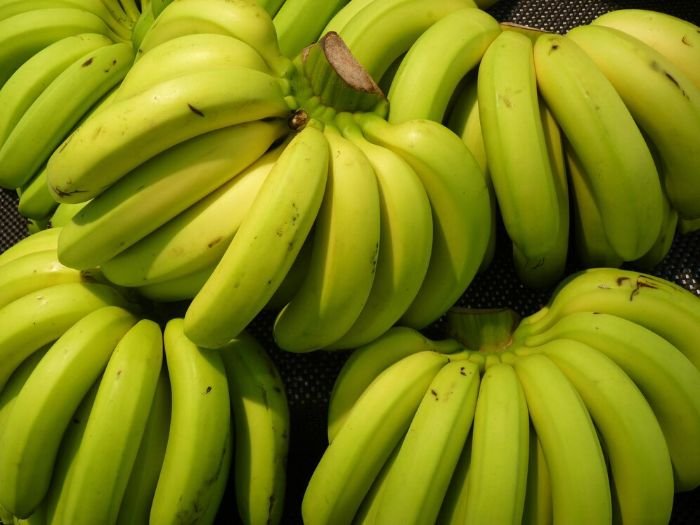
Harvest when the fingers have filled, their sharp ridges have rounded, and the fruit has reached the expected size for the cultivar. Many home growers cut the bunch at the mature green stage, before several fruits split or attract wildlife. Support the bunch, cut the stalk carefully, and hang it in a cool shaded place to ripen.
| Visible problem | Likely checks | First response |
|---|---|---|
| Folded, pale leaves | Dry root zone, heat, root damage | Check moisture deeply and water the full root area |
| Yellow lower leaves | Normal aging, nutrition, saturated roots, disease pattern | Inspect drainage and new growth before adding fertilizer |
| No fruit | Cultivar, plant age, warmth, light, sucker crowding | Confirm an edible cultivar and protect active growth |
| Shredded leaves | Wind exposure | Add shelter without reducing full sun |
| Plant topples | Wind, saturated soil, nematodes, weevil damage | Inspect roots and pseudostem base before replanting |
| Leaf spots spreading | Humidity, leaf wetness, local Sigatoka risk | Confirm the diagnosis through local extension guidance |
Do not diagnose every yellow leaf as potassium deficiency. Older leaves die naturally, cold injures tissue, flooded roots stop nutrient uptake, and several diseases produce yellowing or dark lesions. The order of symptoms across old and new leaves, the condition of the roots, recent weather, and local disease pressure carry more evidence than one photograph.
Start new mats with clean planting material. Progressive yellowing, internal brown discoloration, a foul or soft corm, tunneling at the base, or repeated toppling deserves local diagnostic help. Do not move suspect suckers or contaminated soil to another garden.
Why Grow Bananas at Home?
A home planting offers flavors, cooking qualities, and fruit sizes rarely found in supermarkets. The clump also creates fast summer screening and supplies abundant soft material for composting after harvest. Raw bananas provide carbohydrate, fiber, vitamin B6, vitamin C, and potassium. Nutrition alone should not determine the cultivar or fertilizer plan.
Conclusion
Choose a named fruiting cultivar, then give it the longest warm season your site can provide. Full sun, wind shelter, freely drained fertile soil, and consistent moisture matter more than any single fertilizer product. If winter interrupts growth, protect the rhizome first and treat fruit as a climate-dependent bonus.
Maintain the mat as a sequence, never a thicket: one bearing pseudostem, one follower, and one small replacement. Feed during active growth, watch the root zone before watering, and cut the bunch when its fingers become full and rounded. A well-managed mat replaces each harvested stem with fresh green leaves already rising beside it.
FAQ
Can you grow a banana tree from a banana?
Not from a typical supermarket banana. Most familiar edible bananas are sterile and seedless. Choose a named nursery plant, a healthy sword sucker, a piece of disease-free rhizome, or a tissue-cultured plant.
How long does it take for bananas to grow?
A small sucker may reach harvest in about 9 to 20 months under warm, productive conditions. Flowering may begin around 10 to 15 months, followed by roughly 80 to 180 days for the bunch to mature. Cold or drought can extend the schedule greatly.
Do banana trees only fruit once?
Each individual pseudostem fruits once, then dies. The underground rhizome remains alive and produces replacement suckers. Keep one strong follower and one small sword sucker so the mat can continue producing after the spent stem is removed.
Can banana plants grow indoors?
Banana plants can grow indoors with intense light, warmth, humidity, and a large well-drained container. Producing fruit is much harder because the plant needs substantial root space and a long uninterrupted warm season. Compact edible cultivars offer the best chance.
What is the best fertilizer for banana plants?
Use a complete fertilizer suited to the soil, with adequate nitrogen, potassium, and magnesium, applied in smaller split doses during active warm growth. A soil test and local extension advice should determine the formula and rate. Do not feed cold, waterlogged, or drought-stressed roots heavily.
When should you harvest bananas?
Cut the bunch when the fingers are full sized and their angular sides have rounded, commonly with a green peel. Support the heavy stalk during cutting, then hang the bunch in a cool shaded place to finish ripening.