




Updated April 16, 2026
Lawn rakes and garden rakes are not interchangeable – and most gardeners figure that out the frustrating way. Pull a bow rake through leaves and watch it dig into the turf instead of gathering. Try to level a freshly turned bed with a fan rake and the tines fold before moving anything. Both errors take more time to undo than the task itself.
The designs diverge at the tines. Their shape, flexibility, and spacing each solve a different problem. A lawn rake moves volume. A garden rake moves mass. That one distinction explains every task assignment in this guide.
Most home gardens only need two core rake types: a lawn rake for light surface debris and a garden rake for soil and heavier material. Specialty tools like thatch rakes and shrub rakes have their place, but they are usually unnecessary when the main pair is chosen correctly from the start.
Key Takeaways:
- Match tine flexibility to material weight – flexible tines for debris, rigid tines for soil
- Stop using a garden rake on grass – the rigid tines dig into turf rather than gather from it
- Check thatch depth before reaching for a lawn rake – over half an inch needs a different tool
- Choose forged steel tines on a bow rake for durability across years of soil work
- Buy a fan head width of 20-24 inches for general residential lawn cleanup speed
Table of Contents
Lawn Rake vs Garden Rake – Why the Tines Tell the Whole Story
The difference between these two tools begins at the tines – how flexible they are, how far apart they sit, and how long they run. Everything else follows from those three variables.
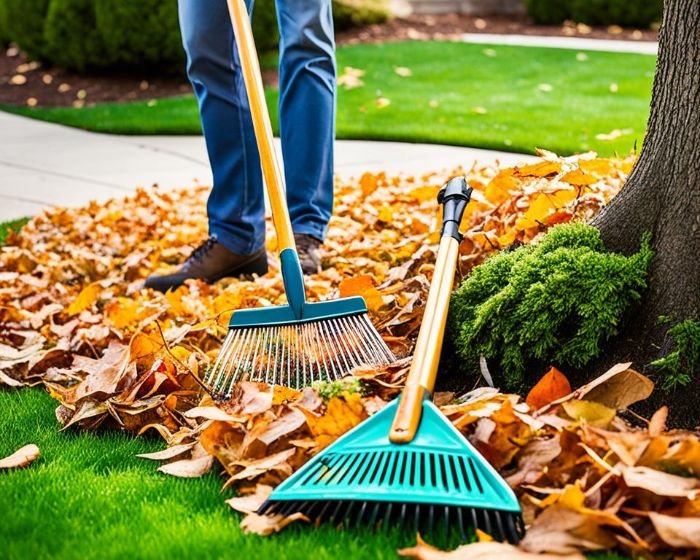
A lawn rake – also called a leaf rake or fan rake – uses a wide spread of thin tines made from plastic, bamboo, or spring steel. They flex on contact. That flexibility lets them skim across grass without catching, passing over uneven turf and collecting what sits on top without disturbing what lies beneath.
A bow rake – the most common garden rake – uses 14 to 16 short, rigid metal tines, typically about 3 inches long, set wider apart. They do not flex. That rigidity allows them to bite into soil, drive through heavy mulch, and level compacted material without deflecting under load. The “bow” refers to the curved metal supports running from the tine bar to the handle collar – a structural detail that distributes stress across the head rather than concentrating it at a single mounting point, which is why quality bow rakes hold true even after hitting buried rocks.
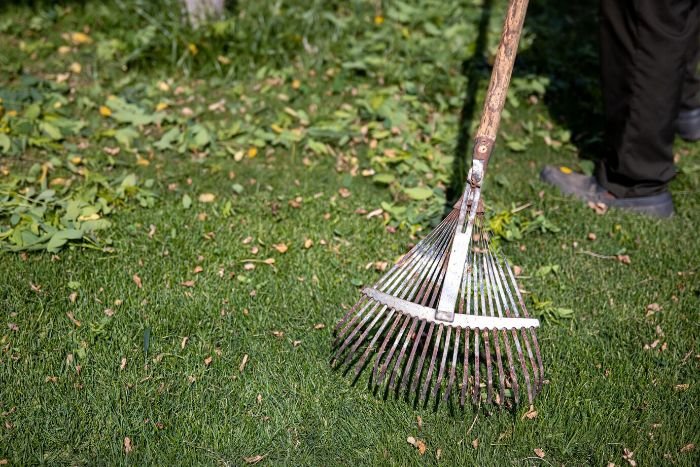
These are different mechanical actions. Flexibility is the defining feature of a lawn rake. Rigidity is the defining feature of a garden rake. Each design is genuinely good at one thing and genuinely poor at the other – and no amount of technique compensates for using the wrong one.
Lawn Rake Uses – Why Flexibility Is the Feature, Not a Compromise
A fan rake head spans anywhere from 10 to 30 inches across, according to Family Handyman’s tool guides. That width is the design’s main advantage during leaf season: a 24-inch fan covers ground quickly and collects light debris in broad strokes without applying downward pressure on the turf below.
Beyond leaves, a lawn rake handles tasks that surprise people who only reach for it in fall:
- Spreading grass seed after overseeding – a back-and-forth motion creates light seed-to-soil contact without burying seed too deep
- Removing loose thatch where accumulation is minimal – under half an inch
- Working small debris out of low-growing ground cover without snapping stems
- Fluffing pine needle or bark mulch that has compacted under foot traffic
Pro Tip: For fall cleanup on large lawns, work in parallel rows from one end to the other rather than raking in circles. You will build consistent windrows that are easier to tarp or bag in a single pass – a method that cuts cleanup time noticeably on full-sized properties.
What a lawn rake cannot do is move anything with real weight. Push it into a pile of topsoil, compost, or wet mulch and the tines deflect outward rather than pushing material forward. That flexibility – the same quality that makes it effective on turf – makes it useless in beds that need turning, leveling, or amendment work. That is what the garden rake exists for.
Garden Rake Uses – Where Rigid Tines Are the Whole Point
The 3-inch rigid tines of a bow rake are built to penetrate. Pulled back with steady pressure, they break clumped soil, move heavy organic matter, and leave a level surface – the kind of prep work a fan rake physically cannot perform.
Tasks that belong to a garden rake:
- Breaking up clumped or slightly compacted soil before planting
- Leveling a bed after digging and adding amendments
- Spreading and smoothing mulch or compost across established beds
- Pulling stones and coarse debris from a seedbed before sowing
- Creating shallow furrows for direct sowing of larger seeds
Good soil management in garden beds starts with having the right tool for surface prep, and the bow rake is what makes that work efficient rather than exhausting.
The same rigidity becomes a problem the moment a garden rake crosses onto grass.
I often see gardeners clear leaves from a lawn with a bow rake and end up with patchy, scraped areas where the rigid tines caught and tore the turf. The design is meant to enter soil – it does exactly that on grass when you do not intend it to. The clogging problem runs in the opposite direction too: pull a garden rake through dry leaves and they fall between the wide-set tines rather than collecting in front. You end up redistributing the pile rather than moving it.
Which Rake for Which Task – A Direct Reference
| Task | Lawn Rake | Garden Rake |
|---|---|---|
| Collecting dry leaves on grass | Yes | No |
| Collecting wet leaves | Marginal | No |
| Light thatch removal (under 0.5 in) | Yes | No |
| Heavy thatch removal (over 0.5 in) | No | No – use a thatch rake |
| Leveling topsoil or compost | No | Yes |
| Spreading mulch across beds | No | Yes |
| Breaking up surface soil crust | No | Yes |
| Removing stones from a seedbed | No | Yes |
| Spreading grass seed (overseeding) | Yes | No |
| Gravel path leveling | No | Yes |
The thatch row is worth a pause. Garden Gate Magazine places the threshold at half an inch: thatch shallower than that can be gathered with a firm lawn rake on a dry day; deeper than that, it has become matted and compacted. Neither a fan rake nor a bow rake reaches into that layer effectively. A dedicated thatch rake – with short crescent blades designed to cut and pull matted dead grass upward – is the right tool at that depth. The full range of specialty rake types is covered separately for anyone who wants to go beyond the two main tools.
Buying a Lawn Rake or Garden Rake – What Actually Matters
For a lawn rake, the most important decision is head width. A 20 to 24-inch head works for most residential lawns. Go narrower – around 10 to 12 inches – only if the majority of cleanup happens in tight beds where coverage speed matters less than maneuverability. Tine material separates the seasons: plastic tines become brittle in cold temperatures and snap without warning mid-stroke; spring-steel tines flex without breaking in cold and outlast plastic across multiple fall seasons in northern climates.

For a garden rake, the single biggest quality indicator is how the tines were made. Hobby Farms’ guide on tool selection makes a distinction that most buyers overlook: forged steel tines – shaped under pressure while the metal is hot – resist bending when they contact buried rocks or hardpan clay. Stamped tines, cut from flat sheet metal, deflect under load and rarely return to true after they bend once. The price gap is real. A quality forged bow rake properly stored off the ground in winter will still be working decades from now.
Handle material matters more than most buying guides acknowledge. Ash and hickory hardwood absorb the shock of hitting buried resistance. It is a small thing per stroke, but cumulative over a long session of bed preparation. Fiberglass handles are lighter and rot-resistant, but they transmit vibration directly to the wrists. For occasional light use, fiberglass is a reasonable tradeoff. For regular soil work, hardwood reduces fatigue noticeably over the course of an hour.
One size note: landscape rakes – wide aluminum heads from 20 to 36 inches – serve a different purpose. They level bare soil across large open areas, like a newly seeded patch or disturbed ground after construction. They are not a substitute for a standard bow rake in an established bed where precision matters more than coverage speed.
The question most gardeners do not ask until they own both rakes is which one they reach for first. The answer usually reveals which task occupies most of their yard time – and that is the clearer guide to where to start than any buying chart.
Conclusion
A lawn rake moves light material fast without touching what is beneath it. A garden rake moves heavy material with bite and would damage turf if used there. The choice between them is not about preference – it follows directly from what the tines can physically do. Match the tool to the material weight and both feel nearly effortless at their specific tasks.
If you are building a tool set from scratch, lead with your most frequent task. Active beds that need seasonal prep and amendment spreading call for a bow rake first – you cannot level a seedbed with a fan rake no matter how carefully you try. A yard where leaf cleanup occupies most of October and November calls for a quality lawn rake with a wide enough head to make that work fast. Most gardeners eventually find themselves with both. The goal is simply to stop reaching for the wrong one by force of habit, because that habit is where the extra work comes from.
FAQ
Is a lawn rake the same as a leaf rake?
Largely yes. Both names describe the same tool: a wide fan head with thin, flexible tines. “Leaf rake” emphasizes its seasonal primary use in fall; “lawn rake” is a slightly broader label that covers general turf cleanup throughout the year. The design – fan-shaped, flexible, lightweight – is identical. Some manufacturers market the same product under both names depending on the season.
Can you use a garden rake on grass?
A garden rake crossing an established lawn with a very light touch will not destroy the turf, but any deliberate pulling motion works the rigid tines into the surface. Thin patches, dry turf in summer, and newly seeded areas are particularly vulnerable. The tines are designed to penetrate soil – they perform that function on grass when you do not intend them to. For leaf removal on a lawn, a fan rake is both faster and safe for the turf beneath it.
What happens if I use a lawn rake for soil work?
The tines deflect rather than moving the material. A lawn rake’s flexibility is the feature that lets it skim debris without catching – the same quality that makes it useless in beds. Press the tines into topsoil or compost and they splay outward instead of pushing the pile. The rake is not damaged by the attempt, but the task simply does not progress. Soil work requires rigid tines that maintain their shape under load.
How do I know if my thatch needs more than a lawn rake?
Press a screwdriver or pencil into the lawn between grass plants. If there is more than half an inch of spongy, brown, fibrous material between the soil surface and the green grass base, a lawn rake will not remove it efficiently. At that depth, thatch has compacted and matted into a layer. A dedicated thatch rake – with short, sharp crescent blades designed to cut into and pull that layer upward – is the appropriate tool. Using a fan rake more aggressively does not compensate for the design limitation.
What is the most common mistake people make with a garden rake?
Using it with a sweeping motion instead of a pulling motion. A bow rake is designed for downward contact and a deliberate pull back toward the body. Gardeners who swing it quickly across a surface – the way they would use a broom – find the tines skip and catch rather than moving material cleanly. The correct motion is deliberate: set the tines into the material, apply even downward pressure, and pull. That is the motion the tool is built for, and it makes a substantial difference in how much the rake moves per stroke.
Can a lawn rake remove thatch at all?
Yes, in limited circumstances. A firm back-and-forth motion with a metal-tine fan rake on a dry day will bring loose, shallow thatch to the surface where it can be gathered. That works when buildup is under half an inch and has not yet compacted. It is surface maintenance, not dethatching. Once thatch matures past that half-inch depth and the dead material has matted together, the density requires a tool specifically designed to cut into and pull it free – the fan rake’s flexibility works against it at that point.
Do I really need both rakes, or can I get by with one?
It depends on your yard. A garden-only property with no real lawn can get by with a bow rake for most of the year. A lawn-only yard with no planted beds can manage with a fan rake through all seasons. The moment you have both an active lawn and established garden beds, you genuinely need both – a bow rake in the beds will damage the turf on the way there, and a fan rake in the beds will not accomplish anything useful. At roughly $25-40 for a decent fan rake and $35-55 for a quality forged bow rake, most gardeners find the pair within the first full year of active use.