
Updated July 27, 2026
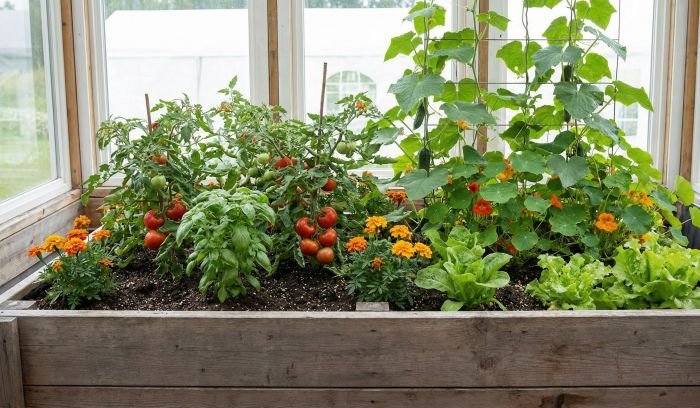
Companion plants for vegetables work best when each neighbor has a practical job: filling unused space, attracting beneficial insects, shading heat-sensitive leaves, or finishing before the main crop needs the room. Start with the crop you want to harvest, use the chart below to shortlist compatible neighbors, then check mature size, root depth, water demand, and harvest timing before planting. A famous pairing can still fail when two plants crowd the same soil or canopy.
Choose the harvest crop first. Add one companion only when it solves a real bed problem without stealing the crop’s light, root room, water, or harvest access.
Key takeaways:
- Use the crop chart as a shortlist, then confirm spacing, timing, and water compatibility.
- Choose one clear companion job and leave unnecessary gaps unfilled.
- Keep crops apart when they share serious diseases, mature into the same space, or block harvest access.
- Root vegetables need shallow or short-lived neighbors that leave the swelling zone open.
- Crop-specific pairings for tomatoes, carrots, beets, and radishes deserve separate checks beyond a general chart.
Table of Contents
Vegetable Companion Planting Chart
A useful vegetable companion planting chart does more than label plants as friends or enemies. “Plant with” means the crops can share a bed when their mature size and care needs are respected. “Keep separate” identifies a practical conflict such as shared disease, difficult harvest, dense shade, or competition in the same root zone. It does not prove that one plant chemically harms another.
Use the chart to choose one or two candidates, not to pack every named companion around a crop. The strongest combinations make space or timing easier to manage. Fast radishes can leave before a slower crop expands. Lettuce can cover open soil without building a deep root system. Flowers at the bed edge can support beneficial insects without occupying the vegetable row. For a crop-specific example, the site’s tomato companion plant guide goes beyond the general pairings below.
| Main crop | Good starting companions | Keep separate in tight beds | Practical reason |
|---|---|---|---|
| Tomatoes | Basil, parsley, sweet alyssum, lettuce, bush beans | Potatoes; mature fennel | Low companions cover soil or support insects; potatoes share important disease risks. |
| Peppers | Basil, alyssum, carrots, onions, lettuce | Fennel; crowded mature tomatoes | Compact companions fit below the pepper canopy; dense nightshade foliage closes airflow. |
| Cucumbers | Dill, peas, bush beans, radishes, nasturtiums | Potatoes; sprawling squash in small beds | Trellised cucumbers leave ground space; two vigorous vines quickly block light and access. |
| Beans | Corn, carrots, cucumbers, radishes, summer savory | Onions or garlic in the same narrow row | Upright or trellised beans can share vertical space; mixed root harvests disturb close neighbors. |
| Carrots | Onions, leeks, chives, lettuce, young radishes | Parsnips or potatoes in crowded soil | Shallow or early companions leave before carrot roots need their full soil volume. |
| Beets | Lettuce, onions, garlic, brassicas, bush beans | Pole beans directly above the row | Low companions use different canopy space; tall vines can shade beet leaves and hinder thinning. |
| Radishes | Lettuce, peas, cucumbers, spinach, carrots | Dense mature brassicas | Radishes finish quickly and mark rows; close relatives can concentrate shared pest pressure. |
| Brassicas | Dill, thyme, sage, onions, sweet alyssum | Strawberries; crowded tomatoes | Open-flowered herbs support beneficial insects; dense neighbors make caterpillar scouting harder. |
| Lettuce | Carrots, radishes, onions, peas, trellised tomatoes | Any crop that fully covers it | Light afternoon shade can delay heat stress; deep shade produces weak, stretched leaves. |
| Onions and garlic | Carrots, beets, lettuce, brassicas, tomatoes | Beans and peas in narrow rows | Their upright leaves use little canopy space; bulb harvest can damage intertwined roots. |
| Squash and pumpkins | Dill, nasturtiums, pole beans, corn, radishes | Potatoes; other sprawling vines | Edge flowers and vertical crops preserve access; competing vines turn inspection into a search. |
| Corn | Pole beans, squash, cucumbers, early lettuce | Tomatoes in small beds | Corn supplies height and support; its roots and shade can overpower another large feeder. |
| Potatoes | Bush beans, peas, alyssum, marigolds | Tomatoes, eggplants, cucumbers, squash | Hilling and digging require a clear zone; related nightshades also share disease exposure. |
Charts disagree because many traditional pairings have not been tested under the same conditions. The most reliable benefits come from intercropping principles that can be observed: different growth timing, less bare soil, support for beneficial insects, and better use of vertical space. The companion planting guidance for home gardens from University of Minnesota Extension makes the same distinction between workable garden design and claims that lack strong research.
Root Vegetable Companion Plants
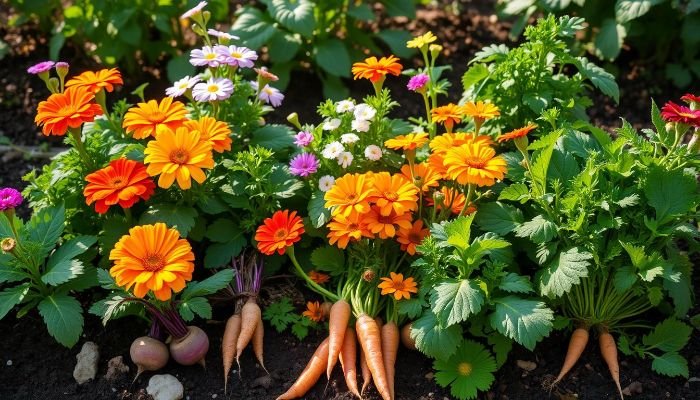
Root vegetable companion plants must respect the soil line. Carrots, beets, radishes, turnips, onions, garlic, parsnips, and potatoes form the harvest underground, so the best neighbor is usually shallow-rooted, narrow, or ready to leave early. A companion that looks harmless above ground can still drink the seed row dry, tangle through the swelling zone, or make thinning and lifting roots difficult.
| Root crop | Useful neighbors | How to place them | Failure signal |
|---|---|---|---|
| Carrots | Lettuce, onions, leeks, chives, early radishes | Keep companions beside the row; pull radishes before carrot shoulders widen. | Thin tops, forked roots, or dry soil through the seed line. |
| Beets | Lettuce, onions, garlic, bush beans | Alternate short blocks; do not mix every plant. | Small roots beneath a dense leaf canopy. |
| Radishes | Peas, spinach, lettuce, cucumbers | Use as row markers or a fast first harvest. | Tough roots after taller companions close the row. |
| Turnips | Peas, lettuce, dill, calendula | Leave the bulb line open and put flowers at the edge. | Crowded crowns or flea-beetle damage spreading through related crops. |
| Onions and garlic | Carrots, lettuce, beets, brassicas | Use straight bands that remain easy to weed and lift. | Bent leaves, shaded bulbs, or tangled roots at harvest. |
| Potatoes | Bush beans, peas, alyssum, marigolds | Keep companions outside the hilling and digging zone. | Damaged roots whenever soil is hilled or harvested. |
Flowers and herbs belong at the edge of a root bed, leaving the crop rows open. Sweet alyssum, calendula, cilantro, dill, and parsley can feed predators and parasitoids when allowed to flower. The goal is to keep insect activity close and permanent roots outside the crop zone. The University of California IPM overview of predators and parasitoids in garden pest control gives a stronger basis for this placement than the assumption that a flower’s scent repels every pest.
Season also changes the fit. Spring radishes and lettuce can leave before summer root crops expand. In fall, spinach, cilantro, onions, garlic, and late carrots share cooler conditions without the same heat-driven water demand. Whatever the season, pull the faster crop on schedule. A companion stops being useful when it becomes permanent competition.
What Companion Planting Solves in a Vegetable Garden
Leaf edges chewed overnight, soil staying wet longer than expected, or one row racing ahead as the next stalls all point to imbalances that show up mid-season. Companion planting vegetables addresses patterns like uneven growth, repeat pest pressure, and wasted space that compound over weeks, not days. The value sits in reducing corrections later, because fewer stress signals mean fewer reactive fixes with sprays, feeds, or replanting.
Garden problems that trigger interest in companion planting
Repeated pest damage often starts at the edges of beds. Aphids or flea beetles tend to settle within 3-5 days after warm weather arrives, then spread inward if nothing disrupts movement. Mixed plantings break that path, because scent cues and leaf textures vary across short distances, which slows pest buildup and buys time before intervention becomes necessary.
Growth stalls also trace back to competition, even when care is consistent. Roots occupying the same depth band compete most when rainfall drops below about 1 inch per week. Pairing crops with different root profiles eases that pressure, so irrigation reaches more plants evenly and nutrients remain available longer between feedings.
Space misuse shows up later in the season when airflow tightens. Crowded foliage stays damp for hours after morning watering, which raises disease risk once daytime highs pass 80 F. Strategic companions change canopy shape and spacing without adding more square footage, because height and spread work together without colliding.
Beds planted in single blocks can look strong for the first month, then decline quickly once temperatures rise. Well-spaced mixed beds can hold leaf color and firmness longer under the same watering schedule.
Companion planting also has limits worth knowing early. It cannot compensate for compacted soil, low light below six hours, or chronic overwatering. When those basics fall short, plant pairings only mask symptoms. The practical gain comes when companions handle minor stressors, so attention stays focused on bigger structural issues and fewer small fixes. Understanding the science behind companion planting helps separate observable mechanisms from repeated garden folklore.
Functional Roles of Vegetable Companion Plants
A mixed bed can look orderly at planting, then turn messy once pests move in or growth rates split apart. Vegetable companion plants work best when selected by job, because a clear function guides spacing, timing, and how many plants belong in the bed. A small set of helpers per bed works best when leaf damage slows within 2-3 weeks.
Plants that interfere with pests
Pest pressure drops fastest when insects have trouble locating host plants.
Aromatic herbs and strongly scented flowers may complicate host finding, with results changing by pest and planting density. Trap crops work differently. A preferred leaf type draws insects to a sacrificial planting placed at the bed edge, so removal stays simple. Use the narrower guide to companion planting for pest control when insect pressure is the main reason for adding a neighbor.
A practical field rule works well. If the main crop shows fresh chewing on more than 1 out of 10 leaves, add disruption close to the crop and run a daily check for 4-5 days. If new damage keeps appearing at the same rate, trap planting at the perimeter usually beats adding more scent plants, because perimeter pressure often drives the infestation.
Plants that influence soil behavior
Soil helpers matter most when growth slows despite consistent watering.
Shallow rooted companions improve surface structure and reduce crusting, helping irrigation penetrate with less runoff. Deep rooted companions loosen soil channels over time, which improves infiltration after heavy rain.
Nutrient helpers sit in a separate category. Some companions support nutrient cycling by shedding fine roots and leaves that break down quickly. The main benefit shows up later, because soil biology responds over weeks, therefore gardeners should judge performance by leaf color consistency and stem thickness across the row, not by a sudden jump in growth.
Plants that modify space and microconditions
Space helpers solve problems linked to heat, light, and airflow.
Tall companions offer light shade during afternoon heat, which reduces stress on cool-season crops once temperatures pass about 85 F. Ground covers reduce soil splash during rain, which lowers disease spread on lower leaves.
Support plants matter in vining crops. A living support works when stems stay upright without tying every few days. If vines flop or twist, a simple trellis takes less effort than forcing a support pairing that does not hold shape.
| Role | Primary effect | Best placement | Fast feedback signal |
|---|---|---|---|
| Scent disruptors | Slower pest buildup | 12-18 inches from crop row | New leaf damage slows within a week |
| Trap crops | Concentrated pest activity | Bed edge or outside row | Pests cluster on trap leaves |
| Ground covers | Reduced splash, cooler soil | Under taller crops | Cleaner lower leaves after rain |
| Shade helpers | Lower midday stress | West or south edge of bed | Less wilting on hot afternoons |
| Support plants | Upright growth habit | Adjacent to vines | Less vine contact with soil |
A function-first approach prevents overcrowding because each helper earns space through a visible result. Flowers deserve the same test: the guide to companion planting flowers in vegetable beds separates pollinator support, beneficial-insect habitat, trap crops, and decoration. Over time, bed planning gets simpler because plant choices follow roles grounded in observable results.
Why Vegetables Grow Better When Planted Together
A bed planted in clean rows can look strong for a few weeks, then slip once heat, insects, and uneven growth pile up at the same time. Gardeners asking what to plant together vegetables usually want fewer mid-season surprises and a bed that holds performance without constant adjustments. Mixed planting works when plants shape the growing conditions around them, because small changes in shade, airflow, and root activity add up across a 3-4 week run.
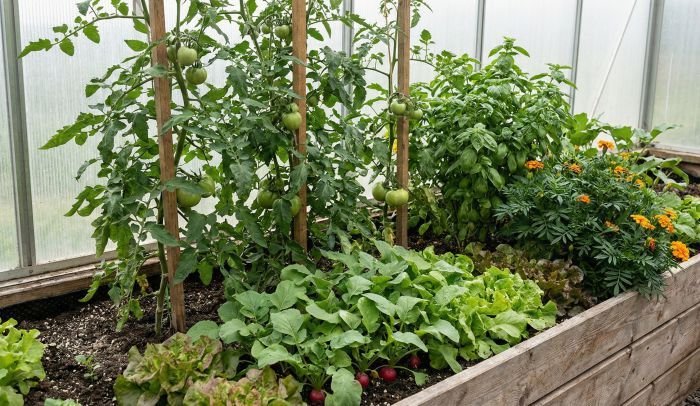
Vegetables go well together when three pressures stay in balance – competition, exposure, and timing. Competition shows up first in water and nutrient demand. When two crops draw heavily from the same soil zone, leaf size shrinks and fruiting slows, especially during dry spells that stretch past 5-7 days. Exposure problems appear next. Tall foliage can reduce sun on shorter crops; the same shade can limit heat stress when afternoon temperatures run above 85 F. Timing is the tie-breaker. A fast crop that finishes in 30-45 days can share space with a slower crop if mature spread does not overlap early.
Field testing stays simple. If plants keep upright leaf posture into late afternoon and new growth stays consistent across the row, the pairing works. If lower leaves stay wet for hours after irrigation or stems stretch thin toward light, spacing or plant height needs adjustment. A small improvement in placement often saves more effort than swapping varieties, because canopy shape controls humidity and light at the leaf surface.
Pairing Logic for Vegetable Garden Companion Planting
A pairing can look fine at planting, then collapse once one crop hits a growth spurt and the other gets shaded or dried out. Vegetable garden companion planting works when the pairing rules stay simple enough to apply in real time, because beds change fast after the first 2-3 rounds of irrigation and warm nights. A good decision model reduces rework later, leaving more time for harvesting and less for rearranging.
Matching growth habits and timing
Start with growth habit, then line up timing.
Fast growers fit beside slower crops when mature spread stays separated early. A clean benchmark helps. If one crop reaches half its final height within 14-21 days, keep a buffer so leaves do not overlap during that early surge.
Harvest timing matters as much as spacing. A crop harvested weekly can share space with a crop harvested once if access stays open. If harvest requires stepping into the bed or lifting vines every time, the pairing costs labor and damages stems.
Insider tip – Match companions by harvest window first, then adjust spacing for canopy size.
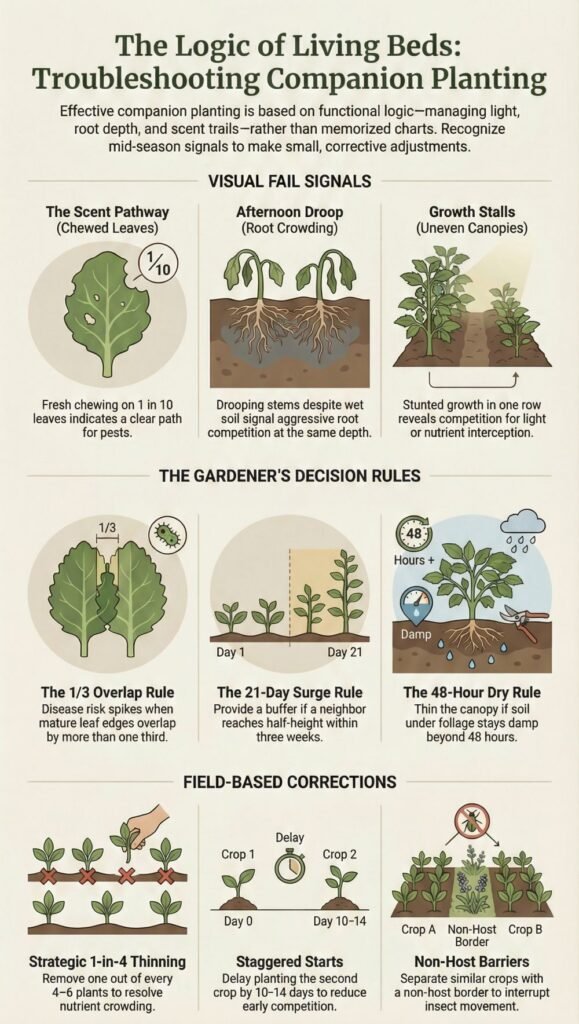
Use visual signals and timing rules like these to adjust plant pairings before damage spreads.
Reading plant behavior during the season
Plants give clear signals when a pairing fails, and quick corrections prevent a full-season drag.
Watch for uneven leaf size across the same row. A drop in new leaf size over 7-10 days often points to competition at root level or light interception at the canopy edge. A small thinning move can fix the pattern. Remove one plant out of every 4-6 in the crowded area and compare growth after a week.
Check moisture behavior after watering. If soil stays wet under dense foliage and nearby soil dries in a day, airflow and shade patterns need adjustment. A simple prune on the lowest leaves or a slight relocation of a sprawling plant can shorten dry-down time and reduce disease pressure.
Use an if-then rule for mid-season decisions. If stems stretch thin and lean toward open sun, increase spacing or reduce the height of the neighbor crop. If lower leaves yellow and the top stays green, focus on root competition before adding fertilizer, because added feed rarely fixes a crowding problem.
A pairing earns a spot when growth stays even and harvest access stays simple across a month of peak growth.
Vegetable Combinations That Often Underperform
Some pairings fail quietly. Leaves stay smaller, pest pressure climbs, and harvest stretches longer because plants never hit stride. The clearest warning signs are uneven growth, closed airflow, shared pest damage, and a harvest that disturbs neighboring roots. The detailed guide to companion planting mistakes covers the broader layout and rotation problems behind these failures.
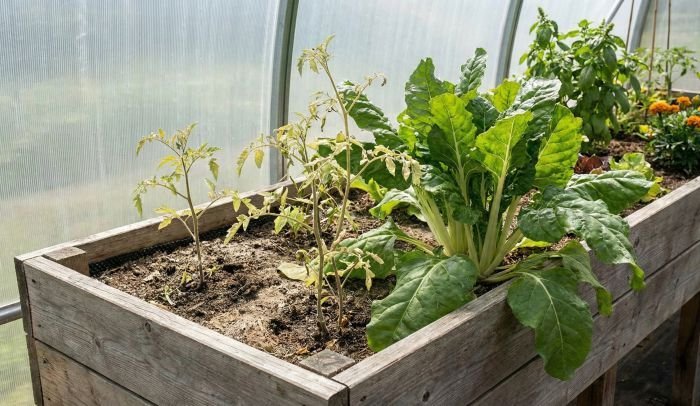
Nutrient and root conflicts
Competition shows up first in growth rate, not in dramatic plant collapse.
Root conflicts happen when two crops draw water from the same depth band. During a dry stretch of 5-7 days, one crop often takes the lead and the weaker crop falls behind with thinner stems and lighter leaf color. A quick check helps. If soil feels damp 2 inches down and plants still droop in late afternoon, root competition often beats irrigation as the cause.
Crowding also limits nutrient uptake because root zones overlap too tightly. A clean correction rule works well. If new leaves stay smaller for 10-14 days, pull or relocate the weaker plant before adding fertilizer. Extra feeding rarely fixes a bed that cannot deliver enough water and oxygen through the root zone.
Shared pest exposure
Some combinations amplify pest damage because insects move easily between similar leaf shapes and scents.
A fast test saves effort. If fresh chewing or stippling appears across two neighboring crops within a week, separate the crops or interrupt the path with a non-host border, so insects lose the easy hop between plants.
Chemical interference between plants
Some plants release compounds that slow nearby germination or root growth, which gardeners often mistake for poor seed quality.
Poor emergence often shows in patches. Seeds sprout unevenly and stay behind even when soil moisture stays consistent. When a bed shows that pattern for more than 7-10 days after normal germination time, replanting in a new spot beats waiting.
| Problem pattern | Common symptom | When it shows up | Best correction |
|---|---|---|---|
| Root competition | Afternoon droop, thin stems | After 5-7 dry days | Increase spacing or remove one crop |
| Nutrient crowding | Small new leaves for 10-14 days | Mid-season growth surge | Thin the row, then reassess growth |
| Shared pest pathway | Damage spreads crop-to-crop | Within 3-7 days | Separate crops or add a non-host buffer |
| Chemical inhibition | Patchy germination, slow starts | 7-10 days after sowing | Replant away from the interfering crop |
Bad pairings cost time because the fixes arrive late. A quick diagnosis early in the season keeps the bed productive without chasing symptoms.
Companion Plants for Vegetables in Raised Beds and Containers
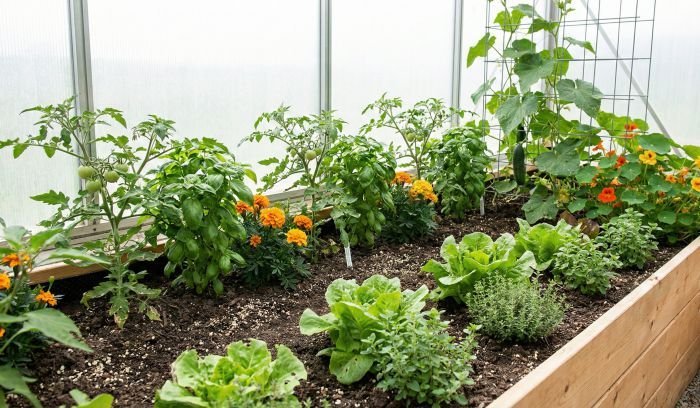
Tight spaces magnify every mistake. A plant that sprawls a few inches wider than expected can block airflow, trap moisture, and make harvesting annoying by mid-season. Companion plants for vegetables still work in small beds and pots when canopy shape and root crowding stay controlled, because limited soil volume changes water and nutrient behavior within days.
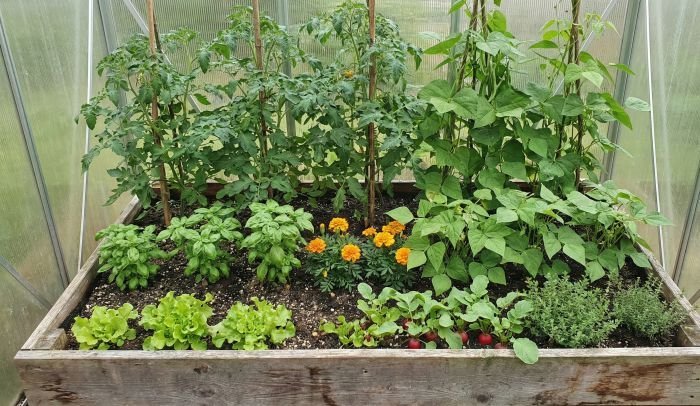
Layering without crowding
A good layout for a vegetable garden uses height and spread like tools, not decoration.
Keep a simple layering order. Tall crops sit on the north side of a bed, medium crops sit in the center, low crops sit on the south edge, so leaves do not shade smaller plants during the strongest sun hours.
Spacing needs a harder line in a raised bed. When mature foliage from neighboring plants overlaps by more than 2-3 inches for more than a week, humidity stays higher and lower leaves stay damp after watering. That pattern raises disease pressure and also slows pollination in flowering vegetables because flowers get hidden inside the canopy.
Small beds fail more often from sideways spread than from plant height, especially once a vigorous plant starts leaning into walkways and gets bumped during harvest.
When companions share containers
Containers punish crowding because roots hit the pot wall early and water use becomes uneven across the pot.
A practical rule works well. One fruiting vegetable per 5-gallon container leaves enough soil volume for a small companion; smaller pots work best with one main crop only. If wilt shows up again within 24 hours of watering on warm days, root crowding or pot size usually causes the problem, not lack of fertilizer.
A simple check helps before adding more plants. Lift the container after watering, then lift again the next day at the same time. A sharp weight drop signals fast water draw, so companions should be minimal and shallow rooted.
- Place tall crops on the north side to protect light access
- Keep foliage overlap under 2-3 inches week to week
- Limit containers to one main crop per 5-gallon pot
Small spaces reward restraint. A few well-chosen companions fit better than a packed mix that turns every watering and harvest into a chore.
Applying Companion Plants for Vegetables Without Overcomplicating
A garden can slide into constant tweaking when every bed gets treated like a test plot. Companion plants for vegetables work best when choices stay focused on the problems showing up right now, because a small number of adjustments can reduce pest pressure and growth stress without adding extra maintenance.
Knowing when simple planting works fine
The easiest companion plant is often the one that fits the bed without forcing a redesign, and the easiest approach is leaving a working bed alone.
Use a quick decision rule before adding companions. If harvest stays consistent and new growth stays even across a 2-3 week span, keep the planting simple and spend effort on watering, weeding, and access. A bed that performs well does not need extra complexity.
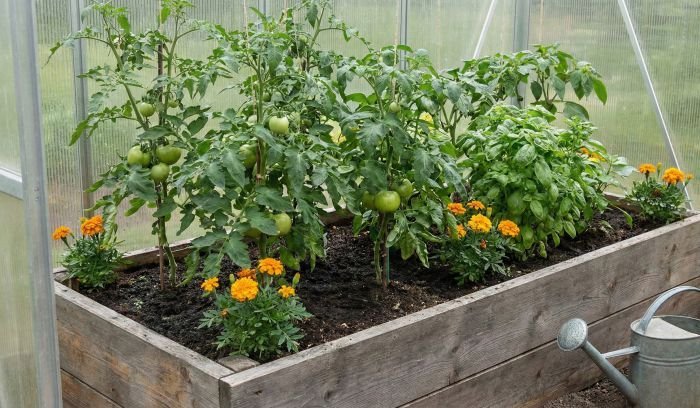
Add companions only when a clear failure signal appears. Chewing that spreads over a week, uneven plant size that persists for 10-14 days, or lower foliage staying wet long after watering all point to a problem worth addressing. One change at a time keeps diagnosis clean. Add a helper near the problem zone, then watch for improvement across the next 7-10 days before adding anything else.
Effort matters in real gardens. Every added plant increases pruning, harvesting access, and irrigation adjustments. When a gardener can keep hands and tools moving through the bed without breaking stems or brushing wet foliage, the bed stays easier to manage and yields stay more predictable.
A practical finish line helps. If the garden needs more than one correction per bed in a month, scale back the mix and rebuild around fewer, better-performing crops.
Conclusion
Start with the vegetable you most want to harvest, choose one companion from the chart, and give both plants their full mature space. Check the bed weekly for leaf overlap, drying speed, pest movement, and harvest access. If the main crop slows as its neighbor accelerates, remove the companion before adding water or fertilizer.
Successful companion planting looks manageable and uncrowded. Leaves dry after watering, the main crop remains easy to inspect, roots lift without tearing through another row, and each plant has an obvious reason to occupy the bed.
- Wait 2–3 weeks before adjusting plantings
- Change one variable per bed only
- Check leaf size during weekly walk-through
- Thin canopy when soil stays wet
- Reset spacing after major heat waves
FAQ
Can you use companion planting without memorizing plant pair charts?
Yes, practical results come from reading growth speed and space use, not from memorizing charts. If two crops reach peak size within the same 2–3 week window and share similar root depth, spacing pressure rises fast. Separate one by at least 12 inches or stagger planting dates by 10–14 days to keep competition visible and manageable.
What happens if companion plants grow faster than expected?
Fast growth shifts light and airflow before roots fully establish. When upper leaves shade neighboring crops before noon for more than three consecutive days, trim or remove the faster plant early. Waiting longer locks in reduced yield and uneven moisture patterns that persist all season.
How close is too close when planting vegetables together?
Spacing becomes risky when mature leaf edges overlap by more than one third of plant width. At that point, soil drying slows and disease pressure increases after rain or irrigation. Pull back one plant or thin foliage until soil surface dries within 36–48 hours.
Can you test a new pairing without risking the whole bed?
Yes, isolate trials to a 2 by 2 ft section and compare growth rate after the first true leaf set. If height or leaf size differs by more than 25 percent between neighbors, separate early. Small test zones reveal conflicts before roots interlock.
What happens if vegetables compete below ground before problems appear above?
Root competition often shows as slowed growth without discoloration. If irrigation volume stays the same but soil feels dry sooner near one crop, roots are overlapping aggressively. Increase spacing or relocate one plant within the first month to prevent long-term stunting.
How often should companion planting setups be adjusted during the season?
Adjustments work best on a light cadence, with no need for constant tuning. Check structure and spacing every 7–10 days during rapid growth phases, then monthly once canopy stabilizes. Frequent changes after midseason rarely recover lost yield.
Can you rely on companion plants for vegetables in mixed beds with different soil depth?
Mixed depth beds need extra caution because shallow-rooted crops lose access first. If bed depth varies by more than 3 inches, place deeper-rooted plants on the lower side so moisture distribution stays even. Ignoring depth differences often causes uneven harvest timing.
What happens if companion planting looks fine early but fails later?
Late failure usually traces back to timing conflicts. When one crop enters fruiting while another is still vegetative, nutrient demand spikes unevenly. Reduce foliage mass or harvest aggressively within a 7 day window to rebalance growth before decline spreads.