



Updated April 23, 2026
Choosing the right compost bin starts with the material you actually generate, not the catalog photo or the promise printed on the box. A dual-chamber tumbler looks tidy until autumn leaves and tomato vines fill it in a week. A big open bin looks practical until a household with mostly kitchen scraps leaves wet peels exposed near the surface and spends a month fighting flies.
The right system fits four things at once: the volume and type of waste you produce, the amount of turning or lifting you will realistically do, how neat the setup needs to stay near neighbors, patios, or wildlife, and whether it will still feel easy to use in bad weather. Get that match right and composting feels routine. Miss it and even good materials go sour, cold, or untouched.
Most wrong choices fail on capacity, airflow, or workflow long before they fail on price or features.
Composting for beginners depends on browns, greens, moisture, and pile behavior, while bin choice depends on which system still makes sense once the waste volume becomes real.
Key Takeaways
- Match the bin to your waste stream before you compare features
- Choose volume first because undersized systems fail fastest
- Use tumblers for modest batches, not for peak leaf season
- Pick enclosed bins when tidiness and pest control matter most
- Place any bin where you will still use it in bad weather
Table of Contents
Fast Decision Filter Before You Compare Bin Types
| If this is your situation | Start by comparing | Why this is the right first lane |
|---|---|---|
| Mostly yard waste, leaves, and seasonal clean-up | Wire bin, open bay, or multi-bin system | Bulk volume matters more than neat hardware when the feedstock is loose and abundant |
| Mostly kitchen scraps with very little yard waste | Worm bin or compact enclosed bin | Food-heavy streams need surface control and regular cover more than maximum outdoor capacity |
| High pest pressure, close neighbors, or HOA-visible placement | Enclosed stationary bin or modest tumbler | Lids, cleaner edges, and easier surface management reduce nuisance risk near living spaces |
| Low labor tolerance or inconsistent turning | Enclosed stationary bin | It stays useful longer under irregular maintenance than a tumbler or a staged multi-bin build |
| Need stage control and steady finished compost for beds | Multi-bin system | Separate bays keep fresh input, active compost, and finished material from getting remixed |
Compost Bin Types At A Glance – Which System Fits Which Garden
| System | Best for | Struggles with | Work level |
|---|---|---|---|
| Wire or open bin | Large leaf volume, garden trimmings, broad backyard space | Strict tidy looks, high pest pressure, small patios | Moderate turning, high capacity |
| Enclosed stationary bin | Average backyard mix of kitchen scraps and yard waste | Huge seasonal surges of leaves and stalks | Low to moderate |
| Tumbler | Smaller batches, cleaner handling, easier aeration | Bulky stems, heavy wet grass, big fall leaf loads | Moderate but physically easier |
| Multi-bin system | Gardeners who want batch control and steady output | Tight spaces and low-commitment routines | Moderate to high |
| Worm bin | Mostly kitchen scraps, small spaces, indoor or shaded setups | Big yard waste volume and hot active composting | Light but regular |
Compost-system choice depends on where you live, how much material you have, what materials you want to compost, how much time and energy you have, and what you plan to do with the finished product. Feedstock and workload should come before lids, doors, and color.
Holding units ask less from the gardener and finish more slowly. Turning units move faster because they keep oxygen available to the microbes, but they cost more and stay useful only when the batch size matches the machine. That tradeoff matters more than marketing claims about speed.
One more distinction saves buyers from wasting money. Electric food-scrap dehydrators and grinders reduce volume and weight but do not produce compost. A countertop caddy stores scraps. A dehydrator pre-processes scraps. A compost bin is the system where microorganisms – or worms in a vermicomposting setup – turn raw feedstock into stable compost.
Choose By What You Actually Generate – Leaves, Kitchen Scraps, Or Both
The fastest way to choose badly is to think in abstract terms like “I want to compost more.” Think in buckets and armloads instead. Two grocery-size containers of kitchen scraps per week behaves very differently from four bags of maple leaves and a wheelbarrow of spent tomato vines. The first stream fits a worm bin or enclosed backyard unit. The second overwhelms small tidy systems almost immediately.

A hot working mass usually needs a compost pile three to five feet high and at least three feet across so it can insulate itself. That threshold explains why so many small bins disappoint. They simply do not hold enough mixed material to maintain heat once cool nights, dry wind, or a run of rain starts pulling at the outer layer. A small bin still makes compost, but the timeline stretches and the margin for error shrinks.
Input choice still matters after the bin is chosen. Best compost materials affect whether the chosen bin receives the right balance of browns, greens, moisture, and structure. Bin size and feedstock quality have to work together.
Why small tumblers fail in big gardens
A tumbler handles modest batches well because turning is easy and the mix stays contained. Load it with shredded leaves, grass clippings, and long fibrous vines from a productive vegetable plot and the physics change. Wet material packs into a heavy mass. Dry leaves fill volume faster than they lose it. The drum becomes hard to rotate and the center stops mixing cleanly. What looked efficient in April turns cramped by September.
The problem shows most in gardens that generate big shoulder-season surges: spring clean-up, summer trimmings, and fall leaf drop. The tumbler is not wrong. It is undersized for the waste stream. A wire bin or multi-bin system handles those surges more gracefully because bulk becomes an asset there, not a mechanical problem.
When a worm bin is the smarter choice
Vermicomposting is a real home-composting method, not a novelty. A worm bin fits households with mostly fruit peels, coffee grounds, filters, and small volumes of food scraps. It fits apartments, shaded porches, garages, and small suburban yards where neatness matters and leaf volume is low. It does not replace a yard-waste system for a large garden. It solves a different problem.
Worm bins should be shallow rather than deep because red wigglers live near the surface of rich organic matter, not far down in compacted material. That single biological fact explains why a worm bin works so well for food scraps and so poorly for whole-armload yard cleanup. The organism decides the container shape.
Tumbler, Stationary Bin, Worm Bin, Or Multi-Bin – The Real Tradeoffs After The First Month
Bin differences become clearer after the excitement of setup wears off. By week four, the question is no longer “Which one seems easiest?” It is “Which one still fits the waste, the season, and the amount of labor I am giving it?”
Tumblers reward consistency, not overload
A tumbler is strongest when the batch stays moderate, the pieces are chopped, and the gardener values neat edges more than maximum capacity. Turning restores oxygen without a fork, and enclosed sides reduce direct pest access. The weakness is volume. Many tumblers fill fast, especially once dry browns are added at the correct rate. Long stems bridge across the chamber, wet grass mats, and the load turns from fluffy to dense and thudding.
Tumblers are easy to turn only up to a point. A tumbler is easier while the load stays within a weight and texture range that the drum can still lift and drop freely. Once the chamber is packed with wet clippings, shredded leaves, and fibrous stems, the same design feels cramped instead of efficient.
Stationary bins are the default answer for most backyards
An enclosed stationary bin is the best middle-ground choice for many households. It takes mixed kitchen and yard waste, holds moisture better than an open wire circle, stays tidier near a fence, and costs less than more engineered systems. It also tolerates neglect better. If a busy week passes without turning, the bin keeps going. It may cool, but it does not become useless.
The tradeoff is harvest access and turning effort. A cramped lower hatch sounds convenient until wet material bridges above it and only half-finished compost trickles out. Wide top access and a removable front panel matter more in practice than small cosmetic features on the lid.
Multi-bin setups win when throughput matters
Once a garden produces real volume, multi-bin systems start making sense. One bay takes fresh input, one runs hot or curing, and one holds finished compost. That separation keeps the workflow clean. You stop remixing nearly finished material every time a bucket of scraps appears. Gardeners who prune heavily, clean beds seasonally, and want compost ready at planting time benefit from that control.
Space is the price. So is routine. A three-bin system pays off only if the gardener will actually shift material from one stage to the next. If the whole setup is likely to become one giant holding area, a simpler enclosed bin is the better buy.
Worm bins are precise tools, not miniature hot piles
Worm bins stay productive because the biology is different. Ideal vermicomposting temperatures sit around 55 to 80 F, with air-filled bedding, moisture, darkness, and shallow depth. That means a worm bin belongs indoors or in dependable shade, not in a sun-baked corner beside a pile of hedge clippings. If you want castings from food scraps with very little odor, it is a strong choice. If you want to digest corn stalks and bags of leaves, it is the wrong machine for the job.
Placement, Material, And Access Matter More Than Fancy Features
A good bin in the wrong spot underperforms. Place a compost pile or bin in a convenient location more than six feet from the house or wooden structures, in shade, within reach of a hose, on flat ground, and away from flooding or runoff. Placement is one of the biggest reasons some systems work and some never get used enough to succeed.
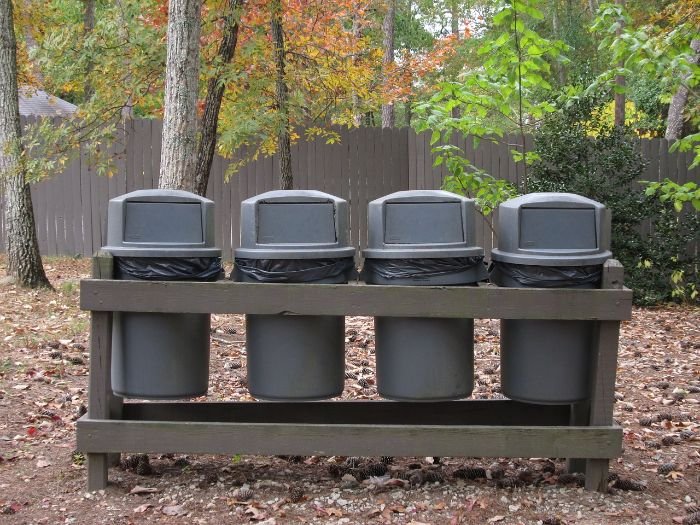
Access decides whether the bin gets fed correctly
If the route to the bin turns muddy in rain or icy in winter, the scraps do not stop coming – the routine does. Kitchen waste ends up tossed on top instead of buried under browns. Dry cover material stays twenty feet away in another shed. The lid stops closing cleanly because nobody wants to stand there long enough to fix the mess. Convenience is not a soft factor. It drives the day-to-day mechanics of odor control and clean layering.
If your current setup already smells sour, draws flies, or stays soggy at the bottom, the bin may be wrong for the waste stream, but the fix also lives in day-to-day handling. Common composting problems usually start with the same signals: sour smell, exposed food scraps, soggy bottoms, or poor aeration.
The best setups keep one container of dry browns right beside the bin. That single choice does more to prevent flies and sour surface layers than most add-on accessories ever will.
Material choice changes heat, durability, and rodent resistance
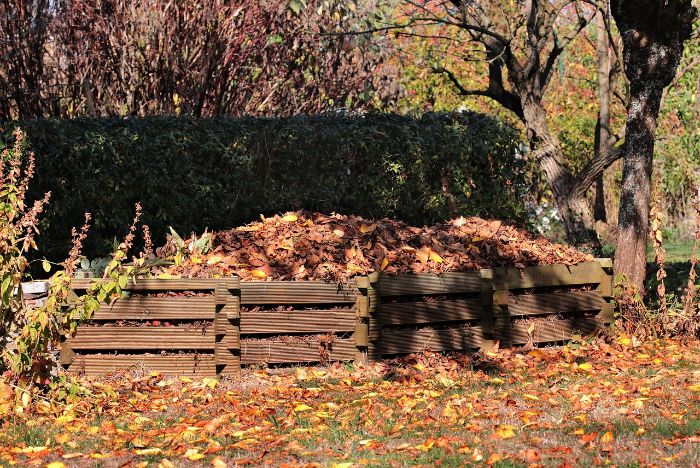
Black recycled plastic warms quickly and holds moisture well, which helps smaller backyard bins. Wire mesh breathes freely and scales cheaply for leaf-heavy gardens, though it dries faster and looks rougher. Wood works beautifully in multi-bin systems, but constant soil contact shortens its life unless the build uses rot-resistant lumber and decent airflow. Metal resists chewing and can outlast plastic, though sun exposure turns some metal surfaces harshly hot in summer.
Pest resistance is less about a magic material and more about gaps, lid fit, and surface management. Where rodent exclusion matters, reinforce bins with lids and keep openings tighter than a quarter inch. Food scraps buried under several inches of dry browns matter just as much. A poorly managed “rodent-proof” bin still attracts attention if wet peels sit near the surface every night.
Effective choosing and using a composting system depends on feedstock, workload, bin size, and finished-compost use.
Best Match By Situation
The final choice usually comes down to the most common real-world matches.
| If this sounds like your garden | Best fit | Why it usually wins |
|---|---|---|
| Bags of leaves, armloads of trimmings, and spent vegetable plants every season | Wire bin, open bay, or multi-bin system | Large loose inputs need capacity and airflow more than a compact rotating chamber |
| Steady kitchen scraps plus modest yard waste in a typical suburban backyard | Enclosed stationary bin | It gives the best balance of appearance, mixed-input capacity, and low-friction upkeep |
| Visible patio, close neighbors, or HOA-sensitive placement with only moderate compost volume | Tumbler or slim enclosed bin | Cleaner edges and contained handling matter here, but only if the batch stays modest |
| Mostly food scraps, little yard waste, and limited space indoors or in dependable shade | Worm bin | It solves the food-scrap problem neatly without pretending to process brush, stalks, or leaf surges |
| Need one batch curing while another is still being filled | Multi-bin system | Stage separation keeps throughput clean and prevents half-finished compost from getting remixed |
| High wildlife or rodent pressure around the compost area | Enclosed stationary bin with a tight lid and controlled openings | Exclusion and buried surface handling matter more here than raw capacity alone |
Conclusion
The best compost bin is the one that fits your heaviest month, not your most optimistic week. Choose for peak leaf drop, peak food-scrap flow, the least effort you will reliably give it, and the actual path from kitchen or garden to the bin.
If the system matches the waste stream, the routine stays simple: scraps get buried, browns stay close, odors stay low, and finished compost arrives on schedule. If the bin is too small, too awkward, or too exposed, the composting biology is not the first thing that fails. The workflow is.
FAQ
Is a compost tumbler or a regular compost bin better?
The better choice depends on volume and texture. Tumblers fit smaller, tidier batches and make aeration easier. Regular bins handle larger yard-waste volume, especially leaves, stalks, and seasonal cleanup. If your garden produces more bulk than kitchen scraps, a stationary or wire bin usually stays useful longer.
What size compost bin do I need for a small backyard?
Most gardeners assume smaller is safer. It is safer only if the waste stream is also small. A compact enclosed bin works well for a modest household with limited yard waste, but a hot working mass still needs enough volume to hold heat. If you expect more than a light weekly bucket of scraps plus occasional trimmings, buy larger than your first instinct suggests.
Can you compost in a bin without turning it?
Yes, and many people do. Holding units are low-maintenance systems that take much longer because aeration is limited. You trade speed for less labor. If you will not turn compost regularly, a simple enclosed or open holding bin is a better match than a system marketed around active mixing.
What happens if the compost bin is too small?
Volume disappears first, then performance. Dry browns fill the chamber, food scraps stay too near the surface, the mix compacts faster, and temperature swings widen because the mass cannot insulate itself. In tumblers, weight and clumping become obvious fast. In small enclosed bins, harvest access often turns awkward before the compost is actually finished.
Are worm bins good for outdoor gardens?
Yes, when the feedstock is mostly food scraps and the bin stays within the worms’ temperature range. Ideal worm-bin operation sits around 55 to 80 F, which is why indoor rooms, garages, and shaded outdoor spots work well. Worm bins are excellent tools for producing castings. They are poor replacements for a large yard-waste bin.
Do I need a rodent-proof compost bin?
If wildlife pressure is high, a tight enclosed bin is worth the money. Where exclusion matters, use lids and openings no larger than one-quarter inch. The design helps, but handling still matters just as much. Food scraps buried under dry browns attract far less attention than scraps dropped wet and exposed near the top.
Can a countertop compost bin replace a garden compost bin?
No. A countertop caddy stores scraps until they go outside. It does not produce compost. Electric food-scrap dehydrators and grinders reduce volume but do not create finished compost. A garden bin, tumbler, or worm system is still needed for actual decomposition.
What compost bin works best if I do not have much time?
For low time and moderate outdoor space, choose an enclosed stationary bin. It tolerates irregular turning better than a tumbler and stays neater than an open pile. If your waste stream is mostly food scraps and the volume is low, a worm bin is another low-labor option. The wrong low-time choice is a small system that constantly fills before it finishes.