Updated April 13, 2026
The role of trees in sustainable gardening is to cool exposed areas, moderate water movement, build soil organic matter, and create habitat that smaller plants cannot provide. A good tree can lower heat stress, reduce watering pressure, soften storms, and turn empty overhead space into a working part of the garden.
That does not happen automatically. Trees help most when the canopy, root zone, and mature size match a real garden job. They stop helping when the wrong species blocks needed light, drains the wrong bed, or turns every season into a fight with shade, roots, and failing lawn.
Start with the problem that costs the garden most: excess heat, runoff, weak habitat, poor soil cover, or a failing zone under existing canopy. Tree choice gets easier once the job is clear.
Key Takeaways
- Assign a tree one clear job before choosing species
- Place canopy where heat, runoff, or habitat need is highest
- Use mulch and dry-shade planting under mature trees
- Favor native canopy when wildlife value matters most
- Avoid forcing lawn and vegetables into root-heavy shade
Table of Contents
The Role Of Trees In Sustainable Gardening – Five Jobs That Change The Whole Site
Trees are not just large plants. They are long-term site managers. The USDA Forest Service describes urban forests as green infrastructure because they filter water, control stormwater, conserve energy, and create habitat. In a home landscape, that same logic plays out on a smaller scale and often with more visible results.
| Tree job | What it changes | Where it helps most | What to watch |
|---|---|---|---|
| Climate regulation | Surface heat, glare, and moisture loss | West walls, patios, exposed beds | Loss of needed light near vegetables or solar gain zones |
| Water moderation | Rain impact, infiltration, and runoff speed | Slopes, downspouts, paving edges | Planting too close to structures or utilities |
| Soil building | Organic matter, aggregation, fungal life | Mulched root zones and planted borders | Bagging every leaf and leaving bare soil |
| Habitat support | Insect hosting, nesting, shelter, food webs | Native canopy in mixed gardens | Choosing low-value ornamentals for a wildlife goal |
| Site zoning | How space is used and what can grow there | Small yards and mature canopy zones | Planting for looks with no defined function |
EPA groups the benefits of trees and vegetation around many of the same functions: cooler environments, cleaner air, lower energy demand, and more resilient built spaces. In a garden, that only matters when one of those functions solves a real site problem. EPA’s summary of the benefits of trees and vegetation is a good reference point for the larger pattern.
That is where tree planning stops sounding abstract and starts aligning with the rest of sustainable gardening practices that support ecosystems.
Where A Tree Pays Back Most – Match The Job To The Hardest Problem
| Garden problem | Tree job | Best placement zone | Main watchout |
|---|---|---|---|
| Hot late-day patio or wall | Cooling canopy | West or southwest exposure | Do not shade the only productive vegetable bed |
| Runoff path or repeated washout | Water moderation | Upslope of erosion line or beside water exit | Do not plant too close to foundations or utilities |
| Quiet yard with little wildlife activity | Habitat support | Canopy position with space for layered planting below | Do not rely on low-value ornamental trees alone |
| Failing lawn under existing canopy | Site conversion | Directly under mature shade where turf already thins | Do not keep reseeding a site that has changed function |
| Dry shade and root-heavy soil | Understory adaptation | Outer root zone with shallow planting | Do not deep-dig or rebuild grade over roots |
Use the matrix as the first filter. A hot west side calls for cooling canopy. Active washout or puddling calls for water moderation near the runoff line, often in the same part of the garden where soil erosion after heavy rains keeps reappearing.
A quiet yard with little wildlife activity usually needs a native canopy, not another ornamental accent, which is often where choosing native plants becomes a canopy decision. A lawn that keeps thinning under mature shade is already signaling site conversion. Stop trying to restore sun-lawn conditions where they no longer exist.
Pro Tip: Walk the garden at 4 p.m. on the hottest day you can tolerate outdoors. The place you avoid standing, watering, or sitting in for more than a minute is often where one well-placed tree will pay back first.
Tree Canopy And Garden Climate – Where Shade Saves The Most Water
Heat management is one of the clearest reasons to use trees in a sustainable garden. EPA notes that urban forests are cooler than nearby non-green areas, and the difference in a yard becomes obvious where paving, fences, brick walls, and dark mulch hold afternoon heat long after the sun has shifted.
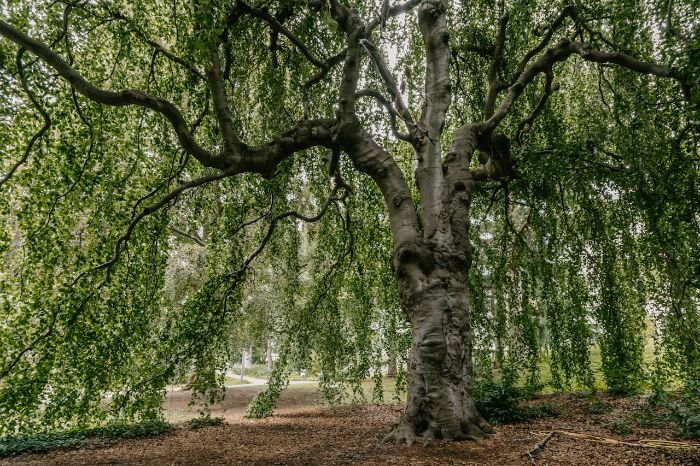
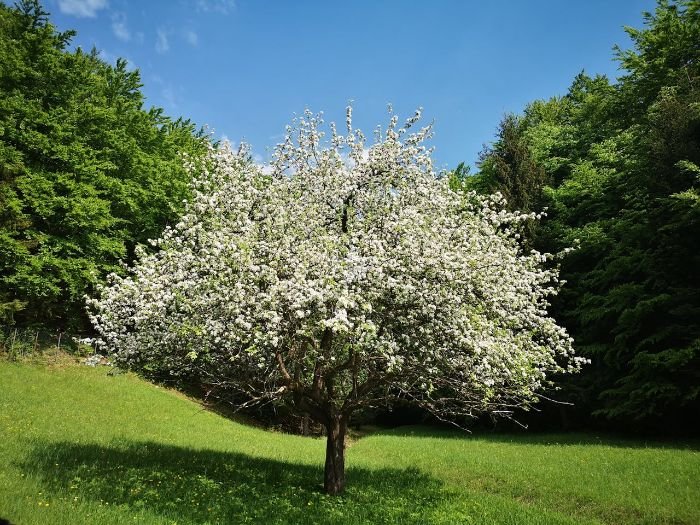
A canopy helps in two ways. First, it blocks direct solar load on surfaces that would otherwise radiate heat back into nearby plants. Second, the tree moves water through its tissues and cools the surrounding air through evapotranspiration. A pergola can shade. A tree shades and changes the air around the shade.
The best cooling position is usually the one that intercepts late-day sun before it hits the hottest hard surface. In many small yards that means west or southwest of a patio, seating area, wall, or mixed bed that dries out too quickly. If the same slot would also shade the only productive vegetable bed, the tree is being asked to do the wrong job in the wrong place.
Wind matters too. A looser canopy or a layered boundary can soften air movement enough to reduce moisture loss around shrubs and perennials, though on a truly wind-exposed site the slower-moving strategy behind the role of hedges in reducing wind speed may solve the edge faster during tree establishment.
Trees And Soil Health – Leaves, Roots, Mulch, And Understory Do The Slow Work
Soil does not improve because a tree exists nearby. It improves because the tree keeps sending organic matter and root activity into the same ground year after year. Leaves fall, fine roots turn over, bark fragments break down, fungi spread through the litter layer, and the surface stops behaving like exposed dirt.
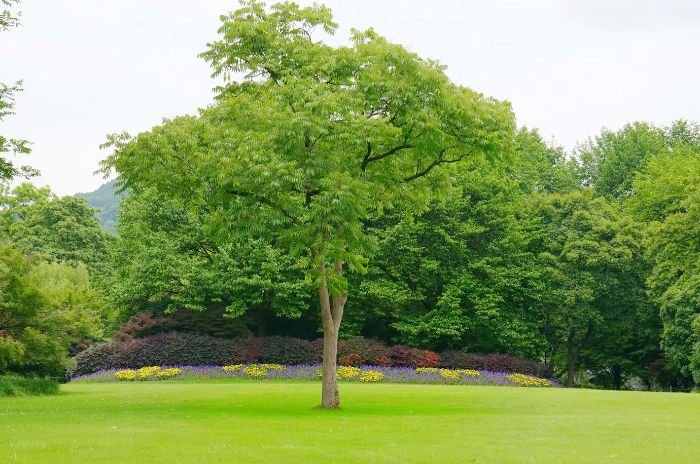
NC State Crop and Soil Sciences notes that soil organic carbon improves water retention and helps form water-stable aggregates. Trees feed that carbon path continuously if the ground beneath them is managed to keep it in place. This is why the mulched tree zone often becomes darker, cooler, and easier to work than the surrounding soil.
University of Maryland Extension makes the lawn conflict plain: trees usually perform better when properly mulched than when forced to share their base with turf. The practical move is to widen the mulch ring as the canopy expands, keep the root flare visible, and stop mowing tight circles around the trunk. If the site needs a planted underlayer, treat it like a real shade planting zone, not a lawn gap that keeps failing to recover.
Penn State Extension adds an important rule for existing mature trees. Do not build a raised bed over the roots, do not bury the root flare, and do not keep adding heavy soil over the crown area. Work with the site you have. Small plugs, leaf retention, and a light mulch layer are far safer than trying to remake the area into a fresh bed from scratch.
That management logic sits very close to soil health improvement and mulching to conserve moisture. The difference is that under a tree, root protection matters just as much as soil improvement.
Native Trees And Wildlife – The Canopy Decides What The Garden Can Feed
A sustainable garden that wants real wildlife presence cannot rely on flowers alone. University of Delaware entomologist Doug Tallamy’s research on keystone native plants shows that a relatively small group of native woody plants supports a disproportionate share of the insect life that birds and other animals depend on.
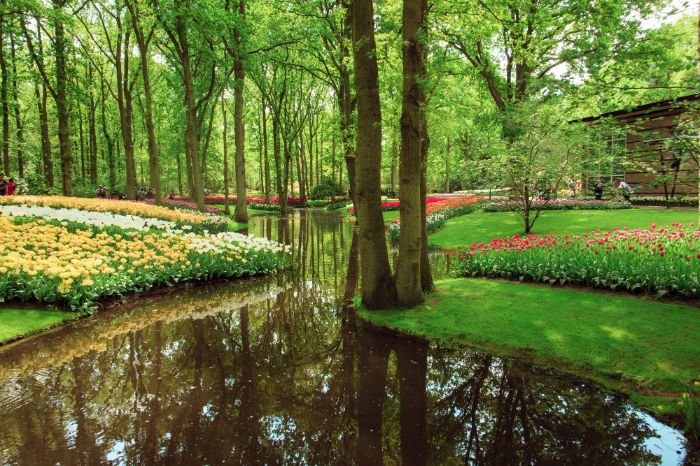
That is the practical value of a native tree. It hosts caterpillars, shelters insects in bark and litter, gives birds landing and nesting space, and often adds seeds, fruit, or nuts later in the year. A canopy layer can support life in ways a bed of annual color cannot, even when the flowers look generous to us.
If wildlife support is one of your top goals, start with the tree layer before chasing smaller habitat fixes. A single region-appropriate oak, cherry, willow, birch, or serviceberry can change the whole food web around it. In a small yard with room for one major tree, that ecological return is often a better long-term choice than a purely ornamental canopy. The planting below that canopy can then follow the same layered logic used in many habitat-focused gardens.
In many yards, bird traffic increases before anything else changes because there is finally somewhere worth landing, feeding, and sheltering.
Trees And Water Movement – Slower Rain, Better Infiltration, Fewer Repair Jobs
Trees influence water before and after a storm. The canopy intercepts part of the rainfall, softens the force of raindrops that would otherwise hammer bare soil, and spreads water across a larger leaf area before it reaches the ground. Roots then help create channels and pore space that improve infiltration in the upper soil profile.
USDA Forest Service and EPA materials both treat this as part of the stormwater value of urban trees, and the home-garden version is easy to see. Slopes stay more intact. Downspout zones stop crusting as badly. Mulch does not migrate as fast. The bed at the edge of paving stays usable longer after heavy rain.
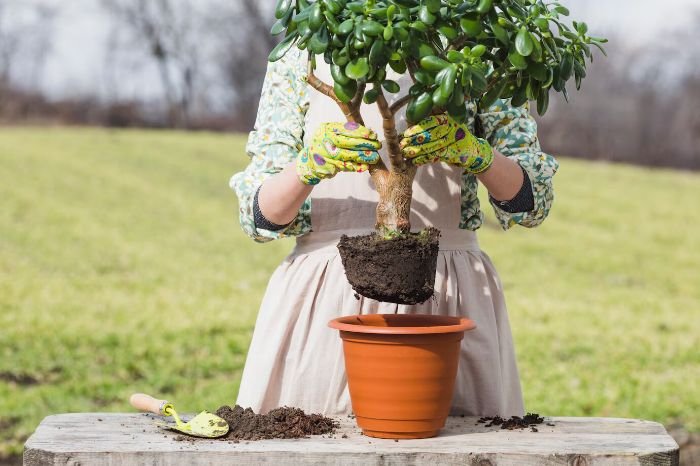
Where a site already sheds water aggressively, tree placement should follow that movement. Plant upslope of a wash line, near a runoff path, or where roof water exits into a broader planted zone, not an isolated puddle. A tree will not fix bad grading on its own. It can still slow the cycle that keeps stripping soil and drying the site again a few days later.
Canopy also changes irrigation demand after the storm has passed. Shaded soil loses water more slowly, mulch stays cooler, and the root zone below the tree often holds usable moisture longer into a hot spell.
When Trees Create Conflict – Dry Shade, Vegetable Beds, Roots, And Structures
Trees become unsustainable when the garden has to keep compensating for a bad placement decision. The most common version is root competition. Under a mature canopy, the soil is often dry, crowded with feeder roots, and short on the light that sun-loving crops need. Penn State Extension puts it plainly: when other plants compete with tree roots for moisture, the tree wins.
That is why vegetable beds and mature trees rarely make a good close partnership. Heavy-feeding annual crops want sun, regular irrigation, and less competition than a large root zone will allow. Keep permanent vegetable production beyond the densest canopy and major feeder-root area. The same caution applies to black walnut and other allelopathic trees that create extra planting limits around them.
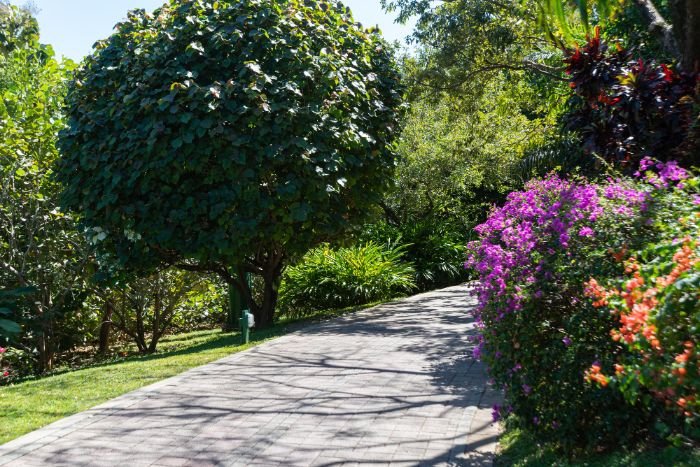
Under mature trees, the sustainable move is usually adaptation, not resistance. Use dry-shade perennials, bulbs that bloom before leaf-out, woodland groundcovers, and a mulch layer that protects the soil without smothering the crown. Start planting about a foot from the trunk, use small plugs, not large root balls, and abandon any plan that requires deep digging through major roots.
- Do not deep-dig through major roots to install a new bed.
- Do not raise grade over the root zone with added soil.
- Do not keep reseeding lawn where canopy and root competition are permanent.
Observation: The patch that keeps getting reseeded under a mature tree is often not a lawn problem at all. It is a site that has already changed function, even if the maintenance routine has not caught up.
Distance matters above ground too. A tree that matures too close to a foundation, drain line, retaining wall, or narrow path can turn long-term function into long-term expense. In dry climates, a species with higher water demand can also push the garden in the wrong direction by asking for irrigation levels the rest of the landscape no longer needs. The sustainable choice is the tree whose mature size, root behavior, and water use stay inside the limits of the site.
If you are not sure whether a difficult area should stay lawn, become a shade planting, or be redesigned entirely, the answer usually shows up faster in the roots and light pattern than in the surface symptoms. Thin grass, surface roots, dry crumbly soil, and a canopy that closes early in the season are already giving the decision away.
Conclusion
Trees earn their place in a sustainable garden when they solve recurring problems, not when they simply fill open sky. If you only have room for one, place it where it reduces the highest long-term cost in the garden: heat, runoff, habitat loss, or a chronically failing zone that needs a new purpose.
Water young trees deeply through establishment, widen the mulch ring as the canopy expands, and let the planting below reflect the conditions the tree creates. When the choice is right, the hottest corner stays usable longer, storms leave less repair behind, leaf litter starts feeding the ground, and evening air under the canopy feels cooler before you even touch the hose.
FAQ
Do tree roots steal water from garden plants?
They compete very effectively for it, especially under mature trees where feeder roots occupy the upper soil and shade reduces surface drying cues. In practical terms, that means thirsty annuals and shallow-rooted plants often lose out unless they are moved beyond the most competitive root zone.
Where should a tree go to cool a garden most?
The best spot is usually west or southwest of the hottest hard surface or bed because that placement blocks late-day heat when stress is strongest. Focus on patios, west walls, exposed seating areas, and borders that dry out fast every afternoon.
How far from a house, patio, or foundation should a tree be planted?
Far enough that the mature canopy and root zone fit the space without constant pruning or hardscape conflict. The exact distance depends on the species, but the safe rule is to plan from mature spread and root behavior, not nursery size. Small trees can work near patios or smaller foundations more easily than large fast-growing canopy trees.
Can trees reduce watering in a garden?
Yes, when they shade the right places. Canopy lowers surface temperatures, slows evaporation, and keeps mulch and soil cooler for longer. The reduction is most noticeable around paved areas, west-facing beds, and underplanted root zones that no longer sit in full reflected heat.
What trees should not be planted near vegetable beds?
Avoid large dense-shading trees, shallow-rooted vigorous trees, and allelopathic species such as black walnut near permanent vegetable space. The problem is not only shade. It is the combination of shade, root competition, and moisture demand in the same zone.
How do you garden under mature trees sustainably?
Work with the conditions already there. Keep the root flare clear, avoid building raised beds over roots, use small dry-shade plants or woodland species, and mulch lightly to protect the soil. Deep digging, repeated turf repair, and large soil additions usually make the area worse.
Should you remove fallen leaves under trees?
Only when they pile up deeply enough to smother tender plants or evergreen crowns. A light layer of leaves is useful organic matter and habitat. In many tree zones, partial leaf retention is healthier than keeping the soil bare all winter.
Is grass under mature trees a bad idea?
It often becomes a high-maintenance compromise because the site no longer offers full-sun lawn conditions. When grass keeps thinning under a canopy, mulch and shade-tolerant planting usually use less water and hold up better over time.