



Last Updated June 13, 2026
Sculpture garden design works best when the art, planting, paths, and open space are planned as one outdoor display. A good sculpture area does not need a museum budget or a large estate. It needs a clear viewing route, enough breathing room around each piece, a background that does not fight the form, and installation details that keep the work stable through weather and seasons.
The main mistake is treating sculpture as a last-minute ornament. A statue pushed into a crowded border may look fine in a product photo and disappear once shrubs leaf out. Tall metal forms placed on open lawn may feel strong from one window and awkward from the patio. Small ceramic pieces may have charm up close and no presence from ten feet away.
A focused outdoor art display starts with the way people will see it. The first glimpse, the approach, the pause point, and the background matter as much as the sculpture itself. When those pieces line up, the garden feels curated through route, spacing, background, and rhythm.
Key Takeaways
- A sculpture garden needs a viewing sequence with objects placed to create arrival, pause, and discovery.
- Each sculpture should have a primary view, a clean background, and enough open space around it.
- Scale should be judged from the real viewing distance, not from the size of the sculpture alone.
- Paths, plinths, gravel pads, edging, and bases shape the display as much as plants do.
- Durable materials and planned maintenance matter before the piece is installed.
- Lighting should reveal shape and shadow without flattening the garden at night.
Table of Contents
Start With One Clear Viewing Route
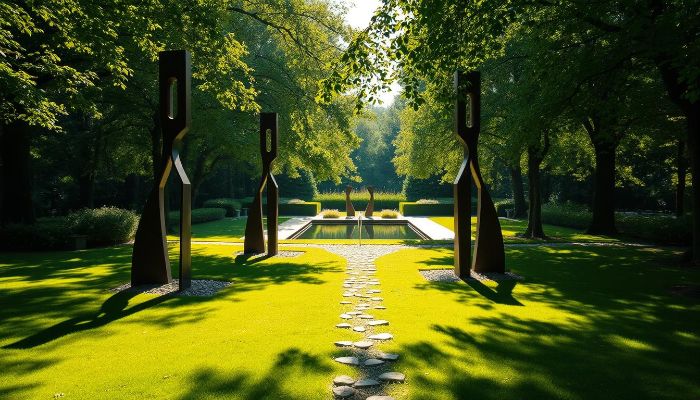
A sculpture garden becomes readable when the visitor has a route. That route can be a loop, a short spur from a patio, a side-yard walk, or a few stepping stones that end at a bench. Sequence matters: first view, closer view, side view, and place to pause.
Stand at the garden entrance, back door, patio edge, or gate and mark the first sculpture that should catch the eye. That first piece sets the tone. It may be the tallest form, the brightest color, the quietest stone, or the work with the strongest silhouette. Place it where the eye lands naturally, not where an empty corner happens to be available.
Then walk the route slowly and look for natural pause points. A bend in a path, a change from paving to gravel, a small clearing, or a bench creates a moment for a sculpture to be seen without rush. Garden pathway design matters here because a path that is too narrow, too straight, or too busy can make the display feel compressed and difficult to view slowly.
For a small yard, one strong route is better than several weak ones. A single curved path with two or three well-spaced works gives the eye time to reset between pieces. A crowded scatter of art across lawn, beds, and fence lines usually reads as storage.
Choose Sculpture Placement By View, Scale, And Background
The right location depends on how the piece will be seen. A sculpture with a strong front can sit at the end of a view. Work that changes shape from every angle needs room to walk around it. Small tactile pieces belong near a seat, low wall, or path edge where people can notice surface, texture, and detail.
Before digging, use a temporary marker. Set a cardboard box, stake, empty pot, or contractor bucket where the sculpture might go. Walk past it from the house, patio, gate, and main path. If the marker looks lost, the sculpture will likely look lost too. If the marker blocks movement or crowds planting, the finished piece will feel forced.
| Display Goal | Best Placement | Planting Backdrop | Avoid |
|---|---|---|---|
| Strong focal point | End of path, lawn axis, patio view, or gate view | Evergreen hedge, dark foliage, clipped shrubs, plain wall | Mixed flowers directly behind the form |
| Quiet close viewing | Beside a bench, low wall, gravel pad, or slow path bend | Fine grasses, mossy stone, low groundcovers | Fast-growing plants that hide the base |
| Walk-around sculpture | Open gravel circle, lawn island, courtyard center | Planting set back from the viewing ring | One-sided placement against a fence |
| Vertical accent | Beside steps, at a path turn, or against layered shrubs | Medium-height foliage that leaves the top clear | Tree branches that cut through the silhouette |
| Series or collection | Along a loop path or repeated garden rooms | Repeated plant palette for unity | Equal spacing that feels like a sales display |
Scale comes from distance. A 24-inch sculpture can look strong from three feet away and weak from the back door. A six-foot piece can dominate a small courtyard if the viewer cannot step back. As a rough check, give a major focal sculpture at least one to two times its height in clear viewing distance. A four-foot piece usually needs four to eight feet of open view before planting, furniture, or another object interrupts it.
Background is the quiet partner. Dark yew, holly, boxwood, laurel, conifer, brick, weathered timber, or a clean stucco wall can sharpen a pale stone or stainless steel piece. Pale gravel, silver foliage, or light masonry can lift a dark bronze or black steel form. Speckled planting behind a detailed sculpture makes the edges harder to read.

Use Negative Space So Each Piece Can Breathe
Empty space gives an art-focused garden the visual field each sculpture needs. It separates the artwork from leaves, flowers, pots, chairs, and garden tools that would compete with the form.
Leave a visual buffer around each piece. On the ground, that buffer might be gravel, low thyme, clipped turf, decomposed granite, or a simple paving pad. In the planting, it might be a band of one repeated grass or a low evergreen mass. The sculpture should look intentionally held by gravel, paving, turf, groundcover, or a repeated planting mass.
Negative space also prevents collection fatigue. If the visitor sees four pieces at once from every angle, none of them gets full attention. A curve in the path, a hedge shoulder, a tree trunk, or a change in grade can hide the next piece until the viewer moves. That small delay makes the garden feel larger and more deliberate.
Restraint protects the rhythm between one artwork and the next. A sculpture garden can fail from too much art as easily as from weak art. If every open space gets filled, the display loses rhythm. Keep one or two quiet stretches where the eye rests on foliage, paving, water, or shade before the next form appears.
Build Stable Bases, Plinths, And Hardscape Into The Plan
The base is part of the composition. A sculpture can sit on grade, on a stone plinth, on a concrete pad, on a wall, in gravel, or within a paved court. Each choice changes the mood. Ground-level boulder forms feel embedded in the landscape. Bronze figures on plinths feel formal. Steel abstract pieces on gravel feel contemporary and deliberate.
The base has to handle appearance, weight, drainage, frost movement, mower edges, irrigation spray, and foot traffic. Heavy pieces may need a compacted aggregate base or reinforced concrete footing. Tall or narrow works may need pins, anchors, or a buried support system specified by the artist, fabricator, or installer.
Hardscaping in garden design becomes the quiet engineering layer here. The path surface, edging, gravel depth, step height, and wall cap decide whether visitors can approach the art comfortably and whether maintenance crews can work without damaging planting.
Water is the hidden test. A plinth sitting in wet soil can stain. Hollow metal bases can trap moisture. Low stone sculpture placed under roof runoff may collect algae on the shaded side. Watch the site after rain before final installation. If puddles sit for more than a few hours, move the piece or correct the drainage first.

Curate Materials For Weather, Mood, And Maintenance
Outdoor sculpture materials age differently. Bronze develops patina. Corten steel forms a rust-colored surface layer. Stainless steel reflects light and nearby planting. Stone weathers slowly and can stain under trees. Concrete can chip or absorb moisture. Ceramic needs careful frost resistance. Painted metal brings color and asks for inspection at scratches and joints.
The best material choice depends on the site. Coastal gardens expose metal to salt. Shady gardens hold moisture longer. Hot, open gardens make dark metal surfaces hotter to touch. Gardens under oaks, maples, pines, or fruiting trees drop tannins, sap, needles, and debris that can mark stone or painted surfaces.
For a garden that will be maintained by one household, choose fewer materials and learn how each ages. Mixing bronze, painted steel, ceramic, wood, resin, concrete, and stone in one small area can make the garden feel restless and complicate care. A tighter material palette usually looks stronger.
The existing garden should also guide the finish. Rustic stone walls can carry carved limestone, basalt, or weathered steel. A modern patio may suit stainless steel, smooth concrete, or a single bold painted piece. A cottage border may handle smaller ceramic, carved wood, or figurative stone better than a glossy monumental form.
Material durability deserves its own decision before purchase. Weather-resistant sculpture materials can save a display from early fading, cracking, corrosion, or surface staining.
Plant Around Sculpture Without Hiding The Art
Planting should frame, contrast, and pace the display. Dense seasonal growth can become a moving curtain that hides the sculpture by midsummer. Mature height matters more than nursery height. A one-gallon grass may look harmless in spring and cover the lower third of a small sculpture by August.
Use plants in three jobs. Background plants create a readable wall behind the work. Ground plants define the base without hiding it. Seasonal plants add change away from the main silhouette. When all three jobs happen in the same small spot, the display can feel messy.
Simple combinations often work best. Dark evergreen hedge behind pale stone. Fine ornamental grass around a heavy concrete form. Low sedum around corten steel. Ferns and moss near carved stone in shade. Clipped boxwood or dwarf yaupon around a classical figure. A plain gravel apron around a complex abstract piece.
Keep aggressive plants away from bases. Vigorous vines, spreading bamboo, thorny roses, and large-rooted shrubs can trap moisture, scratch surfaces, block access, or make inspection difficult. Aim irrigation heads away from the sculpture. Repeated water on one side can create mineral marks, algae, or uneven weathering.
If the garden already uses statues as focal points, keep the distinction clear. Garden statues often work through figure, story, symmetry, or classical placement. A sculpture garden can include statues, with the wider display organized by movement, spacing, and sightlines.

Add Seating And Lighting Only Where They Improve Viewing
A seat changes how the art is experienced. It turns a quick glance into a pause. Place seating where the view works from sitting height as well as along the standing approach. A bench that faces the blank side of a sculpture or sits too close to a tall piece can feel uncomfortable.
One bench, stone seat, wall cap, or pair of chairs is enough for many small sculpture gardens. The seat works best as quiet support unless it is meant to function as usable art. A restrained garden bench can give the display a pause point without stealing attention from the main piece.
Lighting should reveal form, texture, and shadow. A low grazing light can bring out carved stone. Narrow uplights can sharpen vertical metal pieces. Soft cross-lighting can show depth on a figurative work. Flat front lighting often makes sculpture look like a sign.
Night lighting needs restraint. Too many fixtures turn the garden into a display case and erase the dark spaces that make sculpture dramatic. Use fewer lights, warmer color, shielded fixtures, and careful aiming. The strongest garden lighting plans often leave some areas dim so the lit forms feel intentional.
Create A Simple Care Record Before The First Season Passes
Outdoor art needs records. Write down the artist or maker, material, finish, installation date, base type, anchoring method, cleaning instructions, and any warranty or care notes. Photograph the piece from all sides after installation. Those first images become the baseline for spotting cracks, stains, leaning, fading, or corrosion later.
A seasonal walk-through can stay simple. Check whether the base is level, water drains away, plants are touching the surface, anchors look sound, mulch has piled against the plinth, and irrigation is hitting the piece. Look at joints, welds, seams, chips, and painted edges. Small changes are easier to handle before they become structural or surface damage.
Outdoor sculpture records should preserve maker, material, location, condition, installation details, and yearly images because weather, access, and surface condition change over time.
Home gardeners can keep one folder with photos, purchase records, installer notes, and yearly condition images. If a piece is valuable, commissioned, electrically lit, water-fed, or structurally complex, get care instructions in writing before installation. For bronze, stone, painted metal, and mixed-media pieces, avoid harsh cleaners unless the artist, fabricator, or conservator has specified them.
For valuable, coated, water-fed, lit, or structurally complex pieces, maintenance recommendations should come from the artist, installer, or a conservation professional, with inspection, cleaning, and coating schedules set before deterioration becomes visible.
Focused Sculpture Garden Layouts For Different Spaces
The right layout depends on how much room the garden can give to art without breaking daily use. Keep a sculpture area clear of lawn access, vegetable beds, compost routes, bins, gates, and hose paths. Beauty that makes maintenance harder usually declines fast.
| Garden Space | Best Layout | Number Of Pieces | Strongest Design Move |
|---|---|---|---|
| Small patio garden | One focal piece with a clean wall or hedge behind it | 1 | Use a plinth or wall cap to lift the piece into view |
| Side yard | Linear walk with two pauses and repeated planting | 2 to 3 | Let the path reveal pieces one at a time |
| Open lawn | Single major work or loose triangular grouping | 1 to 3 | Keep broad negative space around the forms |
| Woodland edge | Quiet trail with natural stone, metal, or carved wood | 2 to 5 | Use filtered light and trunks as framing elements |
| Courtyard | Central piece with walk-around room | 1 | Design the paving pattern as part of the display |
| Large garden | Connected rooms with one anchor piece per room | 3 to 7 | Change mood between rooms without changing every material |
Some gardens are too visually busy for a sculpture collection until clutter is reduced. If the view includes multiple furniture sets, bright containers, children’s equipment, tools, hoses, mixed edging, and crowded borders, adding art will not make the space feel curated. Edit the surroundings first, then place the sculpture.
Common Sculpture Garden Mistakes
Most weak displays fail because the site gives the art poor placement, background, scale, or viewing distance. A good piece can look wrong when the site gives it no visual support.
- Placing every sculpture against the fence with no viewing route.
- Using flowering plants directly behind detailed forms.
- Installing small art too far from the path or patio.
- Letting irrigation spray metal, stone, ceramic, or painted surfaces.
- Ignoring the view from sitting height.
- Choosing a base that looks too small for the sculpture.
- Lighting every piece with the same fixture and angle.
- Adding new pieces before the first group has enough space.
Start by removing one competing element before adding another sculpture. A single edited pot, shrub, gravel pad, or background can make the collection look calmer without buying anything new.
Conclusion
A focused sculpture garden is built from decisions the eye can feel: one clear route, one main view for each piece, enough negative space, a stable base, and planting that keeps the sculpture visible. The art creates the focal point, while the garden controls the approach, pause point, background, and viewing distance.
Start with the viewing sequence before buying another object. Mark the locations, walk the route, check the background, watch the drainage, and leave more open space than feels necessary at first. When the sculpture, path, base, plants, and light work together, even a small outdoor area can feel like a deliberate garden gallery.
FAQ
How many sculptures should a small garden have?
One strong sculpture is often enough for a patio, courtyard, or small backyard corner. Two or three can work if each one has its own view and the path reveals them gradually. If all pieces are visible at once from the back door, the collection may need more spacing or fewer objects.
Should garden sculpture match the house style?
The sculpture does not need to match the house. It should make sense with the garden materials around it. A modern steel piece can work near an older house if the base, path, and planting create a clean transition. The clash feels awkward when the sculpture, plinth, paving, and planting all speak different design languages.
Can sculpture sit directly in a planting bed?
Yes, if the bed stays low, dry enough, and accessible. A hidden pad, flat stone, or compacted gravel base usually works better than bare soil. Keep mulch, stems, and irrigation away from the surface so the piece can be inspected and cleaned.
What is the best background for outdoor sculpture?
A plain, contrasting background usually works best. Dark foliage sharpens pale stone or stainless steel. Light gravel or a pale wall can reveal dark bronze or blackened steel. Detailed flower borders suit simple bold forms better than intricate figurative pieces.
How do you make a sculpture garden feel intentional?
Give the display a route, repeat one or two materials, and leave open space around each work. Use plants to frame the art, define the base, and pace the route. A visitor should know where to look first, where to walk next, and where to pause.