




Last Updated May 08, 2026
Garden color schemes work when the palette is planned across flowers, foliage, backdrop, and season. A white border can glow against a dark hedge, a pink planting can soften a gray fence, and a hot orange mix can feel powerful or chaotic depending on how tightly the colors are repeated.
A useful color-themed garden should separate dominant color, support color, foliage tone, and seasonal bridge plants. It should also distinguish long-bloom performers from short flushes, background shrubs from front-edge fillers, and annual testers from plants meant to hold the palette for years.
Plant selection for color-themed gardens should account for light, drainage, mature size, climate fit, and upkeep. Once site fit is clear, color can be repeated in a way that reads as intentional from the first spring flush through late-season structure.
Most color problems begin when every decision is made by bloom color alone and almost nothing is chosen to hold the scheme after the first flowers pass.
Key Takeaways:
- Build the palette around one dominant color family and one support tone
- Repeat foliage colors as deliberately as flower colors
- Match the palette to the house, fence, paving, and light level around it
- Plan a seasonal bridge so the bed still reads clearly after the first bloom wave
- Test riskier color ideas in containers or annuals before rebuilding a whole border
Table of Contents
What Garden Color Schemes Need To Do In A Real Garden
Color in a planting bed has a practical job. Cool blues, violets, whites, and silvers can make a space feel calmer and more open. Warm yellows, oranges, reds, and copper foliage move visually forward and can make a front border feel livelier from the street. Deep burgundy and near-black leaves add weight and contrast, especially when the rest of the palette stays simpler.

That palette also has to read against the fixed surfaces around it. Cream flowers can disappear against pale paving. Strong oranges can become harsh beside warm brick if every plant pushes the same intensity. Blue flowers can flatten in heavy shade if there is no light foliage nearby to keep the planting readable. A garden color scheme always works in relation to walls, mulch, paths, fences, and the light that falls across them.
Flowers create the peak moments, though leaves often hold the palette longer. In practice, colourful foliage often holds a palette after flowers fade, which is why silver, blue-green, burgundy, chartreuse, and variegated leaves matter so much in color planning. Green counts as part of the palette too, because it gives the eye somewhere to rest between stronger notes.
Repetition makes the scheme legible. A single white plant in six different corners looks scattered. Three repeated drifts of the same white perennial or the same burgundy foliage plant make the garden feel designed.
Build A Garden Color Palette From Dominant Color, Support Tone, And Foliage
A color palette is easier to build when each part of the scheme has a clear job. That keeps plant choices from drifting every time a new flower opens in the nursery.
| Palette layer | Function | How to use it | Main caution |
|---|---|---|---|
| Dominant color family | Sets the main visual identity | Repeat one color family through flowers or foliage across the bed | Too many unrelated dominant colors make the border look accidental |
| Support tone | Softens or strengthens the main color | Add one nearby color, such as blue with violet, pink with plum, or yellow with apricot | Strong support colors can take over if repeated too heavily |
| Accent color | Adds contrast in small doses | Use a small amount of white, dark burgundy, lime, orange, or silver | Accent plants become visual noise when used everywhere |
| Foliage bridge | Holds the scheme between blooms | Repeat silver, blue-green, chartreuse, burgundy, or variegated leaves | Foliage color changes with light, heat, and cultivar |
| Backdrop color | Changes how the palette reads | Test the scheme against brick, fence, paving, mulch, and wall color | Nursery color can look different against the real backdrop |
| Seasonal bridge | Keeps the scheme readable after the first flush | Use bulbs, long-bloom perennials, foliage anchors, grasses, seedheads, or evergreen color | One-season palettes collapse after the peak bloom window |
Color Calendar – Build The Palette Through The Seasons

| Seasonal window | Best color layer | Good plant direction | What holds the palette | Main caution |
|---|---|---|---|---|
| Early spring | Bulbs, fresh foliage, and first low bloom | Tulips by palette, creeping phlox, lungwort, emerging heuchera foliage | Color starts low and clear before taller plants hide the bed edge | If spring carries the whole scheme, the bed goes flat by early summer |
| Late spring | Shrubs and first tall perennials | Peonies, iris, allium, early roses, mock orange with matching companions | The palette becomes readable from a greater distance | Bloom overlap needs planning so one short flush does not leave gaps |
| Early summer | Long-bloom perennials and foliage anchors | Salvia, catmint, lady’s mantle, heuchera, coleus in warm weather | Repeat plants stabilize the palette after spring shrubs finish | Deadheading and cutback timing decide whether color stays clean |
| Midsummer | Heat-tolerant peak color | Coneflower, garden phlox, daylily by cultivar, zinnia, dahlia | The garden reaches its strongest flowering mass | Irrigation mismatch can weaken color quality faster than palette mistakes |
| Late summer to fall | Repeat bloom, seedheads, grasses, and warm season bridges | Asters, sedum, rudbeckia, ornamental grasses, Japanese anemone | Texture and later flowers keep the scheme from ending abruptly | Fall tones need screening if the earlier palette was very cool and pale |
| Winter | Evergreen, stem, bark, and retained foliage color | Variegated evergreens, colored-stem dogwood, dark conifers, seedheads where appropriate | Structure keeps the bed identifiable when flowers are gone | Winter color usually comes from leaves, bark, and stems, with bloom playing a smaller role |
Common Garden Color Scheme Types
| Scheme type | How it works | Best use | Main caution |
|---|---|---|---|
| Monochromatic | One color family in several tones | Small borders, formal beds, white gardens, pink gardens | Needs foliage contrast or it can look flat |
| Analogous | Neighboring colors on the color wheel | Blue-violet, pink-plum, yellow-apricot, orange-red planting | Colors must stay close enough to look intentional |
| Complementary | Opposite color families used with control | Purple and yellow, blue and orange, lime and burgundy | Too much equal contrast can feel harsh |
| Warm palette | Yellow, orange, red, bronze, and copper | Front gardens, sunny borders, bold street-facing beds | Tight spaces need restraint |
| Cool palette | Blue, violet, white, silver, and soft green | Calm seating areas, shade-brightening beds, narrow gardens | Needs enough light foliage to avoid visual flattening |
| Neutral or green-white | White, cream, green, silver, and variegation | Formal, evening, shaded, or lower-noise designs | Weak foliage makes the scheme fade after flowers pass |
Use Foliage, Backdrops, And Repetition To Keep Color Cohesive
Backdrops decide how strong a color reads. White flowers against dark hedging glow. Soft pinks against warm red brick can look muddier than they did in the nursery pot. Silver foliage beside pale gravel can lose definition unless a darker leaf or deeper bloom sits next to it. Test the palette against the real wall, fence, mulch, or paving that will frame it every day.

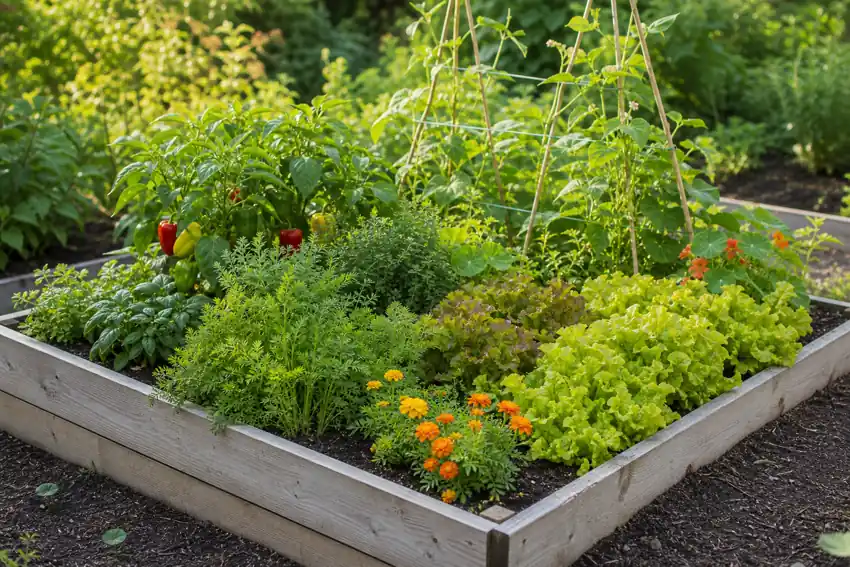
Foliage carries the palette during gaps between bloom waves. Burgundy heuchera, silver artemisia, blue-green hosta, chartreuse hakone grass, dark ninebark, coleus, and variegated sedges can each hold a scheme when the flowers are resting.
Repetition keeps the palette from fragmenting. Three or four plants repeated in drifts usually hold a design better than one specimen of everything in the garden center. The same rule applies to foliage tones: repeat the same silver, burgundy, or chartreuse note often enough that the palette feels intentional from one end of the bed to the other.
Seasonal edits matter too. Annual fillers, replacement pots, and late-season swaps can pull a bed off palette if they are bought in a hurry. Seasonal garden care should include the planting calendar, deadheading rhythm, and replacement plan before the border starts to thin out.
Best Garden Color Schemes By Mood And Use
Start with the feeling and use of the space, then choose plants that support the palette.
| Palette goal | Best color direction | Strong examples | What it adds | Main watchpoint |
|---|---|---|---|---|
| Calm and airy border | Blue, soft violet, white, and silver | Salvia, catmint, lavender, white gaura, artemisia | Cool mood, evening brightness, and visual depth | Blue flowers need contrast in darker shade and silver foliage can look washed out in glare |
| Warm and welcoming front bed | Yellow, apricot, orange, red, and bronze foliage | Coreopsis, rudbeckia, crocosmia, dahlia, bronze heuchera | Energy, visibility from the street, and strong seasonal impact | Too many hot colors in a tight space create visual noise fast |
| Elegant green and white scheme | White bloom, layered greens, silver, and variegation | White hydrangea, foxglove, hosta, dusty miller, variegated sedge | Clean structure, brightness, and a quieter formal feel | Short bloom overlap leaves the scheme flat if foliage is weak |
| Romantic pink and plum palette | Soft pink, mauve, plum, and burgundy leaves | Roses by cultivar, allium, coneflower, astrantia, dark heuchera | Layered softness with richer shadow tones | Color drift toward salmon or magenta can break the palette quickly |
| Bold dark-and-lime contrast | Chartreuse, deep burgundy, and white accents | Coleus, ninebark where space fits, chartreuse hosta, dark dahlia | Drama, foliage contrast, and strong readability from a distance | Leaf color changes with sun, heat, and cultivar choice |
| Shade-brightening scheme | White, lime, cool green, and silver variegation | Brunnera, white astilbe, hosta, Japanese forest grass | Lift, softness, and better visibility in low light | Dry shade still limits plant choice more than palette preference |
Color-Themed Plants That Hold The Palette Together
Flowers Carry The Peak Color
Flowering perennials, shrubs, bulbs, and annuals give the most obvious expression of a color theme, though they do not all behave the same way. Roses, salvias, coneflowers, foxgloves, dahlias, asters, and phlox can all support a palette well when the cultivar is screened for exact tone and bloom timing. The tradeoff between perennials vs annuals matters for palette planning: perennials anchor the scheme, while annuals help you push or test a color more quickly.

Foliage Keeps The Scheme Between Bloom Flushes
Burgundy heuchera, silver artemisia, blue-green hosta, chartreuse hakone grass, dark ninebark, coleus, and variegated sedges should be treated as repeating color anchors, with light exposure, mature size, and cultivar color stability checked before they carry the scheme.
Repeated Structure Makes The Palette Read Clearly
One clipped evergreen rhythm, one mounded perennial repeated several times, or one grass form used as a spacer can keep the scheme readable across the whole bed. Basic landscape design principles and designing garden layout both matter when repeated structure, viewing lines, and plant massing carry the palette across the bed. Color reads best when the structure carrying it is simple enough to repeat.
Plant choice still needs a behavior and safety filter. Foxglove is useful in a white or cottage-style palette, and placement should be checked against potentially harmful garden plants guidance before use where children or pets may touch or sample plants. Coleus is a strong foliage tool in warm weather and behaves as a tender annual in cold climates. Hydrangea size, moisture needs, and cultivar behavior should be checked before it becomes the main white or pastel anchor. Dark foliage plants such as ninebark and heuchera also need enough light to keep their color readable.
Choose The Right Color Palette For Your Garden
The strongest color-themed gardens usually start with combinations matched to backdrop, light, and scale. Choose the palette that fits the place before chasing favorite flowers.
| Garden situation | Best palette direction | Why it works | Main watchpoint |
|---|---|---|---|
| Warm brick or terracotta backdrop | Cream, plum, apricot, soft yellow, bronze foliage | The palette echoes the masonry without flattening into one tone | Bright acid yellow can turn harsh if overused |
| Cool gray or white house wall | Blue, violet, pink, silver, dark foliage | Cool colors stay crisp and contrast cleanly with the backdrop | Pale pastels need repetition or they can disappear from a distance |
| Hot sunny front bed | Gold, orange, burgundy, or silver-blue drought-tolerant planting | Strong colors and heat-tolerant foliage keep the bed readable in glare | Mixing thirsty fillers into a dry palette weakens the whole planting |
| Shaded side yard or north border | White, lime, cool green, and variegated foliage | These tones stay visible where darker flowers recede | Root competition and dry shade still narrow the plant list |
| Small patio or container-only scheme | One flower color plus one foliage tone repeated through the pots | The palette stays edited and easy to test at close range | Too many pot colors break the scheme before the plants do |
| Long border needing four-season color | Spring bulbs, summer perennials, fall grasses, evergreen or colored-stem anchors | The palette keeps a readable sequence instead of one bloom burst | Each season still needs room, cutback timing, and succession planning |

When the garden is a low-light problem first and a color problem second, shade-loving plants for outdoor low light should come before exact color choices. Color comes after the site can actually support the plants that carry it.
Common Mistakes In Color-Themed Garden Design
Most palette failures come from timing, repetition, or site mismatch more than from color theory itself.
| Mistake | What it causes | Better correction |
|---|---|---|
| Choosing by flower color alone | The scheme peaks once, then falls apart after bloom | Pair bloom color with foliage, structure, and succession plants |
| Ignoring the house, fence, or paving color | The palette clashes with the surfaces around it | Screen the color scheme against the real backdrop before planting |
| Using one of everything | The bed looks busy and the palette feels accidental | Repeat a shorter list of plants and fewer color notes |
| Forcing a palette into the wrong light | Dark colors disappear or pale colors glare | Match color intensity to shade, sun, and viewing distance |
| Forgetting that green is part of the palette | The eye gets no resting space between strong flowers | Use foliage blocks and repeated leaf color to calm the scheme |
| Letting seasonal replacements drift off palette | The design changes randomly by midsummer or fall | Plan annual swaps, container edits, and cutback timing in advance |
Conclusion
The best garden color schemes are the ones that fit the light, backdrop, season, and plant behavior of the space they occupy.
A strong palette can stay simple: one dominant color family, one support tone, one foliage note repeated often, and one structural rhythm that keeps the bed readable from more than one angle. Build around those decisions, and the garden starts to look cohesive for longer than a single bloom wave.
FAQ
How do you choose a garden color scheme?
Start with mood, backdrop, light, and season. Pick one dominant color family, one support tone, and one or two foliage colors that can repeat through the bed. The scheme gets easier to manage when plants are screened by site fit before exact flower color.
What are the main types of garden color schemes?
The main garden color scheme types are monochromatic, analogous, complementary, warm, cool, and green-white or neutral schemes. Monochromatic schemes use one color family, analogous schemes use neighboring colors, and complementary schemes use controlled contrast. Warm schemes feel energetic, while cool and green-white schemes usually feel calmer and more spacious.
Should a garden color scheme match the house or fence?
It should respond to the house, fence, paving, mulch, and wall color. Warm brick often works better with cream, plum, apricot, bronze, and soft yellow than with harsh acid tones. Cool gray or white walls usually support blue, violet, pink, silver, and dark foliage more cleanly.
What are the easiest color schemes for a small garden?
White and green, blue and white, or one warm accent color with strong foliage are usually the easiest to keep coherent in small spaces. Fewer colors help a tight garden feel larger and more intentional.
Which colors work best in shade?
White, lime, pale pink, cool green, and variegated foliage usually read best in lower light. Dark purple and deep red can still work in shade, though they usually need a lighter partner nearby so the planting does not disappear visually.
Should I use annuals or perennials in a color-themed garden?
Most strong palette gardens use both. Perennials build the long-term structure and annuals let you test stronger or more temporary color notes. The balance depends on how permanent the scheme should be and how much seasonal editing you want to do.
Can containers help test a garden palette before replanting a bed?
Yes. Containers are one of the safest ways to trial a hot palette, a white garden, or a dark-and-lime combination before committing shrubs and perennials to the ground. They also show quickly whether the colors work with the house wall, paving, and seating area nearby.
How do I keep a color-themed garden coherent through the seasons?
Use a seasonal sequence. Let spring bulbs or shrubs open the palette, bring in repeated summer perennials and foliage anchors, then carry the scheme into fall with asters, grasses, seedheads, or foliage color that still belongs to the same family.