Updated July 29, 2026
How to grow apple trees at home begins with four decisions: a variety adapted to your climate, a rootstock that fits the available space, a compatible pollination partner, and a sunny site with freely drained soil. Plant the graft union above the final soil level, water the developing root zone deeply, train strong branch angles during the tree’s early years, and thin crowded fruit. These choices determine tree size, time to first crop, and long-term apple tree care.
Key Takeaways
- Buy a grafted tree whose cultivar, rootstock, and disease resistance fit your climate and space.
- Confirm overlapping bloom periods before relying on a second apple or crabapple for pollination.
- Plant with the root flare visible and the graft union safely above the final soil level.
- Keep a grass-free, mulched root zone and water according to soil moisture, tree age, and weather.
- Train structure early, prune moderately, and thin excess fruit to protect branches and next year’s crop.
Table of Contents
How to Grow Apple Trees: Quick Start
Start with a grafted nursery tree, not a seed from a favorite apple. Named apple cultivars are cloned onto selected rootstocks so the fruit traits and tree size are predictable. A seedling combines genes from two parents, may take much longer to fruit, and usually does not reproduce the apple it came from.
| Decision | Check before buying | Useful target | Failure to avoid |
|---|---|---|---|
| Cultivar | Climate, disease resistance, harvest season, flavor | A locally proven apple you will use | Choosing by supermarket name alone |
| Rootstock | Mature height, support, soil adaptation | A tree that fits the garden at maturity | Treating “dwarf” as a complete specification |
| Pollination | Bloom group and nearby compatible trees | Overlapping flowers from different cultivars | Buying two identical trees |
| Site | Sun, drainage, frost pockets, mature spread | 8 hours of sun and no standing water | A shaded lawn or wet low spot |
| Care | Water access, pruning, thinning, pest pressure | A manageable annual routine | Expecting a fruit tree to be maintenance-free |
Keep the nursery label and record both cultivar and rootstock. The cultivar controls the apple’s flavor, season, and many disease traits. The rootstock influences mature size, anchorage, bearing age, and response to certain soils and pests. Losing either name makes future pruning, support, and pollination decisions harder.
Choose an Apple Variety and Rootstock
Apple tree varieties should be screened through the garden before they are screened through a flavor list. Check winter hardiness, chill requirement, summer heat, humidity, local disease pressure, and harvest timing. A famous variety can be a poor home-garden choice when it needs frequent disease control or ripens outside the reliable local season.
| Tree form | Typical garden use | Main advantage | Main tradeoff |
|---|---|---|---|
| Dwarf | Small yards, compact orchard rows | Earlier bearing and easier harvest | Often needs permanent support and closer water management |
| Semi-dwarf | Medium yards and mixed gardens | Useful balance of size, yield, and anchorage | Still requires meaningful mature space |
| Standard | Large properties and traditional orchards | Long-lived, vigorous framework | Later bearing, difficult pruning, and tall harvest |
| Columnar or trained form | Narrow beds, walls, or formal systems | Efficient use of limited width | Needs careful cultivar, rootstock, and training choices |
Ask the nursery for the expected mature size in your climate and soil. Rootstock labels such as M.9, M.26, G.11, G.41, M.7, or MM.111 carry more useful information than a generic “dwarf” tag. Some dwarfing roots need permanent staking. More vigorous roots may tolerate difficult soil better and take longer to bear.
For constrained spaces, compare dwarf fruit trees for small gardens. Leave enough room for sunlight, airflow, pruning access, and the spread expected from the specific rootstock.
Disease resistance can reduce the annual workload substantially. In regions with persistent apple scab, fire blight, cedar-apple rust, or powdery mildew, prioritize cultivars with useful regional resistance. Resistance lowers risk; it does not eliminate the need for sanitation and observation.
Plan Apple Tree Pollination
Most apple cultivars produce the best crop when pollen arrives from a different compatible apple or crabapple flowering at the same time. “Self-fertile” cultivars may set some apples alone. A suitable partner commonly improves reliability. Two trees of the same cultivar are genetically identical and do not supply the cross-pollination most apples need.
Compare flowering groups, not harvest dates. An early-ripening apple can bloom in the same window as a later-ripening partner. Select cultivars from the same or neighboring bloom groups and confirm compatibility with the nursery or a regional pollination chart.
Triploid cultivars often have sterile pollen and need two other compatible cultivars if the broader planting must pollinate reliably. Also check whether a proposed partner shares a genetic incompatibility. A good nursery should be able to verify this before purchase.
Protect pollinating insects during bloom. Avoid unnecessary insecticide use on open flowers and provide a garden with nectar and shelter across the season. These pollinator-friendly plants can support activity beyond the short apple blossom window.
Choose the Best Site and Soil
Apple trees need strong light to build flower buds, color fruit, dry foliage, and develop sturdy wood. Choose a site receiving at least eight hours of direct sun through the growing season. Morning sun is especially helpful because it dries dew from leaves and fruit.
Avoid low frost pockets where cold air settles during bloom. A gentle slope with air drainage can protect flowers better than a sheltered depression. Leave distance from large trees, hedges, and buildings that compete for light and roots.
The best soil for apple trees is deep, freely drained, and able to hold useful moisture without staying saturated. A slightly acidic to near-neutral pH, commonly around 6.0-7.0, suits many apples. Rootstock and local soil conditions can shift the practical target, so test the soil before adding amendments.
| Site condition | What it means | Better response |
|---|---|---|
| Deep loam with reliable drainage | Good balance of moisture and oxygen | Plant in native soil and maintain a mulched root zone |
| Heavy clay that drains slowly | Root oxygen and disease risk need attention | Choose tolerant rootstock, plant high, and correct broad drainage |
| Very sandy soil | Water and nutrients move quickly | Add stable organic matter broadly and plan deeper irrigation |
| Standing water after rain | The site may be unsuitable for apple roots | Improve site drainage or choose another location |
| Old apple-tree position | Replant problems may reduce growth | Move the new hole where possible and seek local guidance |
Clear a wide circle of grass and perennial weeds before planting. Turf competes strongly with young fruit-tree roots for water and nutrients. Do not solve this by filling one hole with rich compost; roots eventually meet the unmodified surrounding soil, and the soft pocket can collect water.
How to Plant an Apple Tree
Plant bare-root apple trees during dormancy, commonly from late fall through early spring when soil is workable and not waterlogged. In colder regions, early spring limits winter injury to newly planted roots. Container-grown trees offer a wider window, though cool conditions and available irrigation make establishment easier.
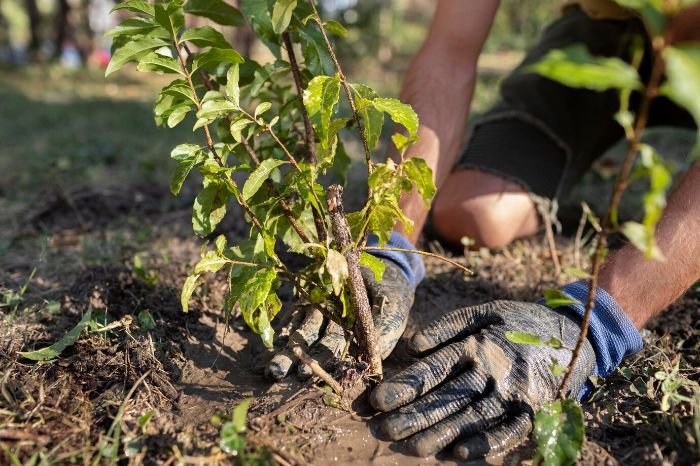
| Step | What to do | Why it matters |
|---|---|---|
| 1. Inspect roots | Soak bare roots briefly and trim only damaged ends | Healthy roots establish the tree |
| 2. Find final depth | Locate the root flare and graft union before digging | The trunk must not be buried |
| 3. Dig wide | Make the hole broad enough to spread roots without bending | Roots can grow outward into loosened soil |
| 4. Set the tree | Keep the root flare at grade and graft union clearly above soil | Deep planting causes decline and may defeat the rootstock |
| 5. Backfill | Use the excavated soil, firm gently, and water thoroughly | This removes air gaps without creating a rich pocket |
| 6. Stake if needed | Use broad flexible ties and allow limited trunk movement | Dwarf roots may need support and trunks still need strength |
| 7. Mulch | Cover the root zone and keep mulch away from the trunk | Moisture stays steadier without bark decay |
Do not bury the graft union. If the scion develops roots above it, the tree can lose the size control supplied by the rootstock. Settle loose soil with water, then recheck the root flare after the first irrigation because soft backfill can sink.
The UC Statewide IPM guide to growing and planting apple trees also emphasizes matching the hole depth to the root system and spreading bare roots carefully. Adapt timing to local climate and follow the rootstock supplier’s support guidance.
Apple Tree Care Through the Year
Young trees need consistent moisture through their first growing seasons. Check soil several inches below the surface and water deeply across the developing root zone when it is drying. Frequent surface sprinkles encourage shallow rooting. Saturated soil removes oxygen, so the goal is moist and aerated, not constantly wet.
| Season | Main apple tree care | What to watch |
|---|---|---|
| Late winter | Prune structure, remove damaged wood, check guards and ties | Overpruning and poorly placed cuts |
| Spring | Observe bloom, pollination, leaf health, and moisture | Frost, fire blight symptoms, scab, aphids |
| Early summer | Thin fruit, manage weeds, water deeply, inspect new growth | Overloaded clusters and codling moth activity |
| Late summer | Support heavy branches and judge ripeness by cultivar | Drought, sunburn, fruit drop, wildlife |
| Fall | Harvest, remove diseased debris, refresh mulch after leaf fall | Mummified fruit and trunk damage |
Maintain a broad grass-free circle as the tree grows. Renew mulch to a moderate depth and leave a clear collar around the trunk. Expand the circle so it follows the active root area as the tree becomes larger.
Fertilize from evidence. Weak annual growth, pale foliage, crop load, soil results, and local recommendations can justify feeding. Excess nitrogen creates soft shoots, delays fruiting, increases pruning, and may intensify disease pressure. A tree making balanced growth may need little beyond weed control and organic surface mulch.
Prune, Train, and Thin Apple Trees
Training creates the permanent framework; pruning maintains it. Begin when the tree is young by selecting a suitable central leader or other system recommended for the rootstock and tree form. Develop well-spaced scaffold branches with strong, wide attachment angles. Remove competing leaders and branches that rub or grow into crowded positions.
Most home apple trees respond better to moderate annual pruning than occasional severe cutting. Remove dead, damaged, diseased, crossing, and poorly placed wood. Open enough space for sunlight and air without stripping the canopy. Review these pruning basics before making structural cuts.
Thin excess fruit after natural early drop, following local timing advice. Leave enough space for the remaining apples to develop without pressing together. Thinning improves size, reduces branch breakage, and helps limit biennial bearing, where a heavy crop one year is followed by few flowers the next.
Remove fruit by holding the cluster and twisting or clipping unwanted fruit without damaging the spur. Prioritize damaged, misshapen, and crowded apples. Young trees should carry only a light crop during root and permanent-branch development.
How Long Do Apple Trees Take to Grow?
Apple trees begin growing immediately after establishment. The question “how long” can refer to several milestones. New roots may develop in the first season. A visible framework takes several years. The first meaningful crop depends on nursery-tree age, rootstock vigor, cultivar, pollination, training, and growing conditions.
| Tree type | Typical first fruit window | Time to a fuller crop | Important condition |
|---|---|---|---|
| Dwarf rootstock | Often about 2-3 years after planting | Roughly 4-5 years | Support, consistent water, and controlled crop load |
| Semi-dwarf rootstock | Often about 3-5 years | Roughly 5-7 years | Balanced growth and structural training |
| Standard rootstock | Often about 5-8 years | May take 8-10 years or more | Adequate space and long-term pruning access |
| Seed-grown tree | Often 6-10 years or longer | Highly variable | Fruit quality and final size are unpredictable |
These are planning ranges, not promises. The University of Minnesota Extension guide to growing apples in home gardens notes that rootstock, variety, pollination, and seasonal care all shape performance. A tree flowering early should not be allowed to carry a heavy crop before its roots and branches can support it.
Track shoot growth and tree structure as well as apples. A young tree that spends its first seasons building roots and strong scaffolds is not failing. Heavy early fruiting can slow establishment and bend weak branches into poor positions.
Protect the Tree and Harvest Apples
Apple pest and disease pressure is regional. Learn the few problems most likely in your area and monitor at the correct season. Apple scab produces leaf and fruit lesions in wet regions. Fire blight can blacken blossoms and shoots. Cedar-apple rust depends on nearby junipers. Codling moth and apple maggot damage fruit in many locations.
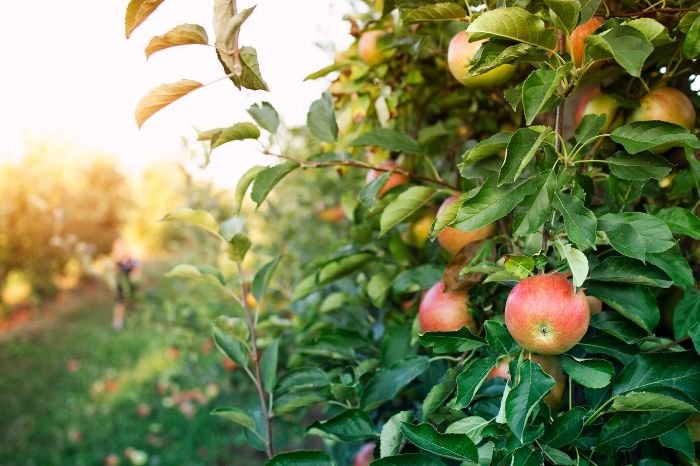
Start with prevention: resistant cultivars, full sun, open structure, clean harvest, removed mummified fruit, and fallen-leaf management where disease history warrants it. Protect trunks from rabbits, voles, deer, and mower injury. Check guards so they do not constrict the trunk or trap constant moisture.
| Symptom | First checks | Practical response |
|---|---|---|
| No flowers | Tree age, rootstock, pruning, shade, excess nitrogen | Correct growth conditions and avoid stimulating shoots |
| Flowers with no apples | Frost, bloom overlap, pollinators, cultivar fertility | Verify a compatible flowering partner |
| Small crowded fruit | Fruit load, water, leaf health | Thin early and maintain moisture |
| Blackened shoot tips | Fire blight pattern and local alerts | Confirm diagnosis before pruning or treatment |
| Premature fruit drop | Natural drop, drought, pests, crop load | Inspect fallen fruit and stabilize care |
Harvest timing depends on the cultivar. Background skin color, flavor, seed color, starch development, and how easily the apple lifts from the spur are more useful than a calendar date alone. Pick by cupping the fruit and lifting with a gentle twist; pulling downward can remove the spur that carries future flowers.
Why Grow Apples at Home?
A home tree lets you choose cultivars for flavor, storage, cooking, cider, disease resistance, or a long harvest sequence. Fruit can be picked at the stage you prefer and used as a whole food in place of juice or sweetened products. Whole apples provide fiber along with naturally occurring nutrients and plant compounds.
Homegrown does not automatically mean more nutritious or pesticide-free. The meaningful advantages are control over cultivar, harvest timing, storage, and garden practices. A productive tree can also turn whole fruit into a convenient daily option because the harvest is already at home.
Conclusion
Choose the apple tree that fits the climate, mature space, and care you can provide. Confirm the cultivar, rootstock, pollination partner, and disease resistance before purchase. Then place it in full sun, plant with the root flare visible, and build a wide grass-free root zone.
Reliable apple tree care is a sequence of small annual decisions: water according to the soil, train strong structure, prune moderately, thin excess fruit, monitor regional problems, and harvest at cultivar maturity. This approach produces a manageable tree and a better chance of useful crops for years.
FAQ
What is the best place to plant an apple tree?
Choose a site with at least eight hours of direct sun, freely drained soil, good air movement, and enough room for the rootstock’s mature spread. Avoid shaded lawns, low frost pockets, standing water, and heavy competition from established trees.
Do I need two apple trees to get fruit?
Most apple cultivars crop best with pollen from a different compatible cultivar flowering at the same time. A nearby apple or suitable crabapple may already provide pollen. Two trees of the same cultivar do not provide true cross-pollination.
How long does an apple tree take to bear fruit?
A grafted dwarf tree may begin in about two to three years, a semi-dwarf tree often takes three to five years, and a standard tree may need five to eight years or longer. Nursery age, cultivar, care, climate, and pollination change the timing.
What soil is best for apple trees?
Apple trees perform well in deep, freely drained soil that retains useful moisture and commonly has a pH around 6.0-7.0. Test before adding lime, sulfur, or fertilizer. Standing water is a larger threat than mildly imperfect texture.
How often should I water a young apple tree?
Check moisture several inches below the surface and water deeply when the developing root zone is drying. Frequency changes with soil, heat, rain, mulch, and tree age. Avoid both daily surface sprinkling and constantly saturated soil.
Can I grow an apple tree from a seed?
Yes, but the seedling will not reliably reproduce the parent apple, may become a large tree, and often takes six to ten years or longer to fruit. A grafted named cultivar is the practical choice for predictable fruit and size.