
Last Updated May 10, 2026
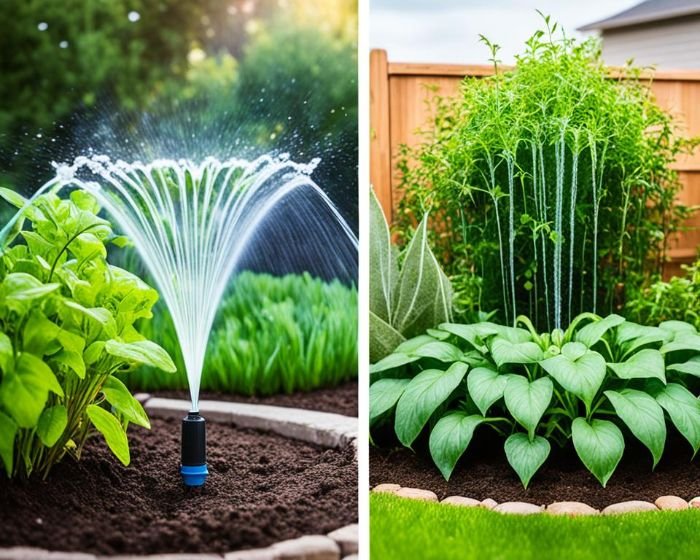
Drip vs sprinkler irrigation for vegetable gardens is really a choice about what part of the garden needs to stay wet. Some beds need moisture held low in the root zone, with leaves, paths, and the space between rows staying dry. Other beds need a thin even film of moisture across the whole surface so tiny seeds can wake up and push through before the top quarter inch turns to dust.
The better system depends on crop pattern, disease pressure, wind exposure, bed shape, seedling stage, and the amount of adjustment the gardener will maintain. In many backyards, drip wins most of the season. Sprinklers still earn their place during direct seeding, broad shallow-rooted blocks, or short coverage jobs that drip handles poorly.
A garden can waste water with either system if the wet pattern and the crop never match. Broader soil health improvement also matters because irrigation works better when soil structure, organic matter, drainage, and root-zone moisture are managed together.
Key Takeaways:
- Match the wet pattern to the crop layout
- Use drip where roots need precision and dry leaves
- Use sprinklers for germination and broad seeded beds
- Separate vegetable zones from lawn schedules
- Check root-zone moisture before extending runtime
Table of Contents
Drip Vs Sprinkler Irrigation Starts With What Needs To Stay Wet
Water savings alone do not decide the system. Root-zone wetting and surface-wide wetting create different results. Drip is built to place water where established roots are already working. Sprinklers are built to cover an area, which can be exactly right for one phase of growth and exactly wrong for the next.
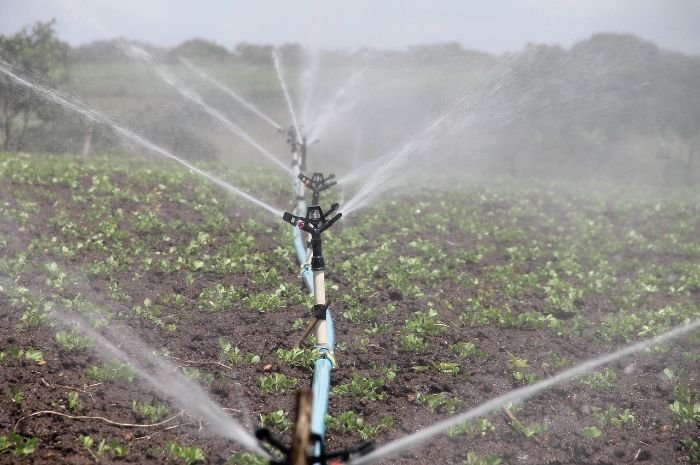
Think about the crops you direct-seed most often. Do they need a damp seed surface for the next week, or a cooler deeper root zone for the next two months?
Drip Vs Sprinkler Irrigation At A Glance
| Factor | Drip irrigation | Sprinkler irrigation | Better choice |
|---|---|---|---|
| Water efficiency | Delivers water near roots with less wind loss | Loses more to evaporation, drift, and off-target wetting | Drip |
| Seed germination | Can miss broad seed zones unless lines are close | Moistens the whole surface evenly | Sprinkler |
| Established vegetables | Strong for tomatoes, peppers, cucumbers, beans, and mulched beds | Can wet leaves and paths unnecessarily | Drip |
| Disease pressure | Keeps foliage drier | Increases leaf wetness and splash risk when timed poorly | Drip |
| Setup effort | More parts, layout, filters, and pressure control | Faster hose-end setup | Sprinkler |
| Mixed gardens | Works best as a permanent backbone | Works best as a temporary establishment tool | Split system |
| Windy sites | Less affected by wind | Spray pattern drifts and breaks apart | Drip |
| Maintenance | Needs flushing and clog checks | Needs coverage checks and spray adjustment | Depends |
Garden condition decides whether the same bed needs drip, sprinkler, or a short seasonal shift between both systems.
| Garden condition | Better fit | Why it wins | Watch for |
|---|---|---|---|
| Raised beds with tomatoes, peppers, cucumbers, or beans | Drip | Keeps water near roots and leaves paths dry | Dry gaps if line spacing misses the crop rows |
| Carrots, lettuce, spinach, beets, or mixed seed rows just after sowing | Sprinkler at establishment | Moistens the whole seed zone evenly | Keep this phase short so leaves do not stay wet for weeks |
| Hot windy plot where spray drifts off target | Drip | Places water below the wind line | Emitter clogging or pressure drop on long runs |
| Large uniform patch that needs quick broad coverage | Sprinkler | Covers a wider area with less line layout | Runoff, weed flushes, and uneven coverage in tall crops |
| Mixed backyard with transplants in one bed and direct-seeded rows in another | Split system | Lets each zone stay on its own watering pattern | Tying both onto one timer schedule |
Most gardens change their irrigation answer during the season. A sprinkler can be useful when the seedbed must stay evenly damp. The same garden may want drip as soon as roots deepen, mulch goes down, and disease pressure starts climbing.
Drip Irrigation Wins When The Root Zone Matters More Than The Surface
Once vegetables are established, most of the season becomes a root-zone problem. The crop no longer needs the whole surface damp. It needs enough water held where feeder roots are active, with fewer losses to wind, splash, and bare paths.
Microirrigation systems use twenty to fifty percent less water than conventional sprinkler systems because water is delivered slowly where plants need it, not thrown across the whole garden. In home-garden setups, ninety to ninety-five percent of the water can go into the soil, which is why beds stay workable and foliage stays drier after irrigation.
Raised Beds, Mulch, And Fruiting Crops Lean Drip
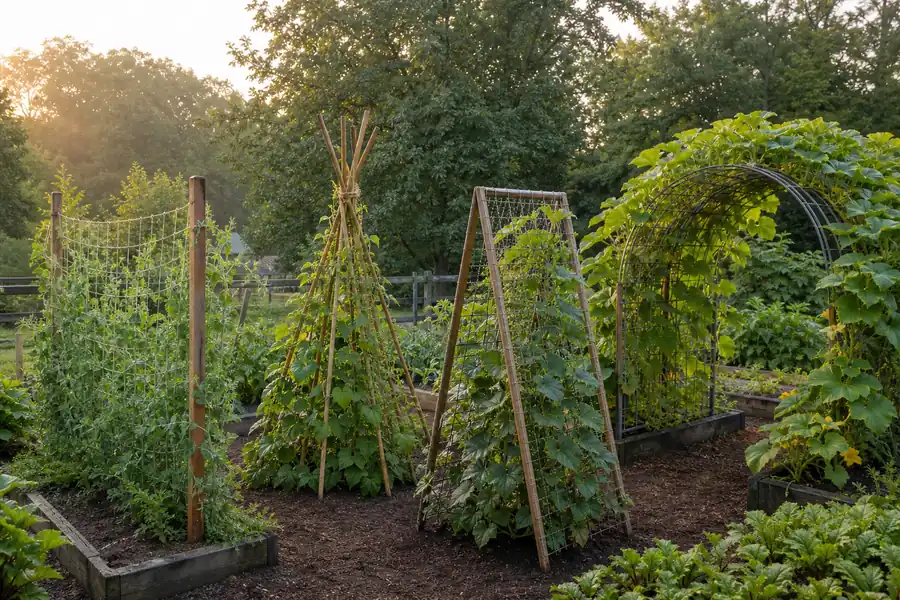
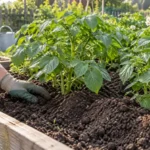
Drip lines fit raised beds especially well because the crop is already organized in repeatable rows or blocks. Once the tubing is laid where roots will expand, the wetted pattern stays predictable. Add mulch above the lines so mulching to conserve soil moisture reduces surface heat, slows evaporation, and keeps the wet band useful longer.
The visual difference is easy to spot by midsummer. Under drip, the mulch stays darker in narrow watering bands and the paths remain dusty. Under sprinklers, the whole bed surface darkens, including the places where weeds would be happy to join the plan.
Drip Is Better When Wet Leaves Cause Trouble
Tomatoes, peppers, cucumbers, and other wide-spaced fruiting crops usually gain from drier foliage and more targeted watering. That does not remove disease by itself, and it takes away one of the repeating triggers. Longer slower sessions support deep watering techniques for stronger root growth better than shallow daily splashes.
Drip is not perfect. If emitters are too far apart in sandy soil, one line can leave roots chasing moisture sideways. If the system runs in short frequent bursts, roots may stay too close to the surface. If filters are ignored, output can fade quietly until one end of the bed starts lagging and the real cause traces back to the line.
Sprinkler Irrigation Still Helps When The Whole Surface Must Stay Even
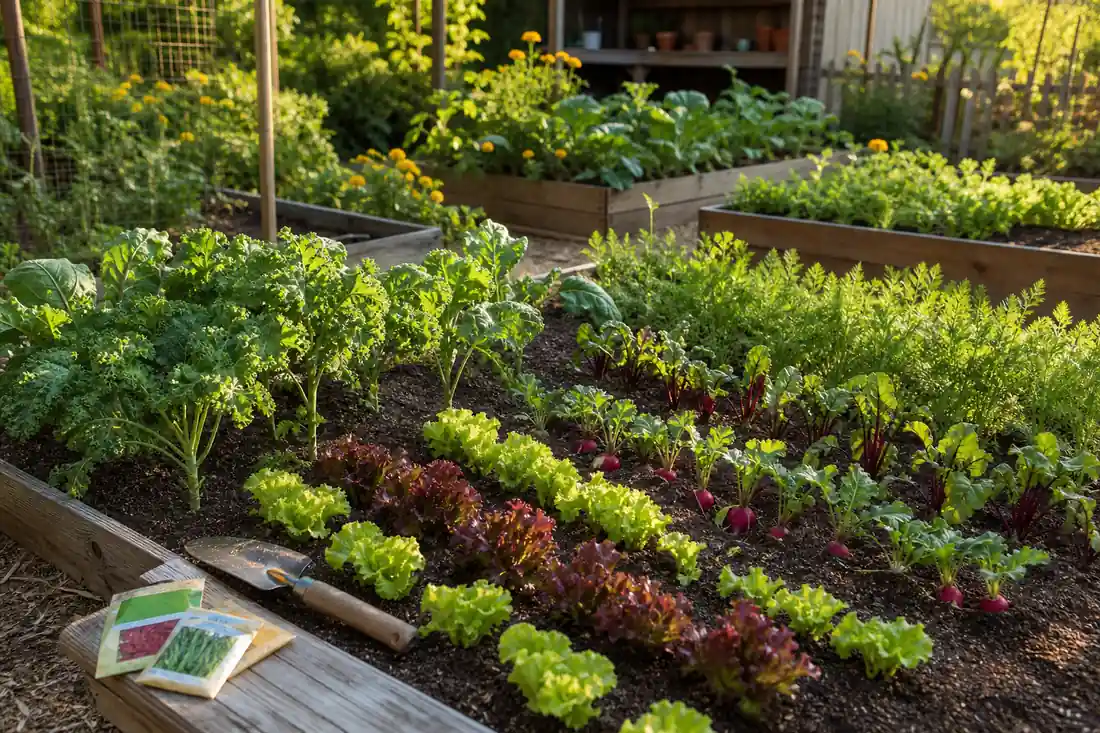
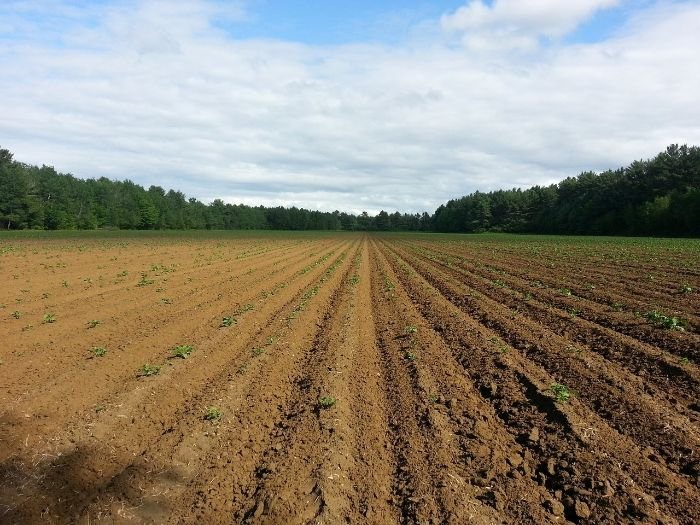
Sprinklers are easy to dismiss until you try to germinate carrots in warm wind or hold a shallow salad bed together through three bright afternoons. In that phase, the job is a broad thin seed zone that stays evenly damp long enough for emergence.
Direct-seeded beds need the seed zone kept evenly moist during emergence, which is why gentle overhead watering can outperform widely spaced drip lines for short establishment windows.
The Short Window When Overhead Watering Helps
Carrots, beets, lettuce, spinach, and similar crops often care more about uniform surface moisture at the start than about deep watering on day one. A sprinkler or hose-end overhead pattern can bridge that early phase better than a permanent drip layout built for later growth. Once seedlings root in and the spacing becomes clear, the garden often shifts back toward drip or soaker lines.
That is also why sprinklers stay useful in gardens with cover crop strips, quick turnover beds, or temporary seedings that do not justify rebuilding the drip layout every two weeks.
Where Sprinklers Become The Wrong Tool
Later in the season, broad coverage turns into a liability. Sprinklers wet the whole soil surface, which raises weed germination. They also put water on leaves, stems, stakes, and cages whether the plant benefits or not. For blight-prone crops, overhead watering becomes riskier when irrigation wets the canopy late in the day and leaves foliage damp into evening.
Wind makes the tradeoff worse. Tall corn or pole beans can block the pattern. A hot open site can throw spray sideways before it ever reaches the intended bed. What looked like easy coverage from the hose bib can turn into wet paths, dry centers, and a false sense that the garden got watered.
Installation And Maintenance Change The Real Cost Fast
The cheaper system on day one is not always the lower-friction system in July. Drip asks for more planning up front. Sprinklers ask for more tolerance for overspray, wind drift, and a broader wet footprint every time they run.
| What changes after installation | Drip | Sprinkler |
|---|---|---|
| Initial layout | More planning around rows, emitters, filters, and regulators | Faster to cover an area, especially with hose-end units |
| Water quality tolerance | Needs cleaner water and regular flushing | Usually more forgiving of minor debris |
| Runtime calibration | Needs root-depth checks so lines do not run too short | Needs catch-can style checks so coverage is not uneven |
| Common failures | Clogs, chewed tubing, popped fittings, dry gaps | Wind drift, wet foliage, runoff, blocked spray pattern |
| Best fit | Permanent beds and repeatable crop layouts | Temporary coverage, germination, and broad uniform areas |
Drip systems usually need a filter and pressure regulation before the lines, especially on long runs or stored-water setups. Any system connected to a household water supply should follow local backflow-prevention rules, because irrigation water should not be able to move back into drinking water lines.
Manifolds, tubing, pressure regulators, and line layout belong to setting up drip irrigation after the wetting pattern is chosen. Pattern comes first, then parts.
Pro Tip: Keep one simple hose-end sprinkler even if your main system is drip. It is the cleanest backup for seed germination, post-repair testing, or one temporary bed that does not deserve a full line layout.
Drip also rewards better observation. You need to lift mulch, probe the soil, and confirm how deep the wet band actually reached. Sprinklers make watering visible, though that visibility can fool you because a shiny wet surface does not mean the root zone was properly recharged. Soil moisture monitoring helps confirm root-zone moisture once schedules stop matching real weather.
A Split System Often Fits Mixed Vegetable Gardens Better
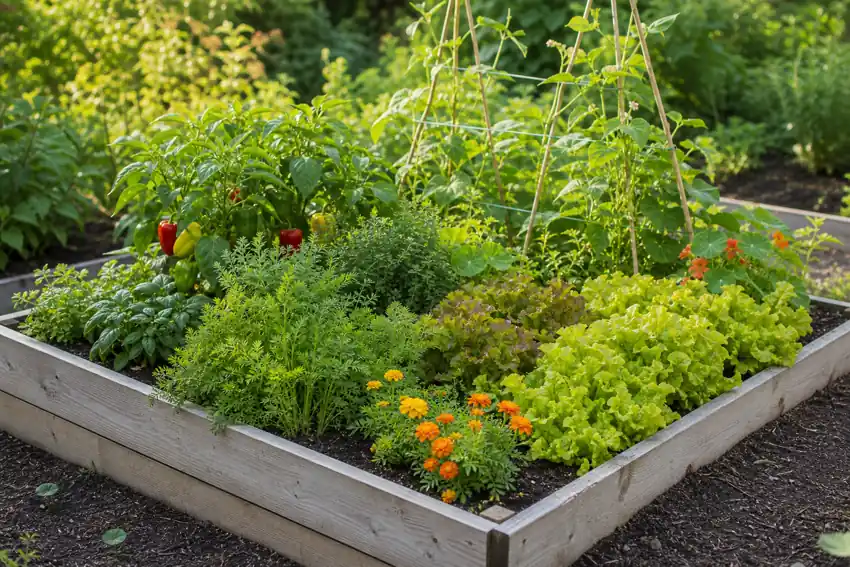
Most backyards are not uniform enough for one pure answer. They mix transplanted tomatoes, a seeded carrot row, a late lettuce patch, a bean trellis, and one bed that gets replanted three times a year. That garden often needs two wetting patterns instead of one system used everywhere.
A split irrigation setup makes sense when crop mix, soil type, water supply, labor, and setup cost point toward different wetting patterns in different beds. The clean split is usually one permanent drip zone for established beds and one temporary overhead zone for seedbeds, repairs, or short germination windows.
I often notice that a garden blamed on summer heat is really suffering from the wrong wet pattern. The paths are soaked, the leaves stay damp, and the actual root zone still swings too quickly from wet to dry.
This split approach also saves you from forcing every crop onto the lawn timer. Vegetable beds should not share the same schedule as turf. They dry at different rates, sit in different soils, and shift water demand much faster. If part of the system is fed from stored water, rainwater harvest techniques need cleaner filtration for drip lines than for a temporary hose-end sprinkler.
A split system works when each zone follows the wetting pattern it needs and the root zone stays damp enough between runs without keeping the whole canopy wet.
Start With The Irrigation Move That Matches Your Garden
Your raised beds hold tomatoes, peppers, cucumbers, or beans, and the paths keep turning muddy even as the crop rows dry out. Start with inline drip or soaker lines placed where roots will actually expand, then cover them with mulch and check moisture below the surface after the first long run.
Your hardest beds are the ones you direct-seed with carrots, beets, lettuce, or spinach, and germination keeps coming up patchy. Start with a gentle sprinkler pattern only for establishment so the whole seed zone stays evenly moist, then shorten that overhead phase once seedlings root in and the bed no longer needs full-surface wetting.
Your garden mixes transplants and seeded rows, and one timer keeps leaving half the space too wet and the other half thirsty. Start by splitting the vegetable area into at least two zones, one for permanent drip beds and one for temporary overhead coverage.
Your plot is windy, irregular, or short on water pressure, and spray keeps drifting away from the target. Start with short drip runs in the most valuable beds first, then expand only after you confirm that each line wets the root zone deeply enough.
Conclusion
Drip usually wins the long season because vegetables spend more time needing controlled root-zone moisture than broad overhead coverage. Sprinklers still matter when the whole seed surface has to stay evenly damp or when a temporary bed does not justify a full drip layout.
The strongest answer for many backyards is a timed shift between patterns: sprinkler for short surface-moisture windows, drip for established root-zone watering, and separate zones where crops need different schedules.
FAQ
Is drip always better for a vegetable garden?
No. Drip is usually better for established crops, raised beds, and disease-prone vegetables because it targets the root zone and keeps foliage drier. Sprinklers still help during direct seeding, broad shallow-rooted blocks, or temporary coverage jobs.
Which irrigation system is more water efficient for vegetables?
Drip is usually more water efficient for established vegetables because it applies water near the root zone with less wind drift, evaporation, and off-target wetting. Sprinklers can still be the better short-term tool for seed germination because they wet the whole surface evenly.
When should I use a sprinkler for vegetable seedlings?
Use it when the whole seed zone must stay evenly moist for emergence, especially with carrots, lettuce, spinach, or beets. Once seedlings root in and the bed no longer depends on surface-wide moisture, the garden often benefits from shifting back toward drip.
How do I decide how long to run drip or sprinkler irrigation?
Use the soil check, not the clock alone. Drip should moisten the active root zone under the crop row. Sprinklers should wet the seed zone evenly without causing runoff or keeping foliage damp into evening. Adjust after checking moisture below the surface.
Can I use drip and sprinkler irrigation in the same garden?
Yes, and mixed gardens often work better that way. Keep established fruiting crops on drip and use a separate overhead pattern only where germination or temporary broad coverage calls for it.
Does sprinkler irrigation always cause more disease?
No. The risk rises when water stays on leaves for long periods or splash moves soil-borne spores upward. Morning irrigation, better spacing, and a short germination window reduce that pressure, and tomatoes and similar crops still lean toward drip.
Can vegetables run on the same timer zone as the lawn?
No. Lawn and vegetable roots use water differently, and vegetable demand changes much faster through the season. Sharing a zone usually leaves one side overwatered or the other side behind.
What is the lowest-maintenance option for a small backyard vegetable garden?
For a compact bed with repeatable crop rows, a simple drip or soaker setup under mulch is usually the lowest-maintenance option once it is laid out well. For a small seed-starting bed that changes often, a portable gentle sprinkler may be easier during establishment.