
Updated August 7, 2026
How to grow cherry trees successfully starts with a grafted edible variety that fits your winter cold, summer heat, available space, and pollination plan. Give the tree full sun, freely drained soil, a visible root flare, and enough room for its rootstock to mature. Then keep moisture consistent, shape young branches early, and protect ripening fruit before birds discover it. Those first decisions determine whether cherry tree care becomes a manageable seasonal routine or a long fight with poor fruit set, split cherries, and an oversized canopy.
Key Takeaways
- Choose an edible grafted variety and a rootstock that fits the mature space.
- Confirm self-fertility or compatible bloom overlap before buying a second tree.
- Plant with the root flare visible and the graft union above soil.
- Prune moderately in suitable dry weather and protect productive fruiting wood.
- Stabilize moisture before harvest to reduce stress and fruit cracking.
Table of Contents
How to Grow Cherry Trees: Quick Start
Buy a named grafted cherry tree from a nursery. The upper variety determines fruit type, flavor, ripening season, and much of the disease response. The rootstock influences mature size, anchorage, soil tolerance, and time to bearing. Growing cherry trees from seed is a separate project: seedlings vary genetically, grow larger, and may take years to produce fruit different from the cherry that supplied the pit.
| Decision | Check before buying | Useful target | Failure to avoid |
|---|---|---|---|
| Fruit type | Fresh eating, cooking, preserving, harvest season | Sweet or sour cherry suited to your use | Buying an ornamental flowering cherry |
| Climate | Winter hardiness, chill, summer heat, spring frost | A locally proven cultivar | A tree adapted to another region |
| Rootstock | Expected height, soil, support, vigor | A canopy you can prune, net, and harvest | Trusting a generic dwarf label |
| Pollination | Self-fertility, bloom group, genetic compatibility | A verified route to fruit set | Two incompatible sweet cherries |
| Site | Sun, drainage, air movement, mature spread | Eight hours of sun and no standing water | A wet hollow or shaded lawn edge |
Keep the original nursery label and photograph it. Record the cultivar and rootstock names in a garden file. Those details become important when you need a pollination partner, replacement tree, disease diagnosis, or realistic mature-size estimate.
Choose Cherry Varieties and Rootstocks
Edible cherries fall into two main groups. Sweet cherries, Prunus avium, usually produce large fruit for fresh eating and perform best with abundant sun and suitable winter chill. Sour or tart cherries, Prunus cerasus, have brighter acidity, work well for cooking and preserving, and are often smaller and more cold tolerant. Ornamental flowering cherries are selected for bloom and form, not for a useful fruit crop.
| Cherry group | Examples | Garden fit | Pollination pattern |
|---|---|---|---|
| Sweet cherry | Bing, Rainier, Black Tartarian, Royal Ann | Fresh fruit, warm sheltered site, larger potential canopy | Many require a compatible second variety |
| Self-fertile sweet cherry | Stella, Lapins, Sweetheart, BlackGold | Useful where one tree must supply fruit | One tree can set fruit; another compatible tree may increase the crop |
| Sour or tart cherry | Montmorency, North Star, Morello | Cooking, preserving, colder sites, smaller gardens | Common cultivars are usually self-fertile |
Named examples show the range, not a universal recommendation. Local disease pressure, winter lows, heat, bloom frost, and harvest timing can make a less famous variety the better choice. Ask a nearby extension office or experienced regional fruit nursery which cultivars crop consistently in your area.
Rootstock controls much of the tree’s scale. Gisela rootstocks can create compact, early-bearing sweet cherries, with vigor varying by selection and site. Mazzard and Mahaleb generally produce larger trees with different soil responses. Dwarfing roots often need permanent support and closer water management. Compare the practical limits of dwarf fruit trees in small gardens before choosing by height alone.
Plan Cherry Tree Pollination
Most sour cherries are self-fertile. One healthy tree can set a crop when spring weather and pollinator activity cooperate. Many traditional sweet cherries are self-incompatible and need pollen from a genetically compatible sweet cherry that flowers at the same time. Two trees of one cultivar are clones and do not solve that requirement.
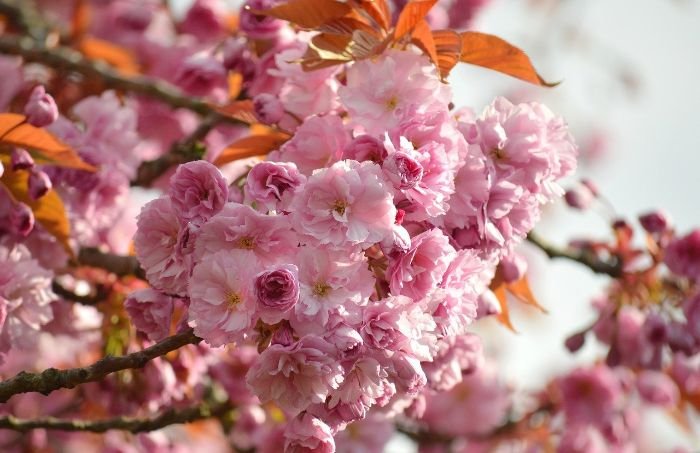
Self-fertile sweet cherries such as Stella and Lapins can fruit alone. Self-fertile does not mean pollinator-proof: bees still move pollen within the flowers, and cold rain or frost during bloom can reduce fruit set. Compatible trees nearby may also improve cropping. Current home cherry pollination guidance distinguishes the usual self-fertility of sour cherries from the cross-pollination needs of many sweet cultivars.
Avoid spraying insecticides on open flowers. Support bees through the rest of the season with pollinator-friendly plants, clean water, and nesting habitat. One short burst of cherry bloom is not enough to sustain a useful pollinator population.
Choose the Best Site and Soil
Sweet cherries need full sun for good sugar development, sturdy wood, and faster leaf drying. Aim for at least six hours of direct light, with eight hours preferred. Sour cherries tolerate some partial shade. Heavy shade still weakens bloom and fruit quality. Leave room around the mature canopy for air, pruning, netting, and harvest.
Good drainage is the hardest requirement to negotiate. Cherry roots decline in saturated soil, and wet conditions increase the risk of root and crown problems. Dig a test hole or observe the site after a long rain. Water that remains near the future root zone signals a site problem, not a fertilizer shortage.
A deep loam is ideal. Cherries can also grow in clay or sandy soil when the rootstock and water plan fit. A pH near 6.0-7.0 suits many sites. Test before adding lime, sulfur, phosphorus, or concentrated fertilizer. The process for testing garden soil before amending separates fertility questions from drainage and texture.
Do not create a compost-filled bowl inside heavy clay. Roots need to enter the surrounding soil, and a highly amended pocket can hold water around the trunk. Correct broad drainage or move the tree. These soil drainage solutions help diagnose compaction, surface runoff, and a high water table before planting.
How to Plant a Cherry Tree
Plant a dormant bare-root tree in late winter or early spring once the soil is workable. Fall planting can work in mild regions when roots have time to establish before severe cold. Container-grown trees offer a wider window. Hot weather demands closer watering. Never plant into frozen, saturated, or powder-dry soil.
- Find the root flare and graft. The trunk should widen where the first major roots begin, and the graft union should remain several inches above the final soil level.
- Dig wide enough for natural roots. Spread bare roots without bending them. Loosen circling container roots and correct any compacted outer layer.
- Backfill with the excavated soil. Firm gently, water thoroughly, and recheck depth after the soil settles.
- Support the tree when needed. Dwarfing rootstocks and windy sites may require a durable stake or trellis.
- Mulch the root zone. Apply a broad two- to three-inch layer and leave several inches of bare space around the trunk.
Planting too deeply hides the flare, limits oxygen near the upper roots, and can allow the scion to root above the graft. A buried graft may defeat the rootstock’s size control. Check the trunk after the first heavy rain because loose soil and mulch can move toward the stem.
Cherry Tree Care Through the Year
New trees need consistent water as roots expand beyond the original hole. Push a trowel or soil probe several inches into the root zone. Cool soil that holds together lightly usually has useful moisture. Dusty soil needs water; shiny, smeared soil needs air. Water deeply enough to wet the active roots, then allow drainage before the next irrigation.
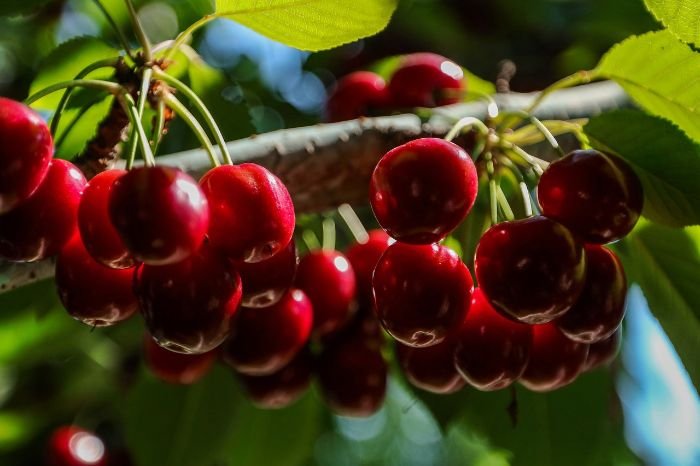
Maintain a broad grass-free circle. Turf competes strongly with young roots near the surface, especially during dry weather. Renew mulch as it breaks down and keep it away from bark. A dark, wet ring against the trunk hides vole damage and creates conditions that favor decay.
Fertilize from evidence. Excess nitrogen creates long, soft shoots, shades fruiting wood, delays hardening, and can increase disease pressure. Use a soil test, leaf color, crop load, and annual shoot growth with local guidance. A young tree that makes strong new growth may need no fertilizer.
Container cherries dry faster and experience hotter summer roots and colder winter roots than the same tree in the ground. Use a genuinely dwarfing tree, a large stable pot with open drainage, and a potting medium that holds moisture without collapsing. Plan winter root protection according to local minimum temperatures.
Prune and Train Cherry Trees
Young sweet cherries are commonly trained to a central leader or a modified leader, with well-spaced scaffold branches and a top that does not shade lower wood. Sour cherries can suit an open-center or modified-leader form depending on cultivar and regional practice. Early training prevents narrow forks from becoming heavy, split-prone limbs.
Remove dead, damaged, diseased, rubbing, and badly placed branches. Thin crowded shoots and avoid shortening every tip. Sweet cherries bear heavily on long-lived spurs, so repeated heading cuts can remove productive wood and trigger dense regrowth. Sour cherries carry more fruit on younger shoots and need renewal that respects that different bearing habit.
Clean tools before work and after cutting diseased tissue. Keep cuts small when possible, preserve the branch collar, and avoid stripping bark. Heavy pruning can expose limbs to sunburn and stimulate vigorous upright shoots. Review pruning basics before changing the permanent framework.
The Royal Horticultural Society’s detailed cherry growing and pruning guidance recommends annual pruning after harvest in its climate, when silver leaf and bacterial canker risk is lower. UC Statewide IPM also emphasizes light thinning, protection of fruiting spurs, and the dwarfing effect of summer pruning. The safe calendar must match local rainfall and disease pressure.
How Long Do Cherry Trees Take to Grow?
A cherry tree grows from its first season. Fruit takes longer. A one- or two-year-old grafted nursery tree may begin producing within roughly two to five years under favorable conditions. Tart cherries often start sooner than vigorous sweet cherries. Some sweet cherries need four to seven years for an initial crop, especially on larger rootstocks.
These ranges are planning estimates. Rootstock, cultivar, nursery age, climate, sunlight, water, pruning, crop load, and pollination can move the date. Tart cherries are placed at about three to five years and sweet cherries at about four to seven years in Penn State Extension guidance. A broader two- to five-year expectation for adapted stone fruits appears in University of Minnesota Extension guidance.
Do not measure progress by fruit alone. A young tree should first build roots, trunk diameter, and a branch framework strong enough to carry future crops. Remove an excessive early fruit set if thin branches bend sharply. One delayed light crop is cheaper than a broken scaffold that shapes the tree for years.
Seed-grown cherries may take much longer and will not reproduce the parent cultivar reliably. Germination also requires proper cold stratification. Treat seed growing as propagation and experimentation, not the quickest route to predictable home cherries.
Protect Cherries and Harvest the Crop
Birds can remove a ripening crop within days. Install fruit-tree netting or a fruit cage before cherries color fully, secure it so wildlife cannot become trapped, and keep it from resting tightly on the fruit. Compact trees are easier to cover, which makes rootstock choice part of pest management.
Brown rot, bacterial canker, leaf spot, aphids, cherry fruit fly, spotted wing drosophila, mites, and borers vary by region. Inspect leaves, shoots, bark, and fruit regularly. Remove mummified cherries and badly diseased material, protect trunks from mower damage, and confirm the problem before choosing a treatment.
| Visible problem | First checks | Practical direction |
|---|---|---|
| Flowers with no fruit | Frost, rain, pollinator activity, compatibility | Verify bloom overlap and the correct pollen partner |
| Small fruit drops early | Pollination, water stress, weather, tree age | Stabilize moisture and assess blossom conditions |
| Cherries split near harvest | Rain after dry weather, cultivar, canopy exposure | Maintain even moisture and harvest promptly when ripe |
| Brown, collapsing fruit | Brown rot, injuries, crowded canopy, wet weather | Remove infected fruit and improve sanitation and airflow |
| Gum on bark | Canker, borer, injury, winter damage | Inspect the full branch and confirm the cause |
| Fruit disappears as it colors | Bird access and loose netting | Protect the canopy before final ripening |
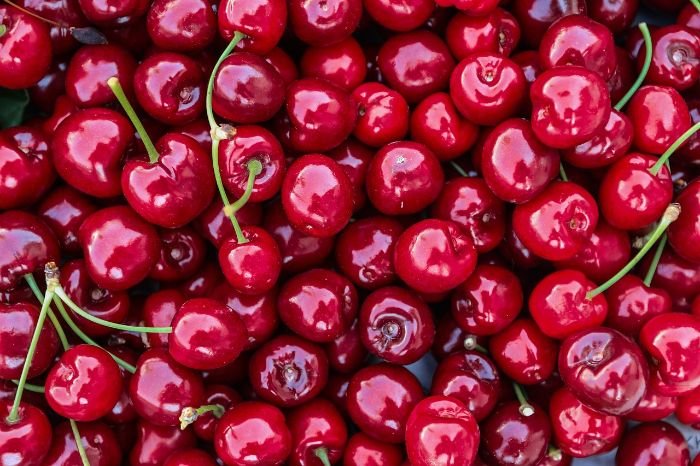
Cherries do not improve after picking, so wait for the cultivar’s full color, flavor, and sweetness. Sample fruit from several parts of the canopy. Harvest during dry weather when possible. Hold or clip the stem to reduce bruising, taking care not to tear the fruiting spur that can carry future crops.
Why Grow Cherries at Home?
A home tree gives you control over variety, harvest maturity, garden practices, and how quickly fruit reaches the kitchen. You can grow a cooking cherry rarely sold fresh, a self-fertile sweet variety for a small yard, or two compatible trees with different ripening seasons.
Whole cherries provide fiber, vitamin C, potassium, and plant pigments as part of a varied diet. Tart cherry products have been studied in relation to sleep and exercise recovery. Concentrated juice and supplements are not equivalent to a bowl of fresh fruit. Grow cherries for flavor and a useful crop, not as a promised medical treatment.
Conclusion
Choose the cherry before you dig: edible fruit type, locally adapted cultivar, suitable rootstock, and a verified pollination route. Place it in full sun and freely drained soil, keep the root flare visible, and establish a wide weed-free root zone.
Reliable cherry tree care stays measured. Water according to the soil, feed only when growth and testing justify it, train young branches, prune moderately in safe weather, and protect the crop before it colors. The result is a tree you can reach, cover, and harvest when the cherries are firm, glossy, and fully flavored.
FAQ
What is the best place to plant a cherry tree?
Choose a site with six to eight hours of direct sun, freely drained soil, good air movement, and enough room for the rootstock’s mature canopy. Avoid low frost pockets, standing water, dense shade, and competition from established trees or lawn.
Do cherry trees need a pollinator?
Most sour cherries are self-fertile, and several modern sweet cherries can fruit alone. Many traditional sweet varieties need a different compatible cultivar flowering at the same time. Check both genetic compatibility and bloom overlap before buying the second tree.
How long does a cherry tree take to bear fruit?
A grafted cherry commonly starts within about two to seven years. Tart cherries and compact early-bearing rootstocks may fruit sooner. Vigorous sweet cherries can take longer. Cultivar, nursery age, climate, pruning, care, and pollination all affect timing.
When should cherry trees be pruned?
Timing depends on climate and disease risk. Many wet-climate programs favor pruning after harvest or during a dry summer period. Some dry regions use dormant pruning. Avoid cutting before rain and follow local extension advice for bacterial canker and silver leaf risk.
Can I grow a cherry tree in a container?
Yes. Choose a genuinely dwarfing tree, a large stable container, and a free-draining potting medium. Container roots need closer water checks and stronger protection from summer heat and winter cold. Confirm whether the variety also needs a pollination partner.
Can I grow a cherry tree from a pit?
Yes. A pit can germinate after suitable cold stratification. The seedling will not reliably reproduce the parent cherry, may grow large, and can take many years to fruit. A grafted named variety is the practical choice when predictable fruit, size, and bearing time matter.