




Last Updated June 03, 2026
Citrus watering fails when the schedule is separated from the root zone. One new lemon can wilt after rain because the nursery root ball stayed dry inside. Mature oranges can drop fruit after shallow sprinkling that wets mulch and leaves deeper roots dry. In a pot, a lime can look thirsty on top with a waterlogged bottom third.
How often to water citrus trees depends on five things: tree age, soil texture, drainage, weather, and root space. How much water depends on whether a session wets the active roots and then lets air return. Citrus roots need moisture and oxygen in the same week.
Most in-ground citrus grows best with deep watering followed by partial drying. Hot, dry weather usually shortens the interval. Cool weather, clay soil, shade, rain, and indoor winter storage lengthen it. New trees and containers need closer checks because their working root zones are smaller.
Key Takeaways:
- Water the root ball on new trees before chasing a wider basin
- Let the upper root zone partially dry before the next deep soak
- Move emitters outward as the canopy and feeder roots expand
- Use pot weight and drainage behavior for container citrus
- Diagnose yellow leaves through soil moisture before adding fertilizer
Table of Contents
Watering Citrus Trees – Let The Root Zone Set The Schedule
Citrus roots sit closer to the surface than many gardeners expect. Fine feeder roots spread through the upper soil, then move outward as the canopy grows. That makes watering placement as important as watering frequency.
A newly planted citrus tree still depends on the nursery root ball. Water poured outside that root ball may disappear into native soil and leave the original roots dry. During establishment, water must reach the root ball first, then the surrounding soil where new roots are supposed to grow.
An older citrus tree needs a wider pattern. Water at the trunk base alone misses much of the active root zone. The useful target expands toward the canopy edge, especially under the outer half of the tree where new feeder roots work through the upper soil.
Soil decides how forgiving the schedule can be. Sandy soil drains fast and asks for shorter intervals. Clay holds water longer and needs slower applications with more time between sessions. Soil pH and soil conditions for citrus trees shape watering because roots cannot use water well in compacted, airless, salty, or poorly drained soil.
| Watering Factor | What It Changes | Best Check | Common Failure |
|---|---|---|---|
| Tree age | Root spread and water storage | Root ball moisture on young trees | Watering outside the root ball too soon |
| Soil texture | Drainage speed and oxygen return | Moisture 4 to 6 inches down | Using the same interval in sand and clay |
| Canopy size | Daily water use and root-zone width | Water pattern under the canopy | Keeping emitters near the trunk forever |
| Weather | Evaporation and leaf demand | Heat, wind, rain, and humidity | Leaving the timer unchanged all season |
| Container size | Drying speed and perched water risk | Pot weight and drain-through | Watering the surface and ignoring the bottom |
How Often To Water Citrus Trees By Age And Season
A useful citrus watering schedule starts as a testing rhythm, then changes with the soil. New trees need frequent checks because roots are still trapped in a small root ball. Mature trees usually need fewer sessions, with a larger volume each time.
Hot-summer citrus often needs deep watering every 7 to 10 days in warm climates, and summer demand can reach about 4 to 6 inches of water per month where heat is strong. Split that demand into deep sessions that wet the working root zone, then let the top several inches breathe again.
Rain changes the next irrigation, not the whole season. A light shower that wets leaves and mulch may do little for roots. A soaking rain that reaches 6 inches down can replace a planned watering. Check the soil below the surface before moving the timer.
| Tree Situation | Starting Check Rhythm | Typical Watering Move | Adjust When |
|---|---|---|---|
| First month after planting | Every 2 to 3 days in warm weather | Keep the root ball evenly moist and water the surrounding basin | Rain reaches the root ball or soil stays wet below the surface |
| Two months to one year | Every 3 to 7 days during active growth | Water a wider basin so roots move into native soil | New shoots hold color and soil dries more slowly |
| Established in-ground tree | Weekly to every two weeks in hot dry periods | Soak the root zone under the canopy edge | Clay stays damp, rain is deep, or heat and wind spike |
| Cool season or winter | Every 2 to 4 weeks, then verify soil | Water only when the upper root zone has dried enough | Tree is indoors, dormant, shaded, or exposed to rain |
| Container citrus outdoors | Daily check in heat | Water when the top mix dries and the pot feels lighter | Drainage slows, nights cool, or the pot moves indoors |
How Much Water Citrus Trees Need Per Session
Enough water means the session reaches the active roots. A cup around the trunk can make the surface look wet and leave the deeper root zone dry. A long soak that runs off compacted soil can waste water and still miss the root ball.
Use depth as the first target. For a new tree, water should moisten the root ball and the surrounding soil to about 12 inches. For a mature tree, water should reach deeper and wider under the canopy, often 18 to 24 inches in workable soil. Dig a small check hole after watering once or twice until you know how long your soil takes.
Use flow rate when you need gallons. Fill a 5-gallon bucket with the hose setting you normally use and time it. If the bucket fills in 2 minutes, the hose is applying about 2.5 gallons per minute. A 20-gallon session at that setting takes about 8 minutes, split across the basin if runoff starts.
Drip systems use the same math. Emitter count multiplied by gallons per hour multiplied by runtime gives the delivered water. Four 1-gallon-per-hour emitters running for 3 hours apply about 12 gallons. The calculation helps only if the emitters sit where roots are active and the water spreads through the soil.
Runoff changes the plan. If water slides away after a few minutes, pause, let it soak in, then resume. Slow cycling works better than forcing water onto compacted or sloped soil all at once.
Drip, Basin, Hose, And Hand Watering Methods
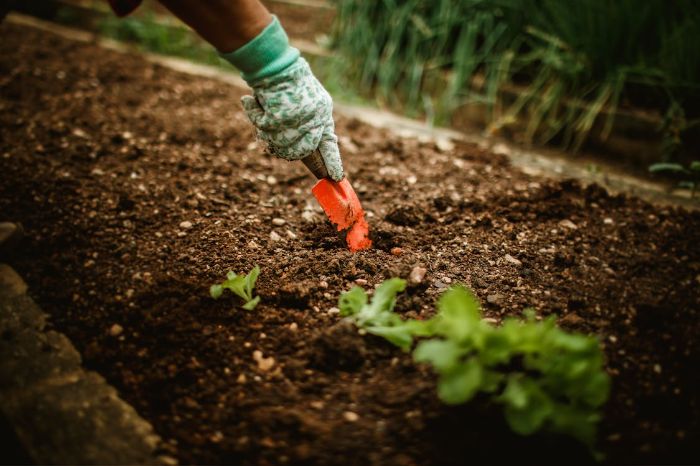
Citrus can be watered well with several methods. The deciding factors are the wetted pattern, depth, and drainage response. A small tree needs water near the root ball. A mature tree needs a pattern that reaches most of the feeder-root zone.
| Method | Best Use | How To Make It Work | Failure Point |
|---|---|---|---|
| Basin watering | New in-ground trees and dry climates | Build a low ring beyond the root ball and fill it slowly | Soil piled against the trunk |
| Drip emitters | Regular home irrigation | Start near new root balls, then add emitters outward | Too few emitters for a larger canopy |
| Micro-sprinklers | Wider mature root zones | Wet a broad pattern under the canopy and avoid trunk spray | Wind drift and shallow runtime |
| Hose trickle | Deep occasional watering | Move the hose around the basin before runoff starts | Leaving water in one spot beside the trunk |
| Hand watering containers | Potted citrus on patios or indoors | Water until excess drains, then empty saucers | Small sips that never flush the pot |
Drip and micro-sprinklers work best when their pattern grows with the tree. A fixed system that still waters the trunk area of a 10-foot canopy will miss the outer roots. Garden irrigation systems should be checked each season for clogged emitters, dry gaps, and overspray.
Container Citrus Watering – Pot Weight Beats The Calendar
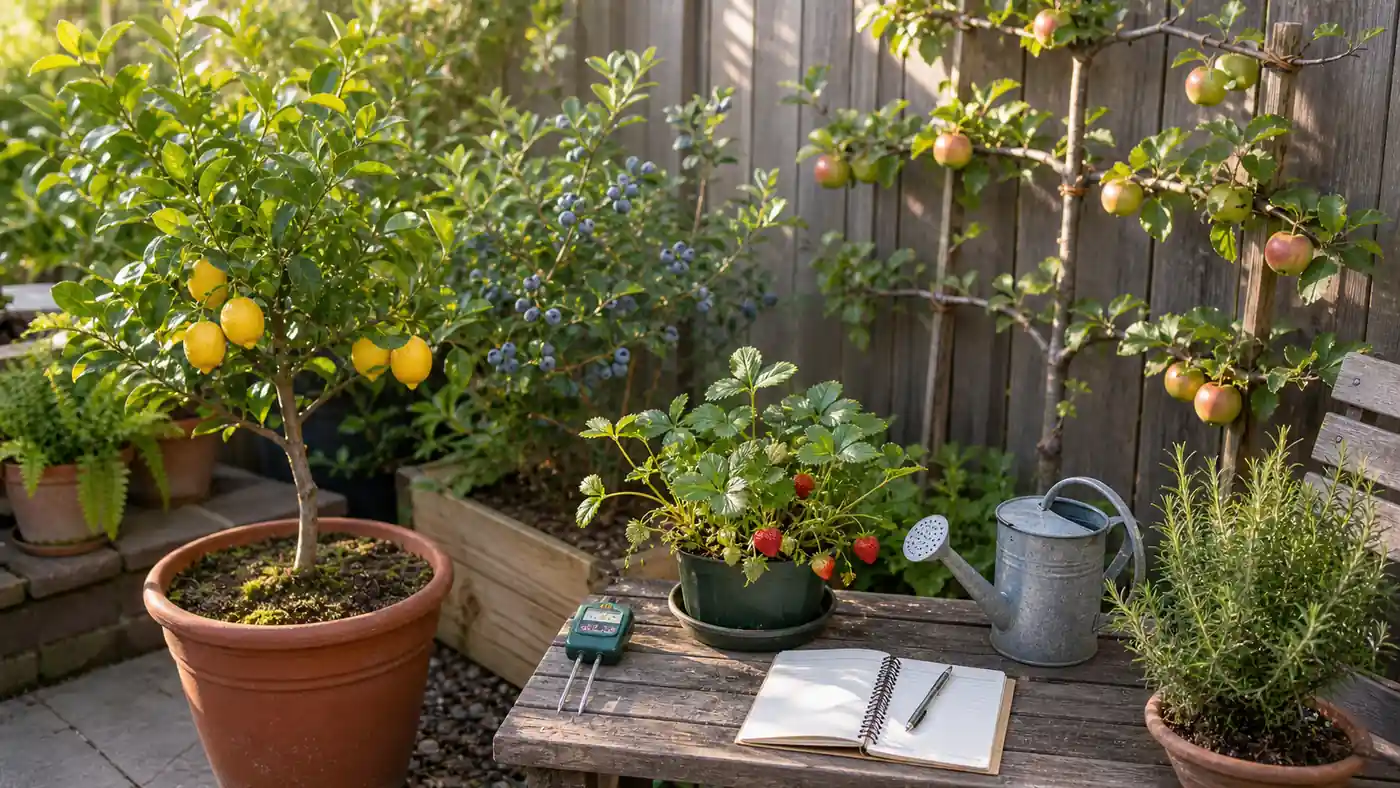
Potted citrus has less soil volume, more exposed root area, and faster temperature swings than an in-ground tree. A patio lemon may need water every day during a hot spell. The same tree indoors in winter may need water far less often.
Pot weight tells the truth faster than the surface. Lift the pot after a full watering, then lift it again when the top inch or two has dried. The weight difference becomes the best local signal. A pot that still feels heavy under a dry surface may have a wet center.
Water container citrus thoroughly when it is ready. Apply water until it runs from the drainage holes, wait for the flow to slow, then empty the saucer. A full soak flushes fertilizer salts and wets the full root ball. Small surface drinks leave dry pockets and salt buildup.
Mix structure controls how safe the schedule is. Dense garden soil in a pot can stay wet around the bottom roots and dry at the edge. A bark-based, fast-draining container soil mix gives citrus a better balance of moisture and air.
Indoor citrus needs extra restraint. Lower light, cooler roots, and closed windows slow water use. Check the pot before watering even if the calendar says it is time. A wet indoor pot can damage roots for days before leaves show the problem.
Reading Citrus Leaves, Fruit, And Soil Moisture
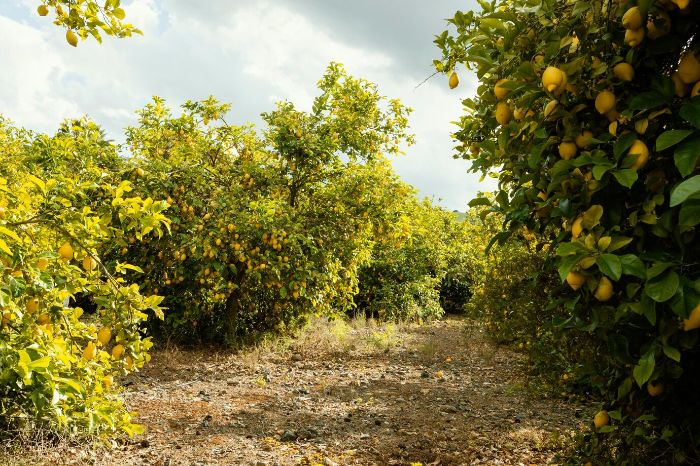
Citrus symptoms can point in opposite directions, so the soil check comes first. Yellow leaves can come from wet roots, dry roots, high pH, salt buildup, or nutrient shortage. Root-zone feel below the surface should decide the next move.
Overwatered citrus often has yellowing leaves, dull growth, leaf drop, sour soil smell, algae on container mix, or wilting in wet soil. Roots short on oxygen cannot move water and nutrients well. Signs of overwatering become easier to read once you check soil moisture several inches down.
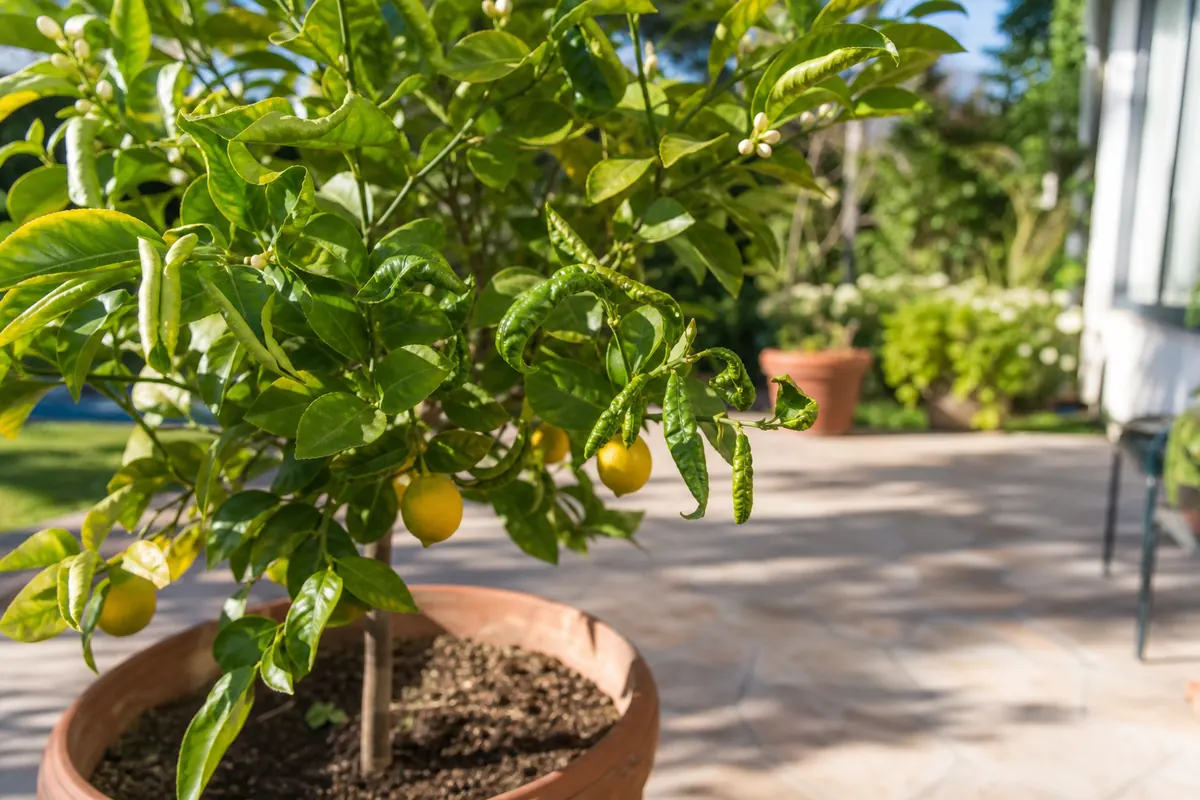
Underwatered citrus often has curling leaves, dry leaf edges, early fruit drop, powdery dry soil, or a root ball that pulls away from the pot wall. A tree can wilt from drought even when mulch looks damp. Underwatering in garden plants usually shows first in the newest growth, fruit set, and leaf posture.
Fruit splitting is usually a moisture fluctuation problem. A dry spell followed by a heavy soak or rain can swell fruit faster than the rind can stretch. Keep the root zone more even during fruit expansion, especially for mandarins, oranges, and thin-skinned citrus.
Salt buildup adds another layer. White crust on soil, burned leaf tips, and poor response after watering can point to salts. Deep watering helps only when drainage allows salts to move out of the root zone. A pot saucer full of old water keeps salts right where roots least need them.
Choose The Right Watering Rhythm By Tree Situation
A citrus tree rarely needs one fixed schedule for the whole year. Match the next watering to the tree situation, then recheck after weather or growth changes. The pattern should become wider as roots spread and slower when soil drains poorly.
| Situation | First Check | Watering Rhythm | Avoid |
|---|---|---|---|
| New tree wilts after planting | Moisture inside the nursery root ball | Water the root ball and nearby basin every few days until roots extend | Assuming rain reached the original root ball |
| Mature tree drops fruit in summer | Moisture under the canopy edge | Deep soak the wider root zone before the soil becomes powder dry | Short sprinkler runs that wet leaves and mulch |
| Leaves yellow after watering | Soil smell, drainage, and moisture at 6 inches | Wait for partial drying, then water deeper and less often if drainage is sound | Adding fertilizer before checking wet roots |
| Potted citrus dries fast in heat | Pot weight and top 1 to 2 inches of mix | Water thoroughly whenever the pot is light and the upper mix dries | Letting the root ball shrink from the pot wall |
| White crust or burned leaf tips appear | Drainage holes, saucer water, and water quality | Flush the root zone during a full watering and improve drainage | Frequent tiny drinks that concentrate salts |
| Winter indoor citrus stays damp | Pot weight below the surface | Lengthen the interval and water only after the mix dries enough | Keeping the summer timer or habit indoors |
Conclusion – Water The Roots You Actually Have
Citrus watering works when it follows the roots. Young trees need their small root balls kept evenly moist. Mature canopies need a wider soak under the outer branches. Container trees need the full pot watered, drained, and allowed to breathe before the next session.
Use the calendar as a reminder, then let the soil make the final call. Check depth, watch pot weight, measure flow rate, move emitters outward, and change the interval when heat, rain, fruit load, or indoor conditions change. Healthy citrus comes from water placed deeply enough, often enough, and slowly enough for roots to use it.
FAQ
How Often Should Citrus Trees Be Watered?
New citrus trees may need water every few days during warm establishment weather. Established in-ground trees often need deep watering every 7 to 14 days in hot dry periods, with longer intervals in cool or rainy weather. Always check soil moisture before following the calendar.
How Much Water Does A Citrus Tree Need?
The right amount wets the active root zone. New trees need the root ball and nearby soil moistened to about 12 inches. Mature trees usually need a wider and deeper soak under the canopy. Use a bucket test or emitter flow rate to calculate gallons for your setup.
Should I Water Citrus Trees Every Day?
In-ground citrus usually should not be watered every day. Daily surface watering can keep roots shallow and soil airless. Container citrus may need daily checks in hot weather, with water applied only when the pot has dried enough and feels lighter.
What Is The Best Time Of Day To Water Citrus Trees?
Morning is usually best because water can soak in before afternoon heat and leaves dry quickly if they get wet. Evening watering can work in hot dry climates when soil needs a slow soak, as long as the trunk and foliage are not kept wet overnight.
Is Drip Irrigation Good For Citrus Trees?
Drip irrigation can work well for citrus when enough emitters wet the active root zone. New trees need emitters near the root ball. Established trees need more emitters placed farther from the trunk as the canopy expands.
How Do I Know If A Citrus Tree Is Overwatered Or Underwatered?
Check below the surface. Wet, sour soil with yellow leaves points toward overwatering or poor drainage. Dry, powdery soil with curling leaves or early fruit drop points toward underwatering. Containers can show both problems if the top dries and the bottom stays wet.