
Updated April 10, 2026
Organic vineyard practices are built on a principle most conventional growers find counterintuitive: fix the ecosystem first, and many of the problems you were paying to manage will shrink on their own. A vine growing in biologically active soil, with flowering cover crops between the rows and predatory insects moving through the canopy, faces a fundamentally different set of pressures from one held up by synthetic chemistry. It handles heat stress differently, sets fruit more reliably, and – for those making wine – tends to express the character of the site more cleanly.
Decades of commercial organic viticulture in California, Oregon, and across Europe have produced consistent findings on what works and what takes longer than growers expect. The soil changes before anything else does. Disease pressure often spikes in year one of organic transition, then steadies as canopy management and soil biology adapt. Beneficial insect populations take two or three seasons to establish, and that lag is where most growers lose confidence. Understanding the timeline matters as much as understanding the practices themselves.
Key Takeaways
- Plant cover crops before your third organic transition season to have established populations ready when certification arrives
- Test soil biology annually – microbial activity drops faster than nutrient levels and is the earlier warning sign
- Apply copper-based fungicides at bud break, before disease symptoms appear, to intercept early powdery mildew and downy mildew cycles
- Avoid high-nitrogen cover crops under young vines – excess nitrogen drives soft shoot growth that attracts spider mites
- Prioritize canopy airflow as a disease management tool – well-pruned, open canopies extend organic spray intervals and shrink disease infection windows
Table of Contents
Organic Vineyard Management – Why the System Matters More Than Any Single Practice
Most growers approaching organic viticulture for the first time treat it as a product substitution problem: swap the synthetic fungicide for copper, the herbicide for mechanical cultivation, the synthetic fertilizer for compost. That framing works for year one, and begins to fail by year three.
The vineyards that manage organic production well over the long term – operations like Bonterra Organic Vineyards in Mendocino County, California, which converted over 1,200 acres to organic management – think about the vineyard as an ecosystem where soil biology, canopy architecture, floor vegetation, and beneficial insect populations interact constantly. A change in one area ripples through the others.
David Koball, vineyard manager at Bonterra, put it plainly in WineMaker Magazine: “A balanced grapevine is one which is healthy, but not overly vigorous, and thus is not as attractive to the spider mites.” That observation holds across most organic pest pressure. Vine health driven by soil biology – rather than excess synthetic inputs – produces a plant that is less attractive to the pests that organic growers have the fewest tools to control.
Ridge Vineyards in Sonoma County, which completed 100% estate organic certification in 2022 after a transition that began in 2008, applies the same principle at scale: cultivating every other row to preserve soil structure, seeding non-vine plant species to attract predatory insects, and cycling winemaking pomace and stems back into vineyard compost. The system is closed, and deliberately so.
If pest pressure in your vineyard increased after you stopped using synthetic pesticides, would your first instinct be to find an approved spray, or to ask why the beneficial insect population has not yet established? The answer tells you whether you are managing organically or just farming without certain chemicals.
Soil Biology in Organic Vineyards – The Work Happening Below Every Row
Vineyard soil in organic management functions as a production system. The microbial communities living in the top six inches perform nitrogen cycling, phosphorus solubilization, and natural pathogen suppression that synthetic inputs replace chemically. When those communities are active, the vine draws on a more stable, season-long nutrient supply and builds physical resilience that shows up in dry years. When they are depleted, purchased inputs have to do everything.
The target for organic matter in vineyard soils is 2-3% by weight. Many California vineyards run below 1.5% under conventional management. Moving that number upward takes years of compost application and floor vegetation management – typically 2-4 tons of compost per acre annually. The USDA Agricultural Research Service has documented that organic matter increases in vineyard soil improve water infiltration and aggregate stability, practical effects that translate to better drought tolerance during fruit set and reduced erosion on sloped sites after winter rains.
Soil pH between 5.5 and 7.0 supports most grapevine production, and organic growers have the same amendment options – lime to raise pH, sulfur to lower it – as conventional growers. The difference is the emphasis on biological activity alongside chemistry. A standard soil test measuring only pH and macronutrients misses what matters most for organic management: microbial biomass carbon, soil respiration rate, and earthworm density as a proxy for overall biology. A handful of healthy vineyard soil at the end of a well-managed organic season has a distinct earthy smell from active Actinobacteria and a crumbly texture that holds its shape under light pressure. Those sensory markers are real indicators of the decomposition activity that drives nutrient cycling.
Understanding your starting point through soil pH and preparation for grape vines is the baseline before any organic transition planning can be realistic.
Pro Tip: Apply compost in early spring rather than fall when possible. Spring application coincides with the soil’s biological peak, improving decomposition rates and nutrient availability exactly when the vine comes out of dormancy and demand for nitrogen is highest.
Cover Crops and Floor Management – A Practice That Does Five Jobs at Once
Cover crops in an organic vineyard do five distinct things simultaneously – and weed suppression is probably the least important of them. Erosion control, organic matter accumulation, nitrogen fixation (legume species), and habitat for beneficial insect populations all depend on species selection and timing decisions that weed management alone would never prompt you to think through carefully.
The insect ecology dimension is where species choice matters most. Research from the USDA Agricultural Research Service found that buckwheat planted in vineyard alleyways increased the longevity and reproduction rates of parasitoid wasps that attack grape leafhoppers and sharpshooters, a damaging leafhopper species in California viticulture. Cahaba white vetch suppresses Mesocriconema xenoplax, a nematode species damaging to grape roots, while also fixing nitrogen and improving soil structure. These species are doing different ecological jobs, and a single-species floor is a missed opportunity.
| Cover Crop | Primary Benefit | Climate Fit | Mow Timing |
|---|---|---|---|
| Buckwheat | Boosts parasitoid populations; fast summer establishment | Warm, arid to moderate | Before seed set |
| Cahaba white vetch | Suppresses root nematodes; fixes nitrogen | Southeast, Pacific NW | At full bloom |
| Crimson clover | Nitrogen fixation; attracts lacewings and syrphid flies | Moderate to humid | At 50% bloom |
| Annual ryegrass | Erosion control on slopes; high organic matter | Any | Before heading |
| Phacelia | Strong pollinator and predatory insect attraction; shallow roots | Arid to moderate | At first flower |
In humid climates, floor management requires more attention than in arid regions. Dense floor vegetation traps moisture and increases Botrytis pressure on low-hanging clusters near harvest. The response is management timing, not elimination: mow or crimp before veraison, maintain shorter sward heights under the vine row, and choose species with shallow root profiles that do not compete aggressively for water during the period from fruit set to harvest. Many humid-climate growers alternate cultivation in every other row, rotating which rows stay vegetated and which are managed mechanically across seasons.
The same ecological reasoning behind cover crop selection applies to the broader question of companion planting with fruit trees – creating a vegetated environment that supports the organisms working on your behalf.
Pest and Disease Control Without Synthetic Chemistry – What the Evidence Actually Shows
Fungal disease is the category where organic viticulture is most demanding, and where growers transitioning from conventional management most often underestimate the work. Powdery mildew (Erysiphe necator) and downy mildew (Plasmopara viticola) are the primary disease threats in most US wine regions, and both require active management programs throughout the growing season – starting at bud break, before any symptoms appear.
Approved materials and their real constraints
Sulfur fungicides are the backbone of organic powdery mildew programs. They are effective preventively and provide some curative action on early infections, but the UC IPM program at UC Davis notes two constraints that organic growers must plan around: sulfur becomes phytotoxic above 90°F (32°C) and should not be applied when temperatures will reach that threshold within 24 hours; and late-season sulfur applications can carry into harvest, creating hydrogen sulfide problems in fermentation. Oregon State University Extension recommends stopping sulfur applications 4-6 weeks before harvest depending on conditions.
Copper-based materials – copper sulfate, Bordeaux mixture, copper hydroxide – are approved under the National Organic Program and effective against downy mildew. The constraint that rarely appears in general organic guides is cumulative soil loading: copper does not break down, and repeated applications above 3-4 kg of active copper per hectare annually begin accumulating to levels that suppress earthworm populations and the soil biology that organic systems depend on. EU organic standards impose stricter limits (1.5-3 kg/ha/year) than current US regulations for exactly this reason. Growers building long-term organic programs need to track cumulative soil copper alongside seasonal spray rates.
Biological fungicides based on Bacillus subtilis strains perform best against Botrytis and work as preventive tools rather than rescue treatments. The ATTRA Sustainable Agriculture Program, funded by the USDA, maintains a detailed organic grape production resource that covers approved materials by pest type and region, including a disease resistance cultivar chart that is among the most practical decision-making tools available to organic grape growers.
Biological pest control and the patience it requires
Leafhopper and spider mite pressure in organic vineyards is managed primarily through habitat for beneficial predators. Lacewings, predatory mites (Galendromus occidentalis in California), and parasitoid wasps all target common vineyard pest species. These populations need flowering plants providing nectar and pollen, refugia areas with minimal spray disruption, and time – typically two to three seasons – to establish at densities where they actually regulate pest populations.
The USDA’s Western Integrated Pest Management Center reviewed cover crop studies from organic vineyards across regions and found that in 95% of cases, pest populations did not increase. 45% showed no change, and 50% showed measurable decreases. The practical caveat is timing: mowing cover crops during a pest population spike removes beneficial insect refugia at exactly the wrong moment. A mowing schedule driven by crop calendar dates rather than insect monitoring can undo a season of habitat-building in one afternoon.
I often notice that vineyards with the most persistent spider mite problems also follow aggressive fertilization schedules. Excess nitrogen drives exactly the kind of lush, fast-growing shoot tissue that mites prefer – soft, high-water-content leaves with thin epidermal cells. Scaling back nitrogen inputs before looking for an approved miticide is nearly always the more productive sequence.
Canopy Management for Disease Prevention – Airflow Is the Tool Most Growers Underuse
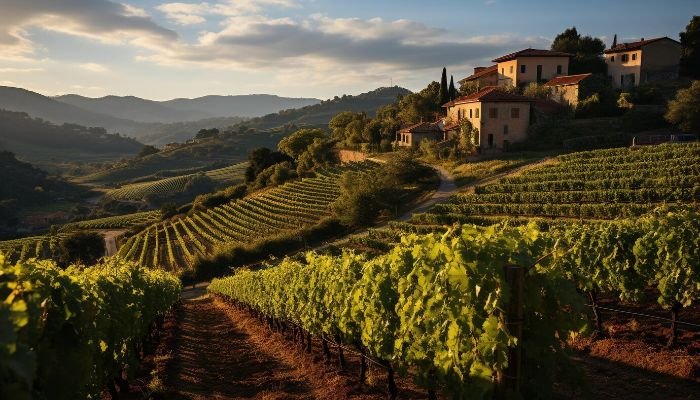
In organic viticulture, canopy management is a disease prevention investment as much as a quality and yield tool. A well-ventilated canopy dries faster after rain, reaches daytime temperatures that slow fungal germination earlier in the morning, and maintains lower relative humidity around the fruit zone across the day. Those three conditions together reduce infection windows for both powdery and downy mildew without any spray application involved.
Research comparing organically and conventionally managed vineyards across similar regions consistently finds that organic operations with better canopy architecture use less copper and sulfur than those managing dense or unbalanced canopies. The approved organic materials are doing less work when the canopy is giving them a reasonable environment to operate in.
Leaf pulling in the fruit zone – removing three to five leaves on the east-facing side of the canopy after fruit set – is the highest-impact single practice for cluster disease reduction. Morning sun reaches the cluster zone, dew burns off quickly, and the temperature differential between the shaded and exposed sides moderates afternoon heat. West-side pulling adds more light exposure but also more afternoon heat load, which can cause sunburn on thin-skinned varieties. The decision depends on your climate: in cool coastal regions, aggressive bilateral leaf pulling is usually safe; in hot interior valleys, east-side only is more common.
The training system you establish sets the ceiling for what canopy management can achieve later in the season. A high-wire cordon in a humid climate gives inherently more airflow than a low bilateral cordon – and that baseline difference reduces the spray burden across the full growing season. The decisions made in the dormant season through careful canopy pruning determine how manageable the summer canopy becomes when disease pressure peaks.
Water and Fertility in Organic Vineyards – Where Restraint Often Produces Better Results
Grapevines are drought-adapted perennials. In regions where growing-season rainfall is sufficient, pushing additional irrigation can drive vine vigor beyond what the site’s natural biology can balance – creating exactly the dense, lush canopy that fungal disease and spider mites prefer. Where irrigation is necessary, drip systems deliver water directly to the root zone, keep the foliage and fruit zone dry, and allow precise timing around rain events. The combination of reduced leaf wetness duration and controllable soil moisture makes drip the clear choice for organic disease management.
Fertility in organic systems is slower-release and more biologically mediated than in conventional programs. Legume cover crops contribute 40-80 pounds of nitrogen per acre annually when managed well, reducing dependence on imported compost nitrogen. Rock phosphate and greensand provide phosphorus and potassium on a multi-year timeline that suits perennial crops building nutrition reserves across seasons. Foliar nutrient applications – kelp extracts, fish hydrolysate, compost tea – are used in organic vineyards for micronutrient corrections and to support plant immune responses. The evidence for these materials is real but modest; they work best when healthy soil biology is already doing the foundational nutrient work, and they compensate poorly when it is not.
Calibrating organic inputs to actual vine demand – rather than applying them on a fixed schedule – requires understanding the timing and seasonal patterns behind grapevine fertilization and nutrition needs.
The Three-Year Transition – What Organic Certification Actually Demands
USDA organic certification under the National Organic Program requires three consecutive growing seasons without prohibited substances before the first certified organic harvest. Those three years are the most operationally demanding period in the transition, and growers who understand the shape of that curve budget differently for it.
Year one is typically the hardest for disease and pest management. Beneficial insect populations have not yet established, soil biology is still recovering from synthetic inputs, and the spray calendar has to be recalibrated from curative to preventive timing. Yield losses of 10-20% are common and should be planned for rather than treated as system failure. This is also the year to bring soil tests, cover crop establishment, and compost programs into place while the vineyard is still building toward its organic equilibrium.
Year two is when early investments in soil and floor management begin to return measurable results. Microbial biomass increases, earthworm counts rise, and the vine’s own nutrient uptake efficiency improves as mycorrhizal networks develop. Pest pressure typically stabilizes. This is the right year to refine cover crop species mix based on what actually established and what attracted the beneficial populations the site needs. It is also when the canopy management program should be locked in, because year three canopy architecture is determined by the pruning and training decisions made in year two dormancy.
By year three, organic vineyards with functioning soil biology, established cover crops, and well-managed canopies typically find that the spray calendar has shortened and emergency interventions are rarer. Certification, when it arrives, documents a system that has been working for two years. Growers who are still building foundational knowledge about starting a vineyard and growing grapes from the beginning should factor the organic transition window into site selection and planting decisions rather than treating it as something to address after establishment.
Conclusion
Organic vineyard management compounds over time in a way that no single-season approach does. The soil biology established in year two is the foundation the year-five vine stands on. The cover crop species planted before certification are still drawing in beneficial insects a decade later. The return on those early decisions keeps accumulating, which is part of why the most experienced organic growers tend to talk less about products and more about the ecology they have built.
The practical marker that organic management is working is not zero disease or zero pest pressure – it is that interventions become less frequent and the consequences of missing a spray window become less severe. A canopy that dries within two hours of rainfall, soil that holds close to 3% organic matter, and a cover crop that is visibly alive with insect activity in July: those are the signs of a vineyard that has developed enough ecological function to absorb stress, more than a little, on its own.
FAQ
What is the difference between organic and biodynamic viticulture?
Organic viticulture focuses on eliminating synthetic pesticides, herbicides, and fertilizers, following standards set by certification bodies like the USDA National Organic Program. Biodynamic viticulture includes all those restrictions but adds practices derived from Rudolf Steiner’s agricultural philosophy from the 1920s: planting calendars based on lunar and astronomical cycles, on-farm preparation of specific compost treatments, and a view of the farm as a self-contained living organism. Both approaches prohibit synthetic inputs; biodynamic also prescribes what to add and when. Whether the additional biodynamic practices produce measurable agronomic benefits beyond the organic baseline remains debated in the research literature, though proponents at operations like Cooper Mountain Vineyards in Oregon point to long-term improvements in soil structure and vine balance that conventional soil chemistry tests do not fully capture.
Can you use copper fungicide in an organic vineyard?
Yes. Copper-based fungicides – copper sulfate, Bordeaux mixture, copper hydroxide, copper octanoate – are approved under the National Organic Program and remain a primary tool against downy mildew in organic viticulture. The constraint that most guides underemphasize is cumulative soil loading: copper does not break down, and annual applications that seem low in isolation accumulate over decades to levels that reduce earthworm populations and suppress the soil biology that organic systems depend on. EU organic standards impose stricter annual copper limits (1.5-3 kg of active copper per hectare per year) than current US regulations precisely because of this long-term effect. Organic growers building programs meant to last 15 or 20 years need to track cumulative soil copper levels alongside seasonal application rates.
What happens if powdery mildew gets out of control in an organic vineyard?
An established powdery mildew infection is difficult to reverse within the same season. Sulfur fungicides slow the spread, but as Oregon State University Extension notes, they perform as preventive and early curative tools rather than rescue treatments. Once infection has colonized shoot tips and cluster surfaces, the practical outcomes are yield loss on affected fruit and reduced vine energy going into dormancy. The recovery response is primarily structural: aggressive leaf pulling to restore airflow, removal of heavily infected shoot tips, and a revised timing protocol for the following season’s spray program starting at bud break. Organic growers should treat a severe powdery mildew outbreak as a system failure – typically tracing back to a canopy management gap, a spray timing miss at the beginning of the season, or an unusual rain event that compressed the infection window faster than any calendar could anticipate.
How long does it take to get organic certification for a vineyard?
Under USDA National Organic Program rules, a vineyard must complete 36 consecutive months without prohibited substances before certifying its first organic harvest. The transition period begins from the last application of any prohibited substance, not from the certification application date – so growers who have already been managing without synthetics can count previous seasons if they have documentation. Most certifying agencies require a filed Organic System Plan at the start of the transition and conduct annual inspections through the process. Growers who have been using conventional inputs through the current season are typically looking at a minimum of four growing seasons before the first certifiable harvest: one more season of conventional management, then three clean transition years.
What cover crops work best for organic vineyards in humid climates?
In humid regions, the selection criteria shift toward species that establish quickly, stay relatively low, and dry out rapidly after rain. Buckwheat, crimson clover, and annual ryegrass all perform well in these conditions. Dense floor vegetation in humid climates creates Botrytis risk by holding moisture near the fruit zone, so many growers alternate: keeping every other alleyway vegetated while mechanically cultivating or mulching the others, rotating annually. Mowing timing also matters more in humid climates than in arid ones – letting cover crops go to mature seed before mowing creates a thick thatch layer that stays wet and can harbor fungal spores. The goal is maintaining biological diversity in the floor without creating a moisture trap during the six weeks leading into harvest.
What mistake do organic vineyard growers make most often in the first year?
Treating approved organic materials as direct replacements for what they removed, on the same spray schedule. Synthetic fungicides and pesticides often have both preventive and curative action and longer residual windows than organic alternatives. A grower who switches to copper and sulfur on the same calendar that worked for conventional systemic fungicides will consistently find the timing inadequate – organic materials require earlier application, shorter intervals, and a preventive rather than reactive approach. The growers who navigate year one well shift their monitoring and application timing before they worry about which approved product to use. The product decision is secondary to understanding that the entire spray logic has to move earlier in the disease cycle.