

Last Updated April 29, 2026
Autumn asters are fall-blooming perennial flowers that give the garden color, pollinator traffic, and structure when many summer plants are already tired. Their best use is as a planned late-season plant placed for habit, color, pollinator value, and structure.
Stand near a healthy clump in September and you can see why gardeners forgive its awkward midsummer phase: purple, blue, pink, or white stars open over rough green leaves as bees work the yellow centers like a crowded market. Choose for habit before color. Tall meadow types, compact mound types, and lower spreading types behave differently in a border, container, or wildlife planting. Put the right one in the right place, and autumn stops feeling like a slow fade.
Key Takeaways:
- Choose habit before color for better placement
- Give full sun and airflow before adding fertilizer
- Avoid crowded clumps that invite mildew and flopping
- Check moisture weekly as buds swell in late summer
- Leave some seed heads when winter wildlife matters
Table of Contents
What Are Asters? – The Autumn Flower Group At A Glance
Asters are daisy-like plants in the Asteraceae family, grown for star-shaped flower heads that bring late color to borders, containers, cutting gardens, and pollinator plantings. In home gardens, the word aster usually points to fall-blooming perennials with purple, blue, pink, or white flowers around yellow centers.
The common name is simple; the plant group includes several botanical genera. Many North American plants still sold as asters are now classified under genera such as Symphyotrichum and Eurybia, while the familiar common name remains on nursery tags. That is why a “New England aster” may appear as Symphyotrichum novae-angliae, and a white wood aster may appear as Eurybia divaricata.
Most autumn asters covered here are herbaceous perennials. They die back above ground in winter, return from the crown in spring, and bloom from late summer into fall. Among garden flowers, their main job is to extend color, feed late pollinators, and hold border structure when summer plants are fading.

Perennial Autumn Asters Vs Annual China Asters
Perennial autumn asters and annual China asters are easy to confuse because both may be sold under the aster name. Perennial autumn asters return each year from established crowns. China aster, Callistephus chinensis, is usually grown as an annual bedding or cut flower from seed or nursery starts.
China aster is a cool-weather annual with showy blooms from early summer to fall. It can be useful in containers and cutting gardens. Its life cycle, disease issues, and planting rhythm differ from hardy perennial asters. Perennial autumn asters are the plants most gardeners mean when they ask about fall asters that come back year after year.
Autumn Asters – Why They Change The Fall Garden
Asters matter most because they bloom after the garden has spent its easy color. By late summer, daylilies are past their peak, many annuals look dusty, and perennial borders can feel heavy with seed heads and tired foliage. Asters bring a second lift without asking the gardener to rebuild the whole bed.
Asters begin blooming as days shorten in late summer to early fall. That short-day response is the quiet reason they feel so well timed. They wait until long nights signal bud initiation, then open just when cooler evenings make purple, lavender, and white read sharper in the garden.
The effect is more than color. Aster stems hold space through summer, then turn into a nectar station during the first cool mornings of fall. If the plant is placed well, the garden gains height, movement, and insect activity at once. If it is placed badly, the same plant may lean over a path, mildew in a tight corner, or drop lower leaves in full view.
Placement decides whether autumn asters respond with clean bloom or visible stress from crowding, shade, and excess fertility.

Use asters where late-season borders lose color, height, pollinator activity, or structure before frost. The right plant may be a clean mound at the front, a tall haze in the back, or a loose native drift that can feed insects and set seed.
What Are Aster Flowers? – Star Shape, Flower Heads, And Names
Aster means star. Each apparent bloom is a flower head made from many smaller flowers. The yellow center is packed with disk flowers, and the colored “petals” are ray flowers that pull pollinators toward the food-rich center.
A New England aster flower head can hold roughly one hundred to one hundred fifty small flowers. A single clump can carry hundreds of heads, and each head becomes a small feeding platform during a season when nectar choices narrow.
The names can be messier than the flowers. Many North American plants still sold as Aster were moved into Symphyotrichum after taxonomic work based on genetic differences. Gardeners still say aster because the common name works. Plant tags may say Symphyotrichum novae-angliae for New England aster, Symphyotrichum oblongifolium for aromatic aster, or Eurybia divaricata for white wood aster.
Use the botanical name as a practical check on species and growth habit, then judge the plant by height, spread, bloom season, mildew resistance, and site preference.
| Common Garden Type | Usual Role | What To Watch |
|---|---|---|
| New England aster | Tall back-of-border color, native plantings, cut flowers | Height, lower leaf drop, possible staking |
| New York aster | Moist borders, compact cultivars, classic fall color | Mildew in crowded or dry conditions |
| Aromatic aster | Drier sunny beds, mounded habit, late color | Spreading behavior in loose soil |
| Smooth aster | Native borders, blue-green foliage, meadow style | Can grow tall in fertile soil |
| Wood aster | Light shade, woodland edges, softer plantings | Less useful for hot, dry, exposed sites |
Color alone is a weak buying filter. The purple plant and the pink plant may be less different than the tall plant and the compact plant.
Best Types Of Autumn Asters For Garden Roles
The best aster for a garden is usually the one that fits the space before it blooms. Color lasts for weeks. Habit affects the bed all season.
Tall New England asters can be magnificent in the back of a sunny border, especially when grasses, goldenrod, rudbeckia, or sedum hide their lower stems. The same plant near a narrow walkway can become a leaning wall of stems. New England aster can reach three to seven feet tall and two to three feet wide, which explains why it belongs where it has room to be itself.
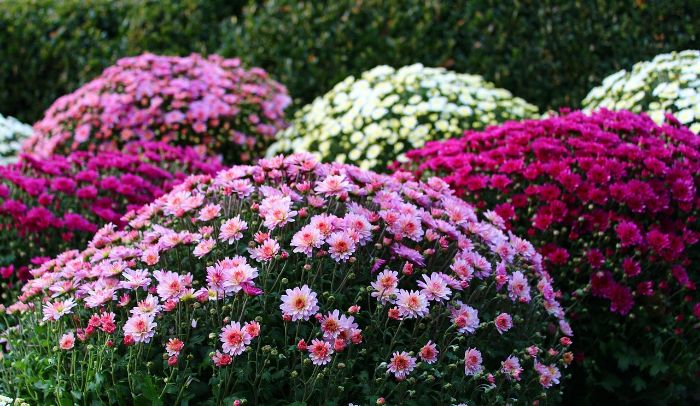
Compact cultivars, including rounded New England aster selections such as ‘Purple Dome’, work better where the viewer sees the whole plant. They suit front-to-middle borders, small gardens, and containers because they carry their own shape without needing neighboring foliage to cover bare ankles. They also read as intentional mounds with a cleaner outline than wild late-season spray.
Aromatic aster earns its place in hotter, drier sunny plantings. Its foliage has a noticeable scent when crushed, and many cultivars keep a lower, bushier shape than the classic tall asters. In a gravelly strip or dry slope, that can matter more than flower size.
White wood aster and related woodland types solve a different problem. They bring starry fall flowers under high tree shade and along woodland edges, where full-sun border asters would thin out and bloom poorly.
Disappointed aster growers often buy the flower color they want, then ask the plant to do the wrong job. A tall meadow plant will not stay like a tidy bedding annual just because the label photo is pretty.
In a designed perennial border, repeat asters in loose groups of three to five plants. Repetition makes the bloom feel deliberate, and it gives pollinators a bigger target. One plant is a sample. Three to five plants begin to act like a season.
Match The Plant To The Problem
Buying the prettiest blooming pot in fall can work, but mature height, spread, and site fit decide whether the plant solves the garden problem. Asters are more reliable when they match a specific gap in the planting.
| Garden Problem | Better Aster Choice | First Placement Rule |
|---|---|---|
| The back border loses color by September | Tall New England or smooth aster | Plant behind grasses, sedum, or sturdy foliage |
| A small bed needs tidy fall color | Compact mound cultivar | Keep it in full sun with space around the crown |
| A dry sunny strip looks bare in fall | Aromatic aster | Use several plants so spreading reads intentional |
| A light-shade edge needs late flowers | Wood aster or shade-tolerant native type | Avoid deep dry shade under dense roots |
| A patio container fades after summer annuals | Dwarf or compact aster | Use a wide pot with drainage and even moisture |
| A pollinator strip needs late nectar | Native New England, smooth, or aromatic aster | Plant in groups and leave some seed heads |
For containers, choose compact plants and avoid letting the pot dry hard as buds are forming. Asters in pots have less root volume than asters in the ground, so drought stress arrives fast. A wide container is better than a narrow decorative pot because the roots stay cooler and moisture swings less sharply.
For beds, look at the plant from the side before buying. Strong asters show multiple stems from the crown, clean new growth, and leaves free of white mildew. A plant in full bloom with a tight root ball can still transplant, and it will need careful watering until the soil cools.
When in doubt, buy for the site you have. The right aster in a plain color will outperform the dramatic cultivar planted in the wrong light, soil, or space.
Aster Plants In The Ground – Sun, Soil, Air, And Timing
Asters perform best when the planting site prevents problems before care begins. Full sun gives stronger stems and heavier bloom. Open airflow keeps leaves drier. Soil that holds moisture without staying soggy helps buds size up in late summer.

Most common garden asters prefer full sun, though some tolerate part shade. In too much shade, stems stretch toward light, flowers thin out, and mildew becomes easier to trigger. Morning sun is especially useful because dew dries faster from the lower leaves.
Soil does not need to be rich in the lush, heavily fed sense. Moderate fertility is better. Overly rich soil can push soft growth that flops before bloom. Aim for soil that crumbles when squeezed, smells earthy, and has no sour odor after rain. If garden beds seal into slick clay or shed water from a crusted surface, work on soil management in garden beds before blaming the plant.
Planting time depends on climate. Spring gives the widest recovery window. Early fall works when the plant has time to root before freezing weather. Get asters in the ground at least six weeks before the ground freezes so roots can settle before winter.
Spacing starts with the plant tag and ends with air movement. Space for mature width and airflow. A one-gallon nursery plant can look lonely at first. Tight spacing creates a damp interior by the second season. When lower leaves stay wet and shaded, the plant gives you mildew, bare stems, and fewer clean flowers.
Pro Tip: At planting, set the aster where it will grow, then step back to view it from the window, path, or patio you use most. Fall bloomers are often judged from a distance. If the plant disappears behind taller neighbors from that view, move it before watering in.
Asters For Pollinators – Late Nectar With Real Tradeoffs
Asters are valuable because they bloom as many insects run out of easy food. Bees, hover flies, butterflies, and migrating monarchs use late-season flowers heavily, and asters are among the plants that still offer fresh nectar and pollen in that window.

New England aster nectar attracts bees, hover flies, and migrating monarch butterflies. The genus Symphyotrichum also supports several specialized bees, and seeds can feed songbirds and small mammals. That is a bigger ecological role than most tidy fall color plants can claim.
The tradeoff is that wildlife value can look less groomed. Leaving some seed heads through winter feeds birds and gives the garden texture. It also allows some asters to self-sow. Cutting everything down after the first hard frost keeps a bed neater and limits seedlings, and it removes winter food and shelter.
Cleanup timing depends on whether neat winter structure, seed control, wildlife value, or disease removal matters more. A small formal front bed may need a cleaner cut. A backyard pollinator strip can afford winter stems and a few seedlings.
Asters also pair well with goldenrod, sedum, black-eyed Susan, native grasses, and late-blooming alliums. Good companions either hide the lower aster stems or extend the nectar sequence around the aster bloom. That makes the planting useful before, during, and after the aster peak.
Seasonal care should treat asters as part of the fall food chain, not just part of the color plan. A clean garden can still leave one planned corner a little wilder.
Autumn Aster Care – Full Plants Without Lost Bloom
Aster care works best when it controls growth early and protects bloom late. Waiting until September to fix a floppy, crowded plant usually means choosing between flowers and correction.
Pinching is the main shaping tool for tall asters. Cut or pinch stems back by about one-third in late spring or early summer, then stop by late July in many climates. Pinching too late can remove the growth that would carry fall buds. Pinching at the right time makes more branches, shorter stems, and a fuller bloom surface.
Water matters most during establishment and bud formation. Established asters can handle some dry spells, and drought during late summer can shrink flowers and shorten the show. Water at the base so foliage stays dry. A leaf that feels cool and damp late in the day is a mildew invitation, especially inside a crowded clump.
Feed lightly. A thin layer of compost in spring or a modest balanced organic fertilizer is enough for most garden soils. Heavy nitrogen pushes tall, leafy stems and delays the part you wanted most.
Lower leaf browning during peak bloom is usually normal. Use lower companion plants to make that normal browning less visible.
Division keeps older clumps vigorous. Dividing fall-blooming perennials works best in spring, when small new shoots are visible and the plant has the growing season to recover. For asters, early spring division every few years also opens the center of the clump, improves airflow, and reduces the dense interior that encourages mildew.
After the first hard frost, choose your cleanup style. Cut stems low if the plant had mildew or if self-sowing is a problem. Leave healthy stems standing if winter seed heads and insect shelter fit the garden. November garden care should separate diseased stems, seed control, winter food, and insect shelter once frost makes the plant’s condition easy to read.
Conclusion
Asters perform better in a planned place than in a gap left after summer plants fade. Give the first plant at least one full season to show its true habit, then judge it by stem strength, bloom density, mildew level, and how well the lower stems fit with neighboring plants.
If the plant flops, pinch earlier next year or move it behind stronger foliage. If mildew returns every season, divide the clump in spring, widen the spacing, and water at the base. Success looks like a cool fall morning when the stems are still upright, the yellow centers are busy, and the garden feels alive after the first leaves have started to drop.
FAQ
Do asters come back every year?
Yes, most garden asters are herbaceous perennials, so the top growth dies back in winter and new shoots return from the crown in spring. Hardiness depends on the species and cultivar. Many common fall asters grow across broad temperate zones, and the plant lasts longer when the crown stays out of winter waterlogging.
When do asters bloom?
Late summer through fall is the main window, with many garden types peaking from August into October. Some cultivars start earlier, and some hold flowers until frost. Shorter days help trigger bud formation, which is why asters feel so strongly tied to autumn.
Do asters need full sun?
Full sun gives the strongest stems and most flowers for most border asters. Part shade can work for some species, especially woodland asters, and heavy shade usually means fewer blooms and looser growth. If the plant leans or flowers only on the sunny side, light is part of the problem.
Can you grow asters in pots?
You can grow compact asters in pots if the container is wide, drains freely, and does not dry hard during bud formation. A twelve to sixteen inch pot is a practical minimum for many dwarf cultivars. Tall native asters usually belong in the ground because their stems and roots need more room.
What happens if asters get powdery mildew?
Powdery mildew usually starts as a white film on leaves, often in crowded, humid, or shaded conditions. It weakens the display more than it kills the plant, and repeated mildew makes a clump look tired before bloom is finished. Improve spacing, divide dense crowns in spring, water at soil level, and remove badly affected stems after frost.
Are China asters the same as perennial autumn asters?
No. China asters are usually annual Callistephus chinensis plants grown from seed or nursery starts for summer-to-fall color and cut flowers. Perennial autumn asters, such as New England aster and aromatic aster, return from the crown each year when they are suited to the climate and site.
What is the most common mistake with fall asters?
The common mistake is buying for flower color without checking mature height and habit. A tall New England aster can be beautiful, and it may need the back of a border and lower companions to cover bare stems. A compact cultivar belongs closer to the viewer, where its mound shape can do the work.