


Last Updated May 06, 2026
Water garden plants perform best when each one matches a real water zone – deep water, open surface, shallow shelf, bog edge, or splash zone – because aquatic labels are too broad on their own. A lily pad lying flat on quiet water, roots trailing beneath a floating rosette, and a clump of pickerelweed holding the pond shelf all do different jobs, and they fail for different reasons.
The biggest misses happen when calm-water plants get pushed into fountain spray, tropical floaters are treated as universal pond fixes, or shallow shelves are packed before anyone decides on a winter plan. Plant choice shifts with water depth, movement, fish load, sun, and whether the feature freezes hard or cools briefly.
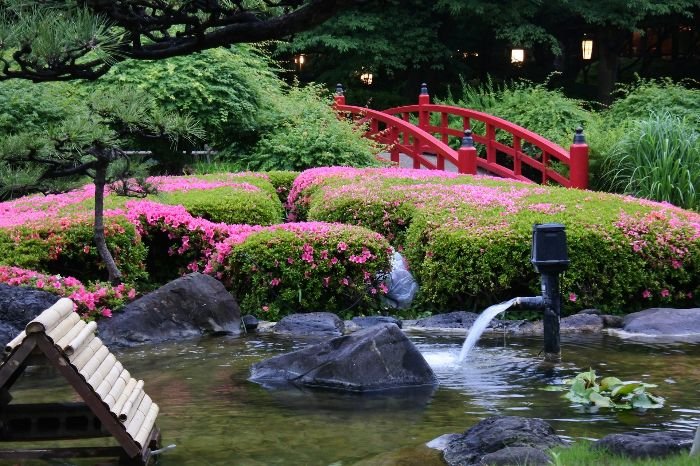
Strong water gardens use plants to shade the surface, soften edges, shelter frogs and fish, and keep the feature from reading like a bare lined hole. A strong planting mix keeps water cooler, looks settled from spring into fall, and stays manageable when baskets need dividing.
Reliable water garden plants include hardy water lilies, lotus, hornwort, vallisneria, pickerelweed, blue flag iris, arrowhead, corkscrew rush, dwarf papyrus, marsh marigold, and water canna. Plant selection logic still applies when water depth and movement are added to the site filter.
Key Takeaways:
- Match plants to depth, movement, and winter survival first
- Use surface cover to shade water before algae thickens
- Reserve fountains for splash-tolerant shelf and edge plants
- Check state invasive aquatic plant lists before buying floaters
- Divide crowded baskets every few seasons before water stalls
Water garden planting works better when deep-water bloomers, free-floating shade plants, submerged stems, shelf marginals, and bog-edge companions are treated as separate groups. Their depth, flow, root anchoring, and winter treatment diverge quickly.
Table of Contents
Best Water Garden Plants At A Glance
| Plant | Best placement | Typical zones | Main job | Main caution |
|---|---|---|---|---|
| Hardy water lily | Still pond water, usually 12-24 inches over the crown | 4-11, varies by cultivar | Shades the surface, flowers strongly, and gives fish cover | Dislikes fountain spray, crowding, and deep shade |
| Lotus | Larger quiet ponds or roomy tubs in warm sun | 4-10, varies by cultivar | Creates bold foliage and a tall summer focal point | Too large for tiny basins and wants heat to bloom well |
| Frogbit, water lettuce, and water hyacinth where legal and non-invasive | Warm quiet water in summer | Tropical or annual, varies | Adds quick shade and trailing root mass | State restrictions, fast surface closure, pump blockage, frost loss, and disposal risk if plants or fragments reach natural water |
| Hornwort | Submerged in calm or slow water | 3-10 | Uses nutrients and creates underwater shelter | Can tangle and overfill small features if never thinned |
| Vallisneria or wild celery | Rooted in deeper shelves or pond bottoms | 4-10, varies by species | Provides submerged structure with stronger anchoring | Some forms spread hard and dislike repeated disturbance |
| Pickerelweed | Shallow shelf, usually 0-6 inches over the crown | 4-10 | Adds vertical bloom and shelf definition | Outgrows tiny bowls and wants dividing over time |
| Blue flag iris | Shelf or bog edge with very shallow water or wet soil | 3-9 | Builds a strong edge line and habitat value | Dense rhizomes can overwhelm small shelves; avoid substituting yellow flag iris where invasive or restricted |
| Arrowhead or Sagittaria | Shallow shelf in ponds and wildlife edges | 5-10, varies by species | Offers clean leaf form and amphibian cover | Spreads by rhizomes or tubers if never edited |
| Corkscrew rush or sweet flag | Wet shelf, bog edge, or fountain-adjacent pocket | 5-9, varies by species | Brings texture to smaller basins and formal features | Less floral impact and shallower crowns can winterkill |
| Dwarf papyrus | Warm shelves, patio tubs, and splash edges | 8-11 | Adds height, motion, and a tropical feel | Frost tender, weak in cold spring water, and often seasonal or overwintered indoors in cold climates |
| Water canna or taro | Rich shelf or bog edge in larger features | 7-11, often lifted in cold regions | Anchors the background with bold foliage | Too coarse for small bowls, hungry in lean tubs, frost tender in cold regions, and regionally risky in warm wet climates |
| Marsh marigold and cool bog perennials | Cool bog edge or part-sun wet margin | 3-7, varies by species | Extends color into cooler or shadier edges | Hot summer water can shorten their season |
Treat zone ranges as starting filters, not guarantees. Water depth, frozen baskets, pump-driven movement, tropical versus hardy behavior, and whether roots sit below the ice line can all change survival inside the same USDA zone.
Water Garden Planting Depths – Match Plants To The Water Zone
Depth is the first sorting tool in a water garden. One plant wants its crown below calm water, another wants only a few inches over the basket, and another wants wet soil beside the feature rather than a submerged crown.
| Water zone | What it means | Strong plant direction | Examples | Main caution |
|---|---|---|---|---|
| Open surface | Plants float freely or leaves sit on the surface | Surface shade and quick summer cover | Frogbit where permitted, water lettuce or water hyacinth where legal, hardy water lily leaves | Fast spread, legal restrictions, and pump blockage |
| Deep-water crown | Basket sits below the surface and the crown stays under calm water | Blooming center plants | Hardy water lily, lotus where scale allows | Fountain spray, wrong depth, and crowding |
| Submerged zone | Plants grow under the surface or root below water | Underwater cover and nutrient uptake | Hornwort, vallisneria | Tangling, pump-intake clogging, and overgrowth |
| Shallow shelf | Crown sits in shallow water or just below the surface | Marginal structure and bloom | Pickerelweed, blue flag iris, arrowhead | Rhizome spread and basket crowding |
| Bog edge | Soil stays wet and may flood at times | Wet-margin transition | Marsh marigold, water canna, sweet flag | Dry spells, coarse growth, and winter exposure |
| Splash zone | Roots stay wet near moving water or fountain spray | Fountain-edge texture | Corkscrew rush, sweet flag, dwarf papyrus | Pump disturbance, frost tenderness, and shallow roots |
Water Garden Plants Succeed By Water Zone, Water Movement, And Winter Depth
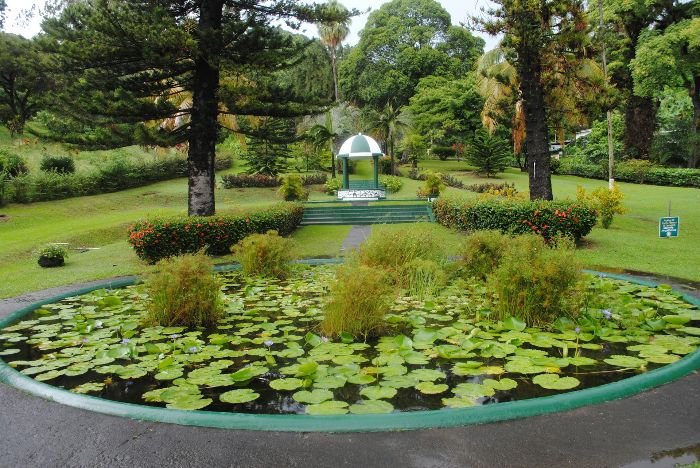
A water garden stops looking confusing once the feature is read in bands. The center may be deep enough for lilies. The upper shelf may fit pickerelweed or iris. The outside edge may stay wet after rain or pump splash. Each band carries different roots, different oxygen exposure, and different winter risk.
Water movement changes the planting list just as much as depth. A quiet pond lets lily pads float flat and keeps lotus leaves from tearing. A fountain basin, bubbling urn, or spillway sends splash across foliage, shifts water level, and can pull loose stems toward a pump. A plant placed beside fountain spray needs foliage, stems, and roots that still hold shape after a week of splash, shifting water level, and pump movement.
Fish load also changes the picture. Wildlife ponds with frogs, dragonflies, and light fish pressure can use a broader mix of shelf and submerged plants. Koi ponds need tougher baskets, sturdier marginals, and more open water because large fish uproot soft stems, chew roots, and stir up sediment faster than a quiet patio tub ever will.
Then winter rewrites the plan. In cold regions, water garden plants need the same winter screening as cold-hardy plants, because shallow baskets expose roots far more than an in-ground border does. A plant can be hardy on paper and fail when its crown sits too high, the pot freezes solid, or the feature is drained below the basket for winter maintenance.
Observation: The cleanest-looking home ponds usually leave obvious open water between plant groups. Crowded shelves read busy in June and murky by August.
Water Garden Planting Matrix – Choose The Right Feature
The fastest way to sort a planting plan is to find the hardest-working zone in the feature. It may be the shallow shelf that bakes in afternoon sun, the fountain rim that stays wet and rarely calms down, or the cold pond where shallow baskets freeze harder than the deep center. Start there, because that zone usually decides whether the feature stays clear, balanced, and manageable through the season.
Once the hardest zone is right, the rest of the palette gets easier. A water garden with a clean surface plant, a stable shelf plant, and one or two controlled underwater plants almost always ages better than a feature filled with species that all want different water lines.
| Feature or problem space | Best plant direction | Strong examples | Why it works | Main caution |
|---|---|---|---|---|
| Small patio tub in full sun | One dwarf water-lily focal plant plus one shelf accent | Dwarf hardy water lily, pickerelweed, dwarf papyrus | Gives shade, flower, and height without crowding the basin | Too many baskets warm the water and erase open surface |
| Still ornamental pond with room for bloom | Deep-water flower with controlled shelf planting | Hardy water lily, lotus where scale allows, blue flag iris | Balances open reflections with edge structure | Fountain spray and heavy crowding reduce flower performance |
| Wildlife pond with shallow shelves | Shelf plants plus modest submerged structure | Pickerelweed, arrowhead, hornwort, marsh marigold | Creates cover and landing zones for frogs, insects, and small fish | Letting one spreader occupy every shelf chokes diversity |
| Fish-heavy pond or koi feature | Tough marginals and rooted underwater structure | Water lily in protected baskets, vallisneria, blue flag iris or locally appropriate hardy iris | Handles root disturbance better than delicate floaters | Koi uproot soft stems and muddy shallow baskets quickly |
| Fountain basin or bubbling urn | Splash-tolerant edge and rim planting | Corkscrew rush, sweet flag, dwarf papyrus | Fits moving water without clogging the center | True pond plants usually dislike turbulence and pump suction |
| Bog edge or overflow swale | Moisture-loving marginals and wet-soil perennials | Blue flag iris, water canna, marsh marigold | Uses the wet margin and keeps roots evenly moist | Dry spells expose roots faster than pond shelves do |
| Cold-winter pond where the surface freezes | Hardy species with baskets kept below the freeze line | Hardy water lily, hornwort, pickerelweed, blue flag iris or locally appropriate hardy iris | Handles winter better when crowns stay deep enough | Tropicals and shallow baskets need removal or replacement |
| Shaded courtyard basin or north-side water edge | Foliage-first wet-edge planting | Sweet flag, marsh marigold, smaller rushes | Performs with less direct sun than blooming pond stars need | Lilies and lotus often bloom weakly in limited light |
Deep-Water And Floating Plants Cool The Surface And Change The Light
Still-Water Bloomers
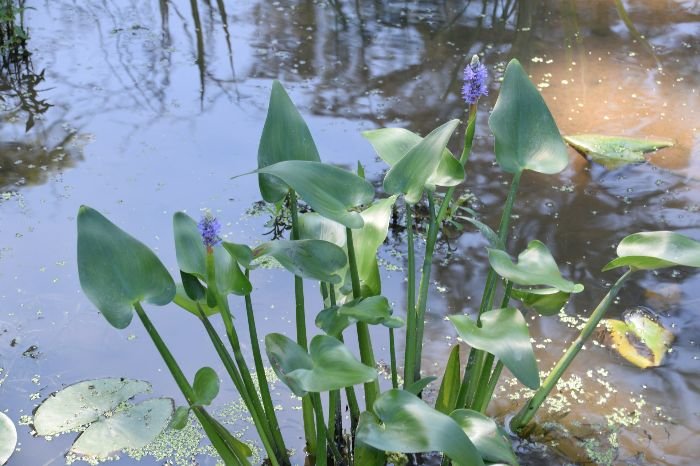
Hardy water lilies are the backbone plant for many ponds because they do several jobs at once. They shade the surface, soften reflections, hide fish, and turn open water into a finished center. Match the cultivar to the size of the pond or tub. Large lilies overwhelm small containers. True dwarf forms can carry a patio basin without swallowing it.
Lotus belongs in the same quiet-water family and behaves at a larger scale. Even smaller lotus cultivars want sun, warmth, and room for their leaves to rise and spread. They suit broad tubs, formal basins, and larger ponds. Tight fountain reservoirs are usually too small for them.
For patio water gardens, restraint supports low-maintenance planting. One water lily, one vertical shelf plant, and some visible water usually looks stronger than a basin stuffed edge to edge.
Free-Floating Shade Plants
Free-floating plants bring fast summer shade and a curtain of dangling roots, which is why they are so tempting when water starts greening up. Water lettuce, water hyacinth, and frogbit can cool the surface and reduce how much direct sun reaches the water. They also multiply fast enough to turn a clean pond into a sealed mat if nobody edits them.
That speed makes local caution mandatory. Several familiar free-floating species are restricted, banned, or problematic depending on region. They also move quickly from summer accent to solid surface cover in warm water.
Aquatic Invasive Risk, Disposal, And Local Rules
Aquatic plant risk is an escape and disposal issue as much as a buying issue. Free-floating plants draw most of the attention. Submerged fragments, rooted marginals, and dumped basket soil can also move viable pieces into ditches, swales, streams, and floodwater.
Check state invasive aquatic plant lists before buying floaters, marginals, or submerged species. Water hyacinth, water lettuce, frogbit, parrot feather, hydrilla, yellow flag iris, and some water primrose species deserve local review first. Blue flag iris is the safer direction in many garden ponds; avoid substituting yellow flag iris in regions where it is invasive or restricted.
Never dump extra plants, trimmings, or basket soil into natural water. Dry and bag removed material, or follow local disposal guidance. Composting only belongs where fragments cannot wash out, rehydrate, or escape with stormwater. Near natural ponds, streams, swales, or flood-prone edges, regional native or clearly approved alternatives are the safer planting direction.
Submerged Plants Help More With Balance Than With Beauty
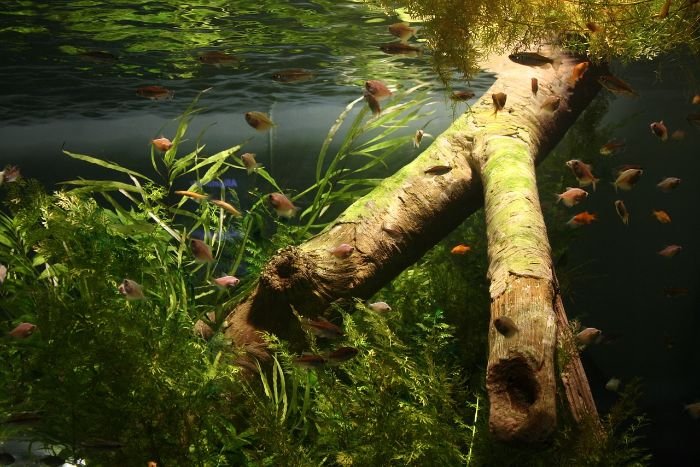
Underwater plants are often sold as oxygenators, and the label captures just one part of the job. They release oxygen during photosynthesis and respire after dark. Their more reliable value is structural: they occupy water volume, use nutrients that algae would otherwise claim, and create cover for fry, tadpoles, and small pond life.
Hornwort is a useful loose or lightly anchored submerged plant for quiet ponds, wildlife tubs, and fish cover. It grows quickly, which is helpful when the water needs soft underwater structure and less helpful when the pond is tiny and never thinned. Pulling a handful every few weeks is normal maintenance in a small feature.
Vallisneria, often sold as wild celery, gives a different effect. It roots more firmly, reads cleaner, and stays calmer in features where a floating tangle would look messy. It is often a better long-term choice for rooted underwater cover, especially in ponds that have enough depth to let ribbon-like leaves move without clogging a pump intake.
Submerged plants are optional in many decorative tubs. They matter more when the feature runs warm, carries fish, or needs extra underwater shelter. They support pond balance, but surface shade, debris cleanup, and reasonable plant spacing still decide whether algae pressure stays manageable. Submerged plants also need thinning before loose stems collect around pump intakes or decay into nutrient load.
Marginal And Bog Plants Shape The Shelf, Edge, And Splash Zone
Shelf Plants For Pond Edges
Marginal plants turn the waterline into a real garden edge. Pickerelweed, blue flag iris, arrowhead, marsh marigold, and related shelf plants give height, bloom, and a place for the pond to meet land with a planted transition. When the shelf depth is right, they hold themselves naturally and make the water-to-bank shift look settled.
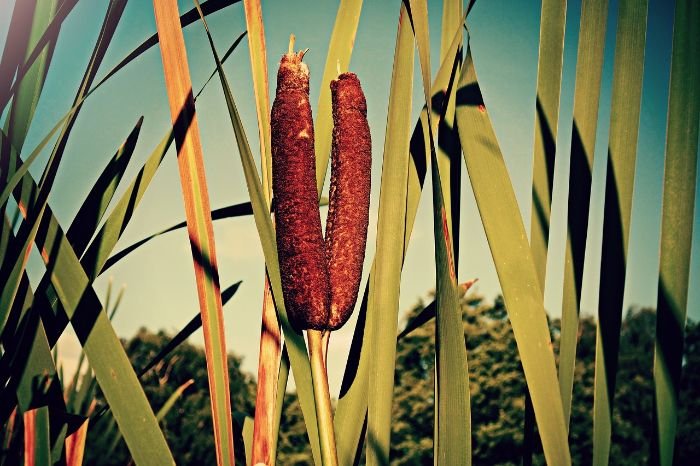
They also carry habitat value above the waterline. Dragonflies perch on the stems, frogs use the shelter, and pollinators work the flowers. Shelf plants can support attracting wildlife with plants when stems, flowers, and shelter remain available above the waterline. Regional shelf choices often perform better when choosing native plants accounts for climate, habitat, and local spread behavior.
Plants For Fountains, Splash Edges, And Shadier Features
Fountains need a separate palette. Most fountain bowls are too shallow, too turbulent, or too pump-heavy for lilies, lotus, or loose submerged stems. The better answer is usually a splash-tolerant marginal planted beside the basin, on a wet ledge, or in an adjoining gravel pocket that stays damp from overspray.
Corkscrew rush, sweet flag, dwarf papyrus, and smaller water-loving grasses or rushes handle that role well. They give the movement and vertical texture people want from a fountain planting and keep broad floating leaves away from spray. Shady courtyard basins need shade-loving plants chosen for low light, wet roots, and limited bloom energy.
Pro Tip: Set empty bricks or overturned nursery pots on the shelf first, then step each basket onto them until the crown sits at the right water line. Depth errors kill more marginal plants than feeding does.
Planting Baskets, Soil, Division, And Winter Care
Most pond plants are easier to manage in baskets or heavy containers, especially when rhizomes spread hard or fish disturb the shelf. Use heavy aquatic soil or dense loam capped with gravel so the basket stays settled, the water stays clearer, and fish have a harder time stirring the planting loose.
Keep baskets clear of pump intakes and leave enough water around them for circulation and fish movement. Divide lilies, lotus, blue flag iris, pickerelweed, arrowhead, and other crowded marginals before baskets jam together. Remove collapsing foliage before it breaks down in the feature, and feed heavy basket growers such as lilies, lotus, and water canna inside the basket rather than enriching open water.
Winter handling belongs in the planting plan from the start. Lower hardy baskets below the freeze line where climate requires it. Lift, store, or replace tropicals such as dwarf papyrus, taro, water lettuce, and water hyacinth in cold regions. Small patio features often need the most intervention because shallow water cools and freezes faster than a deeper pond center.
Water Garden Mistakes That Turn Clear Features Murky And Crowded
Most water garden problems begin earlier than the algae bloom. They start with a mismatch in depth, movement, seasonal cleanup, or winter plan. Cutback, division, and shelf resets should follow seasonal garden care timing, because neglected baskets and collapsing foliage keep altering the water long after the flowers fade.
- Buying by bloom photo before checking actual shelf depth, basket height, and water movement
- Treating a fountain basin like a still pond and tearing up lilies or loose stems with spray
- Using loose potting mix that floats, clouds the water, and feeds nutrient buildup
- Expecting submerged plants to fix a pond that has no surface shade and too much sun
- Adding free-floating or submerged species without checking regional restrictions and spread risk
- Letting pickerelweed, iris, arrowhead, or lotus fill every inch of shelf until water stalls
- Leaving dead foliage, spent flowers, and fallen leaves to decay in the feature
- Ignoring the winter plan for tropicals, shallow baskets, and features that are partially drained
Conclusion
Choose the plant by the water line it has to own.
If the quiet center, the sun-struck surface, the shallow shelf, and the splash edge each carry the right plant, the feature starts managing light, heat, and crowding more gracefully. Trim dead stems on schedule, divide baskets before they jam together, and replace risky tropical floaters when the season ends. The best water garden looks settled: pads floating flat, shelf plants standing clean at the edge, and water with room between plant groups.
FAQ
What plants grow best in a water garden?
Hardy water lilies, hornwort, vallisneria, pickerelweed, blue flag iris, arrowhead, marsh marigold, corkscrew rush, and dwarf papyrus are strong starting points. The right mix depends on whether the feature is still or moving, sunny or shaded, deep enough for lilies, or built around a shallow shelf and wet edge.
What is the difference between floating, submerged, and marginal water garden plants?
Floating plants sit on or near the surface and add shade. Submerged plants grow under the water and provide underwater structure. Marginal plants root on shallow shelves or wet edges and shape the pond perimeter. Depth, water movement, and winter handling decide which group fits each part of the feature.
What are the best water garden plants for a small pond or patio tub?
For a small water garden, think in layers first. A dwarf hardy water lily or a small floating plant can handle the surface. Then one shelf plant such as pickerelweed, corkscrew rush, or dwarf papyrus gives height. Small basins usually look better and stay cleaner when a few plants do the work, because too many baskets warm the water, reduce open surface, and make division harder.
Can you put plants in a fountain?
Usually around the edges or in adjoining wet pockets. Most fountain basins are too turbulent and too shallow for true pond plants such as water lilies and lotus. Use splash-tolerant marginals like rushes, sweet flag, or dwarf papyrus where the roots stay wet and away from the pump.
Do submerged plants really keep pond water clear?
Yes, as part of a larger balance. Submerged plants use nutrients and create underwater structure. Pond balance improves when surface shade, debris cleanup, and reasonable plant spacing are handled well.
Are water lettuce and water hyacinth safe to use?
Treat them as regional-risk plants first and decorative floaters second. In some states they are restricted, banned, or highly problematic because they spread fast and clog waterways. Even where they are allowed, they need close editing and careful end-of-season disposal. Never dump extra plants, trimmings, or water from a crowded tub into natural waterways.
What water garden plants survive winter?
In colder climates, hardy water lilies, blue flag iris or locally appropriate hardy iris, pickerelweed, arrowhead, hornwort, and some rushes can survive well if the roots stay below the freeze line and the plant is truly hardy for the zone. Tropical floaters, papyrus, taro, and many warm-climate shelf plants usually need lifting, indoor storage, or replacement.
Should pond plants be planted in soil or gravel?
Use heavy aquatic soil or a dense loam in baskets, then cap it with gravel. Loose potting mix floats, clouds water, and leaks organic fines into the pond. Straight gravel alone is too lean for heavier feeders such as lotus, lilies, and canna over the long season.