
Last Updated June 03, 2026
A dwarf fruit tree can still become the wrong tree for a small garden. The tag may say patio apple, miniature peach, columnar cherry, or dwarf citrus, and the plant may still need a second pollinator, a permanent stake, a bigger pot, more sun, or a pruning system that the space cannot hold.
Start with the footprint. Measure the tree at working size, not nursery size: mature height, canopy width, root volume, branch access, pollination partner, and harvest reach. A compact tree that needs an 8-foot spread does not solve a 4-foot side yard. A columnar apple that needs another apple nearby does not solve a one-pot balcony unless the pollination plan is built in.
Dwarf fruit trees work best in small gardens when the variety, rootstock, container, training method, and crop expectation all point to the same garden job. The chosen tree should be easy to water, prune, thin, harvest, and protect without turning the whole space into orchard maintenance.
Key Takeaways:
- Read mature height and spread before fruit variety names
- Check whether the tree is genetic dwarf, rootstock dwarf, columnar, or trained small
- Match pollination needs to the number of trees your space can hold
- Use containers for mobility and ground beds for root volume
- Keep pruning height, harvest access, and support needs in the buying decision
Table of Contents
Dwarf Fruit Trees – Read Size Before Variety
Dwarf fruit trees are small because growth has been limited by genetics, rootstock, container restriction, pruning, training, or some combination of those forces. Those are different purchase types. They do not behave the same after three seasons in a garden.
A genetic dwarf has naturally compact growth. Many patio peaches and nectarines fall into this group. They often look dense, short, and ornamental, with fruiting wood close to the trunk. A rootstock-dwarfed tree is a normal fruit variety grafted onto roots that reduce vigor. Many apples, pears, cherries, and citrus are sold this way. A columnar tree grows upright and narrow, so it saves width more than height.
Training also changes size. Espalier, cordon, fan, and step-over forms can make ordinary fruit trees fit narrow spaces, and they demand regular pruning and a support structure. A trained tree is small because the gardener keeps it small. That can be excellent in a tight path or along a sunny fence.
| Dwarf Type | What Controls Size | Best Small-Space Use | Main Caution |
|---|---|---|---|
| Genetic dwarf | The variety itself stays compact | Patio peach, nectarine, some compact cherries | Dense growth still needs thinning and light |
| Rootstock dwarf | The grafted root system limits vigor | Apples, pears, cherries, citrus | Often needs staking and graft-height care |
| Columnar | Upright narrow branching habit | Balconies, narrow beds, fence lines | Width is small; height may still need pruning |
| Espalier or cordon | Training and pruning keep the tree flat | Walls, fences, side yards, formal beds | Needs permanent structure and regular cuts |
| Container-restricted | Root volume limits growth | Movable citrus, fig, patio trees | Water and root heat become sharper problems |
Choose The Right Dwarf Fruit Tree For The Space
Small gardens fail with fruit trees when the tree is chosen for the fruit first and the access pattern later. A tree needs room for light on every fruiting side, hands inside the canopy, a watering basin or pot, and space for dropped fruit cleanup.
Use numbers before trusting the word dwarf. Many dwarf fruit trees still need several feet of canopy width, a working path around the tree, and a container large enough to hold moisture without tipping. For patio trees, a container in the 20- to 24-inch range is often a more realistic starting point than a decorative porch pot, and many in-ground dwarf trees still need roughly 6 to 8 feet of usable garden space once pruning and harvest access are included.
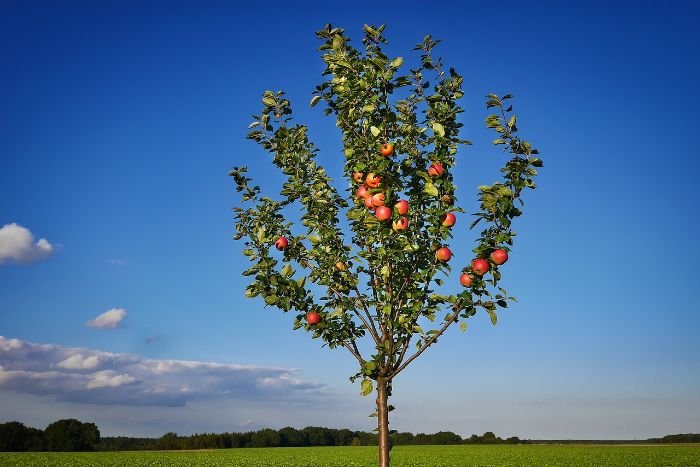
Start with the garden job. Patio trees need stable container weight and a tidy canopy. Narrow side yards need a flat or columnar form. Front-yard edible landscapes need bloom, leaf texture, clean fruit drop, and harvest access that does not block the walk. Edible landscaping works better when fruit trees are chosen as structure first and harvest second.
| Small-Space Situation | Best Tree Form | Good Fruit Choices | Decision Check |
|---|---|---|---|
| Balcony or rented patio | Movable container tree | Dwarf citrus, fig, patio peach, columnar apple | Can one person move or protect the pot? |
| Narrow side yard | Cordon, espalier, or columnar tree | Apple, pear, cherry, fig | Will the tree leave walking and pruning access? |
| Small sunny backyard | Dwarf or semi-dwarf tree in ground | Apple, peach, plum, cherry, pear | Does mature spread still fit after pruning access? |
| Courtyard with warm walls | Container citrus or fan-trained tree | Meyer lemon, kumquat, fig, peach | Does reflected heat help the fruit or overheat the pot? |
| One-tree plan | Self-fertile or multi-graft tree | Sour cherry, some peaches, figs, some citrus | Can it set fruit without a second compatible tree? |
Best Dwarf Fruit Trees For Small Gardens
The best dwarf fruit tree is the one that fits your climate, space, and harvest use together. Dwarf peach can be perfect on a warm patio and poor in a late-frost pocket. Dwarf apple can be productive in a small bed and useless without compatible pollen. Meyer lemon can be excellent in a movable pot and impossible in an unprotected winter garden.
| Fruit Tree | Examples To Recognize | Small-Space Strength | Pollination Note | Container Fit | Main Caution |
|---|---|---|---|---|---|
| Dwarf apple | Columnar apples, dwarf-rootstock apples, some self-fertile apples | Strong rootstock choices and easy harvest height | Usually needs compatible apple pollen | Good with the right rootstock and large pot | Needs staking on many dwarfing rootstocks |
| Columnar apple | Columnar apple selections sold for narrow planting | Very narrow footprint | Often needs another apple nearby | Good for patios and balcony edges | Height still needs control |
| Dwarf peach or nectarine | Bonanza-type peaches, Pix Zee-type peaches, patio peaches, compact nectarines | Compact, ornamental, fast fruiting in warm sites | Many are self-fertile | Very good in a large container | Flower buds face spring frost risk |
| Dwarf cherry | Sour cherry, Northstar-type cherries, compact tart cherries | Good fruiting height and spring bloom | Depends on cultivar; sour cherries are easier for one-tree plans | Medium to good | Bird pressure can be heavy |
| Dwarf pear | Dwarf or trained pear forms on suitable rootstock | Useful where a trained form can be managed | Often needs a compatible pear | Possible, less forgiving than apple | Can outgrow the label without pruning |
| Fig | Container-suited common fig selections | Responds well to container restriction and pruning | Many common figs fruit without pollination help | Very good | Cold protection depends on region |
| Dwarf citrus | Meyer lemon, calamondin, kumquat, satsuma-type citrus | Evergreen patio value and useful kitchen fruit | Many types set with one tree | Excellent where winter shelter is available | Needs light and careful watering indoors |
| Compact serviceberry | Compact Amelanchier selections sold for small gardens | Ornamental bloom, edible fruit, wildlife value | Often fruits with one plant | Good for large containers or small beds | Birds may harvest first |
Citrus earns small-space attention because many gardeners need movable fruit. Meyer lemon, calamondin, kumquat, and satsuma can stay manageable in pots when the rootstock, container, light, and winter plan fit. Citrus tree variety selection should happen before a patio grower buys by fruit photo alone.
Rootstock, Graft Height, And Support Decide Long-Term SizeP
The word dwarf often hides the most important purchase detail. A tree may be dwarf because of genetic habit, or because the fruiting variety was grafted onto a dwarfing rootstock. Those two trees can need different staking, watering, pruning, and lifespan expectations.
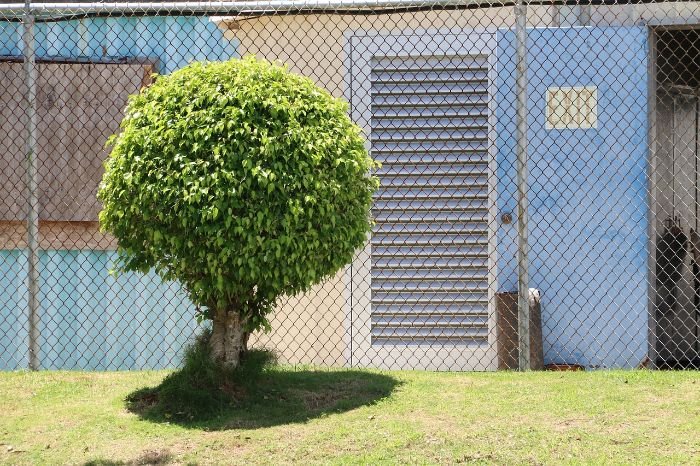
A grafted tree has a graft union near the lower trunk. Keep that union above the final soil or potting mix line. If the fruiting top roots into the soil, the dwarfing effect can weaken because the scion begins using its own roots. In small gardens, that mistake can turn a controlled tree into a larger tree over time.
Many rootstock-dwarfed trees need strong staking or trellising for life because the smaller root system that keeps the tree compact may also make the tree less self-supporting under wind and fruit weight.
| Label Or Rootstock Cue | What It Usually Means | Small-Garden Decision | Support Or Risk |
|---|---|---|---|
| Genetic dwarf | The variety itself stays compact | Best for patio peaches, nectarines, and compact ornamental fruiting trees | Still needs thinning, light, and pruning access |
| Apple on dwarfing rootstock | Rootstock limits final tree size and bearing time | Ask for mature height, rootstock name, and pollination match before buying | Many dwarfing apple rootstocks need staking or anchoring |
| Columnar apple | Narrow branching saves width more than height | Useful for balconies, fence lines, and paired pollination rows | Height and compatible pollen still need planning |
| Cherry on dwarfing rootstock | Rootstock controls height and harvest reach | Check whether the cultivar is sweet, sour, self-fertile, or needs pollen | Bird pressure and support can matter as much as size |
| Pear on dwarfing or semi-dwarfing rootstock | The rootstock reduces vigor, though pears can still grow strongly | Best where pruning, espalier, or a compatible pair fits the space | Some pears outgrow small labels without training |
| Multi-graft tree | Several cultivars share one trunk | Useful when pollination or harvest variety must fit one tree position | Pruning must stop one graft from dominating |
Containers, Ground Beds, And Espalier Change The Footprint
A dwarf tree in the ground gets more root space and usually needs less emergency watering than a potted tree. A container tree gives mobility, soil control, and rental-garden flexibility. Espalier and cordon systems save width by turning the tree into a trained plane.
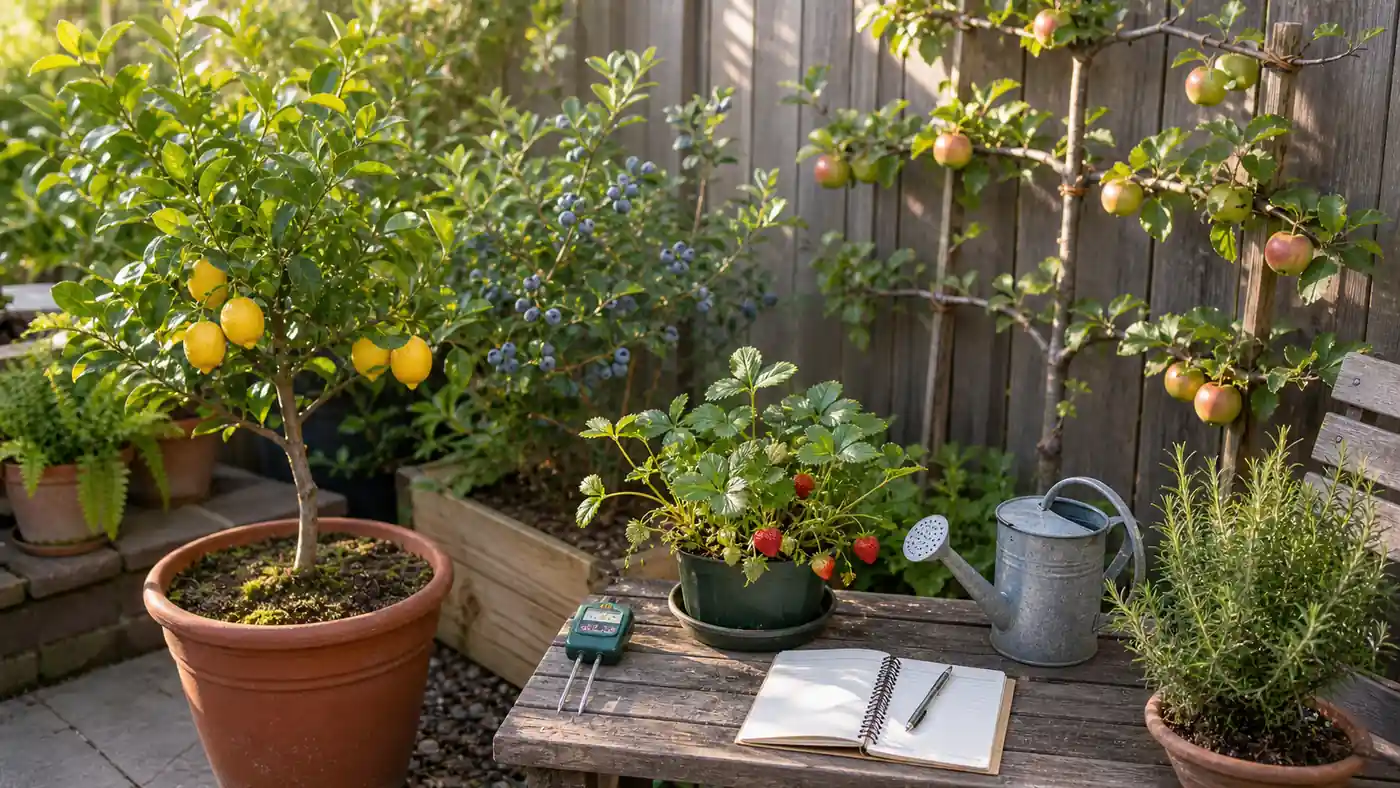
Containers need volume and stability. A tiny decorative pot may keep the tree small by stress, not by design. Fruit trees in pots need enough root room to support leaves, flowers, and fruit. The container also has to resist tipping when wind catches the canopy.
Ground beds need soil preparation beyond the planting hole. Compact soil, waterlogged pockets, and grass competition can stunt a dwarf tree so severely that it stays small and unproductive. In small edible layouts, fruit trees usually work best as long-term structure. That means soil and access need to be right before annual plants fill the edges.
Warm-climate and cold-sensitive dwarf fruit trees often belong in movable pots. Growing tropical fruits in temperate climates depends on container mobility, winter shelter, and root-zone control because cold-sensitive roots and canopies cannot remain exposed all year in many small gardens.
| Method | Space Advantage | Best Tree Matches | Maintenance Demand |
|---|---|---|---|
| Large container | Movable and patio-friendly | Citrus, fig, dwarf peach, columnar apple | Frequent water checks and repotting |
| Small ground bed | More root volume in limited space | Dwarf apple, cherry, peach, pear | Pruning, mulch, and weed control |
| Espalier | Flat against wall or fence | Apple, pear, fig, some stone fruits | Regular tying and pruning |
| Columnar row | Very narrow line planting | Columnar apple, narrow pear forms | Height control and pollination planning |
| Multi-graft tree | Several varieties on one trunk | Apple, pear, plum, citrus | Balance pruning so one graft does not dominate |
Pollination, Chill, And Crop Load In Compact Gardens
A small tree still follows full-size fruit biology. Flowers need the right chilling history, spring weather, compatible pollen where required, and enough leaf area to size fruit. Small gardens make those limits more visible because there is less room for backup trees.
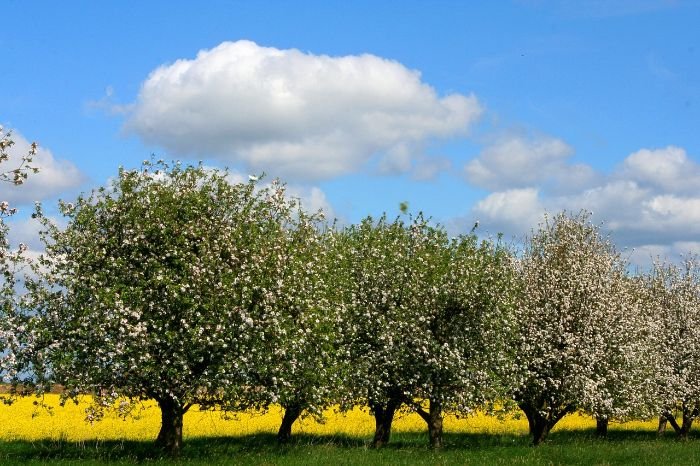
Apples and pears often need compatible pollen from another cultivar that blooms at the same time. Some cherries and plums behave the same way. Peaches, nectarines, figs, sour cherries, and many citrus choices are easier for one-tree spaces because they often set fruit without a separate pollination partner.
Chill hours matter where winters are mild. A tree that needs more winter chill than the garden receives may leaf out poorly, bloom unevenly, or skip fruit. Low-chill peaches, nectarines, apples, and blueberries exist for warmer regions. Cold regions have the opposite problem: winter survival, spring frost, and flower-bud damage.
Crop load matters more on dwarf trees because the canopy is small. Too many fruit can bend branches, reduce fruit size, and weaken next year’s flower-bud formation. Thin early when fruitlets are small, especially on apples, pears, peaches, and nectarines.
| Fruit | One-Tree Reliability | Small-Garden Fix |
|---|---|---|
| Apple | Often low without compatible pollen | Choose self-fertile, columnar pair, crabapple nearby, or multi-graft |
| Pear | Often low without compatible pollen | Use a compatible pair or trained two-tree system |
| Peach and nectarine | Often good with one tree | Pick climate-fit cultivar and protect bloom from frost |
| Sweet cherry | Depends strongly on cultivar | Choose self-fertile type or plant compatible pollen source |
| Sour cherry | Usually good for one tree | Use where birds can be managed |
| Citrus | Often good for one tree | Match winter shelter, pot size, and summer heat |
Soil, Water, And Pruning Keep Small Trees Productive
Dwarf fruit trees have less room to recover from root stress. A standard tree in open ground may hide a bad watering week. A dwarf tree in a patio pot can show leaf curl, fruit drop, or stalled growth fast because root volume is limited.
Use sharp drainage and consistent moisture. In containers, use a potting mix that drains freely and re-wets evenly. Garden soil in a pot usually compacts and leaves wet pockets. In ground beds, mulch the root zone and keep mulch away from the trunk flare.
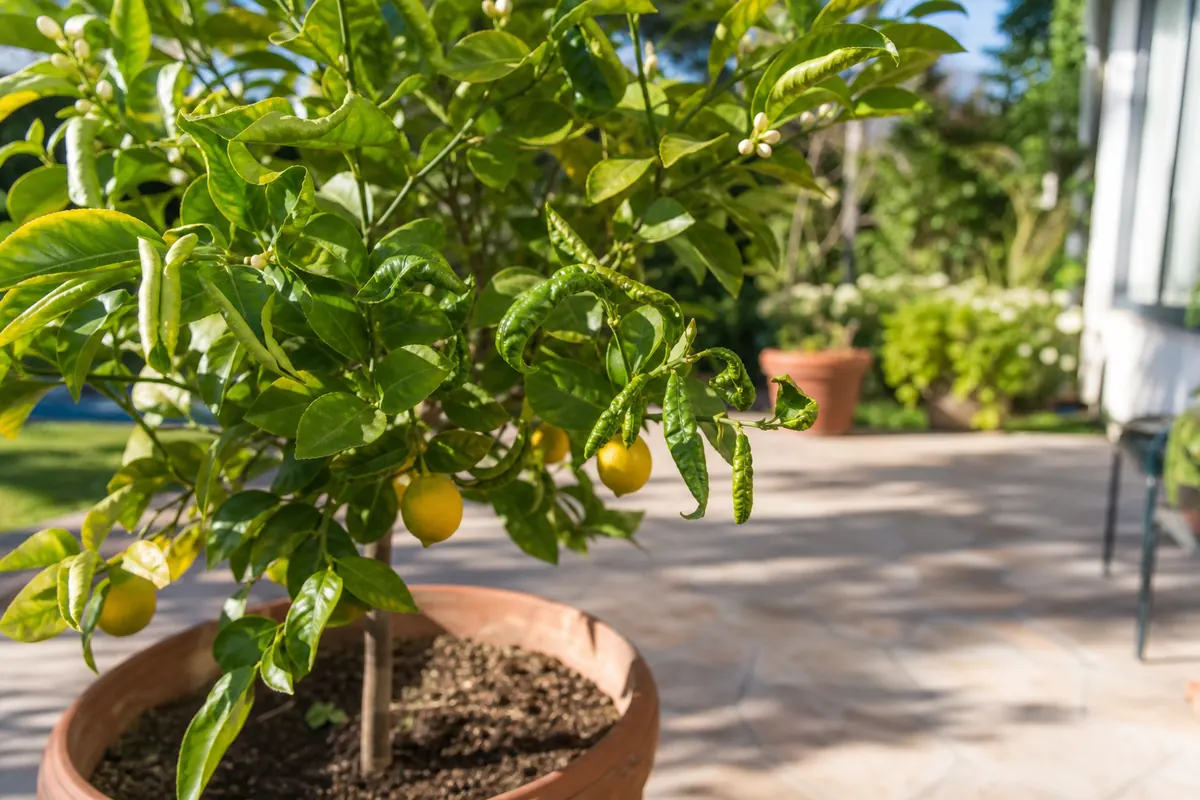
Citrus makes the container lesson obvious. Potted citrus can yellow from waterlogged roots, salts, or cold wet mix long before the gardener reads the problem correctly. Healthy citrus soil conditions also help explain why dwarf fruit trees need oxygen around roots before feeding becomes useful.
Water by root zone, not calendar. A container in sun and wind may need water far sooner than the same tree in a shaded courtyard. Watering citrus trees follows the same container rule other potted fruit trees need: check below the surface, avoid stagnant saucers, and let air return to the mix between waterings.
Pruning should keep fruiting wood reachable. Dwarf trees still need regular cuts, with most of the work closer to eye level. Remove crowded, crossing, dead, or inward-growing wood. Keep enough young wood for species that fruit on newer shoots, and protect older spurs on apples, pears, and cherries where those spurs carry future crops.
Mistakes That Make Dwarf Fruit Trees Too Big Or Unproductive
Most small-space fruit tree failures are visible at purchase. The tree is too vigorous for the bed, the rootstock is unnamed, the pollination partner is missing, the pot is shallow or unstable, or the harvest path is blocked before the first fruit forms.
| Mistake | What Happens | Better Choice |
|---|---|---|
| Buying by cultivar name alone | The tree outgrows the small space | Read rootstock, mature spread, and training form |
| Burying the graft union | The scion can root and weaken size control | Keep the graft above settled soil or mix |
| Skipping the pollination check | Flowers appear and fruit set stays poor | Choose self-fertile, multi-graft, or compatible partner |
| Using a small ornamental pot | Roots dry, overheat, or circle too fast | Use a stable large container with drainage |
| Letting crop load stay too heavy | Fruit stays small and branches bend | Thin early and keep fruiting wood balanced |
| Planting in a low-light corner | Growth is leafy and fruit quality drops | Reserve the sunniest usable space for fruit trees |
A dwarf fruit tree should make the garden easier to use. The right tree leaves a path open, keeps fruit within reach, has enough sun to ripen, and has a pollination plan that fits the number of trees the space can hold.
Conclusion
Choosing dwarf fruit trees for small gardens starts with space math. Mature spread, rootstock, support, pollination, container size, pruning height, and harvest access matter before the fruit photo on the tag.
The most reliable small-space tree is the one that fits the whole system. Dwarf apple may need a pollination partner and permanent support. Patio peach may need frost protection during bloom. Fig may need winter handling. Dwarf citrus may need a bright indoor season and disciplined watering.
Buy the tree you can keep in working shape. The right dwarf fruit tree gives a compact garden blossom, structure, shade, and fruit without taking away the paths, seating, light, and maintenance access that make the garden usable.
FAQ
What Is The Best Dwarf Fruit Tree For A Small Garden?
The best dwarf fruit tree for a small garden depends on climate, sun, pollination, and space. Dwarf apple, patio peach, sour cherry, fig, and dwarf citrus are strong options when their mature size and care needs match the site.
Can Dwarf Fruit Trees Grow In Containers?
Yes, many dwarf fruit trees can grow in containers if the pot is large, stable, and well drained. Citrus, fig, patio peach, columnar apple, and some cherries are good candidates. Container trees need closer watering, feeding, and root checks than trees in the ground.
Do Dwarf Fruit Trees Produce Full-Size Fruit?
Many dwarf fruit trees produce normal-size fruit on a smaller tree. Fruit size still depends on cultivar, pollination, water, sunlight, thinning, and crop load. A tree carrying too many fruit can produce smaller, lower-quality harvests.
Do You Need Two Dwarf Fruit Trees For Pollination?
Some dwarf fruit trees need a compatible pollination partner, especially many apples, pears, plums, and sweet cherries. Peaches, nectarines, figs, sour cherries, and many citrus types are often better for one-tree spaces. Always check the specific cultivar.
How Big Do Dwarf Fruit Trees Get?
Dwarf fruit trees vary widely. Patio peaches may stay close to shrub size, many dwarf apples still reach about 8 to 12 feet depending on rootstock and pruning, and some semi-dwarf trees can become too large for tight spaces. Rootstock, cultivar, container size, climate, and pruning all change final size.
Are Dwarf Fruit Trees Good For Beginners?
Dwarf fruit trees can be good for beginners when the tree is self-fertile, climate-fit, and easy to reach. Fig, dwarf citrus with winter shelter, sour cherry, and patio peach are often simpler than pollination-dependent apples or pears in very small spaces.