


Last Updated May 05, 2026
Vertical gardening for small spaces works when every upright surface gets a job and every plant earns the water, light, and root room it uses. A blank fence, a narrow side yard, a warm patio wall, or a balcony railing can all carry growth that would otherwise sprawl across the floor and make the whole area feel tighter.
The mistake is treating all vertical systems as the same. A cucumber on a deep pot and trellis behaves nothing like basil in a wall pocket, strawberries in a tower, or clematis on a fence panel. Sun angle, wind, wall heat, runoff, mature weight, and how often you can reach the planting decide whether the setup becomes a clean space-saver or a thirsty tangle.
The strongest vertical gardens grow upward while keeping the floor below usable for walking, seating, storage, or harvest access. That is the real win in urban balconies, rental patios, and narrow side yards.
Key Takeaways:
- Match the vertical system to light, weight, and watering
- Grow climbers on strong supports and herbs in shallow pockets
- Leave floor space clear so the garden feels bigger
- Avoid heavy crops on flimsy walls, rails, or tiny pots
- Check sun-facing planters twice daily during hot spells
Table of Contents
Why Vertical Gardening Works Better Than More Pots On The Floor
Small-space gardeners rarely run out of enthusiasm first. They run out of walking room, reachable light, and clean places to set a watering can.
Vertical gardening changes that math in a few clear ways:
- Shifts growth to walls, rails, and supports, not the walkway.
- Keeps vine crops cleaner and easier to harvest.
- Opens room below for storage, seating, or a second planting layer.
- Can improve airflow around leaves when plants are not jammed together.
- Turns bare boundaries into privacy, shade, or color.
Vertical plantings cast real shade, so support placement matters as much as plant choice. In the northern hemisphere, a trellis on the north side of a bed often keeps shorter crops from losing their light. Put that same structure on the south side of a tiny plot and the gain in height can cost you half the planting below it.
Vine crops grown upward stay cleaner, use less ground space, and make harvest easier in tight beds. That matters in a compact edible garden where every square foot has to carry more than one job. A bean teepee or cucumber trellis can produce food, divide the space visually, and still let air move through the garden.
The tradeoff is real. Plants lifted off the ground dry faster in wind, and containers hanging on fences or rails hold a much smaller water reserve than a bed. More height does not remove the need for root room. It makes root limits show up faster.
A strong vertical surface gets decent light and still carries nothing useful – a fence, railing, shed wall, gate, or empty corner. Surface fit tells you more than any trend photo.
Choose A Vertical Gardening System By Surface, Weight, And Watering
The best system is the one your space can carry, you can reach easily, and your watering routine can keep alive in July.
| System | Best fit | Strong plant types | Main watch-out |
|---|---|---|---|
| Slim trellis or wire panel | Fence line, raised bed edge, deep patio pot | Peas, pole beans, cucumbers, clematis, light annual vines | Needs anchoring before roots spread |
| Freestanding obelisk or teepee | Containers, corners, small beds | Beans, sweet peas, black-eyed Susan vine, compact cucumbers | Top-heavy pots tip in wind |
| Railing or window boxes | Balconies, decks, narrow edges | Herbs, lettuce, strawberries, trailing flowers | Shallow soil dries and overheats fast |
| Pocket panels or wall planters | Blank fences and walls with reachable water access | Herbs, salad greens, sedums, trailing annuals | Uneven wetting from top to bottom |
| Stacked towers | Tiny patios, sunny corners, edible focus | Strawberries, greens, herbs, compact annuals | Planting pockets are small and dry unevenly |
| Hanging baskets and chains | Porches, pergolas, eaves, hooks over hardscape | Herbs, strawberries, trailing flowers, cherry tomatoes with care | Weight and daily water demand rise quickly |
Trellises remain the easiest entry point because they solve one clear problem: they give climbing stems a place to go. For food crops, trellises and cages work best when the structure is sized for the mature vine and fruit load.
Pocket walls and stacked towers solve a different problem. They let you place many shallow-rooted plants into a tight footprint. Watering becomes a distribution problem, not a simple soak. The top pockets take the first flush. The bottom pockets often stay wetter longer. On a hot wall, the middle row can dry first because reflected heat hits it from both directions.
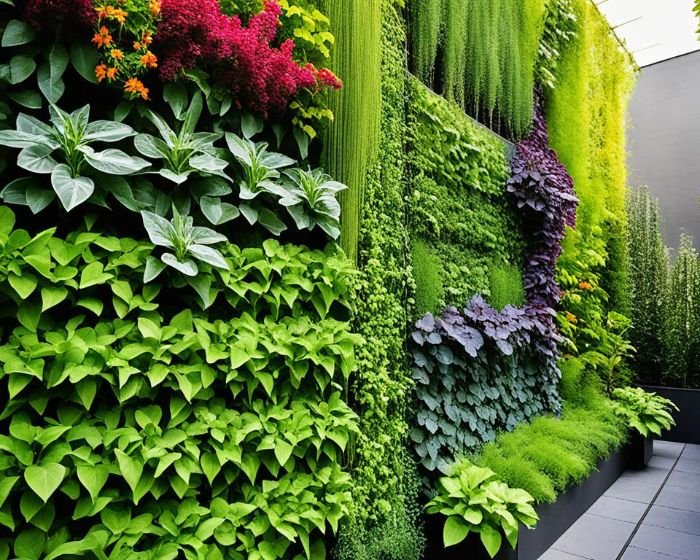
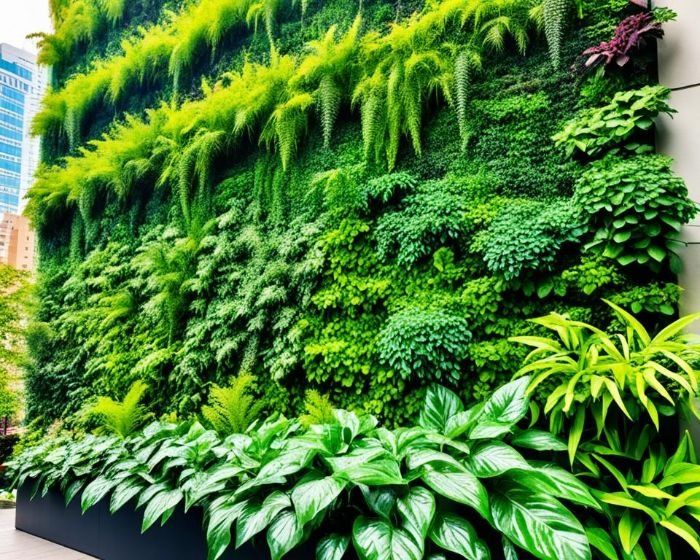
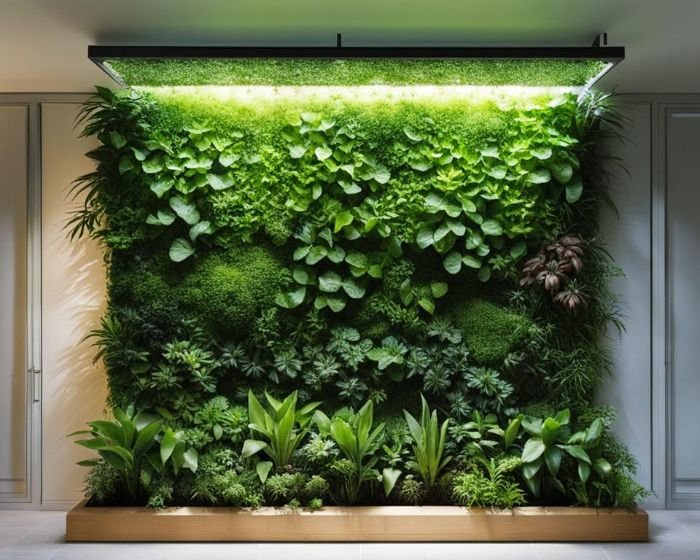
Living walls are the most seductive option and the least forgiving one. Full plant walls can become heavy enough to need structural review before installation. Green walls also become high-maintenance quickly without reliable irrigation. That combination is why most home gardeners do better with trellises, wall-mounted pots, or one compact tower before they attempt a full planted facade.
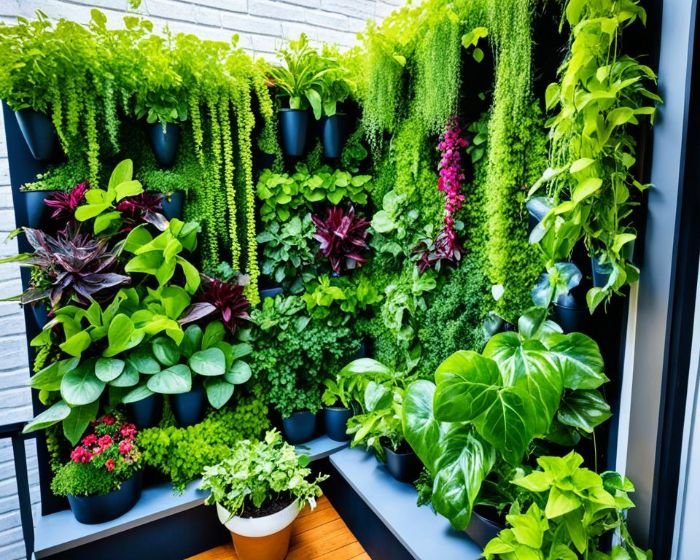
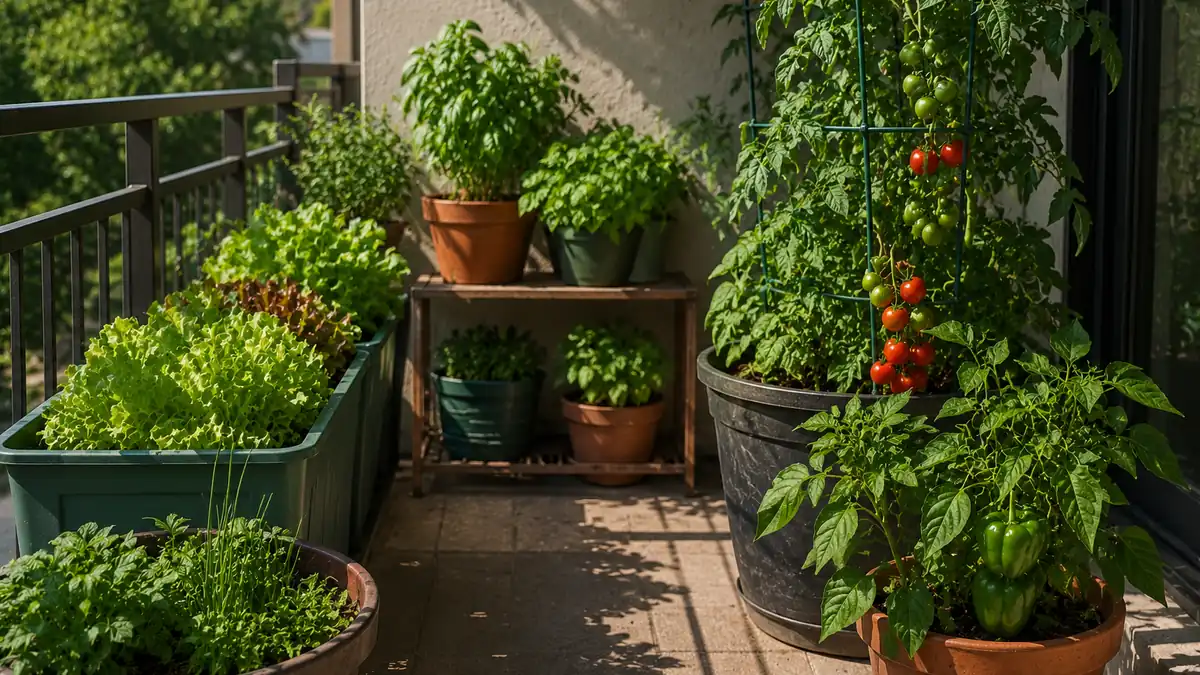
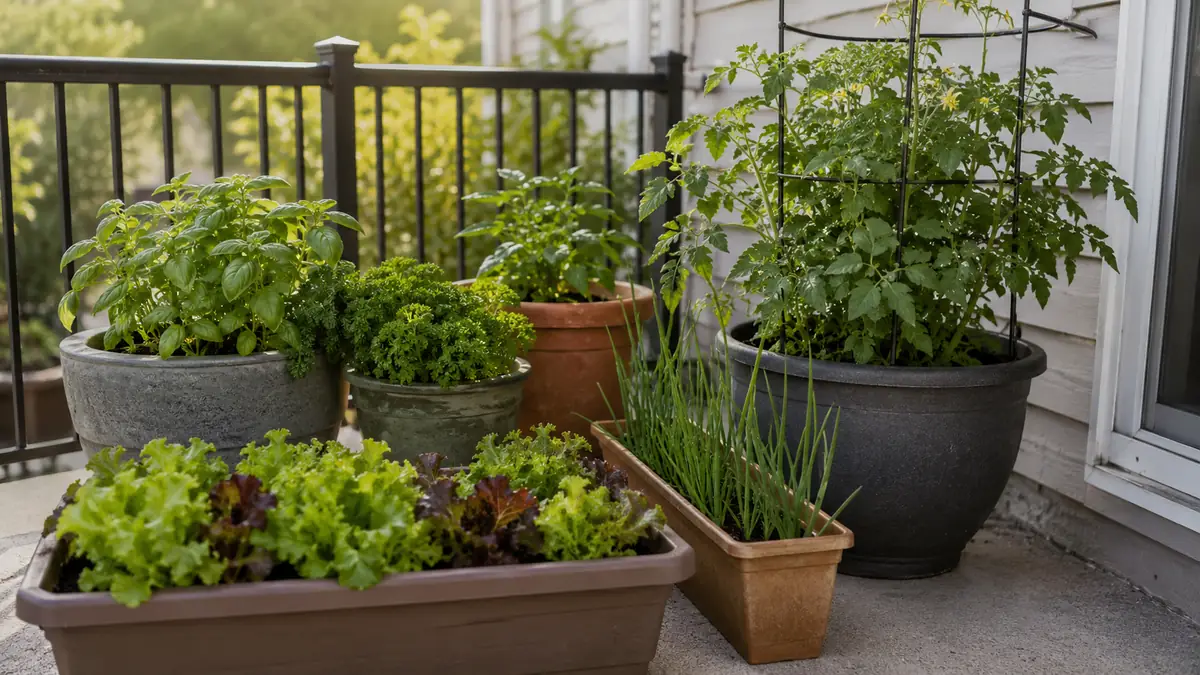
Balcony gardeners need one more filter. Floor load, railing rules, and wind exposure matter before any plant list does. Container gardening tips for balconies and small patio spaces should guide pot size, water access, drainage, and placement because the structure is only half the system. The pot and the water source finish the job.
Balcony, Railing, And Rental Limits Come First
Wet potting mix is heavy, and the load rises again when vines mature or fruit starts hanging off the front edge. Urban balconies and rental patios need secure brackets, a clean runoff plan, and hardware that fits the building rules before a single plant goes in.
Railing planters work best for shallow-rooted crops such as herbs, greens, and strawberries. Heavy crops belong in floor-supported containers, not on rail hardware. Wind exposure also changes the equation. A breezy upper-floor balcony dries faster, tips easier, and punishes top-heavy setups more quickly than a sheltered ground-level patio.
Renters should treat drilled systems as permission-based, not assumed. Freestanding trellises, movable towers, and floor-supported containers are easier to remove, easier to rebalance, and less likely to create disputes over fixings, stains, or dripping water on lower balconies.
Best Plants For Vertical Gardening In Small Spaces
Plant choice gets easier when you sort by root behavior and climbing habit ahead of inspiration-photo appeal.
Plants That Repay A Real Support
Peas, pole beans, cucumbers, small melons, nasturtiums, runner beans, clematis, and many annual vines make sense on trellises because they want height more than width. Scrambling vegetables such as squash and courgettes can grow upward only when the support, ties, and root volume are sized for mature weight. The point is not novelty. The point is using air above the floor space.
Fruiting vines need an honest look at mature load. A cucumber vine with several fruits is one thing. A grape or kiwiberry is another. If your plan includes woody or long-lived climbers, the support has to be permanent and reachable for pruning. Grapes need training grape vine systems where the frame and the maintenance calendar matter as much as the vine itself.
Pro tip: Train one main lead upward first, then guide side shoots once the plant reaches the top third of the support. Early discipline saves far more cutting later.
Shallow-Rooted Plants For Pockets, Rails, And Towers
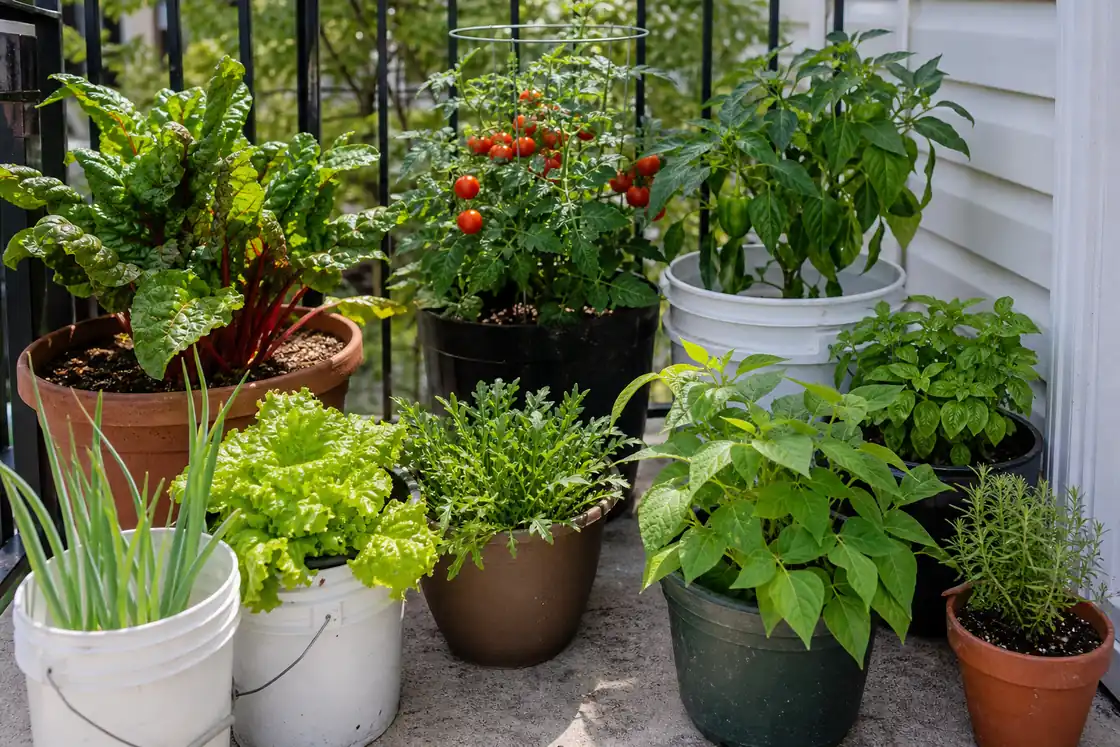
Herbs and greens carry small vertical systems. Basil, thyme, parsley, chives, oregano, lettuces, arugula, spinach, alpine strawberries, sedums, calibrachoa, trailing lobelia, and compact petunias all fit where soil volume is limited. Leaf and root crops tolerate lighter shade better than fruiting crops. Tomatoes, peppers, and beans want roughly six to eight hours of direct sun. That makes pocket walls much easier to fill well on urban balconies and small courtyard walls than many gardeners expect. The best performers match the container depth, root volume, and light level before flower or leaf display becomes relevant.
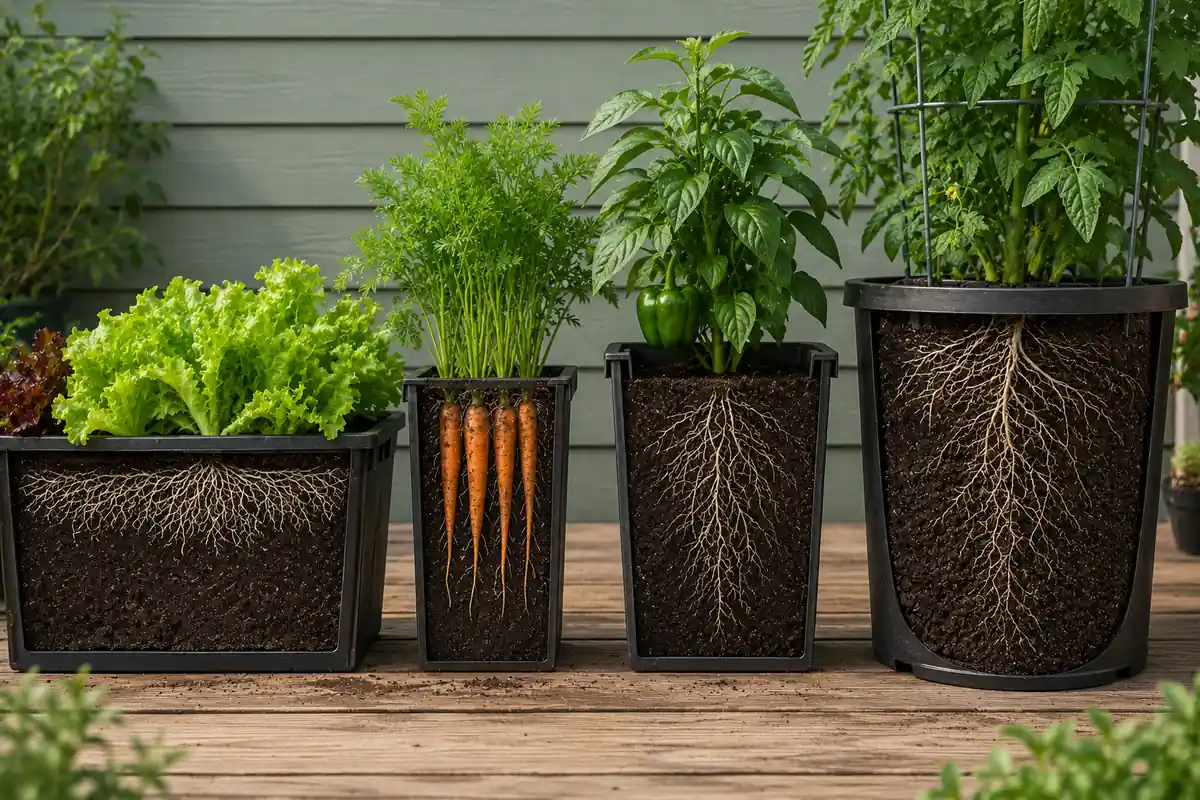
If the planting will live in pots, towers, or boxes over ground soil, best plants for container gardening should be chosen by root depth, feeding demand, and watering control. Herbs and greens forgive shallow root zones. Fruiting plants ask for more volume, more feeding, and tighter watering control.
Plants That Sound Great And Disappoint Fast
Full-size pumpkins, large winter squash, thirsty indeterminate tomatoes in tiny pockets, and heavy woody vines on light balcony hardware all belong on the skip list. The same goes for any plant that needs deep, cool, even root moisture if the setup offers only a few inches of mix and full reflected afternoon sun.
I often notice that beginners blame themselves when a wall planter fails, when the real problem was asking a deep-rooted crop to live in a root zone no thicker than a paperback book.
Plant choice still begins with site fit. Plant selection matters more in vertical gardening because climate, light, and root-depth limits are compressed into a smaller, faster-changing root zone.
The Failure Points That Ruin Small-Space Vertical Gardens
Most vertical gardens fail from physics before they fail from plant choice.
| Failure point | What causes it | Fix |
|---|---|---|
| Top-heavy pots | Tall vines, wet mix, narrow container base | Use a deeper pot, a wider base, and positive anchoring |
| Dry wall pockets | Shallow soil, wind, reflected heat | Choose smaller plants, add drip or slow watering, favor gentler exposure |
| Runoff stains | Fast drainage, no catch tray, planter tight to the wall | Add a tray, route drainage, and leave space from the wall surface |
| Weak harvest access | Plants placed too high or packed too densely | Keep active crops in reachable rows and use fewer modules |
| Mildew and pests | Overplanting and poor airflow | Widen spacing, prune early, and avoid stacking too many layers |
Weight is the first filter. Wet potting mix is far heavier than it looks, especially in grouped wall planters and hanging chains. One watered pocket panel is manageable. Several rows fastened to a weak fence can pull hardware loose by midsummer. A vertical system must stay stable after the potting mix is wet, the vines are mature, and wind hits the structure.
Water comes next. Pots mounted near walls sit in a rain shadow more often than gardeners expect. Touch the side of a dark container on a west-facing wall at 4 p.m. in July and it feels hot, not just warm. That heat pushes moisture out of the root zone fast. Shallow pockets go from evenly moist to crisp-edged in a single windy afternoon.
Drainage is where many tidy-looking designs turn messy. Water needs a place to go that does not stain siding, rot wood, or drip onto a lower balcony. The same rules behind proper pot drainage become stricter in vertical systems because gravity accelerates every mistake. If runoff shoots straight through and out in seconds, the mix is either too coarse, badly dried, or channeling along the container wall.
Soil choice matters more than brand promises. A mix that drains well and still rewets evenly beats a dense peat-heavy bag that shrinks from the container edge after one hot week. Soil mix for container gardening should stay airy enough for roots, absorbent enough for repeated dry spells, and light enough for the structure carrying it.
Overplanting is the last trap. A wall covered edge to edge on day one rarely looks better by August. Airflow drops. Harvest access disappears. Dead leaves stay hidden. Powdery mildew, mites, and missed ripe fruit pile up out of sight. The cleaner move is to plant for six weeks ahead, not for the full July dream on the day of install.
A vertical garden can save space and still demand more labor than a bed on the ground, especially with pocket walls and hanging systems. If daily or near-daily summer checks do not fit your routine, choose fewer modules and deeper containers.
Design A Vertical Garden So The Space Feels Bigger, Not Busier
A small garden does not get calmer from adding more objects. It gets calmer when height is used with restraint and repetition.
One strong vertical plane usually beats five scattered accents. A single trellis panel with one climber and a lower band of herbs reads as a deliberate composition. Twelve unrelated pots clipped to every available fence board read as storage with leaves.
Repeat shapes before you repeat species. Three identical railing boxes create rhythm even if one holds basil, one strawberries, and one trailing flowers. The eye reads the repeated container form first. A vertical edible setup can still feel neat when edible landscaping principles keep repeated forms, harvest access, and visual order working together.
Keep the lower third open when possible. That visible gap below a trellis or between wall planters and the patio floor gives the space breathing room. It also leaves somewhere for a hose, a stool, or a watering can to move without knocking stems loose.
Color and leaf size matter too. A narrow wall of medium green herbs can disappear into the background in a good way. One patchwork of chartreuse sweet potato vine, burgundy coleus, giant squash leaves, and neon annuals can make a tiny patio feel louder than it is. In small spaces, cohesion carries more visual weight than novelty.
Mix one vertical anchor, one useful middle layer, and one soft edge. That could be beans on a frame, parsley and thyme in the middle, and nasturtiums trailing at the front. It could be clematis on a fence, compact shrubs below, and a shallow box of seasonal color. The shape stays readable, and the space still works as a room.
Vertical Gardening Matrix – Match The System To The Small Space
Start With The Space You Actually Have
| Small-space situation | Best vertical move | Strong plant direction | Why it works | Main caution |
|---|---|---|---|---|
| Rental balcony with rules | Freestanding trellis, railing boxes, movable tower | Herbs, greens, peas, compact cucumbers | Keeps the setup movable and avoids unnecessary drilling | Check railing load, wind, runoff, and building rules |
| Fence with soil below | Trellis fixed beside ground soil | Beans, peas, cucumbers, clematis | Roots stay in the ground while growth moves upward | Anchor the support before vines mature |
| Hot wall and narrow walkway | Offset containers, slim shelves, trellis with airflow gap | Thyme, oregano, sedums, drought-tolerant herbs | Reduces floor clutter and softens wall heat | Shallow planters dry fast |
| Food-first patio | Deep pots plus strong supports | Beans, cucumbers, compact tomatoes, strawberries, herbs | Builds compact edible gardens without covering the floor | Fruiting crops need more volume and feeding |
| Privacy edge | Trellis or wire panel with repeated containers below | Clematis, annual vines, herbs, trailing flowers | Creates height and screening with visual order | Avoid blocking light to lower plants |
| Tiny courtyard with shade | Wall shelves or rail boxes with foliage and herbs | Parsley, chives, mint in controlled pots, shade-tolerant annuals | Uses small courtyard walls without forcing fruiting crops | Limited sun narrows crop options |
Start with root zone first, then structure. Floor-supported containers carry mature weight better than rail-only hardware, which is why balconies and upper-level patios almost always reward a simpler system than a full wall planting.
Urban vertical gardening succeeds when the support matches the surface, the plants match the root depth, and the whole layout still leaves the space usable. If one of those three breaks, the system starts fighting the site.
Conclusion
Vertical gardening earns its place when it solves a space problem without creating a heavier watering, pruning, or structural burden. The strongest setups respect structure, root volume, sun, and reach, then use height in a way that still leaves the floor useful.
Start with the surface you actually have, the light it gets, and the amount of summer attention you can give it. Once those three things agree, the plant list gets much better fast for urban balconies, rental patios, narrow side yards, and other small-space gardens.
FAQs
What is the best vertical gardening system for a balcony?
A balcony usually works best with one floor-supported trellis in a deep container plus railing boxes for herbs or greens. Floor-supported containers handle mature weight better than rail-only systems, and railing boxes keep shallow-rooted crops reachable. Check building rules, runoff, wind exposure, and railing load before adding heavy planters.
What is the easiest vertical garden for a beginner?
A trellis in one deep container is the easiest place to begin. It keeps the structure simple, the watering zone concentrated, and the plant list short. Peas, pole beans, sweet peas, black-eyed Susan vine, and compact cucumbers all fit this kind of start better than a wall full of pockets.
How often do vertical gardens need watering?
Small vertical planters may need daily watering in hot weather, and sun-facing pockets or hanging baskets can need checking twice a day during heat waves. Deep floor containers dry more slowly than wall pockets, towers, and railing boxes. The smaller the root zone and the hotter the wall or wind exposure, the faster the watering interval tightens.
Do vertical gardens need full sun?
Not always. Herbs, lettuce, spinach, parsley, and many foliage plants handle part sun or bright half-day light well. Fruiting crops such as tomatoes, beans, and cucumbers need much more direct sun to pay back the space they use. Match the crop to the available light.
What vegetables grow best in a vertical garden?
Climbers and light-fruited crops lead the list. Peas, pole beans, cucumbers, small squash on strong supports, compact tomatoes with tying, strawberries in towers, and leafy greens in shallow boxes all use height well. Heavy pumpkins, full-size melons, and sprawling squash are poor bets unless the frame is serious and the root zone is large.
How do I water a vertical garden without making a mess?
Gravity decides the answer. Water slowly from the top when the system is designed to drain downward, and give each section time to absorb before the next pass. Catch trays, gaps behind wall planters, and a well-draining potting mix matter as much as the hose itself. If water runs straight out in seconds, stop and fix the drainage or the mix before you keep pouring.
Are pocket planters worth it for herbs and greens?
Yes, if you accept what they are good at. Pocket planters shine with basil, thyme, parsley, lettuce, strawberries, sedums, and other shallow-rooted plants that you can reach quickly for harvest and watering. They are a poor home for large fruiting crops, deep-rooted perennials, or anyone who wants to water once and forget it.
Can vertical gardening make a small patio feel larger?
It can, and the effect comes from clearing the floor space, not from adding more leaves. When height carries screening, color, or harvest and the walkway stays open, the patio reads as a usable room, not as a crowded storage edge. One clean vertical plane almost always works better than many small scattered planters.