
Last Updated June 08, 2026
Companion planting in perennial food gardens works when each plant earns a long-term place around roots, canopy, flowers, harvest paths, and soil cover. A young apple tree with a tidy mulch ring looks orderly in spring. Three years later, grass creeps back in, the trunk stays damp after rain, strawberries run into the path, and a comfrey crown sits exactly where you need to stand with pruners.
Perennial food gardens behave differently from annual vegetable beds. Fruit trees, berries, asparagus, rhubarb, grapes, herbs, and edible groundcovers stay in place through winter, so every companion choice affects root competition, access, pruning, pest habitat, irrigation, and harvest for years. The pairing needs a job that still makes sense after the plants reach mature size.
Reliable perennial companion planting turns a food garden into a layered system: woody crops above, shrubs at the edge, herbaceous perennials in working pockets, flowering plants through the season, and living or mulched soil below.
Perennial food garden companion planting uses plant roles such as pollinator support, groundcover, nutrient cycling, pest confusion, living mulch, edge definition, and harvest access. Keep the first 1 to 2 feet around young fruit tree trunks open, place vigorous companions near the drip line, and review the layout each dormant season before roots and crowns become crowded.
Key Takeaways
- Assign every companion a job that survives mature plant size.
- Keep young tree trunks clear before building dense guild layers.
- Use spring, summer, and fall bloom to hold insect traffic.
- Place vigorous plants where pruning and harvest stay open.
- Audit perennial beds once each dormant season for crowding.
- Avoid annual-chart pairings that ignore woody roots and access.
Table of Contents
Build Perennial Companion Planting Around Plant Jobs
A perennial companion plant has to live with the main crop for more than one season. That changes the whole decision. Basil beside tomatoes can be pulled in October. Chives under a pear, thyme near asparagus, or strawberries beneath currants create a root pattern that may last for years.
A perennial companion should change a visible bed condition: nectar, pollen, pest-host confusion, bare-soil cover, chop-and-drop mulch, nitrogen cycling, root-zone occupation, path definition, or a harvestable edible layer. A companion with no clear job becomes another plant asking for water, light, and pruning room.
Roots matter most because roots are the part you stop seeing. Clover, vetch, goumi, and other legumes fix nitrogen through Rhizobium bacteria in nodules, then some of that nitrogen enters the soil after roots, leaves, and prunings break down. Deep-rooted plants such as comfrey, chicory, and yarrow can produce useful cut biomass, and mineral return depends on the plant, soil supply, cutting schedule, and decomposition. Treat them as chop-and-drop plants first, not as guaranteed fertilizer replacements.
Rub a thyme mat after rain and the bed tells you something useful: the leaves feel gritty and resinous, the scent rises sharply, and the soil below stays cooler than the open path. That is a working companion effect. It changes microclimate, scent, and soil cover at the same time.
Companion planting basics still depend on crop fit, and perennial beds add one more filter: will the pairing still work when the woody crop is larger, the roots are wider, and harvest requires a clear place to stand?
| Companion Job | Perennial Food Garden Plants | Where It Fits | Watch Point |
|---|---|---|---|
| Pollinator support | Chives, bee balm, yarrow, calendula, borage, native asters | Drip line, shrub edge, path side, berry row ends | Bloom must overlap crop bloom or pest season |
| Living soil cover | Strawberries, creeping thyme, clover, violets, low oregano | Open sunny patches outside trunk zone | Runners can invade crowns and irrigation emitters |
| Chop-and-drop mulch | Comfrey, sorrel, yarrow, lemon balm in contained clumps | Outer ring or service edge | Leaves need cutting before they shade small crops |
| Nitrogen cycling | Clover, lupine, goumi, seaberry, peas as temporary fillers | Edges, alleys, outer guild zones | Woody nitrogen fixers need pruning or they compete |
| Pest and scent diversity | Garlic chives, sage, thyme, oregano, alliums, dill pockets | Near pest-prone edges, not pressed into trunks | Aromatic plants lose value in wet shade |
| Access and edge marking | Chives, calendula, dwarf daylily, low thyme, compact herbs | Paths, stepping-stone edges, harvest lanes | Keep tools and feet out of crowns |
Choose The Right Companion Plants By Perennial Food Garden Type
A backyard food forest, berry hedge, asparagus bed, grape arbor, and dwarf orchard need different companions. The main crop sets the rules first. Woody plants need trunk safety and future canopy room. Cane berries need air movement and picking access. Grapes need dry foliage, open trunks, and a clear trellis base. Asparagus needs a crown zone that is left alone once spears begin rising.
Young perennial beds tempt overplanting because the first season looks empty. That open space protects future roots, mulch airflow, pruning access, and harvest movement. In year one, temporary annual flowers or shallow greens can fill space. By year three, the permanent layer should carry most of the work.
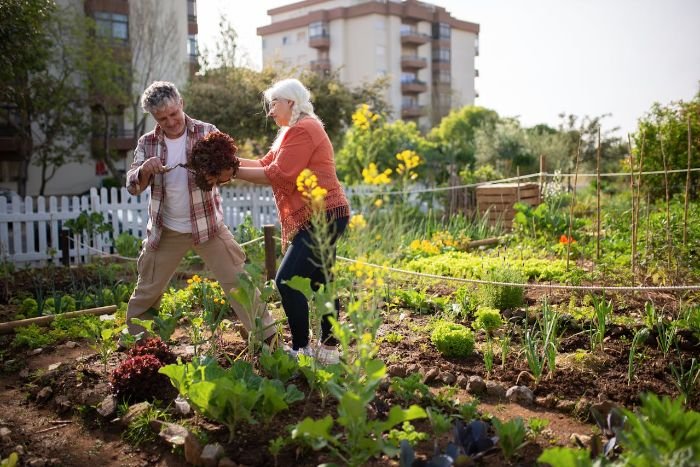
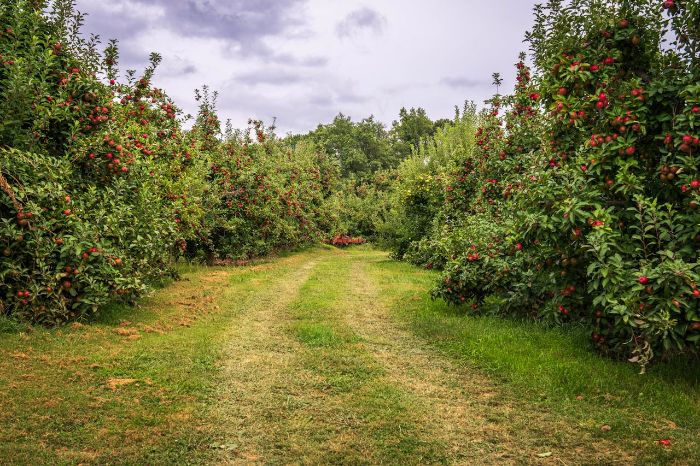
Edible landscaping works best when food plants are placed with mature form in mind. At planting, a currant can look like a twig and still become a shoulder-wide shrub. Even a dwarf apple needs light through its canopy. Grapevines can pull a light trellis out of square if companions hide the base and delay pruning.
| Perennial Food Setup | Main Companion Layer | Useful Plant Choices | Layout Rule |
|---|---|---|---|
| Young fruit tree guild | Outer-ring herbs, flowers, and soil cover | Chives, yarrow, comfrey at the edge, clover, thyme, calendula | Keep the trunk zone open and plant vigorous companions near the drip line |
| Mature fruit tree understory | Shade-tolerant, shallow, low-maintenance plants | Wild ginger, violets, ramps where suitable, currants at edges, spring bulbs | Plant small pockets and avoid cutting large roots |
| Berry hedge | Pollinator strip and clean picking edge | Yarrow, chives, bee balm, alyssum, clover paths, low thyme | Keep cane bases visible for pruning and disease checks |
| Asparagus or rhubarb bed | Edge flowers and low path markers | Calendula, dill pockets, chives, strawberries outside the crown zone | Protect crowns from digging and runner invasion |
| Grape or kiwiberry arbor | Dry-edge herbs and pollinator pockets | Thyme, oregano, sage, lavender, yarrow, shallow flowers | Leave trellis bases open for training and airflow |
| Mixed food forest edge | Layered shrubs, herbs, groundcovers, and access lanes | Serviceberry, currant, gooseberry, strawberries, mint in pots, native flowers | Design maintenance paths before filling planting gaps |
Small yards need even stricter spacing. Dwarf fruit trees for small gardens give the guild a smaller canopy, and the surrounding plants still need room for pruning cuts, ladders, fruit thinning, and fallen-fruit cleanup.
The most impressive year-one guilds often become the hardest to maintain in year three. The gap that felt wasteful at planting becomes the place where a harvest basket, pruners, or kneeling pad needs to fit.
Design Fruit Tree Guilds With Safe Root Zones
A fruit tree guild fails fastest when the trunk disappears into wet leaves, mulch, and crowded stems. Bark at the base of a tree needs air. The root flare needs to remain visible. Rodents, crown disease, and mower damage all increase when the trunk zone becomes hidden.
Keep the inner ring spare. Fruit and nut tree bases need open space because weeds, lawn, and dense plants can harbor pests, promote crown disease, and compete for water and nutrients. Lawn belongs a foot or two from the trunk, and mulch should stay at least 6 to 12 inches away from the base of trees. In a companion-planted food garden, that same safety rule prevents the most common guild mistake: treating every empty inch under a tree as planting space.
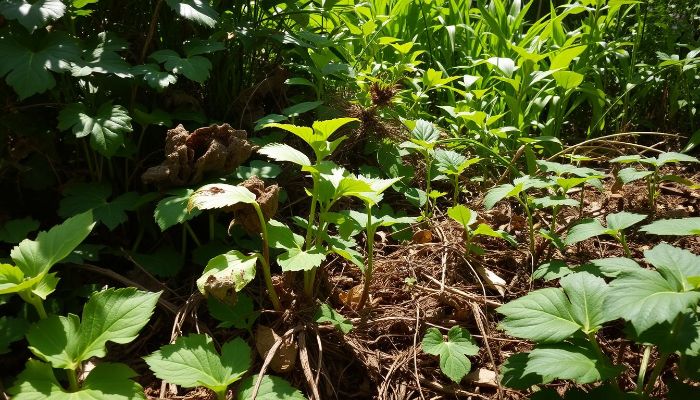
After the trunk zone is clear, build outward. Daffodil bulbs, garlic chives, and low alliums belong near the inner working ring if digging is done before the tree has spread many fine roots. Comfrey, yarrow, bee balm, and larger herbs fit better farther out where their crowns can be cut, divided, or removed. Groundcovers work only where they stay short enough to see irrigation, fallen fruit, and pest signs.
Run your fingers through the mulch at the trunk edge. Healthy mulch feels loose and springy, with a dry gap around bark and a cool earthy smell away from the flare. A problem ring feels packed, wet, and sour where stems press against the trunk. That smell is a warning.
| Guild Zone | Distance Cue | What Belongs There | What To Keep Out |
|---|---|---|---|
| Trunk safety ring | First 12 to 24 inches around young trees | Open mulch, visible root flare, irrigation check point | Groundcovers, dense flowers, mulch against bark, grass |
| Inner working ring | Beyond safety ring, before heavy root disturbance | Small bulbs, chives, low herbs, light mulch | Deep digging after establishment |
| Drip-line ring | Near outer canopy edge | Comfrey, yarrow, bee balm, clover patches, harvest flowers | Large shrubs that block light or access |
| Service edge | Path side or bed perimeter | Pollinator strip, chop-and-drop plants, stepping stones | Spreading plants that cross the path |
Companion planting with fruit trees changes by rootstock, canopy size, trunk age, and disease pressure. For a mixed perennial food garden, the core rule is enough: keep the trunk safe, move vigorous companions outward, and maintain a clean line for pruning and harvest.
Use Herbs, Flowers, And Groundcovers For Pest And Pollinator Timing
Perennial food gardens need flowers before, during, and after the main crop bloom. Fruit trees bloom early and briefly. Berries flower in waves. Grapes and kiwiberries need warm, open weather. Beneficial insects need food outside those windows, so the companion layer has to bridge the gaps.
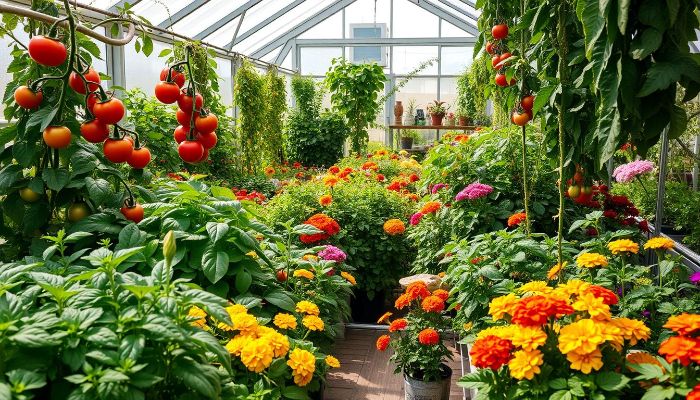
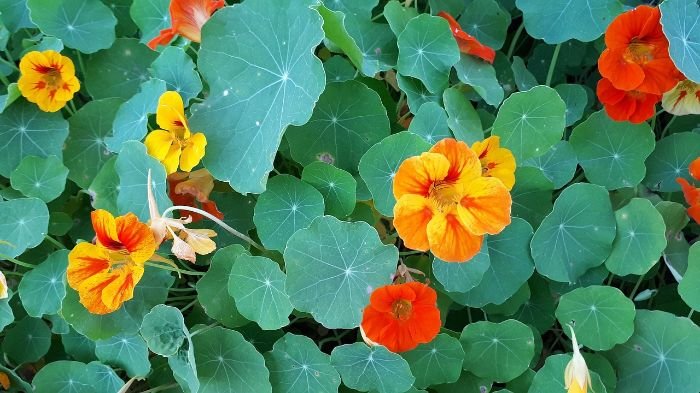
Chives, garlic chives, yarrow, bee balm, thyme, oregano, calendula, alyssum, borage, anise hyssop, native asters, and goldenrod each bring a different flower shape and bloom window. Small flowers such as sweet alyssum, dill, fennel, garlic chives, coriander, and Queen Anne’s lace feed beneficial insects with nectar and pollen. Larger mint-family flowers pull bees through the bed. Late-season asters and goldenrod feed insects when many food gardens are already being cleaned up.
Aromatic plants also change pest search patterns. Their volatile oils create scent signals that interrupt a row of identical host plants. That effect weakens when the herbs are clipped constantly, buried in shade, or waterlogged under a dense canopy. Sage, thyme, rosemary, lavender, and oregano need bright edges and drier soil. Chives, bee balm, yarrow, and calendula tolerate richer food-garden conditions.
Pollinator-friendly plants have to match bloom timing as well as color. Add the next companion during the month with the fewest open flowers within ten steps of the fruit and berry plants.
Groundcovers need a sharper eye. Strawberries under currants can feed the household and cover soil, yet their runners can hide cane bases. Clover paths feed insects and protect soil, then they need mowing before they seed too heavily. Creeping thyme makes a clean sunny edge, and wet clay can turn it into a patchy mat with brown stems and a stale smell after rain.
Pro Tip: Plant pollinator companions in three bloom windows: early spring near fruit bloom, midsummer near berry and vine growth, and fall near cleanup. Use at least one low flower, one upright herb, and one late perennial so insects keep crossing the food garden after harvest begins.
Plan Soil, Water, And Access For Years Two Through Five
The first season of a perennial food garden is planting. The second season is adjustment. Years three through five reveal whether the companion layer is helping or stealing space. Crowding shows up as damp lower stems, narrower harvest paths, thinner berry canes, smaller fruit, and irrigation emitters hidden under leaves.
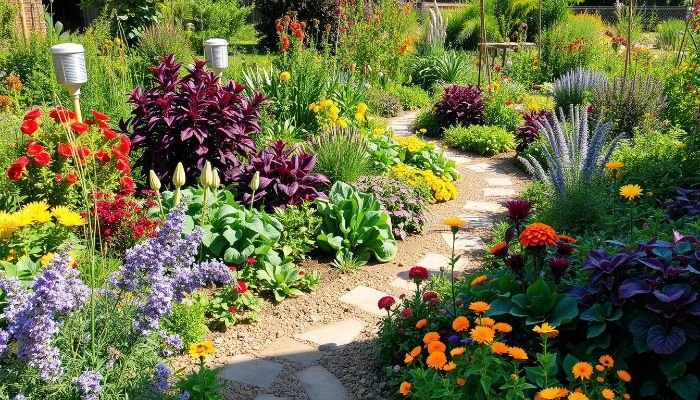
Soil cover is useful only when it protects the main crop. Wood chips feed fungal-dominant soil life around woody plants, hold moisture, and reduce weed germination. Living covers keep roots active and feed soil organisms through exudates. Those benefits have limits. A young tree in sandy soil may need mulch first and living cover later. A mature currant hedge in rich loam may handle a low clover path and a flowering edge with little trouble.
Water zones should match roots. Grapes and Mediterranean herbs prefer a drier crown zone with air moving through the base. Blueberries need acidic, consistently moist soil and pair poorly with lime-loving herbs. Asparagus crowns need stable moisture during fern growth, then a clean dormant cutback. A single drip line hidden under mixed plants rarely serves every layer well.
Healthy perennial food garden soil smells different by the third season. Pull back wood chips after rain and the top layer should smell like damp leaves and mushrooms, with dark crumbs clinging to fine roots. A sour smell, slick mulch, or gray compressed soil signals poor air exchange. Open the mulch, thin groundcover, and restore a path before adding more plants.
Soil health improvement in perennial beds comes from repeated small inputs: leaf drop, pruned stems, composted mulch, living roots, fungal threads, and fewer deep disturbances. Maintenance works as a repeating cycle across mulch, pruning, dividing, watering, and path access.
- First season: mulch, water deeply, and keep permanent companions sparse.
- Second season: divide or move plants that touch trunks, crowns, or trellis bases.
- Third season: replace temporary annual fillers with permanent low layers.
- Later seasons: prune, chop, mow, divide, and keep access lanes open.
Avoid Perennial Companion Planting Mistakes
The most expensive mistake is planting the final look on day one. Perennial food gardens mature upward and outward. A full bed in the first spring often becomes a maintenance knot once shrubs leaf out, trees cast shade, berries sucker, and groundcovers knit together.
Another common mistake is copying annual companion charts into permanent beds. Tomatoes with basil, carrots with onions, and marigolds with peppers all belong to short-season layouts. Perennial gardens ask different questions: will this plant compete with a woody crop for water, hide pests at the crown, block pruning, self-seed into a berry row, or create damp shade where fungal disease already appears?
Mint, lemon balm, comfrey seedlings, aggressive clover, oregano, and strawberries all need boundaries. Containers, root barriers, path edges, and scheduled cutting keep useful plants from becoming the main crop. A companion that spreads through a crown zone becomes a maintenance problem.
Light changes every year. A sunny young guild becomes partial shade under a wider canopy. Dry shade appears under fruit trees that once looked open. The plant that worked in year one may need to move by year three. That is normal. Dormant-season editing is part of perennial companion planting.
Keep a plain record after harvest: which plants fed insects, which blocked access, which stayed too wet, which spread, and which actually reduced weeding. The most reliable system is the one your own garden confirms across several seasons.
Conclusion
Companion planting in perennial food gardens works as a long-term layout. Give each companion a job, keep trunks and crowns visible, place vigorous plants near edges, and audit the bed once every dormant season.
By year three, the right system looks settled without looking tangled: clear bark at the tree base, low flowers along paths, berry canes easy to reach, mulch that smells like damp leaves, and harvest routes that stay open after the garden fills in.
FAQ
What is companion planting in a perennial food garden?
It is the practice of placing long-lived edible and support plants together so each plant changes a useful condition around another. In perennial beds, the main jobs are soil cover, pollinator support, pest habitat, nutrient cycling, harvest access, and root-zone protection. The pairing must still work after several seasons of growth.
Can I plant vegetables under fruit trees?
Young trees need clear root and trunk space first. Shallow temporary crops can work near the outer edge during the first year if they do not disturb roots or block irrigation. Heavy-feeding vegetables, dense brassicas, and vining crops are usually better in a separate annual bed.
Are strawberries useful groundcover under fruit trees?
Strawberries work best in sunny outer rings or beneath open shrubs where runners can be managed. They are less useful close to young trunks, in deep shade, or where fallen fruit needs easy cleanup. Keep a clean inspection strip around the tree base.
How many companion plants should surround one fruit tree?
Start with three to five roles before deciding plant count. A young dwarf tree may need chives, one flowering perennial, mulch, and a small groundcover patch. A larger tree can support more layers after the trunk zone is safe and the drip line is visible.
Do perennial companion plants replace fertilizer?
They reduce some fertility pressure over time through mulch, leaf drop, root turnover, and nitrogen fixation. They do not replace a soil test, compost, or crop-specific nutrition when the main plant shows deficiency. Pale new growth, weak fruiting, and poor cane renewal still need diagnosis.
When should I edit a perennial companion planting layout?
Late winter or very early spring is the cleanest time. Crowns are visible, leaves are low, and woody plants can be pruned before new growth hides the structure. Mark crowded spots during summer, then move or divide plants while the bed is dormant.