




Updated April 14, 2026
Basic landscape design principles help home gardeners make a yard feel organized and readable. Unity, balance, proportion, rhythm, emphasis, and scale are the core ideas, and each one changes a visible decision in the ground.
When those principles are missing, the symptoms are usually easy to spot: too many small plant groups, paths that tighten at the wrong moment, focal points competing with each other, and beds that never relate to the house.
Learn what each principle controls, read the site honestly, and let the layout lead the plant list.
Key Takeaways:
- Define unity, balance, proportion, rhythm, and emphasis early
- Map sun, drainage, and utilities before buying plants
- Size beds, paths, and plants to fit the house
- Repeat key plants and materials to build unity
- Limit focal points so each view has one leader
Table of Contents
Basic Landscape Design Principles – The Core Rules Behind A Cohesive Garden
Basic landscape design principles are not decoration terms. They are the control system that keeps a yard from reading as clutter. Balance, proportion, rhythm, accent, repetition, function, and maintainability shape whether a home garden feels organized or improvised. A clear landscape design process should connect those ideas to real use, movement, maintenance, and plant fit.
| Principle | What it means | Where it shows up at home | Common beginner miss |
|---|---|---|---|
| Unity | The yard feels related from one area to the next | Repeated shrubs, matching bed language, limited material palette | Using too many one-off plants and finishes |
| Balance | Visual weight feels stable across a view | Formal entries, offset masses, paired or equivalent anchors | Assuming balance always means symmetry |
| Proportion | Parts fit the house, lot, and one another | Bed depth, patio size, shrub height near windows | Copying big-estate proportions into a small yard |
| Scale | Plants and features fit their mature size and viewing distance | Tree size, hedge height, path width, border depth | Buying for nursery-pot size, not mature size |
| Rhythm | Repeated cues move the eye through the garden | Spaced trees, recurring grasses, repeated color or shape | Changing style every few feet |
| Emphasis | One feature leads the eye | Specimen tree, bench, urn, borrowed view | Placing several equal-strength focal points in one sightline |
Function, view, and movement are where those principles become visible. A path width is scale. A repeated hedge line is unity. One bench placed at the end of a walk is emphasis. Proportion shows up in the depth of the bed against the house. Rhythm appears when recurring shapes move the eye from one part of the garden to the next.
Design terms become useful only when they change real layout decisions. When you stand at the door you use most, does the eye know where to rest and does the path feel obvious underfoot? If the answer is no, the problem is usually principle failure before plant failure.
Start by naming the use zones in plain language. Entry. Sitting. Eating. Play. Storage. Compost access. Kitchen herb pickup. A home garden layout gets easier when every area has a job, because empty lawn often stays empty when no one ever decided what it needed to do.
Site Inventory And Base Map – The Ground Rules Behind Proportion And Plant Fit
Site inventory supports proportion, scale, and plant fit. Great landscape design cannot compensate for poor growing conditions or improper plant selection. The base map turns impressions into decisions before layout lines harden around the wrong assumptions.
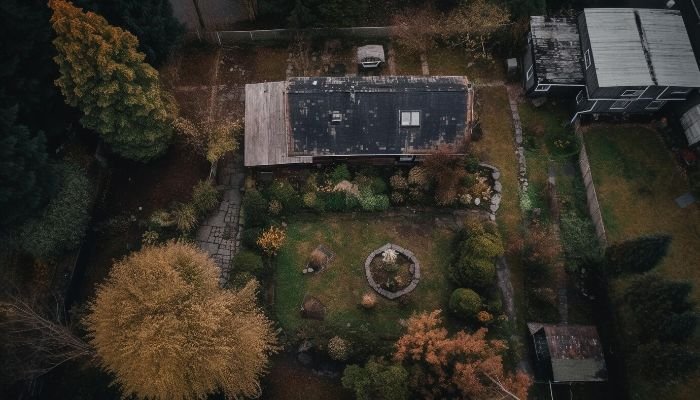
For many home gardens, a scaled bird’s-eye drawing is the working document. A common homeowner scale is 1 inch equals 10 feet. Put the house footprint on paper first, then doors, windows, downspouts, major trees, fences, driveways, hose spigots, and any place where digging would be awkward or unsafe. A rough garden plan becomes much more useful when it reflects the real yard, not a memory of it.
Walk the site after hard rain. Stand where runoff cuts a line through mulch and where the downspout empties into a spot that stays dark and sour-smelling a day later. Test drainage in different parts of the site because moisture can vary more than beginners expect. The low corner that looks fine in April may stay too wet for half the plant list by July, which starts a cycle of replacements and weakens the design.
Measure Light Like A Designer, Not Like A Shopper
Sun is often misread because people check it once at noon and call the job done. Track light through the day and account for winter shadows, when the sun sits lower and even a small structure can cast a longer shadow. If one section of the yard is tricky, the same disciplined approach used in assessing sunlight in the garden pays off here too. Plant failures that look random often trace back to a site note that was never written down.

Existing plants belong on the map as assets, not just obstacles. Established plants are often adapted to the site, and a large healthy shade tree is worth protecting. The strongest beginner layouts usually keep one or two anchors that already fit the ground, then build the new plan around them so balance starts with something real.
Pro Tip: Mark new bed lines with a hose, then live with them for two or three days before digging. Walk the route carrying a hose reel, a wheelbarrow, or a bag of mulch. If the curve looks pretty on paper and annoying in motion, redraw it.
Garden Layout, Balance, And Emphasis – Build Rooms, Paths, And Focal Points Before Plants
Layout is where balance and emphasis become visible. Think in outdoor rooms. The floor may be lawn, gravel, mulch, or paving. The walls may be shrubs, fencing, or a change in grade. The ceiling may be open sky, tree canopy, or a pergola. Once those planes are clear, even a modest yard starts to feel larger because each space reads as a place with a purpose.

Many beginners reverse the sequence. They buy plants first, then try to discover a path between them. Activities and use areas should be located before the final layout is resolved. If the route to the compost bin, gate, hose bib, or seating nook is awkward in February, it will still be awkward when the borders are full in June.
Give each main room one clear focal point. That could be a small tree, a bench, a large container, a birdbath, or a clean view to borrowed scenery beyond the property line. One focal point anchors the scene. Three of them at equal strength flatten it. If seating is part of the plan, choose the view before you choose the furniture. A bench placed for sunset or a framed border works harder than a bench dropped into leftover space, so the right garden bench should be chosen around view, access, and focal-point role.
Balance deserves its own name here because beginners often treat it as a formal-garden term and move on. Balance is visual stability. A centered front door may suit matching shrubs or paired containers. A side-yard seating area often feels better with asymmetrical balance, where one small tree is answered by a broader shrub mass or a longer bed on the other side. The elements do not have to match. The weight does.
Paths need the same discipline after dark as they do in daylight. If a route matters in the evening, the lighting should reinforce the line of travel, not scatter points of light at random, which is why pathway lighting design works best when the route itself has already been decided.
Keep the bed edges secondary to the circulation pattern. The prettiest curve in the yard is useless if it steals width from the route people actually take.
Scale, Proportion, Rhythm, And Repetition – The Difference Between Intentional And Crowded
Many beginner gardens miss scale, rhythm, accent, and repetition even when the plant choices are good. Size relationships and repeated cues are what make the eye trust a composition. A tree that will swallow a small ranch house in ten years is a scale problem. A two-foot border stranded against a broad lawn is a proportion problem because the ratio is wrong even before the plants fill out.
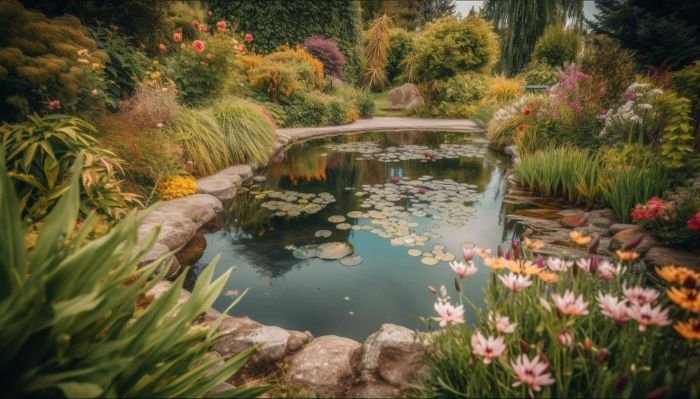
For residential planting, select a limited number of species and repeat them in masses for a cohesive, uncluttered design. The garden looks calmer, and maintenance gets lighter because care is organized around groups, not dozens of unrelated singles.
Use Rhythm And Repetition To Build Unity
Repetition does not mean cloning the same bed across the entire yard. It means recurring forms, colors, materials, or plant textures often enough that the landscape feels related from one area to the next. Rhythm is the same idea stretched through space. A drift of one grass repeated near the entry, again beside a path, and again near the patio reads as intention because the eye recognizes the cue and expects it again.

Layering helps the rhythm land. Start with structural plants that hold shape longer – shrubs, small trees, clipped forms, broad evergreen masses, or sturdy grasses. Add middle-layer plants that carry bloom or foliage interest for a longer season. Finish with low plants that knit the soil surface together. Small details look better when the larger shapes are already doing their job, and the larger shapes are usually what hold proportion from across the yard.
There is a real tradeoff here. Too much sameness can make a yard feel stiff. That is where accent belongs. One stronger feature per view is usually enough, and it works best when the rest of the design has earned the right to stay quiet.
If color is part of the plan, treat it with restraint. A repeated palette nearly always outperforms a grab bag, which is why a focused approach to color-themed garden design tends to age better than trying to feature every color at once.
Planting Design And Unity – Put The Right Plant In The Right Place And Mass It Properly
Planting design either supports the layout or weakens it. Proper plant selection depends on performance, longevity, growth habit, mature size, bloom cycle, and seasonal interest. In plain terms, that means each plant has to fit the spot in four ways at once: site conditions, mature size, visual role, and maintenance load.
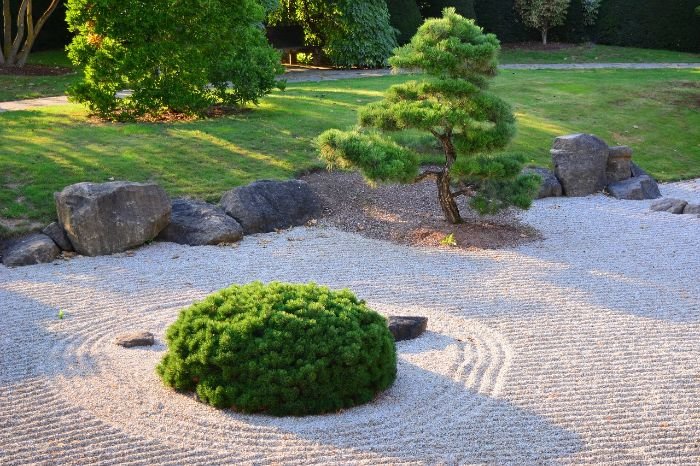
Start with the bones. Place the plants that shape the space in winter and from a distance. Those are often trees, large shrubs, hedges, or strong evergreen forms. After that, mass the supporting plants in groups large enough to read from normal viewing distance. Three to five of one perennial is often the minimum needed before it looks like a design choice instead of leftover inventory. Larger beds may need drifts of seven, nine, or more.
Color comes later than most people expect. Color can attract attention and direct the eye toward a focal point. That makes color powerful, which is exactly why it should not be sprayed across the whole yard at equal intensity. Use the loudest color near entry moments, destination spots, or small accents that deserve emphasis. Let foliage, structure, and texture carry more of the work everywhere else.
Water use and soil condition belong in the planting decision too. A border that mixes thirsty shade perennials with heat-loving dry-site shrubs may survive for a season, though it becomes maintenance debt almost immediately. In parts of the yard where compaction or low organic matter are already issues, soil health improvement usually matters more than adding another attractive species to the plan.
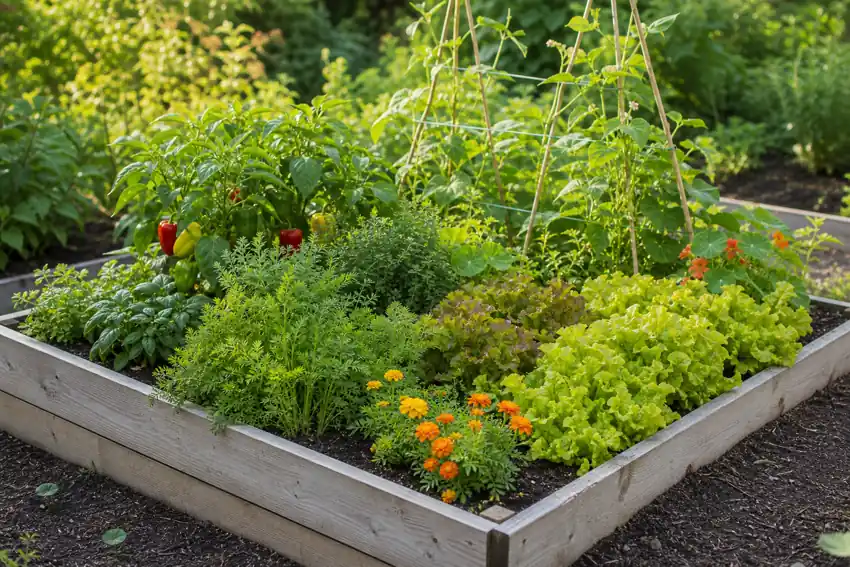
Food plants can fit into this logic when they are treated as design material, not as a separate world. Blueberries, herbs, espaliered fruit, and leafy greens can all work inside a layout that still reads cleanly, which is why the best edible landscaping borrows the same rules of scale, rhythm, and access as an ornamental border.

A restless midsummer border usually points to one diagnosis: too much buying by bloom color and too little planning by foliage shape and mass. Flowers flash in and out. Leaf texture keeps the composition legible after the bloom peaks pass.
From Sketch To Yard – Apply The Principles In Phases Without Losing Unity
Most home gardens are built in phases, not in one grand installation. That is normal. Residential designs can be implemented over time, but the landscape should still read as one unified plan after multiple installation phases. The order of work should protect unity, balance, and proportion from the start.
The usual build sequence is more forgiving than many beginners think. Solve grade and drainage first. Install the hardscape, edging, and any buried sleeves or irrigation parts next. Put in the trees and large shrubs after that. Then fill the major plant masses. Containers, annuals, and smaller detail planting can carry the look as the permanent structure grows in. A phased plan is far easier to live with than a yard full of impulse purchases waiting for a layout to appear around them.
Build The Best Part First
If the budget only covers one zone this season, do not scatter that money across the whole property. Finish the area you use or see most. For many people that is the front entry, the view from the kitchen, or the main sitting space. One finished room creates momentum and gives the rest of the plan a clear standard.
Review the sketch twice a year after installation begins – once in late spring when growth is fresh and once in late summer when gaps, crowding, and irrigation problems are easier to spot. Plants on paper all look polite. Plants in August tell the truth.
If a phase feels empty, hold the line. Mulch, simple containers, or one seasonal layer can bridge the space without forcing permanent decisions too early. The garden does not need to look complete in year one. It does need to keep its logic.
Conclusion
Unity comes from repeated cues, balance comes from visual weight, proportion and scale keep the parts fitting the house, rhythm moves the eye, and emphasis tells it where to land. If the drawing still feels busy after you remove a third of the plant list, the principle set was already out of line.
Then give the plan time to prove itself. Recheck the use zones, widen the path people actually take, and use fewer plant types in larger drifts before you spend another dollar. Watch the yard once in spring leaf-out and once in late-summer stress, because those two moments reveal most layout mistakes. When the design is right, the route feels natural underfoot, the focal point lands where the eye expects it, and the garden still looks composed even when only foliage, mulch, and evening light are doing the talking.
FAQ
What are the basic principles of landscape design?
At home-garden level, think of them as the rules that make a yard feel organized and usable. The main ones are unity, balance, proportion, scale, rhythm, and emphasis. In practice that means the parts fit the house, the eye moves in a clear way, and one focal moment leads each important view.
How do I plan a garden layout for beginners?
Start with a scaled base map and mark the fixed parts first: house, doors, utilities, downspouts, trees, fences, and the sunniest and wettest spots. After that, place the use areas and paths before you draw the planting beds. Most beginner mistakes come from reversing that order.
Can you design a good home garden without formal training?
Yes, and many strong home gardens are built exactly that way. The skill is not fancy drawing. It is careful observation, honest measuring, and enough restraint to repeat a few good choices, not collect many unrelated ones.
What happens if I ignore mature plant size?
The yard may look full for one season and wrong for the next ten years. Oversized plants swallow windows, crowd paths, trap moisture, and force constant pruning. Undersized plants disappear against the house and never carry the visual weight you expected.
How many plant types should a beginner use in one bed?
Fewer than most people think. In a modest bed, three to five main plant types often read better than eight or nine. Repeat a limited number of species in masses when you want the bed to look calm from day one.
Do you draw the hardscape or the plants first?
Hardscape and circulation usually come first because they lock in how the yard functions. Paths, patios, steps, edging, and the route to gates or utility areas should be settled before the final planting plan. Plants can soften and complete those lines later.
Should front-yard landscape design be symmetrical?
Not always. Symmetry suits some houses, especially formal facades with a centered entry. Many homes look better with asymmetrical balance, where different plants or features carry similar visual weight without mirroring each other exactly.
What is the difference between unity and balance in landscape design?
Unity makes the whole yard feel related. Balance makes one view feel stable. You can have unity through repeated plants, edging, or materials across the property and still have one border feel lopsided if too much visual weight sits on one side.