
Updated August 8, 2026
How to grow plum trees successfully begins with a fruiting variety adapted to your winters, spring frost pattern, summer heat, and available space. Match that variety to a suitable rootstock and a compatible pollination partner before choosing the planting hole. Full sun, freely drained soil, stable moisture, and careful early training then turn plum tree care into a predictable seasonal routine. Get those decisions wrong and a vigorous tree can still flower without fruit, split under a heavy crop, or become too tall to prune and harvest safely.
Key Takeaways
- Choose a grafted fruiting plum whose group and rootstock fit your garden.
- Verify pollination compatibility within the European, Japanese, or American group.
- Plant with the root flare visible and keep the graft above soil.
- Prune in locally suitable spring or summer weather, never by habit.
- Thin crowded fruit before its weight bends or breaks young branches.
Table of Contents
How to Grow Plum Trees: Quick Start
Start with a named grafted tree from a reputable nursery. The upper cultivar determines the fruit, harvest season, flower timing, and much of the disease response. The rootstock influences vigor, anchorage, soil adaptation, support needs, and bearing age. A plum seedling is genetically variable and cannot promise the same fruit or final size as the plum that supplied the stone.
| Decision | Check before buying | Useful target | Failure to avoid |
|---|---|---|---|
| Plum group | European, Japanese, American, or hybrid | A group adapted to local winters and summers | Confusing a flowering plum with a fruit cultivar |
| Rootstock | Mature size, soil, support, suckering | A canopy you can prune and harvest | Trusting the word dwarf without a rootstock name |
| Pollination | Self-fertility, bloom overlap, compatible group | One proven self-fertile tree or a compatible pair | Pairing European and Japanese cultivars |
| Site | Sun, drainage, frost pockets, mature spread | Eight hours of sun and no standing water | A wet hollow or a cramped lawn corner |
| Care | Water, thinning, pruning, pest pressure | A realistic annual routine | Letting a young tree carry every fruit |
Keep the nursery label and record the cultivar and rootstock. Those names guide pollination, mature-size estimates, pruning decisions, and replacement choices. A tag that says only plum tree leaves too many important questions unanswered.
Choose Plum Tree Varieties and Rootstocks
The main types of plum trees differ in hardiness, bloom season, flavor, growth habit, and pollination. European plums, Prunus domestica, include prune plums, Damsons, Green Gage, Italian, and Stanley types. Their fruit often has dense flesh and works well for drying, preserving, or fresh eating. Many tolerate colder winters and flower later than Japanese plums.
Japanese plums, Prunus salicina and related hybrids, often make juicy, round fruit in red, yellow, purple, or near-black shades. Santa Rosa, Satsuma, Shiro, and Methley are familiar examples. They can bloom early, so late frost and regional heat patterns matter. American plums, Prunus americana, add strong cold hardiness and may grow as suckering small trees or large shrubs.
| Plum group | Common traits | Garden fit | Pollination direction |
|---|---|---|---|
| European plum | Oval or round fruit, dense flesh, later bloom | Fresh eating, drying, cooking, colder regions | Some are self-fertile; many crop better with another European |
| Japanese plum | Juicy round fruit, early bloom, spreading growth | Fresh fruit, suitable warm-season regions | Most need a compatible Japanese or suitable hybrid |
| American plum | Cold hardy, smaller fruit, possible suckering | Cold climates, wildlife value, preserves | Compatibility depends on cultivar and hybrid background |
| Plum hybrid | Traits vary with parentage | Selected for regional hardiness, flavor, or season | Use the nursery’s named compatible partner |
Rootstock sets much of the scale. Myrobalan-type roots commonly make vigorous trees. Marianna, St. Julien, Pixy, Krymsk, and other named rootstocks offer different combinations of size, soil response, anchorage, and compatibility. Availability varies across the United States. Ask for the exact rootstock and its expected mature size under local conditions.
A compact label does not remove the need for root space, sun, thinning, and pruning access. Compare the limits of dwarf fruit trees in small gardens before deciding that a pot or narrow border can hold any plum.
Plan Plum Tree Pollination
Plum pollination starts with group identity. European plums generally do not pollinate Japanese plums, even when both flower. Many Japanese cultivars need another compatible Japanese or Japanese-American hybrid blooming at the same time. Some European cultivars are self-fertile, yet a suitable second European plum can increase crop reliability.
Self-pollinating plum tree labels deserve a closer look. They mean one cultivar can set fruit with its own pollen under suitable conditions. Cold rain, frost, low bee activity, tree age, and poor flower health can still leave a self-fertile tree with a light crop.
European and Japanese plums differ in winter hardiness and suitable pollen partners. This home-garden plum selection resource lists European choices for colder areas and Japanese choices for warmer parts of Illinois. European-Japanese pollen incompatibility is also documented by Utah State University Extension and University of Maine Cooperative Extension.
Avoid insecticides on open blossom. Support bees across the rest of the season with pollinator-friendly plants, clean water, and nesting habitat. A garden that feeds insects beyond plum bloom is more likely to have active visitors during a short spring flowering window.
Choose the Best Site and Soil
Plant plums in full sun. Six hours of direct light is a practical minimum, and eight hours supports stronger flowering, sweeter fruit, sturdier wood, and faster drying after rain. Leave enough open space for the mature canopy, air movement, pruning, fruit thinning, and harvest.
Avoid low frost pockets. Japanese plums can bloom early, and one cold night may brown flower centers before leaves appear. Cold air settles into hollows and enclosed lawn corners. A gentle slope with air drainage often protects bloom better than a still, low site.
Plum roots need oxygen. Deep loam with reliable drainage is ideal, though a matched rootstock can handle a wider soil range. A pH around 6.0-7.0 suits many home sites. Use a garden soil test before amending so lime, sulfur, phosphorus, and fertilizer answer a measured need.
Do not fill a single clay hole with rich compost. The soft pocket can collect water and discourage roots from moving into surrounding soil. Water that remains after rain signals a site limitation. Diagnose the cause through these soil drainage solutions or choose a safer location.
How to Plant a Plum Tree
Plant a dormant bare-root plum in late winter or early spring when the soil is workable and no longer saturated. Fall can suit mild climates where roots establish before severe cold. Container-grown trees provide a wider window. Postpone planting during hard frost, waterlogging, or intense summer heat.
- Find the root flare and graft. Identify where the trunk broadens into major roots and where the cultivar joins the rootstock.
- Dig a wide planting hole. Spread bare roots naturally and loosen circling container roots without burying the trunk.
- Set the final depth. Keep the root flare at grade and the graft union several inches above the soil.
- Backfill with excavated soil. Firm gently, water deeply, and recheck the tree after settling.
- Add support when required. Use a stake or trellis for dwarfing roots, windy sites, or nursery instructions.
- Mulch the root zone. Apply two to three inches broadly and leave bare space around the trunk.
Deep planting can suffocate upper roots and allow the cultivar to root above the graft, weakening the rootstock’s size control. Recheck the flare after the first heavy rain. Pull soil or mulch away if the trunk enters the ground like a straight pole with no visible widening.
Plum Tree Care Through the Year
Young plum trees need reliable moisture as roots expand. Check several inches below the mulch and water when the active root zone is drying. Cool soil that holds a light shape usually has useful moisture. Dusty soil needs water; slick, sour-smelling soil needs time to drain and breathe.
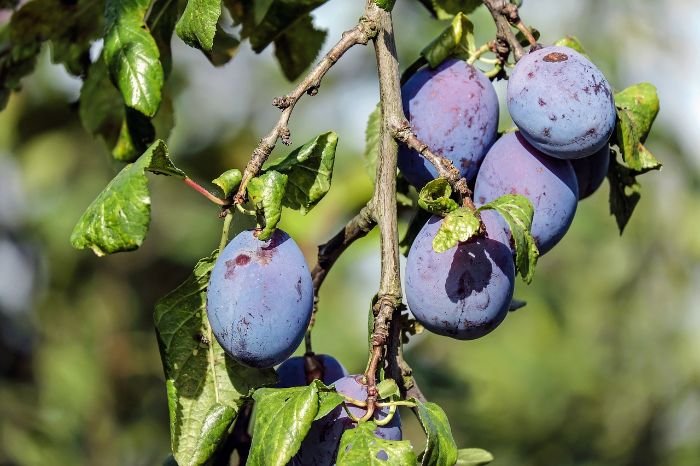
Keep a broad grass-free circle and renew mulch as it breaks down. Turf competes with young feeder roots for water and nutrients. Leave the trunk exposed. Damp mulch pressed against bark can hide vole injury and decay.
Feed according to evidence. Excess nitrogen produces long, soft shoots, heavy shade, delayed hardening, and more pruning work. Soil results, leaf color, annual shoot growth, crop load, and local recommendations provide a better guide than a fixed yearly fertilizer dose.
Spring care centers on blossom frost, pollination, and new growth. Early summer brings moisture checks, suckers, pests, and fruit thinning. Late summer or fall shifts attention to harvest, sanitation, and branch damage. During dormancy, inspect trunk guards, ties, rootstock suckers, and any gum or sunken bark that needs diagnosis.
How to Prune a Plum Tree Safely
When to prune plum trees depends on climate, tree age, training form, and disease pressure. Plum wood is vulnerable to silver leaf and bacterial canker in some regions. Wet-climate programs commonly avoid winter pruning and use early spring for young trees and summer for established trees. Dry regions may provide different local timing.
Train young trees before branches become thick and rigid. Japanese plums often suit an open-center framework with three or four well-spaced scaffold limbs. European plums may use an open center, modified leader, or another regionally recommended form. The aim is strong attachments, reachable fruit, and light through the canopy.
Remove dead, damaged, diseased, crossing, and badly placed wood. Preserve useful fruiting spurs and avoid stripping the tree of productive branches. Large cuts stimulate vigorous new shoots and open wider infection sites. Renovate a neglected plum over several seasons.
The practical plum pruning schedule and training methods use early spring or mid-summer to reduce silver leaf risk in the United Kingdom. UC Statewide IPM describes fruiting spurs on two- to three-year-old wood and recommends opening crowded centers with measured thinning. Match the calendar to regional extension advice and a dry forecast.
Clean tools before work and after diseased tissue. Make cuts at the branch collar, leave no long stub, and avoid tearing bark. These pruning basics help distinguish thinning cuts from heading cuts before the permanent framework is changed.
How Long Do Plum Trees Take to Fruit?
A grafted nursery plum may begin bearing about three to six years after planting. Compact, precocious rootstocks can produce earlier, and vigorous standard-size trees may need longer. A first handful of fruit does not mean the tree has reached full production.
Rootstock, cultivar, nursery age, winter injury, bloom frost, sunlight, pruning, nitrogen, water, and pollination all change the schedule. A healthy young tree may invest in roots and branch structure for several seasons. Excessive pruning and heavy fertilizer can keep it growing vegetatively instead of settling into balanced fruiting.
Allow only a light early crop on thin branches. Remove crowded fruit when the branch bends sharply or the trunk is still building strength. Protecting the framework matters more than keeping every young plum.
Seed-grown plums can take longer and may never match the parent fruit. Stones also need a suitable cold period to break dormancy. Grow from seed for experimentation, wildlife plants, or future rootstock possibilities; use a grafted named tree for predictable fruit.
Solve Problems and Harvest Plums
A plum tree that flowers with no fruit first needs a pollination and weather check. Confirm its plum group, partner cultivar, and bloom overlap. Cut open several faded flowers after a cold night; black or brown centers indicate frost injury. Cold rain and wind can also reduce bee movement during bloom.
Black knot forms hard, dark swellings on branches and is especially serious in parts of North America. Brown rot collapses flowers or soft fruit. Plum curculio can scar fruit and trigger drop. Aphids, mites, bacterial canker, silver leaf, and scale vary by location. Identify the organism and life stage before choosing a treatment.
| Visible problem | First checks | Practical direction |
|---|---|---|
| Flowers with no plums | Frost, bloom overlap, group compatibility, bees | Verify a suitable pollen partner and inspect flower centers |
| Young fruit drops | Pollination, water stress, curculio scars, crop load | Stabilize moisture and inspect fallen fruit |
| Black branch swellings | Black knot pattern and nearby wild Prunus | Confirm locally and remove infected wood at the advised season |
| Soft brown fruit | Brown rot, cracks, injuries, crowded clusters | Remove infected fruit and improve sanitation and airflow |
| Small crowded plums | Crop load, light, moisture, leaf health | Thin earlier and protect the branch framework |
| Large crop every other year | Overcropping and late thinning | Thin heavy sets before the tree exhausts its reserves |
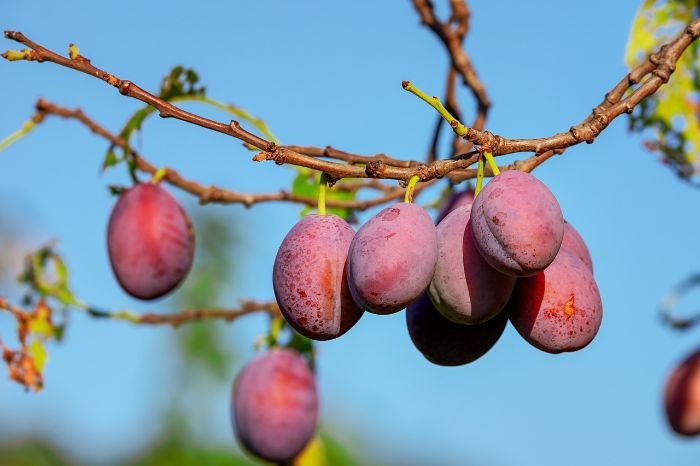
When to harvest plums depends on cultivar and intended use. Fruit for fresh eating should develop its expected color, aroma, sweetness, and a slight give under gentle pressure. Pick firmer fruit for cooking or short storage. Twist and lift carefully; ripe plums usually release without pulling hard on the spur.
A plum tree rarely ripens every fruit on one day. Pick several times and handle fruit in a shallow container because soft plums bruise under their own weight. Remove cracked, rotting, or insect-damaged fruit from the tree and ground.
Why Grow Plums at Home?
A home tree offers varieties selected for flavor, cooking, drying, color, or harvest season rather than shipping durability. Tree-ripe fruit can develop a floral aroma and soft, juicy flesh that is difficult to preserve through long commercial handling.
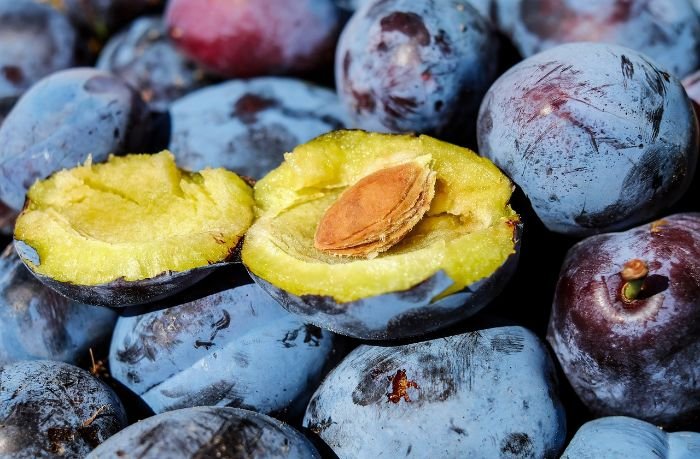
Fresh plums provide water, fiber, vitamin C, potassium, and colorful plant compounds as part of a varied diet. Dried plums concentrate natural sugar, calories, and fiber into a smaller portion. Homegrown fruit is not automatically more nutritious; its practical advantages are cultivar choice, ripeness, freshness, and control over garden practices.
Conclusion
Choose the plum group, cultivar, rootstock, and pollination partner before planting. Give the tree full sun, freely drained soil, a visible root flare, and a broad grass-free root zone. Those decisions control most of the future size, fruit set, and maintenance burden.
Good plum tree care stays measured: water according to soil moisture, feed from evidence, thin heavy clusters, prune during locally safe weather, and inspect fruit before problems spread. Pick in stages when each plum reaches full color, fragrant skin, and a slight softness under your fingertips.
FAQ
What is the best place to plant a plum tree?
Choose a site with six to eight hours of direct sun, freely drained soil, good air movement, and room for the rootstock’s mature spread. Avoid standing water, deep shade, enclosed frost pockets, and strong competition from established trees or lawn.
Do I need two plum trees to get fruit?
It depends on cultivar and plum group. Some European plums are self-fertile, though many crop more reliably with another compatible European. Most Japanese plums need a compatible Japanese or suitable hybrid blooming at the same time. European and Japanese plums generally do not pollinate each other.
When should plum trees be pruned?
Use regional disease guidance and dry weather. Wet-climate programs often prune young plums in early spring and established trees in summer to reduce silver leaf and bacterial canker risk. Some dry regions use a different calendar. Avoid automatic winter pruning.
How long does a plum tree take to bear fruit?
A grafted plum often starts in about three to six years. Precocious rootstocks and adapted cultivars may fruit sooner, and vigorous trees can take longer. Nursery age, climate, pollination, sunlight, pruning, and nutrition all affect the date.
Can I grow a plum tree in a container?
Yes, when the cultivar and rootstock stay compact and the container is large, stable, and freely drained. Container plums need closer moisture checks, durable support, regular root-zone protection from temperature extremes, and the same pollination planning as in-ground trees.
Can I grow a plum tree from a seed?
Yes, after the stone receives the cold period needed to break dormancy. The seedling will not reliably reproduce the parent plum, may become large, and can take many years to fruit. Choose a grafted named cultivar when predictable fruit and mature size matter.