


Last Updated May 22, 2026
A grey water garden can save potable water only when the used water reaches the right roots, in the right soil, under the right local rules. Shower water and laundry water may look harmless as they leave the house, and they can still carry soap, salts, skin cells, lint, hair, grease traces, and cleaning residues. The garden has to use that water as a controlled irrigation source with a known outlet, root-zone target, and bypass route.
The safest greywater system begins with source selection, plant choice, soil infiltration, and a diversion path back to the sewer or septic system. Trees, shrubs, vines, and established ornamentals usually make better targets than salad greens, seedlings, root crops, compacted beds, or acid-loving plants. If the water cannot soak into mulch-covered soil without surfacing, smelling, running off, or touching edible plant parts, the system needs a different design.
The main benefit is lower potable-water demand for established plants during suitable weather, especially where showers or laundry already create a regular household flow. That benefit drops when the receiving soil is saturated, the plants are poor candidates, or household products carry salts, bleach, boron, grease, or disinfectants into the root zone.
Key Takeaways:
- Greywater usually means used water from showers, bathtubs, bathroom sinks, laundry tubs, and washing machines
- Toilet water, dishwasher water, kitchen-sink water, and water with harsh cleaners belong outside simple garden greywater use
- Apply greywater to soil or mulch basins and keep spray away from leaves, paths, and edible plant parts
- Established trees, shrubs, vines, and larger perennials are safer greywater targets than seedlings or root vegetables
- Local rules decide whether a laundry-to-landscape system, branched drain, treated system, or permit is required
Table of Contents
What Counts As Greywater In A Garden System
Greywater, also spelled graywater, is household wash water that has not carried toilet waste. Many rules define it as wastewater from bathtubs, showers, bathroom washbasins, clothes washing machines, or laundry tubs, with toilet, kitchen sink, dishwasher, water softener, and similar high-risk sources excluded from that category.

That source line matters more than the color of the water. A shower load after normal bathing is different from a bucket that contains bleach cleaner, diaper wash water, paint residue, solvents, or greasy kitchen waste. A greywater garden starts indoors, at the products and drains that feed the system.
| Household Water Source | Garden Greywater Fit | Main Risk To Manage |
|---|---|---|
| Washing machine rinse and wash water | Often the easiest simple source | Detergent salts, boron, bleach, lint, and uneven flow |
| Shower and bathtub water | Useful when plumbing can route it safely | Soap, hair, skin cells, and local code limits |
| Bathroom sink water | Possible in some systems | Toothpaste, grooming products, cleaning residue |
| Kitchen sink and dishwasher water | Poor fit for simple garden use | Food particles, grease, pathogens, and stronger detergents |
| Toilet water | Blackwater, not greywater | Human waste and high public-health risk |
| Water softener discharge | Poor fit for soil and plants | Salt load that can damage structure and roots |
Rainwater is a cleaner reuse source than greywater, and treated reclaimed water is a different category again. A barrel under a downspout may suit vegetables and containers. Greywater asks for more caution because it has already passed through people, fabrics, soaps, and plumbing. The root-zone habits in water conservation gardening tips still apply: water only helps when it reaches active roots and avoids a new problem.
Choose The Right Greywater System For Your Garden
The right greywater system is the smallest legal system that moves suitable water to suitable plants without storage, runoff, spray, or edible contact. Untreated greywater should move to the receiving soil promptly because storage encourages odor, biological growth, clogging, and maintenance risk unless the system is designed and permitted for treatment. A bucket from a shower warm-up period is different from a permanent plumbing change. A washing-machine diversion is different from a treated pressurized system. Each step adds water volume, plumbing complexity, maintenance, and regulatory weight.
Simple systems work best when gravity, short pipe runs, and mulch basins do most of the work. Pumped, filtered, stored, or pressurized systems need more design because lint, hair, soap residue, and biological growth can clog emitters and create odors. A system that looks clever on paper can fail fast if the receiving soil is clay, compacted, frozen, saturated, or too small for the water volume.
| Greywater Setup | Best Garden Fit | Why It Works | Main Limit |
|---|---|---|---|
| Manual bucket or shower warm-up capture | Containers, a single shrub, or hand-watered ornamentals | No plumbing change and easy control of water quality | Small volume and easy to misuse on edibles |
| Laundry-to-landscape diversion | Trees, shrubs, vines, and larger perennials near the laundry wall | Washing machine pump can move water to mulch basins | Detergent choice and lint management decide plant safety |
| Branched drain from bath or shower | Gravity-fed basins downhill from the house | Water divides among plants without pumps | Pipe slope, access, and code requirements matter |
| Treated greywater system | Larger landscapes or regulated non-potable reuse | Treatment can support more controlled distribution | Higher cost, maintenance, and permitting burden |
| Skip or postpone greywater | Frozen soil, tiny gardens, edible beds, renters, or unclear rules | Freshwater drip, mulch, and hydrozones may solve enough | Water savings come from conservation first |
The system should also be easy to turn off. A simple gravity-fed greywater setup should be disconnected during unsuitable greywater periods. A gardener needs that same practical control: one valve, one visible outlet, one place where water can go back to the approved sewer or septic route when the soil, household products, or weather make reuse unsafe.
Plants And Beds That Handle Greywater Safely
Greywater is usually better for woody plants than for small edible crops. Fruit trees, shade trees, hedges, shrubs, vines, ornamental grasses, roses, rosemary, sedum, and many dry-climate perennials can use intermittent water around their root zones. Seedlings, newly planted annuals, small herbs, acid-loving shrubs, and vegetables with edible parts near the soil leave less room for error.
Plant choice should follow three checks: edible contact, alkaline or salty inputs, and root-zone drainage. Acid-loving and shade-loving plants are poor greywater candidates. Better suited examples include junipers, oaks, roses, rosemary, sedum, sumac, and many native desert plants.
| Plant Or Bed Type | Greywater Fit | Practical Reason |
|---|---|---|
| Established fruit trees | Good when water stays below fruit and leaf surfaces | Woody stems and deep mulch basins separate water from edible fruit |
| Ornamental shrubs and hedges | Good where soil drains and products are plant-friendly | Large root systems can use intermittent household flow |
| Vines and cane fruit | Possible with careful basin placement | Edible fruit can stay above the irrigated soil surface |
| Perennial flowers and grasses | Mixed fit | Established, salt-tolerant plants handle greywater better than delicate seedlings |
| Leafy greens and low herbs | Poor fit | Edible leaves sit close to the irrigation zone |
| Root crops eaten raw | Poor fit | Edible parts grow in the same soil receiving greywater |
| Acid-loving plants | Poor fit | Many soaps and detergents push water or soil toward alkaline conditions |
Hydrozoning becomes more valuable with greywater because the water source is irregular. Laundry water may arrive in large pulses. Shower water may arrive daily. A tree can use a basin that fills and drains. A mixed border with seedlings and mature shrubs cannot receive the same pulse evenly. Grouping plants by water needs keeps greywater from serving one thirsty plant at the expense of everything around it.
Soaps, Salts, And Soil Decide Long-Term Plant Health
Greywater can make a plant look better in the first season and still damage the soil slowly. The drain load usually matters more than the pipe route. Detergents, sodium, boron, chlorine bleach, disinfectants, fabric softeners, degreasers, and high-pH products can build up faster than rainfall or irrigation flushes them away. Clay soil, low rainfall, and poorly drained basins raise that risk.
Plant-friendly greywater products should be salt and borax free, biodegradable, and non-toxic, with chlorine bleach diverted away from the greywater system. That product choice is a root-zone decision. It decides whether the garden receives a mild irrigation source or a slow soil chemistry problem.
| Household Input | What It Can Do In Soil | Better Greywater Habit |
|---|---|---|
| Sodium-heavy detergent | Damages soil structure and burns sensitive roots over time | Use low-sodium, greywater-compatible products |
| Boron or borax | Toxic to many plants at low buildup levels | Keep boron-containing products out of greywater lines |
| Chlorine bleach and disinfectants | Can injure roots and soil biology | Divert wash loads with bleach to sewer or septic |
| Fabric softener and fragrance products | Add residues with little plant value | Use plain plant-friendly laundry routines for greywater loads |
| Hair, lint, and soap film | Clog outlets and create odor pockets | Use accessible filters or outlet shields that can be cleaned |
Soil type decides how forgiving the system will be. Greywater can contain high levels of salt from detergents, with clay soils and low-rainfall areas needing periodic flushing and some damage taking one or two years to appear. Sandy soil drains faster, and it can also move greywater too quickly beyond small roots or toward prohibited reuse areas.
The receiving bed should be alive, open, and mulched. Organic matter and roots help keep pore space active, and mulch basins slow the pulse so water can soak below the surface. The structure habits in soil health improvement matter because greywater asks the soil to irrigate and filter at the same time. A compacted bed gives it neither job well.
Distribution Design Keeps Greywater In The Root Zone
Greywater should enter soil calmly. Spray creates contact risk, drift, odor, and uneven wetting. Surface discharge onto a path or bare bed invites runoff. The safer target is a covered basin where water spreads through mulch, soil organisms, and the upper root zone before people, pets, or edible plant parts can touch it.
Safe distribution keeps the water low and spread out: apply greywater directly to the soil, avoid sprinklers, avoid contact with above-ground plant parts, keep it away from raw-eaten root crops, use it on established plants, disperse it over a large area, and rotate with fresh water to reduce salt buildup.
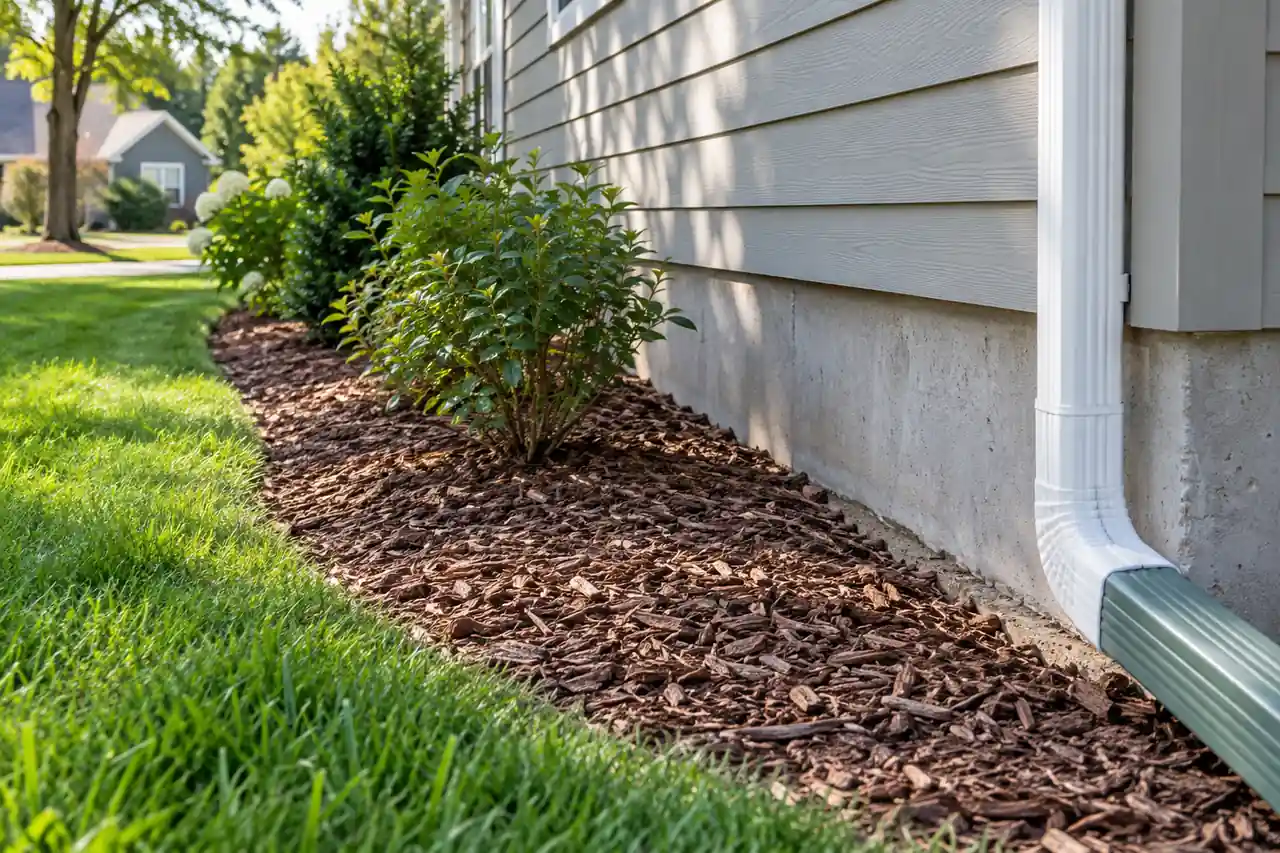
A mulch basin is the common home-garden receiver. Dig a shallow basin outside the trunk flare or crown, fill it with coarse wood chips, and bring the outlet into the basin under a shield or cover. Water should disappear into the mulch and soil without ponding on top. If the basin smells, stays wet, attracts flies, or spills into paths, it is undersized, overloaded, clogged, or receiving poor-quality water.
| Distribution Detail | Good Signal | Warning Signal |
|---|---|---|
| Outlet position | Water enters mulch basin away from trunk or crown | Water hits bark, stems, paths, or exposed soil |
| Soak rate | Water disappears without ponding after normal use | Basin stays wet, sour, or slick hours later |
| Access | Filter, lint trap, and outlet can be cleaned | Buried clogs require digging to find |
| Backup route | Diverter can send water to sewer or septic quickly | Every wash load has to go to the garden |
| Freshwater rotation | Rain or clean irrigation periodically flushes the basin | Soil crust, leaf burn, or white deposits build up |
Greywater adds a separate source to normal irrigation design. The deeper moisture checks in soil moisture monitoring help confirm whether greywater is reaching roots or only wetting the mulch surface. A probe after a laundry cycle should find cool, damp soil near active roots; a wet-looking cap over a dry profile means the basin needs adjustment.
Regulations, Permits, And Diversion Decide Whether The System Belongs
Greywater rules change by country, state, county, city, water district, and plumbing code. One place may allow a simple laundry system with conditions. Another may require permits, inspection, setbacks, treatment, or professional design. Local rules can also limit use by soil type, slope, water table, septic system, freezing season, daily volume, or edible crop contact. A garden plan that is legal in one county can be prohibited across a boundary line.

Before cutting pipe or buying parts, check the authority that handles plumbing, wastewater, public health, or onsite sewage in your area. State water reuse regulations and guidelines for landscape applications help locate the relevant rule layer, and a local health jurisdiction can confirm whether greywater irrigation is allowed at the address.
The legal check belongs before trenching, pipe cutting, parts purchase, or permanent layout decisions. Ask which sources are allowed, whether kitchen sink water is excluded, whether subsurface distribution is required, whether food crops are limited, how close outlets can be to wells or property lines, whether winter diversion is required, and whether a permit or licensed professional is needed.
| Condition | Greywater Decision | Reason |
|---|---|---|
| Soil is saturated, frozen, or flooded | Divert to sewer or septic | Roots cannot use the water and runoff risk rises |
| Bleach, disinfectant, dye, or harsh cleaner was used | Divert that load | Plant roots and soil biology can be injured |
| Household illness or contaminated laundry | Divert that water | Pathogen risk rises beyond normal garden reuse |
| Outlet clogs, backs up, or smells | Stop garden flow and clean the system | Odor and surfacing show failed infiltration or maintenance |
| Plant stress appears after greywater use | Pause greywater and flush with fresh water if appropriate | Salt, pH, product residue, or saturation may be accumulating |
A diversion valve gives the system its safety margin by keeping unsuitable loads out of the garden. Greywater is only useful on days when the garden can receive it. A clean off-ramp protects the plants, the plumbing, the septic system, and the people who use the garden.
Common Greywater Garden Mistakes
Most greywater mistakes come from treating reuse as free irrigation. The water has value, and it also has a load. The safest garden reads that load through plant response, soil smell, outlet behavior, and whether the water stays where the design intended.
| Mistake | What Happens | Better Correction |
|---|---|---|
| Sending greywater to vegetable leaves | Edible surfaces can contact microbes and residues | Use fresh water for leafy greens and direct greywater to woody plants |
| Using ordinary detergent without checking ingredients | Sodium, boron, bleach, or softeners build in soil | Switch to greywater-compatible products and divert harsh loads |
| Watering acid-loving plants | Leaves yellow, roots stall, and pH stress increases | Use greywater on more tolerant trees, shrubs, and perennials |
| Letting outlets surface on bare soil | Runoff, odor, and contact risk rise | Use covered mulch basins sized for the flow |
| Forgetting freshwater flushing | Salt crusts and leaf burn may appear slowly | Rotate with rain or clean irrigation and monitor soil response |
| Skipping the legal check | The system may need removal or redesign | Confirm local rules before plumbing changes |
These systems reward boring maintenance. Clean lint traps, lift outlet shields, smell the basin, probe the soil, and watch the plants farthest from the pipe. Mulch settles and roots grow. A basin that worked in spring may need resizing by late summer after the shrub fills in or laundry volume changes.
Conclusion
A grey water garden works when household water is treated as a managed irrigation source. Start with legal sources, plant-friendly products, established plants, mulch basins, freshwater flushing, and a diversion route. Keep the water below the surface, away from edible contact, and inside soil that can absorb it.
The best system feels modest. It sends a known source to a known root zone, gives the gardener a fast way to shut it off, and lets the plants show whether the soil is handling the extra load.
FAQ
What Is Greywater In A Garden?
It is used household wash water from sources such as showers, bathtubs, bathroom sinks, laundry tubs, and washing machines. Toilet water, dishwasher water, kitchen sink water, and water with harsh chemicals belong outside simple garden greywater use.
Can Greywater Be Used On Vegetables?
Vegetable use is narrow. Leafy greens, raw-eaten root crops, and edible plant parts that touch soil are poor targets. Fruit trees, shrubs, vines, and larger established plants are safer when the water enters soil or mulch below the edible crop.
Is Laundry Water Safe For Plants?
Laundry water can be useful when detergents are low in salt, free of boron, free of chlorine bleach, and compatible with greywater use. Loads with bleach, disinfectant, dye, oily rags, or contaminated laundry should be diverted to sewer or septic.
Can Greywater Go Through Drip Irrigation?
Simple untreated greywater often clogs standard drip irrigation because of lint, hair, soap film, and biological growth. Many home systems use mulch basins or purpose-designed distribution for that reason. Treated pressurized systems need design and maintenance that match local rules.
Do I Need A Permit For A Greywater Garden?
Permit rules depend on local plumbing, wastewater, health, and environmental codes. Some places allow simple systems under conditions, and others require permits, treatment, inspections, setbacks, or professional design. Check local rules before changing plumbing.