Last Updated May 21, 2026
A bonsai tree usually fails in the care before it fails in the design. The pot dries faster than a houseplant pot, inner shoots lose light, roots run out of air, and a wire left on a growing branch can mark the bark before the shape looks finished. The art of bonsai depends on those small daily limits because a tree can be beautiful only as long as its roots, leaves, trunk, and seasonal rhythm still work.
Bonsai care is the long-term cultivation of a real woody plant in a shallow container, where training, pruning, and container restriction keep growth miniature without stopping the tree from behaving like a tree. Water, light, soil, roots, and timing decide whether the design can keep living.
Key Takeaways:
- Choose a bonsai species that fits your light, winter conditions, and daily attention
- Water by soil moisture and pot weight, then soak the root ball fully
- Prune for structure first and surface neatness second
- Use wire only on healthy growth and remove it before it cuts into bark
- Repot when root density, soil breakdown, and water movement show real decline
Table of Contents
Bonsai Is Living Tree Care Before It Is Styling
Bonsai begins with a tree that wants to grow larger than the pot allows. Training answers that growth with selective pruning, branch placement, root pruning, shallow containers, and repeated observation. Leaf size, shoot length, color, dieback, and root density show how the tree answers back, so good bonsai work listens before cutting again.
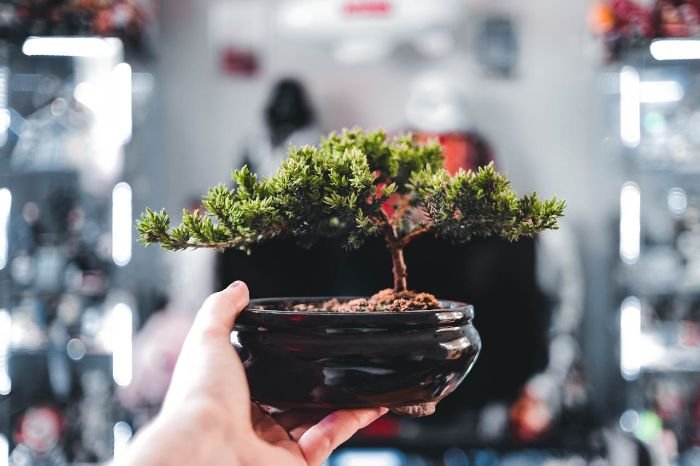
The miniature scale can fool beginners into treating bonsai like decor. A ceramic pot still leaves each species with its own biology: the juniper wants outdoor light, the maple needs dormancy, and the ficus wants warmth and brightness. The shallow pot changes the margin for error because roots have less soil volume, less water reserve, and less protection from temperature swings.
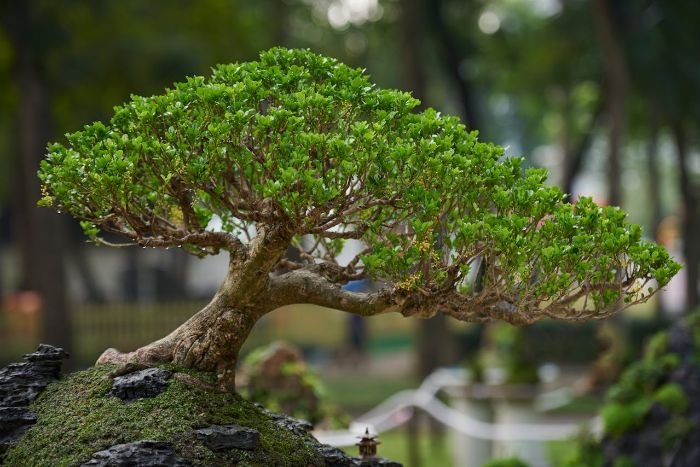
The design also has a horticultural reason: a visible trunk line gives the tree age, open branch spacing lets light reach inner buds, root flare makes the tree look anchored, and fine twigs create scale. Every visual choice depends on growth that can keep rebuilding itself.
| Bonsai Decision | Tree Health Question | Design Result |
|---|---|---|
| Shorten a shoot | Is the branch vigorous enough to back-bud? | Compact ramification |
| Remove a branch | Will enough foliage remain to feed the tree? | Clearer trunk and branch structure |
| Wire a limb | Is the wood flexible and actively growing? | Better angle and movement |
| Repot | Are roots filling the pot or soil breaking down? | Fresh root space and stable drainage |
| Reduce leaves | Is the species suited to leaf reduction? | Better scale on refined trees |
Strong bonsai cultivation feels slow because each hard move needs a recovery season behind it. The tree is shaped across growing seasons as roots, buds, bark, and branches answer each cut. Fast work can create a temporary outline, while patient work builds a tree that can keep becoming one.
Choose The Right Bonsai Tree For Your Space And Skill
The first bonsai choice is location. Indoor and outdoor bonsai should be chosen by climate tolerance, light demand, dormancy, and daily access before style matters. Most temperate trees need outdoor light, weather, and winter rest, and tropical or subtropical species tolerate indoor life better when the room is bright and warm. A tree chosen for the wrong climate becomes a watering problem, a pest problem, and a styling problem at the same time.
Start with the place you can offer all year: a sunny balcony, sheltered patio, unheated cold frame, bright south window, and warm grow-light shelf each fit different species. The pot may be small, and the tree still reads the room, the season, and the air around it.
| Growing Place | Better Bonsai Direction | Why It Fits | Main Risk |
|---|---|---|---|
| Bright indoor room | Ficus, dwarf jade, schefflera | Warmth and indoor tolerance matter more than classic outdoor style | Weak light creates long internodes and leaf drop |
| Outdoor patio with winter cold | Juniper, pine, elm, maple where hardy | Temperate trees use seasonal change to stay in rhythm | Roots in shallow pots need winter protection |
| Beginner with limited time | Healthy nursery stock or established ficus | Vigor gives more room for learning cuts and watering | Cheap stressed gift trees may already be declining |
| Small balcony | Compact outdoor species in a stable training pot | Air, light, and easy checking support daily care | Wind dries soil and can topple light pots |
| Collector display goal | Species with mature bark, fine branching, and known training response | Refinement depends on predictable growth after pruning | Advanced trees punish missed watering and late wire removal |
A bonsai container setup at home controls pot placement, drainage, and small-space growing. The daily work stays close to the tree itself: what to cut, what to bend, what to water, and what to leave alone.
Watering Bonsai Means Reading A Shallow Root Ball
Watering is the daily test of bonsai care. A shallow pot warms quickly, cools quickly, and has little stored moisture. The surface can look dry before the center dries, and a compacted root ball can shed water down the sides as the core stays thirsty. A good watering habit checks moisture, then waters the whole root zone.
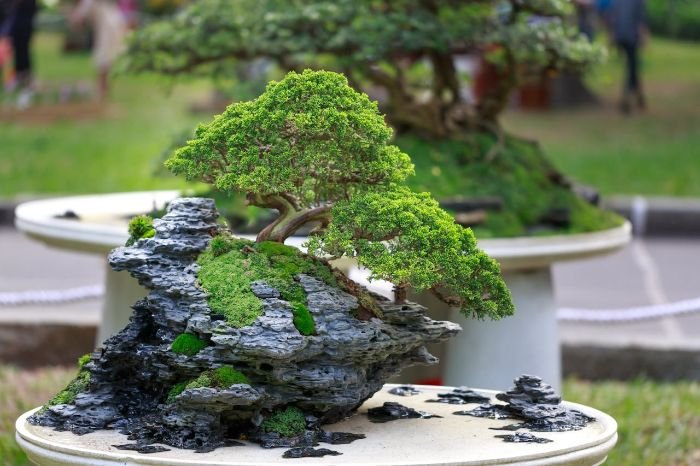
Use three signals together: touch the surface, lift the pot, and look at leaf posture and new growth. If the pot feels light and the surface is dry, water until water runs from the drainage holes. Pause, then water again when the mix has pulled away from the pot edge, because a shallow bonsai root ball can rewet unevenly after drying.
Weak watering creates two opposite failures: light sprinkling keeps the surface damp and leaves the lower root ball dry, and constant soaking removes oxygen and turns fine feeder roots brown. Bonsai roots need both water and air, so the potting mix must drain freely after a thorough soak.
Bonsai roots recover after watering only when proper pot drainage, granular media, and a stable pot position let air return to the root ball.
| Signal | Likely Meaning | Better Response |
|---|---|---|
| Pot feels much lighter than yesterday | Root ball is losing moisture fast | Water deeply and check wind or heat exposure |
| Water runs out instantly | Dry, compacted, or channeling soil | Soak slowly until the root ball rewets |
| Soft yellow leaves and sour soil smell | Wet root zone with low oxygen | Improve drainage and let the mix breathe |
| Fine new shoots wilt by midday | Heat and root volume may be out of balance | Move to morning sun and review pot size |
Light, Soil, And Feeding Keep Bonsai Growth Compact
Bonsai styling depends on short internodes, healthy buds, and leaves that match the scale of the tree. Light drives that compact growth. A tree kept too dim reaches for light with long, weak shoots. The grower then cuts back repeatedly, and the tree keeps answering with soft growth that never refines.
Outdoor species usually need open sky, moving air, and seasonal temperature change. Indoor tropical bonsai need the brightest window available or a strong grow light close enough to matter. Rotate indoor trees gradually so all sides receive light, then prune after the tree shows active growth.
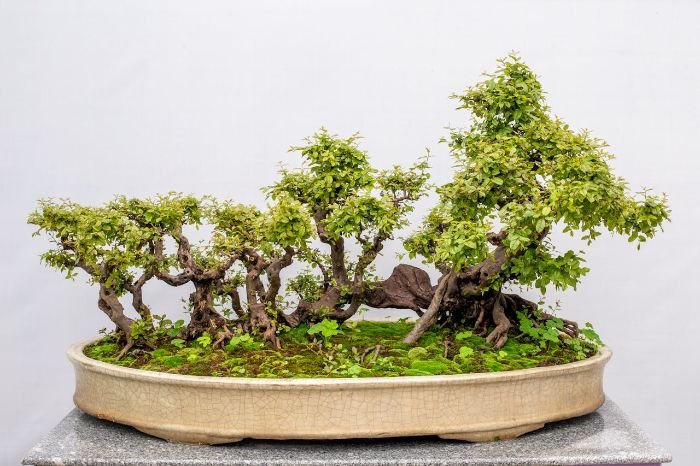
Soil has to hold water without becoming mud, and bonsai mixes usually rely on gritty particles that keep air spaces open. Organic-heavy mixes can work for a young training tree for a season or two, then they break down and hold too much water. A refined bonsai in a shallow pot needs a mix that can be watered thoroughly and drained quickly.
Bonsai uses a sharper version of the same container logic: the best soil mix for container gardening gives roots air, water, and structure; bonsai mix leaves more open pore space for repeated soaking and fast drainage.
Fertilizer Should Match Active Growth And Root Recovery
A bonsai in active growth can use food to rebuild leaves, roots, and fine branching after pruning. A bonsai sitting in low winter light, cold soil, or recovery after repotting cannot use the same push. Feeding at the wrong time makes soft shoots, salt buildup, or root stress before it improves design.
Feed lightly during active growth, then reduce or stop when the tree slows, goes dormant, or holds weak roots after repotting. Tropical indoor bonsai may keep growing under strong light. Outdoor temperate trees follow the season more clearly. The fertilizer decision should start with new growth, leaf color, root recovery, and water movement through the pot.
| Tree Condition | Feeding Decision | Why It Matters |
|---|---|---|
| Strong spring growth | Light regular feeding | New shoots and roots can use nutrients |
| Freshly repotted tree | Delay until recovery starts | Cut roots need oxygen and moisture before food |
| Weak indoor winter growth | Reduce or pause feeding | Low light makes soft stretched growth more likely |
| Refined tree before display | Use restrained feeding | Heavy nitrogen can lengthen internodes and enlarge leaves |
| Dormant outdoor tree | Stop feeding | Dormant roots use little nutrient for active growth |
Pruning Bonsai Builds Structure Before Surface Neatness
Pruning a bonsai starts with the branch structure that keeps light, sap flow, and visual scale working together. The first cuts build the structure: trunk line, primary branches, branch spacing, and the open areas that make the tree readable. Later cuts refine the silhouette and encourage finer twigs.
Look at the tree from the front before cutting, then remove dead wood, weak crossing shoots, and growth that points straight into the trunk. Decide which branch carries the design. A strong lower branch may become the visual weight of the tree, and a straight vertical shoot near the top may need cutting before it takes energy from the intended apex.
Maintenance pruning happens through the growing season on many species, and structural pruning usually waits for a safer seasonal window when the tree can respond. Species timing matters because deciduous trees, conifers, tropicals, and flowering bonsai recover from hard cuts on different timelines.
The difference between shortening a shoot and removing a branch is the same logic covered in heading vs thinning cuts in pruning. Bonsai uses that logic at miniature scale. Heading can make new shoots dense near the cut. Thinning opens space and shows the trunk.
| Cut Type | Use In Bonsai | Risk If Overused |
|---|---|---|
| Tip pinch | Slows extension and encourages compact growth | Weakens a tree that needs strength |
| Heading cut | Shortens a branch and can push side buds | Creates swelling or clutter near the cut |
| Thinning cut | Removes a branch to open structure | Leaves gaps if the design branch is removed too soon |
| Root pruning | Refreshes the root system during repotting | Stresses weak trees or badly timed repots |
Wiring And Shaping Need Healthy Growth To Hold
Wire changes branch direction during the period when the branch can still bend and set. A weak branch needs recovery before it can hold a new line safely. A healthy shoot with active cambium can slowly accept a new angle, and a brittle or stressed branch cracks, scars, or dies back after force.
Anchor the wire securely, wrap at an even angle, and bend in small movements. Watch the outside curve of the branch because bark stretches there first. Wire should guide the branch while leaving the bark free to expand during the next flush of growth. Growing branches thicken, and wire left too long can girdle a branch.
Cut wire off in short pieces when removing it because unwinding can tear bark or snap fine twigs. Check wired trees often during strong growth, especially junipers, elms, maples, and tropicals kept warm. A mark that looks small today can become a permanent scar by the next flush.
Shaping also includes what the grower refuses to bend. Young growth may need time to thicken before refinement, a sacrifice branch may stay for trunk development, and a newly repotted tree may need recovery before wiring. Bonsai design improves when each technique waits for the tree’s strength.
Repotting And Root Pruning Keep The Tree From Declining
Repotting begins as root care because old soil, circling roots, and sealed pore space decide whether water can still move through the pot. The tree is lifted, old soil is worked out, roots are shortened or combed, and fresh mix replaces the tired zone. A good repot leaves fine feeder roots, open soil, and enough pore space for water to move through the pot without sealing the root ball.
A bonsai may need repotting when water stops soaking in, roots circle heavily, growth weakens despite good light and watering, or the soil breaks into dense particles. Young vigorous trees fill pots faster, older refined trees may need a gentler schedule, and a flowering or fruiting bonsai may need timing that protects buds.
Do the heaviest root work when the species can recover. Many temperate bonsai recover best when repotted before new growth fully opens. Tropical bonsai usually need warm active growth before major root work. A sick tree should regain water movement and root activity before heavy reduction.
Container choice changes the same recovery window. A training pot gives roots more room to build trunk and branch strength. A shallow display pot tightens the visual scale and raises the care demand. Choosing garden planters for plant health starts with volume, drainage, material, and root behavior; bonsai narrows those choices into a deliberate training tool.
Seasonal Bonsai Care Changes The Work You Can Safely Do
Bonsai tasks follow the tree’s energy. Spring growth supports repotting, bud selection, and early structure work on many species. Summer asks for water discipline, shade management in heat, pest checks, and careful pruning. Fall is for reducing fertilizer, checking wire, and preparing outdoor trees for cold. Winter protects dormant roots and keeps indoor tropicals away from cold glass and dry heat.
Outdoor temperate bonsai need winter protection because the roots sit above ground in a shallow pot. A tree hardy in the landscape can still suffer root damage in a shallow container because above-ground roots lose the insulation of garden soil. Place hardy outdoor bonsai where wind, freeze-thaw cycles, and winter sun cannot dry the pot. The tree may be dormant, and the root ball should still hold slight moisture.
Indoor bonsai face the opposite winter problem because heat, low humidity, and weak light can push tired growth. Move tropical trees closer to light, avoid heater drafts, and water by pot moisture and root demand. Fertilizer should follow visible growth, leaf color, root recovery, and available light.
Every bonsai cut changes where stored energy moves next, so the basics of pruning still matter when a small branch, apex, or root cut changes the tree’s recovery path.
Common Bonsai Problems Show Up In The Routine First
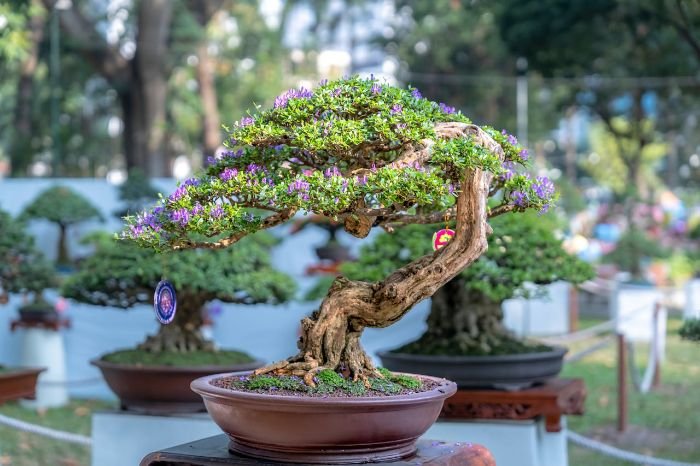
Most bonsai problems announce themselves before the tree collapses. A pot dries sooner than it used to, water runs along the pot wall, inner leaves yellow, new shoots stretch, wire starts to press into bark, or moss stays wet for days. These signals are more useful than a late rescue search after the canopy drops.
| Problem Signal | Likely Cause | First Check |
|---|---|---|
| Leaves drop indoors | Light change, dry air, watering swing, or species mismatch | Confirm species and move to brighter stable light |
| Brown tips after wet soil | Root stress or low oxygen | Smell the soil and inspect drainage |
| Long pale shoots | Low light or too much nitrogen for the light level | Improve light before trimming again |
| Interior branches weaken | Dense outer canopy shading inner buds | Thin carefully to admit light and air |
| Wire marks bark | Wire stayed on during active thickening | Cut wire off and delay more bending |
| Water refuses to soak in | Compacted root ball or hydrophobic soil | Rewet slowly and plan a repot if roots are packed |
Pests often follow stress. Scale, aphids, spider mites, and fungus issues move faster on trees kept too dry, too dark, or too crowded. Inspect leaf undersides, branch crotches, and bark crevices during watering. A bonsai is small enough that a careful hand can find problems early.
The discipline is simple and demanding: check the tree before changing the tree. Healthy bonsai work comes from repeated small readings that catch water stress, wire pressure, weak light, and root decline before the tree needs rescue.
Conclusion
Bonsai care works when cultivation and design stay together. Watering keeps the root ball alive, light keeps growth compact, pruning builds structure, wiring guides movement, and repotting renews the roots that make every cut possible. The tree becomes art through repeated care that respects what it can recover from today.
A healthy bonsai is never finished in the usual sense. It is checked, adjusted, rested, and grown again. That rhythm is the real craft: a small tree, a shallow pot, and years of decisions made at the speed of living wood.
FAQ
What Is The Easiest Bonsai Tree For Beginners?
Ficus is often the easiest indoor beginner bonsai because it tolerates warm rooms better than temperate outdoor species. Outdoor beginners may do better with a hardy juniper, elm, or other species proven for their local winter conditions.
How Often Should I Water A Bonsai Tree?
Water a bonsai when the root ball is approaching dry, then soak it until water drains from the holes. The schedule changes with species, pot size, soil mix, light, wind, heat, and season, so daily checking works better than a fixed calendar.
Can Bonsai Trees Grow Indoors?
Some tropical and subtropical bonsai can grow indoors with strong light, warmth, and careful watering. Most temperate bonsai, including many junipers, pines, maples, and elms, need outdoor conditions and winter dormancy.
When Should I Prune A Bonsai?
Light maintenance pruning usually happens during active growth. Larger structural cuts should match the species and season so the tree can recover. Avoid heavy pruning on weak, newly repotted, heat-stressed, or drought-stressed bonsai.
Why Is My Bonsai Losing Leaves?
Leaf drop can come from low light, sudden location changes, dry roots, wet roots, cold drafts, pests, or species mismatch. Check light, soil moisture, drainage, and the tree’s indoor or outdoor needs before pruning or fertilizing.