



Last Updated May 09, 2026
Garden soil structure decides whether water sinks in, roots move down, and organic matter turns into lasting fertility or a short-lived surface fix. When structure breaks down, one bed puddles after every rain, another dries gritty by noon, and a third grows roots that spread sideways because they hit a hard layer a few inches down.
Poor soil structure gets mistaken for a feeding problem all the time. Gardeners add fertilizer, then add compost, then water more, and the bed still stalls because the real limit is physical. Roots need air-filled pore space as much as they need nitrogen.
The fix is a sequence, not a single product. Read the failure pattern first, choose the right organic input, disturb the soil less once it starts recovering, and keep living roots or surface cover doing the slow work between crops. Broader soil health improvement should still include testing, fertility balance, and long-term maintenance because structure recovery depends on more than one amendment.
Key Takeaways:
- Match the fix to puddling, crusting, or fast drying
- Add organic matter in forms that fit the problem
- Disturb soil less once pore space starts recovering
- Keep roots and mulch working between growing cycles
- Test before adding more compost to rich dark beds
Table of Contents
Choose The Right First Move For Your Soil Problem
The advice to add compost is common because it helps, though the first move depends on how the bed fails. Soil that seals into a crust after rain is not asking for the same correction as sandy soil that sheds water and dries warm at two inches deep.
| If the bed acts like this | Do this first | What it changes |
|---|---|---|
| Water sits after rain and footprints stay glossy | Stop traffic, topdress with compost, and check drainage pattern | Protects pore space and slows surface sealing |
| The surface dries into a hard pale crust | Add fine compost or leaf mold and keep the top covered | Reduces crusting and improves early infiltration |
| Soil feels gritty and goes dry fast below the surface | Repeat moderate compost additions and mulch the bed | Raises water holding and microbial activity |
| A spade hits a dense layer four to six inches down | Loosen once with a digging fork during a dry window | Opens channels that roots and water can follow |
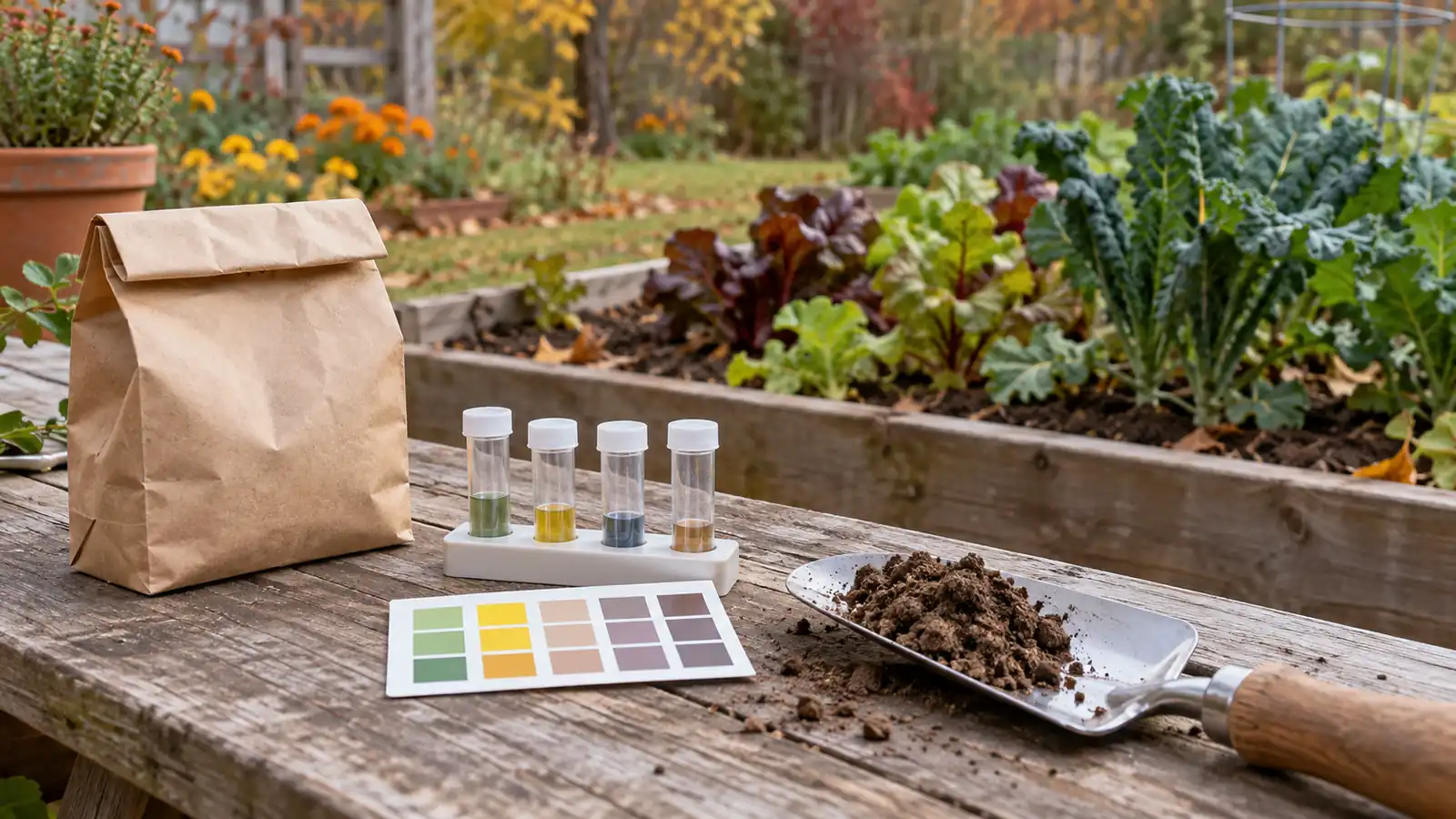
| The bed is black and rich and plants still look burned or soft | Run a soil test before adding more organic material | Prevents over-enrichment and salt buildup |
Think about the bed that disappoints you most. Does water stall on top, disappear too fast, or stop at a hard layer? That answer tells you more than a general promise on a bag ever will.
The fastest gains come from matching the correction to the failure. Many gardens have two structure problems at once, which is normal. A clay bed can crust on top and hold a tight layer underneath. A raised bed can look rich and still slump because it got fed long after the pore balance was already good.
Soil Structure – The Hidden Limit On Roots, Air, And Water

Structure Is Not Texture
Texture tells you how much sand, silt, and clay are in the soil. Structure tells you how those particles are assembled into crumbs, blocks, plates, or dense clods. Texture changes slowly over very long timeframes. Structure changes within a season when roots, microbes, organic matter, rain impact, and traffic push the soil in one direction or the other.
Productive garden soil often contains roughly forty to sixty percent pore space. That number matters because roots respire. Oxygen has to diffuse through those pores, water has to move through them, and fine roots have to push through them without hitting a wall.
A practical home-garden target is organic matter near five percent on a soil test, with enough stable aggregation for water and oxygen to share the same profile without separating into slick, airless layers.
You can read structure without a lab, too. Good soil breaks into small crumbs under light pressure, smells earthy after rain, and gives a trowel easy entry without a metallic stop. Degraded soil smears slick when wet, turns brick-hard when dry, or lifts in flat plates that show water has been moving across the top more than through the bed.
Organic Matter Builds Soil Structure – And The Form Changes The Result
Organic matter earns its reputation because it works across nearly every soil type. Improving garden soils with organic matter helps compacted soil when organic inputs feed aggregation, water entry, and biological activity. Texture changes slowly. Structure can improve through organic matter, roots, cover, and lower disturbance.
| Material | Best use | Structural effect | Watch for |
|---|---|---|---|
| Finished compost | Annual beds, reset beds, shallow incorporation | Builds stable crumbs and improves water holding | Too much can over-enrich already rich beds |
| Leaf mold or shredded leaves | Fall topdressing, tree and shrub zones, crusted beds | Feeds fungi and softens the surface layer | Fresh thick layers buried before planting can tie up nitrogen |
| Wood-chip mulch | Perennial beds, paths, bed edges | Protects aggregates from splash and heat | Keep it off crowns and trunks |
| Cover crop residue | Off-season vegetable beds | Leaves root channels and decaying carbon in place | Termination timing has to fit planting plans |
Fresh Material And Finished Compost Do Different Jobs

Fresh residues and finished compost are not interchangeable. Fresh organic matter in garden soil decomposes rapidly and can stimulate the sticky microbial exudates that glue particles together. That quick burst helps structure. It also raises the risk of temporary nitrogen tie-up if you bury woody or leafy material right before planting. Finished compost has already gone through the hot breakdown phase, so it loses volume more slowly and is easier to use in planting beds.
Improving garden soil with compost and organic matter should be treated as a selection problem, not just an enthusiasm problem. Compost suits a reset bed that needs reliable incorporation. Leaf mold suits a crusted or dry surface that needs fungal food and softer tilth. Wood chips suit the garden zones where surface protection matters more than fast nutrient release.I often notice that the darkest bed is not the one growing best. It is the one that received the most material, whether the root zone needed it or not.
Too Much Compost Is Still Too Much
That tradeoff gets missed in many home gardens. In one study of twenty-seven urban gardens with over-enriched soil, average organic matter reached thirteen percent, far above the three to five percent minimum range often treated as a healthy floor. Some beds were carrying more fertility than structure work, which raises the odds of nutrient runoff, soluble-salt stress, and soft growth that looks lush for a short stretch and then collapses.
If you make your own material, keep composting at home in the system. Just do not assume every season needs another thick layer. Good structure comes from balance. A bed that already smells sweet, holds moisture, and breaks into crumbs may need cover and restraint more than another load of compost.
How To Enrich Different Types Of Poor Soil
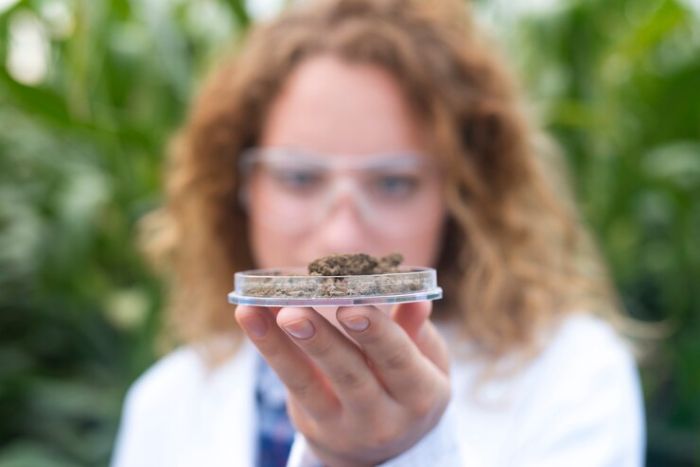
Poor soil does not need one universal amendment plan. The right enrichment direction depends on whether the bed is tight, dry, depleted, overfed, or physically compacted. This is where gardeners waste the most time by repeating a favorite material without matching the amendment to the failure pattern.
| Soil condition | Best enrichment direction | Use carefully | Avoid |
|---|---|---|---|
| Heavy clay with crusting | Compost topdress, leaf mold, mulch, traffic control | One-time fork loosening in dry soil | Sand as a quick fix |
| Sandy soil that dries fast | Repeated moderate compost, leaf mold, organic mulch | Frequent shallow watering | Large single compost dump |
| Compacted new bed | Permanent paths, dry-window fork loosening, compost, cover crops | Deep-rooted cover crops after opening | Rototilling wet soil |
| Over-rich dark bed | Soil test, cover, restraint, plant-demand matching | Light mulch only | More compost by habit |
| Low-organic-matter vegetable bed | Finished compost, cover crops, residues left in place | Nitrogen timing with fresh material | Bare winter soil |
Poor soil needs the correction that matches its failure pattern. If the bed is tight, you are rebuilding pore space. If it is hungry and pale, you are rebuilding carbon and cycling. If it is already dark and soft, the smarter move may be to stop adding and start measuring.
No-Till Gardening Protects Structure – Up To The Point You Need A Reset
No-till gardening gets recommended for good reason. Repeated tillage destroys air-and-water pores, increases runoff and surface crusting, and brings buried weed seeds back into the light. It also tears through fungal networks and earthworm channels that help keep aggregates stable.
Once a bed has decent structure, lower disturbance protects the gains. Surface compost, mulch, narrow permanent paths, and transplanting into opened holes preserve the channels that roots and organisms already built. Each season of less disturbance leaves more biological scaffolding in place.

No-till is not a religion, though. Thick mulch slows spring warming in some climates, and direct seeding into a heavily covered bed takes more care than dropping transplants into holes. Home-garden no-till can still allow one-time mechanical help during bed establishment, especially when compaction is high and organic matter is low.
That one-time reset works best in a dry window with a digging fork, not a rototiller in sticky soil. Drive the fork in, rock it back to open cracks, then move on. Do not flip the whole profile upside down unless the bed is being rebuilt from scratch. The goal is air entry and root passage, not a dramatic churn.
Cover Crops, Mulch, And Living Roots Keep The Pores Open
Roots Do Structural Work A Shovel Cannot

Once the first correction happens, living roots keep the repair from fading. Roots leak sugars into the rhizosphere, microbes feed on those sugars, fungal hyphae thread through the pore network, and decomposing roots leave biopores that the next crop can follow. A shovel can open a slot. Roots can occupy an entire profile.
That is why cover crops for soil health matter even in small gardens. Oats, peas, clover, buckwheat, or a simple winter-kill mix keep something alive in the soil when a bed would otherwise sit bare through rain impact and temperature swings. At cleanup, cut tops and leave roots in place where possible. Decay becomes structure.
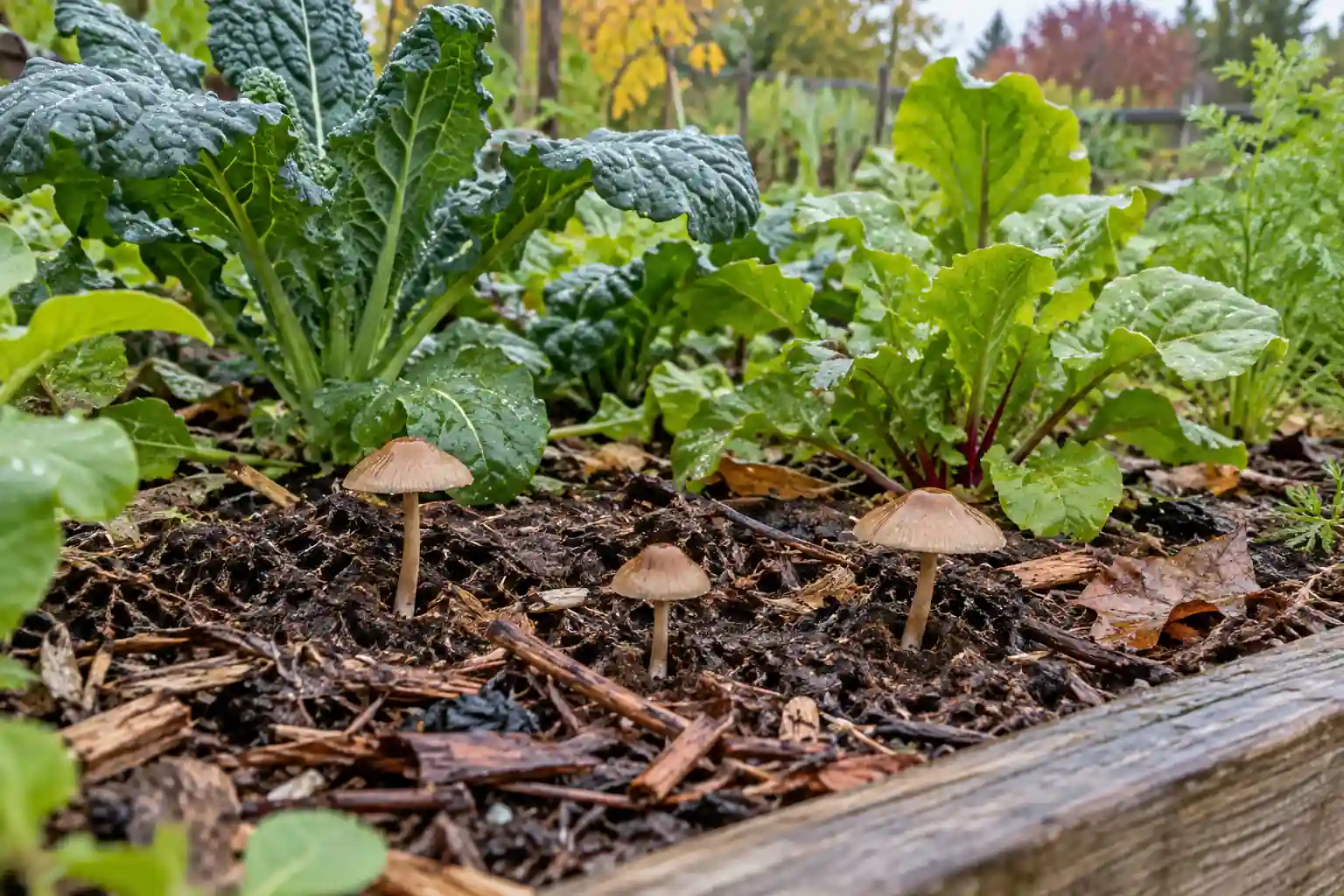
Surface cover finishes the job from above. A good layer of mulching to conserve soil moisture shields aggregates from pounding rain, slows evaporation, and softens the top inch where crusting starts. Stable aggregates depend on organic matter and biological activity, which is another reason bare soil loses ground fast after the first improvement phase.
Pro Tip: After a hard rain, pull mulch aside and squeeze the top inch. If the soil smells earthy and breaks into crumbs, the cover is helping. If the surface feels greasy or sealed, thin the mulch where it is smothering the top and correct the water pattern feeding that spot.
Use that surface cover with some discipline. Keep mulch a few inches off crowns, let the soil warm before piling it thick in spring vegetable beds, and do not smother a fall cover crop with leaves meant for winter protection. The method works when roots, residues, and surface cover each get their own role.
Compaction And Drainage Problems Need A Cause Fix, Not Another Bag
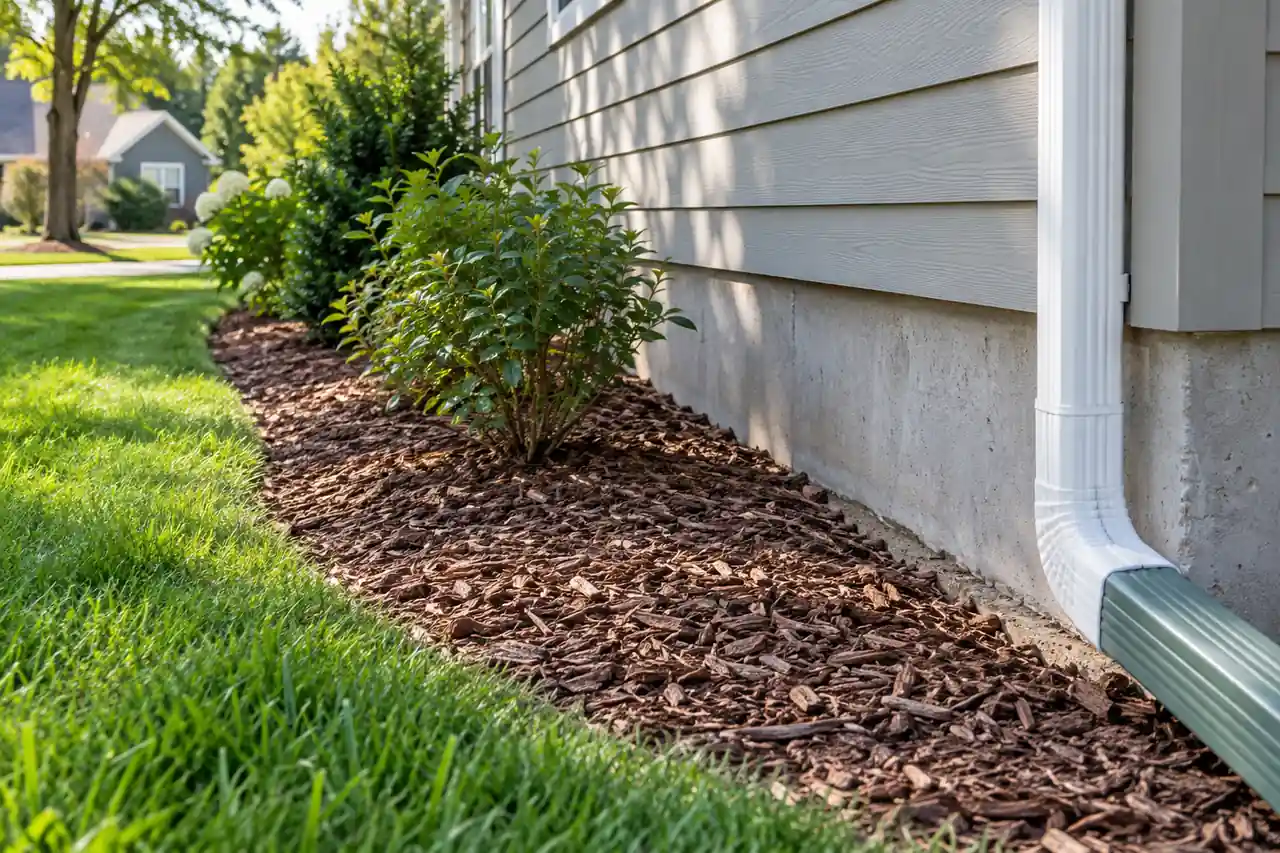
Some beds have weak structure. Others have a routing problem. A downspout dumps on them, a path squeezes them, or a buried dense layer keeps water perched near the top. Compost alone cannot outrun any of those causes.
Wet soil compacts faster under pressure because pore space collapses before the profile has drained. The field-scale examples are larger than backyard beds, though the same physics shows up in a garden bed the morning after rain. Step into a saturated bed and the glossy heel print tells you air was displaced and the top layer was compressed.
Read the signals closely. A hole that still holds water the next morning points toward drainage or a restrictive layer. A shovel that lifts the soil in flat plates points toward compaction. A clay bed that cracks wide in summer after sitting slick in winter needs structure work and often a surface-water correction at the same time.
Targeted soil drainage solutions should address the cause before more amendments are added. Divert runoff, keep feet off wet beds, use permanent paths, and reserve one-time loosening for the dense zones you can actually identify. Sand almost never rescues clay in a home bed. Fine particles lock tighter and the result reads closer to brick than loam.
What Not To Add When Soil Structure Is The Problem
- Do not add sand to clay unless you are following a tested engineered soil mix.
- Do not keep adding compost to beds that already test high in organic matter.
- Do not rototill wet soil to “fluff it up” for a faster fix.
- Do not bury thick fresh woody material right before planting.
- Do not use fertilizer to solve puddling, crusting, or compaction.
Conclusion
Improve structure in the order the soil asks for: read water behavior, add the right organic matter, reduce disturbance, keep roots or cover on the surface, then test again every season or two. If organic matter already sits near five percent and the bed still puddles, stop feeding and chase traffic, grade, or a hard layer.
Good structure becomes obvious under your hands before any lab report arrives. Rain sinks in. A trowel enters without a sharp stop. The soil smells earthy, breaks into small crumbs, and leaves roots heading down through cool moist channels instead of circling in the top few inches.
FAQ
Can you improve garden soil structure without tilling every year?
Yes, and that is the better path once the bed has basic pore space again. One dry-window loosening with a digging fork may be justified in a compacted new bed. After that, surface compost, mulch, permanent paths, and living roots usually do more lasting structural work than annual churning.
What happens if I keep adding compost every season?
More compost does not always mean more improvement. Once organic matter is already in a healthy range, repeated additions can push phosphorus and soluble salts higher than the bed needs. The result may look like lush soft growth, nutrient runoff, or plants that burn even though the soil looks rich and dark.
Is sand a good fix for heavy clay soil?
In most home beds, no. Small additions of sand to clay tend to tighten the mass, especially when the mix never becomes coarse enough to change the pore network. Organic matter, surface protection, and traffic control do a better structural job over time.
How long does it take poor soil structure to improve?
A crusted top layer can soften within one season if the bed gets compost, cover, and lower traffic. A dense layer lower in the profile takes longer because roots and soil life have to reclaim it. Give annual beds a full year of better habits before judging, and give perennial zones closer to two growing seasons.
Can mulch alone fix poor soil structure?
Mulch protects structure faster than it rebuilds it. It cuts splash, keeps the surface cooler, and feeds the upper soil food web as it breaks down. A severely compacted bed still needs some opening action or deeper biological work from roots before the lower profile changes much.
What is the best cover crop for compacted garden soil?
For shallow compaction, a mix usually outperforms a single species. Oats add fibrous roots, peas or clover add nitrogen, and tillage radish can punch larger channels where the climate supports it. The best choice still depends on season, frost pattern, and how easily you can terminate the stand before planting.
Why does soil stay hard even after I add organic matter?
The mechanism is usually repeated damage. Traffic on wet ground, runoff from above, a buried dense layer, or shallow irrigation that never encourages deeper rooting can keep collapsing the same pores you are trying to rebuild. Organic matter helps, though the cause has to stop for the improvement to hold.