




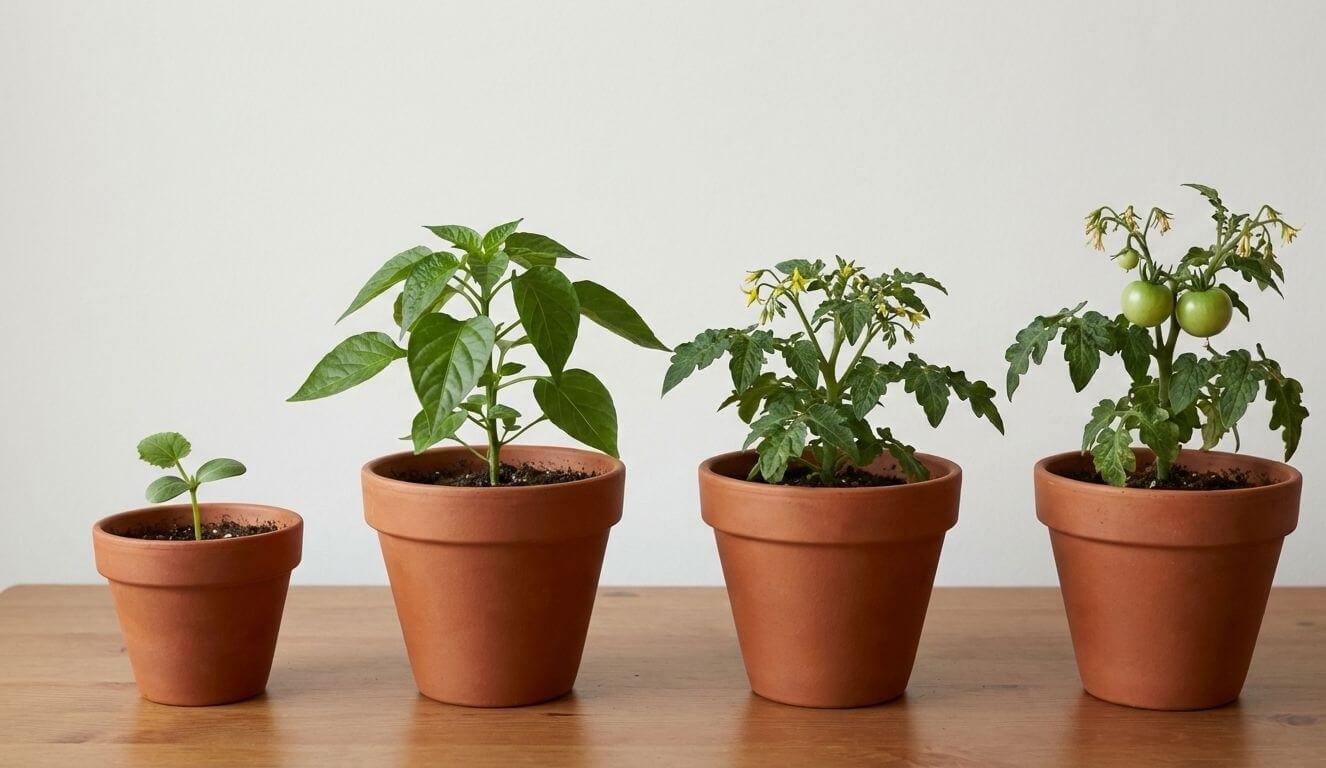
Vegetable growth stages can feel confusing when seeds planted together sprout days apart and early seedlings look weak or stalled. A small mismatch in timing expectations often turns into wasted space, patchy beds, and harvesting guesswork later. Clear stage signals make planning easier because each phase has visible cues that tell a grower what is working and what is drifting off track. The goal is simple: spot normal growth, catch common failure points early, and make harvest timing decisions with confidence instead of hope.
Key takeaways:
- Expect uneven sprouting even with identical planting conditions.
- Strong roots come first, even when shoots seem slow.
- Leaf growth predicts later harvest quality more than height.
- Flower drop often links to heat or watering swings.
- Maturity cues beat calendar dates when deciding harvest timing.
Table of Contents
From Seed to Soil – What Starts Vegetable Growth
Seeds planted on the same afternoon rarely behave the same way. One row breaks the surface in four days, another takes a full week, and a few spots stay bare long enough to trigger replanting. Vegetable growth stages begin long before green shows above soil, and most early problems trace back to conditions underground rather than anything visible yet.
Activation below the surface
Vegetable growth starts once moisture reaches the seed coat and internal tissues rehydrate. For most common vegetables, soil needs to sit between about 55-75°F for enzymes to activate at a predictable pace. Cooler ground slows the process, warmer ground speeds it up until oxygen availability drops and rot becomes more likely.
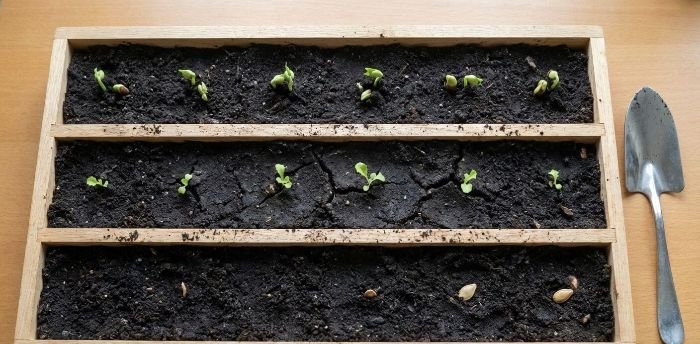
Seed size matters here. Larger seeds like beans or squash carry more stored energy and tolerate minor swings in moisture. Smaller seeds rely on close soil contact and even moisture, so gaps or crusted surfaces delay activation. Poor contact often explains why two seeds planted inches apart behave differently.
Uneven emergence explained
Emergence timing varies because soil conditions vary inch by inch. Slight differences in compaction, moisture retention, or organic matter change how quickly water moves toward the seed. A half inch deeper can add two or three days to sprouting, especially in heavier soils.
I often notice that bare patches line up with spots that dried out faster after planting, usually near bed edges or raised ridges. Reworking only those areas rather than reseeding entire rows saves time and seed.
Depth also plays a role. Seeds planted too shallow dry out during the first warm afternoon. Seeds planted too deep burn energy pushing upward and stall before breaking through. For many vegetables, planting depth close to two times the seed diameter keeps moisture stable while limiting energy loss.
Pro tip – After planting, firm soil gently with a flat hand rather than watering heavily. Light pressure improves contact without sealing the surface, which helps moisture move evenly around the seed.
Early growth below ground sets the pace for everything that follows. When activation happens evenly, later stages line up more predictably and make planning space and harvest timing easier.
Seedling Stage – Root Build and First True Leaves
Seedlings look fine at breakfast, then flop by dinner, especially after a warm windowsill day or a heavy watering. Early success depends on root growth and light quality, because seedlings run out of stored energy fast and need to switch to self-feeding on schedule.
Early root dominance
Roots drive survival during the seedling stage because water uptake stays limited until branching starts.
A simple rule works well – if a seedling holds upright only in wet soil, roots lag behind top growth. Dry-down cycles push roots to branch, so aim for soil that feels lightly damp through the top inch rather than saturated. Overly wet media keeps oxygen low, and stem tissue softens near the soil line.
Container choice matters more than most gardeners expect. Small cell trays dry quickly and reduce rot risk, but they require daily monitoring in warm rooms. Larger pots buffer moisture swings, but they stay wet longer after one heavy watering. Trade-offs show up fast in week one.
Shift from seed energy
True leaves mark the point where stored reserves stop carrying the plant.
Most vegetables reach that handoff within 7-14 days after emergence, depending on temperature and light intensity. If true leaves stay tiny or pale, light levels often fall short, because photosynthesis becomes the only fuel source and growth slows within days.
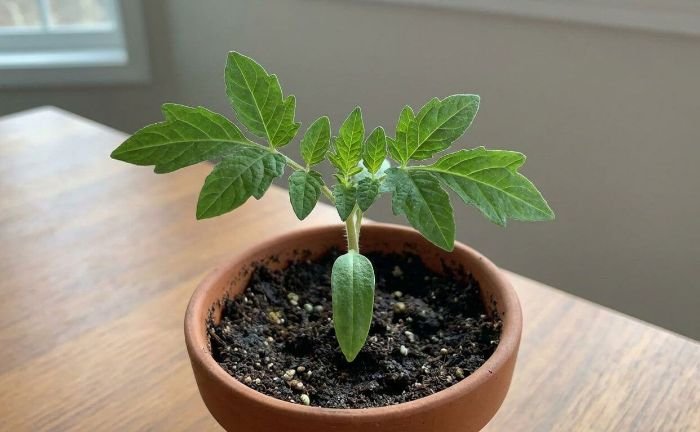
Feeding can wait until true leaves expand. Early fertiliser in a wet mix often pushes soft growth and attracts damping-off problems. A mild, diluted feed after true leaves develop supports steady leaf color without forcing tall, weak stems.
Seedlings with pale new growth and long internodes recover quickly once light improves, while seedlings with pinched stems at soil level rarely rebound.
Light and spacing pressure
Light direction and crowding shape seedling structure before any transplanting happens.
Indoor seedlings need long, bright days – 14-16 hours of strong light keeps stems compact. Window light rarely matches that, so rotation becomes a maintenance habit. Turn pots a quarter turn every day or two, so stems stay centered instead of leaning hard.
Spacing works as an early decision rule – if leaves touch across cells, air exchange drops and stems stretch. Thin to one plant per cell once true leaves appear, even when extra plants feel like insurance. Extra plants cost time later because tangled roots slow transplanting and increase breakage.
Good seedling structure reduces rework later. Strong roots, true leaves, and compact stems make transplant timing easier and cut losses during the move outdoors.
Vegetative Growth – Leaf Area Sets the Harvest Ceiling
Beds often look great during vegetative growth, then production falls short later because plants never built enough working leaf surface. Leaf growth controls how much energy a plant can make each day, so canopy quality matters more than overall height.
Leaf area and energy capture
Leaf area acts like solar panel coverage because photosynthesis runs in the leaves, therefore bigger, healthy canopy generally supports stronger later yield. Height can fool growers, especially when stems stretch and internodes lengthen. Long internode spacing means the plant invested energy into reaching light instead of building dense leaf sites.
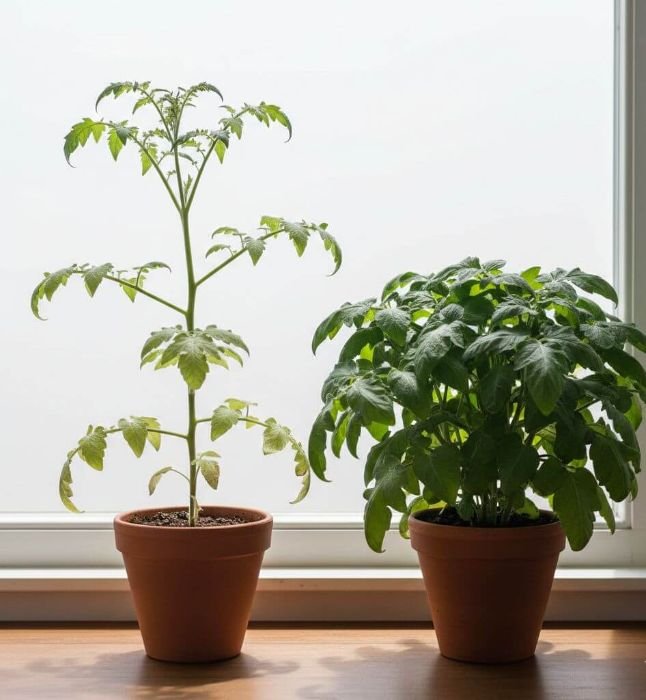
A practical checkpoint works well – measure 2 adjacent internodes on the same stem. When internodes run 2-3 inches apart on a young plant, light intensity often falls short or spacing runs too tight, so plants compete upward. Leaf density gives a second signal. A plant with many leaves packed close together usually holds better water balance and more stable daily growth than a tall plant with sparse leaves, even when overall size looks similar.
Watch leaf angle by late afternoon. Leaves that stay firm and mostly level after heat peaks usually indicate adequate root uptake for current canopy size, while drooping and slow recovery points to canopy outpacing uptake capacity. Fast correction often comes from thinning and better airflow, since crowded canopies trap humidity and drive stretch.
Growth speed differences
Vegetables vary widely in growth rate, so timing expectations need a simple decision rule. If canopy size doubles in roughly 7-10 days under warm, bright conditions, growth runs on track. If canopy size holds nearly unchanged for 10-14 days, one limiting factor usually controls the whole bed, often light, root restriction, or inconsistent moisture.
Slow growers often show tight internode spacing with compact leaves, while fast growers show rapid leaf expansion and thicker stems. A quick read comes from comparing stem thickness near the base to leaf size. A thickening stem with expanding leaf blades usually signals balanced growth. A thin stem with large, floppy leaves signals weak structure and higher lodging risk outdoors.
| Field cue | What it usually indicates | What to adjust first |
|---|---|---|
| Internodes 2-3 inches apart | Low light or crowding stretch | Increase spacing or light exposure |
| Very dense leaf clusters | Strong light, compact growth | Maintain airflow, avoid overcrowding |
| Sparse leaves on tall stems | Energy spent on height | Reduce competition, improve light |
| Leaves droop after midday heat | Uptake lag vs canopy demand | Improve moisture consistency, reduce canopy load |
Vegetative growth rewards simple measurement and quick course corrections. Strong leaf area and reasonable internode spacing set realistic limits for later harvest quality and quantity.
Flowering and Pollination – Managing the Transition Phase
Flower buds appear, plants look full, and expectations rise quickly. A short stretch of hot afternoons or dry soil can undo weeks of good vegetative growth, because flowering reacts faster to stress than leaves or stems.
Environmental sensitivity during bloom
Flowers form and hold only when temperature, moisture, and airflow stay within a workable range. Daytime temperatures above roughly 85°F for several days often reduce pollen viability, therefore flowers may drop even when foliage looks healthy. Night temperatures matter too. When nights stay above about 70°F, energy use rises and fewer flowers carry through to fruit set.
Water balance shifts during bloom. Roots must support both leaf cooling and flower development, so uneven watering creates sudden stress signals. Soil that cycles from dry to saturated within a day often triggers flower loss. A more even pattern helps – moderate watering that keeps moisture consistent through the top few inches reduces abrupt stress responses.
Air movement also plays a role. Dense canopies trap heat and humidity around flowers, which interferes with pollen transfer and increases drop rates. Opening space between plants improves airflow and lowers leaf surface temperature by a few degrees during peak heat, which often improves retention without changing irrigation volume.
In my garden, I often see that flower drop spikes two to three days after an abrupt heat jump rather than during the heat itself. Checking forecasts and adjusting watering cadence before temperature peaks reduces losses more reliably than reacting afterward.
Timing decisions matter more than interventions. When flowers appear during a mild weather window, retention usually improves even without changes to care routines. When bloom overlaps with heat waves or dry winds, fewer flowers hold regardless of effort. Observing local patterns helps set realistic expectations and prevents overcorrection.
Flowering marks a narrow transition point. Stable conditions during a short window often matter more than perfect care across the whole season, and recognizing that window simplifies decision making before plants shift into fruit development.
Fruit and Root Development – Where Yield Gets Locked In
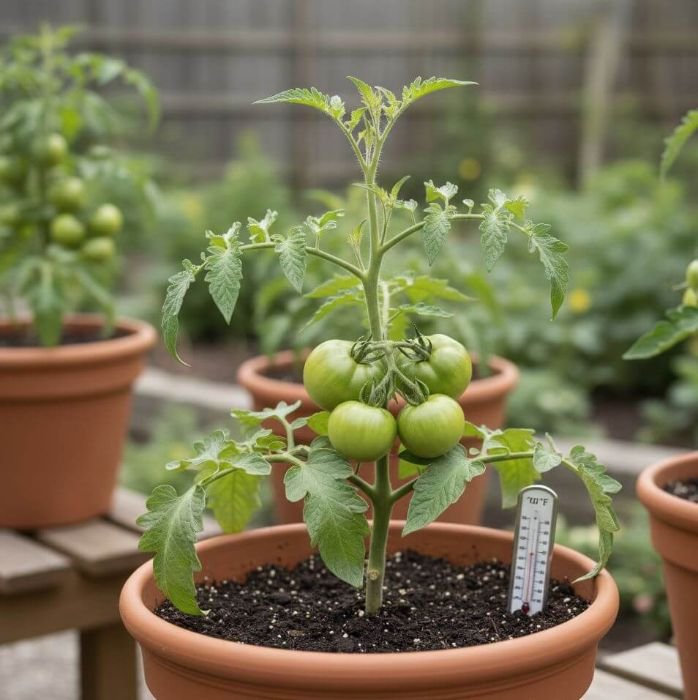
Fruit swell and roots bulk up in uneven spurts, so progress can look stalled for days, then jump after a warm night or a well-timed watering. Edible growth depends on how well plants redirect daily sugars into storage tissues, and small stress events often show up here first as misshapen produce or slow sizing.
Energy allocation shift
Plants shift energy into edible parts after canopy growth reaches a workable size, because leaves act as the supply side and developing fruit or roots act as the demand side. When demand rises, plants start moving more sugars away from new leaves and into storage tissues. A useful field read comes from watching new leaf growth at the top. When fresh leaves appear smaller or slower while fruit or roots begin sizing, energy is moving into the crop rather than into more foliage. Temperature influences the pace. Many vegetables size faster when nights stay in the 60-70°F range because respiration stays lower than during hot nights, so more of the day’s sugars remain available for storage. Water consistency matters for the same reason. Rapid dry-down followed by a heavy soak creates short cycles of stress and recovery, which often interrupts sugar movement into fruit or roots and can trigger cracking, hollowing, or uneven fill. A practical cadence works well in beds and containers – keep moisture fairly even through the main rooting zone, then avoid sudden overwatering after a dry spell.
Root versus fruit priorities
Underground crops prioritize storage in the root zone, so leaf growth can stay moderate while the edible portion expands steadily. Above-ground fruiting crops often show stronger swings, with visible size jumps after pollination and warm conditions.
A decision rule helps separate normal slow fill from a stalled crop. If fruit size or root diameter shows little change after 10-14 days of stable weather, limiting factors usually include root restriction, chronic moisture swings, or excessive heat at night. If foliage stays lush and sizing stays slow, plant energy often remains tied up in maintenance growth rather than storage growth. A small thinning of dense foliage and better spacing can reduce internal shading and improve sugar production without changing fertilization.
Visual signs of proper fill
Healthy fill shows up as consistent size progression and firm texture.
Firmness matters more than color at this phase. Fruit that feels uniformly firm across the surface usually indicates even cell expansion, while soft spots or ridges often indicate uneven water supply. For root crops, look for steady thickening at the shoulder and a smooth surface. Sudden swelling after a dry week often leads to splits because outer tissues expand faster than inner tissues can keep up.
| Field signal | What it suggests | Practical correction |
|---|---|---|
| Cracking or splits | Moisture swings during rapid sizing | Even out watering intervals |
| Hollow centers | Fast growth after stress | Avoid dry spells during sizing |
| Misshapen fruit | Incomplete fill or irregular water uptake | Improve root zone consistency |
| Slow sizing with lush leaves | Energy staying in foliage | Reduce crowding, improve light penetration |
Sizing stage rewards patience and consistency. Even moisture, moderate temperatures, and good light exposure help plants move sugars into edible tissues without interruptions.
Maturity and Harvest Timing – Picking at the Right Moment
Harvest timing feels obvious until flavor falls flat or texture turns tough after one extra week on the plant. Calendar targets help for planning, yet maturity shows up in the crop itself, because heat, cool nights, and moisture change the pace by several days.
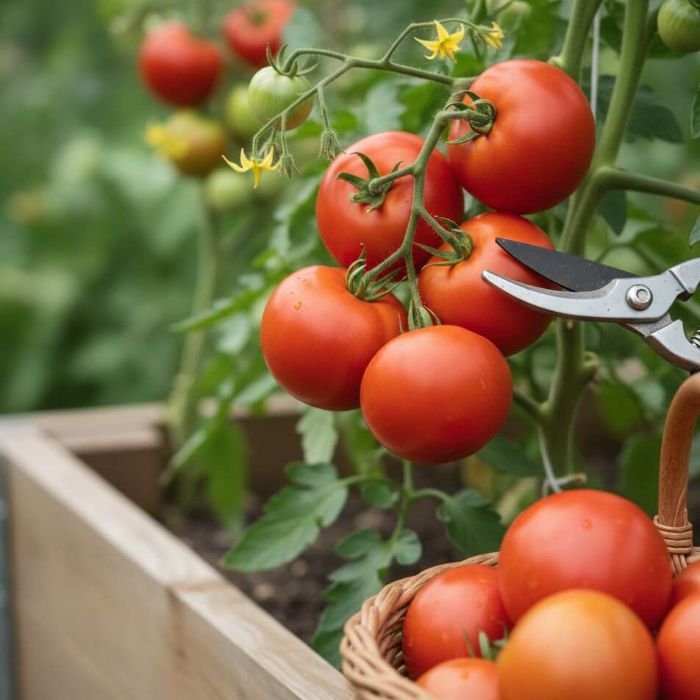
Pro tip – Harvest early morning when temperatures run coolest. Produce holds firmer texture and better snap because plant tissues carry higher water content after the overnight recovery period.
- Use days-to-harvest as a window, then verify with firmness and size.
- Check two or three plants, not a single best-looking specimen.
- Look for uniform color change across the surface, not patchy shading.
- Test with gentle pressure at the shoulder or thickest point.
- Pick in rounds every 2-3 days during peak production.
Picking too early leaves underdeveloped flavor because sugars and dry matter have not finished building. Picking too late often shifts texture toward fibrous or mealy because cell walls thicken and moisture balance changes. A quick habit prevents most mistakes – compare today’s crop to one picked 48 hours earlier, then adjust harvest pace based on the difference in firmness and size.
Conclusion
Most garden problems around yield come down to timing discipline rather than effort. A simple rule holds across seasons – when visible change stalls for more than 7–10 days during active growth, one limiting factor usually controls the outcome. Checking moisture consistency, night temperatures, and spacing within a single afternoon often reveals the cause faster than adding inputs. Regular observation beats intervention because plants signal trouble early through slowed sizing, uneven color, or delayed recovery after heat.
A practical way forward relies on routine rather than reaction. A weekly pass through the garden with one clear question keeps decisions grounded – are plants progressing at a pace that matches recent weather. If progress lags after stable conditions, adjust one variable at a time and wait 3–4 days before judging results. Rapid changes compound stress, while small, spaced adjustments allow plants to re-balance energy use and finish strong.
- Walk beds weekly with a single growth question
- Compare progress over a 3 – 4 day window
- Adjust one factor before changing another
- Watch recovery after warm nights
- Harvest in short, regular rounds
FAQ
How long do vegetable growth stages usually take in real garden conditions
Timing varies more with weather than with seed packets. Cool nights can add 5–10 days to early stages, while warm spells can shorten later stages by a week. A better check is visible progress over a 7-day window rather than counting calendar days.
Can you tell if a plant will produce well before harvest starts
Yes, canopy balance gives early clues. Plants with firm stems, evenly spaced leaves, and no prolonged midday wilt usually support good production. Weak stems, uneven leaf size, or slow recovery after heat often limit later yield.
What happens if vegetables are picked slightly too early
Early harvest often means lower sugar content and thinner texture because storage tissues have not finished filling. Flavor usually improves within 2–4 additional days on the plant when weather stays mild and moisture remains consistent.
Can you slow down growth if vegetables mature too fast
Growth rate responds to temperature and moisture first. Shading during heat waves, spacing adjustments, and avoiding sudden heavy watering can moderate rapid sizing without harming plant health.
How do you know if poor sizing comes from roots or foliage
Check where growth slows. If leaves remain lush but fruit or roots stay small for more than 10–14 days, energy stays in maintenance growth. If leaves yellow or shrink while sizing stalls, root stress or moisture swings usually play a role.
What happens if plants flower well but produce little afterward
Flower drop or poor set often traces back to heat spikes or uneven watering during bloom. Effects usually appear 2–3 days after stress rather than immediately, which makes timing patterns more useful than single-day checks.
Can you rely on days-to-harvest numbers across different seasons
Days-to-harvest work best as planning ranges. Spring crops often run slower, while midsummer crops finish faster. Visual cues like firmness, color change, and size progression give more reliable harvest timing than dates alone.