

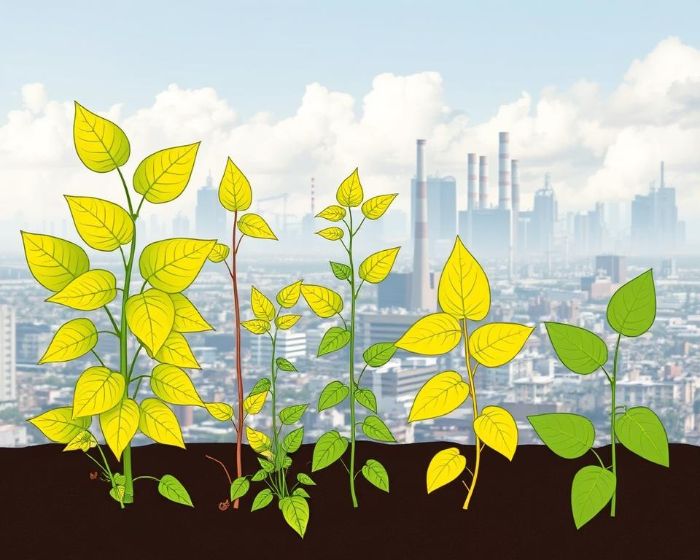
Have you ever thought about how air pollution affects plants? As air quality gets worse, it’s key to know how pollutants harm plants. Air pollution, mainly from factories and cars, is a big threat to plants.
Signs of damage can be seen in plants. They might grow slowly, change color, or even die. How much damage depends on the pollution level and the plant type.
It’s important to spot these signs to keep plants healthy. This helps protect our environment and green spaces.
Key Takeaways
- Air pollution significantly threatens plant health and biodiversity.
- Visible symptoms can indicate the extent of air pollution damage.
- The concentration of pollutants and plant species types affect damage levels.
- Identification of these signs is critical for preserving agricultural and natural ecosystems.
- Understanding the relationship between pollution and plant health can guide better environmental practices.
Table of Contents
Understanding How Air Pollution Affects Plants
Air pollution is a big problem for plants. It brings in harmful substances like sulfur dioxide, nitrogen oxides, and ozone. These pollutants hurt plants in different ways. It’s important to know how they affect plants to lessen the damage.
Common Pollutants That Impact Plant Health
Sulfur dioxide, often associated with combustion byproducts, seeps into plant leaves in much the same way properly placed hedges can buffer wind and shield plants from harsh environmental factors. This can cause leaf damage and weaken plants. Nitrogen oxides and ozone, from industrial emissions and sunlight, also harm plants.
Ozone is especially bad for crops. In 2019, wheat yields in Greece dropped by up to 9% because of ozone. This shows how ozone can hurt crops a lot.
Short-Term vs. Long-Term Effects of Pollution
Pollution has both short-term and long-term effects on plants. Short-term exposure can cause immediate harm, like leaf color changes and slow growth. Long-term exposure can lead to ongoing problems, like slower growth and lower yields.
Chronic ozone exposure hurts crops and can even reduce biodiversity. This threatens our food supply. It’s crucial to keep an eye on air quality to tackle these problems.
Visual Symptoms of Air Pollution Damage
Plants stressed by air pollution show many signs. These signs help us understand their health. They let gardeners and farmers know when their plants are in trouble.
Leaf Discoloration and Chlorosis
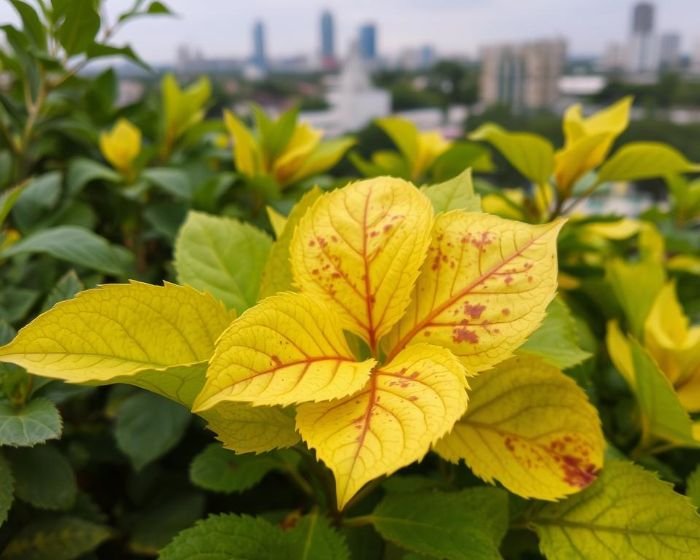
Leaf discoloration is a common sign of air pollution. It looks like yellowing chlorosis, where pollutants mess with photosynthesis. This makes leaves lose their green color, showing they’re not healthy.
Chlorosis shows that pollutants are causing nutrient problems. It means plants can’t get the nutrients they need to grow well.
Stunted Growth and Leaf Drop
Stunted growth is another sign of air pollution damage. Plants may not grow as tall or wide as they should. Sometimes, they even drop their leaves early.
This shows plants are stressed and need help. It’s a sign that they’re not doing well and need care to get better.
Recognizing Specific Damage from Different Pollutants
Knowing how different pollutants harm plants helps us manage them better. Ozone damage shows up on the top leaves, causing bronzing and flecking. This is especially true for plants like bean and lettuce. Spotting these signs is key to caring for plants, especially when selecting resilient species suited to your region to better withstand common pollutants.
Effects of Ozone on Leaf Structure
Ozone is a big problem in the air that hurts plants a lot. It mainly affects the top of leaves, causing bronzing and stippling. This can stop plants from making food, which slows down their growth.
Seeing these signs early helps us take steps to protect plants.
Damage Caused by Sulfur Dioxide and Nitrogen Oxides
Sulfur dioxide can harm plants in many ways. It can cause quick damage like lesions on leaves. Or it can lead to long-term problems like too much chlorosis, making plants weak.
Nitrogen oxides also hurt plants, but in a different way. They help make acid rain, which changes the soil and water. This makes it harder for plants to thrive. Knowing how these pollutants affect plants helps us find ways to fight their harm.
How to Differentiate Pollution Damage from Other Issues
It’s important to know why plants get damaged. This helps us fix the problem right. It’s hard to tell if it’s pollution, pests, or not enough nutrients. But, by looking closely and testing, we can find out.
Distinguishing Air Pollution Symptoms from Pests
Some signs of air pollution look like pest damage. We need to check well to know the real cause. Look for:
- Holes or chewed edges on leaves, which typically indicate pest activity.
- Presence of webs or sticky residue that may signal spider mites or aphids.
- Discoloration that could arise from both nutrient deficiencies and pollution exposure.
By looking at these signs, we can tell if it’s pests or pollution.
Identifying Damage Due to Nutrient Deficiencies
Nutrient lack can also make plants look bad, like pollution. Look for:
- Uniform yellowing of leaves, often indicating a nutrient deficiency such as nitrogen or iron.
- Patchy discoloration that specifically shows patterns related to specific nutrient shortages.
- Overall delayed growth in comparison to healthy plants nearby.
Knowing these signs helps us fix the right problem. It’s not pollution; in some cases, proactive soil management may resolve nutrient imbalances that mimic pollution symptoms.

Monitoring Environmental Conditions for Plant Health
Keeping plants healthy means watching the environment closely. This includes checking the air quality. By using tools like air quality indicators and apps, gardeners can make quick decisions to help their plants.
Using Air Quality Indicators and Apps for Garden Care
Many apps and devices help track air quality. They show levels of pollutants that can harm plants. By using these tools, gardeners can make better choices, like when to water or protect plants from pollution.
Recognizing High-Risk Periods for Air Pollution
Knowing when air pollution is worse is key to protecting plants. Air quality often drops in summer or during industrial busy times. By knowing these times, gardeners can plan better to keep their plants safe.
Tips for Protecting Plants from Air Pollution
It’s important to protect plants from air pollution, similar to shielding them from severe heat, to maintain overall garden health and resilience. Using physical barriers, picking plants that can handle pollution, and spraying plants with special sprays helps a lot. Each method has its own benefits for a better environment for plants and people.
Creating Barriers and Selecting Pollution-Tolerant Species
Setting up barriers like hedges or windbreaks can keep plants safe from bad air. These barriers also make gardens look nicer. Choosing plants that can handle pollution is key too.
Plants like Eastern red cedar, Red maple, and American elm are good at cleaning the air. Adding these to your garden makes it stronger and more able to survive bad air.
Applying Anti-Pollution Sprays and Washes
Special sprays or washes can help protect plants from pollution. These products cover leaves and stop bad stuff from getting in. Using them often keeps plants healthy and growing well.
By using these sprays and picking the right plants, gardeners can really help protect their plants from pollution.
Supporting Plant Recovery from Air Pollution Exposure
Helping plants recover from air pollution requires careful steps; understanding your local climate zone also guides how much pruning or fertilizing is needed for optimal regrowth. Pruning is a key method. It removes damaged parts and helps new growth.
By cutting off the bad parts, plants can focus on growing strong. This makes them better at fighting off pollution.
Pruning Damaged Areas to Stimulate New Growth
Pruning is crucial for plants hit by air pollution. It gets rid of the bad parts and brings out new growth. Making clean cuts at the right time helps plants get back to health.
Keeping an eye on your plants helps you know when to prune. This keeps your garden healthy and strong.
Using Fertilizers to Boost Plant Resilience
Fertilizers also help plants recover. The right mix of nutrients helps them fight off pollution better. Using the right fertilizer boosts growth and health.
By giving plants what they need, gardeners help them overcome pollution. This makes gardens healthier and supports nature.
FAQ
What are the main causes of air pollution that affect plant health?
Air pollution harms plants mainly from industrial emissions, car exhaust, and burning coal. Pollutants like sulfur dioxide, nitrogen oxides, ozone, and dust particles are big problems.
How can I identify if my plants are suffering from air pollution-related damage?
Look for signs like yellow leaves, slow growth, early leaf fall, and spots. These signs show air pollution is hurting your plants.
What is the difference between short-term and long-term effects of air pollution on plants?
Short-term pollution can cause sudden damage like leaf discoloration. Long-term exposure can lead to slower growth, less yield, and plant changes.
Which types of pollutants have the most harmful effects on plant health?
Ozone harms the top of leaves, while sulfur dioxide causes both quick and lasting damage. Nitrogen oxides affect growth by causing acid rain.
How can I differentiate between pollution damage and damage caused by pests?
Pests leave holes or webs, while pollution causes color changes or stunted growth. Knowing the difference helps fix the problem.
What tools can I use to monitor air quality for my plants?
Use air quality tools and apps to get pollution updates. This helps you care for your plants better, especially when pollution is high.
What strategies can I implement to protect my plants from air pollution?
Use barriers like hedges, choose hardy plants, and apply special sprays. These steps help protect your plants from pollution.
How can I support the recovery of plants affected by air pollution?
Prune damaged areas to help plants grow new leaves. Use fertilizers to fix nutrient gaps. This boosts your plants’ health.